

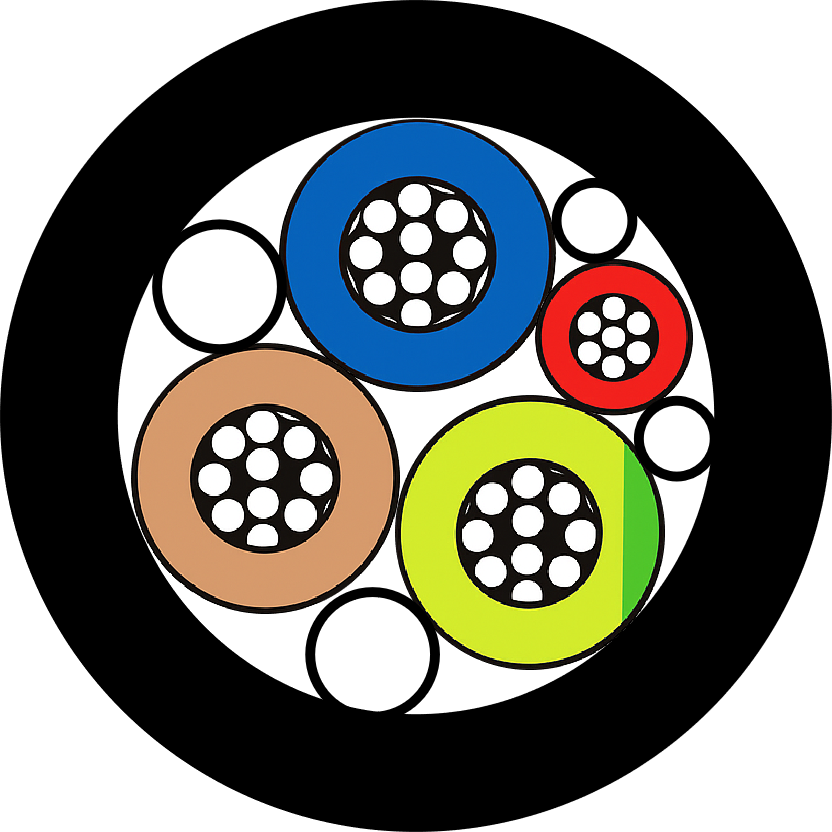





Fiber optics has taught us to transmit data and, in turn, has converted industries to enable unprecedented connectivity. Now, with communication services and supports demanding faster and dependable wires, organizations and individuals have increasingly begun to recognize fiber optic cables as a great alternative to traditional copper wiring. But what makes fiber optic the preferred choice? This article will scrutinize the benefits fiber optic cables have over copper cables: faster data transmission, wider bandwidth, better durability, and higher efficiency. Whether you’re a technology enthusiast, an IT attendee, or just interested in fast connectivity, this blog will bestow upon you the inside track on why fiber optics will find its way into the future of communication technology.
Introduction to Fiber Optics
Fiber optics stands for a technology that utilizes thin strands of glass or plastic to carry data through pulses of light. Compared to traditional copper wire cables, fiber optic cables can carry far greater amounts of data over longer distances, thereby lessening signal loss. Therefore, they are fast and reliable, serving modern communication systems for the internet, television, and telephone networks. Lack of induction of electromagnetic interference and enhanced durability of fiber optics have thus made the technology a high-flying success in the industry.
What is Fiber Optic Cable?
Fiber optic cables are an advanced medium of communication, making use of glass or plastic fibers in transmitting data as light signals. These cables, with their greater speed and efficiency, have largely overshadowed traditional copper cables in many respects. Each fiber optic strand, being smaller than a human hair, carries terabits of data being received and sent by one very high-frequency light signal with very little interference.
Key Performance Metrics:
- Residential speeds: 1 Gigabit per second to 10 Gigabits per second
- Enterprise networks: Even higher capacities available
- Distance capability: Up to 60 miles (nearly 100 kilometers) before requiring amplification
- Copper comparison: Copper wires can hardly offer this for a few miles
The adoption of fiber technology is prompting an accelerated acceptance, brought about by some recent improvements in manufacturing, setup, and maintenance. Fiber optic cables have better security, given that they cannot be tapped into without detection, which makes them suitable for sensitive applications. From an environmental standpoint, electromagnetic interference or spotted physical wear hardly affects fiber optic cables, which stand in for their increased reliability. Telecommunication systems, medical imaging, and high-speed internet infrastructure across the globe all rely heavily on fiber optic capabilities due to these improvements. So, it is a future-oriented technology fixing the next-generation network, including supporting 5G deployments and data center expansion.
The Basics of Optical Fiber Technology
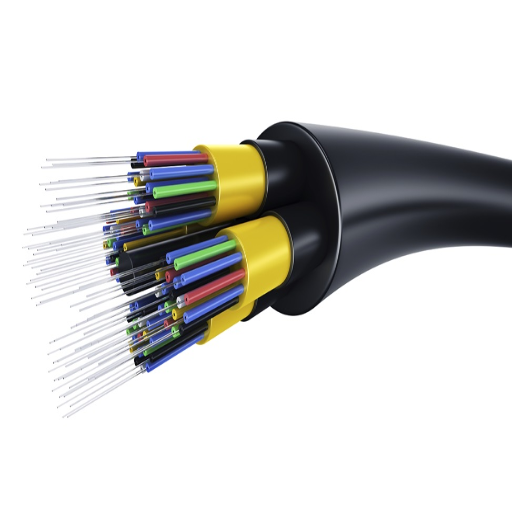
Optical fiber technology centers around the transmission of information in the form of pulses of light down very thin glass or plastic fibers. In essence, these fibers are suitably designed to transmit large volumes of data over great distances with minimal loss in signal. Every optical fiber basically comprises three foundational elements:
- The core: Where light travels
- The cladding: Which reflects the light into the core so that none can leak out
- The protective outer coating: For practical durability
The most important one amongst other technical advancements is the extraordinary potential of an optical fiber for data transmission. Usually, single-mode fibers can transmit data at layers up to 100 Gbps; however, in laboratory conditions, even higher speeds and terabit levels per second could be achieved over long distances. This leaves optical fiber as the only truly unlimited bandwidth resource, unlike traditional copper cables, for 21st-century telecommunication and internet infrastructure.
Optical fibers also offer excellent mitigation against attenuation. While copper cables attenuate largely after going over a few hundred meters, optical fiber can carry out transmission for over 60 miles (100 kilometers) without any signal boosting. Technologies such as Wavelength Division Multiplexing (WDM) supercharge capacity by allowing multiple wavelengths of light to carry data concurrently and thus multiply the potential of the fiber.
It further complements energy efficiency. Studies have shown that optical fiber consumes far less power per gigabit than other older technologies for carrying data, thereby making it a greener solution to rising global internet traffic demands.
Due to their speed, reliability, and scalability, optical fiber networks serve as the backbone for 5G rollouts, cloud storage solutions, and the advancement of AI and machine-learning applications. Thus, with an exponentially growing demand for data, concrete optical fiber technology will carry forward new possibilities in every industry.
Importance of Fiber in Modern Communication
Fiber optic technology stands at the nucleus of communication in today’s world, with its unmatched speed, performance, and bandwidth capacity. Unlike the traditional copper cables that convey electrical current on the metal conductor and electromagnetic signals through airwaves, fiber optics transmits information in the form of light signals, capable of achieving a speed 1,000 times greater than typical broadband services.
Market Growth Projection: Global internet traffic is expected to cross 500 exabytes per month by 2025, steered by an exponential rise in streaming, work-from-home initiatives, and IoT devices.
Another reason for fiber network popularity is their exceptional reliability, latency, and immunity to electromagnetic interference-making them highly suitable for real-time videoconferencing and care communications for automated vehicles.
The scalability of fiber optic networks goes a long way to safeguarding their prestige in the current digital realm: for example, a single fiber strand is capable of handling multiple terabytes of data per second, providing the requisite bandwidth to sprawling urban centers and dense data hubs. The fiber network is also energy efficient, consuming less power when compared to older technologies, which helps to maintain worldwide sustainability goals by reducing carbon footprints. Fiber optics thus plays a critical role and is not just an option for ensuring a smooth and future-proof communication infrastructure, along with 5G, cloud computing, and advanced AI systems.
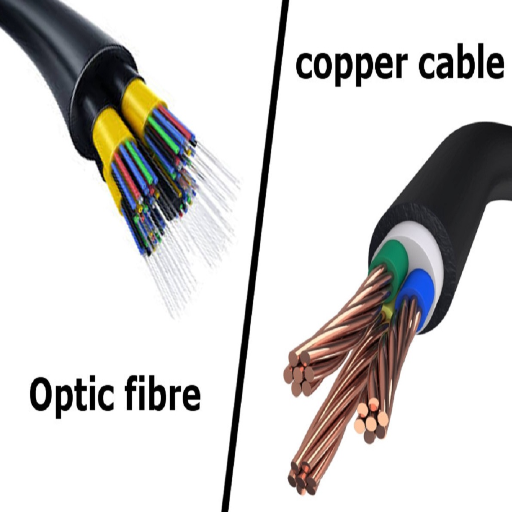
Comprehensive Comparison: Fiber Optic vs Copper Cables
| Feature | Fiber Optic | Copper Cable |
|---|---|---|
| Data Transmission Speed | 1 Gbps to 100+ Gbps | Up to 1 Gbps (limited) |
| Bandwidth Capacity | Virtually unlimited | Limited bandwidth |
| Maximum Distance | Up to 60+ miles without amplification | A few hundred meters |
| Signal Degradation | Minimal over long distances | Significant attenuation |
| EMI Resistance | Complete immunity | Susceptible to interference |
| Security | Difficult to tap, highly secure | Easy to intercept |
| Lifespan | 25-50 years | 10-15 years |
| Power Consumption | 85% less than copper networks | Higher power requirements |
| Initial Cost | $1-6 per foot | $0.20-0.50 per foot |
| Installation Complexity | Requires specialized skills | Simpler installation |
Speed and Bandwidth Advantages
Fiber optic technology provides exceptional speed and bandwidth capability, standing in contrast to copper wiring. Made to demand video streaming, cloud computing, and much online gaming, fiber optics can deliver speeds from 1 Gbps to 100 Gbps, depending on its configuration. Unlike copper cables, which experience signal degradation having larger distances in kilometers, fibre optics keep on staying consistent in the delivery of speed. Hence, though put forth in data transmission traditions for hardcore, fiber optics has presented uninterrupted high-speed data transmission.
Furthermore, fiber offers symmetrical upload and download speeds, which is important for businesses and individuals engaged in activities like video conferencing, uploading large files, and real-time data sharing. With technological advancement going further and further, terabits of data per second can be handled by a single fiber, increasing the requirements for high-definition and data-intensive services over commercial and residential environments. Such efficiency and capacity never fail to make fiber optics the backbone of current communication networks.
Higher Data Transmission Rates
Fiber optic technology is bringing a revolutionary change in the way data is transmitted, providing levels of speed beyond the capacity of copper wire infrastructure. While fiber optics supports data speeds of up to 1 Gbps for residential purposes, higher-end commercial systems can exceed 400 Gbps speeds, thus far outstepping the older technologies. Their generation: light is used, which ensures a more efficient and interference-free data transmission.
Moreover, WDM further aids in permitting numerous data streams to flow simultaneously down a fiber, effectively multiplying this fiber’s bandwidth potential. For example, experimental setups of current fibers allow carrying up to 100 Tbps over one single cable, while in reality, there is a huge scope for upgrading to fulfill future demands. Such pioneering innovations render fiber optics the basis of any high-performance next-generation communication network.
Resistance to Interference
Fiber optic cables resist EMI and are thus best deployed in environments of substantial electrical noise. Fiber optics works on light, unlike copper cables, which work on electric signals, and thus have no interference arising from local equipment, power line sources, or anything else disrupted in communication.
Fiber optic cable lines also offer more security against data breaches. Since signals over fiber cables cannot be intercepted through electromagnetic eavesdropping, thereby minimizing the possibility of signal theft for any critical applications, the integrity of the data remains intact.
Reports show that modern fiber optic portfolios are best suited to harsh environmental conditions. They continue to do well even when exposed to abnormal weather conditions or temperature fluctuations, thereby reinforcing their reliability. According to research, fiber optics can operate stably over 100 km or so without any signal amplification in a controlled environment, which proves its robustness and suitability for long-distance communication. Fiber optics resists interference strongly, making it indispensable for industrial sectors that require a high degree of precision and reliability, such as the healthcare, finance, and national security sectors.
Cost Analysis: Investment vs. Long-term Value
Initial Investment Breakdown
Fiber Optic Installation Costs:
- Material cost: $1 to $6 per foot
- Installation cost: $18,000 to $30,000 per mile
- Requires specialized labor and equipment
- Higher upfront investment
Copper Cable Installation Costs:
- Material cost: $0.20 to $0.50 per foot
- Lower installation complexity
- Standard tools and skills required
- Lower initial investment
Long-term Value Proposition
However, fiber optics yields far greater long-term savings, so its initial cost is more than justified. They require very little maintenance and last longer, both in terms of physical durability and operations. In addition, since fiber optics consumes less power than copper systems, its operational costs become lower with time.
On the whole, fiber optics demands greater upfront capital, but based on its performance, reliability, and scalability, the cable system is the best choice for larger and future-proofed networks. Copper cabling would be suitable for short-term or small-scale projects for cost-saving, but it will not stand the same kind of demand for advanced connectivity that needs to be laid out in these environments.
Durability and Longevity Comparison
Fiber optic cables are more resilient and durable than other cables. Fiber optics is simply glass or plastic, which does not corrode and has virtually no tolerance for temperature changes or electromagnetic interference. At the very least, fiber optic cables can survive for between 25 and 50 years without any relative degradation, which means these would hardly ever need replacement, thus reducing costly expenses over time.
On the other hand, copper cables, while sturdy for certain applications, tend to wear away with time. Exposure to moisture, high temperatures, and the like serves to allow electromagnetic interferences to make their way into the copper cabling, thereby disturbing and degrading them at a reduced efficiency, estimated to last 10-15 years with normal operations for such a condition. Due to inherent material properties, copper is prone to environmental stressors, increasing maintenance and replacement costs.
Studies have shown the ever-increasing preference for fiber optics for infrastructure projects, based on the patient-level benefits. For example, industries of telecommunications and data centers increasingly select fiber optic cables for performances that span several decades while reserving copper cabling for short-term or significantly subpar use instances. Fiber optics investment yields reliability and shades ecological and financial loading due to frequent upgrades.
Installation and Maintenance Considerations
Being an installation process for fiber optic cables, every little detail counts for utmost performance and warranty. Typically, install fiber optics through underground conduits, aerial routes, or wherever buildings provide an alternate route. Much installation requires fairly specialized equipment and higher-level technicians. Proper cable management and installation will warrant the least signal loss and further efficiency by avoiding excessive bending or tensile pulling.
Unlike traditional copper cables, in many cases, maintenance is rarely done on fiber optics, though regular inspections keep the system in excellent condition. Studies indicate fiber optic cable life is more than 25 years on average, rendering it a cost-efficient pick for long-term projects. Another technology leap has been the implementation of automated monitoring systems, thus making fault detection or attenuation real-time, hence contributing to reducing downtime.
Data from infrastructure projects has featured bandwidth demands reaching 100 Gbps and beyond, thus perfect for future-proofing networks with fiber optics. With lower signal degradation and resistance to electromagnetic interference, fiber optics outperforms copper cables in reliability and scalability, thereby requiring fewer maintenance interventions and lower life-cycle costs. Getting fiber optic systems right at installation and exploiting modern means for their upkeep will give an unmatched value for their whole operational life.
Key Advantages of Fiber Optic Technology
🚀 High Speed and Bandwidth Support
Fiber optics has basically limitless speeds for data transfer. Theoretically, this allows a user to enjoy download speeds of 1 Gbps or higher in many installations. Each channel with such incredible bandwidth ensures performance is maintained constantly, even when the network is heavily loaded.
📡 Longer Distance of Transmission
Unlike copper cables, fibre optic cables transmit data for longer distances without much attenuation. Wire sizes being large, some single-mode fiber links may even extend for 60 miles plus, making them apt for long-distance communication.
🛡️ EMI Immune
Fiber optics uses light signals and does not carry electrical signals; hence, it remains immune to EMI disturbances. This ensures data transmission with great stability and reliability, even in situations where there is heavy electrical or radio interference.
🔐 Improved Safety
Transmission through fiber optics is more difficult to tap compared to copper cables. This is particularly suitable for sensitive industries, like banking, military operations, and healthcare.
💪 Durability and Longevity
Fiber optic cables are waterproof and weatherproof under any climate and temperature. A sure 30 years’ lifespan may be given to the infrastructure with proper installation.
🌱 Green Technology
Fiber optics uses far less power compared to copper networks. A recent study proved that fiber could reduce network energy use by as much as 85%, thus advocating green communication technologies.
🔮 For Future Growth
Fiber optics is great to scale, as bandwidth is simply increased and the infrastructure remains unchanged. This makes for a highly future-proof solution to ever-growing technological demands.
Disadvantages and Challenges of Fiber Optics
💰 High Initial Installation Cost
The Largest Drawback in Fiber Optics Installation Is the High Upfront Cost. Fiber optic installation normally requires new infrastructure, such as laying cables underground, which can be very laborious and costly. Industry sources place prices anywhere between $18,000 and $30,000 per mile of fiber optic installation, while price varies with the terrain’s complexity and urban settings.
⚠️ Fragility and Durability Issues
Fiber optic cables, even while very efficient, are considered more fragile than copper cables. They can get damaged due to mishandling, bending beyond tolerance for fiber, and excessive environmental stress, such as flooding or construction activities, which raises the maintenance cost.
🏘️ Limited Availability in Rural Areas
Despite the potential, fiber Internet is still not widely available in rural or remote areas. Building infrastructure in less-populated regions is usually not economically viable for providers, thus leaving many communities to rely on older, slower technologies. A report in 2023 suggested that fiber connectivity might be made available to only about 40% to 50% of rural households in some countries.
🔧 Maintenance and Repair Complications
Fiber optics, while designed to have a lifetime, and hence maintenance can be tough to maintain. Locating and repairing a broken fiber needs special equipment and highly skilled technicians, thereby contributing to extended operational downtime and exorbitant repair costs.
🌪️ Vulnerability to Physical Damage
Fiber optic networks are susceptible to disruptions brought by severe weather conditions or accidental damage inflicted during construction projects. Unlike copper wires that might be able to withstand harsher handling, fiber optic cables demand a delicate treatment, which consequently amplifies the risks in long-term deployments.
⚡ Limited Power Transmission Option
Cannot transmit electrical power by itself; moreover, it requires additional infrastructure for powering the device.
When to Choose Fiber Optic Cable
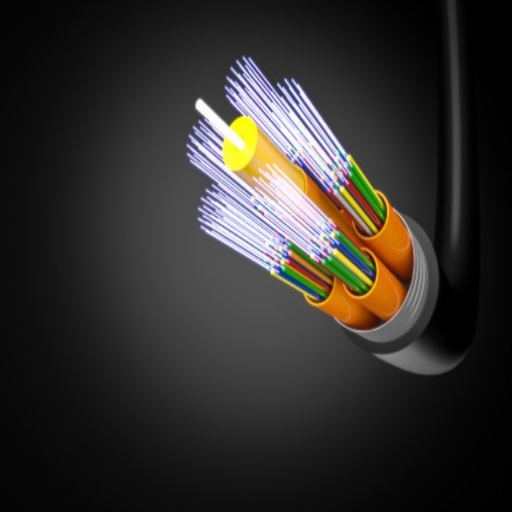
Fiber-optic cable installation is ideally suited where speed and top reliability are the requirements for the internet or data communication. The other end includes businesses, institutions, or homes that want sustained performance when video conferencing, cloud computing, or streaming HD content. Fiber also becomes a perfect choice when long-distance communication or negligible signal interference is a key consideration. As far as bandwidth and future scalability are considered, fiber optic cable stands as the best choice.
🚀 Future Trends in Fiber Optics Technology
Fiber optics technology is aimed at improving speed, capacity, reliability, and maintainable cost structures. One such new evolution revolves around the 5G networking structure, where fiber optics is responsible for providing ultra-fast and low-latency connectivity. Security and encryption improvements for optical communication systems would also include improvements in optical encryption based on wavelength-division multiplexing (WDM), whilst improvements in WDM are yet to fulfill their promise in attaining efficiency in the transmission of data. WDM systems, being capable of supporting high bandwidth, are now serving businesses and consumers for their ever-increasing data needs.
There is, of course, a general trend by which FTTH installations expand, with the growing need for high-speed internet in urban and rural areas. And with integration into AI and machine learning, network management and fault detection processes can be optimized for a smooth user experience. Making ways to make fiber optic works more durable and sustainable are the innovations in bend-insensitive fiber and eco-friendly materials, thereby making the future for fiber optics to remain the necklace of disunity at the global level.
Key Future Developments:
-
- 5G Network Integration: Ultra-fast, low-latency connectivity
- Enhanced Security: Advanced optical encryption systems
- FTTH Expansion: Fiber-to-the-home installations growing rapidly
- AI Integration: Smart network management and automated fault detection
- Sustainable Materials: Eco-friendly and bend-insensitive fiber innovations
Final Thoughts on Fiber Optics vs. Copper
In my opinion, fiber optics is the clear selection when it comes to modern-day connectivity needs. Speed and reliability are factors in its favor, including scalability, making it much better suited for today’s demanding, high-bandwidth applications. Copper still wins for shorter, less-demanding arrangements, although high-level data transmission lies ahead with the very end of the fiber optic technology.
Bottom Line: While fiber optics requires a higher initial investment, its superior performance, longevity, and future-proofing capabilities make it the optimal choice for businesses and individuals seeking reliable, high-speed connectivity. For organizations planning long-term infrastructure investments, fiber optics offers unmatched value and positions them for future technological demands.
Reference Sources
“An Enhanced Advanced Encryption Standard (EAES) Algorithm for Secure Fiber Optic Communication”
“Non-Destructive Fiber-Optic Sensor System for the Measurement of Speed in Road Traffic”
Frequently Asked Questions (FAQs)
Why are fiber optic cables preferred over copper?
The fiber optic cable has several advantages over copper wire: greater bandwidth, longer distances of transmission with lesser loss, and immunity to electromagnetic interference. This makes fiber optic cable suitable for data networks, especially in places with high electronic noise.
What problems do optical fiber cables have?
Fiber optic cables offer a whole set of advantages, but they also face a few disadvantages. The first of these is the high initial installation costs, which also require special test equipment for maintenance. Though fiber optic cables are more fragile compared to copper cables, which means careful handling during installation is necessary.
What are the differences between fiber optics and copper wire?
Fiber optics offers the best advantages in terms of speed and bandwidth when compared to copper wires. Fiber optic cables can transmit more data for greater distances without degradation, while copper is limited by distance and bandwidth limitations.
What kinds of fiber are used in fiber optic cables?
These two main types of fiber used in fiber optic cables are single-mode and multimode. Single-mode fiber has a smaller core for long-distance communication, while for short distances, multimode fiber is used because the core is bigger. Both types have their own sets of advantages and applications.
Are fiber optic cables affected by electromagnetic interference?
Let’s focus on electromagnetic interference first. Fiber optic cables are immune to it, which is the major advantage over copper cables. This makes data transmission more reliable in cases where electromagnetic radiation could hamper signals; hence, fiber optic cables are best suited for a variety of applications.
What are the advantages of using fiber optic cables in data networking?
In data networking, fiber optic cables mean faster speeds, higher bandwidth, and the ability to transmit data over longer distances without loss. Their resistance towards environmental factors affecting copper cables also increases the range of applications for these cables.
What is the difference between single-mode fiber and multimode fiber?
Single-mode and multimode differ primarily in the core size and light propagation. A smaller core lets light go one way only in single-mode fiber, which is suitable over long distances. On the other hand, multimode fiber has a larger core that can allow more than one mode of light and is suitable for short distances with low bandwidth applications.
Can fiber optics replace copper cable?
Yes, fiber optic cables can replace copper cables on many occasions, particularly where greater bandwidth and longer distances of transmission are being sought. Fiber optic cables weigh highly in terms of first-time installation, but in the long run, amount to savings and pave the way for better performance and such considerations in organizations.
Advantages and disadvantages of fiber optics?
Some advantages of fiber optics are that it is faster, has higher bandwidth, does not suffer an electromagnetic interference, and is cheaper in the long run. On the other hand, some disadvantages are its very high installation cost, need for specialized test equipment, and possible fragility during handling. It is these very pros and cons that one needs to weigh when choosing their network infrastructure.