






L'efficacité, la fiabilité et la sécurité de tout système électrique reposent fortement sur le choix approprié du câblage. L’un des aspects les plus importants est de connaître les différences entre les deux Câbles DC (Courant Direct) et les câbles AC (Courant alternatif).Leur but est de transmettre l'énergie électrique, mais ils diffèrent énormément en termes de conception, de fonctionnalité et d'application Cette pièce approfondira les différences entre les câbles DC et les câbles AC, mettant en lumière leurs caractéristiques distinctives, leurs fonctions et leurs détails incomparablement techniques Peu importe que vous soyez un ingénieur électricien ou un simple passionné qui souhaite comprendre la transmission de puissance à un niveau plus profond ; cet article fournira sûrement des informations essentielles qui vous aideront à prendre de meilleures décisions sur vos projets ou opérations.
Qu'est-ce qu'un Câble DC ?
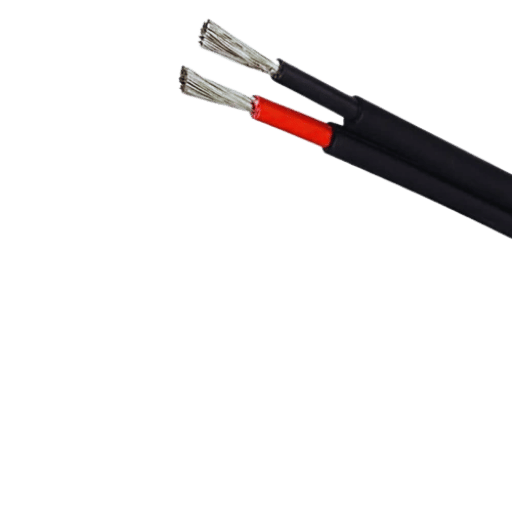
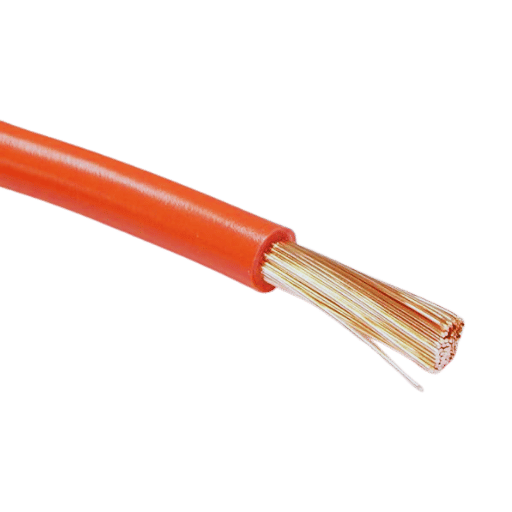
Un câble DC est un câble électrique conçu spécifiquement pour la transmission d'électricité en courant continu (CC). Contrairement au courant alternatif (AC), l'électricité en courant continu (CC) circule dans une direction constante. Par exemple, énergie solaire les systèmes, les véhicules électriques et les systèmes de stockage par batterie utilisent de tels dispositifs de distribution d'énergie, qui nécessitent des performances constantes. Ces câbles sont spécialement conçus pour prendre en compte les divers défis posés par l'utilisation de l'électricité CC, tels que la perte de puissance ou la faible fiabilité sur une période de temps dans différentes conditions environnementales.
Définition des câbles d'alimentation CC
DC câbles d'alimentation sont des types de câbles que l'on trouve spécialement pour transporter l'énergie électrique sous forme de courant continu (CC).De ce fait, ils sont appliqués dans des structures avec un flux de courant fixe et unidirectionnel, comme dans installations de panneaux solaires, (en), les véhicules électriques, et les systèmes de stockage de batterie Ces câbles sont construits pour garantir un transfert d’énergie fiable et efficace avec un minimum de gaspillage d’énergie ainsi qu’une protection contre les facteurs de stress environnementaux et opérationnels.
Caractéristiques clés du câble d'alimentation CC
Matériau conducteur
- Câbles d'alimentation électrique en cuivre d'emploi et l'aluminium comme matériaux préférés car ils ont une bonne conductivité et peuvent stocker efficacement l'électricité De plus, le cuivre est très efficace en raison de sa faible résistance au flux d'électricité et a donc une efficacité du schéma de performances électriques d'utilisation intensive.
Tension Évaluation
- Ces câbles ont mis en service ainsi que le support des systèmes de courant continu Dépendent de l'application et de l'industrie, les cotes de tension courantes d'utilisation à terme continu incluent la basse tension qui est inférieure à 1 kV, la moyenne tension de 1 36 kV, la haute tension supérieure à 36 kV.
Isolation
- Les matériaux de choc électrique à haute résistance de bonne qualité comprennent le polyéthylène (XLPE), le chlorure de polyvinyle (PVC), l'éthylène propylène caoutchouc EPR et d'autres qui empêchent l'humidité de pénétrer Ces matériaux sont très mécano-sensibles, par conséquent ils améliorent les mesures de sécurité en ce qui concerne les dommages aux câbles renforcés.
Température Résistance
- Dans des conditions environnementales extrêmes, ces câbles d'alimentation CC sont bien exposés à différentes plages de températures. Par exemple, certains câbles ont des performances nominales de -40 degrés centigrades pour la limite inférieure et de 90 ou plus pour la limite supérieure, selon l'application.
Flexibilité
- Certains manuels conçus pour les installations modernes sont équipés de câbles d'alimentation CC avec une construction flexible. Ils conviennent très bien à un environnement dynamique comme un système de véhicules électriques ou une unité de stockage de batteries portables où une flexion fréquente est requise.
Blindage
- Pour prévenir les interférences électromagnétiques (EMI) et les perturbations de courant dans les télécommunications ou les instruments, les câbles CC blindés comportent des couches de protection avancées pour permettre une circulation optimale du courant.
Résistance aux UV et aux intempéries
- Pour une utilisation en extérieur, les câbles d'alimentation CC sont généralement résistants aux rayons UV et sont spécialement conçus pour résister à la lumière du soleil, aux précipitations et à l'exposition environnementale pendant de longues périodes sans se détériorer.
Résistance chimique et pétrolière
- Dans les environnements industriels et à haut risque, la durée de vie de nombreux câbles d'alimentation CC est prolongée en raison de l'absence de gaines synthétiques qui résistent aux produits chimiques, aux huiles et aux acides.
Taille et section transversale
- Les câbles sont disponibles avec différentes tailles et sections transversales en fonction de la capacité de transport de courant nécessaire. Un câble avec une section transversale plus grande peut supporter des courants plus élevés avec très peu de perte de puissance.
Conformité aux normes
- Les câbles d'alimentation CC sont produits conformément aux exigences internationales telles que la CEI, l'UL ou l'ISO en ce qui concerne leur destination, leur qualité, leurs performances et leur portée.
Application dans l'alimentation électrique
Les câbles d'alimentation CC sont des composants indispensables pour l'efficacité et la fiabilité des systèmes d'alimentation. Leur utilisation s'étend à différentes industries et environnements où les câbles sont spécifiquement conçus pour fonctionner de manière optimale dans différentes conditions opérationnelles. Les détails des installations sont fournis ci-dessous :
Infrastructure de télécommunications
- L'application consiste à alimenter des stations de base de télécommunications et des centres de données.
- Communément utilisé pour les systèmes -48 V DC afin de fournir des réseaux de communication fiables.
- Configuré pour une chute de tension faible et une redondance pour améliorer la disponibilité.
Systèmes d'énergie renouvelable
- Connexion de panneaux photovoltaïques et d'onduleurs en énergie solaire installations.
- Les configurations solaires hors réseau et hybrides sont utilisées pour la compatibilité du stockage d'énergie.
- Isolé avec un matériau résistant aux UV, il est durable pour une utilisation dans l'exploitation de l'énergie solaire.
Véhicules électriques et stations de recharge
- Faciliter le transfert de l'alimentation CC aux bornes de recharge vers les batteries EV.
- Les câbles sont très durables et peuvent être utilisés dans des conditions difficiles.
- Conformité standard pour la recharge publique et résidentielle afin d'améliorer la sécurité.
Automatisation industrielle
- Fourniture d'énergie aux moteurs à courant continu, à la robotique et à d'autres systèmes de contrôle dans l'environnement de l'usine.
- Résistant à l'huile, aux contraintes mécaniques et aux températures élevées.
- Tolérant à la tension et au courant régulés spécifiques pour la stabilité dans le système.
Alimentations sans interruption (UPS)
- Connexion des batteries aux onduleurs des systèmes UPS pour une alimentation de secours critique.
- Fiable pendant les cycles de charge-décharge continus.
- Aide au maintien de l’efficacité opérationnelle en cas de panne du réseau.
Systèmes ferroviaires et métropolitains
- Application dans l'électronique embarquée, les dispositifs de signalisation et les systèmes de propulsion.
- Les vibrations, la charge de courant élevée et les facteurs météorologiques sont supportés par une construction grossière.
- Activer le fonctionnement à longue distance sans problèmes de sécurité ni dysfonctionnements.
Aérospatiale et Défense
- Employer des systèmes embarqués et des équipements de qualité militaire Assurer l'utilisation de câbles DC légers et durables.
- Fournir une distribution d'énergie dans les régions de haute altitude avec des températures extrêmes et des changements de pression incontrôlés.
- Conçu pour garantir des normes maximales de sécurité et de performance.
Ces divers exemples illustrent clairement comment les solutions d'alimentation modernes sont facilitées par l'utilisation de câbles d'alimentation CC et présentent le compromis entre efficacité et conformité en matière de sécurité.
Comment fonctionne un câble d'alimentation CC ?
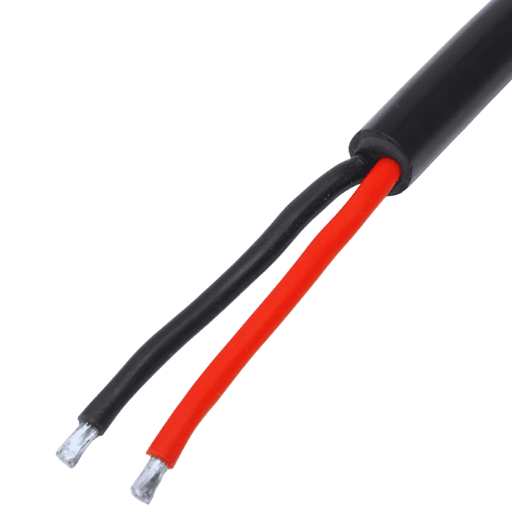
Le rôle du courant continu dans la transmission de puissance
Pour les applications qui nécessitent un flux d'énergie constant et ininterrompu, le courant continu (CC) est indispensable dans la transmission de puissance. Le courant continu diffère du courant alternatif (AC) dans le sens où il se déplace dans une seule direction, ce qui signifie qu'il est idéal pour les batteries, énergie solaire systèmes, et même circuits électroniques Les câbles d'alimentation CC transmettent un courant constant efficacement sur de courtes distances sans beaucoup d'énergie gaspillée, ce qui garantit un fonctionnement fiable des équipements connectés Cette fonctionnalité rend le courant continu particulièrement utile dans les applications qui ont des exigences élevées de précision et de stabilité.
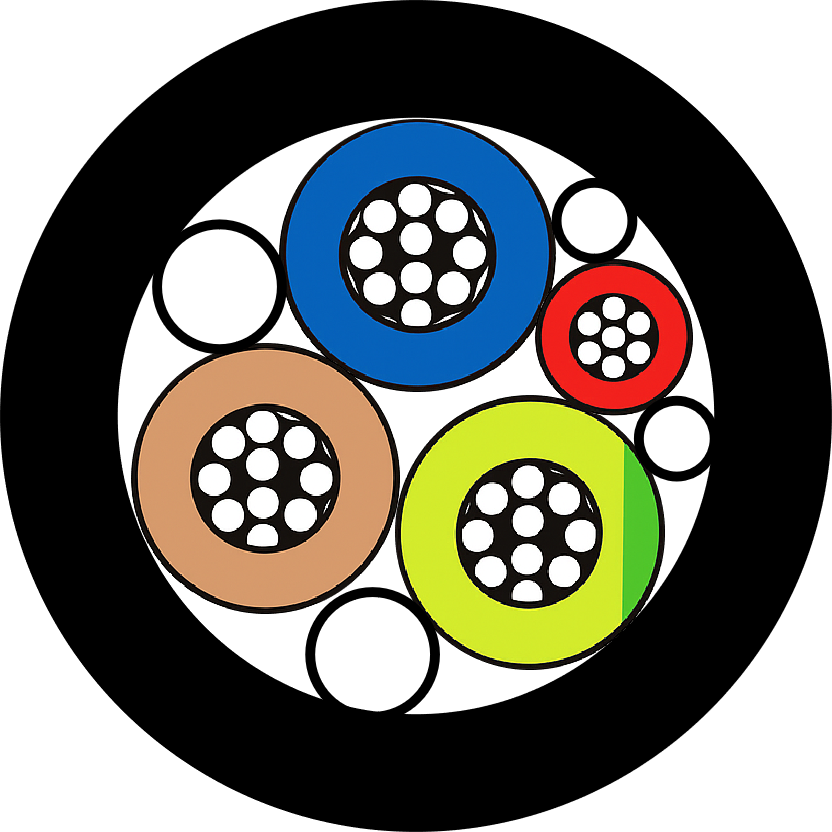
Composants d'un système de câbles CC
Un système de câble à courant continu se compose d'un certain nombre de pièces différentes mais tout aussi importantes qui travaillent ensemble pour fournir du courant continu de manière sûre et efficace. Ce sont :
Conducteurs
- Les conducteurs forment le noyau d'un système de câbles DC car ce sont les pièces qui transportent réellement le courant électrique Les matériaux connus pour les conducteurs sont l'aluminium et le cuivre en raison de leur fiabilité et de leur conductivité élevée Le cuivre, par exemple, a une conductivité d'environ 5,96 x 10^7 S/m (Siemens par mètre) et est largement utilisé dans l'industrie ainsi que dans les applications basse tension En comparaison, l'aluminium a une conductivité plus faible mais est bénéfique dans des scénarios particuliers car il est léger et peu coûteux.
Isolation
- L'isolation, dans ce cas, fait référence à la couche externe du thermoplastique qui encapsule le conducteur pour éviter les risques électriques pour l'utilisateur. Le polyéthylène (PE), le polyéthylène doublé (XLPE) et le chlorure de polyvinyle (PVC) offrent à la couche isolante une protection en raison de leur rigidité diélectrique et de leur résistance thermique. Le XLPE, par exemple, peut résister à plus de 90 degrés Celsius lors d'une utilisation normale, ce qui est favorable dans des conditions difficiles.
Blindage
- Le blindage est principalement effectué pour éviter les dysfonctionnements des câbles dus aux interférences dans les champs électromagnétiques (EMI) ainsi que pour atténuer toute émission parasite Les rubans tressés en cuivre et en aluminium sont le plus souvent appliqués Cette garantie de blindage que les gadgets électroniques résidents ne seront pas endommagés en raison de problèmes électrostatiques découlant du fonctionnement des câbles CC.
Veste extérieure
- L'enveloppe extérieure repousse l'humidité, les produits chimiques et les dommages physiques tout en protégeant le câble de l'humidité et des températures extrêmes. Pour des raisons courantes, les matériaux thermoplastiques tels que le PVC sont largement utilisés tandis que d'autres, comme l'élastomère thermoplastique (TPE) et les polymères plus spécialisés, sont utilisés dans des conditions plus extrêmes en raison de leur flexibilité et de leur robustesse accrues.
Connecteurs et terminaux
- Les connecteurs et les bornes créent la frontière entre le système ou l'appareil et le câble CC. La conception permet aux utilisateurs de connecter et de déconnecter facilement le conducteur tout en garantissant une faible résistance de contact et une fixation mécanique ferme. L'amélioration de la conception avec l'incorporation de surfaces de placage avec de l'or ou de l'étain améliore la conductivité électrique et la protection contre la corrosion.
Évaluation de la tension et des performances en aspect thermique
- La catégorisation des câbles CC est effectuée en fonction des tensions qu'ils peuvent gérer, qui peuvent aller de moins de 1 000 V aux systèmes à courant continu haute tension (HVDC) au-dessus de 100 kV. La conception thermique du système est également un facteur important car la surchauffe entraînera certainement une défaillance de l'isolation et, en fin de compte, une inefficacité du système. Les câbles CC modernes sont construits selon des spécifications qui offrent des marges suffisantes au-dessus des charges électriques et thermiques maximales prévues.
Ces composants garantissent une fonctionnalité économiquement viable et sûre des systèmes de câbles CC dans les centrales à énergie renouvelable, les télécommunications, les systèmes d'automatisation industrielle et d'autres domaines L'examen de chaque conception et choix de matériaux s'accompagnera d'un ensemble défini de limites opérationnelles, de conditions environnementales et d'exigences applicables en matière de normes électriques et mécaniques.
Différences entre les câbles courants AC et DC
Ce qui suit est un résumé de quelques différences plus nuancées entre les câbles AC (courant alternatif) et les câbles DC (courant continu) :
- La direction du flux de courant : Les câbles CC ont un courant circulant dans une direction constante, tandis que les câbles CA ont un courant alternatif, qui s'inverse périodiquement dans la direction.
- Niveau d'isolation : Les câbles CA ont généralement besoin d'une isolation pour les tensions alternatives, tandis que les câbles CC ont besoin d'une isolation spécifique afin de gérer une tension constante et des périodes d'ionisation prolongées.
- Conception du câble : Les câbles CC sont de conception plus simple et contiennent moins de matériau, ce qui leur permet d'être plus efficaces sur de longues distances que les câbles CA, qui ont un diamètre plus grand pour gérer le plus grand niveau de pertes résistives dues aux champs alternatifs.
- Utilisations : Les câbles CC sont utilisés dans les systèmes d'énergie renouvelable, de transport longue distance et de systèmes basés sur batterie, tandis que les câbles CA sont utilisés dans la distribution d'énergie résidentielle et urbaine.
Ces distinctions découlent des principes du fonctionnement de l'appareil et des contraintes technologiques posées pour chaque type de courant.
Quelles sont les différences entre les câbles CC et CA ?
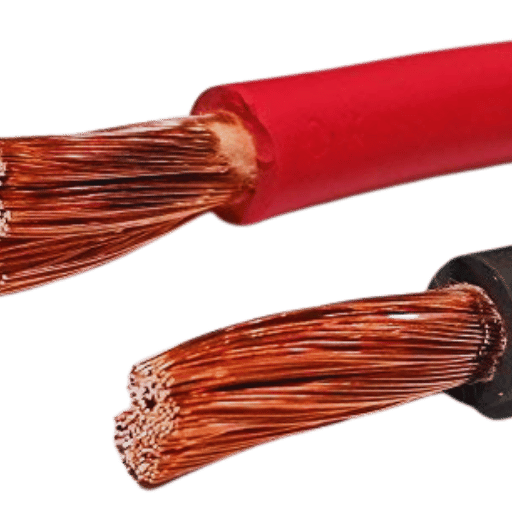
Différences structurelles dans les câbles d'alimentation
La différence de structure entre les câbles DC et AC provient de leur isolation et de leurs composants de construction :
- Isolation: Par rapport aux câbles CA, les câbles CC ont une isolation beaucoup plus épaisse car les niveaux de tension sont constants et réduiraient le risque de claquage diélectrique avec le temps Le courant alternatif fournit aux câbles CA des tensions de pointe qui nécessitent des niveaux d'isolation plus élevés.
- Conception du conducteur : Des conceptions plus simples de conducteurs sont typiques des câbles DC à cause de l'inexistence de l'effet de peau L'effet de peau est un phénomène par lequel le courant électrique est concentré sur la surface du conducteur Les câbles AC doivent être conçus en tenant compte de l'effet de peau et donc utiliser des conducteurs toronnés ou toute autre approche qui optimiserait le flux de courant.
- Exigences de blindage : Lors de la construction des câbles AC, un blindage beaucoup plus complexe est ajouté pour la gestion des champs électromagnétiques liés au courant alternatif Les câbles DC ont des exigences de blindage moins complexes en raison de l'absence de champs électromagnétiques alternatifs.
Les exigences relatives au blindage varient d'un type de câble à l'autre, ce qui permet de décrire les caractéristiques opérationnelles et les besoins de performance de chaque type de câble.
Utilisation du courant alternatif ou du courant continu dans les appareils électroniques
La distinction entre l'électricité AC et DC est généralement faite en fonction de l'efficacité de l'application, de la technologie qui lui est associée et des exigences de définition La puissance de transmission sur de longues distances est faite en utilisant l'électricité AC car elle peut être transformée à différents niveaux de tension à l'aide de transformateurs et parce qu'il y a moins de perte d'électricité DC, en revanche, est préférée dans les systèmes d'énergie renouvelable et l'électronique moderne comportant des applications basse tension et haute efficacité.
La norme de réseau électrique pour les ménages et les machines industrielles est l'électricité CA. Par conséquent, c'est ce qu'utilisent la plupart des appareils Les réfrigérateurs, les climatiseurs et les systèmes d'éclairage utilisent l'électricité CA car ils sont déjà compatibles avec l'infrastructure Cependant, les appareils électroniques portables plus petits équipés de smartphones, d'ordinateurs portables et de caméras utilisent le courant continu car il existe une exigence de niveaux de tension continus pour des performances optimales En raison du grand nombre d'appareils fonctionnant sur batterie disponibles sur le marché, l'électronique moderne s'est adaptée à l'utilisation de l'électricité CC.
L'intégration des systèmes AC et DC a été simplifiée en raison des développements de l'électronique de puissance et des convertisseurs Par exemple, des, énergie solaire les systèmes comportent des panneaux photovoltaïques qui captent l'énergie solaire et la convertissent en électricité à courant continu (CC), qui est ensuite convertie en courant alternatif (AC) pour un accès facile au réseau ou stockée dans des batteries en tant que DC. Comme d’autres technologies modernes, les centres de données et les véhicules électriques (VE) fonctionnent également avec une alimentation CC en raison de leur capacité à stocker l’énergie plus efficacement et à améliorer le contrôle.
Le stockage et la livraison d'énergie renouvelable sont un exemple solide de résultat qui tire de la valeur de son utilisation des systèmes CC ; ils donnent un avantage d'efficacité de 10 201TP3 T. De plus, la récente poussée dans l'adoption des protocoles de fourniture d'énergie USB illustre le mouvement vers la charge CC à haute puissance Ces changements signifient une redirection vers l'utilisation du DC dans les endroits où l'utilisation des ressources énergétiques renouvelables est essentielle. Cette manifestation est une manifestation claire de ce qui reste à venir. Bien que ce changement soit inévitable, l'équilibre et la synergie entre AC et DC continueront de créer l'avenir des systèmes électriques pour appareils électroniques.
Impact de la tension et du flux de courant
Le fonctionnement des systèmes électriques est soutenu par la tension et le flux de courant, qui définissent l'énergie fournie et consommée La tension montre le courant de motivation d'énergie potentielle à travers un circuit, alors que le courant est le taux de flux de charge. Des tensions plus importantes permettent une transmission de puissance plus efficace sur de longues distances à mesure que la perte d'énergie due à la résistance électrique est minimisée. D’un autre côté, une tension ou une puissance plus élevée peut générer beaucoup plus de chaleur, ce qui peut détériorer l’efficacité du système. Il est nécessaire de réguler à la fois la tension et le courant afin d’obtenir des performances optimales tout en garantissant la sécurité et la protection des composants et systèmes électroniques.
Comment choisir le bon câble d'alimentation CC ?

Comprendre les exigences de tension
Ma principale considération dans le choix du bon câble d'alimentation CC en tension réside dans les exigences de tension de mon système, car celles-ci ont un impact important sécurité système et compatibilité Il est essentiel de s'assurer qu'un câble ne va pas tomber en panne ou se dégrader en raison d'être sur-isolé par la tension maximale du circuit Je dois m'assurer que la chute de tension à cause de la résistance du câble est suffisamment faible pour que le système fonctionne correctement Connaître ces valeurs m'aide à sélectionner un câble qui minimise le gaspillage d'énergie et permet au système de fonctionner comme prévu.
Sélection du connecteur approprié
Tout en essayant de choisir le bon connecteur, prenez note de savoir s'il s'adapte à la fois à l'alimentation et à l'unité Vérifiez d'abord la taille et le type du connecteur car des connecteurs correspondants manquants peuvent entraîner de mauvaises connexions et/ou des blessures au dispositif Assurez-vous que les spécifications du connecteur incluent les niveaux de tension et de courant nécessaires de votre système Par ailleurs, il convient de prêter attention à la construction des connecteurs, car ceux qui ont une construction robuste contribuent à améliorer la fiabilité opérationnelle Il est préférable d'utiliser des connecteurs standardisés, si possible puisqu'ils facilitent la mise à niveau ou le remplacement des dispositifs de connexion.
Considérations pour le blindage et l'isolation
L'utilisation à la fois d'un blindage et d'une isolation efficaces est fondamentale pour réduire les interférences électromagnétiques (EMI) et permettre un transfert de puissance fluide dans les équipements électriques Le blindage fait référence à la protection externe des câbles avec d'autres matériaux conducteurs tels que des feuilles de cuivre ou d'aluminium qui peuvent bloquer les interférences EMI ou extérieures. Par exemple, les écrans en cuivre tressé peuvent offrir une couverture d'interférence supérieure à 951TP3 T pour les applications haute fréquence.
Avec l'isolation, la protection contre les courts-circuits en tandem avec la contamination de l'environnement par l'humidité, la chaleur ou l'abrasion sont gardés Les matériaux isolants sont considérés comme du chlorure de polyvinyle (PVC) parce qu'ils sont bon marché et offrent une protection contre la chaleur, ainsi que le polyéthylène, qui est connu pour avoir une grande rigidité diélectrique Les câbles à haute température peuvent être isolés avec des matériaux en polyfluoroéthylène car ceux-ci peuvent supporter des températures supérieures à 200 degrés Celsius.
Lors du choix du bouclier et des matériaux isolants, les environs où il sera utilisé, la fonctionnalité du système et son prix doivent tous être pris en compte de manière logique. Les tests industriels tels que ceux de la Commission électrotechnique internationale (CEI) ou des Underwriters Laboratories (UL) doivent être utilisés pour vérifier les normes de sécurité et s'assurer qu'ils fonctionnent comme prévu. Ces mesures, une fois mises en œuvre, amélioreront la fiabilité et la durée de vie du système.
Quelles sont les applications courantes pour les câbles CC ?

Utilisation dans les installations de panneaux solaires
Les câbles à courant continu servent un objectif important dans les configurations de panneaux solaires car ils transportent le courant continu produit des panneaux vers l'onduleur, ce qui le transforme en courant alternatif, qui peut être utilisé efficacement. Ces câbles sont spécialement conçus pour supporter des conditions météorologiques difficiles, telles que la lumière UV et les températures fluctuantes. Ils sont fréquemment utilisés pour interconnecter les panneaux solaires en série ou en parallèle et également pour connecter le panneau solaire à d'autres éléments du système. Le transfert fiable d'énergie et la perte de puissance réduite, ainsi que la flexibilité nécessaire pour supporter l'usure au fil du temps, rendent les câbles à courant continu de qualité durables, ce qui est une exigence pour le fonctionnement fiable des systèmes photovoltaïques.
Implémentation dans les moniteurs et les appareils électroniques
Les câbles CC sont essentiels dans les moniteurs et les appareils électroniques modernes en raison de leur alimentation précise dans les circuits internes. Ils sont considérés comme un sous-système de l'alimentation électrique et permettent aux composants d'alimentation de maintenir le courant nécessaire aux délicates opérations électroniques. Les câbles CC avancés sont souvent équipés de boucliers qui minimisent les interférences électromagnétiques (EMI) pour une meilleure clarté du signal et des performances de l'appareil.
À titre d'exemple, les moniteurs LED utilisent des systèmes de rétroéclairage, qui nécessitent toujours une alimentation suffisante pour leur fonctionnement. D'autres, dotés de câbles CC à capacité de transport de courant, permettent d'alimenter le rétroéclairage des moniteurs LED. Dans les ordinateurs portables et les appareils intelligents, des câbles CC portables durables et légers sont utilisés pour l'alimentation efficace d'appareils électroniques plus petits.
Les rapports de recherche ont indiqué que les câbles CC de qualité dans les mêmes conditions de fonctionnement avec des câbles standard ont moins de perte de puissance de 15 à 25 pour cent. Ces progrès sont nécessaires pour améliorer l'efficacité énergétique et augmenter la durée de vie des appareils électroniques. Des performances et une fiabilité maximales sont obtenues en employant des câbles CC appropriés conformes aux normes internationales telles que RoHS et UL accréditées pour la plupart des applications.
Rôle dans les connexions des haut-parleurs
Les câbles CC sont cruciaux dans les connexions des haut-parleurs puisqu'ils fournissent de l'électricité pour assurer des performances audio constantes Ils aident à maintenir la force du signal et à diminuer la distorsion tout en améliorant la qualité sonore Avec un blindage adéquat, les câbles CC fournissent une sortie audio claire en réduisant les interférences Pour la longévité des systèmes de haut-parleurs et leur fonctionnalité optimale, il est essentiel de choisir des câbles certifiés standard.
Foire aux questions (FAQ)
Q : Quelle est la disparité entre les câbles CC et les câbles CA ?
R : La distinction principale réside dans le sens d'écoulement de l'énergie La direction de circulation du courant électrique à travers les fils diffère principalement entre le ‘ courant continu ’ et le ‘ courant alternatif ’. Les câbles CC transportent le courant dans un flux dans une seule direction. Cependant, le flux de courant à travers les câbles CA est réversible. Cette différence fondamentale influence leur utilisation dans plusieurs systèmes et appareils électriques.
Q : Les câbles CC et les cordons d'alimentation sont-ils identiques ?
R : Non. Bien que certains cordons puissent être conçus pour transmettre de l'énergie, ces cordons ne remplissent pas la fonction de câbles CC. Les cordons d'alimentation ont la possibilité d'être conçus pour le courant alternatif ou continu en fonction du produit spécifique et de son utilisation prévue. Les câbles CC servent à transmettre l'énergie du courant continu qui est normalement utilisée dans les tâches opérationnelles basse tension.
Q : Quelle est la connexion entre les câbles DC et les câbles USB ?
R : Les câbles USB sont un type spécifique de câble CC fabriqué dans le but de transférer des données et d'alimenter des appareils tels que des ordinateurs et des téléphones mobiles. Ils transmettent généralement une puissance d'environ 5 V CC, mais peuvent être augmentés avec les normes modernes. Les deux sont des types de câbles qui conduisent l'alimentation de manière unidirectionnelle, mais ont l'avantage supplémentaire de transférer des données depuis et vers des appareils.
Q : Que représente la mesure de l'ensemble de 2,1 mm x 5,5 mm sur les câbles CC ?
R : Ces mesures sont pertinentes par rapport aux spécifications de la fiche CC Le diamètre d'une broche est habituellement d'environ 2,1 mm, tandis que le diamètre extérieur du barillet est de 5,5 mm Cette plage s'applique à divers connecteurs d'alimentation CC en courant continu et contribue à faciliter l'interopérabilité technique entre les sources d'alimentation et les équipements.
Q : Quelle est la différence entre un câble CC mâle-mâle et un câble CC mâle-femelle ?
R : Les deux extrémités d'un câble CC mâle-mâle ont une broche de connecteur, de sorte que ceux-ci sont généralement appelés câbles d'extension Les câbles mâle-femelle ont une extrémité avec une broche et une autre extrémité avec une prise, et ils sont généralement utilisés pour brancher les appareils sur une source d'alimentation La situation régissant les connecteurs spécifiques des appareils que vous souhaitez interconnecter dicter dictera lequel utiliser.
Q : Quel est l'impact de la jauge de fil (AWG) sur les performances des câbles CC ?
R : La capacité et la résistance actuelles sont deux caractéristiques critiques d'un câble qui est affecté par son fil jauge mesurée en AWG. à mesure que le cadran baisse sur le numéro de jauge, l'épaisseur augmente, ce qui signifie que le fil aura la capacité de conduire des courants plus élevés avec une résistance moindre. Cela devient la principale préoccupation des câbles CC dans certains projets, tels que les systèmes automobiles et solaires, où la chute de tension doit être atténuée sur de plus longues distances.
Q : Est-il possible d'utiliser un câble CC dans une application CA et vice versa ?
R : Bien que les câbles AC et DC puissent sembler similaires, il n'est pas sûr de les éteindre Chaque câble fonctionne pour un flux de courant unique et il existe souvent un niveau distinct de caractéristiques d'isolation et de sécurité ; ces deux types doivent être considérés comme deux produits différents L'utilisation d'un mauvais type de câble créera un manque d'efficacité, des dispositifs cassés et des problèmes de sécurité Utilisez toujours des câbles spécialement conçus pour votre application, qu'il s'agisse de courant alternatif ou continu.
Sources de référence
1. L'analyse du comportement à décharge partielle et de son vieillissement accéléré sous une dynamisation répétitive des câbles CC et une inversion de polarité d'alimentation en tension
- Auteurs : G. Montanari, R. Oliveti, L. Manai
- Journal: Transactions IEEE sur la livraison d'électricité
- Date de publication : 1er avril 2021
- Jeton de citation : (Montanari et coll., 2021, pp. 578-586)
- Résumé: Cet article examine l'impact des tensions temporelles fournies sur les câbles à courant continu (CC), en particulier les décharges partielles (PD) qui peuvent potentiellement provoquer une défaillance de l'isolation. Les auteurs montrent que lors de l'excitation et de l'inversion de polarité de tension, de graves phénomènes de dégradation se produisent qui entraînent des dommages cumulatifs qui menacent la durée de vie du câble. Cet article estime les dommages produits par la décharge PD et tente de concevoir des modèles appropriés de vieillissement et de durée de vie résiduelle. Une observation étonnante de l’étude était que même quelques opérations par jour pourraient causer des dommages majeurs.
2 Matériaux d'isolation à haute température pour l'isolation des câbles CC (partie I : charge d'espace et conduction
- Auteurs : Mohamadreza Arab Baferani, Yudi Purnadi, Mohammad Zareei
- Journal: Transactions IEEE sur diélectrique et isolation électrique
- Date de publication : 1er février 2021
- Jeton de citation : (Baferani et al., 2021, pp. 223230)
- Résumé: Ce document détaille les investigations préliminaires concernant le développement de matériaux diélectriques à haute température destinés à être utilisés avec des câbles DC Les auteurs analysent les phénomènes de charge d'espace et la conductivité électrique pour différents matériaux sous différents environnements Les résultats suggèrent que la FEP a une accumulation de charge d'espace exceptionnellement faible, tandis que les PI et PEEK ont une mobilité contrôlée par piège significativement plus faible en raison de leurs caractéristiques structurelles particulières Cette étude est destinée à guider d'autres études portant sur les matériaux à haute température destinés aux applications dc.
3. Matériaux d'isolation à haute température pour l'isolation des câbles CC Partie III : Dégradation et dégradation de surface
- Auteurs : Chuanyang Li et coll.
- Journal: Transactions IEEE sur diélectrique et isolation électrique
- Date de Publication: 1er février 2021
- Jeton de citation : (Li et al., 2021, pp. 24027)
- Résumé: Cet article couvre l'étude de la dégradation et de la rupture de surface des matériaux d'isolation à haute température Les résultats obtenus montrent que le PTFE et le FEP conservent leurs structures stables en CF lors des essais d'érosion par arc PI, par contre, possède la meilleure propriété d'érosion anti-arc de surface à température ambiante Les auteurs présentent des explications pour la dégradation et la caractérisation par vieillissement de ces matériaux pour l'isolation des câbles DC.
4. Simulation et conception d'un accessoire de terminal de câble CC 500 kV à l'aide de composites à microsphères à varistance ZnO
- Auteur: Xiaolei Zhao et autres,
- Publié dans: Transactions IEEE sur diélectrique et isolation électrique
- Date de publication : 1er février 2020
- Jeton de citation: (Zhao et coll., 2020, pp. 10-16)
- Résumé: Dans ce travail, les auteurs ont conçu et simulé un accessoire de borne de câble DC incorporant des composites de microsphères de varistance ZnO Les auteurs effectuent des simulations par éléments finis pour étudier la distribution du champ électrique pour différents gradients de température Les résultats montrent que la conductivité non linéaire du matériau améliore l'effet de gradation du champ électrique, ce qui est très important pour la conception et le développement d'accessoires de câble CC haute tension.
5. Caractérisation électrique d'un nouveau mélange de copolymères réticulés pour l'isolation des câbles CC
- Auteurs : S. Kumara et coll.
- Journal: Énergies
- Date de publication: 19 mars 2020
- Citation: (Kumara et coll., 2020)
- Résumé: Dans ce travail, la caractérisation électrique d'un nouveau mélange de copolymères réticulés conçu pour l'isolation des câbles CC haute tension est présentée. L'étude juxtapose les propriétés électriques du nouveau matériau en ce qui concerne les matériaux isolants conventionnels LDPE et XLPE. Les résultats indiquent que le mélange de copolymères a une conductivité CC similaire et une tangente de perte beaucoup plus faible, ce qui le rend adapté comme milieu isolant pour les applications CC.