







Grounding the subpanel is important for both safety and functionality of your installation. It is a process that should be done carefully and adequately. Whether you are trying to do it yourself or want to attain more education on the matter, it is paramount that proper grounding of the subpanel be observed to make electric and home safety issues irrelevant. This article seeks to help you understand the important features of the construction of a subpanel grounding system, thereby simplifying the concepts involved. Besides, you will be able to make out other factors such as the main purpose of grounding and the pitfalls and traps that quite commonly catch most inexperienced doers. Feel free to go ahead and read through the process on how to ground a subpanel in a manner that is appropriate and safe.
Understanding the Grounding Sub Panel
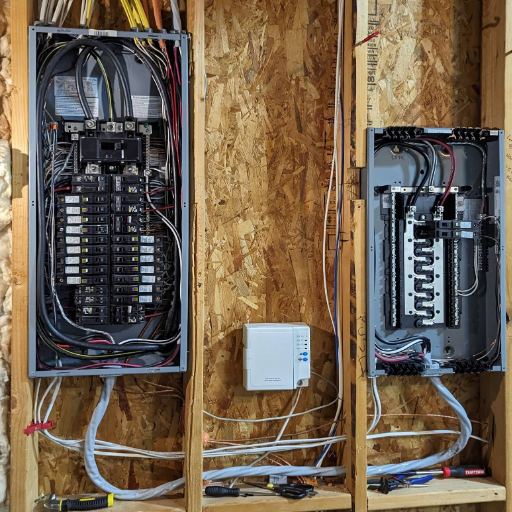
The installation of a ground bar in the box, separately connected to the main panel’s ground bar, is the answer to the question of how to ground a subpanel, as wrong grounding endangers the inhabitants of the house. Grounding in these areas helps protect the equipment or persons using the equipment from electric shock and mitigates the dangers of a short circuit that may cause fire or explosion. Ground bus rods in each subpanel must be fixed as they are made to ground only. The most important thing to remember when correcting a subpanel is not uniting the ground and neutral wires. The codes or rules and laws of installation are there for a reason, so make sure you check them. For more help, hiring a qualified electrical professional is advocated.
What is a Sub Panel?
Coming off of the main panel, secondary or distribution panels tend to be very common since they uniquely share electrical circuits and energies all the way to different portions of a dwelling. They are often provided in order to load-share the main panel, improve circuits in the building, or to bring power more efficiently to a specific part of a building, such as a garage, basement, or workshop.
Subpanels are attached in such a manner that they are connected to the main panel straight through a feeder line, which involves two hot wires, a neutral wire, and a ground wire as needed. The size of the sub-panels in this case will be determined by the ampacity of the board; as a rule, this ranges between 60 and 200 amps; for instance, you can have a 100-amp panel in the household with a moderate to high electrical load.
One primary component of subpanels is that they are powered from the main panel but do not share circuits. Breakers are provided for the specified regions, which assist with shutting off power in that particular area only, facilitating repairs or expansion of system wiring. It is important that the grounding and the neutral wire be separated from each other inside the subpanel to eliminate identified hazards.
Additional enhancement in energy and effort consumption in bigger houses is mostly directed towards the subpanels. Instead of running long stretches of conductors, power circuits are placed as close as possible to the electrical load to minimize voltage reduction and enhance the system’s performance. When fitting a subscreen, it is very important to make sure any feeder cables, circuits, and circuit protection devices employed are as per the prevailing local building as well as electrical stipulations. To be safe always and where installations are complicated, always inquire how to ground sub-panel wiring from competent electricians.
Importance of Grounding in Electrical Systems
Grounding all electrical systems is an important factor because it enhances safety and ensures the system works better. By making contact with the physical ground (the earth), this is termed grounding, which functions as a means by which circuit stray current or electric equipment current can safely be diverted into the ground. In doing so, the chances of electric shock, fire, and appliance failure due to a power surge are greatly diminished.
Grounding, among other things, helps in enhancing the stability of the voltage within the electrical system. Such as by providing fair sharing of the electrical energy in the system when the voltage is high, such that excess voltage does not destroy any devices in the circuit. For example, based on statistics, lightning produces surges reaching several hundred volts and as high as several hundred million volts. In such a case, the system should be properly grounded so as to neutralize the accumulated immense energy, thus protecting both the system and the people involved.
Key Benefits of Proper Grounding
- Reduces equipment failure tendency by approximately 60%
- Provides protection against electrical surges and lightning strikes
- Ensures electrical code compliance and system reliability
- Prevents costly repairs and replacements
What is more, we use the materials used in these grounding systems, which are copper and galvanized steel, which are indeed highly conductive and have a strong composite index, which means not very easily corroded by chemical contacts. They are also tested to confirm that they will work just as well under the harshest of conditions. For example, it has been with the help of various earlier conducted experiments that it has been established that properly grounded systems reduce equipment failure tendency to about 60% and so indirectly, save the users from their bad effects, such as costly repairs and replacements.
Grounding is also important for electrical code compliance, which can otherwise be compromised by improper installation. For example, the NEC requires specific constructions of grounded conductors, connections, as well as bonding systems. By observing these codes, operators limit their exposure and enhance the consistency of their electrical systems in the long term.
It is of utmost importance that individuals consider grounding when designing electrical installations in homes and commercial centers, as this will boost the electrical system’s safety, performance, and durability to a great extent.
Overview of Equipment Grounding
Equipment grounding is considered crucial as it promotes the safety of any electrical system by providing an efficient path to the fault currents, which would otherwise lead to electrocution hazards. It is very important to ensure that it’s possible to equip a system and a person in a way that would not cause them harm from shocks or fires, or protection from very high currents. Grounding, in this context, is a way of eliminating the risk of collection of unwanted voltage levels in surrounding bulky metal structures – elements like tools, within cabinets, or even industrial equipment that are finished with metallic walls.
The National ELECTRICAL Code provides instructions on earthing – grounding – including materials and methods of installation that ought to be employed. As an example, all conductors used for grounding are required to be designed to withstand the fault currents without heating in relation to the size of the system. Further, all such joins need to be made in a manner that is accepted, which can be through the use of clips, ground bars, or action fittings that shall offer non-moving, impossible to corrode joints.
Apart from conventional systems, there are modern modifications such as ground fault circuit interrupters that can detect and guard against even minor leakage currents by instantaneously cutting off the circuit, thereby reducing risk.
This is rhetoric, and it indeed turns into practice, especially in places where electric instability tends to occur. For example, such areas for industrial purposes, utilizing heavy electrical appliances, or facing incessant thunderstorm occurrences. Regular maintenance of a grounding system is beneficial in obtaining clear operational efficiency, time activity, and productivity standards, thereby enhancing small electrical systems to large electrical systems regarding operational safety and efficacy.
Components of a Sub Panel
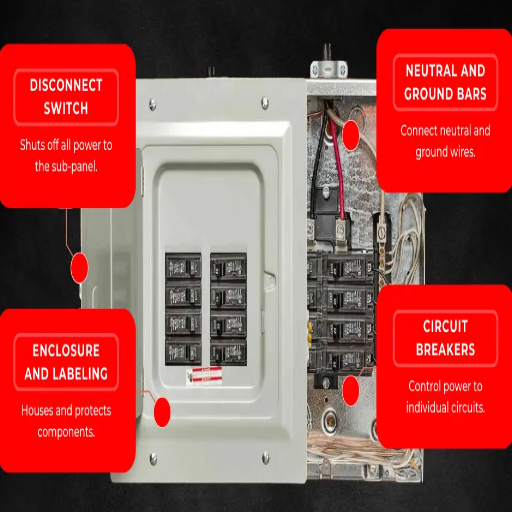
The following are usually found in a sub-panel:
| Component | Function | Description |
|---|---|---|
| Main breaker (if present) | Power control | A breaker that cuts off the flow of electricity to the sub-panel and may be used in the event of danger |
| Bus-bars | Power distribution | A system for carrying power and distribution to the customers of the circuits. Commonly, there are vital neutral and ground bus bars |
| Breakers | Circuit protection | Fuses are provided within a substation for each circuit’s protection against its overloading or any fault |
| Enclosure | Safety housing | A protective housing for containing all constituent parts of the sub-panel for damage avoidance and safety |
| Main feeder conductors | Power connection | These connect the sub-panel to the main panel to draw electrical power |
The components above perform a safe and effective distribution of power to specific places and or equipment.
Key Parts of a Sub Panel
Neutral and Ground Bars
One more component of the subpanel ensures proper connection as well. The neutral bar carries the current back, while the ground bar offers protection since it is linked to the house’s grounding system. It is important to isolate neutrals and grounds in the subpanel to avoid creating a hazardous ground fault.
Circuit Breakers
Circuit Breakers that are installed in the subpanel for controlling and protecting circuits are available in capacities that are usually measured in Amps. For example, for the most common domestic circuits, there can be 15 Amp or 20 Amp breakers, whereas other appliances will need bigger breakers like 30 Amp or 50-amp. Breakers of these types automatically switch off when overloading of the circuits or other electrical anomalies are faced, thereby helping in avoiding fire hazards.
Components of a subpanel include a breaker panel case, neutral bar, and ground bar. Clear separation of busbars within a subpanel is important in avoiding electrical problems. Crash or power outages between systems are possible incidence to mixed busbars in a subpanel. Always check for the separation of busbars when installing a new subpanel.
Enclosure
To ensure the enclosure is long-lasting and has external protection, the sub-panel sunflower enclosure is designed using suitable weatherproof materials like steel. Ending up with an indoor enclosure design is a furniture requirements that have provision for grasping and fastening, while in outdoor cases they must have weather-resistant covers of gaskets and locks to prevent water, soil, etc.
Feeder Wires
Feeder wires enable transfer of electricity from the enclosed panel to the main one. They are made up of various separate conductors comprising, among others, hot wires, standby, or considered as neutral and ground. It is the capacity or ampacity of the additional panel that will determine what size wires for the feeder will be used there. For instance, a sub panel with 100 amps in it usually needs a size 4-gauge copper built wire or any other 2 size 2-gauge aluminum wire.
These parts facilitate the smooth functionality of the sub panels by enabling the distribution of electrical power within safe limits in accordance with the respective electrical codes. The practice of fitting and servicing the devices and circuits of the aforementioned assemblies will aid in easily grounding, how to ground a subpanel, and avoiding circuitry failures.
Understanding the Main Lug and Equipment Ground
The main lug acts as the most important incoming power conductor fitted in a subpanel. It accepts the electricity from the main panel and passes it on to the branch circuits for distribution. In contrast to a main breaker panel, a main lug-only panel does not have a main breaker to stop power. Therefore, you must have a breaker on the main panel upstream for circuit protection. The size of the lugs must be the right one to safely handle the load, with typical sizes geared toward certain amp ratings, such as those for a 100-amp or 200-amp system.
Being another vital part of electrical safety, the equipment ground is provided mainly as the path for fault current during a short circuit or electrical fault, thus preventing the danger of an electric shock or a fire. This grounding system would consist of the grounding bar being connected in the subpanel to a proper grounding electrode outside the structure, such as a ground rod or plate. The electrical code requires that the neutral (grounded) conductor be kept isolated from the equipment ground in the subpanel to prevent any unwanted feedback or “ground loops.”
While looking for both the main lug and equipment grounds, one must abide by the NEC standards. For example, certain articles of the NEC specify certain types of grounding conductors and explain the procedure for bonding and separating the neutral and ground in sub-panels. Next, a stranded copper or aluminum conductor would usually be selected to make the connection to the main lug based on the total load capacity rating of the system. This has been done so that electrical systems operate safely and efficiently.
Wiring a Subpanel: An Overview
Due to safety considerations, one must be careful with the plan when wiring a subpanel to ensure that it works and adheres to local codes. The key steps are: selecting the appropriate size subpanel, running proper feeder cables, and ensuring the wiring is properly connected between the main panel and the subpanel.
Subpanel Sizing Guidelines
Subpanel sizing means having to work out the load demand it will need to support, in view of things or appliances it will be serving. The usual sizes are between 60 amp and 200 amp; anything in between depends on the requirements of use. For instance, one hundred amps is for the medium residential utility, whereas two hundred amps will provide a home of greater extent or workshops.
Feeder Cable Requirements
To feed cables, the main electrical panel and the subpanel have to be compatible with the distance to power requirements due to the voltage drop. For a 100-amp subpanel within a distance of 50 feet, a #3 AWG copper wire or a #1 AWG aluminum wire is generally considered adequate. If the distance is increased, then larger gauge wire upgrades must be considered to avoid drops.
Grounding Configuration
Another very important element to be installed is the wiring for the grounding of the subpanel. Ground and neutral shall be kept isolated in the subpanel; the neutral bus bar shall not be in direct contact with the panel’s case, whereas a separate grounding bar shall be engaged to the ground for extra safety. This configuration ensures the prevention of ground loops and adherence to NEC (National Electrical Code) standards.
Finally, harnessing proper labeling of circuits and regular inspection of the connection points, plus the compatibility of breakers, ensures long-term performance and safety. Following the details contained in this chapter will allow the subpanel to perform efficiently while making the whole electrical system safe.
Steps to Properly Ground a Sub Panel
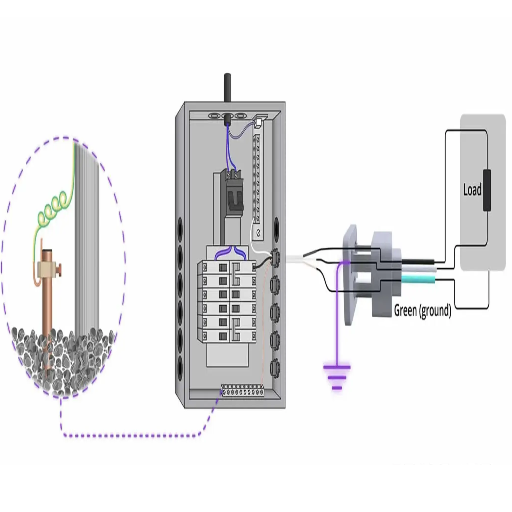
Step-by-Step Grounding Process
- Turn Off the Power: First, make sure you turn off the power supply coming into the main panel for the sake of safety.
- Keep Neutral and Ground Wires Separate: Put in a ground bus bar in the subpanel, if not already installed. Make sure that the neutral and ground wires remain on separate bus bars.
- Attach the Ground Bus Bar: Attach the ground wires from the sub-panel circuits to the ground bus bar. Afterward, connect the ground bus bar to the metal enclosure of the subpanel.
- Attach Grounding Electrode Conductor: From the ground bus bar in the subpanel, run a grounding wire to the ground rod or grounding system, depending on local codes.
- Inspect and Test: Review all connections and test the ground system to ensure that it is working properly and up to code.
Tools and Materials Needed
| Category | Items | Purpose |
|---|---|---|
| Panel Components | Sub Panel Kit, Circuit Breakers | Panel enclosure and circuit protection as determined by your requirements |
| Grounding Equipment | Grounding Electrodes and Rods | Proper grounding systems installation |
| Electrical Wiring | Electrical Wires (Appropriate Gauge) | Connecting the subpanel to the main panel; includes hot, neutral, and ground wires |
| Protection & Routing | Conduit and Connectors | Protect and route the electrical wiring |
| Installation Tools | Screwdriver, Drill | Screwing and fixing panel components and installing the enclosure |
| Testing Equipment | Voltage Tester, Multimeter | Check connections and ensure safe system installation |
| Wire Working Tools | Wire Strippers, Pliers | Strip wires and securely attach all connections |
| Organization | Labeling supplies, Electrical tape | Circuit identification and wire protection |
| Reference | Local electrical code reference guide | Ensuring compliance with safety and legal standards |
To complete the grounding and wiring system of a subpanel as safely and correctly as possible, the items above are essential. Respect safety procedures, and if in doubt, seek a professional.
Wiring the Grounding Lug
In wiring the grounding lug, you first want to make sure power is off at the main breaker. Locate a grounding bar or place intended for grounding inside the subpanel, usually attached to the metal frame of the panel itself. The ground wire should be attached to a grounding lug on the grounding bar with a screwdriver of the appropriate diameter. Make sure the connection is tight but not overtightened, as overtightening may damage either the wire or the lug.
The grounding wire should originate at the main panel’s grounding bar and adhere to the local electrical code. When installing a subpanel on a detached structure, drive a grounding rod into the Earth close to the structure and connect it to the grounding system via a grounding conductor of the regulation size. This provides another safe pathway for stray currents, as required by code.
All the connections should be verified for tightness and, in the case of a certain jurisdiction, should meet local codes. In the process of wiring, when connecting a subpanel, keep the ground and neutral wires isolated on separate bars to avoid the danger of inadvertent current flow. For move accuracy and safety, in any doubt, consult the NEC or get your responses from a licensed electrician.
Connecting the Ground Wire
The grounding conductor for sub-panel installation should start with attachment to the ground bar located inside the sub-panel cabinet. In order to maintain a proper grounding path, ensure that the ground bar is firmly bonded to the metal enclosure. The grounding conductor will also be attached to the main panel, which should have a direct avenue running to the grounding electrode system or grounding rod.
Isolation of grounds and neutrals within sub-panels is paramount; doing so prevents unnecessary current loops and complies with the National Electric Code (NEC). Use grounding conductors of adequate size as required by the NEC relative to the amperage rating of your subpanel. In cases where additional grounding rods are prescribed by a local code, drive them into the earth and bond them to the ground bus within the subpanel.
Check all connections twice for their security, absence of corrosion, and adherence to local code requirements. If questions or doubts arise at any time during the process, always refer to the NEC or a licensed electrician to ensure proper installation and safety of the utmost degree.
Following NEC Guidelines for Sub Panels
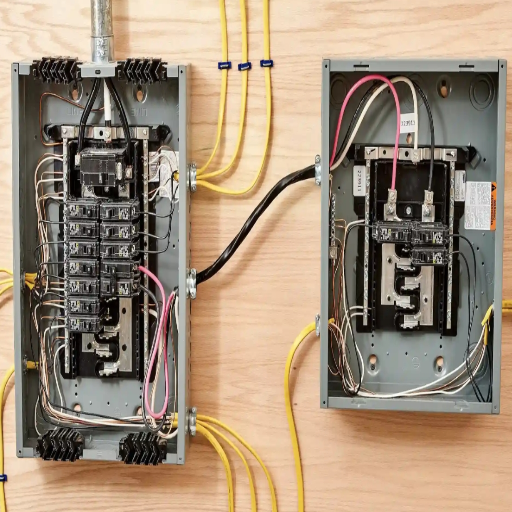
Essential NEC Requirements
- Sub Panel Location: Install the sub panel in a readily accessible dry location away from damp or hazardous environments. It must be given a clearance as specified in related NEC provisions.
- Proper Grounding: Always keep the neutral and ground bars within the subpanel separate. Connect the ground bar to an appropriate grounding system, and verify that all connections conform to the applicable local requirements.
- Conductor Sizing: Select the wire size based on the amperage of the subpanel and the length of the wiring run, as per conductor sizing guidelines in the NEC that prohibit overheating.
- Circuit Breaker Connection: Use an adequately rated circuit breaker in the main panel to feed the subpanel; the rating should match the amperage of the subpanel.
Strict adherence to the NEC ensures the safety, compliance, and reliability of your system. In case of doubt, consult an electrical contractor.
NEC Requirements for Grounding Sub Panels
For safety and compliance with the National Electrical Code, an adequate grounding system should be provided to sub-panels. According to the NEC, sub panels require a dedicated grounding system that is separate from the neutral system so that it prevents any ground faults or hap conditions.
Separate Ground and Neutral Conductors
According to the NEC, the neutral and ground conductors must be separated inside the subpanel. In other words, the sub-panel must have a ground bar bonded to the panel but not connected to the neutral bar.
Installing a Grounding Electrode
When the subpanel is in a detached building, the NEC requires a separate grounding electrode system, which may include grounding rods, plates, or other approved materials that provide a route to earth for fault currents.
Conductor Sizing for Grounding
The size of a grounding conductor must be as specified in NEC Table 250.122, where the conductor sizing is fixed by the overcurrent protection of the circuit in question. For example, a circuit with 100 ampere currents requires a minimum size of AWG #8 for a copper grounding conductor.
Equipment Bonding Requirements
All metal parts and enclosures of the subpanel must be bonded to the grounding system for direct path redirection of fault currents toward the earth, thus averting shock hazards or electrical fires.
Ground-Fault Protection
Ground-fault protection should be provided for subpanels feeding circuits in residential or commercial work where so required by the NEC; this protection is basically provided through either GFCIs or GFI panel breakers, which detect ground faults and thereby interrupt the circuit.
The failure to keep up with grounding requirements can lead to one or more code violations, safety hazards, and possible equipment damage. In every case, it is important to fully comply with the newest updates in the NEC when installing or maintaining sub-panels. If in doubt, extra counseling from a licensed electrician should be sought.
Critical Errors That Can Cause Safety Hazards
Not Separating Ground-Neutral Wire Connections Properly
One error that occurs very frequently is that the ground and neutral wires are connected in a sub-panel. As per NEC regulations, both wires must remain separated to avoid possible ground faults and for safety. Incorrectly bonded wires can pose serious electrical hazards, including the creation of electrical noise, which could possibly harm sensitive equipment.
Incorrect Wire Sizing
This is another common issue: the wrong wire size is used for sub-panel connections. If wires are too small, they overheat and cause a fire hazard; if they are large, additional expenses are incurred. The proper wire gauge must be used for the sub-panel amperage and distance from the main panel, one example being a 100-amp panel 50 feet away, needing #4 copper or #2 aluminum.
Overloading Sub-panel
Over-installing circuits or pushing the sub-panel beyond its specified capacity is a big error. And for maximum efficiency and safety margin, the total load must be allowed only up to 80% of the panel capacity for a continuous load.
Illegal Grounding Practices
Not setting up a proper grounding method for the sub-panel is a serious safety violation. According to the NEC, a sub-panel installed in any detached structure must have grounding means in place, such as a ground rod. Without proper grounding, appliances in the building are at greater risk in case of a fault occurrence or lightning strikes.
Using Incompatible Circuit Breakers
In many instances, people go cheap by using some old questions of breaker or a breaker not approved by the manufacturers of the sub-panels considered in this guidance. Make sure the breaker fits the brand of sub-panel for which it is intended and is rated for the amperage in question. Using breakers that are mismatched can cause nuisance tripping or outright failure of the breaker.
Not Aware of the Latest Change of NEC Code Updates
Electrical codes are updated periodically to incorporate the latest changes in technological advances and safety standards. Not complying with the most recent updates of the NEC results in code violations, failed inspections, and unsafe installations. For instance, according to the recent NEC provisions, surge protection devices must now be installed in some applications to protect appliances and prevent downtime resulting from voltage spikes.
Lack of Permits and Inspections
Improper sub-panel installations without acquiring permits or scheduling inspections may cause penalties or void penalties and insurance. Always ensure that permits are properly attained and that an inspection to verify the work against local building and safety codes will be carried out under the wing of an expert.
In assuring that a sub-panel installation is done in a reliable manner and in compliance with the existing codes, avoid making the above mistakes and follow the NEC. Careful planning, precision in calculations, and regular inspections must take priority so as to avoid costly errors and ensure a lasting performance.
Tips for Ensuring Safety and Compliance
Stay Current with NEC Guidelines
Always keep reference to the latest versions of the National Electrical Code (NEC) to ensure compliance with industry standards. The NEC is updated regularly to address new safety concerns and technological advancements. For instance, the use of Ground Fault Circuit Interrupter (GFCI) protection in garages or basements has been reinforced in recent code revisions to reduce the risk of electrical shock.
Ensure Proper Grounding
Grounding is an extremely important factor in any electrical installation. The grounding of your sub-panel will prevent an electrical hazard, such as a voltage surge, and also keep your appliances and individuals safe. Per NEC requirements, a separate ground bar should be provided in sub-panels and be kept separate from the neutral bar in order to prohibit ground loops.
Perform Accurate Load Calculations
The total expected electrical load should be calculated accurately so that the sub-panel can handle the safe power demand. Most experts tell you to use load calculation tools or software to account for peak usage scenarios. They warn about overloading circuits that might potentially lead to fires.
Use Correct Wire Sizes
Wire size selection is crucial to prevent overheating and hazards. For example, a 100-amp sub-panel would usually demand 4 AWG copper wire or 2 AWG aluminum wire, depending on the length of the run. Always verify against the conductor ampacity charts.
Install Proper Circuit Breakers
Circuit breakers should match the sub-panel rating and the load requirements of connected circuits. Inappropriate breakers that are mismatched are a problem to functionality and, worse, safety. Arc Fault Circuit Interrupters (AFCIs) are increasingly being required by the electrical codes for certain circuits to prevent fires.
Schedule Regular Inspections
Routine inspections by a licensed electrician help identify faults such as loose connections, overheating, or corrosion. In contrast, periodic inspections ensure that hazards remain compliant with the electrical codes, promoting the safety of your installation in the long run.
By applying these safety measures while also keeping oneself abreast of current standards, a considerable amount of risk can be reduced; furthermore, system efficiency can be maximized and its installation guaranteed safe and officially compliant.
Grounding Techniques for Different Voltage Levels
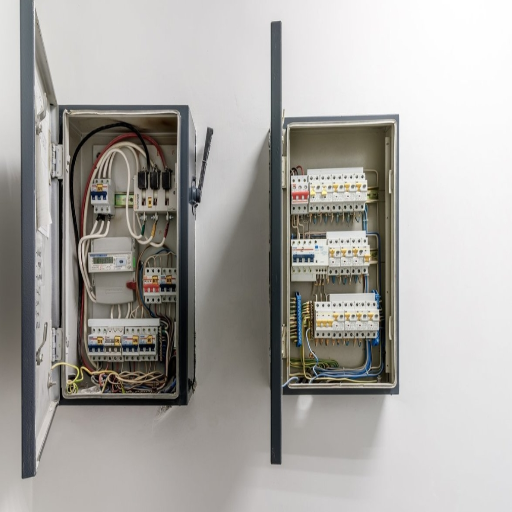
Proper grounding acts as a critical safeguard for the safety and reliability of electrical systems established by varying voltage levels. A ground put into practice for low-voltage systems commonly contains a grounding electrode that provides a direct route between the electrical system and the earth via a rod. This process eliminates the possibilities of electrical shock and the unwanted bruising of equipment caused by power surges.
A medium-voltage system requires at least a bit of extra precaution to ensure that it remains stable during fault conditions; grounding transformers are employed for this. The methods of grounding in high-voltage systems will be far more complicated so that they can handle larger fault currents and further protect across a large area may include counterpoise systems and ground grids.
Each system should preferably follow the relevant applicable standards to ensure compliance and to maximize safety. Furthermore, regular inspections and contingencies should be maintained for ongoing effectiveness, tuned to the grounding methodology in use at different voltage levels.
Grounding a 120V Sub Panel
A firmly grounded subpanel of 120V is an essential safety aspect in electrical operations, not to mention the operative efficiency of the system. Grounding actually redirects sudden and unexpected fault currents to the ground, reducing the chances of an electric shock or damage to the equipment. The following are the grounding procedures and points to consider for safely grounding a 120V subpanel:
Key Requirements for 120V Subpanel Grounding
- Separate Ground and Neutral Wires: If in the main panel, ground and neutral can be one and the same; in the sub-panel, they must be kept apart. Otherwise, some neutral currents will flow through alternate ground paths, creating undesirable conditions. On the other hand, the grounding bar has to be bonded to the panel, as all ground wires go to it. The neutral bar must thus be insulated.
- Install A Grounding Electrode System: Ground electrodes are generally required for sub-panels in detached buildings. The electrode must be driven 8 feet minimum into the ground and connected by a grounding electrode conductor to the subpanel. The grounding electrode conductor should be wire size #6 AWG copper or larger, depending on local code requirements.
- Verify the Wire Sizes: Feeder wires that go from the main panel to the sub panel should consist of the two hot wires, one neutral wire, and a ground wire. The ground wire must be sized for the amp rating of the subpanel, according to the NEC guidelines. For example, a 60-amp sub panel requires a minimum #10 AWG copper ground, with the possibility of larger panels requiring bigger wires.
- Bonding the Panel: In the case of a sub-panel being situated in the same structure as the main panel, a separate grounding electrode may not be necessary, but ground wires must still be connected to the equipment-grounding terminal. Also, ensure the ground bar is bonded to the panel enclosure for proper grounding.
- Verify Compliance with Local Codes: Since electrical codes vary from place to place, following your local codes is very important. Inspections by licensed electricians or authorities would ensure that the grounding system is safe and code-compliant.
- Safety Testing and Maintenance: Following installation, always test panel grounding and check connections for any loose or corroded points. Maintenance should be done from time to time so that the system functions well over time.
Grounding a subpanel correctly is not a matter of the Code only, but a vital step in securing electrical safety in any residential or commercial place. Never attempt to do the work on your own if unsure; always hire a certified electrician for samples of installation.
Considerations for Higher Voltage Sub Panels
When dealing with higher voltage sub-panels, I always ensure I thoroughly understand the specific requirements for the particular voltage level I am working with. These requirements include choosing appropriately rated breakers, wires, and insulation against the increased load to ensure safety. I also pay great attention to grounding methods, as higher voltage demands stricter compliance to avoid electrical hazards. Proper spacing and adequate ventilation are necessary, while local codes must also be observed. If I ever had to question any stage in the process, I would never stay on my own but immediately consult a certified electrician for a safe and compliant installation.
Troubleshooting Grounding Issues
As grounding problems become more serious, they can result in equipment damage, shock hazards, or excessive noise in a circuit. Some brief steps to take when dealing with ground issues are:
Troubleshooting Process
- Inspect Ground Connections: Inspect all grounding points for secure and corrosion-free connections. Should a loose wire appear or damage to the current wire, service or repair must be effected as it will cause malfunction to some extent.
- Test Grounding System: Testing for continuity using a multimeter or a circuit tester is very important in making sure that the ground and neutral are effectively linked. The resistance should be very low and in accordance with the suggested range for safety.
- Check for Ground Loops: If you are confronted with strange noise or interference, try to look for ground loops with multiple ground points creating unintended circuits. Consolidate the grounds if required.
- Check Electrical Panels: Make sure the grounding electrode system of the main panel is correctly installed and bonded. A poor connection right at the panel will give problems throughout the system.
- Check into Code Requirements: Check if the grounding and bonding configuration complies with local electrical codes to consider installation errors.
- Consult the Pros: If you cannot troubleshoot the trouble away, or you find yourself in a very complicated scenario, get in touch with a licensed electrician for correct diagnosis and repairs.
Following these steps will let most grounding problems be efficiently spotted and resolved, finally ensuring safety and proper operation of the system.
Conclusion
Proper subpanel grounding is a critical aspect of electrical safety that requires careful attention to detail, adherence to NEC guidelines, and thorough understanding of electrical principles. By following the comprehensive steps outlined in this guide, ensuring proper separation of ground and neutral conductors, using appropriate materials and sizing, and maintaining compliance with local codes, you can create a safe and reliable electrical installation.
Remember that electrical work carries inherent risks, and when in doubt, always consult with a licensed electrician. Regular inspections, proper maintenance, and staying current with code updates will ensure your subpanel grounding system continues to provide safe and effective operation for years to come.
Reference Sources
Frequently Asked Questions (FAQs)
How Should I Ground a Sub Panel?
To ground sub panel shall have a bare copper or green insulated grounding conductor attached to the ground busbar in the sub panel. This conductor must return all the way to the main service panel as a means of ensuring proper bonding in the ground. All required NEC precautions must be adhered to for safety and compliance.
Why Do I Need Separate Grounds for a Sub Panel?
Having a separate ground for the sub-panel is important in lowering the risks of ground faults and also makes the electrical system safe. Having the neutral and ground separate stops trouble such as neutral return currents traveling back down the ground wire, which would constitute a shock hazard.
Can The Same Ground Wire Be Used For More Than One Sub Panel?
It is generally not recommended to use the same ground wire for more than one subpanel. Each subpanel should have a grounding system that connects back to the main service panel so that each subpanel is properly grounded and NEC-compliant.
What is the Ground-Wire Size for a 60A Sub-Panel?
The sizing of the ground wire for a 60-amp subpanel is usually based upon wire type and the length of the run. For copper, usually a minimum of 6-AWG wire is required, while an aluminum conductor would usually need to be larger, of 4 AWG. Please always verify the local codes and the NEC for the size appropriate to your particular installation.
What is the Role of the Neutral Wire in a Subpanel?
The neutral wire in a subpanel is the return conductor for the current back to the main service panel. It needs to be kept separate from the ground wire in order to prevent any stray current from flowing through the ground system. In the main service panel, the neutral and the ground must be bonded together, but in the subpanel, they must be kept separate for safety.
Do I Need a Double-Pole Breaker for 240 Volts in a Sub Panel?
The use of a double-pole breaker is definitely necessary for providing 240 volts in the subpanel. This type of breaker hooks into both hot lugs, developing the required voltage for larger appliances. Ensure that the breaker is rated corresponding to whatever load you’ll be connecting to it: perhaps 40 amps, or maybe 60 amps if we’re talking about heavy-duty equipment.
How can I identify the ground and neutral wires inside my subpanel?
Contrary to the ground wire, which is usually bare copper or green insulated, the neutral wire should carry a white insulation color. Sometimes the wiring diagrams indicate various times such a distinction to show the purpose of these wires. Make sure to install the conductors on appropriate busbars in an effort to keep the system operating well and safely.