

詐欺攔截器

喬卡

太陽能板是如何製造的:太陽能板製造完整指南

太陽能板是如何製造的:太陽能板製造完整指南
了解有關太陽能電池板製造方式所需了解的一切,從太陽能電池到製造過程。今天開始生產再生能源!
臉書
推特
紅迪網
領英

Amongst the list of renewable energy sources, solar panels have taken up a prominent position made possible by advanced technology that taps into the sun’s power. In this guide, we cover everything about how these wonders are made. We will take you through every step, starting with mining for silicon – an essential raw material, assembling solar cells accurately and checking them for quality at the last stages before they are deemed efficient enough or long-lasting. By knowing what it takes to produce different parts in detail to work together effectively as one system, readers will learn about the sophisticatedness behind this invention. This article is designed to give an overall understanding of all the steps involved in manufacturing solar panels to help those who want to know more about sustainable energy production methods realize their goals.

What Materials Are Used in Solar Panel Manufacturing?

What Materials Are Used in Solar Panel Manufacturing?

Key Solar Panel Materials

The solar cell manufacturing industry commonly uses silicon as the main material because it has the property of being a semiconductor. This is important for the operation of photovoltaic cells. Usually, pure silicon can be transformed into either polycrystalline or monocrystalline forms. Apart from silicon, other materials play a vital role in this process, such as:

  1. Glass: Glass acts as a protective cover for the outer part of solar panels and also allows sunlight to pass through without much reflection loss.
  2. Metal Conductors: Aluminum or silver are often used as conductive grids on solar cells that help transfer electrons.
  3. Encapsulant: Solar cells are usually encapsulated with ethylene-vinyl acetate (EVA) to protect them against moisture and physical damage.
  4. Backsheet: Made from strong polymers, back sheets provide electric insulation and safeguard against environmental hazards.
  5. Anti-reflective Coating: These coatings are applied to the surfaces of solar cells to ensure maximum light absorption by reducing reflection, thereby improving efficiency.

These elements make up both structural aspects and operational parts that enable efficient and long-lasting solar panels.

The Role of Silicon in Solar Panels

Silicon is very important in solar panels because of its outstanding semiconductor properties, which are necessary for converting sunlight into electricity. It can be said more specifically that the atomic structure of silicon enables it to absorb light effectively and create electron-hole pairs, which are needed to produce electric current. In terms of efficiency and production cost, silicon strikes a balance between these two factors in monocrystalline form as well as polycrystalline form. When we compare them with each other, monocrystalline silicon has higher efficiency and a longer lifespan, but it comes with a higher price tag on the flip side; polycrystalline silicon, which is made from many small crystals, is not so efficient but cheaper, widely used for residential purposes. Continuous efforts are being made towards improving this area of technology, seeking to increase power generation by reducing manufacturing expenses per unit area, thereby making sustainable energy through solar cells more affordable for everyone.

Types of Silicon Used in Solar Cell Production

  1. Monocrystalline Silicon: This kind, created using the Czochralski process, has a uniform crystal structure that makes it efficient and long-lasting. Even under low-light conditions, monocrystalline cells perform well in various applications. However, they require more resources to manufacture, so they are more expensive.
  2. Polycrystalline Silicon: Polycrystalline silicon is made from fragments of silicon crystals that are melted together; as a result, it costs less than monocrystalline silicon. Although not quite as efficient, this material is still widely used in residential installations due to its cost-effectiveness and performance.
  3. Amorphous Silicon: Unlike crystalline forms like those mentioned above, amorphous silicon consists of non-crystalline thin films that offer flexibility with reduced materials. While generally lower in efficiency compared to other types it is employed in lightweight and portable solar devices where flexibility along with cost are crucial considerations.

Every silicon type possesses strengths and weaknesses or trade-offs associated with them depending on what needs to be met for a given solar application choice.

How does the manufacturing process of solar panels Work?

How Does the Manufacturing Process of Solar Panels Made Work?

From Ingot to Silicon Wafer

There are several critical steps in transforming a silicon ingot into wafers:

  1. Ingot Growth: Methods like casting for polycrystalline silicon or the Czochralski process for monocrystalline silicon melt high-purity silicon and form it into cylindrical ingots. The temperature and composition of the ingots are carefully controlled so that high-quality crystals can grow.
  2. Ingot Slicing: In this stage, diamond wire saws slice the cylindrical ingot into thin wafers. This step requires accuracy to achieve uniform thicknesses among the wafers, which is important for subsequent solar cell efficiencies. Typically, the wafers are cut to be between 180 and 200 micrometers thick.
  3. Wafer Cleaning and Polishing: After slicing, there is an intensive cleaning process to remove any residues, particles, or surface defects introduced during cutting. Then, it is polished to create a smooth surface, which is necessary for best photovoltaic performance.

These processes, from ingot to silicon wafer, are the basic steps of manufacturing solar cells; thus, the overall quality of the wafer greatly affects the efficiency of the final solar panels as well.

The Photovoltaic (PV) Cell Creation

To convert silicon wafers into useful solar cells, there are several main steps in making a photovoltaic cell:

  1. Doping: During this stage, the cleaned and polished silicon wafers are exposed to elements such as phosphorous or boron. This creates a positive-negative (p-n) junction, which is important because it generates electric fields necessary for the flow of electricity when light shines on the cell.
  2. Anti-reflective Coating: The surface of the wafer is coated with an anti-reflective layer so that it can absorb more light. This coating reduces how much sunlight gets reflected away from it thereby making this process efficient.
  3. Metallization: Electrical contacts are made by printing fine lines of metal (usually silver) on both the front and back sides of the wafer. A grid pattern is used for maximum exposure to light on the side facing the sun while a continuous metal layer collects and conducts the produced current at the back.
  4. Annealing: In annealing, high temperatures are applied to the wafer. This process activates dopants and fixes any crystal defects, further improving cell efficiency.

These steps—doping, applying an anti-reflective coat, metallization, and annealing—turn silicon wafers into highly efficient photovoltaic cells that can be integrated into solar panels.

Assembly of the Solar Modules

Putting together solar modules means taking individual photovoltaic cells and joining them to make a functional panel that can produce a lot of electricity. These are the most important stages involved in doing this:

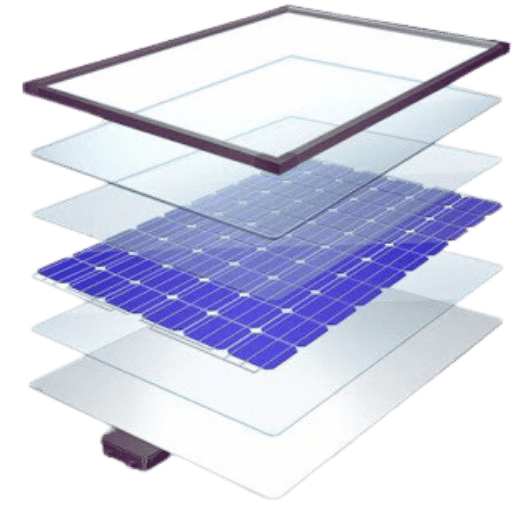
  1. Stringing and Tabbing: Solar cells are strung together by electrically connecting them with thin metal strips called tabs that form a string. These strings are then interconnected to create an array of cells.
  2. Lamination: The cell array is made up of layers of a protective material (typically ethylene-vinyl acetate or EVA) and a strong back sheet that sandwiches it all together. This sandwich is then laminated so as to safeguard against moisture, mechanical stress, and other environmental hazards.
  3. Framing: After lamination, the cell assembly is placed into an aluminum frame that is both durable and resistant to harsh weather conditions. The frame adds strength to the structure while also allowing for easy mounting and installation of the solar module.
  4. Junction Box Installation: A junction box is attached at the backside of the 太陽能電池板, where it houses electrical connections, among others, like bypass diodes used for enhancing performance. This part ensures the safe outputting of current from the panel in an efficient manner.
  5. Quality Testing: Once completed, every single solar module undergoes thorough quality testing to verify compliance with set performance as well as safety standards. Among these tests include the evaluation of electrical output, resistance towards environmental conditions, and mechanical robustness, among others.

Therefore, these systematic module assembling steps guarantee reliability and efficiency in terms of power ratings for photovoltaic panels which can be used in various applications for harnessing solar energy effectively.

Can You Make Your Own Solar Panels?

Can You Make Your Own Solar Panels?

DIY Solar Panels: What You Need to Know

Creating one’s own solar panels is doable for people with the proper abilities and supplies; however, it is important to comprehend the intricacies associated with them. Here are a few main points to consider:

  1. Materials and Tools: Photovoltaic cells, tabbing wire, a flux pen, a soldering iron, and an encapsulant are required. Many of these components can be found in comprehensive kits.
  2. Technical Skills: Basic knowledge about electricity as well as how to solder are essential. Assembling solar cells into a working panel involves carefulness while handling them and precise electrical connections.
  3. Time And Effort: It takes much time and effort since making a single solar panel from scratch is very laborious. The steps include connecting cells, laminating the matrix, framing the panel, and installing a junction box, among others.
  4. Efficiency and Cost: DIY (do-it-yourself) solar panels usually have less efficiency and longevity than those that are commercially manufactured. While they may seem cheaper at first, this could result in lower performance or a shorter lifespan, so this should be considered.
  5. Safety And Regulations: Ensuring the safety of homemade solar panels is very important. To avoid any possible dangers one should follow proper guidelines in addition to local building codes and electrical standards.

In conclusion, it is possible but not easy or cheap, so think twice before you start making your own solar system.

Essential Solar Panel Materials for DIY Projects

When we do a project about DIY solar panels, we need to have the right materials. Below are the necessary things.

  1. Photovoltaic (PV) Cells: These parts convert sunlight into electricity at their cores. It is important to choose good quality ones since they affect efficiency and longevity.
  2. Tabbing Wire: This wire is thin and flat which connects individual PV cells together enabling electric current flow through the panel.
  3. Flux Pen and Soldering Iron: Tabbing wire onto PV cells requires these tools. A flux pen helps clean and prepare surfaces; a soldering iron makes electrical connections.
  4. Encapsulant: Moisture is kept out of cells by coating them with this protective layer that also safeguards their integrity over time; usually made from EVA (ethylene-vinyl acetate).
  5. Glass or Plexiglass Covering: To protect against external elements while providing structural rigidity, a transparent covering should be used.
  6. Frame and Mounting Hardware: Aluminum or stainless steel frames offer stability to solar panels exposed to harsh weather conditions and support them firmly on any surface type during installation.
  7. Junction Box: This box houses electrical connections where generated electricity flows through PV cells towards an inverter/battery storage system safely.

With these materials, you can create a solar panel that works well and reliably meets your energy requirements.

Steps to Make Your Own Solar Panels at Home

  1. Plan and Design: Start by determining your energy requirements and the size of the solar panel you want to build. This involves calculating the wattage needed and the number of PV cells required to produce that power. Sketch a schematic diagram to help you visualize how the cells should be arranged.
  2. Preparing Cells: Thoroughly clean each PV cell for maximum efficiency. Use a flux pen to prepare tabs on each cell for soldering.
  3. Soldering Cells: Arrange PV cells in rows. Connect the cells together in series using tabbing wire; solder wire onto tabs on each cell. This stage needs accuracy for good electrical connections.
  4. Encapsulation: Place the soldered cell array onto the encapsulant material. Carefully cover the cells with another layer of encapsulant to safeguard them from moisture and other external conditions.
  5. Framing: After encapsulating cells, place them on top of glass or plexiglass coverings. Secure the edges of the covering with the frame tightly sealed against any infiltration by moisture.
  6. Junction Box Installation: Fix the junction box at the backside of the panel, ensuring all connections are firm enough; this will enable electricity to flow between the panel and the household or storage system.
  7. Testing: Before mounting, verify that the solar panel produces the expected amount of electricity.Estimate output voltage and current using a multimeter.
  8. Mounting & Installing: Place the finished panel at the best angle and site for maximum sunlight exposure. Connect the panel with the inverter or battery storage system following recommended safety procedures.

If followed correctly, these instructions can help you create a working 太陽能 system that perfectly suits your domestic energy needs.

What Are the Different Types of Solar Panels Available?

What Are the Different Types of Solar Panels Available?

Overview of Monocrystalline Solar Panels

Monocrystalline solar panels are highly effective and made from just one crystal structure. Pure silicon is used to create these panels, resulting in uniform high-performance solar cells with good electron mobility. Monocrystalline has the highest efficiency rates – often over 20% – and can last longer than any other type of panel. In addition, they take up less room than polycrystalline types, making them perfect for installations where space is limited. Nevertheless, because it requires a complex manufacturing process, monocrystalline is usually more expensive than other available options. Essentially, if you need efficient and space-saving solar energy solutions, then this would be the best choice for you!

Understanding Polycrystalline Solar Panels

Many silicon crystals are combined to form polycrystalline solar panels, which makes their structure less uniform than mono-crystalline panels. This method of manufacture reduces the amount of work needed and is hence cheaper. Normally, efficiency rates of between 15% and 17% can be achieved with poly-si cells. The puzzle pieces’ locking arrangement causes a slight decrease in energy conversion efficiency because electron movement is not as good as it could be. Nevertheless, improvements have always been made in how well they work based on technological advancements over time. They are also the cheapest among all types, making them favorites for low-income earners who want to go green but don’t have much money at hand. They may take up larger spaces vis-a-vis monocrystal modules while delivering the same power output; still, they remain widely used in residential and commercial installations due to their affordability coupled with reasonable performance levels.

Introduction to Thin Layer (Amorphous) Solar Panels

Thin film or amorphous solar panels are created by depositing photovoltaic material in thin layers onto a substrate like metal, plastic, or glass. On the other hand, amorphous panels are not made up of rigid crystals as opposed to traditional crystalline types. This makes them flexible and light because they can bend easily, hence finding use in many places where heavy models cannot, such as clothes and bags for portable devices, among others, being integrated into buildings. Normally, these have lower efficiencies than other types, usually between seven percent (7%) and ten percent (10%); however, this is compensated by their better performance under weak light conditions or when partially shaded.

In terms of production cost-saving measures, when compared with c-si modules which require more resources during the manufacturing process, thereby leading to higher costs per unit area, there is a significant difference between the two categories, namely thin-film vs crystalline silicon technology. In addition to this fact, although less efficient than some competitors on the market today, it still remains cost-effective enough, coupled with versatility, making such designs suitable for big installations where space is not limited. Moreover, recent developments have shown that they can be used widely, thus improving efficiency levels further while at the same time expanding the applications base, hence cementing its place within the PV sector as a whole.

How Do Solar Panels Actually Work?

How Do Solar Panels Actually Work?

The Function of Solar Cells in Energy Conversion

Solar panels work by converting the sun’s rays into electricity through photovoltaic cells. Each solar cell is made up of semiconductor materials, typically silicon, that absorb photons from sunlight. When these particles hit the semiconductor material, they bump electrons out of it, thereby creating an electric current. This process is called the photovoltaic effect.

In more depth, a solar cell consists of two layers of silicon: an n-type layer, which has extra electrons, and a p-type layer, which has extra spaces for electrons, known as holes. When these two layers are put together, they create an electric field at their junction. As soon as light energy gets to the solar panel, it liberates some of this panel’s electrons from their atoms, making them move freely along with holes within its semiconductor material but in one direction only due to an electrical imbalance caused by different types and distribution charges across those regions hence acting like diodes.

Because metals have lower resistance than semiconductors do when it comes to conducting electricity or allowing electron flow (i.e., positive ions moving towards negative ones), most solar panels are connected in series so as to allow maximum power output. The direct current produced can then be changed to alternating current suitable for home or business use by means of inverters since this method is both efficient and sustainable besides being cost-effective over time thus becoming widely adopted for renewable energy production purposes too.

Understanding the Flow of Electricity in Solar Modules

The solar modules contain a flow of electricity that is started by the absorption of sunlight in the photovoltaic cells. When light hits these solar cells, it causes some of its energy to shake off electrons from atoms in the semiconductor material creating what are known as electron-hole couples. These free electrons are then pushed towards the front surface of the cell by an induced electric field at the p-n junction thus creating an electric current.

The resulting direct current (DC) is collected by conductive metal contacts and funneled through a junction box attached to the panel. The current then passes through a series of interconnected solar modules within an array to ensure maximum electrical output. This combined DC power flows into an inverter, a key component that changes direct current into alternating current (AC) for use in common utility grids.

String inverters or microinverters, which are classified as modern inverters, have been designed to optimize energy conversion efficiency, control power output, and monitor system performance, among others. It is this back-and-forth movement between solar modules and inverters before being fed into an electrical grid that allows houses and businesses to tap into sustainable sun-generated electricity.

The Role of the Junction Box in Solar Systems

The junction box serves as an important part of the sustainability and effectiveness of solar panels. Basically, the electrical connectors, bypass diodes, and wiring terminals required are placed in the junction box to allow electric current from the cells of a panel to flow into its external circuitry. These connections should be protected against moisture, dust or any other environmental influence that might affect them by providing a safe environment where they can be kept away from temperature changes over time.

The junction box is usually installed on the back side of a solar module and incorporates safety features that help prevent hot spots, among other things, thereby optimizing performance. For instance, within this component, there are bypass diodes that work by allowing current to bypass shaded or faulty cells, hence saving power that would have been lost, thus maintaining the overall energy output levels of such modules. Additionally, it makes installation easier because it has standard functions suitable for different system designs, thereby improving connection efficiency as well as accessibility during maintenance.

Who Are the Leading Solar Panel Manufacturers?

Who Are the Leading Solar Panel Manufacturers?

Top Solar Panel Manufacturers in the Industry

Three companies are always deemed as the top solar panel manufacturers in the business: LONGi Solar, Jinko Solar, and Trina Solar.

LONGi Solar is known for being the best because it only focuses on high-efficiency monocrystalline solar cells. This company has a record of being innovative in photovoltaic technology by capturing substantial market share and providing worldwide high-performance solar products.

Jinko Solar is also a leading producer with a large production capacity and forward-looking research & development (R&D). They have consistently been pushing for higher efficiency and stronger modules which have made them popular both in residential and commercial installations.

Trina Solar is among the industry’s giants because of its wide international coverage and commitment to sustainability. Its range of products and strict quality control measures make Trina reliable even when used in different environmental conditions where performance may be affected.

These organizations are at the forefront of developing solar technology that is cutting-edge thus enabling global adoption for renewable energy systems.

Criteria for Choosing a Reliable Solar Panel Installer

In order to choose a solar panel installer on which you can rely, there are several main points that need to be considered:

  1. Certification and Credentials: These should establish whether or not the person who will mount your solar panels is qualified, such as having achieved accreditation from NABCEP (North American Board of Certified Energy Practitioners), among others; this indicates their level of knowledge and compliance with industry norms.
  2. Experience and Track Record: An individual or company seeking installation services should look for providers who have been around longer because they have more experience handling such projects; customer reviews/testimonials plus case studies can shed some light on how dependable these installers are.
  3. All-Inclusive Services: A reliable installer should offer everything required, from evaluation through design to setup and maintenance, so that clients don’t have to deal with different experts along the way.
  4. Equipment Quality: The efficiency/lifespan rates of any given photovoltaic system mostly depend upon materials used during construction hence it’s necessary to ensure all components adopted by installers meet high standards e.g., top brands known globally must supply most parts for such installations according them maximum chances of success.
  5. Warranty & Support Systems: One ought not to overlook what happens once everything has been put in place since things may fail at times. Hence, warranties covering both workmanship applied during the mounting process and post-installation services offered should be considered, just like availability/efficiency levels shown by customer care teams whenever called upon for assistance should also count.
  6. License Validation & Insurance Coverage: For safety reasons, one needs to verify if licenses issued within their jurisdiction are valid besides checking whether adequate insurance policies have been taken against accidents occurring while workers carry out duties at the client’s premises.
  7. Solvency Status: Financially stable companies usually have better positions than their counterparts in terms of ensuring continuity in business operations. Thus, they can honor warranty agreements signed during installation and support customers when needed.

These are just a few points to consider before settling on a solar panel installer.

The Future of the Solar Industry

The solar industry’s prospects appear ever brighter; this is due to technological advancements, supportive policies, and growing environmental consciousness. More efficient photovoltaic cells, bifacial panels that can absorb sunlight from both sides, and solar-plus-storage systems are among the most advanced innovations, making solar energy affordable and accessible for everyone. Incentives provided by the government, combined with international agreements aimed at cutting down carbon emissions, are also driving expansion within this sector. Furthermore, the integration of smart grid technology with solar power systems improves energy management and reliability while ensuring continuous supply even during peak times when demand is high. The world expects nothing less than a dramatic increase in size and importance, if not significance, on behalf of sustainable industries worldwide, thus making Sunrays one of the infinite sources for future energy infrastructure.

參考來源

光伏

太陽能電池

太陽能

常見問題(常見問題)

Q: What is the process of making solar panels?

答:太陽能板是透過多步驟製程製造的,從矽的萃取和純化開始。然後將純矽成型為錠,切片成晶圓,塗上抗反射材料,然後組裝成太陽能電池,然後連接形成太陽能電池板。.

Q: What are the primary kinds of solar panels?

答:單晶電池、多晶矽板和薄膜板是太陽能板的主要類型。這些在效率、成本和理想使用場景方面各不相同。.

Q: How does a crystalline silicon solar panel work?

答:晶體矽太陽能電池的工作原理是將陽光轉化為電能。當光照射到矽電池時,它會將原子中的電子敲出,從而產生電子流或電流。.

Q: Why must pure silicon be used to make solar panels?

答:純矽是必要的,因為它的原子結構可以產生有效的光伏效應。它允許電子在暴露於太陽光線時移動,因此被廣泛用作生產使用此原理的各種設備(包括光伏電池或模組)的材料。.

Q: What is Boron’s role in manufacturing solar panels?

答:硼是 p 型矽生產過程中摻雜過程的一部分,其中有許多孔(電荷載子)。這有助於在光伏電池內創建 pn 結,電子流在其中分離,從而產生電力。.

Q: What is an anti-reflection coating and why do we use it in solar panels?

答:太陽能板塗有抗反射塗層,這樣陽光就不會從表面反射太多。這樣,更多的太陽能被吸收,從而提高電池效率。.

Q: How is solar energy converted into electricity in a PV system?

答:在光伏 (PV) 系統中,陽光透過面板中的太陽能電池轉化為直流 (DC) 電。然後逆變器將直流電轉換為交流電 (AC),可用於家庭和企業。.

Q: What differentiates monocrystalline from polycrystalline solar panels?

答:單晶太陽能板由單矽晶體製成,效率高、耐用。然而,多晶矽是透過將各種矽晶體熔化在一起而製成的;因此,它們的效率通常較低,但價格便宜。.

Q: On what basis does a solar installer choose what type of panel to use?

答:太陽能安裝商選擇的面板類型取決於特定的能源需求、預算、可用空間和氣候條件等考慮因素,以最大限度地提高安裝的容量和效率。.

Q: What environmental advantages come with using solar panels as a renewable source of energy?

答:太陽能板利用陽光提供清潔、再生能源,從而減少對化石燃料的依賴,同時降低溫室氣體排放,從而支持應對氣候變遷的環境永續性。.

主要產品
最近發布
標誌
喬卡集團

讀者們好!我是 JOCA,這個部落格的作者。我擁有 15 年專門從事高品質光伏電纜製造的經驗,對卓越的承諾推動了我們公司的發展。我以創新為生,為我們尊貴的客戶提供先進的解決方案。.

滾動到頂部
與 JOCA 公司取得聯繫

請填寫下面的表格與我們聯繫。我們的目標是在 12 小時內回覆您。祝您一切順利!

聯絡表格演示

喬卡