
詐欺攔截器

喬卡

太陽能電纜和普通電纜之間的主要區別:您需要了解的內容

太陽能電纜和普通電纜之間的主要區別:您需要了解的內容
臉書
推特
紅迪網
領英

Selecting the correct cable type for any wiring solution is vital for safety, efficiency, and durability. This is especially true for solar energy systems. More often than not, solar and ordinary cables appear very similar. Only when their characteristics and construction mode are analyzed are their differences apparent, especially regarding their intended applications within a solar system. This blog post will investigate the key fare differences between these cable types, explaining why solar cables are especially suitable for photovoltaic (PV) installations and outperform ordinary cables in harsh conditions. Helping solar energy experts or individuals interested in the technology alike better understand these differences so they can make more strategic decisions for their next project.

What are the main differences between solar cable and regular cable?

What are the main differences between solar cable and regular cable?

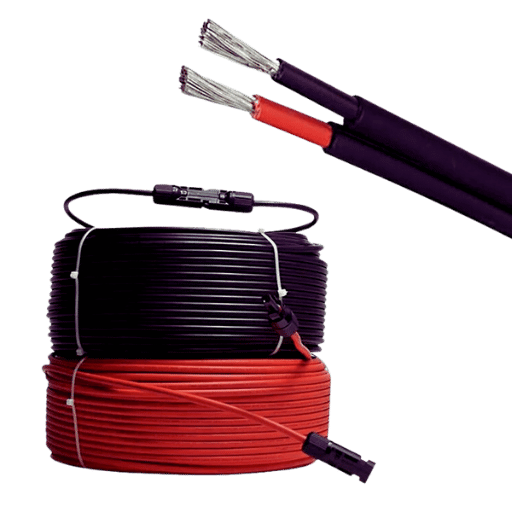
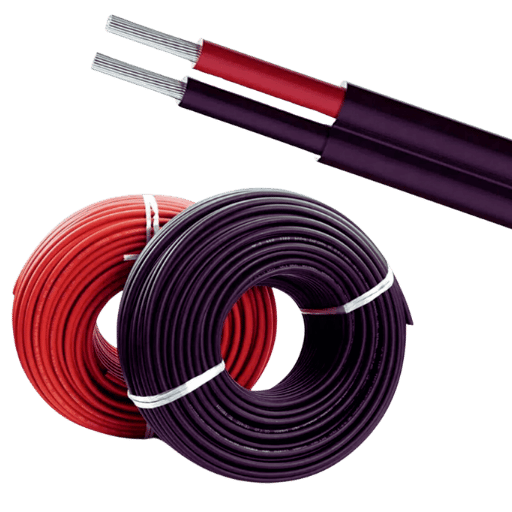
The primary distinction between Solar and regular cables is their structure, raw materials, and intended application. Because solar cables are explicitly made for photovoltaic systems, they are incredibly sturdy and weather-resistant. They are most commonly enclosed with cross-linked polyethylene (XLPE) polymers to serve their purpose for longer outdoors.

On the other hand, Normal cables are not built for such use and tend to deteriorate when exposed to sunlight, moisture, and high temperatures. For instance, solar cables tend to be double insulated and rated for higher voltage due to the need for safe energy transfer from solar panels. Normal cables are solely used for general electrical installations with no such requirements. Such differences make solar cables the best option for optimal and dependable functioning of the photovoltaic system.

UV resistance and weather protection

Solar cables are made with robust materials that enhance UV resistance and guarantee survival in harsh outdoor conditions. Their use of cross-linked polyethylene (XLPE) makes them efficient even in extreme environments, as it prevents damage from the sun and heat. The lifespan is also quite extensive, promoting dependable performance.

Temperature tolerance and insulation

Solar cables are designed to function well across varied temperature ranges from -40 Degrees to 90 Degrees Celsius (-40 to 194 degrees Fahrenheit). The heating to cable insulation material, usually made from XLPE, can be relatively high, withstanding both extremely high and low temperatures. This ensures a stable electrical current and safe usage in varied locations.

Electrical conductivity and efficiency

Solar cables are said to maximize energy transmission by having high electrical conductivity—little energy is lost during transmission. Their conductive materials, such as aluminum or copper, increase the system’s overall efficiency by maximizing the power transmitted to devices such as inverters from the solar panels. The high quality of the raw materials used in manufacturing the cables and the accurate parameters used during production significantly affect the performance of any solar energy system.

Why can’t I use regular cables for my solar panel installation?

Why can't I use regular cables for my solar panel installation?

Safety concerns and compliance issues

Failing to use solar cables in a solar setup will create a non-compliant setup and pose safety risks. This is because solar wires are meant to operate under harsh conditions, including extreme temperatures and sunlight exposure. On the other hand, general wires have a shorter lifespan when exposed to these conditions, which will result in insulation damage, electrical problems, or, worst case, a fire. Additionally, many standard cables cannot bear the higher voltage requirements that solar installations require; for example, in modern systems, the standard voltage is 1500 volts DC.

Moreover, adhering to relevant standards like NEC or UL 4703 guarantees that these cables will not risk performance, durability, or safety. Barely any regular cables have UV or IEC certifications, meaning they lack basic benchmarks, which may lead to warranty retraction or project hold-up. According to a 2023 industry report, over 25% of connected equipment malfunctioning has been linked to erroneous cable usage. Getting specialized solar cables helps avoid such issues and assures both the meeting of rules and insurance criteria, preserving efficiency and altering the lifespan of solar energy systems.

Performance and longevity factors

The function and endurance of a solar energy system depend considerably on several factors, such as the materials used, the quality of the installation, and, over time, the environment. Optimal performance is usually achievable when high-quality solar panels with high efficiency are used. Current panels generally have an efficiency of about 20-22 percent; mono panels often exceed poly ones.

Another factor is the strength of the system components. For example, Tier 1 panels are usually certified to endure environmental factors like hail, high wind systems, and temperatures. Research shows that photovoltaic systems deteriorate an average of about 0.5 percent every year; hence, for 20 years, a system can remain at about 90 percent of its capacity if it operates under proper conditions and proper measures are taken, especially for solar panel cables.

Adhering to appropriate servicing procedures has a significant impact on the lifetime of a system. Regular maintenance, which includes cleaning the surfaces of the panels that can become dirty, panel debris, or snow, as well as routine checking of electrical parts to avoid shocks or burnouts, assists in extending the solar system’s lifespan. There are also well-developed monitoring systems that can help lower the increased cost of service usage by transmitting updated information on energy production and performance efficiency to resolve issues. Merging top-quality elements with quality maintenance can enable a solar energy system to provide power for over 25 years while helping the environment and giving financial returns.

Potential risks of using non-solar cables

It has been observed that using non-solar cables during the installation of photovoltaic systems can adversely affect the functionality and safety of the installation. Non-solar cables are ‘general’ cables and are not constructed to remain insulated from the stabilization of harsh weather elements such as UV rays, unlike solar cables. Indeed, insulation degradation arising from the use of non-solar cables gives rise to insulation failure, which increases the probability of electrical faults, including short circuits and ground faults.

Furthermore, Non-solar cables do not have the required flexibility and heat resistance due to their construction, and this adversely affects systems involving solar. The apparent result is that overheating quickly occurs, significantly reducing the system’s efficiency and exposing it to fire hazards. Studies have confirmed that global solar photovoltaic systems have sustained a fault rate of approximately 11% due to the use of non-solar cables owing to mismanagement of cable selection. In addition to the above, inexpensive and non-solar cables can retract the manufacturer’s warranty on the solar system and significantly increase the maintenance and operational costs.

Only certified solar cables designed for extreme conditions should be used in a solar energy system. This will maximize performance, minimize risks, and optimize solar technology profit.

How does the construction of solar cables differ from regular cables?

How does the construction of solar cables differ from regular cables?

Materials used in solar cable manufacturing

Solar cables are purposefully made to survive exposure to adverse weather, humidity, UV light, and extreme temperature variations. A premium quality solar cable is made from cross-linked polyethylene (XLPE) tailored with ethylene propylene diene monomer rubbers (EPDM). Both XLPE and EPDM provide good chemical and thermal stability, making them perform in extreme range, -40 C to 90 C or higher, depending on the rating of the cable.

Tinned copper is a common conductor material for solar cables. This ensures high conductivity while protecting the wires from oxidation and corrosion when placed outdoors. Copper is plated with tin through the tinning process to protect it from cheap degradation caused by moisture and other environmental influences.

The International Electrotechnical Commission mandates using flame-retardant, hydrolysis-resistant, and strong cables for solar energy systems. These are carried out in the production phase, ensuring the wires are well constructed for performance and safety, meeting a lifespan of over 25 years.

Cross-linking process and its benefits

The cross-linking process entails the chemical bonding of polymer strands to form a three-dimensional structure, strengthening the material’s tensile and thermal properties on a large scale. Cross-linking is incredibly useful for solar cables, protecting them from heat, chemicals, and abrasion. Generally, peroxide cross-linking is one of the conventional methods utilized in synthesizing solar cables. It forms strong bonds within the polymer matrix to provide optimal performance.

Cross-linking tends to improve flexibility in matrices, which results in enhanced mechanical strength and improved long-term thermal stability, reinforcing the cables to go through maximum operational temperatures up to 120°C and short-term temperatures close to 250°C. Cross-linking improves insulation, increasing energy efficiency by making the material more resistant to deformation due to mechanical stress. A study conducted by Chang et al. shows that XLPE (cross-linked polyethylene) is widely used for insulating solar cables due to its resistance to high degradation rates in outdoor climates and low costs. This innovation guarantees the quality and efficiency of solar systems, as the solar cables have been working for over 25 years.

Conductor size and current carrying capacity

Current-carrying capacity is the maximum permissible amount of current varying from heat for a given conductor. Its content concerns the conductor’s size. Still, it sufficiently relates to other attributes of the conductor, such as its cross-sectional area, ambient temperature, the temperature at which it was designed to work, and other specified conditions. Conductors such as aluminum or copper have different heat-dissipating capabilities depending on their size and performance temperature.

Using standard insulating conditions, a 10 AWG copper conductor has been seen, if used under specific temperature conditions with proper insulation, to be capable of running around 30-40 amps; however, this depends on significant environmental factors. On the reverse side, aluminum conductors with the same ecological factors are observed to be far weaker. For tasks requiring motors with more extensive specifications or higher electricity transfer capacity, larger sectional areas are more suitable as they have lower electrical resistance, allowing them to outperform others.

Various factors undermine a conductor’s vertical efficiency, such as extreme temperature and multi-cable groupings inside a conduit, slightly altering and diminishing the effectiveness vertically. It is imperative to ensure that the size of the conductor is selected correctly concerning the NEC when required, as it may render an electrical system unusable.

What are the specific advantages of using solar cables in PV systems?

What are the specific advantages of using solar cables in PV systems?

Enhanced durability and lifespan

Solar cables designed for photovoltaic (PV) systems are expected to endure harsh operating conditions, and this reliability is ensured mainly when sourced with high-quality copper wires. TUV-certified wires maintain cross-linked polyethylene (XLPE) or ethylene propylene rubber (EPR), which feature excellent oxidation and UV resistance and can operate at temperatures of -40 to 90 degrees Celsius throughout their lifespan. This makes them suitable for outdoor installations under direct sunlight and in harsh climates.

Furthermore, solar cables offer strengthened mechanical protection, providing better abrasion and bending and even impact stresses likely to occur during the installation phase or operational use. According to industry data, high-quality solar cables boast a lifespan of 25 years or more, which coincides fascinatingly with the average expectancy of PV panels. For instance, cables tested under TUV can ensure optimal performance against rigorous environmental standards while under continuous electrical load. This physical durability will tend to drive down the total cost of ownership by eliminating intertidal costs while guaranteeing operational energy output throughout the system’s lifetime.

Improved energy efficiency and power output

Effective solar cables are efficient while also increasing the output and efficiency of a solar system as they significantly reduce energy losses in transmission. Solar panels and other components work hand in hand when transferring power because of their very low electrical resistance. Moreover, these cables are built to work across various temperatures and weather conditions without causing an energy drop, allowing uninterrupted power delivery. In the end, dependable solar cables play an essential part in the solar energy system, ensuring all components work in tandem during the system’s usable life.

Compatibility with solar inverters and components

The solar cable for a photovoltaic system must effectively integrate with other system components, such as the solar inverter, because its design and mechanical features influence other components’ operation. Such standards or regulations that govern the proper functioning of these cables are IEC 62930 and EN 50618, which also regulate and ensure that performance solar inverters can function effectively. These cables, for instance, have low voltage drops as one of their attributes, which helps to maintain energy losses as small as possible, which is critical for the operation of the inverter in solar photovoltaic systems.

Unlike the usual ones, such wires or cables are engineered so that they do not affect the devices they are attached to or themselves, and they handle the DC produced by the PV system. Designed for modern infrastructure, these cables have a standard voltage rating in the 600V-1,500V range and can be readily used with most contemporary inverters. Similarly, cables with a UV-resistance layer and insulation free of halogens can be employed to appliance the solar panel, the inverter, and the storage system together without risking their attachments’ integrity from external sources. Hence, the requirement to ensure the safety and reliability of solar installations in the long run is also addressed.

Are there different types of solar cables for various applications?

Are there different types of solar cables for various applications?

DC solar cables vs. AC solar cables

The functions of DC and AC solar cables are entirely different in a solar power system, enhancing the electrical cables’ efficiency. Direct current solar cables can transfer the DC generated by the photovoltaic appliances to the inverter where AC can be supplied. These cables are made of materials resistant to UV rays, high temperatures, and weathering, ensuring they can support enhanced DC voltages. Alternatively, AC solar cables supply the inverter’s displaced alternating current to grids and different electrical loads. Since the primary function of a solar inverter is to support AC, these cables easily align with the required switching power supplies and transformers; however, they use different standard insulation classes and voltage ratings than that of solar DC cables. Each cable type serves its purpose, ensuring the system operates efficiently and safely.

Single-core and multi-core solar cables

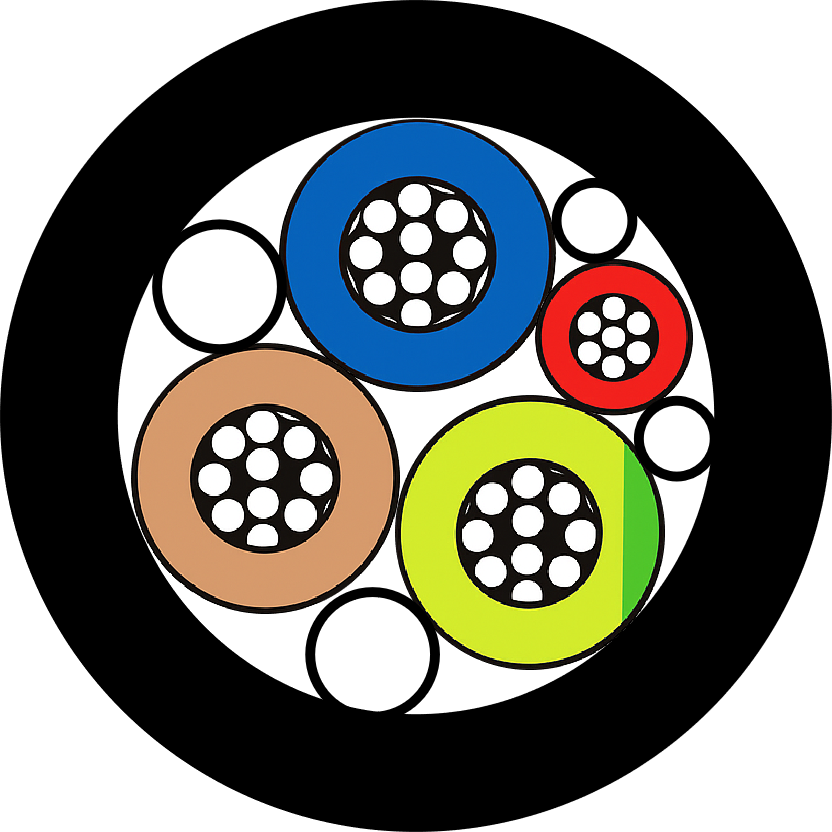
Single-core and multi-core solar cables have distinct differences in their design and use. Single-core cables with a single conductor are often used to ensure simplicity and flexibility and save purchase money on the installation. Multipole or multi-core wires are used in more complicated and advanced solar systems with several connections but look compact in an outer sheath. I would suggest using multi-core cables in more advanced systems and multi-core cables in simpler solar setups. Both options are good for the solar installation requirements for energy transmission.

Specialized cables for specific solar installations

Custom solar cables for specific PV systems address specific operational requirements and climate conditions. Armored conduits would work well for underground installations requiring more mechanical protection. On the other hand, cables with improved UV protection are more appropriate for sky installations where they’re continuously in the sun. For me, these custom-made solutions are vital for system longevity, safety, and performance as part of a holistic approach to challenging conditions.

常見問題(常見問題)

Q: Define a photovoltaic cable and tell me in what areas it differs from an ordinary cable.

A: A photovoltaic cable, or a solar cable or PV wire, is invented and manufactured specifically for solar electricity generation systems. Unlike other cables, PV cables are made to endure unfriendly surroundings, high temperatures, and UV exposure. They are also suitable for carrying direct current, unavoidable in solar power systems.

Q: A question arises: why can’t I employ conventional cables when installing my solar panel?

A: Conventional cables can’t be used while installing a solar panel because they lack the features required to withstand the solar power system environment. Solar cables are made to function under high voltages, endure UV radiation, and work under extreme temperatures. If ordinary wires are employed, efficiency may suffer, the risk of fire may increase, and the system’s blissful working life may be reduced.

Q: Which wire is best for connecting the solar panels?

答:專門製造的太陽能光電電纜是連接太陽能板的最佳電線類型。這些電纜/電線由具有交聯聚乙烯 (XLPE) 絕緣層的鍍錫銅導體製成。這些電線通常具有防風雨、防紫外線功能,並且能夠承受太陽能電池板產生的高直流電壓。.

Q: From your knowledge, what would be the key distinguishing factors between a solar cable and an electric cable?

答:太陽能電纜比典型的戶外電纜堅固得多。它們的創建是為了抵禦高濕度、高熱、零度以下的溫度、暴雨和暴風雪。這種類型的電纜還具有更好的紫外線防護能力,可以防止它們長期受到太陽光線的損壞。另一方面,如果受到某些條件,電纜很快就會變得毫無用處。.

Q: Are there different types of cables for solar AC and DC engines or systems?

答:當然有。如前所述,直流電纜將太陽能光伏模組連接到逆變器,並能夠承受太陽能電池板提供的高直流電壓。然後,在逆變器之後安裝交流電纜,將已轉換為電網或房屋內的交流電傳遞。儘管它們具有不同的詳細特性,但它們都是為與太陽能設備一起使用而設計或修改的,因為它們在整個太陽能結構中發揮不同的功能。.

Q: Are specialized solar cables mandatory for my photovoltaic system, as I have USE-2 cables?

A:當然,對於一些特殊應用,會採用USE-2電纜,但太陽能電纜並不是理想的選擇。專用太陽能光電電纜具有增強的性能能力和出色的安全功能,更適合太陽能係統。光伏電纜至關重要,因為它們可以提高太陽能係統的效率,並且經過專門設計以滿足必要的性能標準。 USE-2 電纜可能適用於系統內的某些區域。不過,通常最好使用專為光伏系統設計的太陽能光伏電纜,以獲得最佳性能和耐用性。.

Q: Can solar cables usually operate in high temperatures, or do they exhibit changes compared to standard cables?

答:太陽能電纜是客製化的,適合高溫和條件,因為它們可能會暴露在外部天氣下。典型的電纜可能遠遠超過 90*C 標誌,對於更高的溫度,該標誌為 194*F,具體取決於電纜類型。這是因為太陽能電池板在陽光直射下加熱得相當快,導致普通電纜退化或熔化,迫使太陽能電纜保持其結構;否則,他們將失去所有性能和結構完整性。.

Q: Should additional aspects be considered when installing solar cables in a particular environment?

A: Yes, several factors affect the installation of solar cables in various climatic conditions. In coastal regions, cables with better anti-corrosion properties should be used. Cases with good low-temperature characteristics must be used for setups requiring cables in extremely low temperatures. Armored solar wires may be employed for regions with a risk of rodent damage. As a rule, the type of solar cables should be customized to the environmental characteristics of the solar systems to enhance their efficiency.

參考來源

1. Multi-Functional Simulation Technique for the Analysis of Phase Stable Cables (2023)(Zhang et al., 2023)

  • In this upcoming paper, a three-dimensional electromagnetic-thermal-flow-mechanics model has been developed to simulate the Phase-Stable Cable more effectively. One of the parameters includes a Corrugated Outer Conductor, which changes how Electromagnetic and Thermal devices work solely due to the difference in Electric Fields.
  • The results show that using the outer corrugated conductor helps reduce the insulator’s thermal expansion, and the pattern design of the outer conductor aids in achieving the correct setting for the assembled outer devices.

2. Grid-Connected Solar PV Power Generation Facilities Optimization: A Cross-Examination 2023(Eddine et al., 2023, pp. 79588–79608)

  • This review article focuses on optimizing the design of PV power plants, which include set elements such as cables, inverters, and PV modules.
  • The article describes the essentials required to install a PV power plant, including the cabling and different inverter topologies used in PV power plants, and it compares these topologies.

3. Numerical modeling of RF coaxial cable impact on 1kHz single-frequency CC-ICP(2022)(Chen et al., 2022

  • In this paper, we adopt an approach where one tries to analyze the coupling effects of RF coaxial cables on capacitively coupled plasmas by developing a coupled transmission line and electrostatic particle-in-cell model.
  • The results demonstrate that RF coaxial cables impact an RF device’s impedance and, hence, the device’s properties.

4. 透過 JOCA 滿足您的太陽能電纜需求,成為您值得信賴的供應商

主要產品
最近發布
標誌
喬卡集團

讀者們好!我是 JOCA,這個部落格的作者。我擁有 15 年專門從事高品質光伏電纜製造的經驗,對卓越的承諾推動了我們公司的發展。我以創新為生,為我們尊貴的客戶提供先進的解決方案。.

滾動到頂部
與 JOCA 公司取得聯繫

請填寫下面的表格與我們聯繫。我們的目標是在 12 小時內回覆您。祝您一切順利!

聯絡表格演示

喬卡