







N2XR(AL)Y/NA2XR(AL)Y
0,6/1 kV Câble d'alimentation de gaine blindée et PVC d'isolation XLPE à noyau unique
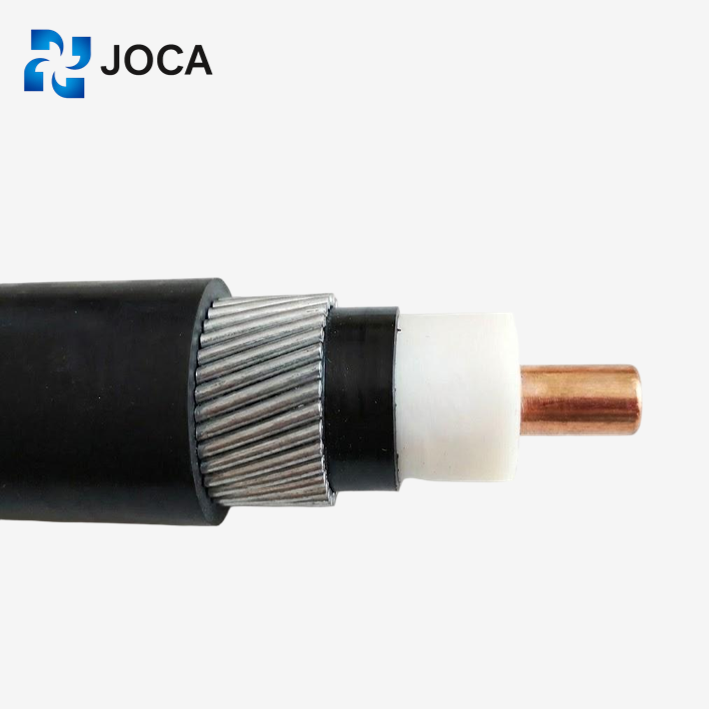
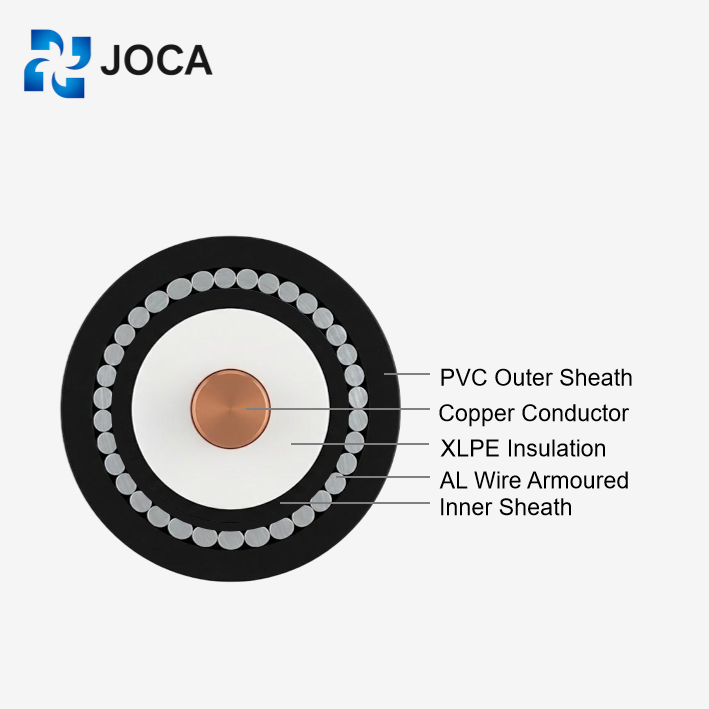
Chef d'orchestre : Conducteur en cuivre compacté circulaire ou circulaire toronné recuit uni (classe 2 à CEI 60228).
Isolation : Couche extrudée de polyéthylène réticulé (XLPE) selon la norme CEI 60502-1.
Literie : Couche extrudée de chlorure de polyvinyle (PVC) de type CEI (ST2) à IEC 60502-1.
Armurement : Couche unique de fils ronds non magnétiques (aluminium).
Veste extérieure : Couche extrudée de chlorure de polyvinyle (PVC) de type CEI (ST2) à IEC 60502-1.
- Traitement rapide des échantillons avec des solutions personnalisées
- Matériaux de haute qualité
- Options de prix abordables
- Livraison mondiale
- Pour une meilleure protection des données, assurez-vous que tous les téléchargements sont sécurisés
Économisez au moins 30% en moyenne
-
Description du produit
N2XR (AL) Y/NA2XR (AL) Y : Description et spécifications du produit
Le N2XR(AL)Y la série est construite pour un travail spécifique : Single-Core distribution d'énergie, Parce que ce sont des câbles à un seul noyau, nous ne pouvons pas utiliser de blindage en acier standard (il surchaufferait à cause des champs magnétiques).Nous utilisons plutôt Armure en fil d'aluminium (AWA). Ceci est non magnétique, il vous donne donc la protection mécanique dont vous avez besoin sans transformer le câble en chauffage. Combiné avec Isolation XLPE, 1, il gère de lourdes charges industrielles sans transpirer.
-
Avantages
N2XR (AL) Y/NA2XR (AL) Y : Avantages et caractéristiques
Protection mécanique élevée avec blindage en aluminium
Excellente résistance à l'humidité, aux chocs et à l'abrasion
L'isolation XLPE offre une capacité de transport de courant plus élevée
Convient pour l'enfouissement direct et l'utilisation industrielle robuste
Performances stables sous contrainte thermique et électrique
Longue durée de vie et exigences de maintenance réduites
Spécification de N2XR(AL)Y/NA2XR(AL)Y
| Composant/Paramètre | Description /Norme |
|---|---|
| Description générale | Ces câbles sont destinés à des installations fixes, à l'intérieur et à l'extérieur, dans des systèmes électriques basse tension. |
| Normes applicables | Les câbles d'alimentation basse tension sont conçus et testés pour répondre à toutes les exigences de la dernière édition de la norme CEI 60502-1. |
| Conducteur (Cuivre) | Conducteur en cuivre compacté circulaire ou circulaire toronné recuit uni (classe 2 à CEI 60228). |
| Conducteur (Aluminium) | Conducteur en aluminium compacté circulaire ou circulaire toronné (classe 2 à CEI 60228). |
| Isolation | Couche extrudée de polyéthylène réticulé (XLPE) selon la norme CEI 60502-1. |
| Literie | Couche extrudée de chlorure de polyvinyle (PVC) - Type (ST2) selon CEI 60502-1. |
| Armure | Couche unique de fils ronds non magnétiques (aluminium). |
| Veste extérieure | Couche extrudée de chlorure de polyvinyle (PVC) - Type (ST2) selon CEI 60502-1. |
Dimensions/Paramètres
| Surface nominale de la section transversale (mm²) | Résistance max DC à 20 °C (Q/km) | Résistance max AC à 90 °C (Q/km) | Actuel : Enterré directement (a) (A) | Actuel : Enterré directement (b) (A) | Courant : Dans les conduits enterrés (c) (A) | Courant : Dans les conduits enterrés (d) (A) | Courant : À l'air libre (e) (A) | Courant : À l'air libre (f) (A) | Courant : À l'air libre (g) (A) | Environ. diamètre hors tout (mm) | Environ poids global (kg/km) |
|---|---|---|---|---|---|---|---|---|---|---|---|
| Cuivre | Conducteur | ||||||||||
| 6 | 3.08 | 3.9273 | 59 | 59 | 49 | 54 | 60 | 61 | 75 | 13 | 255 |
| 10 | 1.83 | 2.3335 | 78 | 78 | 65 | 71 | 80 | 82 | 100 | 13.6 | 300 |
| 16 | 1.15 | 1.4665 | 99 | 99 | 83 | 91 | 105 | 107 | 132 | 14.6 | 380 |
| 25 | 0.727 | 0.9272 | 127 | 127 | 107 | 117 | 138 | 141 | 172 | 16.2 | 500 |
| 35 | 0.524 | 0.6685 | 151 | 151 | 128 | 139 | 168 | 171 | 208 | 17.2 | 615 |
| 50 | 0.387 | 0.4939 | 178 | 178 | 152 | 163 | 202 | 206 | 249 | 18.8 | 765 |
| 70 | 0.268 | 0.3424 | 217 | 215 | 189 | 198 | 253 | 257 | 307 | 20.6 | 1000 |
| 95 | 0.193 | 0.2471 | 257 | 255 | 223 | 234 | 308 | 310 | 366 | 22.4 | 1285 |
| 120 | 0.153 | 0.1964 | 290 | 287 | 253 | 263 | 354 | 354 | 413 | 24.1 | 1560 |
| 150 | 0.124 | 0.1598 | 323 | 318 | 284 | 291 | 403 | 400 | 461 | 26 | 1860 |
| 185 | 0.0991 | 0.1286 | 361 | 354 | 320 | 322 | 461 | 453 | 512 | 28.3 | 2270 |
| 240 | 0.0754 | 0.0991 | 411 | 401 | 367 | 360 | 539 | 521 | 579 | 31 | 2870 |
| 300 | 0.0601 | 0.0805 | 456 | 440 | 410 | 391 | 612 | 583 | 637 | 33.6 | 3475 |
| 400 | 0.047 | 0.0647 | 494 | 472 | 450 | 410 | 685 | 628 | 672 | 38.2 | 4535 |
| 500 | 0.0366 | 0.0527 | 539 | 511 | 497 | 439 | 770 | 691 | 729 | 42.2 | 5715 |
| 630 | 0.0283 | 0.0436 | 582 | 547 | 541 | 465 | 854 | 749 | 783 | 46.4 | 7130 |
| 800 | 0.0221 | 0.0367 | 599 | 565 | 564 | 481 | 908 | 781 | 829 | 52.3 | 9240 |
| 1000 | 0.0176 | 0.0324 | 629 | 595 | 601 | 513 | 996 | 849 | 915 | 61.1 | 11550 |
| Aluminium | Conducteur | ||||||||||
| 10 | 3.08 | 3.9489 | 62 | 62 | 51 | 57 | 63 | 65 | 80 | 13.6 | 240 |
| 16 | 1.91 | 2.4489 | 77 | 77 | 65 | 71 | 81 | 83 | 102 | 14.6 | 285 |
| 25 | 1.2 | 1.5386 | 99 | 99 | 83 | 91 | 107 | 110 | 134 | 16.2 | 350 |
| 35 | 0.868 | 1.113 | 118 | 118 | 100 | 108 | 130 | 133 | 163 | 17.2 | 405 |
| 50 | 0.641 | 0.8221 | 139 | 139 | 118 | 128 | 157 | 161 | 195 | 18.8 | 480 |
| 70 | 0.443 | 0.5684 | 169 | 169 | 145 | 156 | 197 | 201 | 242 | 20.6 | 585 |
| 95 | 0.32 | 0.4109 | 201 | 200 | 174 | 185 | 240 | 244 | 292 | 22.4 | 705 |
| 120 | 0.253 | 0.3252 | 228 | 226 | 198 | 209 | 278 | 281 | 332 | 24.1 | 830 |
| 150 | 0.206 | 0.2651 | 254 | 252 | 223 | 232 | 317 | 319 | 373 | 26 | 965 |
| 185 | 0.164 | 0.2116 | 286 | 282 | 253 | 260 | 365 | 364 | 421 | 28.3 | 1150 |
| 240 | 0.125 | 0.1621 | 328 | 323 | 293 | 297 | 430 | 425 | 483 | 31 | 1390 |
| 300 | 0.1 | 0.1306 | 368 | 359 | 330 | 328 | 492 | 481 | 539 | 33.6 | 1640 |
| 400 | 0.0778 | 0.1028 | 408 | 395 | 372 | 354 | 564 | 536 | 587 | 38.2 | 2150 |
| 500 | 0.0605 | 0.0816 | 455 | 437 | 418 | 387 | 647 | 602 | 650 | 42.2 | 2620 |
| 630 | 0.0469 | 0.0653 | 501 | 478 | 466 | 421 | 733 | 668 | 711 | 46.4 | 3205 |
| 800 | 0.0367 | 0.0533 | 531 | 507 | 500 | 443 | 802 | 714 | 767 | 52.4 | 4150 |
| 1000 | 0.0291 | 0.0452 | 570 | 545 | 545 | 480 | 898 | 789 | 858 | 61.1 | 5165 |
-
Processus de production du câble d'alimentation
Pour assurer une qualité supérieure, JOCA opère lignes de production entièrement numérisées et automatisées pour câbles d'alimentation. Spécifiquement, ce flux de travail complet couvertures toronnage du conducteur, extrusion de l'isolation, tamisage métallique et gainage final. De plus, systèmes intelligents surveiller activement chaque étape pour assurer une performance stable et une qualité constante du produit. En plus, l'usine utilise installations d'essai avancées, telles que les essais de décharge partielle, les essais de traction et les essais d'étincelles. Par conséquent, ces mesures rigoureuses garantie que chaque câble livré répond strictement aux normes internationales.

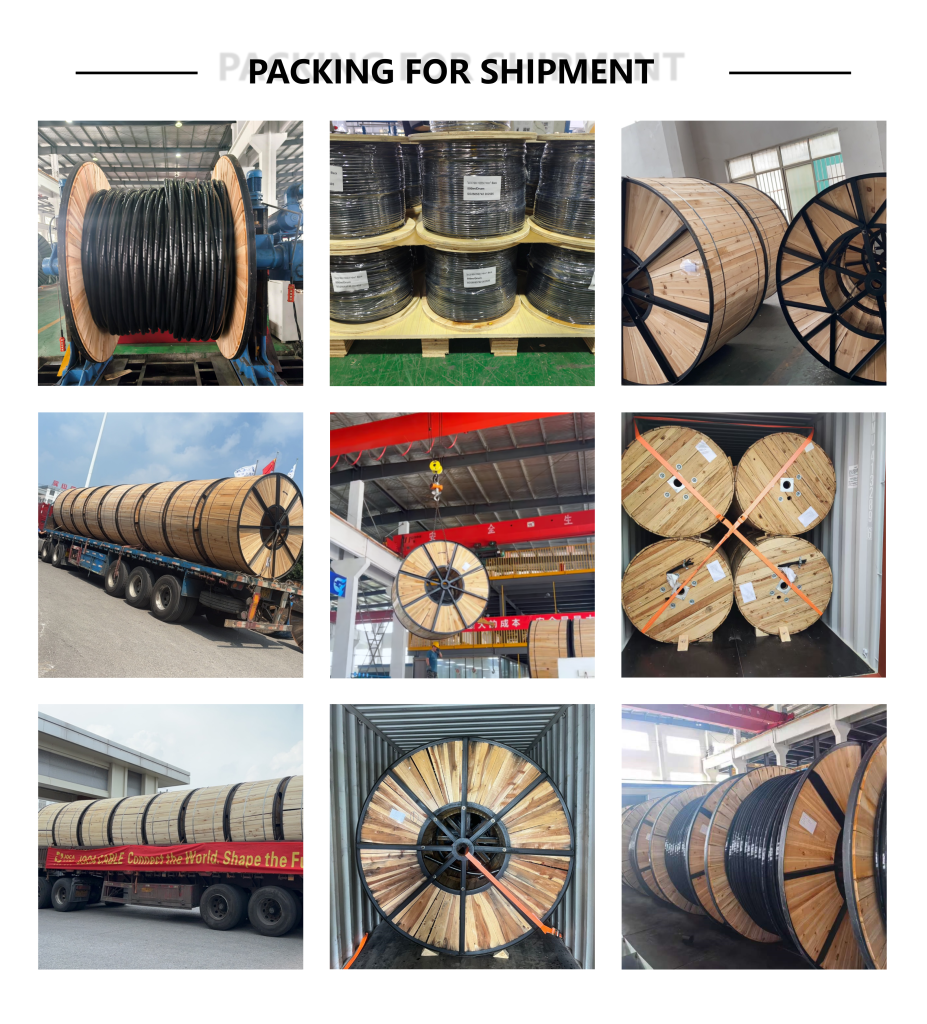
Emballage pour expédition
Pour répondre à divers besoins de transport, il existe de nombreuses méthodes d'emballage qui peuvent être utilisées.
Vous avez plus de questions ?
Commencez facilement en trouvant les réponses aux questions fréquemment posées sur notre entreprise et nos services.
Q : N2XR (AL) Y contre NA2XR (AL) Y : Quelle est la différence ?
UN: Juste le métal conducteur. N2XR(AL)Y est Cuivre. NA2XR(AL)Y (avec le ‘A’) est Aluminium Structurellement, ils sont identiques.
Q : Pourquoi utiliser l'armure en aluminium (AWA) au lieu de l'acier (SWA) ?
UN: Physique. Puisque c'est un Noyau unique câble, il génère un fort champ magnétique Si vous l'enveloppiez dans de l'acier (qui est magnétique), le câble se transformerait en chauffage à induction et cuirait lui-même L'aluminium est amagnétique, 1, donc il empêche le câble de surchauffer tout en vous offrant une protection mécanique.
Q : XLPE vs. PVC : Pourquoi mettre à niveau
UN: Ampacité. PVC est évalué pour 70 °C. poignées XLPE 90°C. Que 20 degrés supplémentaires vous permet de pousser beaucoup plus de courant à travers le câble sans endommager l'isolation C'est juste plus efficace.
Q : Puis-je enterrer cela directement dans le sol ?
UN: Oui. C'est exactement à cela que sert le blindage L'AWA protège le noyau des charges de concassage (comme le tassement du sol ou les roches) Il suffit de le poser dans un lit de sable pour être en sécurité.
Q : Important : Comment mettre l'armure au sol ?
UN: Attention ici. Pour les courtes courses, lier les deux extrémités est bien Mais pour les longues courses ? vous avez généralement besoin Collage à un seul point (mise à la terre d'une seule extrémité) pour empêcher les courants de circulation de chauffer l'armure Vérifiez d'abord la conception de votre système.
Q : Est-il difficile de se plier
UN: C'est plus rigide que le câble non blindé, évidemment, Il faut respecter un rayon de courbure de 15 x le diamètre du câble. Ne le forcez pas plus serré que cela, ou vous créerez des espaces dans les fils d'armure.
Q : À quelle tension s'agit-il
UN: Distribution standard basse tension. 0,6/1kV.
Q : Comment puis-je obtenir un prix ?
UN: Ne perdez pas de temps avec les formulaires génériques Envoyez-nous simplement votre email Calendrier du câble. Dites-nous : Cuivre ou Al ? Taille de la coupe transversale ? longueur totale ? nous calculerons le poids du métal et vous enverrons un devis.