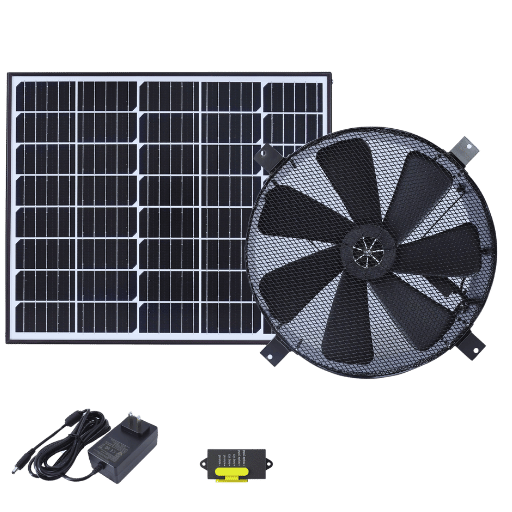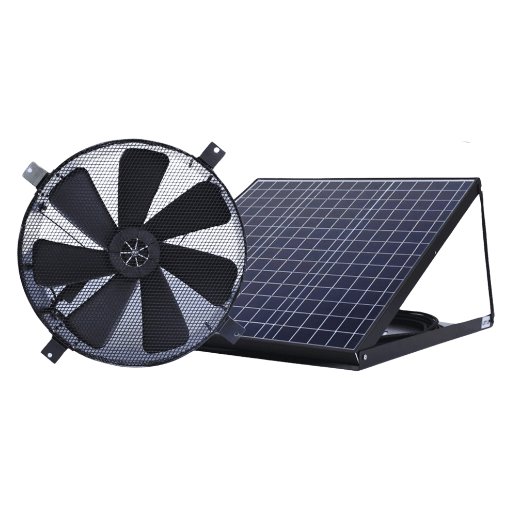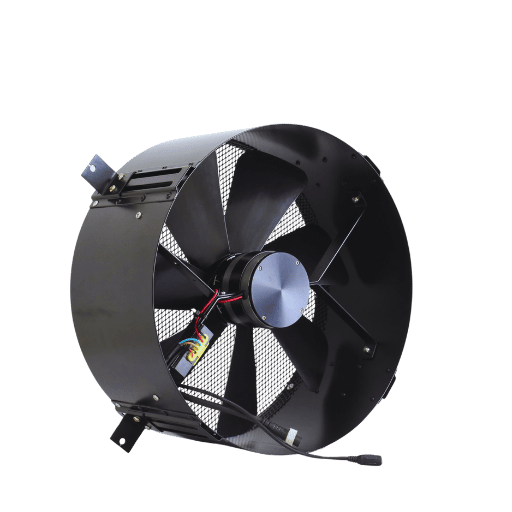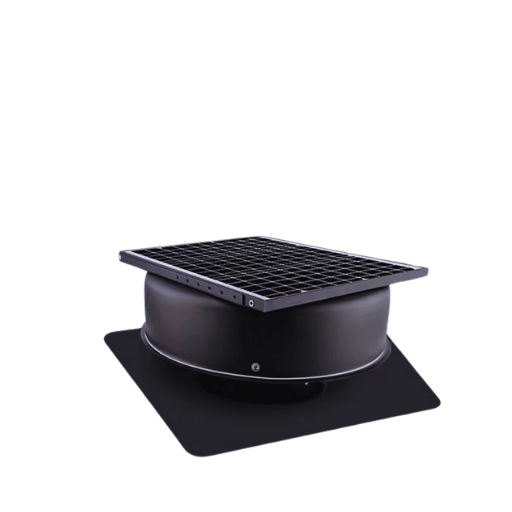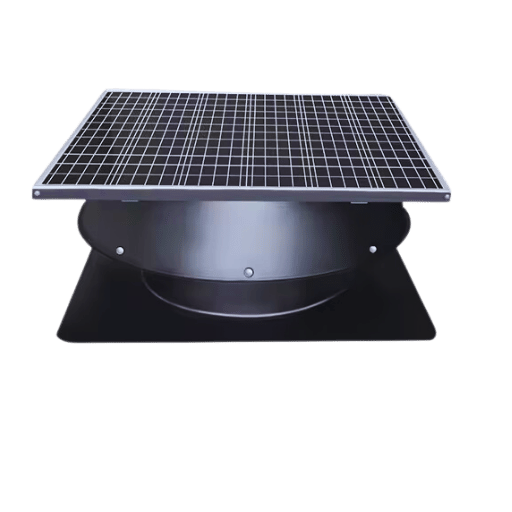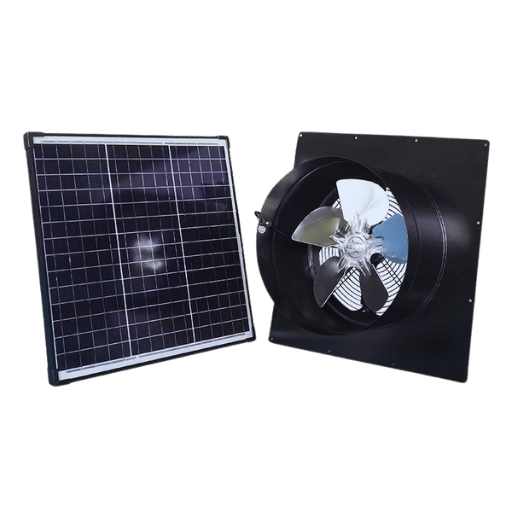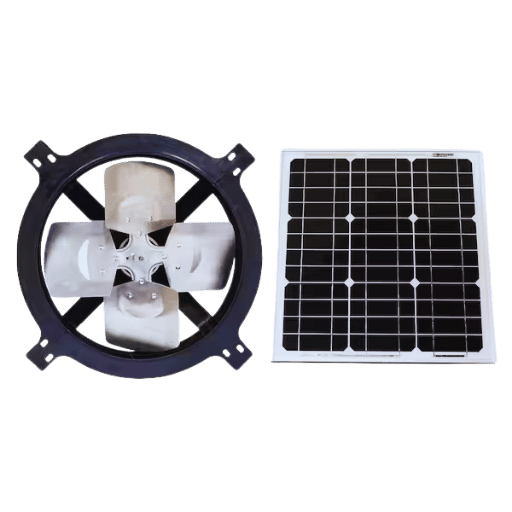


With people becoming more interested in energy-saving and eco-friendly alternatives, solar attic fans have become a trend, especially gable mount ones. This blog post seeks to discuss the advantages and technical specifications of an efficient solar gable attic fan. We’ll look at how solar power works to cool down your house efficiently, which in turn lessens the burden on traditional air conditioners, thereby cutting down energy costs eventually. Moreover, it will also touch on installation steps, maintenance advice as well as notable characteristics that make this product an excellent investment for anyone who wants to improve their home’s overall energy efficiency level.
What Are Solar Energy Gable Vents And How Do They Operate?

Solar Powered Gable Vent Basics
太陽能 gable vents are solar-powered ventilation systems used to increase air movement in attics. This is achieved by transforming sunlight into electricity through photovoltaic panels, which then operate a fan driven by solar energy that expels hot air from the attic. This helps to control the temperature of the loft, reduce moisture levels, and relieve pressure on heating, ventilation, and air conditioning units, thereby making them more energy efficient.
How Solar Panels Power Your Gable Vent
Solar panels capture sun rays using photovoltaic cells, thereby converting them into DC or direct current electricity. The motor of a gable vent fan is powered by DC power. When there is enough solar energy available, the fan starts working, thereby blowing out hot air from an attic and allowing for better circulation. Because such a system does not depend on any home grid electricity, it saves energy, thus reducing reliance on traditional AC units.
The Significance of Attic Ventilation Fans with Solar Power
By removing heat and minimizing moisture content within attics, solar attic fans help maintain conducive conditions for storage purposes. In addition to this they also enhance passive distribution systems in lofts thus boosting HVAC performance leading to reduced power bills. These appliances work independently off electric utility networks while utilizing renewable sun power thereby providing eco-friendly options for airing attics.
Why Should You Think About Installing a Solar Gable Vent?

The Advantages of Solar-Powered Attic Ventilation
- 能源效率: An air conditioning system has to work harder when hot air is trapped inside, so one that expels it using solar power would consume less electricity and reduce utility bills.
- Better Air Circulation: Such arrangements keep the temperatures in the space within optimum levels by allowing continuous movement of air, thereby lowering humidity.
- 生態友善: These vents do not rely on electricity from the national grid; hence, they save energy and protect the environment.
- Savings: As you use less AC, you will notice a significant drop in your monthly electric bill payments thus saving money overtime.
- Roof Durability: Properly ventilated attics prevent moisture and heat build-up which can damage roofs hence extending their life span.
- Sustainable: Homeowners can choose solar-powered ventilation as it uses renewable energy sources like sunlight.
Benefits of Energy Efficiency
By relieving an HVAC system from excessive workload, solar-powered gable vents greatly contribute to enhancing energy efficiency. They achieve this by getting rid of hot air and improving circulation in the attic, which keeps the temperature down, leading to lower cooling costs for houses. Furthermore, these units run on solar power, meaning no electricity is drawn from any socket; therefore, overall consumption of energy decreases even further by saving more on bills. To sum it all up, incorporating systems for venting with built-in sun panels provides convenient methods of saving household power.
Economical Savings And Tax Deductions On The Sun
Investments in such devices can bring about considerable savings over time due to reduced usage of electrical energy. Therefore, dependence on air conditioners will wane away progressively, making one pay less for utilities each month. At times, homeowners may qualify for governmental tax credits linked with the utilization of solar-powered ventilators in their lofts, thus offsetting installation charges initially incurred while buying them. Federal or state-sponsored programs offer financial motivation towards the adoption of renewable power alternatives; therefore, this becomes a cheap method.
How to Choose the Right Solar-Powered Gable Vent for Your House

What to Look for in a Solar-Powered Gable Vent
- Conversion rate of solar panels: Make sure that they have high conversion rates so as to optimize on energy production.
- Air flow capacity: It should be able to match with the ventilation needs of your house in terms of cubic feet per minute (CFM).
- 耐久性: Materials used should be resistant to weather conditions and UV rays, thus ensuring a long life span.
- Ease of installation: Go for those models that can easily fit different types of roofs and have simple installation procedures.
- Thermostat and humidistat compatibility: They must work together by having sensors that detect changes in humidity levels as well temperature variations hence operating automatically.
- Warranties & Support: Pick brands offering extensive warranty coverage coupled with reliable customer care service.
Comparison of Different Types of Solar Attic Fans
- 太陽能電池板 效率: In limited sunlight, high-performance monocrystalline panels tend to perform better.
- 氣流容量: Usually, models with a CFM rating of 800 to 1,500 are enough for most houses.
- 耐久性: To guarantee that the fan will last long, it should be made from reinforced ABS plastic or powder-coated steel.
- 安裝方便: For easy installation without difficulties choose fans with universal mounting brackets and pre-drilled holes.
- Compatibility with Thermostat and Humidistat: It is better to select models having built-in or auxiliary sensors for automatic control of its operation.
- Warranty and Support: A minimum warranty period of ten years plus strong customer service channels should be considered when buying a product.
Understanding CFM and Wattage Figures
When assessing solar-powered attic fans, it is important to know what CFM (Cubic Feet per Minute) ratings and wattage mean in terms of performance efficiency.
- CFM Rating: This rating measures the amount of air moved by a fan within one minute. It shows whether or not enough ventilation can be achieved in an attic area. For bigger attics, more airflow is indicated by higher cubic feet per minute rates.
- Watt Rating: The watt rating of a solar-powered attic ventilator refers to how much energy the motor consumes. Fans with low-wattage typically cost less to run because they use less power but this should not be taken for granted as there needs to be a balance between this factor and CFMs produced so that they work effectively without consuming too much energy. Most commonly, 10-30 watts are used by solar-powered attic fans since it provides an optimum ratio between air motion and electricity utilization.
Tips for Installing Solar Gable Vents and Do It Yourself Guide

Preparing Your Attic for Installation
- 安全第一: Ensure all power is turned off and that you have suitable protective clothing such as gloves, goggles and dust masks.
- Attic Inspection: Assess the attic for any damage or weak points in its structure.
- Clear the Space: Remove any debris or obstructions that may hinder installation or affect ventilation.
- Size up the Vent Location: Measure accurately and mark out where the solar gable vent should be placed, following the manufacturer’s instructions on this as well as considering best air flow practices.
- Gather Tools and Materials: Prior to commencing installation, gather all required tools (drill machine, screwdriver, tape measure etcetera) along with necessary materials (mounting brackets, screws etc.).
Guide for Installation Step-by-Step
- Cutting an Opening: In the attic wall, cut a hole big enough to fit the solar gable vent using the marked measurements.
- Fitting Mounting Brackets: Securely fix mounting brackets onto the vent opening with screws and screwdriver, ensuring that they are strong enough to hold a solar-powered fan.
- Fixing Solar Gable Vent: Put the solar gable vent on top of the brackets and fix it using provided screws.
- Connecting The Solar Panel: Connect the solar panel to its allotted place on the roof or outside wall making sure it gets as much sun exposure as possible.
- Wiring The System: Wire from solar panel to solar gable vent according to manufacturer’s wiring diagram for correct connection during installation.
- Testing The Fan: Turn on the power supply to see if the fan works well and adjust if need be.
How to Keep Your Solar Gable Vent Efficient

Tips for Regularly Keeping Up with It
- Check the Solar Panel: Check this part regularly for rubbish and clean the face of it while you are at it so as to enable maximum absorption of sunlight.
- Look at the Vent and Fan: At regular intervals make time to check if there is anything blocking or damaging these two areas; clean them too if necessary, in order not lose efficiency of your solar powered attic ventilator.
- Examine Electrical Connections: Try wriggling wires around connectors – they should be tight and free from corrosion.
- Observe Performance: Note how well air moves through system & any funny sounds which may indicate wear in the attic ventilator or on the solar fan motor.
- Modify Seasonal Settings: Tweak vent settings depending on time of year so that its performance is maximized.
- Professional Inspection: Each year get an expert technician come out and do a full inspection of all parts – this will help keep things working properly.
Maximizing Efficiency at Different Periods of the Year
- Spring and Summer: Ensure that the solar panel is not blocked by anything during these months. It should be open to the maximum amount of sunlight possible. Clean this part more often as it tends to collect dust and pollen. To lower attic temperatures and improve ventilation, set the vent to work at higher speeds.
- Autumn and Winter: For cooler months, decrease speed of the vent so as not to lose too much heat. In order to keep it efficient, remove leaves or snow from this panel frequently. Also check if there is any ice or snow blocking the vent itself.
Following these seasonal modifications will enable your solar gable vent operate at its full capacity all year round thus ensuring an optimal airflow and saving energy.
Fixing Prevalent Issues
- Fan doesn’t work: Double-check electrical connections and confirm that the solar panel is getting enough sunlight. See if the circuit breaker has tripped and reset it if necessary.
- Strange noises: Look for debris or damages inside of the fan. Tighten any parts that are loose and lubricate the motor as needed.
- Airflow has been reduced: Clean out vents and fan blades so nothing is blocking them. Check for anything in the attic that might obstruct ventilation.
- Inefficient solar panels: Give the solar panel a good cleaning and make sure it’s positioned right. Don’t let anything shade it during peak hours of sunlight.
- Sometimes working: Go over all electrical connections to get rid of corrosion and secure any wires that might be loose. Also, never allow any part of your solar panel system to be shaded at any time.
- 過熱: Make sure you have appropriate vent settings for each season. Confirm that your attic insulation isn’t blocking airflow either.
Top Solar Gable Vent Products: Reviews and Recommendations

Best Value: High Performance – Low Cost
Question: My Fan is not working.
Solution: Make sure all electrical connections are tight, check that the solar panel is clear and facing the right way, and reset the circuit breaker.
Question: What is causing this unusual noise?
Solution: Remove debris, tighten components, inspect for damage or lubricate the motor.
Question: Why has the airflow reduced?
Solution: Clean vent and fan blades; remove any obstructions and ensure free ventilation of attic space.
Question: What should I do about my inefficient solar panel?
Solution: Clean it up; reposition it so that there’s no shade during peak sunlight hours.
Question: My Gable fan keeps turning off and then on. How do I fix this?
Solution: Check all electrical connections for security; remove corrosion if necessary; avoid partial shading of solar panels that may cause intermittent operation of gable fans.
Question: The thing overheats! What could be wrong with it?
Solution: Adjust vent settings according to season; make sure insulation does not block airflow overheated areas.
Best Choices for Higher Performance
Query: Fan Not Working
Secure electrical connections;check if the solar panel is covered or pointed in the wrong direction;reset the circuit breaker.
Question: Unusual Noises
Get rid of debris, look for signs of damage, tighten loose parts, lubricate motor.
Question: Reduced Airflow
Clean vent and fan blades; remove blockages; ensure proper attic ventilation.
Question: Solar Panel Inefficiency
Clean the solar panel, adjust its position, and eliminate shading to maximize its power potential as an attic ventilation fan.
Question: Intermittent Operation
Secure electrical connections; remove corrosion; prevent shading.
Question: Overheating
Adjust vent settings based on season; make sure insulation isn’t blocking airflow so that attic ventilator operates efficiently.
參考來源

常見問題
Q: What is an efficient solar gable attic fan?
A: An efficient solar gable attic fan is a ventilating solution for the attic powered by sunlight that comes with the ability to cool down the space. They help in regulating the temperature in the loft, which could cut cooling bills and extend life expectancy for roofs and other parts of a house.
Q: How does a solar gable attic fan work?
A: The mechanism of operation for this type of attic fans lies within its name as it uses solar energy collected by photo-voltaic cells on one side (gable) while releasing hot air from another end. This process aids in keeping lower temperatures within attics which can lead to less power usage throughout homes thus creating more comfortable living environments.
Q: What are the benefits of using a solar-powered attic fan?
A: There are many advantages associated with applying such devices including energy saving, better ventilation, reduced costs among others. These appliances do not pollute environment; they also decrease workload on HVAC systems and take away heat through exhaustion.
Q: How do I install a solar gable attic fan?
答:大多數型號的設計都是用戶友好的,這樣任何人都可以輕鬆設定它們,沒有太大困難,也不需要特殊工具,除了少數常用的 DIY 儀器。雷明頓太陽能板提供有關安裝的詳細說明,而 QuietCool 也提供逐步指導。如果安裝變得複雜,請諮詢專業人員。.
Q: How much can I save with a solar-powered attic fan?
答:安裝其中一個可以讓您節省20-30% 的空調費用,因為它可以減少對空調的依賴,減少空調的工作難度,特別是在夏季,此時大部分電力都會消耗,試圖進一步降低室內溫度超出必要範圍,取決於家庭隔熱水平以及尺寸和氣候等其他因素
Q: Are federal tax credits possible?
答:是的,許多此類產品可以在聯邦稅收抵免的幫助下購買。要了解最新的國稅局法規或可以實現的節省,最好查看它們或詢問稅務專家。.
Q: Can a solar gable attic fan work with low light?
答:許多型號都配備了高品質的無刷直流電機,可以充當在不同光照條件下運行的閣樓通風機和排氣扇,因此雖然暴露在直射陽光下最適合太陽能山牆閣樓風扇,但它們仍然可以在其他條件下工作條件也一樣,但這取決於型號和可用的陽光。.
Q: What is the capacity of your average solar gable attic fan?
答:不同的型號可能有不同的容量;例如,有 20 瓦山牆風扇等能夠為 2,000 平方英尺的閣樓空間通風的風扇,因此請參閱製造商規格,以了解有關特定產品的更多資訊。.
Q: Do warranties exist for solar gable attic fans?
A: Yes, oftentimes limited warranties are offered by manufacturers on these units, including gable mount and ventilation fan components – it’s important to read through warranty information carefully so you understand what is covered and not covered, such as hail damage or improper installation.
Q: What sorts of motors do solar gable attic fans use?
A: Normally they use energy-efficient brushless DC motors because they serve well in terms of quality and quietness besides requiring little maintenance since they’re very strong.