







熱電偶是現有最通用的溫度測量設備之一。它們的測量能力廣泛應用於從製造業、航空航太、醫療保健到能源生產的工業。. 熱電偶, 能夠在極端環境中測量高溫,由於其廉價的性質和穩健性,在現代工程和科學應用中變得至關重要。本指南提供了對熱電偶、類型、應用和操作原理的全面了解:工程技術人員和工程師,或對精密溫度測量感興趣的人,在閱讀本文後將更好地理解熱電偶的選擇和使用。.
熱電偶簡介
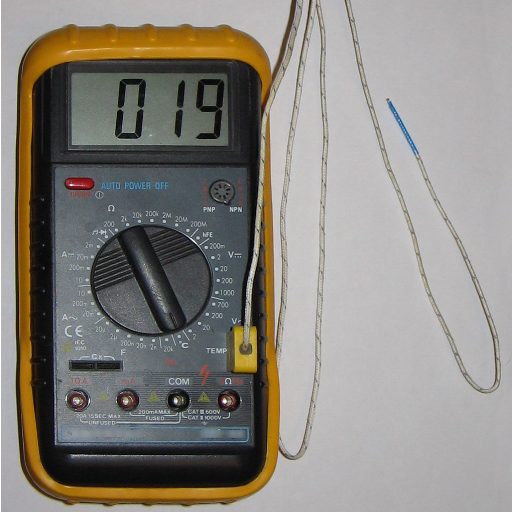
根據塞貝克效應的工作原理,熱電偶是溫度測量裝置。這種效應包括當兩種不同的金屬在兩個結處連接並產生溫差時產生電壓。由於其可靠性、寬溫度範圍能力和快速響應時間,熱電偶廣泛應用於工程和科學領域。熱電偶有多種類型,例如 K、J、T 和 E 型,每種熱電偶都設計用於一定範圍內和不同環境的溫度。它們用於工業製程監測、暖通空調系統、實驗室實驗等,有效率、準確地呈現溫度數據,被認為對操作控制和安全至關重要。.
什麼是熱電偶?
熱電偶是一種溫度感測器,其兩根電線由兩種不同的金屬製成,一端熔合,形成結。當此結點相對於保持在參考結點的電線的其他端暴露於溫差時,會產生電壓,稱為熱電電壓或塞貝克電壓。該電壓與溫差成正比,在測量儀器的幫助下,將其轉換為被測溫度。熱電偶發現在較寬的工作溫度範圍(低溫水平至 1800 °F 以上,取決於類型)下工作的能力具有優點,並且響應時間短。它們的各種構造可能性使它們可用於從工業自動化到能源生產和研究實驗室的許多應用。.
塞貝克效應解釋
當兩個結保持在不同溫度時,在兩個不同的導體或半導體的電路中產生電動勢和伴隨電壓時,就會遇到塞貝克效應。這種現像由 Thomas Johann Seebeck 於 1821 年發現,並為熱電偶等熱電應用奠定了基礎。只要結之間存在溫差,電荷載子(例如電子或電洞)就會從熱區域遷移到冷區域,產生與各自溫度梯度成正比的電位。.
從導體發出的電壓的大小取決於導體的特定物理特性;因此,所謂的塞貝克係數因各種導電對而異。大的塞貝克係數意味著一次溫差的電壓很大。眾所周知,塞貝克效應在某些給定溫度範圍內是線性的,最常用於溫度測量、能量收集系統應用和感測器。儘管其效率始終值得懷疑,但它仍然是科學和工業發展的重要因素。.
熱電偶如何運作
熱電偶起作用於塞貝克效應,該效應涉及在兩個不同的金屬結上存在溫差的情況下產生電壓。兩根不同材料的電線組成了熱電偶,熱電偶在一端聚集在一起,稱為熱接面,暴露在待測量的溫度下。電線的另一端保持分開,形成保持在某個已知參考溫度的冷接面。.
兩個結點(一個熱結點和一個冷結點)之間的溫度梯度導致感應熱電電壓與溫差成正比。此特定電壓是可測量的,可用於透過使用熱電偶已知的材料特定特性來確定熱結處的溫度。相較之下,透過表格或校準曲線,熱電偶可以提供極其精確和可靠的溫度讀數,特別是在工業、科學實驗或工程中使用時。由於其簡單的工作原理、寬測量範圍和堅固的性質,熱電偶在需要精確測量物體溫度的環境環境中找到了有用的工業應用。.
熱電偶的類型
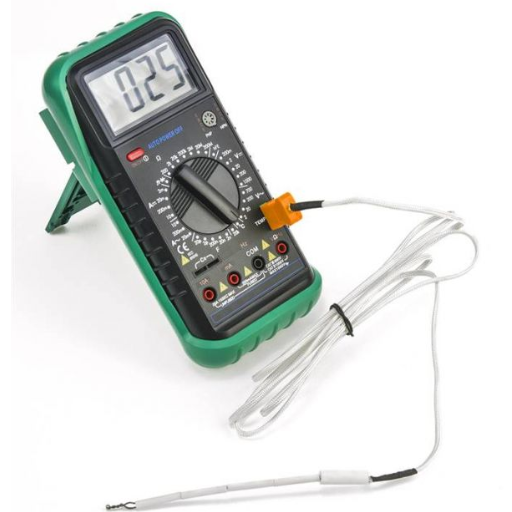
熱電偶的組成不同,因此根據溫度範圍分為數百種類型。下面列出了一些最熟悉的類型:
| 類型 | 成分 | 溫度範圍 | 主要特點 |
|---|---|---|---|
| K型 | 鉻鎳鐵合金 | -200°C至1,260°C | 多功能,用於多個行業 |
| J型 | 鐵康斯坦坦 | -40°C至750°C | 成本較低,用於舊設備 |
| T型 | 銅-康斯坦坦 | -200°C至350°C | 最適合低溫環境、低溫應用 |
| E型 | 克羅梅爾-康斯坦坦 | -200°C至900°C | 更高的輸出可提高靈敏度 |
| N型 | 尼克羅西爾-尼西爾 | -200°C至1,260°C | 非常穩定,具有優異的抗氧化性 |
| 類型研發 | 鉑銠 | 高達 1,480 °C | 常用於科學和實驗室用途 |
| B型 | 鉑銠 | 870°C至1,700°C | 最適合極高的溫度 |
每種類型的熱電偶都是根據溫度範圍、耐用性和應用需求來選擇的。這些分類確保在最惡劣的條件下進行準確可靠的溫度測量。.
不同類型的熱電偶概述
熱電偶依其材料成分和溫度適用性分為不同類型。最常見的類型包括:
K 型(鉻鎳鐵合金)
這些熱電偶因其多功能性而廣受歡迎,可在 -200°C 至 1,260°C 的溫度範圍內正常工作。它們具有良好的靈敏度且耐用;這就是為什麼它們在發電和化學加工等工業應用中特別常見。.
J 型(鐵康斯坦坦)
J 型熱電偶通常用於溫度稍低的應用,範圍從 -210 °C 到 760 °C。它們用於中等溫度的環境,例如塑膠製造和食品加工。.
T 型(銅-康斯坦坦)
Best suited for very precise measurements, they work best in colder environments with a temperature range of -270°C to 400°C. They are suitable for cryogenics and other low-temperature workings.
Type N (Nicrosil-Nisil)
Type N thermocouples enjoy a reputation for stability and oxidation resistance; often, they are utilized in high-temperature industrial processes up to 1,260°C. They substitute Type K thermocouples where harsh environments require reliability over long periods.
Each type of thermocouple is selected with due regard to the requirements of the particular application, such as temperature ranges, environmental conditions, and accuracy. Correct selection offers the best chance to optimize performance in demanding industrial and scientific operations and to ensure longevity of measuring equipment.
Type K Thermocouple: Features and Applications
Type K thermocouples are used as temperature sensors due to their wide temperature range and durability. They consist of two wires: Chromium-Nickel (positive leg) and Aluminum-Nickel (negative leg). Suitable temperature measuring thermocouples used in the range from -200°C to 1,260°C (-328°F to 2,300°F), their sturdy construction allows their use in oxidation environments like in furnaces, gas turbines, and heat treatment processes.
Type K thermocouples are identified by characteristics like good accuracy, low maintenance, and being competitive for a wide range of materials and temperature controllers. However, continued exposure to reducing or sulfur-containing atmospheres may degrade thermocouple accuracy when degradation sets in. Applications include temperature measurement in chemical plants, power plants, the metal industry, and other heavy industries well-known for dependable thermometry.
In general, fabrication of Type K thermocouples, some insulating materials, like ceramic or mineral insulation, so they can be shielded from environmental factors of the outdoors. While a low-temperature, high-accuracy operation would never warrant their employment, high resistance to temperature variations keeps them in their highest regard in field applications, where durability and performance are paramount considerations.
Type T Thermocouple: Benefits and Usage
Type T thermocouples use a copper-constantan couple and are usually employed wherever exact temperature measurement is needed, provided the temperature does not rise too high. The temperature range thus considered can be anywhere from -200°C to 350°C (-328°F to 662°F), placing their utility within cryogenic or low-temperature range applications. High accuracy and stability are shared attributes of Type T thermocouples, together with excellent repeatability and very good corrosion resistance in mildly corrosive or oxidizing environments.
Robustness against drift is what makes the thermocouples credible, serendipitously bringing forth reliability in any laboratory as well as industrial sphere of application. Type T thermocouples find their applications in the pharmaceutical industry, food storage, and medical arena, maintaining their standard in extremely low-temperature situations. These thermocouples, with an extruded jacket of high voltage insulating PTFE or a low voltage PVC insulation, are built for rugged operating conditions. Besides, they remain compatible with normal thermocouple measurement instruments. Hence, they remain the preferred choice for small-scale operations requiring precise temperature measurement.
Type J and Type R Thermocouples: Comparisons
Type J and Type R thermocouples differ across several grounds, thereby being suitable for different applications. In Type J thermocouples, the metallic pair is iron and constantan (copper-nickel alloy), and temperature ranges lie between -210°C and 760°C. They are cheap and reliable, working well in weak oxidizing and reducing atmospheres. However, they tend to oxidize over time and thus are seldom permitted in high-temperature environments or for upper limit time period applications in humid conditions.
On the other hand, Type R thermocouples, which use platinum and platinum-rhodium alloys, have the highest accuracy and stability among the high-temperature thermocouples. These thermocouples are useful in processes requiring very high-temperature measurements, for example, the manufacturing of glasses, metallurgy, etc. But, being precious metals, they do cost more than the Type J.
The operating temperature range, the environmental conditions, and perhaps the cost models need to be kept in mind while selecting one type or another of thermocouples. Type J, being marginally less expensive, can be applied for moderate temperatures. Type R, on the other hand, finds use in high-temperature environments that call for precision and ruggedness.
Type E and Type N Thermocouples: Unique Characteristics
Composed of chromel and constantan, Type E thermocouples are the most sensitive of all thermocouple types and are especially suited for the measurement of low temperatures. With a temperature range of -270°C to 870°C (-454°F to 1600°F), these thermocouples exhibit superb stability in oxidizing atmospheres with a higher signal output and can give the outputs even in cryogenic environments. So, Type E has the characteristics that support scientific applications for extremely precise low-temperature measurements.
Type N Thermocouples consist of Nichrome and Nisil alloys engineered to resist oxidation under high-temperature stability. Their working range extends down to -270°C up to 1300°C (-454°F to 2372°F), placing them among the good contenders for industrial applications like heat treat and furnaces. And in cases where they may be subjected to a prolonged time at elevated temperatures, Type N thermocouples have a superior resistance to drift as compared to the others, like Type K. They are usually preferred due to their durability and reliability when corrosive or aggressive elements are involved.
Type B Thermocouple: High-Temperature Applications
Type B thermocouples are designed for application in high-temperature environments, able to operate up to 1700°C (3092°F). They are made from platinum-rhodium alloy (positive leg: 70% Pt/30% Rh and negative leg: 94% Pt/6% Rh), which guarantees their stability and accuracy at high temperatures. These thermocouples do not experience much drift for long periods, enabling their use in applications where temperature has to be controlled with precision, such as glass making, metallurgy, and industrial furnaces. They are the only thermocouples that, unlike the rest, have their output voltage being practically flat below 50°C (122°F), thereby being unable to measure low temperatures, but they are very reliable at extremely high temperatures. They must be selected whenever a certain resistance under thermal shock is needed, compatible with inert or oxidizing atmospheres, and there are many industries working in very demanding thermal conditions.
Choosing the Right Thermocouple

In selecting the appropriate thermocouple, the following considerations should be kept in mind.
Key Selection Factors:
- 溫度範圍: To cite an example, Type K thermocouples are used for general purposes, whereas Type B thermocouples would be chosen in an environment of extremely high temperatures. Thus, the temperature range must cover the area in which the thermocouple shall provide measurements efficiently.
- 環境: The operational conditions must be investigated in terms of corrosive materials, moisture, or an oxidizing atmosphere. The said types of environments may justify the use of a Type N thermocouple, for example, as this is a thermocouple type that resists oxidation.
- The Accuracy of the Measurements: Thermocouples have varying degrees of accuracy depending on the type. One must then choose thermocouples suited to the level of accuracy required.
- Material Compatibility: The thermocouple material must be compatible with the equipment or environment to avoid chemical reactions or degradation.
- Cost and Longevity: In the case of continuous application in a harsh environment, the initial cost may be overshadowed by longevity.
By aligning the performance and reliability factors with your application, you assure proper functioning and dependability thereupon.
Factors to Consider When Choosing a Thermocouple
End-user thermocouple selection is done by taking into detailed consideration factors that include compatibility and performance for the particular conditions of use:
- 溫度範圍: Select the thermocouple type that covers the entire range of application temperatures expected in your process. For example, Type K thermocouples are used for temperatures of up to 2,300°F (1,260°C), whereas Type R and Type S thermocouples are used for high-temperature measurements in industrial processes.
- Accuracy Requirements: A high level of precision is required by some applications, for example, laboratories with certain measurements require thermocouples with lower error tolerance, like Type T or Type N, to take their measurements.- Evaluate accuracy requirements based on the need-and-ability basis.
- 環境條件: In order to analyze environmental conditions, one needs to look at outside measures such as moisture, vibration, and corrosive elements. Thermocouples with good insulation and protective sheaths made of materials such as stainless steel or ceramic should be selected for harsh environments.
- Response Time: The speed with which a thermocouple reacts is vital in dynamic systems or fast temperature changes. Smaller probes usually respond faster and offer lower durability in industrial settings.
- Electrical Noise and Signal Output: Applications subject to electrical interference should include shielded cables or noise-resistant thermocouples, as in the case of thermocouples with grounded junctions, to make sure readings are reliable. Unequivocally, signal conditioning and good grounding must be taken into account.
- Installation Constraints: The size and configuration of thermocouples should suit installation points, either threaded, flanged, or directly welded. Consider probes that can be bent for complicated configurations.
Synthesis of these guidelines with insights from leading reference sources will allow one to make the best decision considering the special requirements listed for their thermal monitoring application.
Temperature Range and Accuracy
Temperature range and accuracy are critical considerations in thermocouple performance when used in thermal monitoring applications. Thermocouples can be divided according to their materials into several types, for example, Type K or Type J or Type T or Type E, with each type having specific temperature limits for operation. Type K thermocouples operate roughly between -200°C and 1,260°C, while Type T thermocouples work between -200°C and 350°C, though their accuracy may vary.
The accuracy of a thermocouple is dependent on such factors as attest to the composition of the alloys used; calibration and the standards it complies with, such as ANSI or IEC 60584. Generally, tolerances for thermocouples are ±1.1°C or 0.4% of the measured temperature, whichever is greater. High-accuracy thermocouples have comparatively more strict tolerances when manufactured and calibrated to exacting requirements.
Reliable readings can only be gained if the thermocouple type matches the expected temperature range of the application. High or low temperatures, insufficient insulation, or a poorly manufactured probe will compromise the measurement. In cases where failure can lead to serious consequences, such as in industrial processes, aerospace, and medical devices, instruments should be recalibrated regularly to maintain precision.
Thermocouple Wire and Junction Types
The categorization of thermocouple wire types depends on their alloy composition and temperature range suitability, the common ones being K, J, T, and E: K (nickel-chromium/nickel-aluminum) is the most common type, given its wide temperature range (-200°C to 1,260°C) and general ruggedness. Type J thermocouples (iron/constantan) operate in the range of -40°C to 750°C, working especially well in reducing atmospheres. Type T (copper/constantan) is suitable for low-temperature purposes (-200°C to 370°C) and rarely fails in damp or corrosive atmospheres. Type E (nickel-chromium/constantan) has the highest sensitivity of the standard thermo wires and is used for cryogenic temperatures.
| Junction Type | 描述 | Response Time | 最佳用例 |
|---|---|---|---|
| Grounded Junction | Junction is physically connected to the protective sheath | Very Fast | Fast response applications may induce electrical noise in sensitive measurements |
| Ungrounded Junction | Junction is electrically isolated from the sheath | 中等 | Conditions with electromagnetic interference |
| Exposed Junction | The thermocouple bead is exposed | Fastest | Maximum speed response, but susceptible to contamination and mechanical damage |
With respect to wire and junction types, the specifications of the operational environment and required measurement accuracy should be taken into consideration to yield a proper selection.
熱電偶的應用
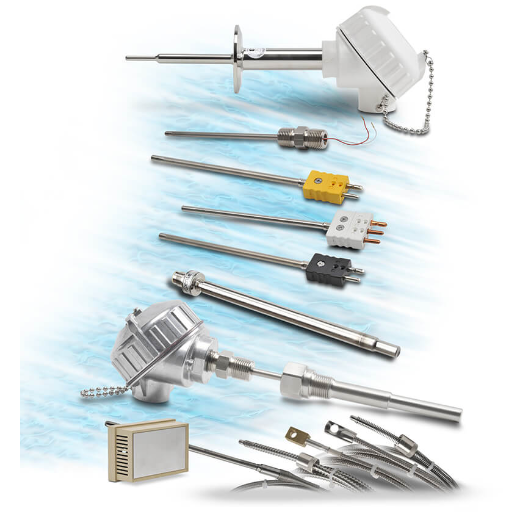
Thermocouples find widespread application in various industries because they are reliable and durable and can measure extremely high temperatures. Some of the common applications of thermocouples are:
- Industrial Processes: Temperature monitoring and control for hot furnaces, kilns, and chemical reactors.
- HVAC Systems: Measurement of temperatures in heating, ventilation, and air conditioning equipment.
- 汽車工業: Measurement of exhaust gas temperatures and evaluation of engine performance.
- Energy Applications: Temperature measurement in power plants and free energy systems.
- Medical Devices: Monitoring laboratory equipment with industrial sterilizers that require precise temperature control.
Their strong points ensure that they remain a critical measurement instrument for all the environments that require fast and responsive temperature measurements.
Industrial Applications of Thermocouples
Thermocouples are a sort of measurement that makes its way into many industries because they have a durable nature, a range of operating temperatures, and a quick reaction time. Some other application areas are described below for the key sectors:
航空航天與國防
Thermocouples find usage in jet engines and space vehicles to measure gas exhaust temperature and maximize performance under harsh ambient conditions. They are also used in high-precision equipment for thermal management.
Chemical and Petrochemical Industry
These sensors are employed for process control in reactors, distillation columns, and storage tanks, where temperature has to be maintained strictly for the sake of product quality and safety.
Food and Beverage Industry
Thermocouples are used during cooking, freezing, and pasteurization to meet stringent requirements prescribed by regulatory bodies for safety and quality.
Metallurgy
Accurate temperature checking is done during melting, annealing, and heat-treating processes to give metals and alloys a certain set of properties.
Being adaptable to very harsh operations is a great feature that makes them relevant for any industrial process, plus the ability to provide accurate data.
Use in HVAC Systems and Thermostats
Thermocouples have been rightly termed as temperature sensors that stay in the heart of an HVAC system or thermostat in ensuring adequate temperature measurement for the prevailing conditions. They are used with systems in fine-tuning the heating, cooling, and ventilation processes. By monitoring temperature changes inside furnaces or heat exchangers or conduction into air ducts, thermocouples guarantee correct control of system performance. The ability of thermocouples to identify rapid temperature changes makes them an integral feature in safety systems to avoid potential hazards, such as overheated situations or faults within the heating elements. Thermocouples, with their durability and ability to withstand high temperatures, have become sine qua non in modern HVAC applications for energy efficiency and longevity of system life.
Thermocouples in Scientific Research
Drawing from the prized tool that science offers, thermocouples are one such tool, held famous for their accuracy and application in temperature measurements. They find their home mainly in places where material science, chemistry, or physics reign…experiments where thermal control is of utmost concern. They can work, measuring temperature ranges in various applications, from very low temperatures to extremely hot temperatures, including monitoring chemical reactions, analyzing phase transition occurrences, and evaluating new material thermal properties. Due to their rapid response time, they are preferred in laboratories where it matters in active experiments. Also, their small size complements most data acquisition systems, thus guaranteeing almost seamless integration into laboratory equipment. Their reliability and adaptability make them essential for the evolution of scientific discoveries.
Calibration and Maintenance of Thermocouples
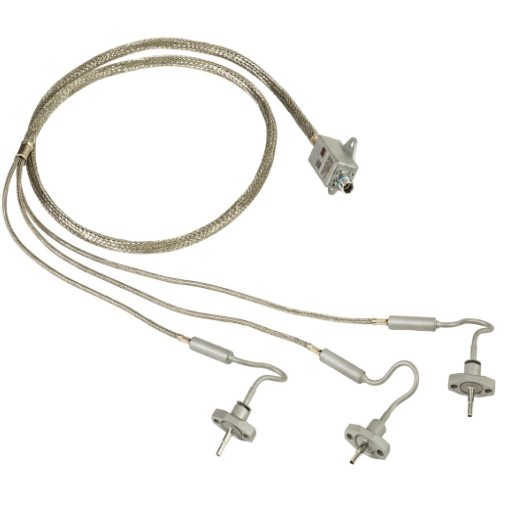
Thermocouples must always be calibrated and maintained well to keep good temperature readings over long periods. Calibration should be carried out frequently by ensuring a reference temperature source (for instance, a temperature-controlled bath or a dry block calibrator) is employed to compare the readings of the thermocouple with the known standard. This procedure brings out any deviation and permits adjustment whenever necessary.
With regard to maintenance, thermocouples need to be inspected for visible damage, corrosion, or contamination, as all these factors lessen functionality. Such thermocouples with damage or those that are worn out should be disposed of and replaced immediately in the interest of accuracy of measurements in a wrap-up manner. While going about it, ensure proper storage of thermocouples so as to avoid any mechanical stress or bending in the course of handling. Adhering to these will also help in keeping it well-performing for a longer time.
Importance of Calibration for Accurate Measurement
Calibration of thermocouples, like any other instrument, is an essential process if measurement accuracy and reliability are to be assured. These instrument ranges are subjected to drifting due to the influence of environmental factors, wear, and in actual practice. The calibration process fixes these errors either by comparing the behaviour of the instrument against a reference standard with a known accuracy or by setting the instrument within the tolerances allowed. An instrument should be calibrated to comply with standards and regulations in its industry, to reduce errors in measurements, and to enhance the quality of products.
Early detection of any abnormality in the instrument due to improper calibration could result in expensive loss of operational time or diminished efficiency. Calibration frequency should depend upon the condition of usage, i.e., how harsh a shock the instrument undergoes during use, temperature variations that surround it, and the manufacturer’s recommendations. Regular calibration that remains traceably documented helps to maintain the accuracy of measurements, which is important in activities ranging from industrial processes to laboratory studies. Putting an emphasis on calibration may allow companies to improve measurement reliability and uphold operational efficiency for the long term.
Common Maintenance Practices
Essential Maintenance Guidelines:
- Conduct regular inspections to check for wear and tear on thermocouple components
- Adhere rigorously to servicing intervals as recommended by manufacturers
- Keep the operating environment free from contaminants and sources of damage
- Maintain a detailed and organized logbook for all maintenance activities
- Ensure traceability for industry standards compliance
- Monitor for signs of corrosion, mechanical damage, or degradation
- Store thermocouples properly to prevent mechanical stress or bending
Troubleshooting Thermocouple Issues
Troubleshooting thermocouple-related issues entails methodically looking into the plausibility of problems that could detrimentally affect the critical sensor’s performance. Common issues are things like loose connections, physical damage, incorrect wiring, and those relating to calibration. Check first that the thermocouple wiring is intact and that all connections are tight without any corrosion or wear. Also, check the probe for any visible signs of damage, such as bends or breaks, since such damage will almost certainly invalidate its function.
After this, check that the thermocouple is properly connected to the measuring unit, following the polarity and wiring standards set forth by the manufacturer. In the case of inconsistent or wrong readings, proceed to recalibrate the thermocouple against a known temperature to eliminate possible calibration errors. Also, make sure the type of thermocouple fits with the device input settings, for example, type K or type J. If the problems still appear after these issues have been taken care of, replace the thermocouple or test it with other equipment to check if the fault lies on the measuring side.
| Common Issue | Possible Cause | Troubleshooting Steps | 解決方案 |
|---|---|---|---|
| Inaccurate Readings | Calibration drift, contamination | Compare readings with the known reference temperature | Recalibrate or replace the thermocouple |
| No Signal | Broken wire, loose connection | Check wiring continuity and connections | Repair connections or replace damaged wire |
| Intermittent Readings | Corroded connections, damaged insulation | Inspect all connection points and wire insulation | Clean connections or replace damaged components |
| Slow Response Time | Contamination, improper installation | Check the probe condition and installation method | Clean the probe or reinstall it correctly |
| Electrical Noise | Grounding issues, EMI interference | Check grounding and shielding | Improve grounding or use shielded cables |
Summary and Conclusion
Thermocouples represent one of the most reliable and versatile temperature measurement instruments available across numerous industries and applications. From their fundamental operating principle based on the Seebeck effect to their diverse types suited for specific temperature ranges and environmental conditions, thermocouples have proven indispensable in modern engineering, scientific research, and industrial processes.
Understanding the different types of thermocouples—Type K, J, T, E, N, R, S, and B—allows engineers and technicians to make informed decisions when selecting the most appropriate sensor for their specific application. Each type offers unique advantages in terms of temperature range, accuracy, durability, and cost-effectiveness. Whether measuring cryogenic temperatures in laboratory settings or monitoring extreme heat in industrial furnaces, there is a thermocouple designed to meet those exacting requirements.
The selection process requires careful consideration of multiple factors, including temperature range, environmental conditions, accuracy requirements, response time, and installation constraints. Proper calibration and regular maintenance are essential to ensure continued accuracy and reliability over the thermocouple’s operational lifetime. By following best practices in selection, installation, calibration, and maintenance, users can maximize the performance and longevity of their temperature measurement systems.
As technology continues to advance, thermocouples remain at the forefront of temperature measurement solutions, combining simplicity, robustness, and precision. Their continued evolution and adaptation to new applications ensure that they will remain critical instruments in industrial automation, aerospace, healthcare, energy production, and scientific research for years to come.
註: This comprehensive guide provides essential information for selecting, using, and maintaining thermocouples. Always consult manufacturer specifications and industry standards for specific applications and ensure compliance with relevant safety regulations.
參考來源
The Design and Inspection of the Thermocouple in the Breakout Prediction System
Proposal of a Method to Automatically Identify a Sensor as Energy Conversion or Energy Control
Design of An Automatic Temperature Recorder for Fishery Vessels Using Internet of Things Technology
常見問題(常見問題)
什麼是熱電偶?它是如何運作的?
熱電偶充當溫度感測器,由兩種不同的金屬在一個結處焊接在一起形成。加熱時,由於塞貝克效應的發生而產生電壓,從中可以推斷出溫度。.
熱電偶的主要類型是什麼?
K、J、T 和 E 熱電偶屬於常見類型。每種類型都有不同的使用材料和溫度範圍,因此它們可以測量不同用途的溫度。.
如何為應用選擇合適的熱電偶?
選擇正確的熱電偶:考慮溫度範圍、使用環境和製造熱電偶的材料。 K 型熱電偶因其一般的溫度範圍和堅固性而成為最常見的類型。.
熱電偶測量什麼溫度範圍?
熱電偶溫度測量可以在攝氏負 200 度到攝氏正 2000 度之間的任何地方進行,具體取決於熱電偶的類型和使用的材料。這些類型旨在限制在特定的溫度限制和應用範圍內。.
為什麼熱電偶顏色代碼很重要?
Thermocouple color codes identify the type of thermocouple wire used to make proper connections and measurements. For instance, a K-type thermocouple’s insulation is usually yellow, whereas that of a J-type is usually black.
熱電偶如何校準?
熱電偶的校準需要將熱電偶的輸出電壓與已知溫度源的輸出電壓進行比較。這種校準可確保準確的溫度測量對於工業應用所需的精確溫度測量非常重要。.
他們稱之為貴金屬熱電偶?
一般來說,貴重熱電偶由鉑和銠等貴金屬製成,可以實現高溫測量和穩定性。鑑於它們非常準確且抗氧化,因此它們可用於實驗室。.
熱電偶測量中的冷結是什麼?
冷結,也稱為參考結,是熱電偶線連接到測量裝置的一種方法。必須考慮結的溫度來計算結溫度和實際讀數。.
熱電偶可以在危險環境中使用嗎?
是的,熱電偶因其堅固性而廣泛用於危險環境。透過特殊的探頭設計,熱電偶可以承受極端條件,因此,這些熱電偶將用於石油和天然氣或化學工業。.