







Thermocouples present one of the most versatile sets of temperature-measuring devices in existence. Their measurement capabilities find extensive use in industries, from manufacturing, aerospace, and healthcare to energy production. Thermocouples, able to measure high temperatures in extreme environments, became vital in modern engineering and scientific applications because of their inexpensive nature and robustness. This guide offers an all-out understanding of thermocouples, types, applications, and operational principles: engineering technicians and engineers, or those interested in precision temperature measurements, will better comprehend thermocouples’ selection and use after reading this article.
Introduction to Thermocouples
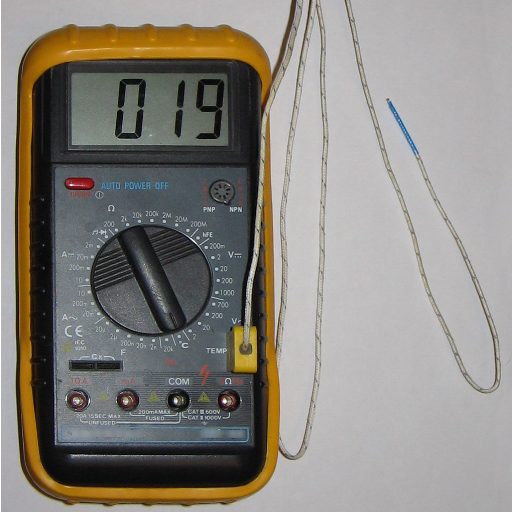
Based on the working principle of the Seebeck effect, thermocouples are temperature measurement devices. That effect consists of the generation of the voltage when two dissimilar metals are joined at two junctions and are made to have a temperature difference. Due to their reliability, wide temperature range capabilities, and fast response times, thermocouples are used widely in the fields of engineering and science. Thermocouples are of many varieties, such as Type K, J, T, and E, each designed for temperatures within a certain range and for different environments. They are employed for industrial process monitoring, HVAC systems, laboratory experiments, etc., presenting temperature data efficiently and accurately, considered critical for operational control and safety.
What is a Thermocouple?
A thermocouple is a temperature sensor with two wires made of two different metals, fused at one end, forming a junction. When this junction is exposed to a temperature difference with respect to other ends of wires kept at the reference junction, a voltage is produced, which is termed the thermoelectric or Seebeck voltage. This voltage is proportional to the temperature difference, and with the help of measuring instruments, it is converted into the temperature being measured. Thermocouples find the virtue in their capability of operating under wide operating temperature ranges (cryogenic levels to above 1800 °F, depending on the type) and have short response times. Their various construction possibilities make them usable for many applications, from industrial automation to energy production and research laboratories.
The Seebeck Effect Explained
The Seebeck effect is encountered when, with the two junctions maintained at different temperatures, an EMF and an accompanying voltage are generated in a circuit of two dissimilar conductors or semiconductors. This phenomenon was discovered by Thomas Johann Seebeck in 1821 and laid the foundation for thermoelectric applications such as thermocouples. Charge carriers, such as electrons or holes, migrate from hot to cold regions whenever a temperature difference exists between junctions, thereby generating an electric potential directly proportional to the respective temperature gradient.
The magnitude of the voltage emanating from the conductor is based on the specific physical properties of the conductor; hence, the so-called Seebeck coefficient varies for various conducting pairs. A large Seebeck coefficient means a large voltage for once temperature difference. The Seebeck effect is known to be linear under some given temperature ranges and is most commonly used in temperature measurement, energy harvesting system applications, and sensors. Its efficiency, though always questionable, continues to be an essential factor in both scientific and industrial developments.
How Thermocouples Work
The thermocouple works on the Seebeck effect, which is about voltage generation in the presence of a temperature differential across two dissimilar metal junctions. Two wires of unlike material make up the thermocouple, which comes together at one end, called the hot junction, exposed to the temperature to be measured. The other ends of the wires stay apart to form the cold junction kept at some known reference temperature.
A temperature gradient between two junctions – one hot and one cold – leads to an induced thermoelectric voltage directly proportional to the difference in temperature. This particular voltage is measurable and can be used to ascertain the temperature at the hot junction by using known material-specific characteristics of thermocouples. In contrast, through tables or calibration curves, thermocouples may give extremely precise and reliable temperature readings, especially when used in industry, scientific experimentation, or engineering. Due to their simple working principles, wide measurement ranges, and sturdy nature, thermocouples find useful industrial applications in environmental settings where the temperature of the object needs to be measured with precision.
Types of Thermocouples
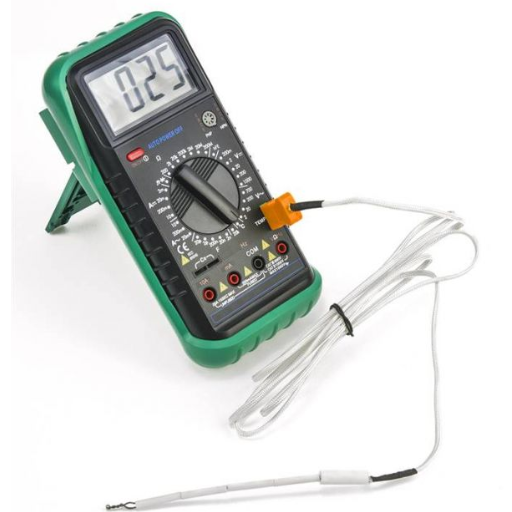
Thermocouples are composed differently and thus classified into hundreds of types in relation to temperature ranges. Some of the most familiar types are listed below:
| Type | Composition | Temperature Range | Key Features |
|---|---|---|---|
| Type K | Chromel-Alumel | -200°C to 1,260°C | Versatile, used in multiple industries |
| Type J | Iron-Constantan | -40°C to 750°C | Lower cost, used in older equipment |
| Type T | Copper-Constantan | -200°C to 350°C | Best for low-temperature environments, cryogenic applications |
| Type E | Chromel-Constantan | -200°C to 900°C | Higher output for increased sensitivity |
| Type N | Nicrosil-Nisil | -200°C to 1,260°C | Very stable with excellent oxidation resistance |
| Type R & S | Platinum-Rhodium | Up to 1,480°C | Common for scientific and laboratory use |
| Type B | Platinum-Rhodium | 870°C to 1,700°C | Best suited for extremely high temperatures |
Each type of thermocouple is selected based on temperature range, durability, and application needs. These classifications ensure accurate and reliable temperature measurements in the toughest conditions.
Overview of Different Types of Thermocouples
Thermocouples are classified into different types by their material composition and temperature suitability. The most common types include:
Type K (Chromel-Alumel)
These thermocouples enjoy wide popularity because of their versatility, functioning suitably over a temperature range of -200°C to 1,260°C. They possess good sensitivity and are durable; that is why they are especially common in industrial applications, such as power generation and chemical processing.
Type J (Iron-Constantan)
Type J thermocouples are typically used for somewhat lower temperature applications, ranging from -210°C to 760°C. They are employed in moderate temperature environments, such as plastics manufacturing and food processing.
Type T (Copper-Constantan)
Best suited for very precise measurements, they work best in colder environments with a temperature range of -270°C to 400°C. They are suitable for cryogenics and other low-temperature workings.
Type N (Nicrosil-Nisil)
Type N thermocouples enjoy a reputation for stability and oxidation resistance; often, they are utilized in high-temperature industrial processes up to 1,260°C. They substitute Type K thermocouples where harsh environments require reliability over long periods.
Each type of thermocouple is selected with due regard to the requirements of the particular application, such as temperature ranges, environmental conditions, and accuracy. Correct selection offers the best chance to optimize performance in demanding industrial and scientific operations and to ensure longevity of measuring equipment.
Type K Thermocouple: Features and Applications
Type K thermocouples are used as temperature sensors due to their wide temperature range and durability. They consist of two wires: Chromium-Nickel (positive leg) and Aluminum-Nickel (negative leg). Suitable temperature measuring thermocouples used in the range from -200°C to 1,260°C (-328°F to 2,300°F), their sturdy construction allows their use in oxidation environments like in furnaces, gas turbines, and heat treatment processes.
Type K thermocouples are identified by characteristics like good accuracy, low maintenance, and being competitive for a wide range of materials and temperature controllers. However, continued exposure to reducing or sulfur-containing atmospheres may degrade thermocouple accuracy when degradation sets in. Applications include temperature measurement in chemical plants, power plants, the metal industry, and other heavy industries well-known for dependable thermometry.
In general, fabrication of Type K thermocouples, some insulating materials, like ceramic or mineral insulation, so they can be shielded from environmental factors of the outdoors. While a low-temperature, high-accuracy operation would never warrant their employment, high resistance to temperature variations keeps them in their highest regard in field applications, where durability and performance are paramount considerations.
Type T Thermocouple: Benefits and Usage
Type T thermocouples use a copper-constantan couple and are usually employed wherever exact temperature measurement is needed, provided the temperature does not rise too high. The temperature range thus considered can be anywhere from -200°C to 350°C (-328°F to 662°F), placing their utility within cryogenic or low-temperature range applications. High accuracy and stability are shared attributes of Type T thermocouples, together with excellent repeatability and very good corrosion resistance in mildly corrosive or oxidizing environments.
Robustness against drift is what makes the thermocouples credible, serendipitously bringing forth reliability in any laboratory as well as industrial sphere of application. Type T thermocouples find their applications in the pharmaceutical industry, food storage, and medical arena, maintaining their standard in extremely low-temperature situations. These thermocouples, with an extruded jacket of high voltage insulating PTFE or a low voltage PVC insulation, are built for rugged operating conditions. Besides, they remain compatible with normal thermocouple measurement instruments. Hence, they remain the preferred choice for small-scale operations requiring precise temperature measurement.
Type J and Type R Thermocouples: Comparisons
Type J and Type R thermocouples differ across several grounds, thereby being suitable for different applications. In Type J thermocouples, the metallic pair is iron and constantan (copper-nickel alloy), and temperature ranges lie between -210°C and 760°C. They are cheap and reliable, working well in weak oxidizing and reducing atmospheres. However, they tend to oxidize over time and thus are seldom permitted in high-temperature environments or for upper limit time period applications in humid conditions.
On the other hand, Type R thermocouples, which use platinum and platinum-rhodium alloys, have the highest accuracy and stability among the high-temperature thermocouples. These thermocouples are useful in processes requiring very high-temperature measurements, for example, the manufacturing of glasses, metallurgy, etc. But, being precious metals, they do cost more than the Type J.
The operating temperature range, the environmental conditions, and perhaps the cost models need to be kept in mind while selecting one type or another of thermocouples. Type J, being marginally less expensive, can be applied for moderate temperatures. Type R, on the other hand, finds use in high-temperature environments that call for precision and ruggedness.
Type E and Type N Thermocouples: Unique Characteristics
Composed of chromel and constantan, Type E thermocouples are the most sensitive of all thermocouple types and are especially suited for the measurement of low temperatures. With a temperature range of -270°C to 870°C (-454°F to 1600°F), these thermocouples exhibit superb stability in oxidizing atmospheres with a higher signal output and can give the outputs even in cryogenic environments. So, Type E has the characteristics that support scientific applications for extremely precise low-temperature measurements.
Type N Thermocouples consist of Nichrome and Nisil alloys engineered to resist oxidation under high-temperature stability. Their working range extends down to -270°C up to 1300°C (-454°F to 2372°F), placing them among the good contenders for industrial applications like heat treat and furnaces. And in cases where they may be subjected to a prolonged time at elevated temperatures, Type N thermocouples have a superior resistance to drift as compared to the others, like Type K. They are usually preferred due to their durability and reliability when corrosive or aggressive elements are involved.
Type B Thermocouple: High-Temperature Applications
Type B thermocouples are designed for application in high-temperature environments, able to operate up to 1700°C (3092°F). They are made from platinum-rhodium alloy (positive leg: 70% Pt/30% Rh and negative leg: 94% Pt/6% Rh), which guarantees their stability and accuracy at high temperatures. These thermocouples do not experience much drift for long periods, enabling their use in applications where temperature has to be controlled with precision, such as glass making, metallurgy, and industrial furnaces. They are the only thermocouples that, unlike the rest, have their output voltage being practically flat below 50°C (122°F), thereby being unable to measure low temperatures, but they are very reliable at extremely high temperatures. They must be selected whenever a certain resistance under thermal shock is needed, compatible with inert or oxidizing atmospheres, and there are many industries working in very demanding thermal conditions.
Choosing the Right Thermocouple

In selecting the appropriate thermocouple, the following considerations should be kept in mind.
Key Selection Factors:
- Temperature Range: To cite an example, Type K thermocouples are used for general purposes, whereas Type B thermocouples would be chosen in an environment of extremely high temperatures. Thus, the temperature range must cover the area in which the thermocouple shall provide measurements efficiently.
- Environment: The operational conditions must be investigated in terms of corrosive materials, moisture, or an oxidizing atmosphere. The said types of environments may justify the use of a Type N thermocouple, for example, as this is a thermocouple type that resists oxidation.
- The Accuracy of the Measurements: Thermocouples have varying degrees of accuracy depending on the type. One must then choose thermocouples suited to the level of accuracy required.
- Material Compatibility: The thermocouple material must be compatible with the equipment or environment to avoid chemical reactions or degradation.
- Cost and Longevity: In the case of continuous application in a harsh environment, the initial cost may be overshadowed by longevity.
By aligning the performance and reliability factors with your application, you assure proper functioning and dependability thereupon.
Factors to Consider When Choosing a Thermocouple
End-user thermocouple selection is done by taking into detailed consideration factors that include compatibility and performance for the particular conditions of use:
- Temperature Range: Select the thermocouple type that covers the entire range of application temperatures expected in your process. For example, Type K thermocouples are used for temperatures of up to 2,300°F (1,260°C), whereas Type R and Type S thermocouples are used for high-temperature measurements in industrial processes.
- Accuracy Requirements: A high level of precision is required by some applications, for example, laboratories with certain measurements require thermocouples with lower error tolerance, like Type T or Type N, to take their measurements.- Evaluate accuracy requirements based on the need-and-ability basis.
- Environmental Conditions: In order to analyze environmental conditions, one needs to look at outside measures such as moisture, vibration, and corrosive elements. Thermocouples with good insulation and protective sheaths made of materials such as stainless steel or ceramic should be selected for harsh environments.
- Response Time: The speed with which a thermocouple reacts is vital in dynamic systems or fast temperature changes. Smaller probes usually respond faster and offer lower durability in industrial settings.
- Electrical Noise and Signal Output: Applications subject to electrical interference should include shielded cables or noise-resistant thermocouples, as in the case of thermocouples with grounded junctions, to make sure readings are reliable. Unequivocally, signal conditioning and good grounding must be taken into account.
- Installation Constraints: The size and configuration of thermocouples should suit installation points, either threaded, flanged, or directly welded. Consider probes that can be bent for complicated configurations.
Synthesis of these guidelines with insights from leading reference sources will allow one to make the best decision considering the special requirements listed for their thermal monitoring application.
Temperature Range and Accuracy
Temperature range and accuracy are critical considerations in thermocouple performance when used in thermal monitoring applications. Thermocouples can be divided according to their materials into several types, for example, Type K or Type J or Type T or Type E, with each type having specific temperature limits for operation. Type K thermocouples operate roughly between -200°C and 1,260°C, while Type T thermocouples work between -200°C and 350°C, though their accuracy may vary.
The accuracy of a thermocouple is dependent on such factors as attest to the composition of the alloys used; calibration and the standards it complies with, such as ANSI or IEC 60584. Generally, tolerances for thermocouples are ±1.1°C or 0.4% of the measured temperature, whichever is greater. High-accuracy thermocouples have comparatively more strict tolerances when manufactured and calibrated to exacting requirements.
Reliable readings can only be gained if the thermocouple type matches the expected temperature range of the application. High or low temperatures, insufficient insulation, or a poorly manufactured probe will compromise the measurement. In cases where failure can lead to serious consequences, such as in industrial processes, aerospace, and medical devices, instruments should be recalibrated regularly to maintain precision.
Thermocouple Wire and Junction Types
The categorization of thermocouple wire types depends on their alloy composition and temperature range suitability, the common ones being K, J, T, and E: K (nickel-chromium/nickel-aluminum) is the most common type, given its wide temperature range (-200°C to 1,260°C) and general ruggedness. Type J thermocouples (iron/constantan) operate in the range of -40°C to 750°C, working especially well in reducing atmospheres. Type T (copper/constantan) is suitable for low-temperature purposes (-200°C to 370°C) and rarely fails in damp or corrosive atmospheres. Type E (nickel-chromium/constantan) has the highest sensitivity of the standard thermo wires and is used for cryogenic temperatures.
| Junction Type | Description | Response Time | Best Use Case |
|---|---|---|---|
| Grounded Junction | Junction is physically connected to the protective sheath | Very Fast | Fast response applications may induce electrical noise in sensitive measurements |
| Ungrounded Junction | Junction is electrically isolated from the sheath | Moderate | Conditions with electromagnetic interference |
| Exposed Junction | The thermocouple bead is exposed | Fastest | Maximum speed response, but susceptible to contamination and mechanical damage |
With respect to wire and junction types, the specifications of the operational environment and required measurement accuracy should be taken into consideration to yield a proper selection.
Applications of Thermocouples
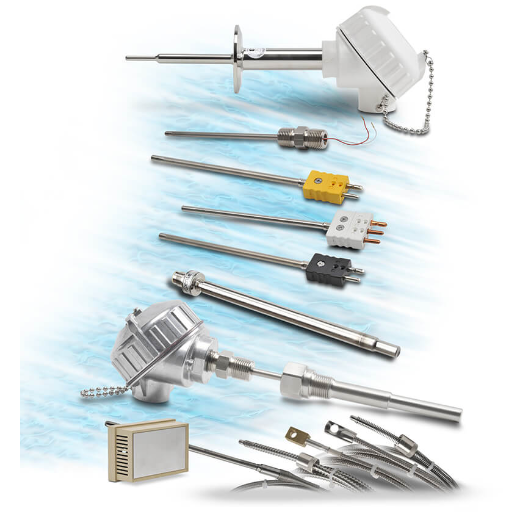
Thermocouples find widespread application in various industries because they are reliable and durable and can measure extremely high temperatures. Some of the common applications of thermocouples are:
- Industrial Processes: Temperature monitoring and control for hot furnaces, kilns, and chemical reactors.
- HVAC Systems: Measurement of temperatures in heating, ventilation, and air conditioning equipment.
- Automotive Industry: Measurement of exhaust gas temperatures and evaluation of engine performance.
- Energy Applications: Temperature measurement in power plants and free energy systems.
- Medical Devices: Monitoring laboratory equipment with industrial sterilizers that require precise temperature control.
Their strong points ensure that they remain a critical measurement instrument for all the environments that require fast and responsive temperature measurements.
Industrial Applications of Thermocouples
Thermocouples are a sort of measurement that makes its way into many industries because they have a durable nature, a range of operating temperatures, and a quick reaction time. Some other application areas are described below for the key sectors:
Aerospace and Defense
Thermocouples find usage in jet engines and space vehicles to measure gas exhaust temperature and maximize performance under harsh ambient conditions. They are also used in high-precision equipment for thermal management.
Chemical and Petrochemical Industry
These sensors are employed for process control in reactors, distillation columns, and storage tanks, where temperature has to be maintained strictly for the sake of product quality and safety.
Food and Beverage Industry
Thermocouples are used during cooking, freezing, and pasteurization to meet stringent requirements prescribed by regulatory bodies for safety and quality.
Metallurgy
Accurate temperature checking is done during melting, annealing, and heat-treating processes to give metals and alloys a certain set of properties.
Being adaptable to very harsh operations is a great feature that makes them relevant for any industrial process, plus the ability to provide accurate data.
Use in HVAC Systems and Thermostats
Thermocouples have been rightly termed as temperature sensors that stay in the heart of an HVAC system or thermostat in ensuring adequate temperature measurement for the prevailing conditions. They are used with systems in fine-tuning the heating, cooling, and ventilation processes. By monitoring temperature changes inside furnaces or heat exchangers or conduction into air ducts, thermocouples guarantee correct control of system performance. The ability of thermocouples to identify rapid temperature changes makes them an integral feature in safety systems to avoid potential hazards, such as overheated situations or faults within the heating elements. Thermocouples, with their durability and ability to withstand high temperatures, have become sine qua non in modern HVAC applications for energy efficiency and longevity of system life.
Thermocouples in Scientific Research
Drawing from the prized tool that science offers, thermocouples are one such tool, held famous for their accuracy and application in temperature measurements. They find their home mainly in places where material science, chemistry, or physics reign…experiments where thermal control is of utmost concern. They can work, measuring temperature ranges in various applications, from very low temperatures to extremely hot temperatures, including monitoring chemical reactions, analyzing phase transition occurrences, and evaluating new material thermal properties. Due to their rapid response time, they are preferred in laboratories where it matters in active experiments. Also, their small size complements most data acquisition systems, thus guaranteeing almost seamless integration into laboratory equipment. Their reliability and adaptability make them essential for the evolution of scientific discoveries.
Calibration and Maintenance of Thermocouples
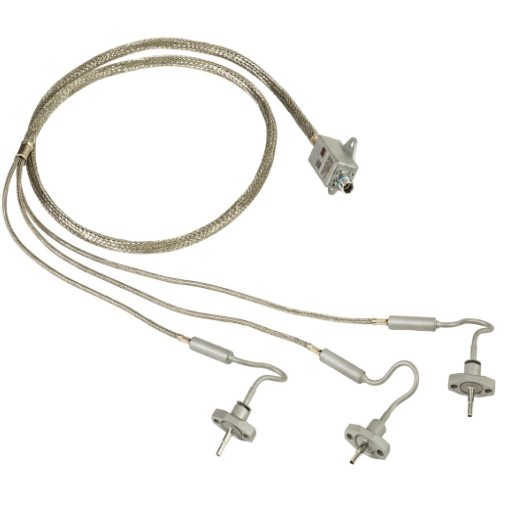
Thermocouples must always be calibrated and maintained well to keep good temperature readings over long periods. Calibration should be carried out frequently by ensuring a reference temperature source (for instance, a temperature-controlled bath or a dry block calibrator) is employed to compare the readings of the thermocouple with the known standard. This procedure brings out any deviation and permits adjustment whenever necessary.
With regard to maintenance, thermocouples need to be inspected for visible damage, corrosion, or contamination, as all these factors lessen functionality. Such thermocouples with damage or those that are worn out should be disposed of and replaced immediately in the interest of accuracy of measurements in a wrap-up manner. While going about it, ensure proper storage of thermocouples so as to avoid any mechanical stress or bending in the course of handling. Adhering to these will also help in keeping it well-performing for a longer time.
Importance of Calibration for Accurate Measurement
Calibration of thermocouples, like any other instrument, is an essential process if measurement accuracy and reliability are to be assured. These instrument ranges are subjected to drifting due to the influence of environmental factors, wear, and in actual practice. The calibration process fixes these errors either by comparing the behaviour of the instrument against a reference standard with a known accuracy or by setting the instrument within the tolerances allowed. An instrument should be calibrated to comply with standards and regulations in its industry, to reduce errors in measurements, and to enhance the quality of products.
Early detection of any abnormality in the instrument due to improper calibration could result in expensive loss of operational time or diminished efficiency. Calibration frequency should depend upon the condition of usage, i.e., how harsh a shock the instrument undergoes during use, temperature variations that surround it, and the manufacturer’s recommendations. Regular calibration that remains traceably documented helps to maintain the accuracy of measurements, which is important in activities ranging from industrial processes to laboratory studies. Putting an emphasis on calibration may allow companies to improve measurement reliability and uphold operational efficiency for the long term.
Common Maintenance Practices
Essential Maintenance Guidelines:
- Conduct regular inspections to check for wear and tear on thermocouple components
- Adhere rigorously to servicing intervals as recommended by manufacturers
- Keep the operating environment free from contaminants and sources of damage
- Maintain a detailed and organized logbook for all maintenance activities
- Ensure traceability for industry standards compliance
- Monitor for signs of corrosion, mechanical damage, or degradation
- Store thermocouples properly to prevent mechanical stress or bending
Troubleshooting Thermocouple Issues
Troubleshooting thermocouple-related issues entails methodically looking into the plausibility of problems that could detrimentally affect the critical sensor’s performance. Common issues are things like loose connections, physical damage, incorrect wiring, and those relating to calibration. Check first that the thermocouple wiring is intact and that all connections are tight without any corrosion or wear. Also, check the probe for any visible signs of damage, such as bends or breaks, since such damage will almost certainly invalidate its function.
After this, check that the thermocouple is properly connected to the measuring unit, following the polarity and wiring standards set forth by the manufacturer. In the case of inconsistent or wrong readings, proceed to recalibrate the thermocouple against a known temperature to eliminate possible calibration errors. Also, make sure the type of thermocouple fits with the device input settings, for example, type K or type J. If the problems still appear after these issues have been taken care of, replace the thermocouple or test it with other equipment to check if the fault lies on the measuring side.
| Common Issue | Possible Cause | Troubleshooting Steps | Solution |
|---|---|---|---|
| Inaccurate Readings | Calibration drift, contamination | Compare readings with the known reference temperature | Recalibrate or replace the thermocouple |
| No Signal | Broken wire, loose connection | Check wiring continuity and connections | Repair connections or replace damaged wire |
| Intermittent Readings | Corroded connections, damaged insulation | Inspect all connection points and wire insulation | Clean connections or replace damaged components |
| Slow Response Time | Contamination, improper installation | Check the probe condition and installation method | Clean the probe or reinstall it correctly |
| Electrical Noise | Grounding issues, EMI interference | Check grounding and shielding | Improve grounding or use shielded cables |
Summary and Conclusion
Thermocouples represent one of the most reliable and versatile temperature measurement instruments available across numerous industries and applications. From their fundamental operating principle based on the Seebeck effect to their diverse types suited for specific temperature ranges and environmental conditions, thermocouples have proven indispensable in modern engineering, scientific research, and industrial processes.
Understanding the different types of thermocouples—Type K, J, T, E, N, R, S, and B—allows engineers and technicians to make informed decisions when selecting the most appropriate sensor for their specific application. Each type offers unique advantages in terms of temperature range, accuracy, durability, and cost-effectiveness. Whether measuring cryogenic temperatures in laboratory settings or monitoring extreme heat in industrial furnaces, there is a thermocouple designed to meet those exacting requirements.
The selection process requires careful consideration of multiple factors, including temperature range, environmental conditions, accuracy requirements, response time, and installation constraints. Proper calibration and regular maintenance are essential to ensure continued accuracy and reliability over the thermocouple’s operational lifetime. By following best practices in selection, installation, calibration, and maintenance, users can maximize the performance and longevity of their temperature measurement systems.
As technology continues to advance, thermocouples remain at the forefront of temperature measurement solutions, combining simplicity, robustness, and precision. Their continued evolution and adaptation to new applications ensure that they will remain critical instruments in industrial automation, aerospace, healthcare, energy production, and scientific research for years to come.
Note: This comprehensive guide provides essential information for selecting, using, and maintaining thermocouples. Always consult manufacturer specifications and industry standards for specific applications and ensure compliance with relevant safety regulations.
Reference Sources
The Design and Inspection of the Thermocouple in the Breakout Prediction System
Proposal of a Method to Automatically Identify a Sensor as Energy Conversion or Energy Control
Design of An Automatic Temperature Recorder for Fishery Vessels Using Internet of Things Technology
Frequently Asked Questions (FAQs)
What is a thermocouple, and how does it operate?
The thermocouple functions as a temperature sensor formed with two dissimilar metals welded together at one junction. When heated, a voltage is produced due to the occurrence of the Seebeck effect, from which the temperature can be inferred.
What are the major types of thermocouples?
K, J, T, and E thermocouples are among the common types. Each type has different materials used and temperature ranges, so that they measure temperature for different uses.
How does one choose the right thermocouple for an application?
Choosing the right thermocouple: Consider temperature range, environment of use, and materials from which the thermocouple is made. K-type thermocouples are the most common types due to their general gamut of temperature range and ruggedness.
What temperature range do thermocouples measure?
Thermocouple temperature measurements can run anywhere between negative 200 and up to positive 2000 degrees centigrade, depending on the type of thermocouple and materials used. The types are meant to be confined to a particular temperature limit and application.
Why are thermocouple color codes important?
Thermocouple color codes identify the type of thermocouple wire used to make proper connections and measurements. For instance, a K-type thermocouple’s insulation is usually yellow, whereas that of a J-type is usually black.
How do thermocouples get calibrated?
Calibration of thermocouples entails comparing the output voltage of the thermocouple with that of a known temperature source. This calibration ensures accurate temperature measurement very important for the precision temperature measurement necessary for industrial applications.
What do they call noble metal thermocouples?
Generally, noble thermocouples are made of precious metals such as platinum and rhodium, which allow for high-temperature measurement and stability. Given that they are very accurate and resist oxidation, they find laboratory use.
What is the cold junction in thermocouple measurement?
A cold junction, also called a reference junction, is a means by which the thermocouple wires are connected to a measurement device. The temperature of the junction has to be accounted for to calculate the junction temperature and the actual reading.
Can thermocouples be used in hazardous environments?
Yes, thermocouples are used extensively in hazardous environments owing to their robustness. With a special probe design, thermocouples could withstand extreme conditions, and therefore, these would be used in oil and gas or chemical industries.