





NEW YORK /NAYCY
Câble d'alimentation isolé multicœur en PVC 0,6/1 kV avec conducteur concentrique en cuivre et gaine en PVC
NYCY/Applications NAYCY
Production d'électricité et industrie Spécifiquement, ces câbles activement puissance installations et installations industrielles à grande échelle.
Réseaux de distribution En plus, les services publics activement déployer eux pour les réseaux de distribution secondaires et l'éclairage public.
Connexions de service De plus, la conception en toute sécurité connecte services du bâtiment et compteurs d'électricité.
Installation souterraine En outre, les entrepreneurs efficacement installer ces câbles dans des conduits souterrains ou des systèmes d'enfouissement direct.
Exigences en matière de dépistage Par conséquent, le conducteur concentrique activement fournit criblage fonctionnel essentiel pour les installations fixes intérieures et extérieures.
- Traitement rapide des échantillons avec des solutions personnalisées
- Matériaux de haute qualité
- Options de prix abordables
- Livraison mondiale
- Pour une meilleure protection des données, assurez-vous que tous les téléchargements sont sécurisés
Économisez au moins 30% en moyenne
-
Description du produit
Câble d'alimentation NYBY/NAYBY : description et spécifications du produit
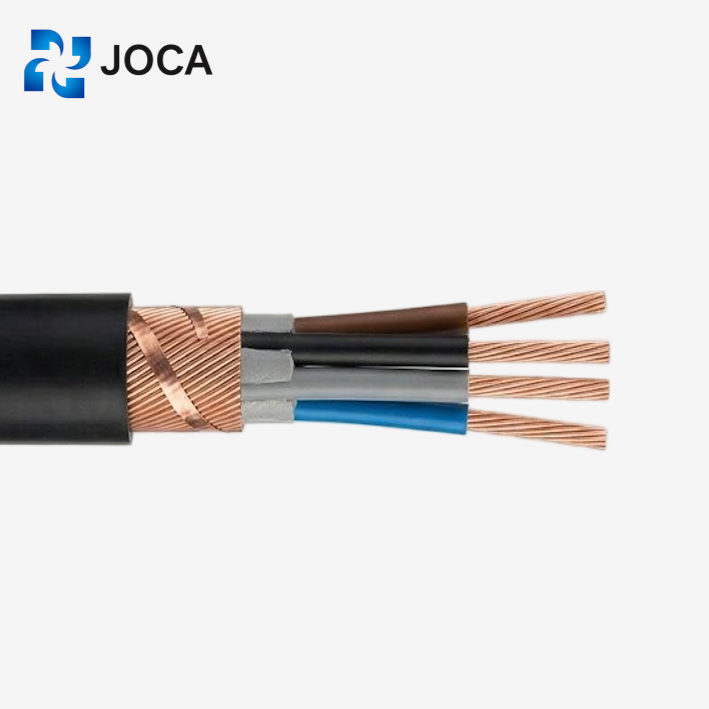
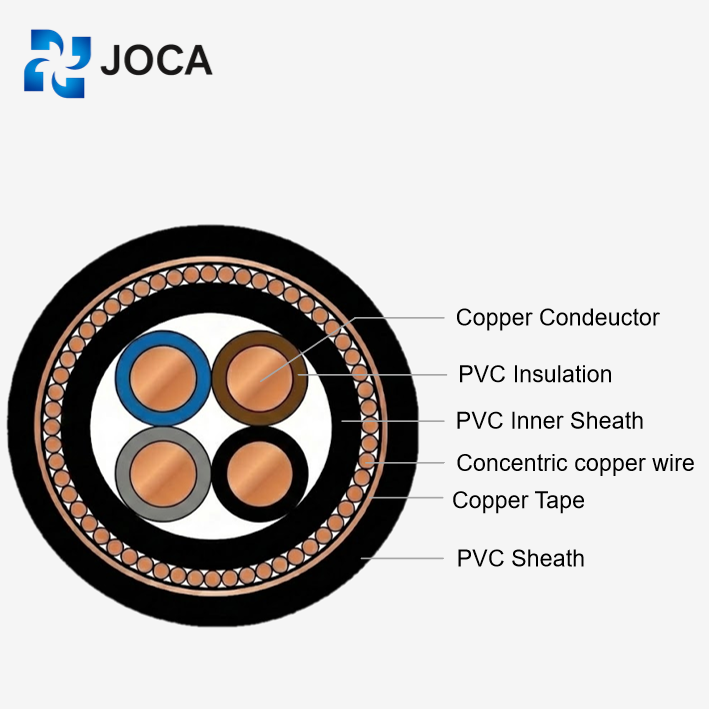
Le Câble d'alimentation NYCY sert en tant que solution basse tension polyvalente dotée d'une isolation en PVC, d'une gaine en PVC et d'un conducteur en cuivre concentrique distinctif. Spécifiquement, tandis que le NYCTH modèle utilise conducteurs principaux en cuivre, le INDULGENT variante offres une alternative en aluminium.
En plus, les fils et rubans de cuivre concentriques appliqués en hélice acte en tant que conducteur neutre et protecteur combiné Cette conception également fournit dépistage fonctionnel essentiel.
Enfin, tu peux déployer ces câbles efficacement dans la distribution d'énergie industrielle, les connexions d'approvisionnement de bâtiment, et les réseaux souterrains Nous assurer ils sont conformes aux normes majeures telles que CEI 60502-1.
-
Avantages
Câble d'alimentation NYBY/NAYBY : avantages et caractéristiques
Puissance combinée et PE concentrique/conducteur neutre dans un câble
Conducteurs principaux en cuivre ou en aluminium disponibles (NYCY /NAYCY)
Les fils et rubans de cuivre concentriques offrent une excellente mise à la terre et un excellent criblage
Isolation et gaine en PVC pour une bonne protection mécanique
Convient aux installations souterraines, de conduits et de bâtiments
Conforme à la norme CEI 60502-1 /DIN VDE 0276 /HD 603
Spécification du câble d'alimentation NYBY/NAYBY
| Données techniques - Paramètre | Données techniques - Valeur |
|---|---|
| Résistance du conducteur à 20 °C | selon VDE 0295 et CEI 60228 |
| Température du noyau, max : | 70 °C en fonctionnement |
| Température maximale du court-circuit : | 160 °C, pas plus de 5 sec |
| Tension nominale - U0 /U (Umax) : | 0,6/1(1,2)kV |
| Tension d'essai : | AC - 4 kV ; 50 Hz |
| Plage de température | |
| Installation fixe : | -30 °C à +70 °C |
| Installation flexible : | -5 °C à +50 °C |
| Rayon de courbure, min. | 12xDcâble |
| Résistance spécifique d'isolation à 70 °C : | min,1010Qx cm |
| contrainte de traction maximale admissible avec adhérence au câble : | Pour conducteur Cu = 50 N/mm2 ; Pour conducteur Al = 30 N/mm2 |
| Structure du câble - Composant | Structure du câble - Description |
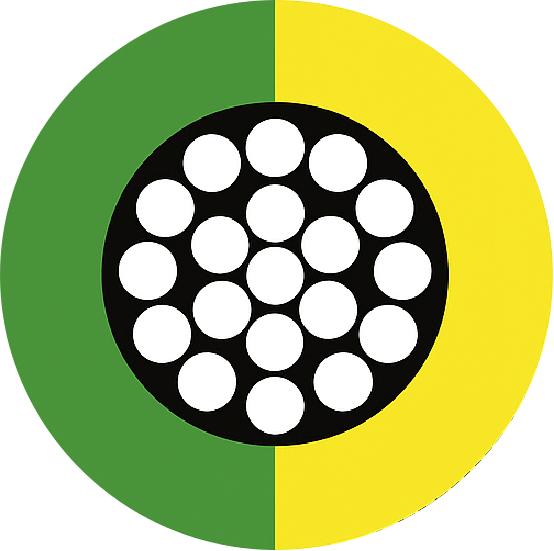
| Chef d'orchestre: | fils solides ou multibrins Cu ou Al classe 1, 2 ou 5 acc. VDE 0295 (IEC 60228) |
| Isolation: | PVC type DIV4 acc. VDE0207 |
| Identification de base : | selon VDE 0293 (HD 308) |
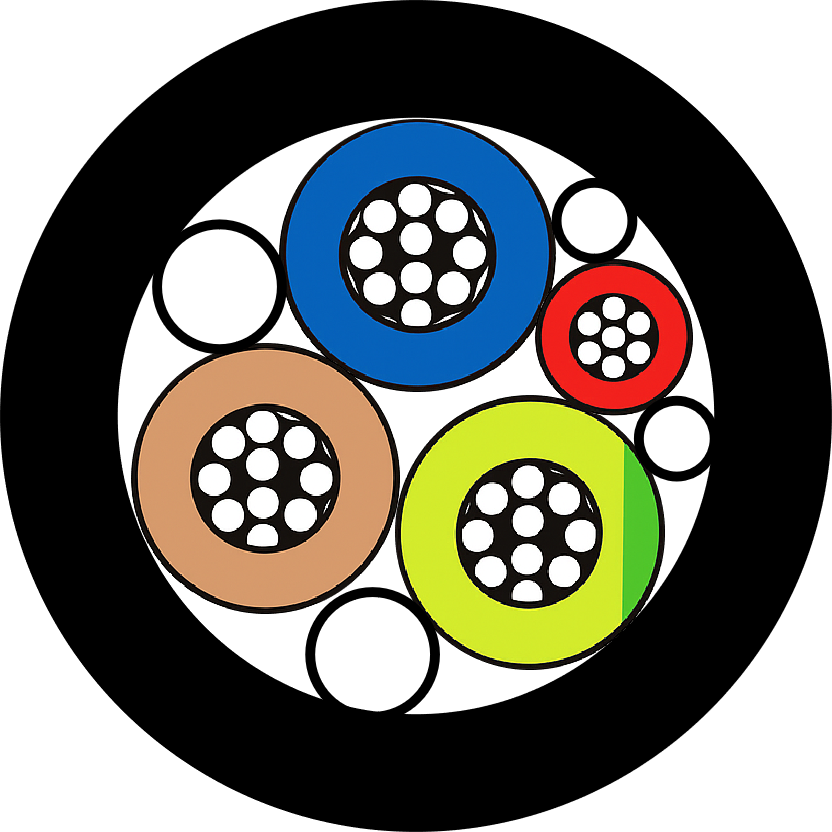
| Assemblage de noyaux | noyaux toronnés concentriquement (cœurs toronnés en couches concentriques, pour le signal) |
| Gaine intérieure: | compaending de remplissage en caoutchouc |
| Conducteur concentrique en cuivre : | fils de cuivre hélicoïdaux et un ruban de cuivre autour du revêtement intérieur |
| Gaine (Gaine) : | PVC type DMV5 acc. VDE 0207, couleur noire |
Dimensions/Paramètres
| Nombre de carottes x Section transversale nominale (No x mm²) | Diamètre global env. (max.mm) | Poids du cuivre Env. (kg/km) | Poids total env. (kg/km) |
|---|---|---|---|
| 2 x 1.5/1.5 | 14 | 60.0 | 245.0 |
| 2 x 2.5/2.5 | 14 | 85.0 | 285.0 |
| 2 x 4/4 | 16.0 | 125.0 | 360.0 |
| 3x1.5/1.5 | 14.0 | 80.0 | 280.0 |
| 3x2.5/2.5 | 15.0 | 109.0 | 316 |
| 3x4/4 | 17.0 | 155.0 | 423.0 |
| 3x6/6 | 18.0 | 240.0 | 530.0 |
| 3x10/10 | 20.0 | 384.0 | 730.0 |
| 3x16/16 | 22.0 | 610.0 | 970.0 |
| 3x25/16 | 25.0 | 870.0 | 1340.0 |
| 3x35/35 | 27.0 | 1340.0 | 1820.0 |
| 3x50/50 | 31.0 | 1980.0 | 2490.0 |
| 3x70/70 | 35.0 | 2680.0 | 3350.0 |
| 3x95/95 | 40.0 | 3650.0 | 4490.0 |
| 3x120/120 | 43.0 | 4610.0 | 5500.0 |
| 3x150/150 | 48.0 | 5750.0 | 6950.0 |
| 4x1.5/1.5 | 15.0 | 94.0 | 302.0 |
| 4x2.5/2.5 | 16.0 | 133.0 | 360.0 |
| 4x4/4 | 18.0 | 195.0 | 485.0 |
| 4x6/6 | 19.0 | 299.0 | 616.0 |
| 4x10/10 | 21.0 | 480.0 | 850.0 |
| 4x16/16 | 23.0 | 766.0 | 1160.0 |
| 4x25/16 | 28.0 | 1112.0 | 1630.0 |
| 4x35/16 | 30.0 | 1515.0 | 2080.0 |
| 4x50/25 | 34.0 | 2156.0 | 2775.0 |
| 4x70/35 | 38.0 | 3070.0 | 3910.0 |
| 4x95/50 | 43.0 | 4200.0 | 5180.0 |
| 4x120/70 | 48.0 | 5275.0 | 6400.0 |
| 4x150/70 | 53.0 | 6690.0 | 8075.0 |
| 4x185/95 | 58.0 | 8030.0 | 9710.0 |
| 5x1.5/2.5 | 16.0 | 109.0 | 344.0 |
| 5x2.5/2.5 | 17.0 | 158.0 | 412.0 |
| 5x4/4 | 19.0 | 259.0 | 560.0 |
| 5x6/6 | 20.0 | 355.0 | 690.0 |
| 5x10/10 | 23.0 | 575.0 | 965.0 |
| 5x16/16 | 25.0 | 940.0 | 1355.0 |
| 7x1.5/2.5 | 17.0 | 141.0 | 395.0 |
| 8x1.5/2.5 | 17.0 | 155.0 | 440.0 |
| 10x1.5/2.5 | 20.0 | 188.0 | 510.0 |
| 12x1.5/2.5 | 20.0 | 223.0 | 585.0 |
| 14x1.5/2.5 | 21.0 | 253.0 | 640.0 |
| 19x1.5/4 | 23.0 | 325.0 | 780.0 |
| 24x1.5/6 | 26.0 | 407.0 | 950.0 |
| 30x1.5/6 | 27.0 | 494.0 | 1105.0 |
| 7x2.5/2.5 | 18.0 | 209.0 | 490.0 |
| 8x2.5/4 | 19.0 | 233.0 | 550.0 |
| 10x2.5/4 | 21.0 | 291.0 | 670.0 |
| 12x2.5/4 | 22.0 | 339.0 | 730.0 |
| 14x2.5/6 | 23.0 | 397.0 | 825.0 |
| 19x2.5/6 | 25.0 | 516.0 | 1000.0 |
| 24x2.5/10 | 28.0 | 673.0 | 1270.0 |
| 30x2.5/10 | 30.0 | 820.0 | 1495.0 |
-
Processus de production de câbles électriques
Pour assurer une qualité supérieure, JOCA opère lignes de production entièrement numérisées et automatisées pour câbles d'alimentation. Spécifiquement, ce flux de travail complet couvertures toronnage du conducteur, extrusion de l'isolation, tamisage métallique et gainage final. De plus, systèmes intelligents surveiller activement chaque étape pour assurer une performance stable et une qualité constante du produit. En plus, l'usine utilise installations d'essai avancées, telles que les essais de décharge partielle, les essais de traction et les essais d'étincelles. Par conséquent, ces mesures rigoureuses garantie que chaque câble livré répond strictement aux normes internationales.

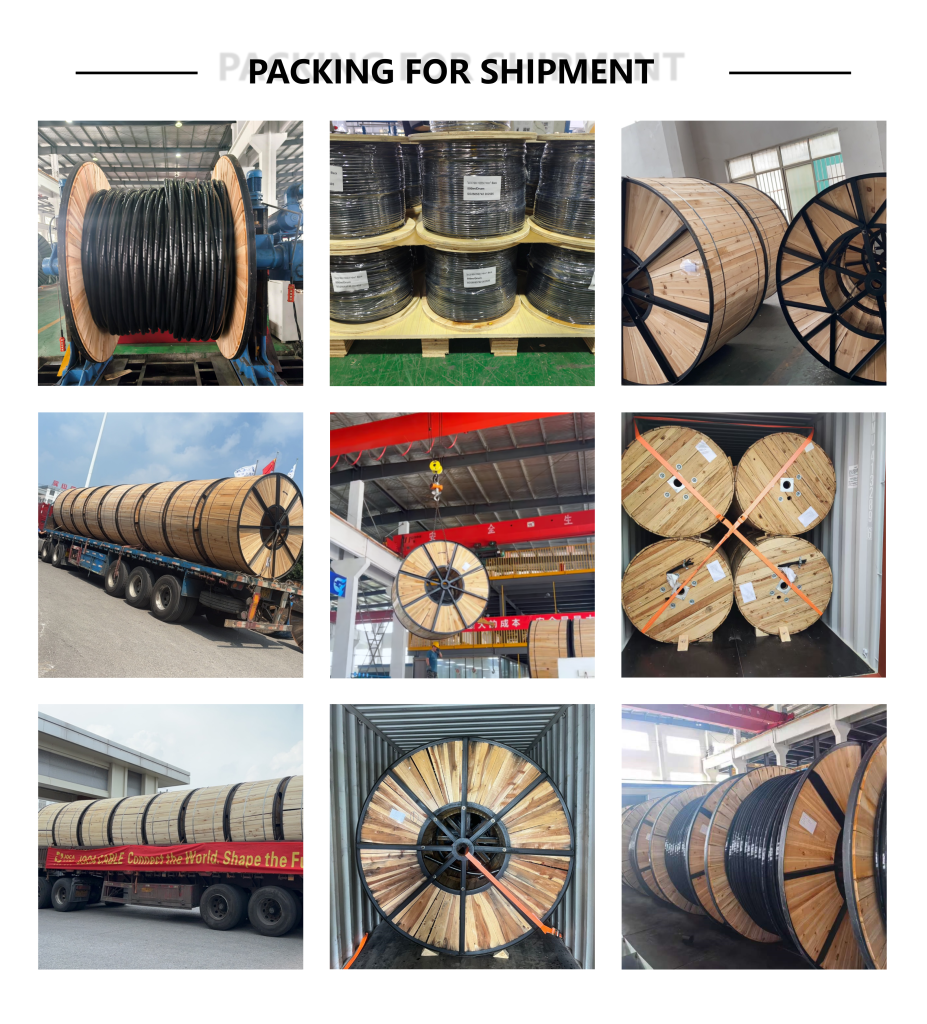
Emballage pour expédition
Pour répondre à divers besoins de transport, il existe de nombreuses méthodes d'emballage qui peuvent être utilisées.
Vous avez plus de questions ?
Nous avons compilé ci-dessous les questions les plus courantes concernant les spécifications, les normes de sécurité et les applications. Si vous ne voyez pas ce que vous recherchez ou si vous avez une exigence personnalisée spécifique, contactez directement notre équipe d'ingénierie.
Q : Quelle est la fonction réelle de la couche de cuivre concentrique (Céandre) ?
UN: Il sert un double objectif Premièrement, il agit comme le conducteur PE ou PEN (Terre protectrice/Neutre).En second lieu, parce qu'il s'enroule autour des noyaux, il fournit efficace dépistage contre les interférences électromagnétiques (CEM). Ceci est crucial si vous utilisez de l’énergie à proximité de lignes de données sensibles ou de systèmes de contrôle.
Q : NYCY contre NAYCY : Lequel dois-je préciser ?
UN: C'est strictement un choix de matériau conducteur principal. NYCTH est du cuivre solide (coûteux, haute conductivité). INDULGENT utilise de l'Aluminium pour les phases principales (moins cher, plus léger), mais garde le écran concentrique en Cuivre. Si le budget est serré et que le parcours du câble est long, NAYCY est le choix d'ingénierie standard.
Q : Quelle est la tension nominale ?
UN: Ce sont des câbles basse tension standard conçus pour 0,6/1 kV. Ils sont fabriqués strictement pour DIN VDE 0276-603 et CEI 60502-1 spécifications.
Q : Puis-je utiliser ces souterrains ?
UN: Oui. Ils sont conçus pour une installation fixe à l'intérieur, à l'extérieur, dans le béton, et directement sous terre. Le conducteur concentrique ajoute en fait une couche de sécurité si quelqu'un creuse accidentellement dans le câble, l'outil heurte d'abord l'écran de terre, déclenchant le disjoncteur avant de frapper une phase sous tension.
Q : Pourquoi choisir NYCY plutôt que les câbles NYY standard ?
UN: Deux mots: Protection CEM. Si vous alimentez VFD (Pilotes de fréquence variables) ou un équipement dans un environnement électrique “noisy” (comme un centre de données ou une usine automatisée), le NYY standard n'arrêtera pas le bruit. NYCY maintient les interférences contenues.
Q : Quelles sont les contraintes de température ?
UN: Gardez à l’esprit que ce sont les cas Isolé PVC câbles. Votre température de fonctionnement continue maximale est de 70°C. Si vous avez une application à haute température ou si vous devez pousser l'ampacité maximale, vous devriez regarder N2XCY (la version XLPE) à la place.
Q : L'installation est-elle difficile en ce qui concerne
UN: Ils sont plus rigides que les câbles standards en raison de la couche concentrique et du ruban hélicoïdal Il faut respecter un rayon de courbure d'au moins 12 x à 15 x le diamètre du câble (monocœur vs multicœur) pour éviter d'endommager l'écran en cuivre lors de l'installation.
Q : Comment puis-je obtenir une proposition technique ou un devis ?
UN: Envoyez-nous simplement votre e-mail Calendrier du câble. Nous devons savoir : Matériau du conducteur principal (Cu ou Al), section transversale (par exemple, 4.95/50) et longueur totale Nous vérifierons les exigences de section transversale de l'écran et vous enverrons un devis formel dès que possible.