







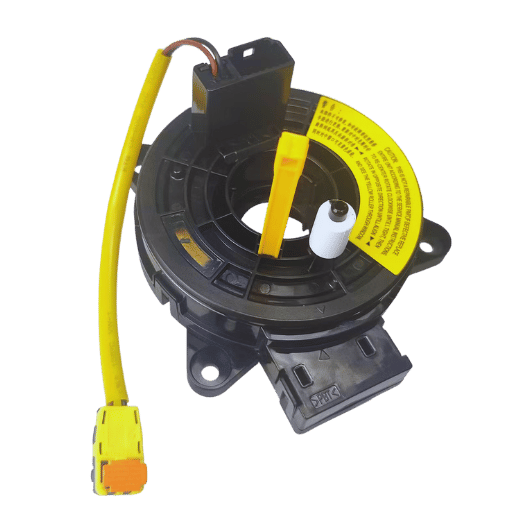
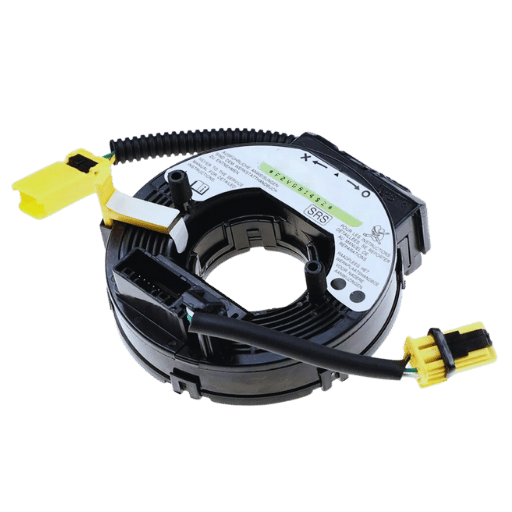
The clock spring, commonly referred to as the spiral cable, is one such component that remains crucial yet often overlooked in modern vehicle safety systems. It acts as the conductor from the vehicle’s steering wheel to the airbag system: without it, the airbag cannot deploy, the horn cannot sound, and steering wheel controls cannot be communicated to. Without it, each of these features would be rendered impossible: such an occurrence would jeopardize safety and occur only in scarce circumstances for genuine convenience! This article will examine the clock spring’s fundamental role in maintaining airbag functionality, discussing its common issues and symptoms of failure, and then address maintenance and replacement. Knowing that this is an important part will make drivers and technicians more aware of the necessary steps to ensure the vehicle’s safety is never compromised.
什麼是螺旋電纜?

A spiral cable, often referred to as a clock spring, is a crucial component of a vehicle’s steering mechanism. It enables the transmission of electric signals between the steering wheel and other systems such as airbag deployment mechanisms, horn, and audio controls, while allowing the steering wheel to rotate. This type of coiled cable ensures uninterrupted functionality for these systems, allowing vital safety and convenience systems to operate continuously during vehicle operation.
Definition and Functionality
A clock spring primarily refers to the continuous electrical connection that electronic devices have with rotary movement. This connection cable features a flexible flat band that is coiled within a structure designed to be fitted onto the steering column; this, in turn, prevents signal loss when the steering wheel is turned. The area is pertinent for the proper operation of car safety features, such as airbags, but also supports user-friendly options, including the horn and steering wheel controls.
The Role of Spiral Cables in Airbag Systems
Spiral cables fit the race to ensure the reliable operation of an airbag system. They pass signals during an accident by maintaining electrical continuity from the vehicle’s control unit to the airbag module. The system must get proper input even if the steering wheel is rotated, enabling the airbag to deploy within milliseconds, thereby affording some time for driver protection. The durability and utmost precision of spiral cable installation go a long way to enhancing the effectiveness of this safety feature.
Importance of Vehicle Safety
Vehicle safety remains a key factor in preventing injuries and fatalities related to traffic accidents. Properly maintained safety systems, such as airbags, seatbelts, and advanced driver-assistance systems, protect occupants during collisions. These systems mitigate the impact of crashes on the road, creating a safer environment for all users. Thus, some form of safety is embedded into vehicle design, allowing manufacturers and drivers to work together in creating an even safer transportation environment.
How Spiral Cables Work in Airbag Systems

Mechanics of the Clock Spring
A clock spring or spiral cable is a crucial component of modern airbag systems, providing an electrical connection between the vehicle’s fixed steering column and the rotating steering wheel. The device comprises a coiled ribbon-type electrical conductor housed in a flat, circular casing. The function of the clock spring is to maintain uninterrupted transmission of electrical signals, for example, for deploying the driver’s airbag during a crash or for activating other functions through steering-wheel-mounted controls, including audio and cruise control buttons.
The clock spring operates by unwinding and rewinding as the steering wheel rotates, with possibly a few complete rotations of the wheel in either direction, allowing for signal continuity between parts on the wheel and the rest of the vehicle. Its internal conducting material is usually made of a very tough material to last through repeated flexing over a significant period. Any fault in the clock spring, such as wear or damage to the inner conductor, can cause intermittent connection problems, which may eventually activate the airbag warning light or render some steering wheel functions inoperable. Most modern designs incorporate various fail-safe features to mitigate risk in the event of failure, ensuring that critical systems, such as the airbag, remain reliable.
Manufacturers rigorously test clock spring assemblies to ensure compliance with strict automotive safety standards, taking into account factors such as material durability, temperature resistance, and electrical integrity. Along with advances in vehicle technology, more advanced clock spring designs accommodate additional wiring for enhanced steering wheel controls.
Connection Between Steering Wheel and Airbag Module
The clock spring serves as the primary connection interface between the steering wheel and the airbag module. In many modern vehicles, the clock spring features a spiral cable mechanism that provides a continuous signal path, regardless of steering wheel rotation. The signals can include airbag deployment signals, horn signals, and signals from other various steering wheel controls.
The design of clock spring assemblies in cars has become increasingly complex with the advent of new automotive technologies. Some of these systems install up to 20 or more electrical circuits and permit data transfer rates in the range of a few megabits per second, matching advanced safety features such as adaptive cruise control and lane-keeping assist. Research has shown that the materials used in clock spring assemblies offer the best resistance to temperature and humidity variations, ensuring reliable service under various environmental conditions.
Furthermore, extensive quality and control tests are performed to ensure that the clock spring and the rest of the electrical system stand the tests of utmost safety and endurance. It is even subjected to stress tests for long periods of rotational movement cycles, which typically exceed 1,000,000 rotations, to ensure long-term reliability. Following such rigorous requirements, a manufacturer guarantees that the interface between the steering wheel and the airbag module is smooth and dependable, thereby furthering the safety and functionality of the vehicle.
Electrical Signals and Control Systems
Modern control systems owe their existence to the electric signals, which are perfectly applied mainly in transport machinery and industry. They allow necessary information to be conveyed from one unit to another, thus ensuring real-time interaction and accurate regulation. Just as in the case of the vehicles, the control areas and network protocols, such as CAN (Controller Area Network), divide electronic control units (ECUs), and tend to command and improve only the required functions in the case of engine operation, braking, and skid control.
Data is crucial in showing the effectiveness of these chips. In this regard, high-end ECUs can now handle numerous commands within seconds while performing tasks such as adaptive cruise control and lane departure prevention. Furthermore, after several investigations were conducted to assess the effect of adaptive signal processing algorithms on response time used in crash mechanisms, such as airbags, it will be implemented at 50%. Consequently, this will lead to increased safety and efficiency in such systems. By utilizing robust cable connections, measuring equipment sensors, and corresponding mechanisms that minimize signal degradation, engineers can ensure that control systems, including airbags, operate reliably whenever needed.
Recent Advancements in Spiral Cable Technology
Innovations in Safety Features
Recent developments in spiral cable technology have focused on enhancing the safety features in modern-day automobiles. Improved materials provide further durability, giving assured performance under extreme temperatures and prolonged periods of holding; hence, avoiding sudden system failure. Modern-day spiral cables may even be fitted with sensors for real-time health monitoring. Such early-stage detection of failure increases the responsiveness of safety mechanisms, such as airbag deployment or ADAS, thereby enhancing vehicle safety and occupant protection.
Trends in Airbag System Development
Recent developments in airbag systems highlight the need to incorporate adaptive and intelligent technologies for maximized occupant safety. Another trend in the development of multi-stage airbags is their ability to vary deployment forces depending on the severity of the collision, occupant size, and seat position. Studies have shown that adaptive airbags can reduce injuries by providing a more targeted response in accidents.
Another significant modification involves the addition of side, curtain, and knee airbags for modern vehicles, ensuring protection beyond just frontal impacts. Curtain airbags have been gaining traction, with their market penetration expected to grow at a CAGR of more than 6% in the forecast years; this acceptance is thus driven mainly by increasing regulations for the upgrade of safety standards across regions.
Additionally, the integration of airbags with ADAS will shape the future of vehicle safety, particularly regarding SRS technologies. For instance, pre-collision sensors can trigger the earlier deployment of airbags or adjust their deployment in real-time, depending on the vehicle’s dynamics. This trend highlights the increasing interlinking of passive and active safety systems in accident mitigation.
Lastly, the use of sustainable materials and designs in airbag manufacturing is gaining ground. Automakers are targeting eco-friendly alternatives, such as recyclable fabrics and non-toxic propellants, to reduce the environmental impact of airbag systems without compromising their performance. These trends all reflect a commitment to safety and sustainability practices in modern vehicle design.
Common Issues and Failures of Spiral Cables

Identifying Airbag Light Malfunctions
When the vehicle’s airbag warning light appears on the dashboard, it indicates that a problem may have occurred within the airbag system, requiring urgent maintenance. One of the most common reasons is the breakdown of the spiral cable or clock spring, which connects the steering wheel electrically to the airbag module. A worn or damaged spiral cable, caused by wear and tear over extended use or excessive rotational stress, can interfere with the signal that enables the airbag to deploy.
Other reasons for causing the airbag light to activate could be sensor malfunctions, wiring problems, or a drained backup battery for the airbag control module. With disturbed connections or aging over time due to impacts and vibration, for example, the integrity of the airbag system lessens. In another way, moisture seeping into the wiring harness and causing corrosion can lead to either short circuits or anomalous electrical resistance, thereby triggering the warning light.
The onboard diagnostic (OBD-II) system is a valuable tool for pinpointing the actual root cause. Once scanned for fault codes, technicians can identify specific issues, such as the absence of a circuit, the lack of a crash sensor, and other technical details. Industry research indicates that these types of malfunctions are frequently encountered during technical vehicle inspections, with harness wire and spiral cable faults accounting for the majority of airbag-related failures.
The airbag light malfunction should be addressed as soon as possible since it concerns the operation of the passenger safety system. To ensure the system retains its long-term functionality and reliability, regular maintenance checks must be performed, including connector inspections and verifying the spiral cable’s condition.
Potential Risks of Faulty Spiral Cables
Faulty spiral cables pose a major safety hazard, as their failure can prevent airbag deployments in actual collision scenarios. This diminishes the level of protection offered by vehicle systems, leaving occupants more susceptible to serious injuries. Similarly, malfunctioning spiral cables can cause failure in other steering wheel controls, compromising functions such as the horn, thereby reducing safety in exigent circumstances. These risks must be assessed and addressed promptly.
Tips for Maintenance and Replacement
Signs It’s Time to Replace Your Spiral Cable
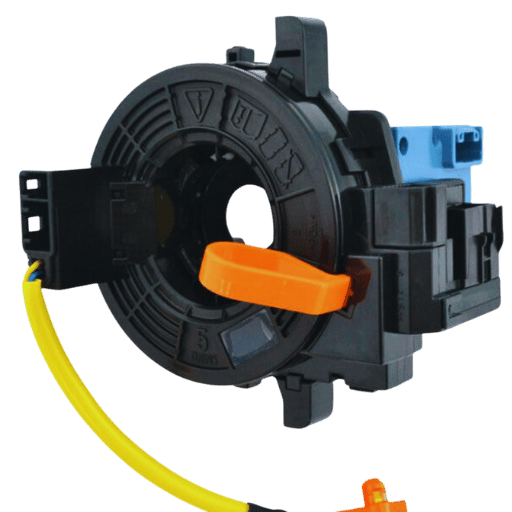
Suppose you have noticed unusual situations, such as airbag warnings on the dashboard, lost steering wheel controls, a horn that does not work when the audio button is pressed, or perhaps some strange noises while turning the wheel. In these instances, the replacement of the spiral cable may be due. This is a warning; act now to prevent another safety concern and ensure the vehicle’s systems function properly.
How to Properly Maintain Spiral Cables in Your Vehicle
- Regular Inspections: Periodically inspect the visible wear and tear on the spiral cable to check for any damage. Signs to look for include fraying or distortion.
- Handle with Care: When servicing or making adjustments to related parts, such as the steering wheel, avoid unnecessarily overstretching or twisting the spiral cable.
- Avoid Excessive Force: Never forcibly rotate the steering wheel more than necessary, as this may cause damage to the spiral cable.
- Consult a Professional: If you suspect a defect in the spiral cable, have it inspected and potentially replaced by a competent mechanic to ensure correct installation and proper functioning.
- Adhere to Maintenance Schedules: Follow the recommended service schedules provided by the manufacturers to ensure the cable’s longevity and prevent sudden breakage.
Purchasing Guidelines for Clock Spring for Toyota Camry and Corolla
- Identify the Correct Part Number: Refer to your owner’s manual or contact a certified parts dealer to determine the correct part number for your model and year.
- Purchase Genuine or OEM Parts: Choose between genuine Toyota parts and OEM parts to ensure the best quality, reliability, and compatibility.
- Verify Compatibility: Double-check your car’s make, model, year, and trim before placing your order to guarantee that the clock spring is a good fit.
- Check Warranty and Return Policies: Look for sellers who offer warranties or have flexible return policies, so your investment is protected if the item turns out to be defective or incorrect.
- Purchase from Trusted Suppliers: Buy from authorized dealers, reputable online sellers, or certified parts distributors to avoid counterfeit or substandard supplies.
常見問題(常見問題)
Q: What is a spiral cable for an airbag in a car?
答:安全氣囊螺旋纜,又稱鐘形彈簧,是將安全氣囊系統與車輛方向盤連接的重要部件。透過這條電纜,當方向盤轉動時,允許通過電訊號,這對於展開安全氣囊至關重要。.
Q: How do I remove and install the airbag spiral cable in a Toyota Corolla?
答:要拆卸並安裝豐田卡羅拉的安全氣囊螺旋電纜,出於安全原因,您首先必須斷開電池。然後,拆下方向盤,輕輕拉出舊的螺旋電纜。反向拆卸程序安裝新的安全氣囊螺旋電纜,確保正確對準。您可以隨時參考一些 YouTube 影片以獲取詳細說明。.
Q: Could I reset the airbag system after the spiral cable replacement?
答:是的。安裝新的螺旋電纜後,安全氣囊系統可能需要重置。這通常可以透過使用診斷工具或遵循特定於您所擁有車輛型號(例如日產或豐田普銳斯)的說明來實現。.
Q: Where can I obtain a new airbag spiral cable for my car?
A: There are several options for buying a new spiral cable, including eBay, stores selling auto parts, or an official dealership, as one can read from several online discussions. However, it’s advisable first to ascertain that the part fits one’s exact vehicle, whether that may be a Toyota Corolla or a Nissan.
Q: What to do if the airbag light shows up after replacing the spiral cable?
答:如果更換螺旋電纜後安全氣囊燈亮起,則表示安裝不成功,或者問題可能出在安全氣囊系統本身內。您可能需要考慮將您的汽車帶到經銷商進行徹底的診斷檢查。.
Q: Are there any recalls for the airbag spiral cable in a vehicle?
答:是的,安全氣囊螺旋電纜已在多種不同的車輛中被召回。對於可能特定於您的車型(包括豐田和日產的車型)的任何召回,必須諮詢製造商或您當地的經銷商。.
Q: How can I find related videos on installing a spiral cable for an airbag?
A: Searching on YouTube for the phrases “install airbag spiral cable” or “clock spring replacement for Toyota Corolla” is most likely to provide related videos on installing the airbag spiral cable.
Q: What is the function of the connector in the airbag spiral cable system?
答:連接器至關重要,因為它透過安全氣囊螺旋電纜將安全氣囊系統與方向盤電氣連接,確保在事故期間安全氣囊展開時發出適當的信號以保護乘員。.
Q: What is the function of the airbag system in my car?
A: The airbag system in your car functions as an added safety element during a collision. The system activates the airbag to cushion occupants from impact and reduce injuries. The airbag clock spring is crucial for the proper functioning of the airbags.
參考來源
1. Design of a Spiral Double-Cutting Machine for an Automotive Bowden Cable Assembly Line
- Authors: A. F. Barbosa et al.
- Published In: Machines
- Publication Date: September 15, 2022
- Citation Token: (Barbosa et al., 2022)
- 總結:
- Designing a machine capable of simultaneously cutting and cleaning two spiral cables, for automotive use, is the research topic. The study highlights the significance of automation in the production process, aiming to enhance efficiency and minimize defects.
- 主要發現:
- The machine, thus designed, could satisfy the requirements of whole automatic operation while doubling the output compared to existing solutions.
- The installation of the machine is likely to result in better quality and uniformity of Bowden cables used in automotive systems.
- In consideration of this document, the squib circuit, which includes the airbag sensor assembly, spiral cable, and various other components, is discussed.
3. Airbag