






Toute industrie individuelle pose des défis uniques aux systèmes électromécaniques ou à l'infrastructure électrique. Parmi tous les constituants importants des systèmes EM, la sélection du câblage influence grandement l’efficacité opérationnelle, la sécurité accrue et la durée de vie. Câbles isolés au PVC (pour le polychlorure de vinyle) démarquez-vous comme le choix dominant en raison de leurs avantages incomparables et de leur adaptabilité dans tous les domaines. Il existe sûrement des facteurs sous-jacents qui les différencient de leurs homologues. D’un point de vue méticuleux, ce guide cherche à offrir un aperçu compréhension des points forts majeurs des câbles isolés en expliquant leurs spécifications techniques ainsi que les avantages qui soutiennent leur utilisation généralisée dans l'infrastructure d'installation électrique moderne Si vous faites partie de l'industrie qui tente d'affiner les pratiques opérationnelles ou si vous êtes curieux de câblage technologie, cet article aidera à améliorer la compréhension des câbles isolés ici étant le câblage préféré dans les systèmes électromécaniques.
Qu'est-ce qu'un câble isolé en PVC ?
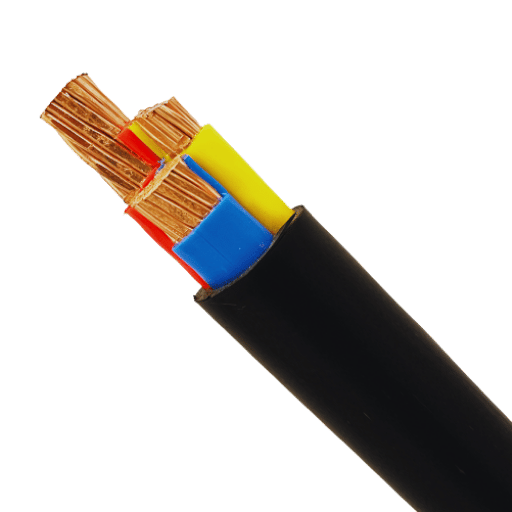
Les câbles isolés en PVC sont des câbles électriques dont les conducteurs sont enfermés dans une gaine protectrice en polychlorure de vinyle (PVC).Cette sauvegarde assure une protection contre les dommages physiques, les facteurs environnementaux et toute fuite électrique potentielle. De plus, le PVC sert de thermoplastique solide et adaptable. Sa résistance à l’humidité, aux produits chimiques et à la chaleur apporte une valeur à la fois fondamentale et supplémentaire câbles en câblage résidentiel, machines industrielles, et même installations extérieures L'isolation améliore la sécurité et la fiabilité des câbles lors de la performance sous différents environnements d'exploitation.
Comprendre l'isolation PVC
L'utilisation de l'isolation en PVC est courante en raison de ses principaux avantages tels que la résistance élevée, le prix bas, la résistance à l'humidité, à la chaleur et aux produits chimiques. Il protège le câble et réduit les dommages résultant de défauts électriques et de courts-circuits garantissant une fonctionnalité électrique fiable. De plus, sa large gamme d’utilisations le rend approprié des applications domestiques aux applications industrielles améliorant la fiabilité et l’efficacité des systèmes électriques.
Comment les câbles isolés en PVC diffèrent-ils des autres types ?
Les différences entre les câbles isolés en PVC et les autres types proviennent principalement du coût, de la flexibilité, de la durabilité, de la résistance à la chaleur et d'applications spécifiques.
| Paramètre | Câbles PVC | Câbles en caoutchouc | Câbles en silicone | Câbles XLPE |
|---|---|---|---|---|
|
Coût |
Faible |
Haut |
Haut |
Modéré |
|
Flexibilité |
Modéré |
Haut |
Très haut |
Faible |
|
Durabilité |
Haut |
Modéré |
Modéré |
Très haut |
|
Résistant à la chaleur |
Jusqu'à 105 °C |
Modéré |
Jusqu'à 200 °C |
Jusqu'à 90 °C |
|
Applications |
À usage général |
Outils mobiles |
Haute température. utilise |
Haute tension |
Applications courantes des câbles isolés en PVC
- Résidentiel les circuits sont utilisés dans les maisons pour l'éclairage et systèmes de distribution d'énergie.
- Commercial 100 000 $ pour une utilisation dans les bureaux, les centres commerciaux et autres centres commerciaux où un service électrique fiable est requis.
- Industriel 100 % trouvés dans les usines et les usines de fabrication pour les terminaisons de moteurs électriques, le câblage de contrôle et la distribution de circuits électriques.
- Installations souterraines Ces conduits sont utilisés pour la protection de l'environnement des conduits conçus pour la transmission souterraine.
- Industrie Automobile 15 Véhicules usagés car il doit être flexible et exposé à des substances chauffantes et chimiques.
- Télécommunications Câblage de systèmes de télécommunications largement utilisé pour la transmission de données et de signaux ainsi que pour le câblage.
- Applications marines et offshore Ces plates-formes sont utilisées sur les navires et les plates-formes offshore en raison des avantages de l'humidité et de l'isolation.
Pourquoi choisir le PVC isolé par rapport aux autres matériaux isolants ?
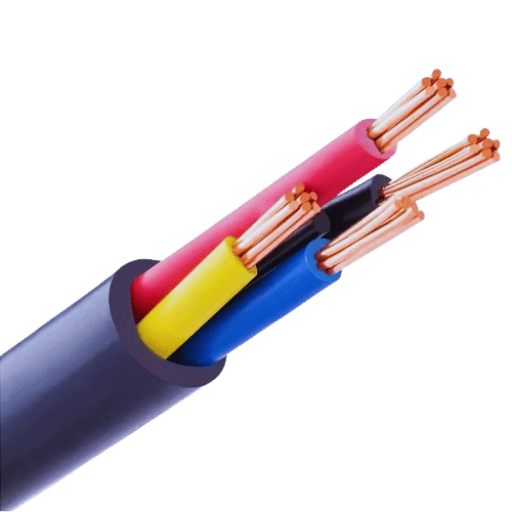
Les avantages du chlorure de polyvinyle dans la fabrication de câbles
- Rentabilité L'efficacité du coût du PVC en fait une option favorable dans l'industrie du câble, en particulier pour la production de câbles en vrac, car il maintient une norme de qualité.
- Durabilité « Résistance exceptionnelle aux impacts et à l'exposition environnementale, garantissant une durabilité de longue date dans des conditions difficiles ».
- Stabilité Thermique Le PVC présente d'excellentes performances dans une large plage de températures, permettant d'effectuer de manière fiable des performances ‘ thermiques ’ dans différentes catégories.
- Résistance chimique Réfracines à partir d'huiles, d'acides, d'alcalis et d'autres substances corrosives, ce qui rend le matériau adapté aux travaux de qualité industrielle.
- Retard de flamme [TRADUCTION] Pour une sécurité supplémentaire, le PVC ajoute moins de risques d'incendie, car il est ignifuge Le PVC protège des incendies.
- Résistance à l'humidité 11 protège de la pénétration de l'eau et de l'humidité qui est utile pour les environnements sous-marins ou humides.
- Flexibilité 'e de manipulation et d'installation en raison de la souplesse du PVC, facilite les dispositions de câblage complexes.
- Isolation Électrique L'utilisation du PVC garantit l'isolation électrique, la sécurité et la fiabilité des performances dans diverses applications.
- Recyclabilité « Le PVC contribue à la durabilité de la production de câbles en réduisant l'impact environnemental, car il est facilement recyclable ».
- Polyvalence Dans presque tous les secteurs, de la construction aux télécommunications, en raison de son adaptabilité excessive, le matériau a des dizaines d'applications.
Analyse comparative : câbles ignifuges vs non retardateurs
Les câbles ignifuges inhibent la propagation du feu, tandis que les câbles non retardateurs peuvent faciliter la propagation du feu.
|
Paramètre |
Ignifuge |
Non-Retardant |
|---|---|---|
|
But |
Empêcher la propagation du feu |
Pas de prévention d'incendie |
|
Matériel |
Traité avec des produits chimiques |
Matériaux standards |
|
Comportement au feu |
Auto-extinguible |
Propage le feu |
|
Applications |
Zones critiques pour la sécurité |
Usage général |
|
Fumée/Gaz |
Faible émission |
Émission élevée |
|
Coût |
Supérieur |
Inférieur |
|
Durabilité |
Résistant au feu |
Durabilité standard |
Comment la température affecte l'isolation du PVC
L'efficacité et la résistance de l'isolation en PVC sont impactées par la température Physiquement et mécaniquement, le ramollissement se produit à des températures plus élevées, affaiblissant les processus électromécaniques exacts qui aident à préserver la sécurité structurelle et électrique La situation est inversée à des températures plus basses, où la fragilité du PVC le rend sujet aux fractures et aux fissures pendant l'utilisation ou le mouvement La performance des câbles isolés en PVC repose sur leur construction, ce qui implique des températures minimales et maximales fixées Dans cette plage conçue, la sécurité de fonctionnement est garantie sans dégradation des caractéristiques électromécaniques La fonctionnalité et la sécurité sont préservées lorsque ces cotes sont respectées dans des conditions environnementales changeantes.
Explorer le matériau isolant et la construction de ces câbles
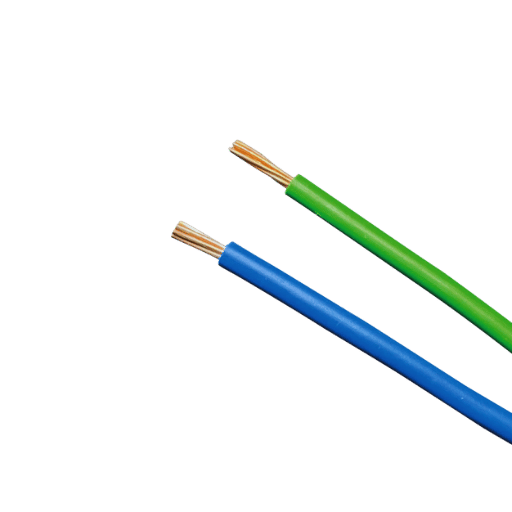
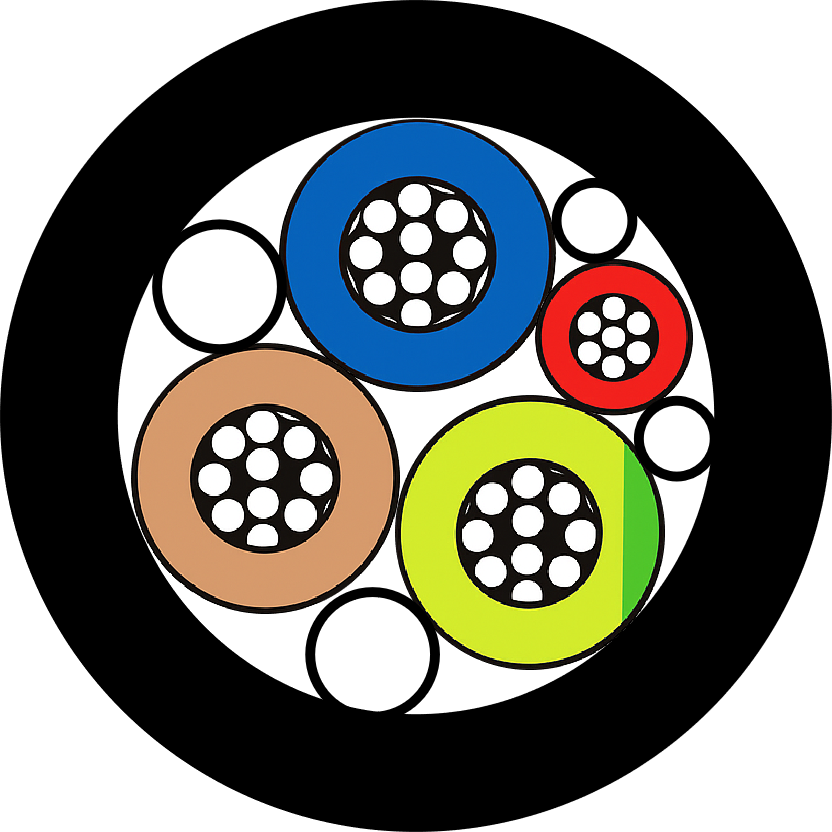
Composants de base d'un câble isolé en PVC
Conducteur
- Le conducteur est la partie la plus importante du câble qui est en cuivre ou en aluminium en raison de sa bonne conductivité électrique Il agit comme un canal, à travers lequel se déplace le courant électrique.
Couche d'isolation
- La couche isolante en polychlorure de vinyle (PVC) entoure le conducteur évite les fuites électriques. Cela garantit la sécurité et garantit un transfert d’énergie fluide.
Gaine intérieure
- La gaine intérieure offre des barrières de protection ajoutées de nature mécanique ainsi qu'une isolation, servant de tampon entre le conducteur et les couches extérieures.
Armure (le cas échéant)
- Dans le cas des câbles blindés en PVC, la couche de blindage est ajoutée pour la protection du câble contre les contraintes mécaniques, les chocs et d'autres facteurs externes, notamment l'environnement. Habituellement, cela se fait soit à travers du fil d'acier, soit à travers du ruban adhésif.
Gaine extérieure
- Comme les marques intérieures du câble, la gaine extérieure est également en PVC, sert donc de revêtement de protection externe du câble Elle protège le câble des dommages physiques, de l'humidité, des produits chimiques et de l'exposition aux UV.
Matériaux de remplissage
- Pendant le fonctionnement, les matériaux de remplissage aident à la forme circulaire globale des câbles et ajoutent de la stabilité.
Collectivement, ces composants garantissent le bon fonctionnement des câbles isolés au PVC, durent longtemps et peuvent être utilisés en toute sécurité dans différentes applications.
Le rôle de la gaine et du câble gainé en PVC
La gaine du câble retient les parties intérieures du fil, tandis que les gaines du PCV servent de revêtements protecteurs La gaine PCV protège les parties intérieures des facteurs environnementaux, des contraintes mécaniques comme les éraflures ternes des autres objets, du mouvement de la plaque intérieure et des produits chimiques Le PCV bouclier protège également les composants intérieurs des rayons UV Cela améliore à la fois le fonctionnement et la durabilité des câbles dans différentes applications En maintenant l'intégrité structurelle et l'isolation, la gaine PCV réduit les défauts électriques, ce qui se traduit par un fonctionnement sûr et efficace.
Qu'est-ce que le Processus de construction de câbles ?
Il existe des étapes critiques dans le processus de construction du câble pour s'assurer qu'il est sûr, fonctionnel et durable La toute première étape de ce processus consiste à les obtenir et à coudre des conducteurs en cuivre ou en aluminium par un processus d'étirage et de recuit Une fois ce processus effectué, ces conducteurs sont correctement isolés pour fournir et empêcher toute fuite d'énergie électrique. Selon l'utilisation et la conception du câble, une fois la couche isolante terminée, les conducteurs peuvent être regroupés, torsadés ou blindés en faisceaux Enfin, des revêtements de protection supplémentaires tels que le PVC peuvent être ajoutés pour les protéger des chocs mécaniques. Chaque étape du processus passe par une série de contrôles de qualité pour garantir qu'il répond aux besoins industriels et applicatifs.
Comprendre le conducteur des câbles en PVC
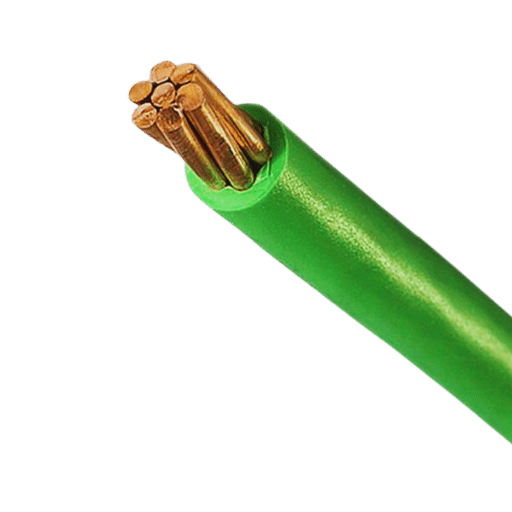
Types de conducteurs : conducteur en cuivre ou fil d'aluminium
Les conducteurs sont principalement de deux types, le cuivre et l'aluminium ; les deux diffèrent par leurs propriétés, leurs avantages et leurs utilisations.
Voici une brève comparaison :
| Paramètre | Cuivre | Aluminium |
|---|---|---|
|
Conductivité |
Élevé (IACS 100%) |
Modéré (61% SIGC) |
|
Poids |
Lourd |
Léger |
|
Coût |
Cher |
Abordable |
|
Durabilité |
Haut |
Modéré |
|
Corrosion |
Résistant |
Proné |
|
Flexibilité |
Haut |
Modéré |
|
Applications |
Câblage, Puissance |
Transmission, Aéronefs |
|
Taille nécessaire |
Plus petit |
Plus grand |
|
Conduite Thermique. |
Haut |
Modéré |
|
Longévité |
Long |
Plus court |
Performances améliorées avec conducteur en cuivre toronné
Les conducteurs en cuivre toronné sont plus flexibles que les conducteurs en cuivre massif Ils sont constitués de brins individuels de cuivre torsadés ensemble, améliorant les performances dans les applications soumises à des mouvements et des flexions répétés Cette flexibilité contribue à réduire la casse, et est particulièrement utile dans les environnements dynamiques... Les conducteurs en cuivre toronné offrent également une conductivité électrique fiable, permettant au cuivre de remplir sa fonction de conduit d'énergie sans perdre l'intégrité structurelle sous des contraintes mécaniques Ces caractéristiques rendent les conducteurs en cuivre toronné adaptés aux industries de l'automobile, de la robotique et des télécommunications où la fiabilité est une demande constante.
L'importance du PVC conducteur dans les applications de câbles d'alimentation
Le PVC conducteur est essentiel dans les applications des câbles d'alimentation car il fournit une barrière d'isolation efficace Le PVC protège contre les fuites électriques, permettant la transmission sûre de l'énergie Le PVC largement utilisé, utilisé pour différentes applications, a une durée de vie prolongée, est particulièrement durable et est flexible tout en étant résistant aux produits chimiques et thermiquement stable dans une large plage de température Sa flexibilité physique facilite l'installation dans des zones délicates et nécessitant des courbures serrées ou des dispositions complexes Dans l'ensemble, la résilience mécanique, ainsi que les attributs d'isolation du PVC, améliorent la fiabilité et la sécurité des câbles d'alimentation utilisés dans les maisons et lors des activités industrielles.
Comment sélectionner le bon câble isolé en PVC pour vos besoins
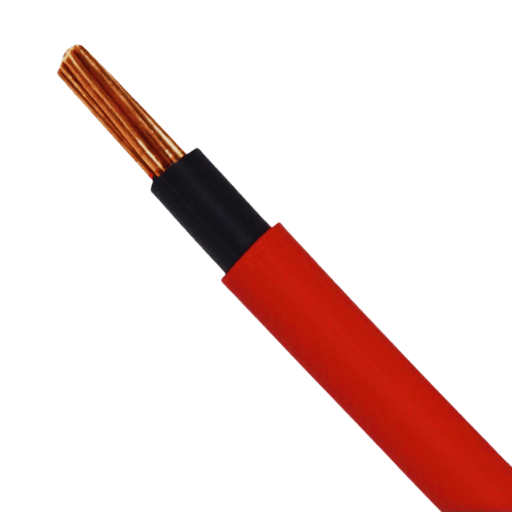
Facteurs à prendre en compte : PVC de tension et évaluation de la température
La sélection des câbles avec isolation en PVC nécessite de prendre en compte les éléments suivants :
- Tension Évaluation[TRADUCTION] ?Irmer la tension nominale du câble est égale ou supérieure à la tension de fonctionnement du système pour obtenir les meilleurs résultats Le fait de ne pas le faire peut causer une défaillance de l'isolation, une surchauffe ou les deux.
- Propriétés PVC 1'isolation PVC Assurez-vous de l'ignifugation, de la flexibilité, et de la ténacité de l'isolation PVC Sélectionnez un câble le mieux adapté à certaines situations environnementales, telles que les produits chimiques ou l'humidité.
- Évaluation de la température : Revoir les limites de température du câble pour vérifier un fonctionnement fiable dans les conditions qui prévalent Choisissez des câbles adaptés aux températures élevées ou à l'installation par temps froid pour la température nominale respective.
La prise en compte de tous ces facteurs garantit que la sécurité, la fonctionnalité et les performances sont optimales pour le câble isolé en PVC.
Décodage de câble PVC à 3 cœurs et de fil d'acier gainé multicœur
Câble PVC 3 cœurs
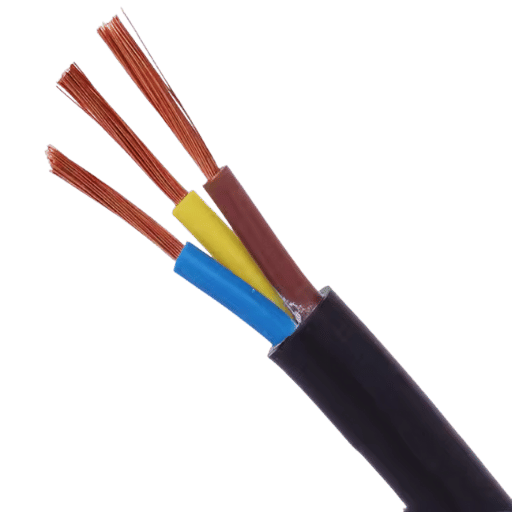
Les câbles PVC à trois coeurs sont des câbles électriques constitués de trois conducteurs isolés avec une gaine PVC résistante Ils sont utilisés pour l'alimentation électrique dans les systèmes résidentiels, commerciaux et industriels Chaque coeur est généralement affecté d'une connexion sous tension, neutre et terre, adaptée à l'alimentation monophasée L'isolation PVC protège le câble de l'humidité, de l'abrasion et de l'exposition chimique légère.
Fil d'acier gainé multicœur
Le fil d'acier gainé multicoeurs comporte plusieurs conducteurs isolés individuellement ; ces conducteurs sont ensuite enfermés dans une armure métallique en acier, qui est en outre enfermée dans une gaine de protection extérieure La résistance mécanique du fil d'acier gainé multicoeurs s'améliore pour les applications lourdes et les zones où des dommages physiques ou une tension élevée sont attendus en raison de l'armure en acier Cette nuance d'acier est principalement utilisée pour la distribution industrielle de puissance et d'autres installations qui nécessitent une durabilité et une protection élevées.
Assurance qualité : sélection d'une usine fiable de câbles isolés en PVC
En sélectionnant une usine de confiance pour les câbles isolés en PVC, je considère d'abord la réputation de la marque, la place de l'usine et les réglementations de sécurité de l'industrie. Je fais confiance aux usines comme JOCA, « , qui montrent une conformité consciencieuse aux matériaux de haute qualité, des tests approfondis et une cohérence des performances. De plus, je vérifie si l'usine délivre des certificats appropriés et propose des conseils adaptés à la portée définie du projet ».
Foire aux questions (FAQ)
Q : Quels sont les principaux avantages de l'utilisation des câbles électriques isolés au PVC ?
A : L'utilisation de PVC isolé câbles électriques est livré avec un certain nombre d'avantages qui incluent : une superbe isolation électrique, une fiabilité mécanique protégée, une endurance à l'humidité, une exposition chimique, une abrasion et un incendie. En dehors de ceux-ci, ils ont un prix inférieur à celui des autres câbles isolés, tout en conservant de fortes performances électriques dans de nombreuses installations électriques.
Q : De quelles manières l’isolation en PVC ajoute-t-elle aux caractéristiques de sécurité des câbles électriques blindés ?
R : L’utilisation sûre des blindés câbles électriques est amélioré par l'isolation en PVC car il ajoute une couche de protection supplémentaire qui protège contre les chocs électriques, les courts-circuits et d'autres dangers. Ses propriétés ignifuges réduisent également les risques d’incendie.
Q : Quels sont les câbles PVC à 3 noyaux, et où sont-ils le plus utilisés ?
R : Les câbles PVC à 3 cœurs sont constitués de trois conducteurs distincts, isolés à l'aide de PVC. Leur application est répandue dans les environnements personnels et professionnels pour les fonctions d'alimentation électrique et de contrôle des systèmes ayant des exigences de blindage mécanique moyennes.
Q : Selon vous, qu'est-ce qui est important dans l'isolation des câbles électriques ?
R : L'isolation des câbles est importante car elle permet une transmission sûre et efficace de l'énergie en éliminant les fuites, en réduisant les risques de chocs électriques et en protégeant les conducteurs des facteurs de détérioration externes.
Q : Quel rôle joue le cuivre étamé dans la construction des câbles d'alimentation en PVC ?
R : Le cuivre étamé aide à améliorer la conductivité des câbles d'alimentation en PVC tout en empêchant l'oxydation et la corrosion. Ceci est particulièrement bénéfique dans les environnements humides ou salés.
Q : Comment une gaine en PVC enveloppant un conducteur en cuivre améliore-t-elle les performances d'un câble ?
R : Une gaine en PVC enveloppant un conducteur en cuivre améliore les performances du câble en offrant une bonne conductivité électrique et une bonne flexibilité, ainsi qu'une protection mécanique. Ceci est utile pour de nombreuses applications, notamment l'utilisation de conducteurs flexibles en cuivre.
Q : Quelles sont les fonctionnalités supplémentaires fournies par les câbles métalliques en acier gainés multicoeurs ?
A : Acier gainé multi-noyaux câbles métalliques offrez une résistance et une protection améliorées, ce qui les rend idéales pour des conditions difficiles. Ils sont également flexibles, ce qui améliore la facilité d'installation tout en offrant une meilleure protection mécanique et durabilité.
Q : Discuter de l'impact des normes CEI sur la qualité des câbles isolés en PVC.
R : Les normes CEI garantissent généralement que les câbles isolés en PVC sont conformes à un certain niveau de critères de sécurité, de performance et de qualité. Cela conduit à une fiabilité et une efficacité accrues des systèmes électriques tout en atténuant les pannes d’équipement et les risques de sécurité.
Q : Quelle est l'importance des câbles conducteurs isolés en PVC ayant des propriétés ignifuges ?
R : Le rôle que jouent les câbles isolés en PVC pour améliorer la sécurité des installations électriques en réduisant le risque d'incendie des systèmes est important.
Q : Pourquoi les câbles en PVC réticulé sont-ils préférés pour les environnements à haute température ?
R : Les câbles en PVC réticulé sont plus avantageux dans les réglages de température extrêmes, car le PVC réticulé offre une meilleure résistance à des températures élevées, ce qui garantit des performances de câble appropriées sans dommage dans un environnement difficile.
Sources de référence
- Une étude des paramètres d'isolation du câble isolé en PVC 11 recherche sur le PVC étudie les caractéristiques d'isolation des câbles isolés tout en considérant leur utilisation dans les avions.
- Glossaire de terminologie Power Cord glossaire complet en PVC analysant différentes classes de cordons d'alimentation, y compris les câbles isolés thermoplastiques en PVC.
- Isolation et gaine des fils et câbles : analyse du cycle de vie document de l'EPA discutant du cycle de vie du PVC dans les fils et câbles.
- Fil
- Câble électrique
- Tension