

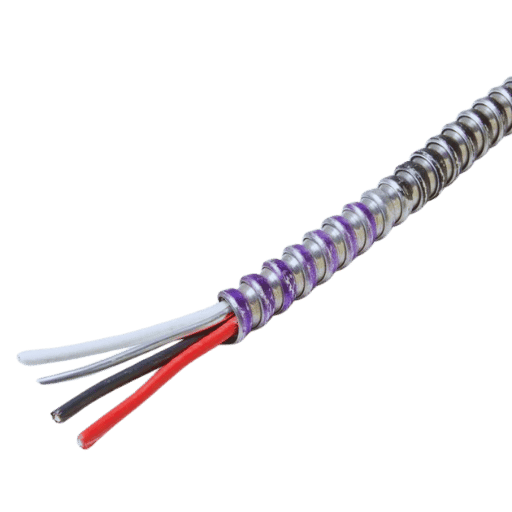
每根電線都有其獨特的規格,正確安裝它們可確保安全、高效並符合建築規範或要求。最受歡迎的住宅和商業佈線方法之一是 AC(裝甲電纜)和 MC(金屬板電纜). 雖然在表面上,這兩種情況可能看起來相同,但它們在結構、應用和適用法律方面存在顯著差異。本文旨在解釋交流和 MC 電纜之間的差異,以方便理解有關特定專案要求的決策。對於電工、承包商、DIYer 以及一般任何想要了解有關電氣安裝過程中使用的這些設備的螺栓和螺母的資訊的人來說,本指南試圖全面解釋這些組件。.
AC 和 MC 電纜之間的主要區別是什麼?
建築:
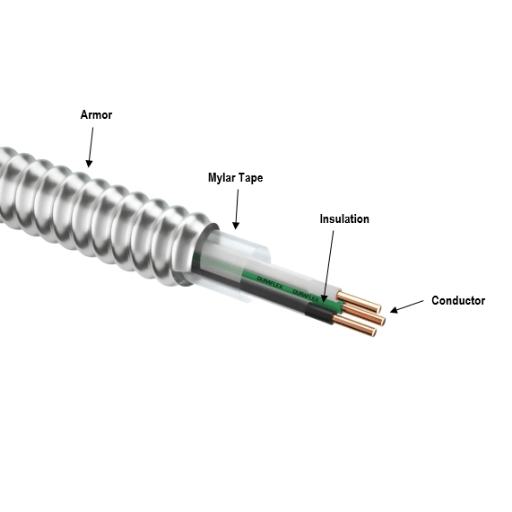
- AC(裝甲電纜)通常包括包含在裝甲內的紙包裝或黏合帶。 MC(金屬夾板)電纜不包括此黏合帶。相反,它配備了綠色絕緣接地導體,用於接地目的。.
應用:
- 住宅區和輕型商業區是交流電纜使用的常見場所。在 與 MC 電纜的比較, 2。MC電纜更堅固,適合室內和室外使用,包括機械或環境因素較高的工業區。.
接地:
- 交流電纜的鎧裝和黏合帶提供接地。由於具有用於接地的單獨絕緣導體,MC電纜更適合不同的接地配置,確保了多功能性。.
代碼要求:
- 交流電纜受國家電氣規範 (NEC) 第 320 條管轄,而 MC 電纜受第 330 條管轄。要求的差異顯示每條電纜的結構和用途不同。.
考慮到這些區別將使您能夠根據其規格和所需的安全標準選擇最適合您專案電氣工作的電纜類型。.
了解交流和 MC 電纜之間的差異
為了加深對交流和 MC 電纜應用的理解,以下是區分它們的關鍵功能的詳細清單。.
建築:
- 交流電纜: 具有內部黏合帶,與裝甲一起形成低阻抗故障電流路徑。.
- MC電纜: 包含非印刷全尺寸絞合接地導管,裸露或綠色絕緣。這用作設備接地導體。.
裝甲材質:
- 交流電纜: 通常由互鎖的鋁或鋼裝甲組成,提供物理保護並接地系統。.
- MC電纜: 配備鋁和鋼裝甲,但該裝甲不用作接地導體。.
接地導體:
- 交流電纜: 使用內部黏合條和裝甲進行接地。.
- MC電纜: 具有補充接地導體,確保接地可靠性的一致性。.
代碼要求:
- 交流電纜: 受 NEC 第 320 條的約束,該條要求對交流電纜的接地和安裝進行精確監管。.
- MC電纜: 受 NEC 第 330 條的約束,對其建造和接地系統有不同的規定。.
應用:
- 交流電纜: 主要服務於住宅和 光 商業應用,尤其是易於安裝至關重要的應用。.
- MC電纜: 廣泛用於工業和商業環境,特別是需要牢固接地或防腐蝕的地方。.
配置的靈活性:
- 交流電纜: 主要用於傳統建築佈線。.
- MC電纜: 更靈活,包括不同類型的接地、直接掩埋和潮濕位置環境。.
分析這種差異使專業人員能夠選擇最合適的電纜類型,同時確保其電氣系統的安全性、合規性和最佳功能。.
探索交流和 MC 電纜的用途
AC(裝甲電纜)和MC(金屬包層電纜)都有與其設計相關的特定應用,因此廣泛應用於電氣安裝。交流電纜主要應用於室內,更具體地說是輕型商業和住宅結構,用於一般分支電路佈線。它可以在不使電纜暴露在潮濕等不愉快條件下的區域中很好地工作。.
MC電纜對工業、商業和戶外等不同環境的適應性使其更加通用。它適用於需要防潮、直接埋藏或在惡劣環境中屏蔽的區域。由於多功能性和強度,在需要額外接地、外殼和保護通道的複雜安裝中尤其受歡迎。.
接地在交流電纜與 MC 電纜中的作用
在電氣安全和整個系統可靠性的背景下,AC(裝甲電纜)和 MC(金屬板電纜)系統中接地的重要性怎麼強調都不為過。交流電纜包含一個與裝甲緊密包裹的整體黏合帶,從而形成直接的接地路徑。這使得電纜裝甲可以充當接地導體。.
MC 電纜中的接地不是由裝甲提供的。相反,它包括絕緣或裸露的接地 電纜中的電線 組裝。即使在受到物理和腐蝕性損壞的區域,該導體也能提供暢通無阻、可靠的接地路徑。一個關鍵的區別是,在 MC 電纜中添加單獨的接地導體可以增強其在強電氣接地至關重要的惡劣應用中的性能。.
為什麼選擇用於電氣安裝的交流電纜?
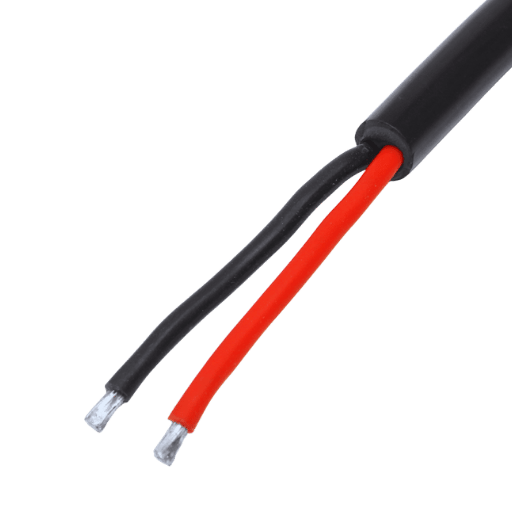
裝甲電纜在住宅佈線中的優點
- 增強耐用性: 裝甲電纜在住宅應用中提供長期可靠性,因為它採用堅固的金屬護套製造,可防止物理損壞。.
- 耐火性: 金屬裝甲作為熱和火焰的額外屏障,進一步有助於電氣裝置的消防安全。.
- Ease of Installation: Streamlining installation processes by reducing labor time, armored cable does not require conduits in many cases.
- Electromagnetic Interference (EMI) Protection: Providing reliable electrical performance, the metallic armor protects the internal conductors from electromagnetic interference, ensuring stable signals free from disruption.
- Superior Grounding: Reducing the need for a separate grounding wire, the sheath of armored cable can, in several installations, serve as an effective equipment grounding conductor.
- Cost-Effective Solution: Armored cable’s combination of durability, paired with individually fire-resistant and grounding capabilities, makes it more cost-effective than other simpler wiring systems.
- 規範合規性: Armored cable fulfills applicable electrical controls for safety and performance, making it compliant with residential standards, trusted wiring, and residential standards.
- 多功能性: Armored cable demonstrates adaptability as it can be used in concealed walls, exposed locations, or moist environments, suitable for various installation settings.
- Minimal Maintenance: The increased durability of the metal armor lessens the frequency of required maintenance or repair on something, increasing its overall value over time.
Understanding the Bonding Strip in AC Cable
The bonding strip in AC cables acts as a grounding conductor to the cable, providing electrical protection as a low-impedance path to ground per the electrical safety requirements.
When to Use AC Cable in Wet Locations
- Outdoor Use: AC cable can be used in outdoor locations that are exposed to rain or any form of moisture.
- Subterranean Use: AC cable is applicable in underground locations as long as it is placed in wet-rated conduit systems.
- Damp Industrial Conditions: The cable can be employed in industrial facilities that are damp and where water or humidity is consistently present.
- Laundries and Other Similar Places: AC cables can be used in residential or commercial spaces in areas like laundries, which are moisture-prone.
- Crawlspace or Basement: In more aged construction, AC wires can be used in the protected form, in basements or crawlspaces that are humid.
- Marine or Coastal: AC cable is practical in humid places and places continually sprayed with saltwater. Also, places near water bodies, like docks, marinas, and coastal buildings.
- Agricultural Regions: Greenhouses, barns, and similar agricultural structures that are exposed to condensation or irrigation can greatly benefit from the use of AC cables.
The incorporation and effective employment of AC cable in wet locations severely depend on proper installation practices and local electric regulations.
What Makes MC Cable a Preferred Choice for Electricians?

Features of Type MC Cables
- Robust Construction: Type MC cables are encased in a durable metallic armor that provides superior protection against physical damage.
- 多功能性: Their applications span across industrial, commercial, and residential sectors.
- Compact Design: The interlocking armor structure of MC cables results in a space-saving, lightweight design without sacrificing performance.
- Fire-Resistant Ratings: Numerous MC Type cables are supplied with fire-rated features to fulfill multiple fire and safety requirements.
- Ease of Installation: The flexibility of these cables simplifies routing through conduits and around corners, saving time and minimizing difficulty during installation.
- Compatibility with Grounding: The armor of specific MC cables simplifies equipment grounding as it can serve as an Equipment Grounding Conductor (EGC).
- 耐濕性: Type MC cables with optional outer jackets and sealed constructions can come in contact with damp and wet conditions.
- 高電導率: These cables utilize copper or aluminum conductors to ensure efficient electrical conductivity for diverse power distribution needs.
- 溫度範圍: Type MC cables can be used in extreme environmental conditions as they are designed to perform within a wide range of temperatures.
- 規範合規性: Type MC cables are gapless constructs to NEC (National Electrical Code) regulations for multiple applications. MC Type cables are guaranteed to exceed set standards.
Applications: When Is MC Cable Preferred?
- Industrial Facilities: Strong construction, which can withstand mechanical harm and harsh conditions, makes MC cables common in industrial workplaces.
- 商業建築: Their versatility and compliance with safety regulations also make them appropriate for use in office buildings, shopping centers, and even hospitals.
- Residential Projects: In multi-family housing units or apartment buildings where there is a heightened need for fire safety, MC cables are also suitable.
- 地下設施: Some types of MC cables are rated for direct burial, therefore they are commonly used for underground power distribution.
- Exposed Applications: For exposed runs such as in basements and utility rooms, MC cables are ideal as interlocked armor offers added protection.
- Hazardous Locations: MC cables are appropriate for certain installations in hazardous locations and meet criteria for areas with flammable gases, vapors, and dust.
- Data Centers: Relaying power to critical systems and equipment ensures that MC cables are frequently relied on in data centers.
- Control and Signal Transmission: MC cables are also used in control circuits and in building automation systems for lighting and signaling.
- Outdoor Applications: Certain MC cables can be installed outdoors and are resistant to sunlight and moisture when fitted with the correct jacket materials.
- Temporary Power Installations: Their use is widespread for the provision of temporary power in construction sites or during events, owing to the ease of their installation and dismantling.
How MC Cable Consists of Different Components
MC cables are made of insulated conductors together with a grounding/bonding conductor, all encased in an aluminum or steel interlocked armor, sometimes protected additionally with a moisture-resistant jacket for added durability and to meet applicable standards.
How Do AC and MC Cables Ensure Protection and Grounding?

The Importance of Metal Armor in Electrical Safety
The protective metal sheathes within electrical cables safeguard against physical breaches and electromagnetic interference, whilst also acting as an effective grounding point—all in alignment with contemporary electrical safety regulations.
Role of Ground Conductor in AC and MC Cables
- 增強安全性: Safety is enhanced as the ground conductor allows electrical faults to dissipate efficiently into the ground, which greatly reduces the risks of electrical shocks or fires.
- Fault Current Handling: The ground circuit also deals with fault currents, thus enabling the circuit breakers or fuses to open the Faulty circuit during one of the abnormal conditions.
- Electromagnetic Interference (EMI) Reduction: The ground conductor also aids EMI by grounding the cable, reducing interference so that sensitive electrical equipment can operate accurately and dependably.
- 符合標準: Proper grounding and meeting electrical codes and requirements of proper regulations ensure the installation does not fall below accepted safety limits.
- Minimized Voltage Build-Up: The ground conductor ensures that motionless, incredibly dangerous voltage does not build up in the cable armor or equipment, which protects systems and personnel.
Understanding the Level of Grounding Provided by Each
The protective functionality of each system is contingent upon its structure and execution. Effective grounding ensures an earth return path with minimal resistance, guaranteeing safety and operational efficacy. Systems having separate grounding conductors usually offer better protection than those relying on conduit or cable armor for grounding. Achievable reliability in a grounding system is attained through thorough examination of grounding parts, compliance with safety regulations, and routine system upkeep.
How to Determine the Right Type of Cable for Specific Needs?

Assessing the Electrical Code Requirements
When trying to verify the appropriate class of a specific cable, these applications would include different market sections such as residential, industrial, or even commercial. This could be derived after checking with the ISO marks and local electrical codes, especially the NEC. The voltage level, current capabilities of the cable and environmental conditions of the location (wet and dry) where the cable is going to be installed should be analyzed, Voltage grade is also a critical factor to consider when choosing the cable. The offered cable should surely pass the tests of proper insulation defined by the codes, Also their relevant approval stamps have to be checked. Insulation tests, stamp tests, and overall mark compliance must be checked against the safety provided for the load, environment, and operational needs to always guarantee sufficiency alongside dependability.
Considering Physical Damage Protection
Conduit systems, cable trays, or other protective enclosures appropriate for the installation environment should be used to shield cables from physical damage. Materials that offer protection from possible impact, abrasion, or exposure to corrosive substances should be selected. The protective system must conform to relevant codes and standards such as the National Electrical Code (NEC). Periodic inspections, along with maintenance, help to identify and mitigate potential threats to cable health. This multi-layered approach preserves the longevity and operational integrity of the cables.
Choosing Between Two Types of Electrical Cables
As for the insulation, conductor type, and particular demands of the usage, these three factors, among others, guide my choice for one of the two possible types of electrical cables. For assistance, I often turn to JOCA Cable, which provides thorough guidance on cable types and proper usage. This way, I am sure that the decisions I reach are based on factors such as quality, durability, and compliance with regulations and standards.
常見問題(常見問題)
Q: What distinguishes MC and AC cable used in metal-clad electrical wiring?
A: The design of MC (Metal Clad) and AC (Armored Cable) cables is what differentiates them from being used in metal-clad electrical wiring. MC cables contain an insulated full-size grounding wire and are generally appropriate for wet locations, while AC cables contain a bonding wire that is wrapped inside the armor and are usually found in dry locations. MC cables are relatively more flexible as well as better protected from physical damage due to their flexible metal jacket.
Q: What are the features of metal-clad cables, and where are they used?
A: Metal-clad cables, as the name suggests, are a type of electrical wiring that has a metal covering around insulated conductors, which enhances the physical protection against any form of damage, alongside improving safety and reliability. Their use is important in different installations of electricity where strength, protection, and coverage from external factors are essential.
Q: What is the effect of cable armor continuity on metal-clad cable performance?
答:裝甲的連續性透過接地系統增強了金屬包覆電纜的操作性能。完整的金屬護套有利於安裝,因為它透過為故障電流提供有效的電氣路徑並減少障礙物來提高電氣系統的安全性和可靠性。.
Q: What is the function of the bonding wire in AC cables?
答:將黏合線包裹在牛皮紙中並將其放置在交流電纜中,起到保護線的作用,透過有效地接地電纜以確保電纜鎧裝接地,從而實現可靠的安裝。.
Q: Describe the application of a dedicated ground wire in MC cables.
A: Protective casing employs a separately insulated ground wire for MC cables, which creates a distinct grounding path separate from the rest of the wire, which increases the safety profile of the electrical network.
Q: What is the importance of thin metal armor in metal-clad cables?
答:透過在金屬包覆電纜中使用薄金屬鎧裝,使佈線系統中多次改道的移動變得更加簡單,它提供了高度的物理損壞保護,同時保持了靈活性並大大減少了障礙。.
Q: What benefits do individually insulated conductors provide in MC and AC cables?
答:單獨絕緣的導體可提供更好的短路和電氣幹擾保護,從而提高電氣裝置中 MC 和 AC 電纜的安全性和有效性。.
Q: Comparing MC electrical cables to other types of cable, how is protection provided?
答:由於具有專用接地線的柔性金屬護套,MC 電纜的保護功能是最先進的。它們最適合在物理損壞保護比標準電纜增強的環境中使用。.
Q: Why is a standard ground wire important when installing metal clad cables?
答:在包覆金屬電纜裝置中使用標準接地線提供了一種接地電力系統的方法,符合安全標準和電氣法規。.
Q: Can metal-clad cables be used in wet environments?
答:是的,金屬包覆電纜,特別是 MC 電纜,適合在潮濕環境中使用,因為它們具有全尺寸絕緣接地線,並且其護套防潮。.
參考來源
- Building Maintenance & Wiring – An instructional video describing the properties of AC and MC cables in depth.
- LCLS Cable Specifications – A document prepared by the SLAC National Accelerator Laboratory detailing the specifications of cables, including MC cables.
- Northwestern University Design Guidelines – Regulations on the application of MC and AC cables in low-voltage electrical circuits.
- 24 CFR § 3280.808 – Wiring Methods and Materials – A legal text elaborating the application and relevance of AC and MC cables in certain contexts.
- Low Voltage Electrical Power Conductors and Cables – A textbook by IMSA explaining the regulatory requirements regarding AC and MC cables compliance standards.
- 電纜
- 電線
- 電氣佈線