
Fraud Blocker

JOCA

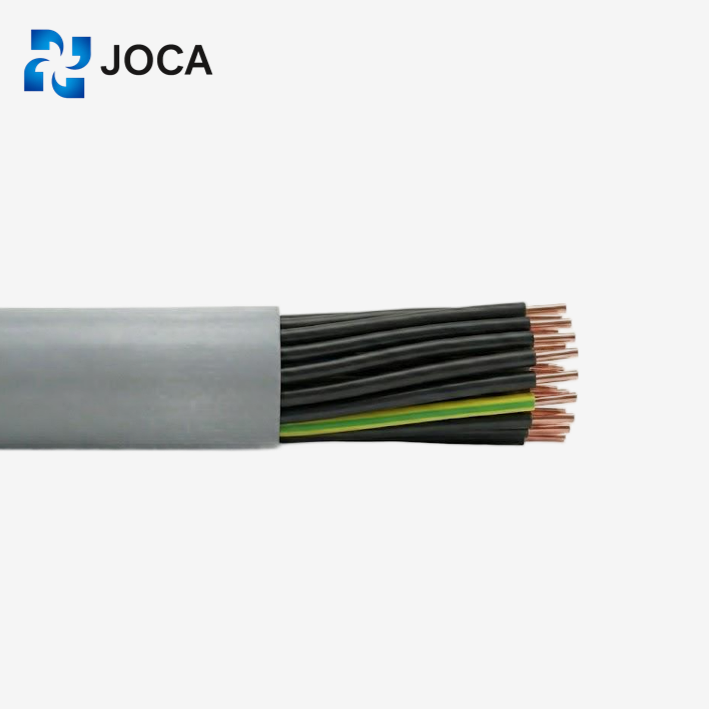
KVV: PVC/PVC Control Cable

PVC Insulated Control Cable for Industrial Automation

  • Conductor: Copper
  • Insulation: PVC,
  • Insulation Color: White-Black
  • Temperature Range: -20°C to +70°C
  • Nominal Voltage: 300V/500V
  • Test Voltage: 1000V
  • Standard: IEC

 Save at least 30% on average

KVV
  • icon

    Product Description

    KVV: PVC/PVC Control Cable : Product Description and Specifications
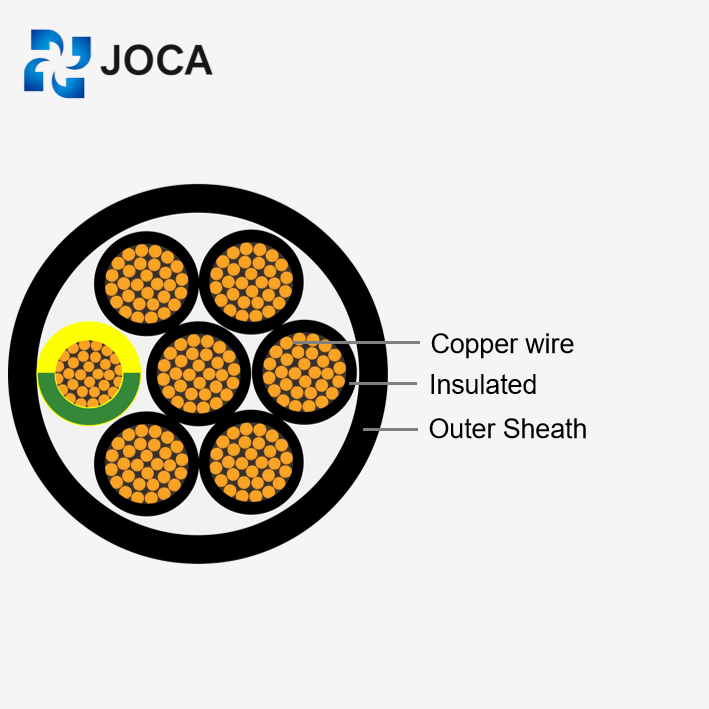
KVV cables are extensively used for interconnecting control equipment, instruments, and protection relays within monitoring and distribution circuits. In applications requiring ease of routing, high-quality flexible variants are the standard choice. Their robust design supports a broad range of applications, specifically within the robotics, construction, and manufacturing sectors. Consequently, these cables have become a standard specification for electrical infrastructure in commercial and industrial markets.

  • icon

    Advantages

    KVV: PVC/PVC Control Cable : Benefits and Features

  • Resists Harsh Conditions: Durable PVC stands up to oil, acid, and moisture.

  • Simpler Wiring: Color-coded cores prevent errors and speed up installation.

  • Budget Friendly: Offers reliable 450/750V performance at a competitive price.

  • Easy Routing: Flexible design fits effortlessly into tight trays and conduits.

  • Safety First: Can be customized with flame-retardant properties for compliance.

Dimensions/Parameters

Nominal SizeConductor StructureInsulation ThicknessSheath ThicknessApprox. Overall Dia.Approx. WeightNominal SizeConductor StructureInsulation ThicknessSheath ThicknessApprox. Overall Dia.Approx. Weight
mm2No./mmmmmmmmkg/kmmm2No./mmmmmmmmkg/km
2x0.751/0.970.61.26.8592x0.757/0.370.61.27.162
3x0.751/0.970.61.27.2683x0.757/0.370.61.27.471
4x0.751/0.970.61.27.8834x0.757/0.370.61.28.187
5x0.751/0.970.61.28.41015x0.757/0.370.61.28.8106
6x0.751/0.970.61.29.01186x0.757/0.370.61.29.4123
7x0.751/0.970.61.29.01237x0.757/0.370.61.29.4129
8x0.751/0.970.61.29.71388x0.757/0.370.61.210.1144
10x0.751/0.970.61.211.217410x0.757/0.370.61.211.7182
12x0.751/0.970.61.512.121012x0.757/0.370.61.512.7219
14x0.751/0.970.61.512.723614x0.757/0.370.61.513.3247
16x0.751/0.970.61.513.326616x0.757/0.370.61.513.9277
19x0.751/0.970.61.514.030119x0.757/0.370.61.514.6314
24x0.751/0.970.61.516.137624x0.757/0.370.61.516.9393
27x0.751/0.970.61.516.440727x0.757/0.370.61.517.3426
30x0.751/0.970.61.517.144630x0.757/0.370.61.517.9466
37x0.751/0.970.61.718.754937x0.757/0.370.61.719.6574
44x0.751/0.970.61.720.964944x0.757/0.370.61.721.9679
48x0.751/0.970.61.721.269248x0.757/0.370.61.722.3722
52x0.751/0.970.61.721.773752x0.757/0.370.61.722.8770
61x0.751/0.970.61.723.185261x0.757/0.370.61.724.3889
  • icon

    Production Processes Of Control cable
Control cables are manufactured via pressure extrusion to lock in PVC density. Quality control goes beyond standard metrics: we conduct mandatory oil resistance and bending tests on each production lot. This verifies actual performance against IEC specs, ensuring durability in real-world automation environments.

Production Processes Of Photovoltaic Wire

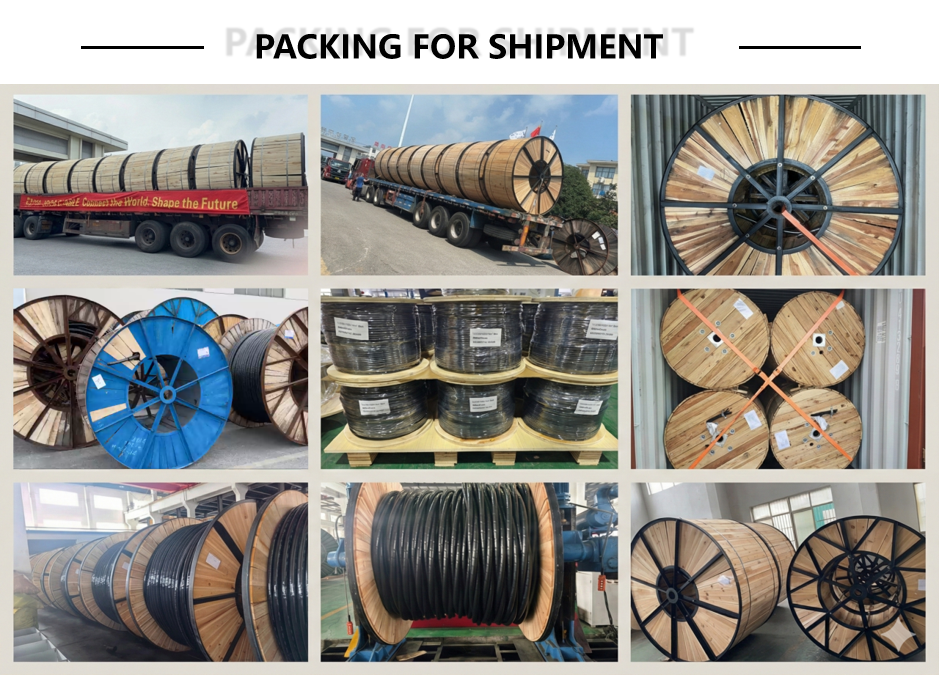
Packing For Shipment

To meet various transportation needs, there are many methods of packaging that can be used.

Packing For Shipment

Have more questions?

Easily get started by finding the answers to commonly asked questions about our company and services.

Q: What is the main difference between KVV and power cables?

A: Think of power cables as the muscle and KVV as the brain. Power cables carry heavy electricity, while KVV handles control signals. KVV usually operates at lower voltages (450/750V) but contains many more cores—sometimes up to 61—to manage complex commands.


Q:Can I use standard KVV cable outdoors or underground?

 A: Standard KVV is best suited for indoor installation in conduits or trenches. It isn’t built for direct burial because it lacks steel armor protection. If you need to bury it, we suggest upgrading to KVV22 (Steel Tape Armored). For outdoor use exposed to sun, we can add UV resistance to the outer sheath upon request.


Q: When should I choose the shielded version (KVVP) instead of KVV?

A: If your cable runs near high-voltage lines or heavy machinery, signal interference can be a problem. In those cases, you should definitely opt for KVVP. The copper wire braiding or copper tape shield acts as a barrier to keep your control signals clean and stable.


Q: How are the cores identified inside the cable?

A: For cables with a small number of cores (usually under 5), we use different colors. For cables with many cores (like 10, 20, or more), we use white numbering on black insulation. This makes it much faster for your electricians to trace connections during installation.


Q: Is the conductor solid or flexible?

A: It depends on your preference. We offer both Class 1 (Solid copper) and Class 2 (Stranded copper). Most clients prefer the stranded Class 2 version because it is easier to bend and route through tight cable trays compared to the stiff solid version.


Q: What is the temperature rating for this cable?

A: The standard PVC used in KVV is rated for 70°C. However, if your environment is hotter, we can switch the insulation material to handle 90°C or even 105°C. Just let us know the operating conditions before we quote.


Q: Does this cable come with flame retardant properties?

A: The base model is standard PVC. But we frequently manufacture it as ZR-KVV (Flame Retardant). This means if a fire occurs, the cable will self-extinguish after the flame source is removed, which is a safety requirement in many industrial buildings.


Q : Can you customize the sheath color?

A: Yes. While black is the industry standard for control cables, we can extrude the outer sheath in grey, red, or other colors if you need to distinguish between different systems (like fire alarms vs. regular control) visually.

Scroll to Top
Get in touch with JOCA company

Kindly complete the form below to reach out to us. We aim to get back to you within 12 hours. Wishing you the very best!

Contact Form Demo

JOCA