







Die ordnungsgemäße Identifizierung von Thermoelementen und den entsprechenden Drähten wird durch ein wesentliches Verständnis der Thermoelement-Farbcodes erleichtert, die ein entscheidender Faktor bei der Auswahl von Thermoelementen sind Thermoelementdraht und Typ für verschiedene industrielle und wissenschaftliche Anwendungen Ohne einen klaren Rahmen wäre die Komplexität von Thermoelementsystemen eine große Herausforderung für Ingenieure, Techniker und Forscher Der gesamte Artikel ist der Erläuterung der verschiedenen Thermoelement-Farbcodierungsstandards gewidmet Darüber hinaus wird Ihnen gezeigt, wie diese Standardfarbschemata die Identifizierung erleichtern, die Kompatibilität sicherstellen und die Genauigkeit bei der Temperaturerfassung verbessern Dieser umfassende Leitfaden hilft Ihnen nicht nur bei der Fehlersuche bei einem bestehenden Thermoelementaufbau oder der Auswahl eines geeigneten Typs für ein bestimmtes Projekt Aber auch die wesentlichen Fähigkeiten vermitteln, die erforderlich sind, um fundierte Entscheidungen hinsichtlich der Auswahl von Thermoelementen und deren Zubehör zu treffen.
Einführung in Thermoelemente
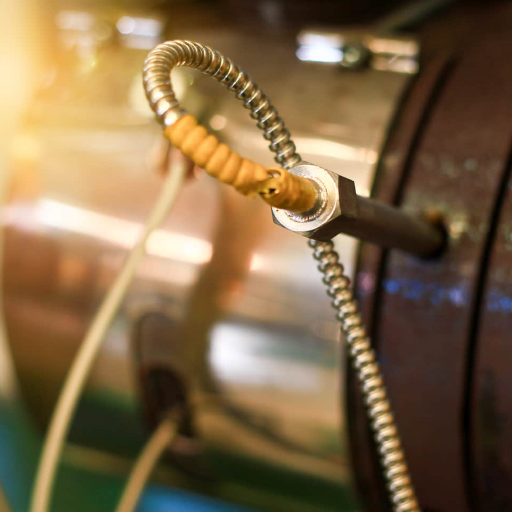
Thermoelemente sind, wie ihr Name schon sagt, Typen von Thermometern, die Wärme direkt in ein elektrisches Signal umwandeln und so die Temperatur messen, anders ausgedrückt, sie bestehen aus zwei verschiedenen Metalldrähten, die an einem Ende zu einem Übergang verschmolzen sind, an dem die Temperatur gemessen wird Die an diesem Punkt an der Verbindungsstelle erzeugte Spannung steht in direktem Zusammenhang mit der Temperatur, wodurch sehr genaue Messwerte möglich sind Der breite Einsatz von Thermoelementen in verschiedenen Anwendungen ergibt sich aus ihrer Fähigkeit, unter rauen Bedingungen zu arbeiten, ihrem riesigen Temperaturbereich und ihrer hervorragenden Reaktionszeit, neben anderen Qualitäten Ihre Zuverlässigkeit und Leistung werden durch die Verwendung standardisierter Farbcodes weiter verbessert, die die korrekte Identifizierung der Verbindungen und die Vermeidung falscher Verbindungen in den verschiedenen Systemen erleichtern.
Was ist ein Thermoelement?
Ein Thermoelement ist ein zur Temperaturmessung verwendetes Gerät, das aus zwei verschiedenen Metalldrähten besteht, die an einem Ende kombiniert werden, um einen Übergang zu erzeugen, wenn ein Temperaturunterschied an der Verbindung auftritt, wird eine kleine Spannung (Seebeck-Effekt genannt) erzeugt, die mit der Temperatur zusammenhängt Der große Betriebsbereich, die Haltbarkeit und die schnelle Reaktion auf Temperaturänderungen sind die Hauptmerkmale von Thermoelementen, Sie sind häufig in der Fertigungs, Luft - und Raumfahrtindustrie und Energieindustrie sowie in der wissenschaftlichen Forschung zu finden, wo eine präzise und zuverlässige Temperaturüberwachung erforderlich ist Es gibt verschiedene Arten von Thermoelementen (z.B. Typ K, Typ J), die mit unterschiedlichen Temperaturbereichen und Spezifikationen kommen, um verschiedene Bedürfnisse zu erfüllen.
Funktionsweise von Thermoelementen
Der Betrieb von Thermoelementen basiert auf dem Seebeck-Effekt, der eine Situation ist, in der zwei verschiedene Arten von Metallen oder Legierungen aufgrund des Vorhandenseins einer Temperaturdifferenz zwischen ihren Verbindungsstellen oder Verbindungspunkten eine Spannung über sie erzeugen Ein Thermoelement besteht aus zwei Drähten unterschiedlicher leitfähiger Materialien; ein Draht geht zum “heißen” oder Messübergang, und der andere befindet sich am “kalten” oder Referenzübergang. Wenn der heiße Übergang die Temperatur einer Wärmequelle hat, erzeugt er eine thermoelektrische Spannung, die den Temperaturgradienten zwischen beiden Verbindungsstellen anzeigt.
Diese üblicherweise in Millivolt ausgedrückte Spannung hat eine direkte Korrelation mit der Temperaturdifferenz und kann mit Hilfe von Standard-Referenztabellen oder den für den Thermoelementtyp spezifischen Kalibrierdaten, deren Messungen durchgeführt werden (wie Typ K oder Typ J), leicht verstanden werden, wobei dann die Temperatur am heißen Übergang durch Vergleich der gemessenen Spannung mit den Referenzen ermittelt wird Um die Genauigkeit der Messwerte in verschiedenen Umgebungseinstellungen weiter zu verbessern, verfügen moderne Thermoelementsysteme normalerweise über integrierte Kompensationstechniken, um dem Einfluss des kalten Übergangs entgegenzuwirken Durch dieses unkomplizierte, aber leistungsstarke Prinzip können Thermoelemente auch unter extremen Bedingungen eine zuverlässige Temperaturmessung liefern.
Bedeutung von Thermoelement-Farbcodes
Die Verwendung von Thermoelement-Farbcodes ist in verschiedenen Systemen notwendig, um sicherzustellen, dass sie ordnungsgemäß identifiziert, installiert und sicher betrieben werden Diese Farbcodes, die standardisiert sind, aber je nach Region variieren (z. B. IEC in Europa, ANSI in den Vereinigten Staaten), spezifizieren die Art des Thermoelements, zum Beispiel Typ K, Typ J oder Typ T, indem sie die positiven und negativen Drähte mit bestimmten Farben färben Dies verhindert nicht nur Fehler in der Verkabelung, sondern minimiert auch die Wahrscheinlichkeit falscher Temperaturwerte, da die Verbindungen nicht übereinstimmen oder die Polarität umgekehrt wird. Darüber hinaus machen die Farbcodes die Fehlersuche und Wartung der Systeme schneller, da die Techniker in der Lage sind, die Art der Thermo- und Raumfahrt zu überprüfen, um zusätzliche Standards für die Herstellung zu überprüfen und die Sicherheit zu gewährleisten und die Sicherheit zu gewährleisten.
Arten von Thermoelementen
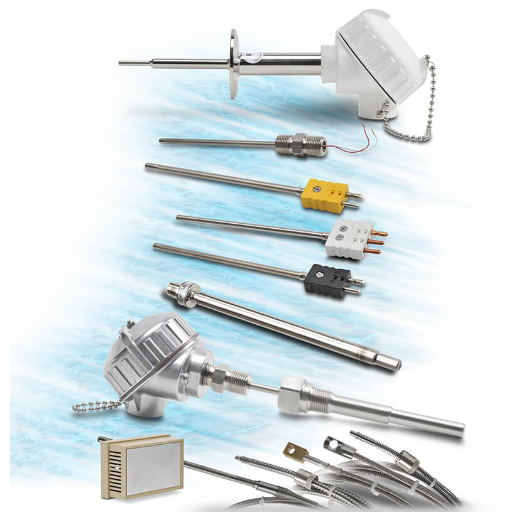
Thermoelemente werden nach Typ spezifiziert, und jedes von ihnen wird durch die besonderen Metalllegierungen beschrieben, die bei ihrer Herstellung verwendet werden, ihren Temperaturbereich und ihre Eignung für verschiedene Atmosphären Die gebräuchlichsten Thermoelementtypen sind die folgenden:
| Typ | Komposition | Temperaturbereich | Schlüsselmerkmale |
|---|---|---|---|
| Typ K | Nickel-Chrom / Nickel-Aluminium | -200°C bis 1.250°C (-328°F bis 2.282°F) | Extrem anpassungsfähig, weit verbreitet, zuverlässig |
| Typ J | Eisen / Constantan | -40°C bis 750°C (-40°F bis 1.382°F) | Begrenzte Reichweite, häufig in alternden Geräten zu finden |
| Typ T | Kupfer / Constantan | -250°C bis 400°C (-418°F bis 752°F) | Hervorragende Präzision, nassundurchlässig |
| Typ E | Nickel-Chrom / Constantan | -200°C bis 900°C (-328°F bis 1.652°F) | Außergewöhnlich hohe Leistung |
| Typ N | Nicrosil / Nisil | -200°C bis 1.300°C (-328°F bis 2.372°F) | Beständigkeit gegen hohe Temperaturen und Oxidation |
Die Wahl, welches verwendet werden soll, richtet sich nach den Anforderungen der Anwendung, die aus Temperaturbereich, Umgebungsfaktoren und der erforderlichen Genauigkeit bestehen.
Übersicht über Thermoelementtypen
Die Auswahl eines Thermoelementtyps erfordert das Abwägen mehrerer Faktoren, um sicherzustellen, dass die Anwendung die beste Leistung erzielt. Im Folgenden finden Sie einige Überlegungen:
Überlegungen zur Schlüsselauswahl:
- Temperaturbereich: Thermoelemente haben für ihren Betrieb einen Temperaturbereich Die Typen E, J, K, N und T sind für die Standardbereiche gut, während Hochtemperaturanwendungen Typ S, R oder B verwenden können, der bis zu 1.760°C (3.200°F) aushält Für Niedertemperaturanwendungen wird normalerweise Typ T oder E bevorzugt, da er eine bessere Empfindlichkeit aufweist.
- Genauigkeit und Sensitivität: Die erforderliche Genauigkeit der Temperaturmessung beeinflusst die Wahl des Thermoelementtyps. Beispielsweise liest Typ T sehr genau, insbesondere unter kryogenen Bedingungen, während Typ K aufgrund seiner guten Kombination aus Empfindlichkeit und Robustheit unter verschiedenen Umgebungsbedingungen am häufigsten vorkommt.
- Umweltbedingungen: Die Atmosphäre rund um das Thermoelement, einschließlich Faktoren wie Oxidation, Schwefeleinwirkung oder korrosive Bedingungen, ist sehr wichtig. Die Typen N und K sind so konzipiert, dass sie oxidationsbeständig sind, während die Kupferzusammensetzung vom Typ T in reduzierenden Umgebungen sehr gut ist.
- Materialkompatibilität: Die Wahl des Materials, wie Chromel, Alumel, oder Platinlegierungen, hat einen direkten Einfluss auf die Korrosionsbeständigkeit und die Lebenserwartung des Thermoelements Platin-Thermoelemente (Typ S, R, und B) haben eine ausgezeichnete Stabilität bei hohen Temperaturen, sind aber teurer als unedle Metalltypen wie J oder K, die auch eine gute Empfindlichkeit haben.
- Kosten vs. Leistung: Die Entscheidung könnte durch Budgetbeschränkungen beeinflusst werden Thermoelemente aus unedlen Metallen wie Typ J und K sind kostengünstig und bieten Vielseitigkeit, während Edelmetallsorten wie Platin die höchste Genauigkeit, aber zu einem Premiumpreis bieten.
In the end, selecting the right thermocouple type according to application requirements will not only make the measurement more reliable and the equipment’s life longer, but also bring about accuracy and durability in different industrial or scientific settings.
Type K Thermocouple
The Type K thermocouple is an industry standard among the thermocouple types due to its excellent performance, long life, and huge temperature span. Comprising a positive and a negative leg of Chromel (Nickel-Chromium alloy) and Alumel (Nickel-Aluminum alloy), respectively, it can detect temperatures from approximately -200°C to 1,260°C (-328°F to 2,300°F) depending on the insulation and ambient conditions. Its nature makes it applicable in oxidizing, inert, or dry reducing atmospheres. But it cannot be used for a long time in reducing or sulfurous conditions because of the possibility of destroying the Chromel wire, leading to the thermocouple’s eventual failure.
Type K thermocouples are quite sensitive to temperature changes, with a sensitivity of around 41 µV/°C, thus being suitable for quite a few industrial applications that involve furnaces, kilns, and engines, to name a few. They are also cheap and provide reliable outputs day in day out, but high temperature exposure above 1,000°C (1,832°F) may lead to calibration drift. Proper shielding is vital to prevent errors that may be caused by electromagnetic interference (EMI) or noise in very active locations. Their low-cost nature and wide-temperature range give them an edge over other types of thermocouples; thus, they continue to be the go-to for general-purpose temperature measurement.
Type J Thermocouple
The J-type thermocouple is a frequently used and very flexible temperature gauge that consists of iron and constantan. It is a lactate device with a temperature range from -210 °C to 760 °C (-346 °F to 1,400 °F), which is a reason why it can be used in different settings that require monitoring of temperatures from moderate to high levels. This thermocouple is also very sensitive and has a Seebeck coefficient of about 55 μV/°C; hence, it is capable of giving very accurate and fast readings.
One of its principal benefits is that it can be used in various atmospheres without affecting its performance; whether they are oxidizing, inert, or reducing, this thermocouple can be utilized in multiple areas, including heat treaters, ovens, and industrial processing activities. On the downside, the iron wire in a Type J thermocouple is easily rusted in the presence of air moisture, which can cause the breakdown of the device sooner than expected. To prevent this, it is advisable to have the device properly insulated and regularly checked.
Type J thermocouples are reliable and cost-effective, thus their utilization in all industrial sectors is massive. However, after a while in high-temperature environments, the thermocouple will show signs of wear due to the continuous process of iron oxidation, which is the reason most manufacturers do not recommend such applications for them.
Type E Thermocouple
The Type E thermocouple is a sensor made of two different metals – Chromel and Constantan – where the first one is positive and the second one negative, respectively. It gives a very good performance, which can be used in many applications. It is very sensitive (68 µV/°C), which is the reason to be used in situations that need very precise temperature measurement of -200°C to 900°C. Its performance is also better in oxidizing and non-reactive atmospheres than that of other types; it can resist corrosion and oxidation excellently, even at moderate temperatures. The metal composition of the Type E thermocouple does not allow the device to undergo magnetic transitions; thus, a stable output is maintained even at low temperatures. This is why it has been used in cryogenic applications where accuracy and stability are the main requirements. Also, the oxidation resistance has been increased due to the absence of iron in its construction, and therefore, better long-term reliability and accuracy. To name some, the applications cover aerospace, medical, and manufacturing sectors, especially those that involve temperature-sensitive processes. On the other hand, Type E thermocouples are not recommended for use in a reducing atmosphere or environments containing sulfur, as those conditions might eventually damage the sensing material.
Understanding Thermocouple Wire Color Codes
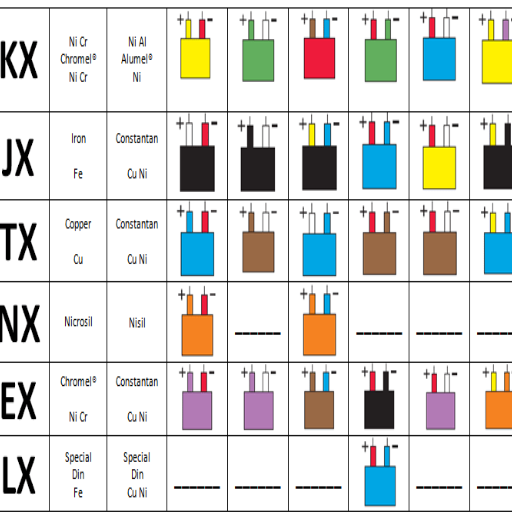
The thermocouple wire color codes are important for quick and accurate identification of the type and polarity of thermocouple wires. The particular color code system differs from one place to another. As an example, USA (ANSI Standard): The positive wire is usually red, whereas the negative wire’s color is determined according to the thermocouple type (e.g., white for Type K and blue for Type T). In Europe (IEC Standard), the positive wire is mostly white, and the negative wire’s color, again, varies by type (e.g., green for Type K and blue for Type T). These color codes help to make connections right and reduce the chance of errors during installation or troubleshooting. It is always advisable to consult the corresponding regional standard to ensure both compliance and correctness.
ANSI Color Codes for Thermocouples
The ANSI (American National Standards Institute) thermocouple color codes are meant to give a uniformity in wiring of different thermocouple types, thus making connections and troubleshooting easier and more accurate. Here is a brief presentation of the ANSI color codes for the most common thermocouple types:
Type J (Iron-Constantan)
Weiß
Rot
Schwarz
Type K (Chromel-Alumel)
Gelb
Rot
Gelb
Type T (Copper-Constantan)
Blau
Rot
Blau
Type E (Chromel-Constantan)
Lila
Rot
Lila
Type N (Nicrosil-Nisil)
Orange
Rot
Orange
The use of these standard colors not only makes it easier to identify the conductors but also minimizes the chances of making wiring mistakes during installation. It is very important to ensure that ANSI standards are followed when working in areas where these regulations are in place. If you are dealing with special thermocouples or applications, you should always check the manufacturer’s documentation or other relevant resources.
IEC Color Codes for Thermocouples
The International Electrotechnical Commission (IEC) establishes a standardized color code system for thermocouples, ensuring compatibility and safety across international installations. Below are the standard IEC color codes for common thermocouple types:
Type K (Chromel/Alumel)
Green
Weiß
Green
Type J (Iron/Constantan)
Schwarz
Weiß
Schwarz
Type T (Copper/Constantan)
Braun
Weiß
Braun
Type E (Chromel/Constantan)
Violet
Weiß
Violet
These color codes promote uniformity and simplify installation and maintenance processes. It is imperative to use IEC-compliant cables when operating in countries that follow these standards. Furthermore, always verify application-specific requirements and consult relevant documentation to ensure optimal performance and safety in thermocouple systems.
Comparison of ANSI and IEC Color Codes
ANSI (American National Standards Institute) and IEC (International Electrotechnical Commission) are the two standards that are most recognized when it comes to thermocouple wiring identification. Both systems have the same goal in mind, i.e., to provide a uniform way of identifying wires, but their methods of doing so are very different.
ANSI Standards
Wire Polarity Identification: In the case of ANSI Standards, the negative wire is symbolized by a red color, and the variety of colors and combinations for the positive wire depends on the thermocouple type. To illustrate, in the case of Type K thermocouples, the positive wire is yellow and the negative wire is red.
Outer Jacket Coding: The ANSI Standards maintain that the outer jacket generally corresponds to the thermocouple type. A yellow jacket, for example, signifies a Type K thermocouple.
Global Application: The ANSI System is mostly used in North America.
IEC Standards
Wire Polarity Identification: IEC Standards apply a different method whereby the positive wire usually gets a color identifier that is more precise, and the negative wire is usually white. As an example, in K Type thermocouples, the positive wire is green and the negative continues to be white.
Outer Jacket Coding: The IEC Standards provide for the outer sheath color to signify the thermocouple type, but are based on a different color structure. For Type K thermocouples, the outer jacket is mostly green.
Global Application: The IEC System is, in fact, the preferred system in Europe and other international geographical areas.
| Thermocouple Type | ANSI Positive Wire | ANSI Negative Wire | IEC Positive Wire | IEC Negative Wire |
|---|---|---|---|---|
| Typ K | Gelb | Rot | Green | Weiß |
| Typ J | Weiß | Rot | Schwarz | Weiß |
| Typ T | Blau | Rot | Braun | Weiß |
| Typ E | Lila | Rot | Violet | Weiß |
| Typ N | Orange | Rot | – | – |
Important Considerations:
Maintenance and Interchangeability: If the wiring is not correctly matched, it can lead to different temperature readings and inconsistencies in the measurements because of the cross-wire color coding systems. Therefore, proper standards cross-referencing is to be done for the compatibility of the systems.
Recognizing the differences between the ANSI and IEC color codes is a must for engineers and technicians involved in the selection, installation, and maintenance of thermocouple-based systems, especially when dealing with projects that cover several regions. It is always a good idea to refer to the standard guidelines and manufacturer documents for specific compliance needs.
Thermocouple Wire Specifications
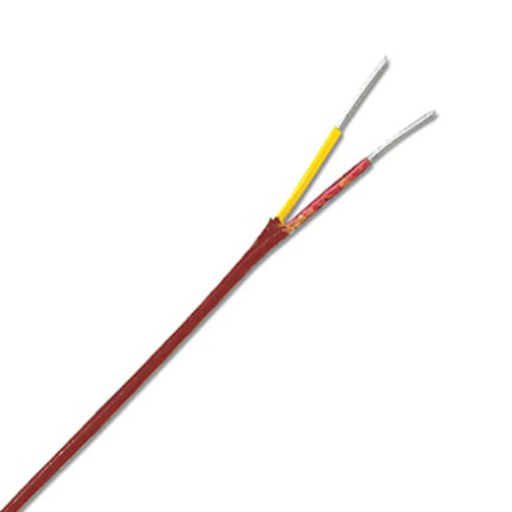
Thermocouples are categorized not only according to their material and temperature limitations but also by the types of wires that are usually considered as follows:
- Wire type: The common varieties are Type K (Nickel-chromium/Nickel-alumel) or Type J (Iron/Constantan) and Type T (Copper/Constantan), with the selection depending on the range of temperatures plus the suitability for the environment.
- Temperaturbereich: Each thermocouple has its own specific temperature limits, and Type K, for instance, is the one that can operate in the range of -200 degrees to 1260 degrees, thus making it popular for large-scale industry.
- Isoliermaterial: The insulation must withstand the conditions of the application. If, for example, it is a high-temperature or corrosive environment, such insulating materials as fiberglass, ceramic, or PTFE are usually recommended.
- Drahtanzeige: The gauge size decides on no reason the wire’s durability and response time. The thinner the gauge, the quicker it reacts, but perhaps not very durable, while thicker gauges are the opposite—strong but slow.
Do not forget to follow the relevant standards like ANSI/ASTM or IEC, and also do not hesitate to check the manufacturer’s datasheets for more accurate wire specifications and their suitability for the application you intend to use them for.
Thermocouple Wire Material
The choice of thermocouple wire materials significantly impacts the precision of temperature measurements and varies according to the thermocouple type in question. The most popular types of thermocouples are Type K (Chromel-Alumel), Type J (Iron-Constantan), and Type T (Copper-Constantan), plus several other types. Each thermocouple type is characterized by a specific temperature range, unique properties, and a composition of materials that can be most appropriately applied in different environments. For instance, K-type thermocouples are the most versatile ones and are stable in oxidizing environments, while J-type thermocouples are suitable for reducing or inert atmospheres but have a lower maximum temperature. T-type thermocouples are mainly used in the field of cryogenics because they offer an excellent degree of accuracy even at low temperatures. Thermocouple wires are usually covered with insulating materials such as fiberglass, Teflon, or ceramic, which are selected according to the temperature tolerances, electrical insulation requirements, and environmental factors (e.g., moisture or corrosive substances). So, always check the calibration and follow the international standards (e.g., ANSI or IEC) when selecting thermocouple wire materials for specific applications.
Thermocouple Extension Wire
Thermocouple extension wires are made to amplify the thermocouple signal towards the measuring device, with minimal errors being the result of such amplification. The opposite is true for thermocouple wires that are used in the harsh conditions of the process and, thus, need to be made of non-meltable and thermally resistive materials; on the other hand, extension wires just need to be able to radiate or absorb heat conducted by the materials used for the signal transport from the thermocouple to the control system. They are made of materials that have the same thermoelectric properties as the thermocouple type, thereby ensuring the thermoelectric voltage is accurately transmitted.
Key Factors for Selecting Thermocouple Extension Wires:
- Materialkompatibilität: The alloys in the extension wire must match those in the thermocouple exactly to avoid inaccuracies caused by voltage drops. For instance, Type K thermocouples consist of a combination of chromel and alumel alloys.
- Operating Temperature Range: The insulation of the extension wire should be made of materials such as PVC, Teflon, or silicone that can withstand the temperature and humidity in the installation area. These materials allow signal stability without being affected by the weather, depending on their ambient conditions.
- Signal Integrity: Application of shielding or twisted-pair methods could significantly reduce the level of EMI and, consequently, the distortion of the voltage signal.
- Standards Compliance: The use of international standards for selecting wires, such as ANSI MC96.1 or IEC 60584, guarantees the quality and mix of the materials in the industrial systems.
Installation plays an important role in the overall performance, and wire length, along with connections, is among the factors that could negatively affect it. Make it a habit to check that the installation of the extension wire has been done according to the manufacturer’s specifications and calibration requirements for best accuracy.
Limits of Error in Thermocouples
Thermocouples have their limits of error dictated by the tolerances related to the accuracy of temperature measurements. These tolerances are set by international specifications like ANSI MC96.1 and IEC 60584. Accuracy is mainly categorized into two types: Standard Limits of Error (SLE) and Special Limits of Error (SPLE).
| Error Classification | Standard Limits of Error (SLE) | Special Limits of Error (SPLE) |
|---|---|---|
| Maximum Allowable Error | ±2.2°C or ±0.75% (whichever is larger) | ±1.1°C or ±0.4% (whichever is larger) |
| Anwendung | General industrial applications | High-precision applications |
| Kosten | Standard pricing | Premium pricing |
In the case of SLE, the maximum allowable error can be ±2.2°C or ±0.75% of the measured temperature (whichever is larger). SPLE is more rigorous and usually announces the tolerances as ±1.1°C or ±0.4%. The values vary with the type of thermocouple (like Type K, Type J, and Type T) and the respective temperature range. Furthermore, aging, contamination, or improper calibration may worsen the situation if not controlled properly and can be a source of inefficiency.
It is crucial to note that environmental conditions such as thermal cycling and the presence of corrosive gases can, over the years, degrade the thermocouple’s performance. Hence, it is deemed acceptable practice to take the steps of regular calibration and strict observance of the manufacturer’s guidelines to regain the accuracy lost due to external factors.
Anwendungen von Thermoelementen
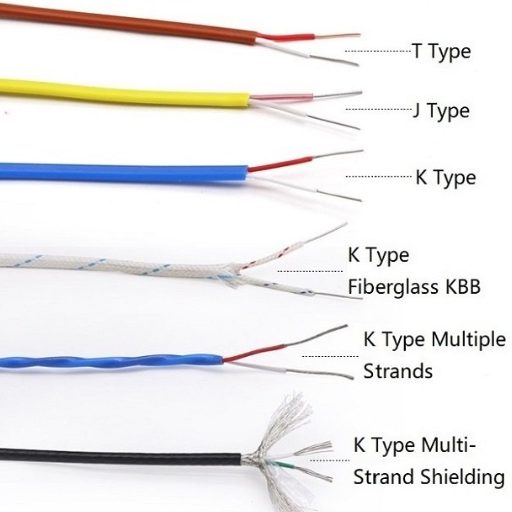
Thermocouples are very reliable and also capable of measuring a temperature range from very low to very high degrees, so they are used in a lot of industries. Their usage is often seen in the following cases:
- Industrial Processes: Temperature monitoring and control in the fields of manufacturing, chemical processing, and metal treatment, where the temperature is crucial.
- Energy Sector: Power plants, including gas turbines, and boilers’ temperature measurement.
- Medical Equipment: Devices like incubators and autoclaves requiring very accurate thermal readings will not be able to work without thermocouples.
- Aerospace Applications: Engine temperature monitoring and materials under severe thermal conditions.
- Consumer Appliances: Water heaters, ovens, and HVAC systems, temperature control.
Thus, the above usages are the major reason why the thermocouples, through their measurement capability, have not only drawn but also shown the need for continuous purification operation and safety.
Industries Using Thermocouples
Thermocouples are necessary for numerous industries because of their precision, robustness, and ability to work at very high or low temperatures. The following is a summary of the primary sectors that have adopted thermocouple technology:
Manufacturing and Industrial Processing
Thermocouples are indispensable to measuring and regulating the entire temperature range during the production processes of various industries, such as metallurgy, glassmaking, and the manufacture of chemicals. Their durability in high-temperature conditions makes them a necessity in these areas.
Energy and Power Generation
The thermocouples are installed in the power plants, which are of different types such as nuclear, coal-fired, and geothermal, where they monitor the temperatures of turbines, boilers, and exhaust. They ensure the stability of the operation, energy efficiency, and that safety and environmental regulations are complied with.
Aerospace and Defense
The aerospace sector is reliant on thermocouples as the only way to guarantee the safe operation of their respective engines, the monitoring of the exhaust temperatures, and the running of critical material stress tests under extreme conditions. Their accuracy is a crucial factor that helps in the preservation of safety and performance standards.
Medical and Pharmaceutical
Applications of thermocouples in the healthcare industry include incubators, sterilizers, and cryogenic chambers, where temperature control is critical for product consistency and patient safety.
Automobilindustrie
Car manufacturers monitor engine temperatures, emissions systems, and air-conditioning units using thermocouples. This guarantees that the cars meet the performance, efficiency, and regulatory requirements.
Food Processing
The quality and safety standards of the food and beverage sector are maintained through the precise temperature regulation provided by thermocouples during cooking, pasteurization, and storage.
These various industries highlight the universal nature and trustworthiness of thermocouples, which, in turn, signal their acceptance in the thermal monitoring and control of the sectors requiring high-accuracy work.
Temperature Measurement Ranges
In my view, the range of temperatures that thermocouples can measure varies a lot depending on their type and material composition. For instance, Type K thermocouples, which are often used the most, can measure temperatures across a wide range, around -200°C to 1,260°C (-328°F to 2,300°F). Likewise, Type J thermocouples do their job in a range of -40°C to 750°C (-40°F to 1,382°F). The performance range of each thermocouple type is unique, and thus, they are used in different industrial or scientific applications where accuracy and robustness are required.
| Thermocouple Type | Temperature Range (°C) | Temperature Range (°F) | Typische Anwendungen |
|---|---|---|---|
| Typ K | -200°C to 1,260°C | -328°F to 2,300°F | General-purpose, industrial furnaces, kilns |
| Typ J | -40°C to 750°C | -40°F to 1,382°F | Plastics, food processing, moderate temperatures |
| Typ T | -250°C to 400°C | -418°F to 752°F | Cryogenic applications, food storage, and pharmaceuticals |
| Typ E | -200°C to 900°C | -328°F to 1,652°F | Aerospace, medical devices, cryogenics |
| Typ N | -200°C to 1,300°C | -328°F to 2,372°F | High-temperature industrial processes |
Metal Thermocouples vs. Other Types
The metal thermocouples, which include Types K, J, and T, are built on the principle of the Seebeck effect, whereby the temperature difference between two different metals creates a generated voltage. Basically, these thermocouples are characterized by their resilience, large-scale temperature ranges, and low price, all of which make them suitable for industrial applications; examples are furnaces, engines, and HVAC systems.
In contrast, there are non-metal thermocouples, which comprise ceramic-based thermocouples (e.g., Type R, S, and B). They are made for extreme temperature conditions and thus surpass the limits of standard metallic thermocouples. The mentioned types use noble metal alloys, making it possible for them to work in temperature ranges above 1,500°C (2,732°F). Yet, their price is very high, and the mechanical robustness is very low compared to metallic ones.
| Characteristic | Metal Thermocouples (K, J, T) | Noble Metal Thermocouples (R, S, B) |
|---|---|---|
| Operating Principle | Seebeck effect with base metal alloys | Seebeck effect with noble metal alloys |
| Temperaturbereich | -250°C to 1,300°C | Up to 1,700°C+ |
| Kosten | Low to moderate | High (premium) |
| Haltbarkeit | High mechanical strength | Lower mechanical strength |
| Anwendungen | General industrial use, HVAC, engines | Glass making, metallurgy, and high-precision labs |
| Sensitivity | Good to excellent | Excellent at high temperatures |
Each group of thermocouples has different objectives and applications depending on the working conditions. Metal thermocouples are a flexible and low-cost solution for general uses, while non-metal thermocouples are necessary for the very high-temperature applications in metals or glass making, where accuracy is key.
Summary and Conclusion
Understanding thermocouple color codes is fundamental to ensuring accurate temperature measurement, proper system installation, and safe operation across various industrial and scientific applications. The standardized color coding systems established by ANSI and IEC provide essential frameworks that prevent wiring errors, reduce troubleshooting time, and maintain system reliability.
The distinction between ANSI and IEC color codes reflects regional preferences and regulatory requirements. ANSI standards, predominantly used in North America, utilize red as the negative wire color across all thermocouple types, while the positive wire color varies by type. In contrast, IEC standards, favored in Europe and internationally, typically employ white for the negative wire, with the positive wire color indicating the thermocouple type. Recognition of these differences is critical for engineers and technicians working on international projects or maintaining equipment from different regions.
Each thermocouple type—whether Type K, J, T, E, or N—offers unique advantages in terms of temperature range, accuracy, sensitivity, and environmental compatibility. The selection of the appropriate thermocouple type and adherence to the correct color coding standard ensures optimal performance, measurement accuracy, and long-term reliability. Proper attention to wire specifications, including material compatibility, insulation type, wire gauge, and extension wire selection, further enhances system performance and reduces measurement errors.
As industries continue to demand greater precision and reliability in temperature measurement, the importance of understanding and correctly implementing thermocouple color codes cannot be overstated. Whether working in manufacturing, aerospace, energy generation, medical devices, or food processing, adherence to these standardized color coding systems is essential for maintaining operational safety, regulatory compliance, and measurement accuracy.
By mastering the principles outlined in this comprehensive guide, technicians, engineers, and researchers can confidently select, install, and maintain thermocouple systems that deliver accurate, reliable temperature measurements in even the most demanding applications. The proper identification and implementation of thermocouple color codes remain a cornerstone of effective thermal management and process control across all industries.
Important Notice: Always verify color codes against regional standards (ANSI or IEC) before installation. Consult manufacturer documentation and relevant safety regulations to ensure compliance and optimal performance. Regular calibration and maintenance are essential for maintaining measurement accuracy over time.
Referenzquellen
Cold Chain Storage of Vaccines: A Brief Introduction to Thermometry
Energy Harvesting Strategies for Wireless Sensor Networks and Mobile Devices: A Review
Häufig gestellte Fragen (FAQs)
Was genau sind Thermoelement-Farbcodes?
Thermocouple color codes are the set of colors that belong to the different thermocouple wires’ positive and negative sides. They help in the proper connection of the thermocouples to the measuring and the equipment, thus providing accuracy in temperature readings and data collection.
Wie unterscheiden sich die Farbcodes für Thermoelementdrähte zwischen den ANSI- und IEC-Standards?
Das von ANSI verwendete System zur Bestimmung der Farben basiert auf den spezifischen Farben, die den Thermoelementdrahttypen zugeordnet sind; so wird beispielsweise Rot für das K-Thermoelement verwendet, und Gelb ist die positive Mine Der IEC-Standard verwendet dagegen einen völlig anderen Farbsatz, wobei beispielsweise Schwarz das Negative und Weiß die positive Mine darstellt Das Bewusstsein für diese Unähnlichkeiten ist von größter Bedeutung, wenn es darum geht, Thermoelementverbindungen in verschiedenen Anwendungen zu verstehen.
Welche Rolle spielen das positive Blei und das negative Blei in Thermoelementen?
In thermocouples, the positive lead is the one that produces a voltage when there are temperature fluctuations, and the negative lead is the one that acts as the reference. It is crucial to pinpoint these leads correctly since their interchange may generate wrong temperature values and, in turn, affect the whole measuring system’s efficiency.
Welche Arten von Thermoelementen gibt es und welche Farbcodes gibt es?
Es gibt acht verschiedene Arten von Thermoelementen, die wichtigsten sind K, J, T, E, S, R, N und B. Die für jeden Typ spezifischen Drahtfarbcodes werden auch gemäß den ANSI- und IEC-Standards bestimmt, die nicht nur helfen um die verwendeten Materialien, aber auch ihre jeweiligen Temperaturbereiche zu erkennen.
Was ist der Temperaturbereich für Thermoelemente vom Typ K?
Thermoelemente vom Typ K, die aus Nickel-Chrom und Nickel-Aluminium bestehen, haben einen Temperaturbereich von nahezu -200°C bis +1260°C. Aufgrund ihres breiten Temperaturbereichs eignen sie sich für eine Vielzahl von Anwendungen, einschließlich industrieller und Laboranwendungen.
Wie identifiziere ich die richtigen Thermoelement-Stecker für mein System?
Bei der Auswahl von Thermoelementanschlüssen müssen die Art des Thermoelements, der erforderliche Temperaturbereich sowie die Umgebungsbedingungen, unter denen die Anschlüsse arbeiten, berücksichtigt werden. Wenn der Steckertyp mit dem Thermoelement kompatibel ist, erhalten Sie genaue Messwerte.
Ist es zulässig, Verlängerungsdrähte mit Thermoelementen zu verwenden?
Thermoelement-Verlängerungsdrähte können verwendet werden, um das Thermoelement mit Messinstrumenten zu verbinden, ja. Diese Verlängerungsdrähte bestehen aus den gleichen Materialien wie das Thermoelement, können aber unterschiedliche Farbcodes haben. Es ist immer zu überprüfen, ob der Verlängerungsdraht vom gleichen Typ wie das Thermoelement ist, um Fehler bei den Messungen zu vermeiden.
Was sind die IEC 60584-3 Thermoelementdrahtcodes?
IEC 60584-3 definiert die Farbcodes für Thermoelementdrähte und spezifiziert dabei die Thermoelementtypen sowie deren positive und negative Enden. Die Einhaltung dieser Codes ist eine wichtige Voraussetzung, um die richtige Kompatibilität und die anhaltende Wirksamkeit bei der Temperaturmessung zu erreichen.
Welche Folgen hat die Arbeit mit Thermoelementen in inerten oder oxidierenden Atmosphären?
When thermocouples are to be used in inert or oxidizing atmospheres, they should be made of such materials that will not degrade, even when the right materials are selected for the thermocouple and its insulation. The right selection will not only extend the thermocouple’s life and precision over time but also provide trustworthy readings in difficult areas.