







The proper identification of thermocouples and their corresponding wires is facilitated by an essential understanding of the thermocouple color codes, which are a vital factor in the selection of thermocouple wire and type for different industrial and scientific uses. Without a clear framework, the complexities of thermocouple systems would be a big challenge for engineers, technicians, and researchers. The entire article is dedicated to explaining the different thermocouple color coding standards. Moreover, it will show you how these standard color schemes make identification easier, ensure compatibility, and improve accuracy in temperature sensing. This comprehensive guide will not only assist you in case you are troubleshooting an existing thermocouple setup or selecting a suitable type for a particular project. But also impart the essential skills necessary to make informed decisions regarding the selection of thermocouples and their accessories.
Introduction to Thermocouples
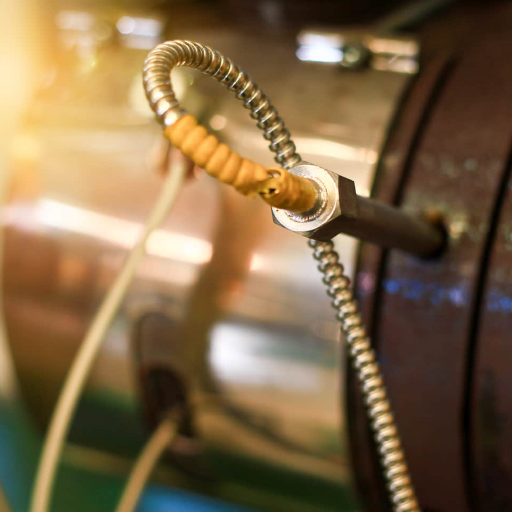
Thermocouples, as their name suggests, are types of thermometers that directly transform heat into an electric signal and thus measure temperature. To put it differently, they are composed of two different metal wires that are fused at one end to form a junction where the temperature is measured. The voltage being produced at the junction at this point is in a direct relationship with the temperature, which means very accurate readings are possible. The wide use of thermocouples in various applications stems from their capability of operating under harsh conditions, their huge temperature range, and their excellent response time, among other qualities. Their dependability and performance are further improved by the use of standardized color codes, which facilitate the correct identification of the connections and the prevention of wrong connections in the various systems.
What is a Thermocouple?
A thermocouple is a device used for temperature measurement that is made up of two different metal wires that are combined at one end to create a junction. When a temperature difference occurs at the junction, a small voltage (called the Seebeck effect) is generated that is related to temperature. The wide operational range, durability, and fast response to temperature changes are the main characteristics of thermocouples. They are often found in manufacturing, aerospace, and energy industries, as well as in scientific research, where precise and reliable temperature monitoring is required. There are different types of thermocouples (e.g., Type K, Type J) that come with different temperature ranges and specifications to meet various needs.
How Thermocouples Work
The operation of thermocouples is based on the Seebeck effect, which is a situation where two different kinds of metals or alloys generate a voltage across them due to the presence of a temperature difference between their junctions or points of connection. A thermocouple is made up of two wires of different conductive materials; one wire goes to the “hot” or measuring junction, and the other one is on the “cold” or reference junction. When the hot junction is at the temperature of a heat source, it creates a thermoelectric voltage that tells about the temperature gradient between both junctions.
This voltage, commonly expressed in millivolts, has a direct correlation with the temperature difference and can be easily understood with the help of standard reference tables or the calibration data specific to the thermocouple type whose measurements are being done (like Type K or Type J). The temperature at the hot junction is then found by comparing the measured voltage with the references. To further enhance the accuracy of the readings in different environmental settings, modern thermocouple systems usually have built-in compensation techniques to counter the influence of the cold junction. By means of this straightforward but powerful principle, thermocouples can deliver dependable temperature measurement even in extreme conditions.
Importance of Thermocouple Color Codes
The use of thermocouple color codes is necessary in various systems to ensure that they are properly identified, installed, and operated safely. These color codes, which are standardized but vary depending on the region (e.g., IEC in Europe, ANSI in the United States), specify the type of thermocouple, for example, Type K, Type J, or Type T, by coloring the positive and negative wires with certain colors. This not only prevents errors in the wiring but also minimizes the chances of incorrect temperature readings because of the connections being mismatched or the polarity being reversed. Furthermore, the color codes make the troubleshooting and maintenance of the systems quicker as the technicians are able to quickly check the type of thermocouple and the corresponding materials without the need for additional testing or dismantling. Through the observance of these standards, industries like manufacturing, aerospace, and power generation can achieve system reliability and compliance with safety protocols.
Types of Thermocouples
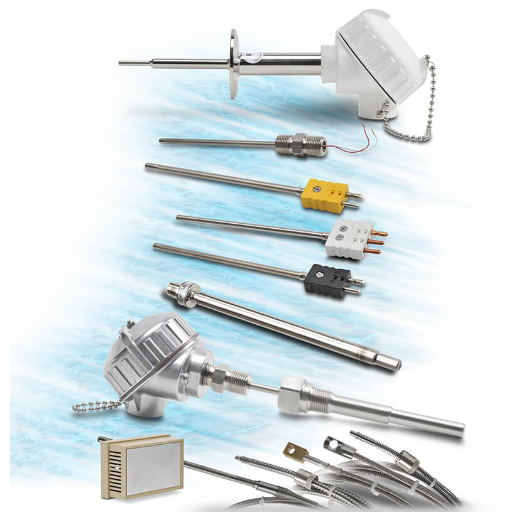
Thermocouples are specified by type, and each of them is described by the particular metal alloys that are used in their manufacture, their temperature range, and their suitability for different atmospheres. The most common thermocouple types are the following:
| Type | Composition | Temperature Range | Key Characteristics |
|---|---|---|---|
| Type K | Nickel-Chromium / Nickel-Aluminum | -200°C to 1,250°C (-328°F to 2,282°F) | Extremely adaptable, widely used, dependable |
| Type J | Iron / Constantan | -40°C to 750°C (-40°F to 1,382°F) | Limited range, often found in aging equipment |
| Type T | Copper / Constantan | -250°C to 400°C (-418°F to 752°F) | Excellent precision, impervious to wetness |
| Type E | Nickel-Chromium / Constantan | -200°C to 900°C (-328°F to 1,652°F) | Exceptionally high output |
| Type N | Nicrosil / Nisil | -200°C to 1,300°C (-328°F to 2,372°F) | Resistance to high temperatures and oxidation |
The choice of which one to use is made according to the requirements of the application, which consist of temperature range, environmental factors, and the accuracy needed.
Overview of Thermocouple Types
The selection of a thermocouple type requires weighing several factors to make sure that the application is getting the best performance. The following are some considerations:
Key Selection Considerations:
- Temperature Range: Thermocouples have a temperature range for their operation. Types E, J, K, N, and T are good for the standard ranges, while high-temperature applications can use Type S, R, or B, which can withstand up to 1,760°C (3,200°F). For low-temperature applications, Type T or E is usually preferred as it has better sensitivity.
- Accuracy and Sensitivity: The temperature measurement’s required accuracy affects the choice of the thermocouple type. For instance, Type T reads very accurately, especially in cryogenic conditions, while Type K is the most common for its good combination of sensitivity and robustness in different environmental conditions.
- Environmental Conditions: The atmosphere surrounding the thermocouple, including factors like oxidation, sulfur exposure, or corrosive conditions, is very important. Types N and K are designed to be resistant to oxidation, while Type T’s copper composition is very good in reducing environments.
- Material Compatibility: The choice of material, like Chromel, Alumel, or platinum alloys, has a direct impact on corrosion resistance and the thermocouple’s life expectancy. Platinum thermocouples (Types S, R, and B) have excellent stability at high temperatures but are more expensive than base metal types like J or K that also have good sensitivity.
- Cost vs. Performance: The decision might be swayed by budget limitations. Thermocouples made of base metals such as Types J and K are inexpensive and offer versatility, while noble metal types, like platinum, offer the highest accuracy but at a premium price.
In the end, selecting the right thermocouple type according to application requirements will not only make the measurement more reliable and the equipment’s life longer, but also bring about accuracy and durability in different industrial or scientific settings.
Type K Thermocouple
The Type K thermocouple is an industry standard among the thermocouple types due to its excellent performance, long life, and huge temperature span. Comprising a positive and a negative leg of Chromel (Nickel-Chromium alloy) and Alumel (Nickel-Aluminum alloy), respectively, it can detect temperatures from approximately -200°C to 1,260°C (-328°F to 2,300°F) depending on the insulation and ambient conditions. Its nature makes it applicable in oxidizing, inert, or dry reducing atmospheres. But it cannot be used for a long time in reducing or sulfurous conditions because of the possibility of destroying the Chromel wire, leading to the thermocouple’s eventual failure.
Type K thermocouples are quite sensitive to temperature changes, with a sensitivity of around 41 µV/°C, thus being suitable for quite a few industrial applications that involve furnaces, kilns, and engines, to name a few. They are also cheap and provide reliable outputs day in day out, but high temperature exposure above 1,000°C (1,832°F) may lead to calibration drift. Proper shielding is vital to prevent errors that may be caused by electromagnetic interference (EMI) or noise in very active locations. Their low-cost nature and wide-temperature range give them an edge over other types of thermocouples; thus, they continue to be the go-to for general-purpose temperature measurement.
Type J Thermocouple
The J-type thermocouple is a frequently used and very flexible temperature gauge that consists of iron and constantan. It is a lactate device with a temperature range from -210 °C to 760 °C (-346 °F to 1,400 °F), which is a reason why it can be used in different settings that require monitoring of temperatures from moderate to high levels. This thermocouple is also very sensitive and has a Seebeck coefficient of about 55 μV/°C; hence, it is capable of giving very accurate and fast readings.
One of its principal benefits is that it can be used in various atmospheres without affecting its performance; whether they are oxidizing, inert, or reducing, this thermocouple can be utilized in multiple areas, including heat treaters, ovens, and industrial processing activities. On the downside, the iron wire in a Type J thermocouple is easily rusted in the presence of air moisture, which can cause the breakdown of the device sooner than expected. To prevent this, it is advisable to have the device properly insulated and regularly checked.
Type J thermocouples are reliable and cost-effective, thus their utilization in all industrial sectors is massive. However, after a while in high-temperature environments, the thermocouple will show signs of wear due to the continuous process of iron oxidation, which is the reason most manufacturers do not recommend such applications for them.
Type E Thermocouple
The Type E thermocouple is a sensor made of two different metals – Chromel and Constantan – where the first one is positive and the second one negative, respectively. It gives a very good performance, which can be used in many applications. It is very sensitive (68 µV/°C), which is the reason to be used in situations that need very precise temperature measurement of -200°C to 900°C. Its performance is also better in oxidizing and non-reactive atmospheres than that of other types; it can resist corrosion and oxidation excellently, even at moderate temperatures. The metal composition of the Type E thermocouple does not allow the device to undergo magnetic transitions; thus, a stable output is maintained even at low temperatures. This is why it has been used in cryogenic applications where accuracy and stability are the main requirements. Also, the oxidation resistance has been increased due to the absence of iron in its construction, and therefore, better long-term reliability and accuracy. To name some, the applications cover aerospace, medical, and manufacturing sectors, especially those that involve temperature-sensitive processes. On the other hand, Type E thermocouples are not recommended for use in a reducing atmosphere or environments containing sulfur, as those conditions might eventually damage the sensing material.
Understanding Thermocouple Wire Color Codes
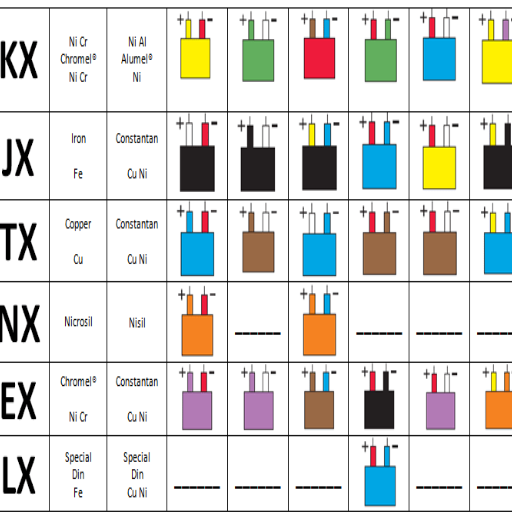
The thermocouple wire color codes are important for quick and accurate identification of the type and polarity of thermocouple wires. The particular color code system differs from one place to another. As an example, USA (ANSI Standard): The positive wire is usually red, whereas the negative wire’s color is determined according to the thermocouple type (e.g., white for Type K and blue for Type T). In Europe (IEC Standard), the positive wire is mostly white, and the negative wire’s color, again, varies by type (e.g., green for Type K and blue for Type T). These color codes help to make connections right and reduce the chance of errors during installation or troubleshooting. It is always advisable to consult the corresponding regional standard to ensure both compliance and correctness.
ANSI Color Codes for Thermocouples
The ANSI (American National Standards Institute) thermocouple color codes are meant to give a uniformity in wiring of different thermocouple types, thus making connections and troubleshooting easier and more accurate. Here is a brief presentation of the ANSI color codes for the most common thermocouple types:
Type J (Iron-Constantan)
White
Red
Black
Type K (Chromel-Alumel)
Yellow
Red
Yellow
Type T (Copper-Constantan)
Blue
Red
Blue
Type E (Chromel-Constantan)
Purple
Red
Purple
Type N (Nicrosil-Nisil)
Orange
Red
Orange
The use of these standard colors not only makes it easier to identify the conductors but also minimizes the chances of making wiring mistakes during installation. It is very important to ensure that ANSI standards are followed when working in areas where these regulations are in place. If you are dealing with special thermocouples or applications, you should always check the manufacturer’s documentation or other relevant resources.
IEC Color Codes for Thermocouples
The International Electrotechnical Commission (IEC) establishes a standardized color code system for thermocouples, ensuring compatibility and safety across international installations. Below are the standard IEC color codes for common thermocouple types:
Type K (Chromel/Alumel)
Green
White
Green
Type J (Iron/Constantan)
Black
White
Black
Type T (Copper/Constantan)
Brown
White
Brown
Type E (Chromel/Constantan)
Violet
White
Violet
These color codes promote uniformity and simplify installation and maintenance processes. It is imperative to use IEC-compliant cables when operating in countries that follow these standards. Furthermore, always verify application-specific requirements and consult relevant documentation to ensure optimal performance and safety in thermocouple systems.
Comparison of ANSI and IEC Color Codes
ANSI (American National Standards Institute) and IEC (International Electrotechnical Commission) are the two standards that are most recognized when it comes to thermocouple wiring identification. Both systems have the same goal in mind, i.e., to provide a uniform way of identifying wires, but their methods of doing so are very different.
ANSI Standards
Wire Polarity Identification: In the case of ANSI Standards, the negative wire is symbolized by a red color, and the variety of colors and combinations for the positive wire depends on the thermocouple type. To illustrate, in the case of Type K thermocouples, the positive wire is yellow and the negative wire is red.
Outer Jacket Coding: The ANSI Standards maintain that the outer jacket generally corresponds to the thermocouple type. A yellow jacket, for example, signifies a Type K thermocouple.
Global Application: The ANSI System is mostly used in North America.
IEC Standards
Wire Polarity Identification: IEC Standards apply a different method whereby the positive wire usually gets a color identifier that is more precise, and the negative wire is usually white. As an example, in K Type thermocouples, the positive wire is green and the negative continues to be white.
Outer Jacket Coding: The IEC Standards provide for the outer sheath color to signify the thermocouple type, but are based on a different color structure. For Type K thermocouples, the outer jacket is mostly green.
Global Application: The IEC System is, in fact, the preferred system in Europe and other international geographical areas.
| Thermocouple Type | ANSI Positive Wire | ANSI Negative Wire | IEC Positive Wire | IEC Negative Wire |
|---|---|---|---|---|
| Type K | Yellow | Red | Green | White |
| Type J | White | Red | Black | White |
| Type T | Blue | Red | Brown | White |
| Type E | Purple | Red | Violet | White |
| Type N | Orange | Red | – | – |
Important Considerations:
Maintenance and Interchangeability: If the wiring is not correctly matched, it can lead to different temperature readings and inconsistencies in the measurements because of the cross-wire color coding systems. Therefore, proper standards cross-referencing is to be done for the compatibility of the systems.
Recognizing the differences between the ANSI and IEC color codes is a must for engineers and technicians involved in the selection, installation, and maintenance of thermocouple-based systems, especially when dealing with projects that cover several regions. It is always a good idea to refer to the standard guidelines and manufacturer documents for specific compliance needs.
Thermocouple Wire Specifications
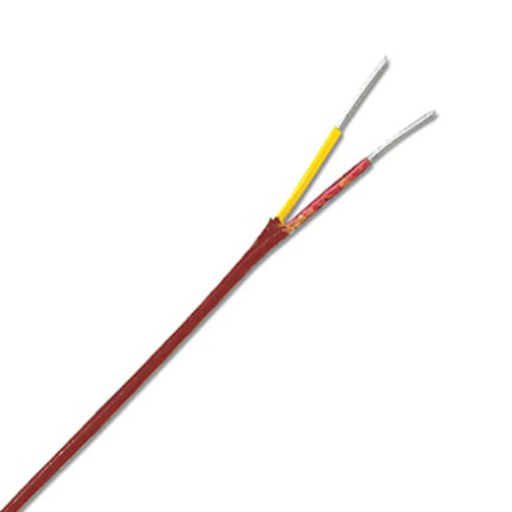
Thermocouples are categorized not only according to their material and temperature limitations but also by the types of wires that are usually considered as follows:
- Wire type: The common varieties are Type K (Nickel-chromium/Nickel-alumel) or Type J (Iron/Constantan) and Type T (Copper/Constantan), with the selection depending on the range of temperatures plus the suitability for the environment.
- Temperature Range: Each thermocouple has its own specific temperature limits, and Type K, for instance, is the one that can operate in the range of -200 degrees to 1260 degrees, thus making it popular for large-scale industry.
- Insulation Material: The insulation must withstand the conditions of the application. If, for example, it is a high-temperature or corrosive environment, such insulating materials as fiberglass, ceramic, or PTFE are usually recommended.
- Wire Gauge: The gauge size decides on no reason the wire’s durability and response time. The thinner the gauge, the quicker it reacts, but perhaps not very durable, while thicker gauges are the opposite—strong but slow.
Do not forget to follow the relevant standards like ANSI/ASTM or IEC, and also do not hesitate to check the manufacturer’s datasheets for more accurate wire specifications and their suitability for the application you intend to use them for.
Thermocouple Wire Material
The choice of thermocouple wire materials significantly impacts the precision of temperature measurements and varies according to the thermocouple type in question. The most popular types of thermocouples are Type K (Chromel-Alumel), Type J (Iron-Constantan), and Type T (Copper-Constantan), plus several other types. Each thermocouple type is characterized by a specific temperature range, unique properties, and a composition of materials that can be most appropriately applied in different environments. For instance, K-type thermocouples are the most versatile ones and are stable in oxidizing environments, while J-type thermocouples are suitable for reducing or inert atmospheres but have a lower maximum temperature. T-type thermocouples are mainly used in the field of cryogenics because they offer an excellent degree of accuracy even at low temperatures. Thermocouple wires are usually covered with insulating materials such as fiberglass, Teflon, or ceramic, which are selected according to the temperature tolerances, electrical insulation requirements, and environmental factors (e.g., moisture or corrosive substances). So, always check the calibration and follow the international standards (e.g., ANSI or IEC) when selecting thermocouple wire materials for specific applications.
Thermocouple Extension Wire
Thermocouple extension wires are made to amplify the thermocouple signal towards the measuring device, with minimal errors being the result of such amplification. The opposite is true for thermocouple wires that are used in the harsh conditions of the process and, thus, need to be made of non-meltable and thermally resistive materials; on the other hand, extension wires just need to be able to radiate or absorb heat conducted by the materials used for the signal transport from the thermocouple to the control system. They are made of materials that have the same thermoelectric properties as the thermocouple type, thereby ensuring the thermoelectric voltage is accurately transmitted.
Key Factors for Selecting Thermocouple Extension Wires:
- Material Compatibility: The alloys in the extension wire must match those in the thermocouple exactly to avoid inaccuracies caused by voltage drops. For instance, Type K thermocouples consist of a combination of chromel and alumel alloys.
- Operating Temperature Range: The insulation of the extension wire should be made of materials such as PVC, Teflon, or silicone that can withstand the temperature and humidity in the installation area. These materials allow signal stability without being affected by the weather, depending on their ambient conditions.
- Signal Integrity: Application of shielding or twisted-pair methods could significantly reduce the level of EMI and, consequently, the distortion of the voltage signal.
- Standards Compliance: The use of international standards for selecting wires, such as ANSI MC96.1 or IEC 60584, guarantees the quality and mix of the materials in the industrial systems.
Installation plays an important role in the overall performance, and wire length, along with connections, is among the factors that could negatively affect it. Make it a habit to check that the installation of the extension wire has been done according to the manufacturer’s specifications and calibration requirements for best accuracy.
Limits of Error in Thermocouples
Thermocouples have their limits of error dictated by the tolerances related to the accuracy of temperature measurements. These tolerances are set by international specifications like ANSI MC96.1 and IEC 60584. Accuracy is mainly categorized into two types: Standard Limits of Error (SLE) and Special Limits of Error (SPLE).
| Error Classification | Standard Limits of Error (SLE) | Special Limits of Error (SPLE) |
|---|---|---|
| Maximum Allowable Error | ±2.2°C or ±0.75% (whichever is larger) | ±1.1°C or ±0.4% (whichever is larger) |
| Application | General industrial applications | High-precision applications |
| Cost | Standard pricing | Premium pricing |
In the case of SLE, the maximum allowable error can be ±2.2°C or ±0.75% of the measured temperature (whichever is larger). SPLE is more rigorous and usually announces the tolerances as ±1.1°C or ±0.4%. The values vary with the type of thermocouple (like Type K, Type J, and Type T) and the respective temperature range. Furthermore, aging, contamination, or improper calibration may worsen the situation if not controlled properly and can be a source of inefficiency.
It is crucial to note that environmental conditions such as thermal cycling and the presence of corrosive gases can, over the years, degrade the thermocouple’s performance. Hence, it is deemed acceptable practice to take the steps of regular calibration and strict observance of the manufacturer’s guidelines to regain the accuracy lost due to external factors.
Applications of Thermocouples
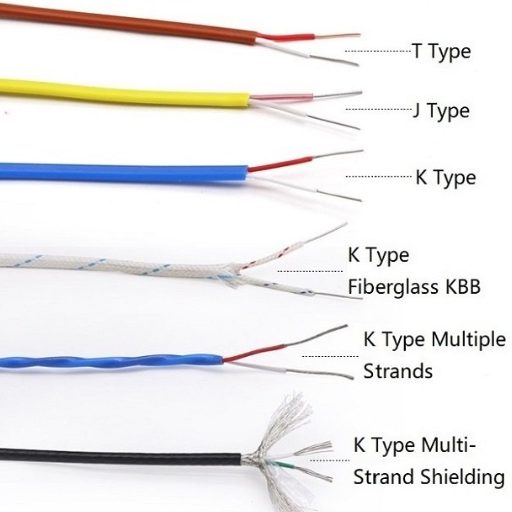
Thermocouples are very reliable and also capable of measuring a temperature range from very low to very high degrees, so they are used in a lot of industries. Their usage is often seen in the following cases:
- Industrial Processes: Temperature monitoring and control in the fields of manufacturing, chemical processing, and metal treatment, where the temperature is crucial.
- Energy Sector: Power plants, including gas turbines, and boilers’ temperature measurement.
- Medical Equipment: Devices like incubators and autoclaves requiring very accurate thermal readings will not be able to work without thermocouples.
- Aerospace Applications: Engine temperature monitoring and materials under severe thermal conditions.
- Consumer Appliances: Water heaters, ovens, and HVAC systems, temperature control.
Thus, the above usages are the major reason why the thermocouples, through their measurement capability, have not only drawn but also shown the need for continuous purification operation and safety.
Industries Using Thermocouples
Thermocouples are necessary for numerous industries because of their precision, robustness, and ability to work at very high or low temperatures. The following is a summary of the primary sectors that have adopted thermocouple technology:
Manufacturing and Industrial Processing
Thermocouples are indispensable to measuring and regulating the entire temperature range during the production processes of various industries, such as metallurgy, glassmaking, and the manufacture of chemicals. Their durability in high-temperature conditions makes them a necessity in these areas.
Energy and Power Generation
The thermocouples are installed in the power plants, which are of different types such as nuclear, coal-fired, and geothermal, where they monitor the temperatures of turbines, boilers, and exhaust. They ensure the stability of the operation, energy efficiency, and that safety and environmental regulations are complied with.
Aerospace and Defense
The aerospace sector is reliant on thermocouples as the only way to guarantee the safe operation of their respective engines, the monitoring of the exhaust temperatures, and the running of critical material stress tests under extreme conditions. Their accuracy is a crucial factor that helps in the preservation of safety and performance standards.
Medical and Pharmaceutical
Applications of thermocouples in the healthcare industry include incubators, sterilizers, and cryogenic chambers, where temperature control is critical for product consistency and patient safety.
Automotive Industry
Car manufacturers monitor engine temperatures, emissions systems, and air-conditioning units using thermocouples. This guarantees that the cars meet the performance, efficiency, and regulatory requirements.
Food Processing
The quality and safety standards of the food and beverage sector are maintained through the precise temperature regulation provided by thermocouples during cooking, pasteurization, and storage.
These various industries highlight the universal nature and trustworthiness of thermocouples, which, in turn, signal their acceptance in the thermal monitoring and control of the sectors requiring high-accuracy work.
Temperature Measurement Ranges
In my view, the range of temperatures that thermocouples can measure varies a lot depending on their type and material composition. For instance, Type K thermocouples, which are often used the most, can measure temperatures across a wide range, around -200°C to 1,260°C (-328°F to 2,300°F). Likewise, Type J thermocouples do their job in a range of -40°C to 750°C (-40°F to 1,382°F). The performance range of each thermocouple type is unique, and thus, they are used in different industrial or scientific applications where accuracy and robustness are required.
| Thermocouple Type | Temperature Range (°C) | Temperature Range (°F) | Typical Applications |
|---|---|---|---|
| Type K | -200°C to 1,260°C | -328°F to 2,300°F | General-purpose, industrial furnaces, kilns |
| Type J | -40°C to 750°C | -40°F to 1,382°F | Plastics, food processing, moderate temperatures |
| Type T | -250°C to 400°C | -418°F to 752°F | Cryogenic applications, food storage, and pharmaceuticals |
| Type E | -200°C to 900°C | -328°F to 1,652°F | Aerospace, medical devices, cryogenics |
| Type N | -200°C to 1,300°C | -328°F to 2,372°F | High-temperature industrial processes |
Metal Thermocouples vs. Other Types
The metal thermocouples, which include Types K, J, and T, are built on the principle of the Seebeck effect, whereby the temperature difference between two different metals creates a generated voltage. Basically, these thermocouples are characterized by their resilience, large-scale temperature ranges, and low price, all of which make them suitable for industrial applications; examples are furnaces, engines, and HVAC systems.
In contrast, there are non-metal thermocouples, which comprise ceramic-based thermocouples (e.g., Type R, S, and B). They are made for extreme temperature conditions and thus surpass the limits of standard metallic thermocouples. The mentioned types use noble metal alloys, making it possible for them to work in temperature ranges above 1,500°C (2,732°F). Yet, their price is very high, and the mechanical robustness is very low compared to metallic ones.
| Characteristic | Metal Thermocouples (K, J, T) | Noble Metal Thermocouples (R, S, B) |
|---|---|---|
| Operating Principle | Seebeck effect with base metal alloys | Seebeck effect with noble metal alloys |
| Temperature Range | -250°C to 1,300°C | Up to 1,700°C+ |
| Cost | Low to moderate | High (premium) |
| Durability | High mechanical strength | Lower mechanical strength |
| Applications | General industrial use, HVAC, engines | Glass making, metallurgy, and high-precision labs |
| Sensitivity | Good to excellent | Excellent at high temperatures |
Each group of thermocouples has different objectives and applications depending on the working conditions. Metal thermocouples are a flexible and low-cost solution for general uses, while non-metal thermocouples are necessary for the very high-temperature applications in metals or glass making, where accuracy is key.
Summary and Conclusion
Understanding thermocouple color codes is fundamental to ensuring accurate temperature measurement, proper system installation, and safe operation across various industrial and scientific applications. The standardized color coding systems established by ANSI and IEC provide essential frameworks that prevent wiring errors, reduce troubleshooting time, and maintain system reliability.
The distinction between ANSI and IEC color codes reflects regional preferences and regulatory requirements. ANSI standards, predominantly used in North America, utilize red as the negative wire color across all thermocouple types, while the positive wire color varies by type. In contrast, IEC standards, favored in Europe and internationally, typically employ white for the negative wire, with the positive wire color indicating the thermocouple type. Recognition of these differences is critical for engineers and technicians working on international projects or maintaining equipment from different regions.
Each thermocouple type—whether Type K, J, T, E, or N—offers unique advantages in terms of temperature range, accuracy, sensitivity, and environmental compatibility. The selection of the appropriate thermocouple type and adherence to the correct color coding standard ensures optimal performance, measurement accuracy, and long-term reliability. Proper attention to wire specifications, including material compatibility, insulation type, wire gauge, and extension wire selection, further enhances system performance and reduces measurement errors.
As industries continue to demand greater precision and reliability in temperature measurement, the importance of understanding and correctly implementing thermocouple color codes cannot be overstated. Whether working in manufacturing, aerospace, energy generation, medical devices, or food processing, adherence to these standardized color coding systems is essential for maintaining operational safety, regulatory compliance, and measurement accuracy.
By mastering the principles outlined in this comprehensive guide, technicians, engineers, and researchers can confidently select, install, and maintain thermocouple systems that deliver accurate, reliable temperature measurements in even the most demanding applications. The proper identification and implementation of thermocouple color codes remain a cornerstone of effective thermal management and process control across all industries.
Important Notice: Always verify color codes against regional standards (ANSI or IEC) before installation. Consult manufacturer documentation and relevant safety regulations to ensure compliance and optimal performance. Regular calibration and maintenance are essential for maintaining measurement accuracy over time.
Reference Sources
Cold Chain Storage of Vaccines: A Brief Introduction to Thermometry
Energy Harvesting Strategies for Wireless Sensor Networks and Mobile Devices: A Review
Frequently Asked Questions (FAQs)
What exactly are thermocouple color codes?
Thermocouple color codes are the set of colors that belong to the different thermocouple wires’ positive and negative sides. They help in the proper connection of the thermocouples to the measuring and the equipment, thus providing accuracy in temperature readings and data collection.
How are the color codes for thermocouple wires different between the ANSI and IEC standards?
The system used by ANSI to determine colors is based on the specific colors assigned to the thermocouple wire types; for example, red is used for the K thermocouple, and yellow is the positive lead. The IEC standard, on the other hand, employs a completely different color set, where, for example, black represents the negative and white the positive lead. Being aware of these dissimilarities is of utmost importance when it comes to understanding thermocouple connections in different applications.
What is the role of the positive lead and negative lead in thermocouples?
In thermocouples, the positive lead is the one that produces a voltage when there are temperature fluctuations, and the negative lead is the one that acts as the reference. It is crucial to pinpoint these leads correctly since their interchange may generate wrong temperature values and, in turn, affect the whole measuring system’s efficiency.
What types of thermocouples are there, and what are their color codes?
There are eight different types of thermocouples, the main ones being K, J, T, E, S, R, N, and B. The wire color codes specific to each type are also determined according to ANSI and IEC standards, which not only help to recognize the materials used but also their respective temperature ranges.
What is the temperature range for type K thermocouples?
Type K thermocouples, which are composed of nickel-chromium and nickel-aluminum, have a temperature range of nearly -200°C to +1260°C. The broad temperature range makes them suitable for a variety of applications, including industrial and laboratory use.
How do I identify the correct thermocouple connectors for my system?
When choosing thermocouple connectors, one must take into consideration the type of thermocouple, the temperature range required, as well as the environmental conditions in which the connectors will be operating. If the connector type is compatible with the thermocouple, you will get accurate readings.
Is it permissible to use extension wires with thermocouples?
Thermocouple extension wires can be used to connect the thermocouple to measurement instruments, yes. These extension wires are made from the same materials as the thermocouple but may have different color codes. It is always necessary to check that the extension wire is of the same type as the thermocouple to avoid any errors in the measurements.
What are the IEC 60584-3 thermocouple wire codes?
IEC 60584-3 defines the color codes for thermocouple wires, specifying the thermocouple types and their positive and negative ends. Compliance with these codes is an important condition for obtaining the right compatibility and the continued effectiveness during temperature measurement.
What are the consequences of working with thermocouples in inert or oxidizing atmospheres?
When thermocouples are to be used in inert or oxidizing atmospheres, they should be made of such materials that will not degrade, even when the right materials are selected for the thermocouple and its insulation. The right selection will not only extend the thermocouple’s life and precision over time but also provide trustworthy readings in difficult areas.