







In today’s global village, reliable and efficient network infrastructure is essential for both homes and businesses. While the world generally associates Ethernet cables with the heart of modern networking, very few people are aware of the continued importance that coaxial cables hold in this context. Enter the Ethernet to Coaxial Cable Adapter-the ingenious and multitalented device that bridges the gap between these two technologies. The article will discuss the relevance of this adapter, its operation, and when to use it for optimal networking applications. Suppose you need to extend connectivity over longer distances, convert an existing coaxial wiring scheme, or enhance your home’s entertainment network. In that case, this post will provide you with the necessary insights to make an informed choice.
Introduction to Ethernet Over Coax
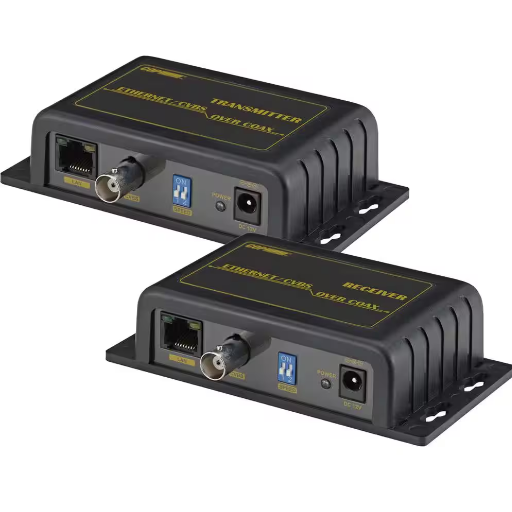
In simple words, this technology is used to send internet or network data using existing coaxial cables. This service is well-positioned to convert coaxial wiring, typically used for cable TV, into an efficient network system with high-speed connectivity, without the need for new wires. When network coverage needs to be enhanced or extended in buildings or homes with extensive coaxial infrastructure, this solution becomes prominent due to its cost-effectiveness and convenience.
What is Ethernet Over Coax?
Ethernet over Coax is a technology that transmits Ethernet data at very high speeds over existing coaxial cable networks. It utilizes coaxial cable, initially designed for cable TV and satellite signals, as a medium to provide internet connectivity without requiring additional wiring. The EoC, utilizing either adapters or MoCA (Multimedia over Coaxial Alliance) technology, can deliver transfer rates comparable to those of Ethernet, typically exceeding 1 Gbps, making it suitable for streaming, gaming, and other high-bandwidth tasks. This is a very economical solution that uses existing infrastructure, thus reducing interference in network extensions throughout an entire building or home.
Advantages of Using Ethernet Over Coax
Leverages Existing Infrastructure: EoC technology utilizes existing coaxial cable networks, thereby eliminating the need for a separate wiring process. It creates convenience and saves precious time and money for both residential and commercial setups, as coaxial cables are easily used in many buildings for television and broadband services.
High-Speed Performance: As emerging speeds surpass 1 Gbps and higher, some recent EoC solutions even provide speeds that can exceed 2.5 Gbps, making them perfectly suitable for applications requiring ultra-high bandwidth, such as 4K video streaming, online gaming, and remote work, with the promise of uninterrupted low latency.
Cost-Effective Networking: EoC eliminates the need for company intervention in laying new Ethernet cables by maximizing the use of existing coaxial cables, thereby reducing costs. It acts like a boon in retrofitting old buildings or homes, where it is very labor-intensive and expensive to get the place rewired.
Minimal Disruption and Easy Installation: EoC device installations cause minimal disturbance to the property. Instead of undergoing messy construction work, one just connects an EoC adapter to the coaxial outlet and the other to the modem or router. This user-friendly concept facilitates fast deployment, thus the network upgrade becomes efficient.
Extensive Range and Good Connectivity: Compared to standard Ethernet cables, coaxial cables typically have a more comprehensive range, sometimes capable of signal transmission over distances of more than 500 meters without significant signal degradation. This makes EoC an ideal option for extending connectivity in large apartments, offices, or multistory buildings.
Noise Immunity and Reliability: Compared to other types of cabling, coaxial cables are more immune to EMI, which would in turn allow EoC to provide a steady and reliable internet connection even in environments where interference levels would otherwise impair performance.
Future-Proofing for Evolving Needs: EoC is scalable enough to meet future network demands. As technology continues to evolve, numerous EoC systems are now aligned with emerging standards, allowing for easy upgrades whenever bandwidth requirements increase in the years ahead.
The Ethernet over Coax combines practicality with performance and savings to become an irresistible choice for modern network deployments, offering strong connectivity with easy scalability.
Understanding Coaxial Cables

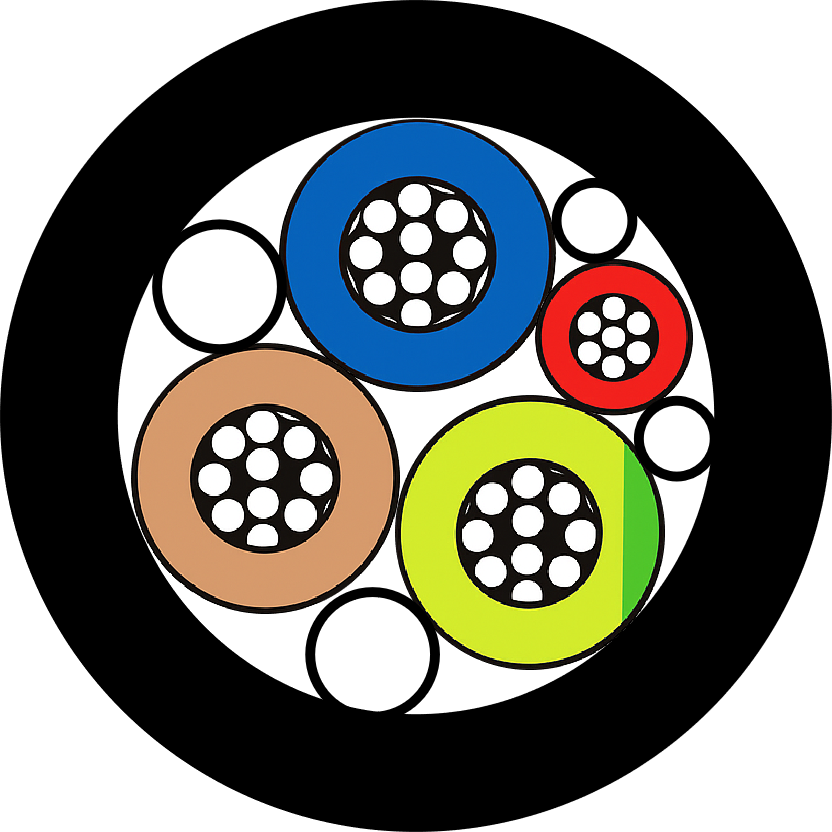
In general, coaxial cables are a type of cable that carries high-frequency signals effectively. From inside to outside, there are four layers: an inner conductor that conveys the signal, an insulating layer surrounding this conductor, a metallic shield that protects against interference, and an outer jacket. These cables have low attenuation throughout their length and high attenuation of the noise signal; thus, they are best suited for applications such as television broadcasting, internet connectivity, and telecommunications. Coaxial cables are in high demand due to their durability, reliability, and consistent performance over great distances.
Types of Coaxial Cables
Ethernet-to-coaxial cable adapters include MoCA adapters, coaxial-to-Ethernet converters, and Ethernet over Coax (EoC) adapters.
|
Adapter |
Use Case |
Speed |
Compatibility |
Range |
|---|---|---|---|---|
|
MoCA Adapter |
High-speed |
Up to 2.5Gbps |
Cable TV, ISP |
Long-range |
|
Coax-Ethernet Conv |
Signal bridge |
Up to 1Gbps |
Standard coax |
Medium |
|
Ethernet over Coax |
Internet dist |
Up to 2Gbps |
Home networks |
Varies |
Coaxial Cable Specifications
In coaxial cables, data, video, and internet signals are transmitted. It has an inner conductor surrounded by an insulating layer, a metallic shield, and an outer insulating layer. Here are the most important specifications you want to bear in mind:
Impedance: Typical values are 50 ohms (radio transmission) and 75 ohms (video and internet applications). Matching impedance maintains signal integrity and avoids loss.
Frequency Range: The Ability to carry signals varies for varying frequencies. Depending on the type, most coaxial cables can carry frequencies up to several GHz.
Attenuation: Signal decrease over distance in dB. The lower the attenuation, the better the performance.
Shielding: Strong shielding (aluminum foil or braided copper) keeps the interference out of external signals, ensuring consistent performance.
Connector Compatibility: Commonly used connectors include F-type, BNC, and RCA, which are selected based on the application.
Durability: Issues such as UV resistance and temperature tolerance must be addressed for outdoor installations, ensuring the cable can enjoy a long life and provide reliable service.
By understanding the specifications, users can select the ideal coaxial cable for their application, ensuring optimal performance and compatibility.
Coaxial vs. Ethernet Cables
When comparing coaxial and Ethernet cables, it is essential to note that they have distinct functionalities, speeds, and applications. Coaxial cables are mainly used to send cable TV signals and broadband internet over longer distances. With improved shielding to prevent signal degradation, they serve their purpose well in highly specialized environments, such as networking and satellite communications. In contrast, in most cases, coaxial cables allow slower data speeds compared to Ethernet cables.
Ethernet cables, on the other hand, are primarily used in local area networks and are designed to facilitate faster data transmission. Ethernet cables vary in speed from a couple of hundred megabits per second (Mbps) to 10 gigabits per second (Gbps), depending on the category of cable used. They are suitable for collectors that require them over relatively small distances, with low latency and top reliability. Ethernet cables are cheaper and easier to install for shorter to medium distances, usually not exceeding 328 feet (100 meters).
Ultimately, the choice between coaxial and Ethernet cables will depend on the specific network requirements. Coaxial will be a good fit where distance and shielding from interference are essential, while Ethernet will offer maximum speed and flexibility for nearly all contemporary networking needs.
Ethernet to Coaxial Cable Adapters
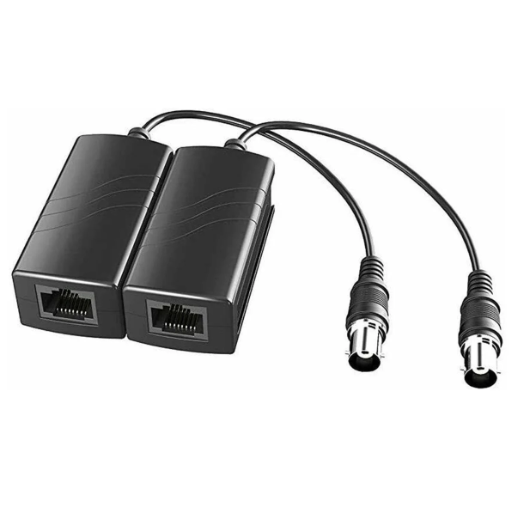
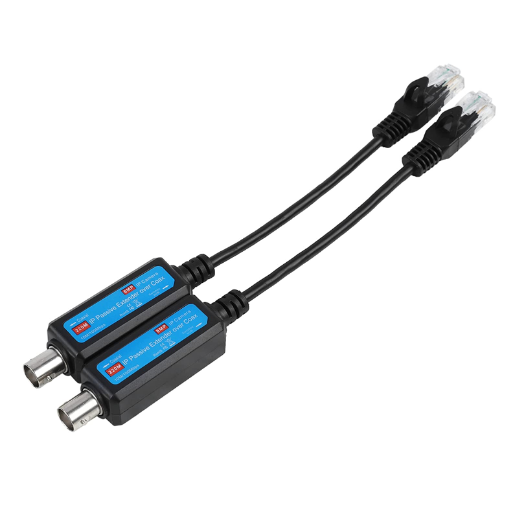
Ethernet to Coaxial cable adapters are physical devices that enable sending network data over a coaxial line instead of traditional Ethernet cables. These are positioned as the ideal adapters for utilizing existing coaxial cable infrastructure within a home or office to achieve high-speed internet without laying any new wires. Essentially, these have become part of the MoCA (Multimedia over Coax) communication, which can carry a 2.5 Gbps speed and offers a low latency level, making it suitable for streaming, gaming, and video conferencing. The adapters are very easy to use; just plug them into a coax port and connect through Ethernet to your router or device.
What is an Ethernet to Coax Adapter?
An Ethernet to Coax Adapter is manufactured by a vendor to transmit Ethernet signals over the existing coaxial cabling, thereby bridging, to some extent, wired Ethernet functionality with the convenience of pre-installed coaxial cabling. This technology is used and quite valuable in homes and buildings that are very cheap or impossible to retrofit with new Ethernet cables. These adapters typically employ MoCA (Multimedia over Coaxial Alliance) technology, which converts the Ethernet signal into a format compatible with coaxial cables.
Present-day Ethernet to Coax Adapters, based on MoCA 2.5 technology, can bear data transfer rates of up to 2.5 Gbps, positing them for high-speed and reliable connectivity required for bandwidth-intensive applications. They typically exhibit extremely low latency, making them well-suited for online gaming, 4K streaming, and video conferencing. Many offer security features, including encryption, that protect the data that is transmitted.
The most significant advantage of the adapters is the ease of installation. It essentially involves connecting one of the adapters to your router via an Ethernet cable, and the other to the targeted device, such as a smart TV, computer, or gaming console, through the existing coaxial ports in your home. It essentially means that it requires little to no rewiring or complex setup. Additionally, some adapters can provide secondary Ethernet ports to serve multiple devices or work with network switches to enable wireless networking across different rooms without compromising speed.
How Ethernet Over Coax Adapters Work
Ethernet over Coax (EoC) adapters run network signals along the coaxial cables inside the home, thus essentially converting coax into a high-speed data link. They communicate via standards such as MoCA (Multimedia over Coax Alliance). The MoCA tech offers a solid and speedy connection, with a commonly observed rating of up to 2.5 Gbps at extremely low latency, making it suitable for activities such as 4K streaming, online gaming, and professional-grade remote work.
It all starts with a single adapter connected to the router using an Ethernet cable. The adapter takes the Ethernet signal and converts it into a signal capable of traveling over the coaxial cables, reaching yet another adapter stationed beside the destination device. At the far end, this second adapter changes the signal back to Ethernet, giving it the best chance to remain reliable. It is because minimized packet loss and reduced interference give EoC adapters an edge over wireless solutions; consequently, they are the preferred choice for homes already equipped with coaxial wiring.
Modern developments have introduced features that enable the encryption of data for secure data transfer and facilitate the coexistence of multiple devices transmitting on the same coaxial line. MoCA-based adapters have demonstrated up to 93% lower latency than Wi-Fi in congested environments, highlighting their efficiency and reliability. Given these perks, Ethernet over Coax adapters offer the most cost-effective and efficient means of extending a wired network without requiring additional cable installation.
Key Features to Look for in an Adapter
While choosing the appropriate Ethernet over Coax adapter, several features must be considered to ensure maximum output and full compatibility:
High-Speed Data Transfer: The demand for modern streaming, gaming, and telecommunication requires Gigabit or Multi-Gigabit speeds to be supported by the adapters sought. Advanced MoCA 2.5 technology, for instance, permits 2.5 Gbps throughput, which in turn allows the data to flow actively even in cases when the users in the neighborhood are engaged in peak usage.
Low Latency Operation: Latency is a crucial factor in application scenarios, such as online gaming or video conferencing. High-quality adapters utilize the latest MoCA technology, with latency rates averaging 3.5 ms, ensuring uninterrupted and smooth performance quality.
Broad Compatibility: Check if your coaxial network and devices are compatible with the adapter. Several modern adapters are compatible with various setups, including cable TV and satellite services. Your device has to have universal coaxial connections to do so.
Encryption and Security Features: High-end security stops unauthorized access and hijacking. A high-security adapter uses built-in encryption systems, such as the AES 128-bit encryption system, to secure data transferred over a coaxial network from cyber threats.
Plug-and-Play Installation: Simpler setups in plug-and-play adapters minimize setup time and avoid technical complexities. These easy-to-use designs may offer some form of auto-configuration, and the LED indication enables users to judge and monitor the connectivity status quickly.
Pass-Through Ports: Adapters with pass-through ports allow for greater flexibility. This way, the other side can be simultaneously connected to devices such as modems, TVs, DVRs, or other utilities without needing extra splitters, thereby preserving signal strength.
Energy Efficiency: The ones with power-saving modes or eco-friendly certifications, such as Energy Star, would be the best choice. The feature brings down electricity use and, in turn, helps the environment.
Cost Efficiency: Consider the price/performance ratio. Some other adapters come at a reasonable price and offer additional features, whereas others provide interference suppression and extra ports as premium features.
By evaluating these features, one can select an Ethernet over Coax adapter that offers high performance, reliability, and the flexibility and convenience needed for an easy networking experience.
Coax to Ethernet Solutions
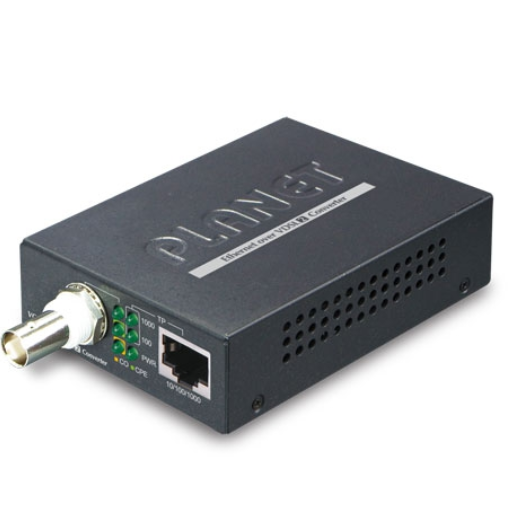
Coax to Ethernet solution is a method of enabling high-speed connectivity for the Internet and networking over existing coaxial cable infrastructure. This is an opportunity in cases where rewiring is not feasible or the cost is too high. Special adapter units are used to convert the coaxial signal to Ethernet, providing quick and reliable data transmission for both home and commercial use. These systems work well with modern electronics and maintain a steady level of performance without requiring frequent upgrades. Therefore, select adapters that work with your coaxial network and meet the required bandwidth criteria, which will facilitate the installation steps.
Benefits of Coax to Ethernet Adapters
Enhanced Network Service: Coax to Ethernet adapters are used to send high-speed internet through the coaxial lines available in the existing infrastructure, with some adapters capable of clocking a maximum speed of 2.5 Gbps. The highest data streams, such as those used for streaming, gaming, or running multiple devices, benefit from this connection. Utilizing the existing infrastructure minimizes the effects of latency and provides stable connectivity, saving on the cost of rewiring.
Cost Effectiveness: Using coaxial cables for Ethernet connectivity forbids more upgrades that would drive prices up. Since, in most cases, coaxial networks are already pre-installed in buildings, there is no need for new wiring to carry high broadband signals. Thus, upgrading internet speed in an older building or a multi-unit dwelling is typically a cost-effective option.
Broad Compatibility: Modern coaxial-to-Ethernet adapters are compatible with a wide range of devices, including routers, set-top boxes, and smart home devices. Such flexibility ensures that they can blend seamlessly into any network setup, making them well-suited for use in homes or commercial settings. Many of the adapters are MoCA (Multimedia over Coax Alliance) and inter-brand compatible.
Ease of Installation: Installing coax-to-Ethernet adapters requires little technical knowledge, making them a good choice for home users. Most adapters are plug-and-play, allowing users to establish a reliable network connection within minutes, with minimal setup time required. Time is very dear for an IT professional or a homeowner.
Scalability and Future-Proofing: With 1 Gbps transmission and the ability to set up protected channels, coax-to-Ethernet adapters are designed to scale to meet the increasing demands for internet use. They are future-ready upgrades, serving emerging technologies such as 4K video streaming, cloud computing, and IoT applications.
This enables the practical ability to enhance the potential of existing coaxial networks through cost efficiency, improved performance, and versatile compatibility across various dimensions. If this tapestry of high currents and amicable networking truly seeks a diversified investment, then these adapters are a must in that regard.
Popular Coax to Ethernet Adapter Models
NetGear MCA1001: The NetGear MCA1001 stands out as an excellent coax-to-Ethernet adapter, supporting high-speed networks. With support for data transfer of up to 270 Mbps, it can be easily used for streaming HD videos and online gaming. It features a plug-and-play design that enables easy setup for both residential users and small enterprise environments.
Actiontec ECB6200: The high-quality MOCA 2.0 adapter, Actiontec ECB6200, ensures optimal Gigabit speeds, allowing for fast and stable connections to Smart TVs, streaming devices, and game consoles. Being compact and further supplemented with built-in encryption, it secures the home network while also providing users with ease.
Motorola MM1000: The Motorola MM1000 enjoys great popularity as a MoCA 2.0-compatible adapter, considering its reputation for performance being dependable. It delivers speeds of up to 1 Gbps, enough to smoothly handle 4K video streaming, video conferencing, and other bandwidth-hungry activities. Its energy efficiency and broad compatibility make it an obvious choice for use in home or office environments.
Comparing Ethernet Extenders and Adapters
Ethernet extenders and MoCA adapters are two of the excellent internet connectivity solutions for various environments, designed to ease work. Ethernet extenders usually extend Ethernet connections for long distances using existing wiring, such as telephone lines or Cat5/6 cables. They best serve scenarios where Ethernet signals need to be channeled to remote locations, such as another floor in a building or an entirely separate building.
Conversely, MoCA adapters utilize existing coaxial cables within a home or building to provide high-speed internet with significantly low latency. They are ideal for environments filled with coaxial infrastructure that enables easy installation with minimum disruption. In general, MoCA adapters offer faster speeds and a highly reliable network, making them a better choice for performance-intensive applications such as streaming and gaming compared to Ethernet extenders.
Depending on your existing wiring setup and performance requirements, go for one or the other. With available coaxial cables, it is usually considered better to go for MoCA adapters. On the other hand, if there is no coaxial infrastructure and the distances are relatively high, then Ethernet extenders can be a practical and reliable choice.
Network Performance and Streaming
The best setup is a wired connection for optimal network performance and streaming. MoCA adapters are best suited for HD streaming, as they provide fast and stable connections over existing coaxial cable wiring. If wired cannot be achieved, then at least ensure that Wi-Fi is strong enough to boast smooth streaming capabilities using the latest equipment, such as dual-band or tri-band routers. It is essential to verify whether the internet package offered can support the required bandwidth for streaming, particularly when multiple devices are used simultaneously.
Impact of Ethernet Signals on Network Performance
Ethernet cables form the backbone of network capabilities, providing faster and more secure connections compared to wireless connection options. With newer Ethernet standards such as Cat5e, Cat6, and Cat6a offering transmission of data at up to 1 Gbps (or more), with Cat6a offering 10 Gbps for shorter distances, such levels of performance offer the kind of low latency and consistent throughput necessary in scenarios like online gaming, video conferencing, or data-heavy applications.
Ethernet connections offer less interference and signal degradation, ensuring a high level of consistency in data transfer. Ethernet typically provides a latency rate of between 1 and 5 milliseconds, while Wi-Fi varies widely depending on environmental factors. Hence, packet loss would be a rare occurrence over an Ethernet, a factor considered highly essential to unbroken data streams.
Businesses utilize Ethernet to enhance their potential for connectivity on any network. With many devices, the pressure is on the network. Having Ethernet connections allows efficient traffic accommodation, whereby one does not notice degraded performance due to the dense traffic pressures on the communication media. This makes them suitable for a typical workplace with servers and cloud services, as well as platforms for continuous and high-speed data transmission.
Optimizing Your Network for Streaming
I have taken several key measures to ensure the network remains optimized for streaming. To begin with, I ensure that my Ethernet connections are set up correctly, as they provide a very stable and fast connection upon which one can rely for streaming demands. Furthermore, I set priorities for the network traffic using QoS (Quality of Service) settings on my router to allocate the necessary bandwidth to the streaming devices. Lastly, I regularly update all devices and the router’s firmware to ensure optimal performance and security. These measures grant smooth streaming experiences that go uninterrupted.
Future of Ethernet Over Coax Technology
Ethernet over Coax (EoC) technology is poised to become increasingly crucial in meeting the challenges of modern connectivity, particularly as the demand for high internet speeds and network reliability grows. By capitalizing on the existing coaxial cable infrastructure, EoC offers a more affordable option for gigabit-level connectivity, eliminating the need for new cable installations. This feature, in turn, is quite helpful while conducting retrofitting in older buildings or while extending networks in residential and commercial installations.
Considering the emergence of smart home systems and IoT devices, EoC trends will gain momentum with their performance in low-latency, high-bandwidth streaming, gaming, and automation. The nature of innovations in the industry focuses on overcoming issues related to signal quality and distance limitations, allowing EoC for wider applications. It is also advantageous that EoC can coexist and work alongside traditional cable television signals without affecting users.”
Looking forward, the development of partnerships between Internet Service Providers and Ethernet-over-Coax technology providers, along with improvements in standards such as MoCA (Multimedia over Coax Alliance), will enhance the scalability and efficiency of this technology. These developments can therefore make Ethernet-over-Coax an essential element in extending global connectivity for the future.
Reference Sources
“Progress on Analogue Front End for 2PAD”
“A low-cost chip set for broadband powerline communications at 200 Mbps”
“Design and implementation of a low-cost IoT-based agroclimatic monitoring system for greenhouses”
Frequently Asked Questions (FAQs)
What is an Ethernet to Coaxial Cable Adapter?
An Ethernet to coaxial cable adapter, also known as a coaxial to Ethernet adapter, is a device that enables the connection of Ethernet devices to a coaxial cable network. This type of adapter is essential for integrating your Ethernet network with existing coaxial cable infrastructure, enabling seamless communication between devices.
How does a Coax to Ethernet Adapter work?
A coax-to-ethernet adapter works by converting Ethernet signals into a format that can travel over coaxial cables. This allows you to extend your network using existing coaxial wiring, making it easier to connect devices that may be located far from your router. The adapter essentially acts as a bridge between the Ethernet device and the coaxial network.
What are the benefits of using Ethernet Over Coax Adapters?
Using Ethernet over coax adapters provides several benefits, including the ability to extend your network without laying new cables. These adapters are designed to deliver fast and reliable internet connections, making them ideal for streaming, gaming, and connecting multiple devices in both home and office environments.
Can I use a Coaxial Ethernet Adapter with AT&T U-Verse?
Yes, you can use a coaxial Ethernet adapter with AT&T U-Verse. Many users find that adapters like the bonded MoCA 2.5 can effectively enhance their network performance by leveraging existing coaxial infrastructure to improve connectivity and speed internet access throughout their home.
What is included in an Ethernet Over Coax Kit?
An Ethernet over coax kit typically includes two adapters, which are necessary to establish a connection between your router and the connected devices. This dual setup allows for seamless data transmission over coaxial cables, effectively extending your LAN and providing stable connections for all your networking equipment.
Do I need special equipment to install Ethernet over coaxial cable adapters?
Generally, installing Ethernet-to-coaxial cable adapters is a straightforward process that does not require special equipment. The kit usually includes all necessary components for installation, allowing you to simply connect one adapter to your router and another to your Ethernet device, making it work with minimal effort.
Are Coax to Ethernet Adapters durable and lightweight?
Yes, most coax-to-ethernet adapters are designed to be both durable and lightweight. This makes them easy to install and position in various locations without adding unnecessary bulk to your networking setup. Their durable construction ensures longevity and reliable performance even in demanding environments.
How can I enhance my mesh Wi-Fi network with Ethernet over Coax?
To improve your mesh WiFi network using Ethernet over coax, you can connect coaxial Ethernet adapters to your existing mesh units. This enables stable and fast connections, providing better overall performance and coverage throughout your home, ensuring that all connected devices receive strong and consistent signals.