

H01N2-D
High Flexibility Rubber Welding Cable
Technical Specifications
Standard: BS EN 50525-2-81 (Harmonized H01N2-D / H01N2-E)
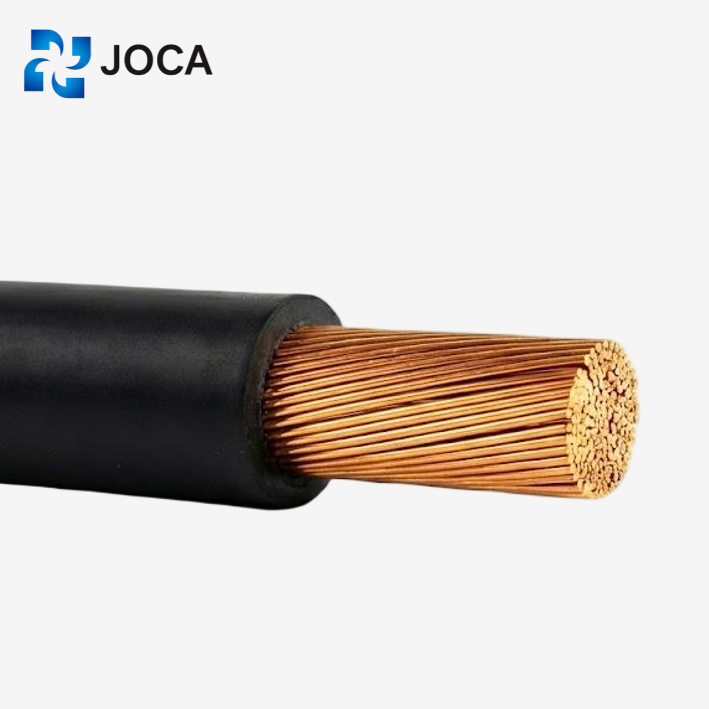
Conductor: Class 6 Extra Flexible Stranded Copper (Strictly meets BS EN 60228)
Separator Layer: High-quality PET (Polyester Tape) to facilitate stripping
Sheath Material: Robust Rubber Compound (Type EM5) according to BS EN 50363
Rated Voltage: 100V (450V for non-welding applications)
Operating Temperature: -20°C to +85°C (Flexing)
Minimum Bending Radius: 6x Overall Diameter (Superior Flexibility)
Customization: JOCA offers oil-resistant and flame-retardant versions upon request.
- Fast Sample Processing with Customized Solutions
- High-Quality Materials
- Affordable Price Options
- Global Delivery
- For better data protection, make sure that all uploads are secure
Save at least 30% on average
Home » Rubber Cable » H01N2-D
-
Product Description
Rubber Welding Cable : Product Description and Specifications
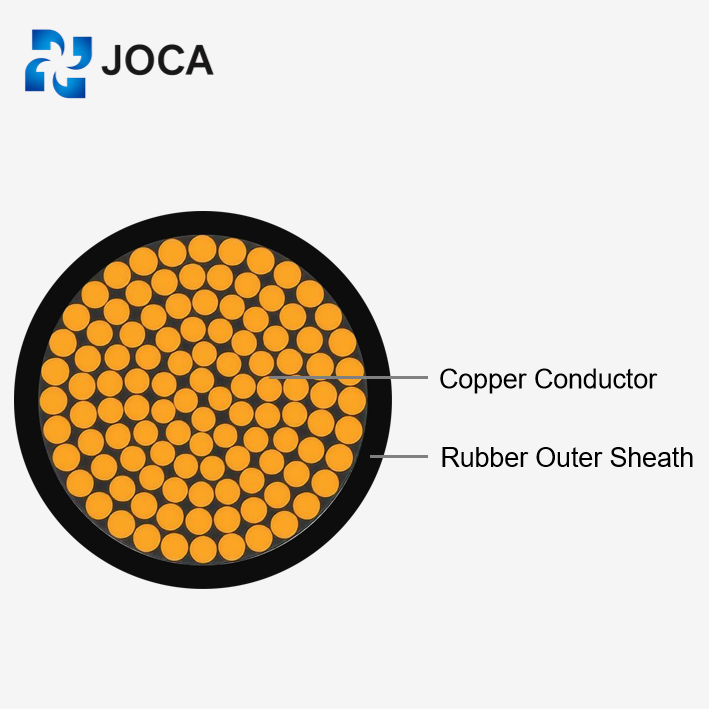
The H01N2-D is a specialized arc welding cable built to connect power sources to electrode holders without restricting operator movement. It relies on Class 6 extra-flexible copper stranding, a design that keeps the cable limp to reduce wrist fatigue during complex maneuvers. This core is encased in a heavy-duty cross-linked EM5 Rubber or Polychloroprene (PCP) sheath, engineered to withstand direct contact with molten spatter, mineral oils, and rough concrete floors. Rated for 100V welding circuits (up to 450V for fixed installations), the cable maintains flexibility down to -20°C and strictly adheres to EN 50525-2-81 standards, ensuring safety and durability in dynamic high-current environments.
-
Advantages
Rubber Welding Cable : Benefits and Features
Zero-Fight Handling: Uses Class 6 copper strands. The cable stays loose and obedient, eliminating strain during precision torch work.
Spatter Immune: The cross-linked rubber jacket ignores welding sparks. Molten drops bounce off without sticking or burning through.
Oil Block: Chemically sealed against workshop lubricants. Grease sits on the surface; the jacket won’t swell or get spongy.
Cold Start: Remains pliable down to -20°C. You can uncoil it on freezing mornings without the insulation cracking.
Drag Ready: Built for rough floors. Pull it over steel gratings or concrete—the sheath resists tearing.
Dimensions/Parameters
| Construction (No.xmm2) | Conductor Resistance at 20°C (Ω/km) | Current Capacity 100% (Amps) | Current Capacity 85% (Amps) | Current Capacity 60% (Amps) |
|---|---|---|---|---|
| 10 | ≤1.91 | 100 | 103 | 108 |
| 16 | ≤1.21 | 135 | 145 | 175 |
| 25 | ≤0.78 | 180 | 195 | 230 |
| 35 | ≤0.554 | 225 | 245 | 290 |
| 50 | ≤0.386 | 285 | 305 | 365 |
| 70 | ≤0.272 | 355 | 385 | 460 |
| 95 | ≤0.206 | 430 | 470 | 560 |
| 120 | ≤0.161 | 500 | 540 | 650 |
| 150 | ≤0.129 | 580 | 630 | 750 |
-
Production Processes Of Rubber cable
JOCA produces these cables using Continuous Vulcanization (CV) technology. This automated system synchronizes copper stranding with rubber extrusion, allowing the EPR insulation and PCP outer sheath to cure evenly. This integrated process ensures a consistent, solid bond between layers without structural defects. regarding quality control, we perform routine oil immersion and flexibility tests on production batches to verify compliance with IEC 60245 and EN 50525.
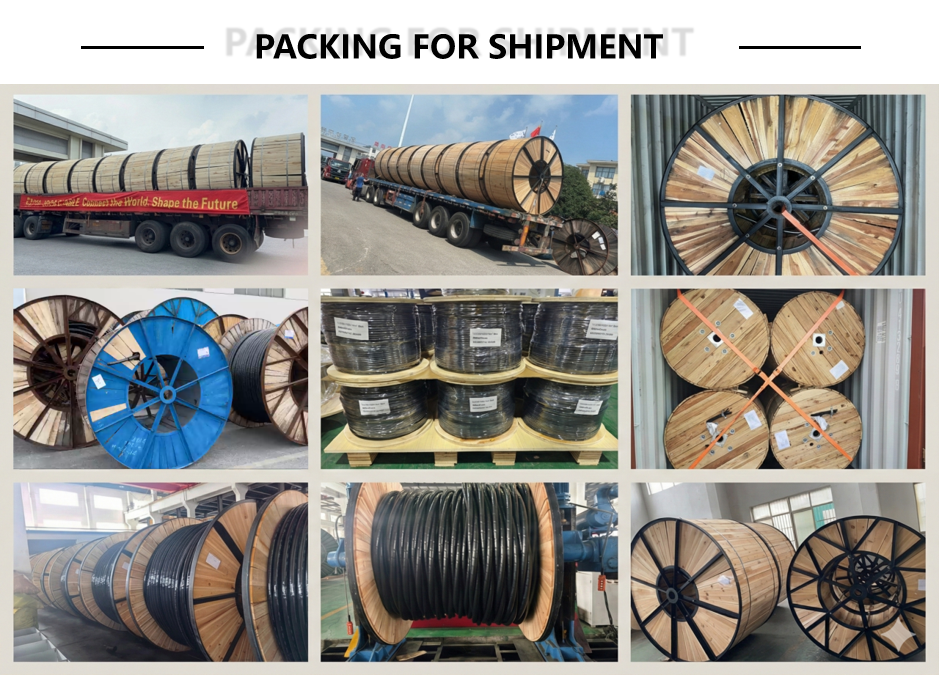
Packing For Shipment
To meet various transportation needs, there are many methods of packaging that can be used.
Have more questions?
Q: What does the code "H01N2-D" actually decode to?
A: It’s the harmonized breakdown of the cable’s build:
H: Harmonized Standard.
01: 100V Rating (Welding Spec).
N2: Chloroprene Rubber (PCP) Sheath.
D: Flexible Copper Conductor. This code is your guarantee that it meets EN 50525-2-81 international norms.
Q: What is the main job for this cable?
A: It connects the secondary side of the welding power source to the electrode holder or earth clamp. Beyond welding, the automotive industry often uses it for heavy-duty jumper cables because it handles high current without stiffening up.
Q: H01N2-D vs. H01N2-E: Which one do I need?
A: It comes down to flexibility requirements.
Type D: Standard flexibility. Perfect for most stationary or semi-mobile welding.
Type E: Extra-high flexibility. Uses finer copper strands. Choose this if the welder is constantly moving the torch in tight, complex angles to reduce wrist strain.
Q: Can it survive oil and chemical exposure?
A: Yes. The EM5 cross-linked elastomer sheath is built for dirty floors. It blocks mineral oils, grease, and chemicals from soaking in. It also acts as a physical shield against concrete abrasion and sharp metal edges.
Q: What is the real voltage limit?
A: For arc welding, it is rated at 100V. However, for fixed, non-welding power transmission, it can handle up to 450/750V. Always check the specific manufacturer datasheet before using it for non-welding applications.
Q: Is it safe for outdoor shipyards?
A: Absolutely. The Neoprene jacket has native UV and ozone resistance. It won’t crack in the sun or rain, and it stays flexible even when the temperature drops, making it the standard for open-air fabrication sites.
Q: How do I pick the right size (Cross-Section)?
A: Don’t guess. Look at your welder’s Output Amps and Duty Cycle.
Match the Amps to our Load Capacity Table.
Check the length. If you are running long cables (over 10m), step up to the next size (e.g., 50mm² to 70mm²) to stop Voltage Drop from weakening your arc.
Q: Why is there a tape layer inside?
A: That’s the Separator Tape. It creates a non-stick barrier between the copper and the rubber sheath. This lets you strip the insulation cleanly in seconds without the rubber sticking to the strands or tearing the copper.