







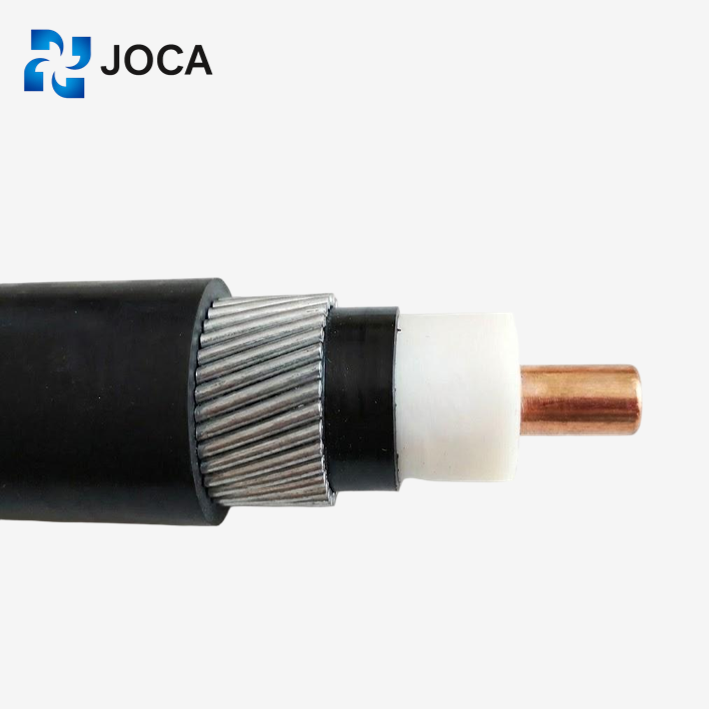
N2XR(AL)Y/NA2XR(AL)Y
0.6/1kV Single core XLPE Insulation Aluminum Wire Armoured and PVC Jacket power cable
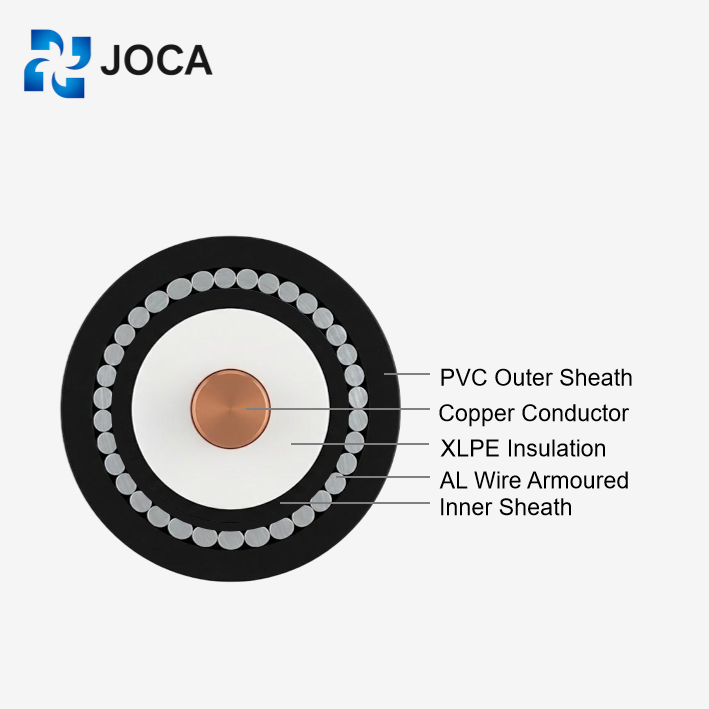
Conductor : Plain annealed stranded circular or circular compacted copper conductor (Class 2 to IEC 60228).
Insulation : Extruded layer of Cross-linked Polyethylene (XLPE) to IEC 60502-1.
Bedding : Extruded layer of Polyvinyl Chloride (PVC) – Type (ST2) to IEC 60502-1.
Armouring : Single layer of round non-magnetic (aluminium) wires.
Outer Jacket : Extruded layer of Polyvinyl Chloride (PVC) – Type (ST2) to IEC 60502-1.
- Fast Sample Processing with Customized Solutions
- High-Quality Materials
- Affordable Price Options
- Global Delivery
- For better data protection, make sure that all uploads are secure
Save at least 30% on average
-
Product Description
N2XR(AL)Y/NA2XR(AL)Y: Product Description and Specifications
The N2XR(AL)Y series is built for one specific job: Single-Core power distribution. Because these are single-core cables, we can’t use standard steel armor (it would overheat due to magnetic fields). Instead, we use Aluminum Wire Armor (AWA). This is non-magnetic, so it gives you the mechanical protection you need without turning the cable into a heater. Combined with XLPE insulation, it handles heavy industrial loads without breaking a sweat.
-
Advantages
N2XR(AL)Y/NA2XR(AL)Y : Benefits and Features
High mechanical protection with aluminium armouring
Excellent resistance to moisture, impact and abrasion
XLPE insulation provides higher current carrying capacity
Suitable for direct burial and heavy-duty industrial use
Stable performance under thermal and electrical stress
Long service life and reduced maintenance requirements
Specification Of N2XR(AL)Y/NA2XR(AL)Y
| Component / Parameter | Description / Standard |
|---|---|
| General Description | These cables are intended for fixed installations, indoors and outdoors, in low voltage electricity systems. |
| Applicable Standards | Low Voltage power cables are designed and tested to meet all the requirements of the latest edition of IEC 60502-1 standard. |
| Conductor (Copper) | Plain annealed stranded circular or circular compacted copper conductor (Class 2 to IEC 60228). |
| Conductor (Aluminium) | Stranded circular or circular compacted aluminium conductor (Class 2 to IEC 60228). |
| Insulation | Extruded layer of Cross-linked Polyethylene (XLPE) to IEC 60502-1. |
| Bedding | Extruded layer of Polyvinyl Chloride (PVC) - Type (ST2) to IEC 60502-1. |
| Armouring | Single layer of round non-magnetic (aluminium) wires. |
| Outer Jacket | Extruded layer of Polyvinyl Chloride (PVC) - Type (ST2) to IEC 60502-1. |
Dimensions/Parameters
| Nominal cross sectional area (mm²) | Max. Resistance DC at 20°C (Ω/km) | Max. Resistance AC at 90°C (Ω/km) | Current: Buried direct (a) (A) | Current: Buried direct (b) (A) | Current: In buried ducts (c) (A) | Current: In buried ducts (d) (A) | Current: In free air (e) (A) | Current: In free air (f) (A) | Current: In free air (g) (A) | Approx. overall diameter (mm) | Approx. overall weight (kg/km) |
|---|---|---|---|---|---|---|---|---|---|---|---|
| Copper | Conductor | ||||||||||
| 6 | 3.08 | 3.9273 | 59 | 59 | 49 | 54 | 60 | 61 | 75 | 13 | 255 |
| 10 | 1.83 | 2.3335 | 78 | 78 | 65 | 71 | 80 | 82 | 100 | 13.6 | 300 |
| 16 | 1.15 | 1.4665 | 99 | 99 | 83 | 91 | 105 | 107 | 132 | 14.6 | 380 |
| 25 | 0.727 | 0.9272 | 127 | 127 | 107 | 117 | 138 | 141 | 172 | 16.2 | 500 |
| 35 | 0.524 | 0.6685 | 151 | 151 | 128 | 139 | 168 | 171 | 208 | 17.2 | 615 |
| 50 | 0.387 | 0.4939 | 178 | 178 | 152 | 163 | 202 | 206 | 249 | 18.8 | 765 |
| 70 | 0.268 | 0.3424 | 217 | 215 | 189 | 198 | 253 | 257 | 307 | 20.6 | 1000 |
| 95 | 0.193 | 0.2471 | 257 | 255 | 223 | 234 | 308 | 310 | 366 | 22.4 | 1285 |
| 120 | 0.153 | 0.1964 | 290 | 287 | 253 | 263 | 354 | 354 | 413 | 24.1 | 1560 |
| 150 | 0.124 | 0.1598 | 323 | 318 | 284 | 291 | 403 | 400 | 461 | 26 | 1860 |
| 185 | 0.0991 | 0.1286 | 361 | 354 | 320 | 322 | 461 | 453 | 512 | 28.3 | 2270 |
| 240 | 0.0754 | 0.0991 | 411 | 401 | 367 | 360 | 539 | 521 | 579 | 31 | 2870 |
| 300 | 0.0601 | 0.0805 | 456 | 440 | 410 | 391 | 612 | 583 | 637 | 33.6 | 3475 |
| 400 | 0.047 | 0.0647 | 494 | 472 | 450 | 410 | 685 | 628 | 672 | 38.2 | 4535 |
| 500 | 0.0366 | 0.0527 | 539 | 511 | 497 | 439 | 770 | 691 | 729 | 42.2 | 5715 |
| 630 | 0.0283 | 0.0436 | 582 | 547 | 541 | 465 | 854 | 749 | 783 | 46.4 | 7130 |
| 800 | 0.0221 | 0.0367 | 599 | 565 | 564 | 481 | 908 | 781 | 829 | 52.3 | 9240 |
| 1000 | 0.0176 | 0.0324 | 629 | 595 | 601 | 513 | 996 | 849 | 915 | 61.1 | 11550 |
| Aluminium | Conductor | ||||||||||
| 10 | 3.08 | 3.9489 | 62 | 62 | 51 | 57 | 63 | 65 | 80 | 13.6 | 240 |
| 16 | 1.91 | 2.4489 | 77 | 77 | 65 | 71 | 81 | 83 | 102 | 14.6 | 285 |
| 25 | 1.2 | 1.5386 | 99 | 99 | 83 | 91 | 107 | 110 | 134 | 16.2 | 350 |
| 35 | 0.868 | 1.113 | 118 | 118 | 100 | 108 | 130 | 133 | 163 | 17.2 | 405 |
| 50 | 0.641 | 0.8221 | 139 | 139 | 118 | 128 | 157 | 161 | 195 | 18.8 | 480 |
| 70 | 0.443 | 0.5684 | 169 | 169 | 145 | 156 | 197 | 201 | 242 | 20.6 | 585 |
| 95 | 0.32 | 0.4109 | 201 | 200 | 174 | 185 | 240 | 244 | 292 | 22.4 | 705 |
| 120 | 0.253 | 0.3252 | 228 | 226 | 198 | 209 | 278 | 281 | 332 | 24.1 | 830 |
| 150 | 0.206 | 0.2651 | 254 | 252 | 223 | 232 | 317 | 319 | 373 | 26 | 965 |
| 185 | 0.164 | 0.2116 | 286 | 282 | 253 | 260 | 365 | 364 | 421 | 28.3 | 1150 |
| 240 | 0.125 | 0.1621 | 328 | 323 | 293 | 297 | 430 | 425 | 483 | 31 | 1390 |
| 300 | 0.1 | 0.1306 | 368 | 359 | 330 | 328 | 492 | 481 | 539 | 33.6 | 1640 |
| 400 | 0.0778 | 0.1028 | 408 | 395 | 372 | 354 | 564 | 536 | 587 | 38.2 | 2150 |
| 500 | 0.0605 | 0.0816 | 455 | 437 | 418 | 387 | 647 | 602 | 650 | 42.2 | 2620 |
| 630 | 0.0469 | 0.0653 | 501 | 478 | 466 | 421 | 733 | 668 | 711 | 46.4 | 3205 |
| 800 | 0.0367 | 0.0533 | 531 | 507 | 500 | 443 | 802 | 714 | 767 | 52.4 | 4150 |
| 1000 | 0.0291 | 0.0452 | 570 | 545 | 545 | 480 | 898 | 789 | 858 | 61.1 | 5165 |
-
Production Processes Of Power cable
To ensure superior quality, JOCA operates fully digitalized and automated production lines for power cables. Specifically, this comprehensive workflow covers conductor stranding, insulation extrusion, metallic screening, and final sheathing. Moreover, intelligent systems actively monitor each stage to ensure stable performance and consistent product quality. In addition, the factory utilizes advanced testing facilities, such as partial discharge testing, tensile testing, and spark testing. Consequently, these rigorous measures guarantee that every delivered cable strictly meets international standards.

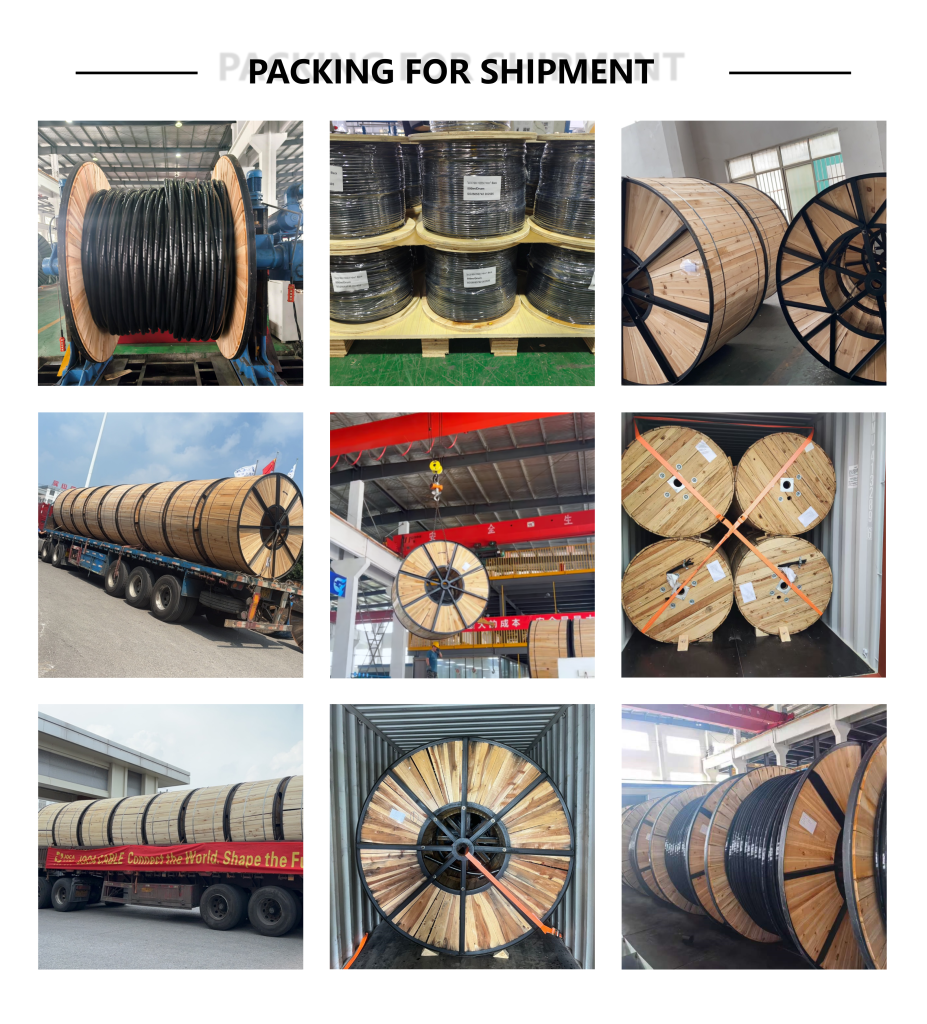
Packing For Shipment
To meet various transportation needs, there are many methods of packaging that can be used.
Have more questions?
Easily get started by finding the answers to commonly asked questions about our company and services.
Q: N2XR(AL)Y vs. NA2XR(AL)Y: What’s the difference?
A: Just the conductor metal. N2XR(AL)Y is Copper. NA2XR(AL)Y (with the ‘A’) is Aluminum. Structurally, they are identical.
Q: Why use Aluminum Armor (AWA) instead of Steel (SWA)?
A: Physics. Since this is a Single Core cable, it generates a strong magnetic field. If you wrapped it in steel (which is magnetic), the cable would turn into an induction heater and cook itself. Aluminum is non-magnetic, so it stops the cable from overheating while still giving you mechanical protection.
Q: XLPE vs. PVC: Why upgrade?
A: Ampacity. PVC is rated for 70°C. XLPE handles 90°C. That extra 20 degrees lets you push significantly more current through the cable without damaging the insulation. It’s just more efficient.
Q: Can I bury this directly in the ground?
A: Yes. That’s exactly what the armor is for. The AWA protects the core from crushing loads (like soil settling or rocks). Just lay it in a sand bed to be safe.
Q: Important: How do I ground the armor?
A: Careful here. For short runs, bonding both ends is fine. But for long runs? You usually need Single Point Bonding (grounding only one end) to stop circulating currents from heating up the armor. Check your system design first.
Q: Is it hard to bend?
A: It’s stiffer than unarmored cable, obviously. You need to respect a bending radius of 15x the cable diameter. Don’t force it tighter than that, or you’ll create gaps in the armor wires.
Q: What voltage is this for?
A: Standard Low Voltage distribution. 0.6/1kV.
Q: How do I get a price?
A: Don’t waste time with generic forms. Just email us your Cable Schedule. Tell us: Copper or Al? Cross-section size? Total length? We’ll calculate the metal weight and send you a quote.