


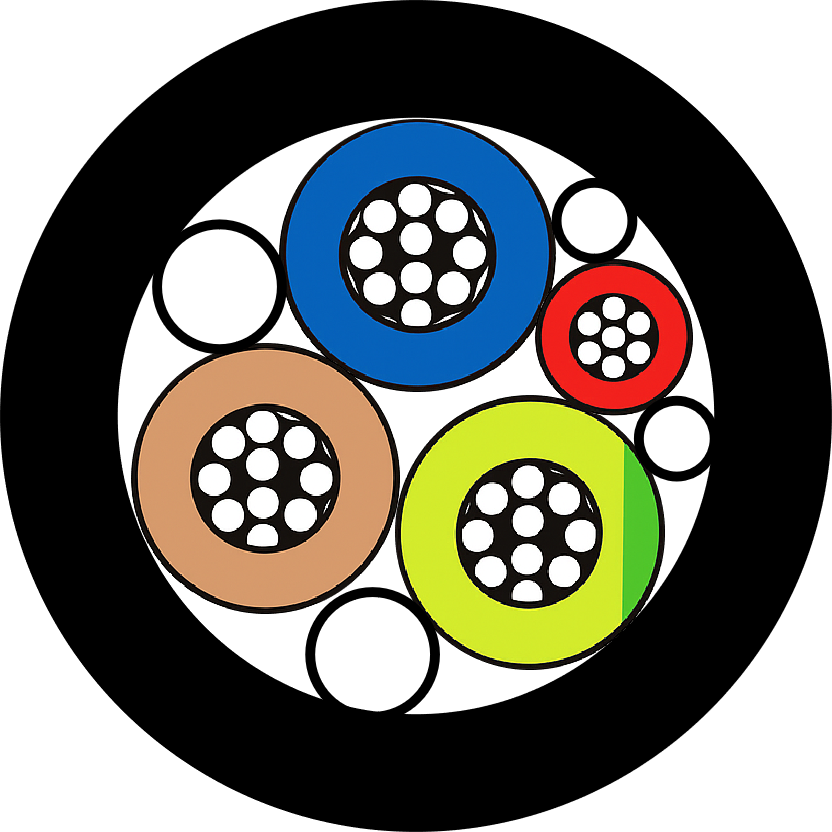





N2XY/NA2XY
0.6/1kV XLPE Insulation and PVC Jacket power cable
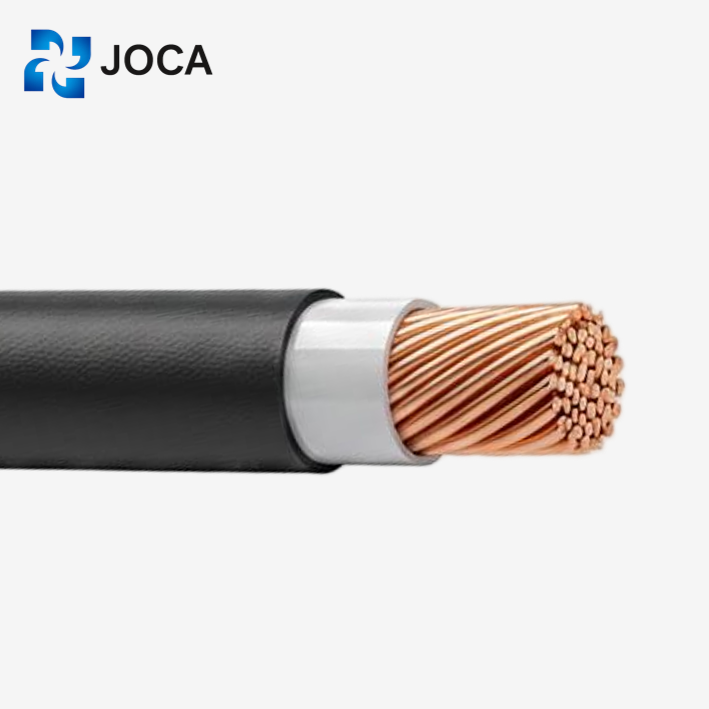
- Conductor:Copper / Aluminum , solid or stranded
- Insulation: XLPE
- core color code acc. to VDE 0293
- cores stranded concentrically
- inner covering
- outer sheath, PVC, black
- Fast Sample Processing with Customized Solutions
- High-Quality Materials
- Affordable Price Options
- Global Delivery
- For better data protection, make sure that all uploads are secure
Save at least 30% on average
-
Product Description
N2XY/NA2XY : Product Description and Specifications
The N2XY series is your go-to solution for 0.6/1kV industrial and urban grids. Unlike older cables, it uses XLPE insulation, which gives you much better thermal stability than standard PVC. You have two options based on budget: N2XY (Copper) for max conductivity, or NA2XY (Aluminum) for cost savings. It comes with a UV-resistant black sheath, making it perfect for fixed installations—just make sure it’s not exposed to heavy mechanical impact since it’s unarmored.

-
Advantages
N2XY/NA2XY : Benefits & Features
Copper or Aluminum: Your choice. We stock Copper (Solid/Stranded) for standard high-conductivity needs, but we also offer Aluminum if you need to slash weight and budget on long distribution runs.
Why XLPE Matters: We use Cross-linked Polyethylene (XLPE) instead of basic PVC. This boosts the thermal rating to 90°C, giving you higher ampacity and better overload protection.
Real-World Protection: The outer PVC sheath isn’t just “durable”—it’s formulated to resist UV and abrasion. It holds up fine in trenches (sand bed) or open trays.
No Guesswork: We strictly follow VDE 0293 color coding. Your electricians will know exactly which core is phase, neutral, or earth without needing to ring it out.
Specification Of N2XY/NA2XY
| Technical Data Parameter | Technical Data Value |
|---|---|
| Conductor resistance at 20℃: | according to VDE 0295 and IEC 60228 |
| Core temperature, max: | 90℃ in operation |
| Max. short circuit temperature: | 250℃ , not more than 5 sec |
| Rated voltage U0 /U(Umax): | 0.6/1(1.2) kV |
| Test voltage: | AC ¨C 4 kV (3.5kV by IEC); 50 Hz |
| Temperature range: | |
| flexing: | -5℃ to +50℃ |
| stationary: | -30℃ to +90℃ |
| Bending radius, min. | |
| for single-core: | 15xDcable |
| for multi-core: | 12xDcable |
| Specific insulation resistance at 90℃: | min, 1014Ωx cm |
| Max. permissible tensile stress with cable grip: | For Cu conducor = 50 N/mm2 For Al conducor = 30 N/mm2 |
| Cable Structure Component | Cable Structure Description |
| Conductor: | solid or multi-strand Cu or Al wires class 1, 2 or (5) acc. VDE 0295 (IEC 60228) |
| Insulation: | XLPE type DIX3 acc. to VDE 0276-603/5G |
| Core identification: | according to VDE 0293 (HD 308) |
| Signal-command copper core: | Additional, cross section 2,5mm2, red coloured (black coloured 1,5mm2 on request) |
| Cores assembly: | cores stranded concentrically (cores stranded in concentric layers, for signal) |
| Wrapping: | paper tape |
| Inner covering: | rubber filling compound |
| Sheath: | PVC type DMV6 acc. to VDE 0276-603/sec.1 or PE HDPE mass, type DMP2 acc. DIN VDE 0276/HD603 |
| Color of sheath: | black |
Dimensions/Parameters
| Number of cores x Nominal Cross Section | Overall Diameter (Approx.) (mm) | Copper (or Al) Weight (Approx.) (kg/km) | Total Weight (Approx.) (kg/km) |
|---|---|---|---|
| 1x4 | 6.5 | 38 | 74 |
| 1x6 | 7 | 58 | 95 |
| 1x10 | 8 | 96 | 142 |
| 1x16 | 9 | 154 | 205 |
| 1x25 | 11 | 240 | 302 |
| 1x35 | 12 | 336 | 400 |
| 1x50 | 13 | 480 | 526 |
| 1x70 | 15 | 672 | 750 |
| 1x95 | 17 | 912 | 1000 |
| 1x120 | 18.5 | 1152 | 1240 |
| 1x150 | 21 | 1440 | 1550 |
| 1x185 | 23 | 1776 | 1890 |
| 1x240 | 26 | 2304 | 2420 |
| 1x300 | 28 | 2880 | 3015 |
| 2x1.5 | 10 | 42 | 142 |
| 2x2.5 | 11 | 72 | 182 |
| 2x4 | 12 | 115 | 242 |
| 2x6 | 13 | 173 | 320 |
| 2x10 | 15 | 288 | 480 |
| 2x16 | 17 | 461 | 700 |
| 3x25/16 | 21 | 874 | 1220 |
| 3x35/16 | 23 | 1162 | 1450 |
| 3x50/25 | 26 | 1680 | 1955 |
| 3x70/35 | 29 | 2352 | 2720 |
| 3x95/50 | 33 | 3216 | 3750 |
| 4x1.5 | 11 | 58 | 165 |
| 4x2.5 | 12 | 96 | 216 |
| 4x4 | 13 | 154 | 290 |
| 4x6 | 14 | 230 | 385 |
| 4x10 | 16 | 384 | 590 |
| 4x16 | 19 | 614 | 864 |
| 4x25 | 23 | 960 | 1295 |
| 4x35 | 27 | 1344 | 1750 |
| 4x50 | 30 | 1920 | 2300 |
| 4x70 | 34 | 2688 | 3280 |
| 4x95 | 38 | 3648 | 4300 |
| 4x120 | 43 | 4608 | 5416 |
| 4x150 | 47 | 5760 | 6700 |
| 4x185 | 52 | 7104 | 8200 |
| 4x240 | 58 | 9216 | 10560 |
| 5x1.5 | 12 | 72 | 193 |
| 5x2.5 | 13.5 | 120 | 252 |
| 5x4 | 14 | 192 | 340 |
| 5x6 | 15 | 288 | 460 |
| 5x10 | 18 | 480 | 840 |
| 5x16 | 21 | 768 | 1040 |
| 5x25 | 25 | 1200 | 1550 |
| Construction data: NA2XY 0.6/1 kV | |||
| 4x16+1.5 | 21 | 196 | 598 |
| 4x25+1.5 | 24 | 298 | 828 |
| 4x35+1.5 | 27 | 406 | 1022 |
| 4x50+1.5 | 30 | 598 | 1127 |
| 4x70+1.5 | 35 | 812 | 1590 |
| 4x95+1.5 | 39 | 1102 | 1946 |
| 4x120+1.5 | 42 | 1392 | 2436 |
| 4x150+1.5 | 47 | 1740 | 2972 |
| 4x185+1.5 | 52 | 2146 | 3592 |
| 4x240+1.5 | 58 | 2784 | 4572 |
| 4x16 | 21 | 196 | 570 |
| 4x25 | 24 | 298 | 794 |
| 4x35 | 27 | 406 | 974 |
| 4x50 | 30 | 598 | 1110 |
| 4x70 | 35 | 812 | 1510 |
| 4x95 | 39 | 1102 | 1920 |
| 4x120 | 43 | 1392 | 2410 |
| 4x150 | 47 | 1740 | 2946 |
| 4x185 | 52 | 2146 | 3565 |
| 4x240 | 58 | 2784 | 4565 |
-
Production Processes Of Power cable
To ensure superior quality, JOCA operates fully digitalized and automated production lines for power cables. Specifically, this comprehensive workflow covers conductor stranding, insulation extrusion, metallic screening, and final sheathing. Moreover, intelligent systems actively monitor each stage to ensure stable performance and consistent product quality. In addition, the factory utilizes advanced testing facilities, such as partial discharge testing, tensile testing, and spark testing. Consequently, these rigorous measures guarantee that every delivered cable strictly meets international standards.

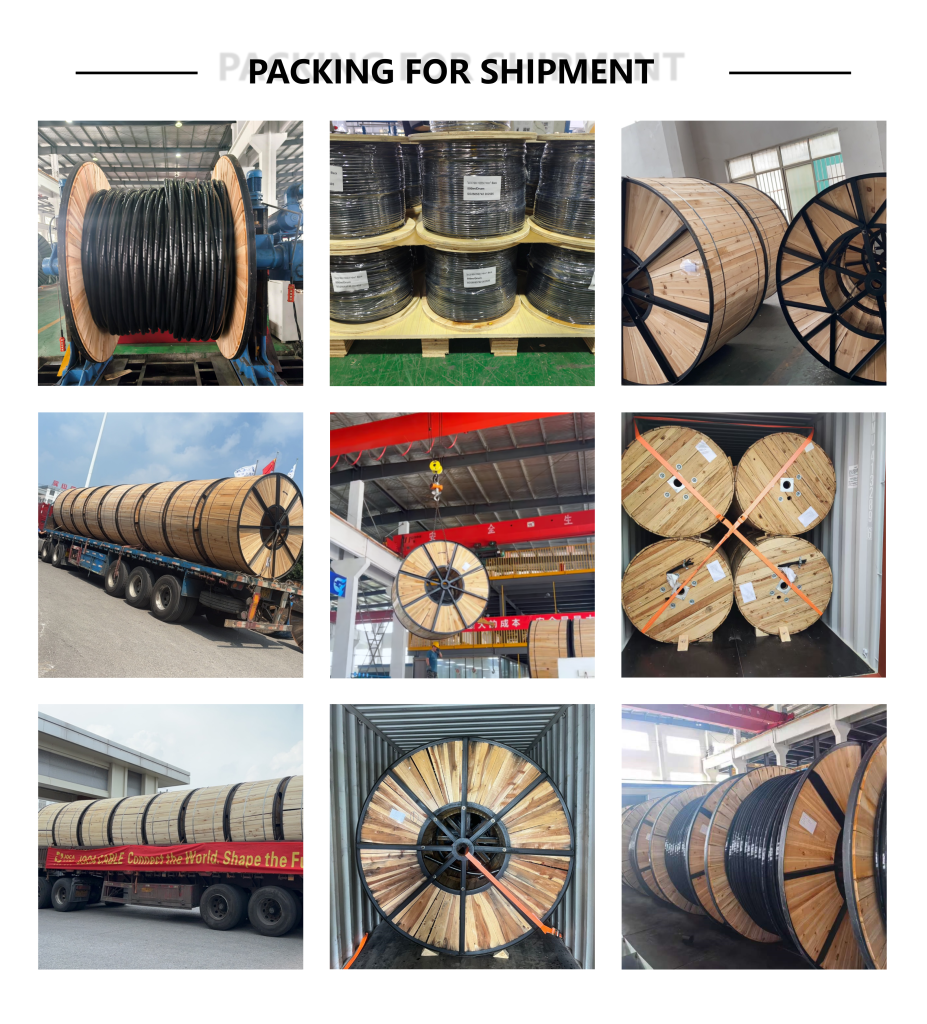
Packing For Shipment
To meet various transportation needs, there are many methods of packaging that can be used.
Have more questions?
We’ve compiled the most common questions regarding specifications, safety standards, and applications below. If you don't see what you're looking for, or have a specific custom requirement, just contact our engineering team directly.
Q: N2XY vs. NA2XY: What's the actual difference?
A: It’s just the metal inside. N2XY is Copper. NA2XY (with the ‘A’) is Aluminum. That’s it. Since Aluminum is way cheaper and lighter, NA2XY is the smart pick if you have a long run and a tight budget.
Q: Why buy N2XY instead of the cheaper NYY?
A: Simple: Heat. NYY is PVC, so it quits working at 70°C. N2XY uses XLPE insulation, which handles 90°C easily. That 20-degree gap is huge—it lets you push a lot more current (amps) through the same cable without burning it out.
Q: What voltage is this for?
A: Standard Low Voltage grids. 0.6/1 kV.
Q: Can I put this outdoors?
A: Yep. The black sheath handles UV fine. You can run it on trays or even bury it (in sand). Just be careful—it has no armor, so don’t put it where a shovel or rock might smash it.
Q: Temperature limits?
A: 90°C all day long. If there’s a short circuit, it can survive 250°C for a few seconds. PVC cables would basically melt at those temps.
Q: Is the wire solid or stranded?
A: Depends on the size. Small wires (under 10mm²) are usually Solid and stiff. Big cables (16mm² and up) are Stranded so you can actually bend them during installation.
Q: Can I get a sample?
A: Sure. We can ship a short piece so you can check the copper quality yourself before ordering a full drum.
Q: How do I get a price?
A: Just email us your BOM (Bill of Materials). Tell us the sizes and total length. We’ll calculate the metal price and send you a quote.