







Industrial motors require various standards; depending on these standards, motors can be compatible, efficient, and offer optimal performance. The most famous of motor standards today are the IEC (International Electrotechnical Commission) and NEMA (National Electrical Manufacturers Association), which provide different approaches to motor design, performance, and application. Understanding what differentiates these two standards is crucial for any engineer, manufacturer, or industry professional involved in the design or integration of motors into various systems. This article discusses the main distinctions and ramifications of IEC vs. NEMA motor standards, thereby giving you the power to make wise decisions regarding operational issues. Whether your concern is with global marketing or system reliability enhancement, this contrast clarifies the essential aspects of these two leading motor standards.
Introduction to Motor Standards
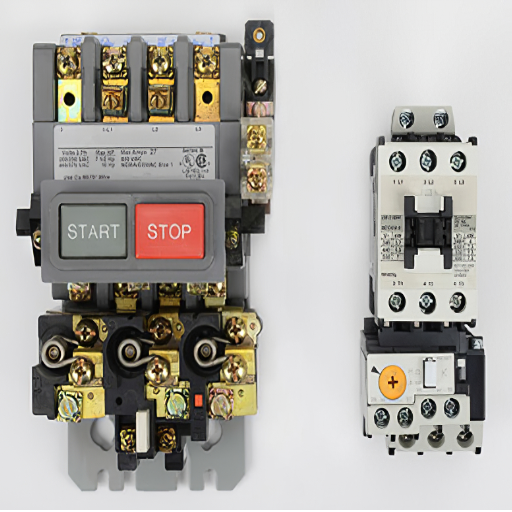
Motor standards have been established to specify the design, performance, and safety requirements of electric motors. Thus, the standards ensure compatibility, reliability, and efficiency across various applications and industries. Two of the most widely accepted motor standards are those established by the International Electrotechnical Commission (IEC) and the National Electrical Manufacturers Association (NEMA). IEC standards are primarily applied in international markets, whereas NEMA standards are mainly applicable in North America. Being conversant with such standards helps in choosing the right motor for your system and adhering to any local/industry requirements.
What are IEC and NEMA?
The IEC (International Electrotechnical Commission) and NEMA (National Electrical Manufacturers Association) are two organizations responsible for developing different testing methods and various standards for electrical equipment, including machines such as motors, to ensure safety, compatibility, and efficiency. IEC standards are globally recognized and based on metric measurement, making them suitable for markets with an international presence. They tend to focus on modular designs and address applications requiring global competence. NEMA standards, primarily considered in North America, are based on imperial dimensions and emphasize durability and overload capacity, often prioritizing applications where ruggedness is paramount. Motors are designed and used according to both IEC and NEMA standards; typically, the choice depends on regional preference and the specific requirements of the application.
Importance of Electrical Equipment Standards
Electrical equipment must meet standards for safety, efficiency, and interoperability across diverse industries. These standards, including those issued by the International Electrotechnical Commission (IEC) and the National Electrical Manufacturers Association (NEMA), focus on aspects of equipment design, performance, and testing. Meeting these standards will significantly reduce the incidence of accidents due to electrical failure and ensure that a certain level of operation is maintained under both normal and extreme environmental conditions by systems.
So, let’s suppose that standard ratings for voltage, current, and insulation exist to ensure that components produced by different manufacturers can be installed and used interchangeably with other systems. Industry data show that utilizing standard equipment can reduce industrial downtime by as much as 20%, as installation and removal are easier. Additionally, standards compliance can facilitate regulatory and market access, particularly in international markets where uniformity is a requirement.
Less significant is the economic impact of standards for electrical equipment. These standards help reduce production costs by simplifying the manufacturing processes and eliminating the need to custom-design every application. Moreover, standardized equipment may help prolong an electrical infrastructure’s life by assuring suitable future upgrades and expansions. With the constant impetus for innovation, grounded in safety and reliability, these standards form the backbone for advancing technology and industrial efficiency on a global level.
Overview of International Standards for Motors
International standards for electric motors are designed to ensure that uniformity, safety, and efficiency are maintained whenever a motor is designed, manufactured, and applied in practical use across the world’s industries. Widely known standards include IEC, NEMA, and ISO.
IEC Standards: The IEC aims to set forth worldwide standards for electric motors according to performance, efficiency, and safety. IEC 60034 is probably the most crucial standard and sets forth technical requirements, including efficiency classes (IE1, IE2, IE3, and IE4), operating conditions, and the type of mechanical construction. These have become the accepted standards throughout Europe and many other parts of the world.
NEMA Standards: Motor manufacturers in the United States are offered NEMA standards as a framework against which motors are designed, ensuring quality and compatibility within their own country. Standards such as NEMA MG 1 define efficiency, design ratings, and procedures for testing motors. Whereas IEC standards adopt a globally acceptable set of regulations, NEMA standards are more tailored toward regional applications for American industries.
ISO Standards: ISO standards ensure manufacturing consistency and address environmental considerations for motors, alongside IEC and NEMA standards. ISO 9001, for example, is a standard for quality management systems that assures customers about the reliability and performance of motors that conform to an agreed-upon international standard.
Compliance with such standards enables manufacturers and industries to consider social considerations, including compatibility, energy efficiency, and regional legislative requirements, thereby creating a pathway for global trade and innovation.
Key Differences Between NEMA and IEC Motors
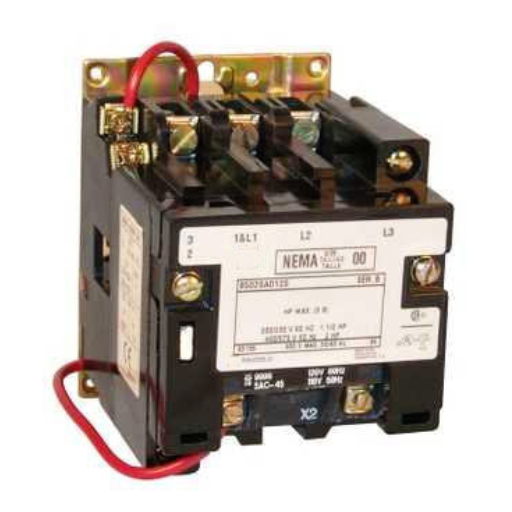
Design Standards: In NEMA motors, the standards used in North America focus on robustness and ensuring high starting torque for a variety of applications, allowing them to be handled perfectly. IEC motors, however, maintain the standards accepted internationally, focusing on efficiency, modular construction, and more adaptable usage worldwide.
Dimension and Mounting: Generally speaking, the frame sizes of NEMA motors are larger than those of IEC motors for the same power rating. The consequence in such a case would be that their mounting dimensions may differ: NEMA motors adhere to imperial dimensions, while IEC motors use metric, hence the interchangeability.
Voltage-Frequency: NEMA motors are designed for 60 Hz power systems prevalent in North America, whereas IEC standards cater to a range of varying voltages and frequencies, including 50 Hz, making them acceptable internationally.
Efficiency Standards: NEMA Motors are classified according to the NEMA Premium^® efficiency standards to encourage energy savings, especially in industrial environments. At the same time, IEC motors are assigned efficiency classes such as IE2, IE3, and IE4, which create a more granular global stage for enhancing energy efficiency.
Applications: NEMA motors are frequently engineered to the heavy demands generally found in the U.S., including high-inertia loads. IEC motors offer more modular and customizable design options, making them highly versatile and utilized by a wide range of industries worldwide.
A firm understanding of these differences enables businesses to select the motor standard that best suits their regional infrastructure, legal requirements, and operational needs.
Design and Construction Variations
NEMA motors are generally heavy-duty in nature and designed for maximum durability, meeting the standards that aim to fulfill heavy-duty operational requirements in the U.S. Their frames are larger and less compact compared to IEC motors, as more weight is allocated to thermal dissipation and mechanical strength. Here, too, the NEMA motor is designed with specific, rigid frame sizes that limit interchangeability but ensure powerful compatibility within local systems.
In contrast, the IEC motors are more modular and uniform in design, with the intention of focusing on worldwide applicability and ease of standardization. Lightweight and compact, their frames are designed for adaptability, offering opportunities for enhanced customizability and interchangeability across various applications. From a design perspective, IEC motors tend to boast a few more stellar features, such as higher energy efficiency and flexible mounting techniques, as they are designed with more modern engineering and environmental considerations in mind.
The significant construction and design differences between NEMA and IEC motors reflect the needs and standards of the regions where they are used predominantly, thereby helping industries select suitable options based on specific application contexts.
Efficiency Ratings: NEMA vs IEC
NEMA and IEC efficiency ratings differ in terms of testing methods, classification scales, and regulatory requirements.
|
Key Point |
NEMA |
IEC |
|---|---|---|
|
Testing |
Full-load |
Any-load |
|
Classification |
EPAct, NEMA |
IE1, IE2, IE3 |
|
Scale |
Unique tiers |
Standardized |
|
Scope |
US, Canada |
Global |
|
Regulation |
Mandatory |
Varies |
Applications and Usage Scenarios
The choice between NEMA and IEC efficiency standards often depends on regional requirements, industry standards, and specific application needs. NEMA motors, widely used in the U.S. and Canada, are suitable for applications requiring robust performance under full-load conditions, such as heavy industrial machinery, HVAC systems, and water treatment facilities. The classification of efficiency of these motors, such as NEMA Premium, is set to comply with high standards of energy regulations as laid down by EPAct and EISA.
Europeans and developers abroad employ IEC motors due to the worldwide acceptance of their classification (IE1, IE2, IE3, IE4) and because their disadvantage lies in accommodating a wider range of voltage and frequency. IEC motors are greatest in industries such as manufacturing, oil and gas, and pharmaceuticals, where varying load conditions and energy efficiency maximization go hand in hand.
Recent industrial figures reveal a growing preference for high-efficiency line motors across both standards. Therefore, IE3 and IE4 motors (as well as other NEMA Premium motors) have reached a stage where they are a prerequisite for achieving energy savings of 15%-20% over their less efficient counterparts. This is because an estimate suggests that 85-90% of a motor’s total life cycle cost is attributed to energy.
Common Misunderstandings Debunked
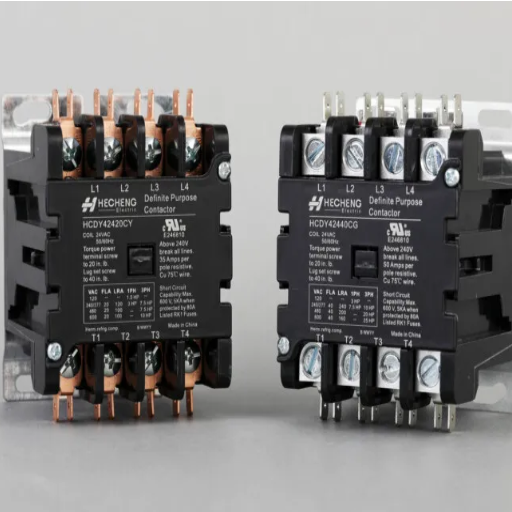
Inherently, neither is better than the other; their suitability depends on the application and operational requirements. A NEMA motor is typically used in North America and is prized for its ruggedness and adaptability to existing mechanisms. In contrast, the IEC motors are standard in Europe and most other parts of the world, resulting in compact designs and efficient solutions for space-limited applications. Both standards are perfectly serviceable but address different demands from regional and industrial standpoints. Factors such as location, industry standards, and compatibility with existing equipment significantly influence the decision between the two.
Myths about Motor Efficiency
There are some misconceptions regarding motor efficiency that can lead to faulty decision-making. One popular myth is that the higher the horsepower motor, the lower its energy efficiency. But motor efficiency depends on design and operating conditions, not just horsepower. Another popular myth holds that an oversized motor would serve any application well. While some margin is necessary, an oversized motor often works below its number-one efficiency range, wasting energy. Finally, premium-efficiency motors are believed to give instant energy savings regardless of the system. In reality, the savings from these motors are realized only when they are appropriately integrated into a well-designed system. Being aware of these myths enables the company to make better and more sustainable choices.
Misconceptions in Motor Selection
A commonly held concern is whether installing higher-horsepower motors is always a worthwhile investment, given their purported ability to meet a variety of operational demands. Studies indicate that motors that consistently run at low loads are subject to a decrease in efficiency and therefore incur higher energy costs. For instance, it has been documented that unless a motor is loaded at approximately 70-80% of its rated capacity, its efficiency begins to degrade. This inefficiency results in greater energy consumption, which in turn means a higher electricity bill to cover the additional costs.
Another common myth is that higher-efficiency motors always have greater economic benefits. They are designed to consume less power, provided they are applied and maintained correctly. For example, a motor with a 95 percent efficiency rating would not yield significant savings if it were mismatched with the system’s load requirements or if the motor were unnecessarily started and stopped.
Unsafe assumptions are frequently made that a mere change of a motor for a new energy-efficient one results in immediate performance optimization. Newer models may indeed possess special attributes; however, their actual benefit depends on the interlinking and the state of connected components, alignment of system operations, and load profile. Analysis from a recent industry report has revealed that nearly 60% of industrial motors, which are capable of efficiency gains through upgrading, fail due to poor installation or system mismatch.
Once facts and insight dispel these myths, industries can work towards producing motor systems that are dependable and energy-efficient, and as a consequence, improve their performance while reducing the operational costs of the industry.
Choosing the Right Motor Standard for Your Needs
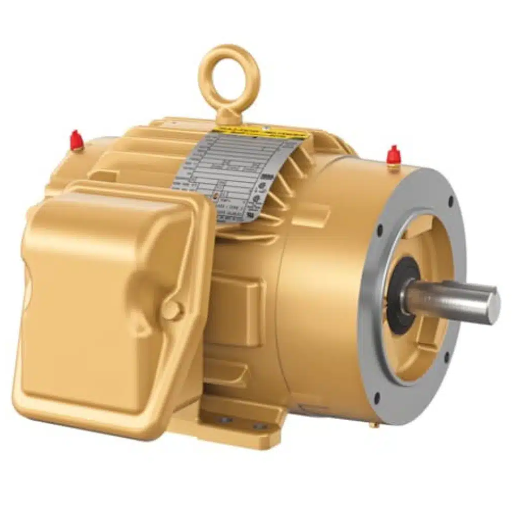
Based on the context, your need for selecting the correct type of motor standards is driven by the parameters of your application, such as load, operating environment, and aims of efficiency. Using standards such as IEC or NEMA invariably assures compatibility and performance. Depending on the industrial application, higher efficiency classes, such as IE3 and IE4, available could be chosen for longer-term energy savings. The manufacturers’ technical manuals and compliance standards should be adhered to by the selected motor to ensure safety and regulatory compliance. A well-balanced selection, incorporating all available information on performance, efficiency, and cost, will ultimately inform your decision.
Factors to Consider in Motor Selection
The following factors are key in motor selection, each ensuring the optimization of performance and efficiency:
Application Requirements: Assess the working environment in which the motor operates, including the type of load, speed, torque, and duty cycle. Ensure the motor’s features meet the application requirements. For instance, motors handling constant loads may not be suitable where variable loads or high-precision positioning are involved.
Power and Efficiency: Determine if the motor has sufficient power rated for the intended task and if it falls within energy-efficient classes, such as IE3 or IE4. Those with better efficiency will become preferable as they require less energy to run over extended periods, especially for industrial purposes.
Environmental Conditions: Consider how the working environment appears under various conditions, such as temperature, humidity, vibrations, dust, or chemicals. Motors with required IP ratings or those that comply with specific standards, such as IEC or NEMA, are of utmost importance in ensuring reliability under harsh application conditions.
Starting and Control Requirements: Determine whether the application requires direct-on-line starting, reduced-voltage starting, or other special controls, such as a variable-frequency drive (VFD). These considerations will determine the type of motor that is best suited for the service and may also impact compatibility with the electrical system.
Size and Mounting: The size and method of mounting of the motor should be suitable for the design of the equipment or machinery. Smaller motors can be helpful in applications where space is a constraint.
Cost and Maintenance: Consider balancing initial cost, efficiency, and maintenance requirements. In other words, energy-efficient motors, although more expensive to purchase, offer lower operating costs in the long run. Also consider accessibility for maintenance and expected life.
By analyzing these factors and consulting the manufacturer’s literature, a motor can be selected to provide reliable and efficient service for its specific application.
Industry Applications and Compliance
Industries ranging from manufacturing, automotive, agriculture, and HVAC consider electrical motors critical. They serve the entire purpose of driving conveyors and pumps in industrial settings, as well as machinery and equipment in agriculture. Motor selection depends on application requirements, including load, speed control, and environmental conditions.
Ensuring compliance with industry standards is crucial for achieving safety, reliability, and efficient energy consumption. Consider some essential compliance aspects with IEC or NEMA standards, which provide guidelines on motor performance, construction, and testing. Other laws typically require motors to comply with energy efficiency regulations at IE3 or IE4 levels to minimize environmental impact and operational costs. Manufacturers and engineers should stay up-to-date with any changing compliance requirements, including regional and sector-specific certifications, to remain compliant and deliver the best service in performance.
Future Trends in Motor Standards
Motor standards see their future in maximizing efficiency, sustainability, and digital integration. Regulatory agencies worldwide are enforcing higher levels of energy efficiency, such as those achieved by IE5 ultra-premium motors, to curb energy resource consumption and greenhouse gas emissions. Smart motor IoT integration is gaining momentum in trends such as real-time monitoring, predictive maintenance, and operational control. The standards are evolving to consider the integration of renewable energy sources and are compatible with advanced automation systems. Hence, adopting global harmonized standards on behalf of the IEC, ISO, and other relevant organizations would help streamline international compliance and boost innovation.
Summary of IEC vs NEMA
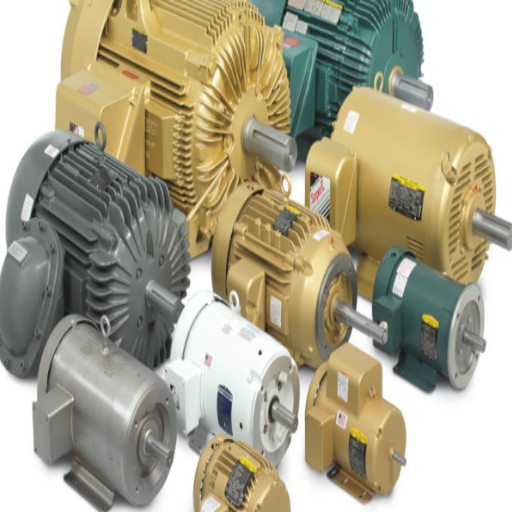
The IEC and NEMA are two key bodies that set standards for electrical equipment worldwide. IEC standards carry an international recognition and emphasize harmonization across countries; they are thus generally adopted by governments in Europe, Asia, and other parts of the world. NEMA standards are primarily applied in North America and address the needs of the industries in that region. IEC standards tend to be modular and metrics-driven, whereas NEMA standards are heavy-duty oriented with great importance on easy operation in rugged environments. The selection of either IEC or NEMA would be based on factors such as geographic location, regulatory requirements, and the specific needs of the application.
The Future of IEC and NEMA Standards
Increasing globalization, energy efficiency, and sustainability are likely to be the primary factors shaping the future direction of IEC and NEMA standards. As the industrial world becomes increasingly interconnected, harmonizing IEC and NEMA standards to facilitate cross-border trade and equipment design uniformity has become a growing concern. Digital transformation exemplified by the industrial Internet of Things (or IIoT) is also modernizing standards to be pertinent to present-day concerns such as automation and intelligent systems. In the face of increased environmental awareness, IEC and NEMA may transform to incorporate stricter energy efficiency requirements and ecological considerations in reducing the carbon footprint of industrial equipment. Eventually, their progress would grow as a result of technical advancements and shifts in international industrial needs.
Final Thoughts on Motor Efficiency and Standards
The efficiency of motors and standards is essential for enabling sustainable industrial practices in the technology sector. In my opinion, aligning with ever-evolving standards, such as those being promulgated by the IEC and NEMA, would have ensured that we are always ahead of the present-day requirements for energy efficiency and automation. By promoting adherence to these standards, we minimize environmental damage while staying current with the technological innovations that are shaping industries worldwide.
Reference Sources
Worldwide Motor Minimum Energy Performance Standards
Frequently Asked Questions (FAQs)
What are the key differences between IEC and NEMA standards for electrical equipment?
The key differences between IEC and NEMA standards lie in their regional applicability and specific requirements. IEC standards, developed by the International Electrotechnical Commission, are globally applicable and focus on ensuring international compatibility. In contrast, NEMA standards, established by the National Electrical Manufacturers Association, are primarily used in North America and emphasize safety and performance within that market.
How do IEC motors compare to NEMA motors in terms of efficiency?
IEC motors are rated based on global standards, which often include efficiency levels such as IE2 and IE3. NEMA motors offer various efficiency classifications, with NEMA Premium Efficiency serving as a standard benchmark. In essence, while both types aim for high efficiency, the metrics and classifications can vary, making it essential to compare based on specific applications.
What is the significance of motor efficiency in IEC and NEMA systems?
Motor efficiency is crucial as it directly impacts energy consumption and operational costs. Efficient motors reduce electricity usage and can lead to significant savings over time. Both IEC and NEMA standards emphasize the importance of motor efficiency, with IEC’s IE2 and IE3 classifications often being equivalent to NEMA Premium Efficiency standards.
What common misunderstandings about IEC and NEMA standards should be debunked?
A common misunderstanding is that IEC and NEMA standards are interchangeable, which they are not. Each set of standards is tailored for different markets and applications. Additionally, some believe that all electrical equipment under these standards is equally safe and efficient. In reality, each has specific requirements that must be met to ensure safety and performance.
How do IEC devices ensure safety and performance in electrical applications?
IEC devices are designed according to international standards that prepare and publish guidelines for safety and performance. This includes rigorous testing methods to ensure that devices can handle various electrical loads and environmental conditions, providing users with reliable and safe electrical components.
What are the service factors for NEMA motors, and how do they compare to IEC standards?
The service factor for NEMA motors indicates the motor’s capability to handle overload conditions without overheating. NEMA standards define specific service factors, while IEC motors are rated based on different classifications that account for similar performance criteria. Understanding these factors is essential for selecting the correct motor for specific applications.
How do ingress protection ratings differ between IEC and NEMA standards?
Ingress protection ratings, which denote the degree of protection against dust and water, are defined differently in IEC and NEMA standards. IEC uses a two-digit code (e.g., IP65), while NEMA provides a classification system that includes NEMA Types (e.g., NEMA 4). Both systems aim to inform users about the environmental suitability of electrical devices.
What role do global standards play in the development of electrical products?
Global standards, such as those from the IEC and NEMA, play a crucial role in ensuring that electrical products are safe, efficient, and compatible across various markets. These standards help manufacturers of electrical equipment create products that meet international expectations, facilitating trade and enhancing user confidence in electrical systems.
How can businesses make informed decisions when choosing between IEC and NEMA equipment?
Businesses can make informed decisions by understanding the specific requirements of their applications and the differences between IEC and NEMA standards. Consulting with manufacturers, reviewing efficiency ratings, and considering factors such as safety, performance, and compatibility are key steps in selecting the right electrical equipment to meet their specific needs.