







An important component to understand when you are given a choice for the electrical panel type is the difference between the main lug panel and the main breaker panel. Both serve quite different purposes, and according to your specific requirements, can be advantageous in their ways. So, how do you know which one will work for you? This write-up provides an overview of the two, covering their key features, functionality, and ideal use cases. Whether you’re replacing your system, designing a new one, or simply seeking to expand your understanding of electrical systems, this will become your go-to guide, providing unambiguous and actionable advice.
Main Lug vs Main Breaker: An Overview
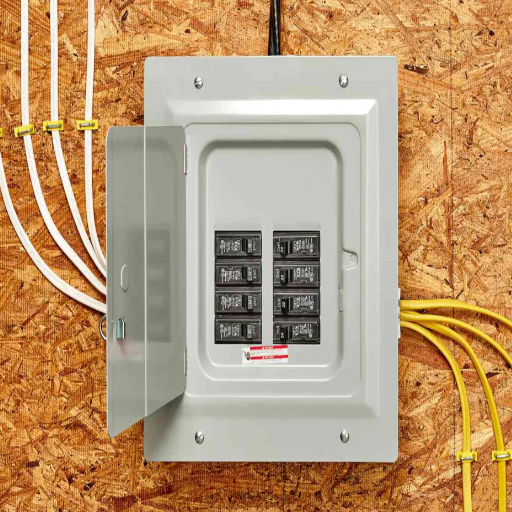
An electrical panel exhibits two prevalent types: a main lug panel and a main breaker panel. Each is made for use under given circumstances.
Main Lug Panel: A main lug panel does not have a circuit breaker integrated into it. Instead, a separate disconnect is required upstream to cut off the power supply. These panels are often deployed as sub-panels to channel power from a central service panel for an area of the building.
Main Breaker Panel: The main breaker panel features a main circuit breaker that can isolate the entire power supply, providing an additional safety feature. Primarily, this can be used as a primary electrical panel for residential or commercial purposes, providing ease with added protection.
Choosing between the two depends on the specific needs of your electrical system. If the panel is the primary power source, a main breaker panel is the ideal choice. For sub-panels or secondary power distribution, a main lug panel is a suitable choice.
What is a Main Lug Panel?
The main lug panel refers to an electrical distribution panel that has no main breaker. Instead, the incoming power lines are connected directly to the lugs, which are terminals meant to receive power. These panels typically function as sub-panels within larger electrical systems, distributing electricity to specific areas or circuits within a building.
An upstream main breaker provides overcurrent protection for the main lug panels or disconnect device, separate from the panel itself. They are typical in scenarios where the main breaker is located elsewhere, such as in a main breaker panel or a service disconnect outside the building. Main lug panels, therefore, allow for ease of expansion in electrical systems, as it is possible to add more circuits without duplicating an unnecessary main breaker.
Currently, main lug panels are manufactured with strict consideration for safety and efficiency. For instance, many models are rated anywhere between 100 and 225 amperes and can operate on either single-phase or three-phase power systems. They are also equipped with features such as ground fault protection and arc fault detection, and may support power from renewable energy sources, including solar power.
According to the NEC, sub-panels, such as main lug panels, must be properly grounded and bonded to maintain safety. Such panels, therefore, find wide application both in the residential and commercial sectors, where they provide an inexpensive yet efficient means of distributing power to specialized areas.
What is a Main Breaker Panel?
A main breaker panel serves as the primary central hub for distributing electrical circuits within a building. It has one main breaker that shuts off the power to all the circuits inside the panel at the flick of a switch. The main breaker provides overcurrent protection to prevent possible damage resulting from electrical overloads or short circuits. Usually, these panels are rated according to their rated amperage, e.g., 100A, 200A, or 400A; however, 200A is what is most commonly used in modern residential homes these days, as energy demands are greater.
Main breaker panels are designed to meet specific safety requirements while accommodating a variety of circuit breakers, allowing for the electrical requirements of different types to be met. It features a neutral bar and a ground bar, allowing for adequate grounding and bonding as required by the National Electrical Code (NEC). Many new models offer support for features like surge protection and integration with renewable energy sources such as solar panel systems.
According to the data, there has been a significant increase in the adoption of renewable energy in homes. For this reason, cabinets or main breaker panels capable of multi-directional energy flow have been installed, allowing for both on-grid and off-grid energy systems. These panels occasionally provide a few free spaces for circuits to accommodate them later on. As energy requirements change and increase, safety and effective functioning have also become considerations that necessitate taking into account the load and configuration of main breaker panels.
Key Differences Between Main Lug and Main Breaker
Several notable differences exist between Main Lug panels and Main Breaker panels in terms of design and purpose. While Main Breaker panels provide an internal main breaker with which all panel circuits may be disconnected if tripped (thereby providing a safe means of disconnecting power in case of overload), Main Lug panels have no main breaker. They are generally fed by a separate disconnect or breaker upstream, making it best suited as a subpanel rather than the main electrical panel.
Main Breaker panels are also used when a single disconnect point is necessary or as equipment for primary power distribution in residential or commercial environments. A Main Lug panel, conversely, is generally used by a detached building, such as a garage, when power is branched off the main panel. In addition, the Main Breaker panel allows for direct control and increased safety of the circuit board, whereas the Main Lug panel fulfills secondary functions more economically and simply. Both serve specific purposes depending on the ultimate design of the electrical system and the relations of power distribution.
Pros and Cons of Main Lug and Main Breaker Panels
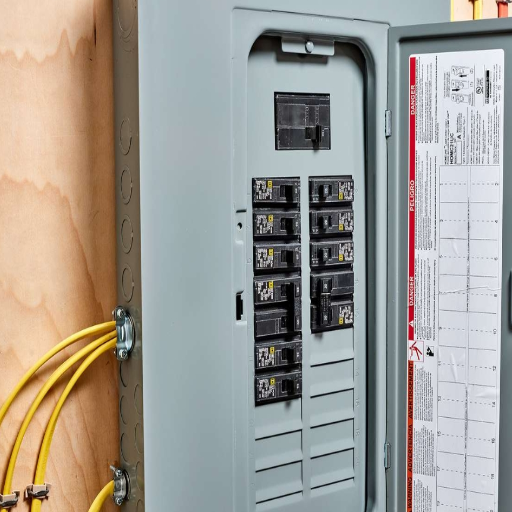
Their advantages lie in the main circuit breaker panels, which enable all power to be shut off from a single point. This allows the implementation of far more comprehensive safety measures during emergencies. They, however, tend to be more expensive and are not a must for secondary systems. However, main lug panels are considered much more affordable, making them easy to put into use, particularly when used as subpanels or to distribute power to separate structures. Of course, the lack of a central switch is a disadvantage when considering main lug panels since power control is less centralized, and some would argue that it is less safe due to this. The final decision is all dependent on the specific requirements and safety issues of the application.
Advantages of Main Lug Panels
Being particularly beneficial when simplicity, cost efficiency, and flexibility are key, main lug panels offer a range of advantages. Being among the more affordable options compared to main breaker panels, they qualify for projects with cost constraints. Their simplicity allows them to be used as subpanels, distributing power from a primary panel to other locations or structures with minimal complexity.
Another advantage is the ease of installation. Being lighter and more compact, the main lug panels require less effort and time to set up. These panels, which are versatile enough to accommodate a wide range of applications, from residential to commercial areas, are flexible enough to meet different circuit needs. Due to the absence of a central breaker, main lug panels are suitable for secondary systems where a main switch is not required. Therefore, they are an excellent option to feed additional electrical circuits to detached garages, workshops, or outdoor zones.
Moreover, contemporary main lug panels are designed to meet high safety and quality standards and often come with features such as dead-front covers, which provide additional safety by safeguarding users from electrical components. Several manufacturers offer panels that conform to the National Electrical Code (NEC), featuring spaces for a specified number of circuits, making it easier and more convenient to select the right one. For example, main lug panels come in configurations ranging from as few as four circuits to 42 circuits, allowing for custom solutions to meet a multitude of power demands. Therefore, the flexibility will enable them to be scaled up or down to the extent required by an application, in response to diverse electrical distribution requirements.
Disadvantages of Main Lug Panels
While main lug panels offer flexibility and scalability, there are significant disadvantages that users should consider. One of these is definitely: no main breaker, the panel is instead disconnected via some upstream breaker or external device. From a maintenance perspective, this poses safety concerns, as the entire panel cannot be de-energized directly from the unit itself.
Another issue arises in terms of cost efficiency in bigger applications. For larger electrical systems, the absence of a breaker within may also necessitate the consideration of additional components, resulting in higher installation costs and increased complications. Also, main lug panels can prove to be inconvenient for emergency power shutoff in comparison to main breaker panels, which offer an easy means to disconnect.”
Additional data highlights that maintenance and troubleshooting may take longer due to the decentralized power control. For instance, in industrial settings with multiple main lug panels, finding and isolating faults can be time-consuming when there are no centralized controls. Lastly, while these panels are versatile, they may not always be the best solution in residential situations, where simplicity and ease of use take precedence over scalability.
These considerations highlight the importance of evaluating specific electrical requirements before selecting main lug panels for the project.
Advantages of Main Breaker Panels
Main breaker panels offer their own set of advantages, making them particularly suitable for both residential and commercial electrical setups. Chief among these is the presence of a breaker switch incorporated within the panel itself, allowing for easy switching off of the entire electrical system. Thus, it serves as a pivotal control point, primarily a safety feature used in emergencies when swift disconnection of power for the entire building may become crucial.
These panels strictly conform to the modern set of electrical standards and safety regulations. They come equipped with circuit protection against electrical hazards through the use of arc fault circuit interrupters (AFCIs) and ground fault circuit interrupters (GFCIs), which help prevent electrocution or, worse, an electrical fire. Evidence from electrical safety studies suggests a 50% reduction in electrical fires in homes with the installation of just AFCIs.
Furthermore, these panels offer circuit capacity, allowing for future load expansion. This renders them increasingly usable for ever-expanding electrical loads, for example, the erection of charging stations for electric vehicles or renewable energy systems. Electric vehicle sales are projected to increase by 27 percent annually, underscoring the need for flexible electrical systems. This type of panel design tends to be intuitive, reducing downtime in the event of faults due to simpler maintenance and troubleshooting.
Most importantly, a main breaker panel is highly regarded as a solution for electric distribution management in both homes and commercial areas, striking a balance between sound safety features, ease of use, and future-proofing capabilities, making it a preferred contender for long-term electrical system management.
Disadvantages of Main Breaker Panels
Although they certainly have their perks, main breaker panels also come with certain disadvantages. They are, for one, an expensive initial investment, more than simpler systems. This was mainly due to the need for advanced components and wiring. This, in turn, affects the demand for such panels for smaller-scale or budget projects. The larger the main breaker panel, the more demanding its installation often is, and the need for professional help can hence result. Another drawback of a main breaker panel is that, in some configurations, the momentary time required to troubleshoot is increased due to the centralized form of the panel when attempting to isolate a specific fault. Finally, since properties with plans for far-reaching expansions in the future may have their main breaker panel capacity limited, cost-intensive system upgrades may be needed.
Safety and Code Compliance Considerations
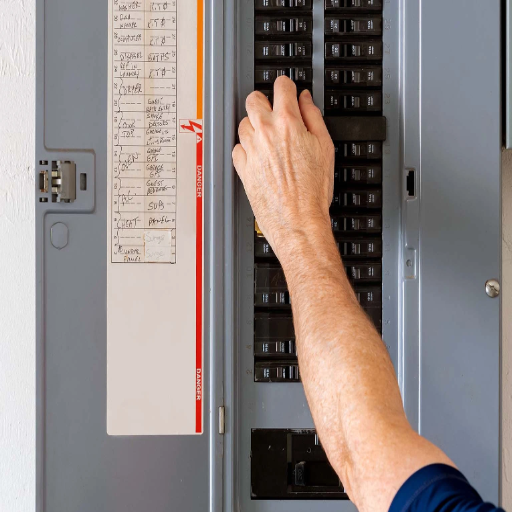
Safety and code compliance should be top priorities when working with a main breaker panel. Always follow the National Electrical Code (NEC) guidelines, as they are primarily designed to minimize the risk of electrical hazards. Ensure these installations are inspected regularly by a licensed electrician and maintained in good condition. Also, ensure the panel amperage matches the actual electrical requirements of the building to prevent overloading the current. Use only approved components of satisfactory quality, as poor-quality components compromise safety. Always turn off the main power to the panel before starting any maintenance or remodeling activity to avoid electric shocks or other accidents.
Understanding Safety Standards
Safety rules must be followed to protect human life and ensure that the electrical systems remain intact. Before and henceforth meeting the updated industry rules, electrical panels must meet NEC requirements to prevent hazards such as fires and shocks. For instance, to put this into perspective, house fires caused by electrical faults rank second, accounting for over 30,000 cases in the U.S. per year. Grounding and bonding must, therefore, be done appropriately to provide a deterrent against these hazards, ensuring that electric current flows safely and minimizing the possibility of electrocution.
Additionally, the codes require the use of GFCIs in damp areas, such as bathrooms and kitchens, to significantly reduce electrical hazards. Many jurisdictions have also mandated circuit interrupter devices such as AFCIs to detect and suppress arc faults that may develop into fires. Knowing the requirements during periodic inspections enables the property owner to prioritize safety and comply with evolving standards.
Code Compliance for Main Lug and Main Breaker Panels
Regarding code compliance for central lug and main breaker panels, it is essential to consider the rules outlined in the National Electrical Code (NEC) and any local amendments. Main lug panels do not have a main disconnect, and they commonly serve as sub-panels downstream of a main breaker panel. In compliance with the NEC, an upstream breaker or disconnect must protect the power feeding these panels and must be rated at the proper amperage. Regarding main breaker panels, the NEC requires the presence and labeling of a main disconnect, allowing the system to be de-energized quickly in emergencies.
Both panel types require proper installation, as specified in Article 408 of the NEC, which outlines requirements for circuit breaker arrangement, panel labeling, and protection against overloading. Adequate bonding and grounding shall also be ensured, as outlined in Article 250, to protect oneself from electrical hazards. Other restrictions may be in effect in local jurisdictions; therefore, the installer should verify local code requirements to ensure full compliance with all applicable regulations. Regular inspections, along with adherence to manufacturer specifications, are crucial for ensuring safety and optimal functionality.
Best Practices for Installation
Understand Local Codes and Standards: A check shall be made of all applicable local and national codes, including the NEC, before commencing any installation project. Regulations may vary from one jurisdiction to another; therefore, it is wise to comply with both federal and local codes to avoid infractions and incurring higher costs.
Plan for Proper Layout and Circuit Design: The electrical layout shall be designed to accommodate future expansion without overloading any circuits. Proper priority shall be given to arranging breakers so that loads are balanced; also, conductors must be labeled appropriately for ease of identification during inspections or maintenance.
Provide for Proper Grounding and Bonding: Proper grounding and bonding will protect humans from hazards such as electric shock or fire. They shall be performed in accordance with the specifications of NEC Article 250, and superior-quality materials that meet the code specifications shall be used to provide a safe and reliable grounding system.
Follow Manufacturer Instructions: Usually, observe the installer’s instructions for the components and systems. As such, any single piece of equipment should operate within its intended working parameters, and the warranties on all components should be valid.
Perform Thorough Inspections: Test and inspect all connections, panels, and circuits after installation to ensure safety and performance standards are met. Identify problems and make necessary corrections before completing the project.
Suppose these can be considered the best procedures for the installers. In that case, all installations should be safe, efficient, and fully compliant with code, guaranteeing their immediate as well as future use.
Converting a Main Lug Panel to a Main Breaker
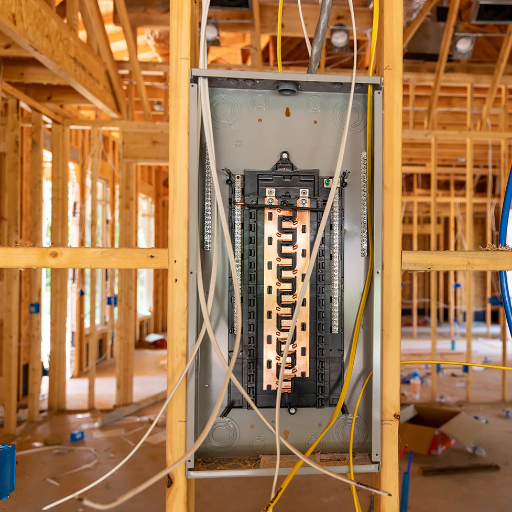
Converting a main lug panel to a main breaker is a relatively straightforward procedure; however, it must be done correctly for both safety and compliance reasons. The following steps outline the process in a nutshell:
Get a Correct Main Breaker Kit: The main breaker conversion kit must be compatible with your panel model. Compatibility is very, very important.
Turn Off Power at the Main Source: Before performing the conversion, ensure the power is turned off at the primary source to prevent any electrical accidents.
Remove the Main Lug Connection: Carefully remove the main lugs from inside the panel to create space for the breaker.
Install the Main Breaker: Securely install the new main breaker within the panel, carefully following the manufacturer’s instructions to ensure it aligns with the bus bars.
Connect the Incoming Wires to the Breaker: Attach the incoming service wires to the terminals of the new main breaker and recheck to ensure all connections are tight and secure.
Restore Power and Test: After the conversion is complete, restore power and test the system to ensure the breaker operates correctly.
Following these steps allows you to successfully convert a main lug panel to a main breaker by accepted safety and operational standards. Always refer to the manufacturer’s instructions, as well as local electrical codes, during this process.
Steps to Convert a Main Lug Panel
Understand the Difference Between a Main Lug and a Main Breaker Panel: A main lug panel is usually utilized as a subpanel. It does not have a main disconnect; therefore, power flows directly into the bus bars within the panel. A main breaker panel, however, will have a built-in main disconnect to cut power to all circuits downstream.
Gather Necessary Tools and Materials: Converting a main lug panel into a main breaker panel requires specific tools and materials, including a main breaker kit compatible with the existing panel, screwdrivers, wire strippers, insulated gloves, and a voltage tester. The main breaker kit’s brand and model should match those of your existing panel.
De-energize the Panel and Confirm it is Safe to Work On: At the outset, switch off the electricity supply at the main service disconnect. Then, use a voltage tester to verify that there is no current flow within the panel. Safety first; always equip yourself with protective gear and exercise extreme caution.
Remove the Cover Panel: Remove the cover to give access to the wiring and bus bars inside. This will be particularly helpful during the conversion process and in future references.
Install the Main Breaker Kit: Follow the manufacturer’s instructions to insert the breaker into the slot for the main breaker in the panel, ensuring the breaker terminals align with the panel bus bars. Most kits come with a diagram to be followed for proper installation.
Connect the Incoming Wires: Connect the service wires (also known as “hot wires”) to the newly installed main breaker. The black and red wires usually connect to the breaker terminals, while the ground and neutral wires will connect to their respective bars. Always check wire gauges and verify they are rated according to code for the given current capacity.
Tighten Its Connection and Check Installation: Inspect every connection to verify that it is tight and secure. Loose or poorly connected wires can cause overheating or electrical problems. Ensure that you double-check the manufacturer’s specifications before restoring power.
Restore Power and Test the System: After everything is installed correctly, restore power by switching the main service disconnect to the “on” position. Test the new main breaker for proper functionality, as it should. If the installation is successful, it will provide correct power to all downstream circuits.
When to Consider Conversion
Several important factors influence the decision to convert an electrical panel or replace the main breaker. One of the primary reasons for conversion is updating outdated wiring systems to meet current energy needs. Older panels are typically rated for 60-100 amps and were not designed to accommodate modern appliances and devices that require more power. Statistics indicate that newer homes generally require a panel of at least 200 amps to provide sufficient power for HVAC systems, kitchen appliances, and electronic devices.
One more distinct reason for a conversion occurs if frequent tripping of breakers or faults is experienced; the overloaded panel or, for instance, aging components may be the cause. If your breaker panel is exhibiting signs of damage, corrosion, or excessive heat, it might be time for an upgrade to promote safety in your home. Suppose you are renovating your home and creating a home office, setting up electric vehicle charging stations, or installing a solar power system. In that case, you may need to upgrade or convert the panels to deal with the increased electrical load.
Finally, the industry generally recommends replacing panels that are more than 25 years old, as they may not comply with modern safety standards or support current technology. It is, therefore, essential to make sure that your breaker panel is up to code, capable of serving your household’s specific energy needs, and able to maintain a safe and efficient electrical system.
Choosing the Right Panel for Your Circuit Needs

Here are some of the critical factors you should consider when choosing the proper panel for your circuit needs:
Capacity: Choose a panel with sufficient capacity to meet both your current and future electrical needs. Residential panels generally range from 100 amps to 200 amps, with 200 amps being a popular choice for modern homes.
Compatibility: Consider the compatibility of the panel when used with the existing electrical system, as well as for additional circuits or devices you plan to install, such as an EV charger or a solar system.
Safety Standards: Always choose a panel that is compliant with the latest safety codes and standards, including panel breakers that protect against overloads and short circuits.
Expansion Options: If you anticipate adding circuits shortly, whether for home extensions or technology upgrades, choose a panel with free circuit spaces.
Working out these options with a licensed electrician will help you make the right choice for your home’s specific needs.
Assessing Your Electrical Load Requirements
When assessing your electrical load requirements, start by calculating your home’s total power demand. Create a list of the appliances, lighting, and other devices you use, along with their wattage. For heavy appliances, consider higher energy consumption, such as HVAC units, ovens, and water heaters. Plans for future expansions, such as additional rooms or upgraded systems, should also be included to ensure the capacity will meet those needs.
Next, calculate the amperage rating required for your panel. A 100-, 150-, or 200-amp panel is usually installed in most houses, depending on size and electrical demands. A modern home, equipped with energy-hungry gadgets and possibly even an electric vehicle, should have a 200-amp panel to prevent overloading.
Some areas have specific code and safety regulations, such as NEC code requirements for load calculations, ensuring that the application serves the interest of supporting a home’s needs. A licensed electrician can perform a load calculation, providing more precise insights into your home’s electrical setup.
Factors to Consider When Choosing
In choosing an electrical panel, I apply fundamental considerations. I first consider the present and future electrical needs of my home in connection with any planned renovations or new appliances. Then I inspect the panel’s capacity to ensure it can adequately carry the required load without tripping frequently. I guarantee that the panel meets current safety requirements, such as those outlined in the NEC. The final step involves engaging the services of a licensed electrician who will ascertain that the panel installed is safe and efficient for my particular home.
Reference Sources
Frequently Asked Questions (FAQs)
Main Lug vs Main Breaker: What Are the Key Differences?
The main differences between a central lug and a main breaker panel primarily revolve around how they manage incoming power and provide overcurrent protection. A main lug panel typically lacks a main breaker and connects directly to the service entrance, whereas a main breaker panel features a built-in circuit breaker that can shut off power to the entire panel. The choice between the two depends on specific load demands and safety requirements.
What Is a Load Center and How Does It Relate to Main Breaker Panels?
A load center is a type of electrical panel that distributes electricity throughout a building. It can be configured as a central lug or a main breaker panel. Main breaker panels typically include a main breaker that allows for the quick shut-off of power, providing a critical component for safety and code compliance in residential and commercial settings.
How Do I Convert a Main Lug Panel to a Main Breaker Panel?
To convert a main lug panel to a main breaker panel, you’ll need to add a main breaker to the existing load center. This process often involves replacing the panel or adding a piece that accommodates a breaker. It’s essential to follow local building codes and, if necessary, consult a licensed electrician to ensure safety and compliance.
What Role Does the Main Breaker Play in Overcurrent Protection?
The main breaker serves as an overcurrent protection device, interrupting the flow of electricity in the event of a fault current. This helps to prevent damage to electrical components and reduces the risk of fire hazards. By using a main breaker, homeowners can achieve enhanced safety for their entire system.
Can I Use Main Breaker Panels in Residential and Commercial Settings?
Yes, main breaker panels are commonly used in both residential and commercial electrical systems. They provide essential safety features, such as the ability to cut off power and protect branch circuits from overcurrent situations. Their design enables flexibility in managing a building’s power needs.
What Are the Pros and Cons of Main Lugs vs Main Breakers?
Main lugs have the advantage of simplicity and are often less expensive to install, but they lack a dedicated shut-off mechanism. Main breakers, on the other hand, provide comprehensive overcurrent protection and a quick means to shut off power, making them a safer choice in many situations. The decision will depend on specific electrical needs and safety preferences.
How Does a Main Breaker Allow for Safe Electricity Management?
A main breaker allows homeowners and building managers to manage electricity safely by providing a clear shut-off point for all power entering the load center. This feature is crucial when performing maintenance or in case of emergencies, as it ensures that power to the entire panel can be quickly cut off without disrupting individual branch circuits.
What Should I Consider When Choosing Between Main Lug and Main Breaker Panels?
When deciding between a central lug and a main breaker panel, consider factors such as your building’s load demands, safety and code compliance, and the need for overcurrent protection. Evaluate whether installing a main breaker is necessary, taking into account the electrical configuration and any future expansion plans for your electrical system.