


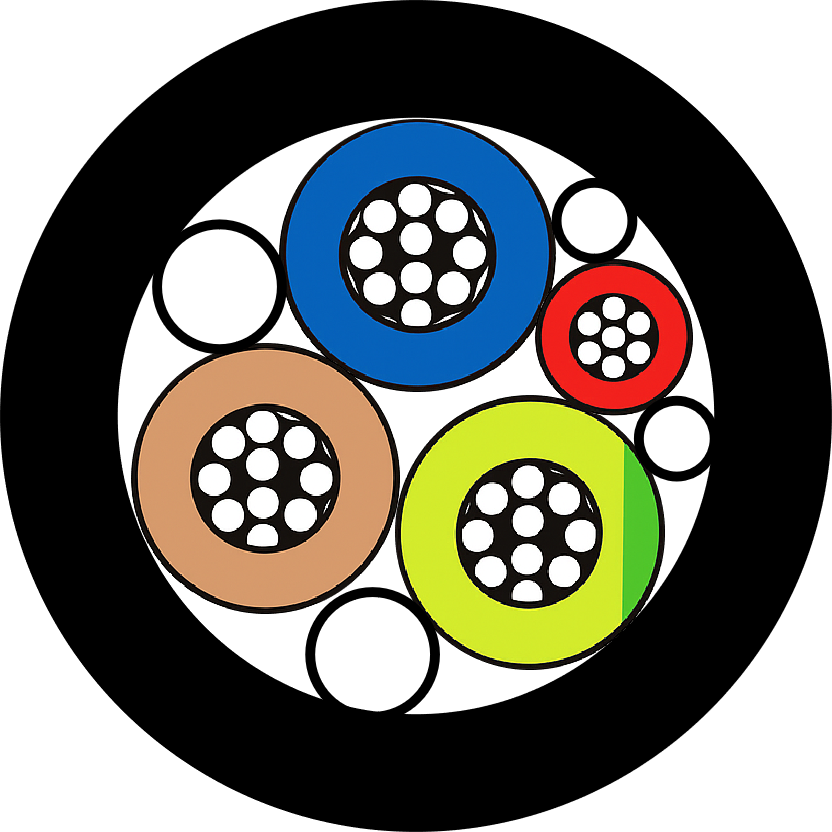





Introduction to Fiber Optics
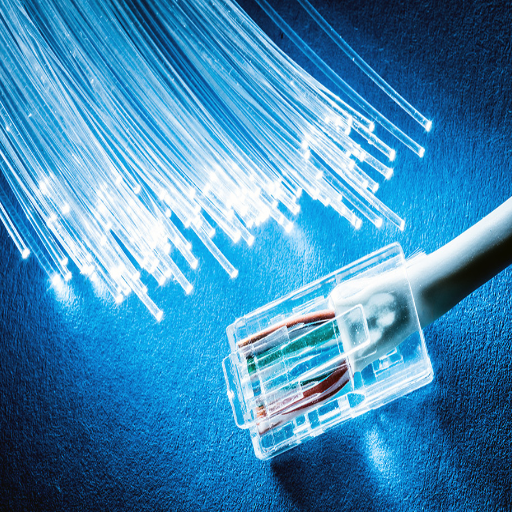
Fiber optics is a method of communication that employs very fine glass or plastic threads, known as optical fibers, to convey information by means of light signals. It is commonly recognized as a technology that is capable of supporting fast and far-reaching communications with very small signal loss. The main benefit of fiber optics technology is its enormous bandwidth, which enables the transmission of data at rates that are faster than those of copper conductors. Besides, fiber optics is not affected by electromagnetic interference and hence can be used in noisy environments. Fiber optics has become a necessary tool in telecommunications, medical imaging, and high-speed internet services, due to its reliability and efficiency in data transmission.
What is Fiber Optic Technology?
Fiber optic technology is able to send data by light pulses, which are then transmitted over wires made of glass or plastic that are usually thinner than a human hair. These fibers usually consist of three main layers- core, cladding, and coating- each having a particular role. The core is composed of either glass or plastic and acts as a medium for light signals to travel. The cladding, which is above the core, reflects light into the core, thus keeping losses to a minimum. Finally, the outer coating is there to protect the fiber from both physical and environmental factors.
Fiber optic data transmission is based on the principle of total internal reflection, whereby light is allowed to bounce inside the core and not escape outside. To put it simply, the wavelength of the modern fiber optic systems is either 850 nm, 1300 nm, or 1550 nm and thus giving an extraordinarily high data transfer capacity. In this regard, multimode fibers are used for the short-distance transmission of data while single-mode ones are meant for long-distance communication, which includes transcontinental and undersea data links.
The advancements in dense wavelength division multiplexing (DWDM) made it possible for one fiber to carry several data channels at the same time with speeds that exceed 100 terabits per second in laboratory conditions. This has the effect of highlighting the importance of fiber optics in accommodating the worldwide data traffic that is growing exponentially. Thus, the technology becomes the backbone of the cloud, 5G networks, and AI infrastructures.
Importance of Fiber Optic Cables
Fiber optic cables are the backbone of the modern telecoms world and are used widely because of many reasons, number one among them being the bandwidth that they can carry more than all other wires combined, low latency, and high reliability. Moreover, they have huge advantages over copper cables, and one of them is that they can carry signals even longer without losing much quality. For example, a single-mode fiber optic cable can carry signals as far as 40 kilometers or even more without any repeaters, hence being suitable for urban as well as remote applications.
The very thing that makes fiber optics critical is its ability to process large amounts of data. The cooperation of optical amplifiers and methods in the likes of dense wavelength division multiplexing (DWDM) is such that a single wire can now carry hundreds of terabits per second. Further developments have shown that experimental fiber connections may actually reach up to 1 petabit per second, thus confirming that researchers have gone even beyond in their efforts. This enormous capacity is a blessing also when it comes to large-scale data centers, video streaming services, and other future technologies like augmented and virtual reality that depend on heavy amounts of data.
Besides, fiber optics was found to be capable of disabling EMI and thus being in constant high performance in very noisy electric environments. This is a feature that all the signal integrity needing industries, such as aviation, manufacturing, and healthcare, can count on. Furthermore, it is a more secure medium of communication offered by fiber optics. Since the fibers do not emit signals and the interception requires physical tapping, they can be said to provide better security against listening in than copper wire systems.
The use of fiber optic cables is the main driving force behind fast networks like 5G being set up that require very good and ultra-fast systems for backhaul. There is already a worldwide launch of 5G, and the predicted smart cities and IoT ecosystems, all these will together make the demand for fiber optics go up massively. Presently, the market for fiber optics is expected to grow at a compound annual growth rate (CAGR) of over 10% for the next few years. This was the reason why companies are still trying to tap into the global communications infrastructure for the future.
How Fiber Optics Works
Fiber optics applies the basic physics of total internal reflection of light and thus very little data loss to transmit light signals over long distances. A fiber optic cable is composed of three primary components: the core, the cladding, and the buffer coating. The core is the part of the cable that is made of either glass or plastic and is the only pathway for the light signals. The cladding with a lower refractive index surrounds the core; as such, the light signals are prevented from escaping and taken back into the core through reflection. The outermost part of the bulk coating, protection against physical harm and environmental influences.
Fiber optics transmits data by first converting the information into light pulses with the aid of lasers or light-emitting diodes (LEDs). The light signals then propagate through the core of the fiber, bouncing off the cladding through total internal reflection. A detector that converts the light back into electrical signals, then reads the data transmitted through the device at the receiving end.
Nothing compares to the performance of fiber optic cables that present the bandwidths of 100 Terabits per second (Tbps) in the so-called advanced systems. It follows that such a performance opens the way for them to be the main support of high-speed broadband networks, data centers, and cloud-based services. Not only that, but fiber optic also has shown great vulnerability to attenuation, with single-mode fibers having loss rates as low as 0.2 dB per kilometer, thus making the uninterrupted data transmission possible over distances of 100 kilometers without the need for repeaters.
The new technologies are getting more and more fiber-optic efficiency. For example, new core fibers and multi-mode fibers are in the pipeline to increase the capacity of data-carrying further on the side of innovations, such as the use of optical amplifiers that change the distance of transmission. These developments indeed confirm that fiber optics is the spine of global telecommunications, keeping pace with the ever-growing demand for data in our connected world.
Types of Optical Fiber Cables
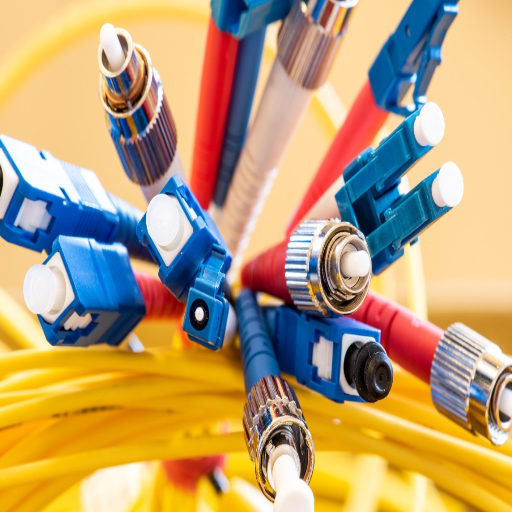
Optical fiber cables can be categorized into two main types:
Single-Mode Fiber: A single-mode fiber is constructed for long-distance data transmission. It consists of a small core, roughly 9 micrometers in diameter, which reduces light dispersion and permits the transmission of high-bandwidth and long-range communication data effectively.
Multi-Mode Fiber: On the contrary, this fiber has a larger core (ranging from 50 to 62.5 micrometers), which can support the passage of several light modes at once. It is mostly adopted for short-distance communication and local area networks (LANs) because of the high signal attenuation that occurs over long distances.
Both of them are indispensable in the field of telecommunications, though their applications depend on the distance and bandwidth requirements.
Single-Mode Fiber
Single-Mode Fiber
Single-mode fiber optics is meant to transport light straight through its tiny core, which is usually around 8 to 10 micrometers in diameter. Such a format permits only one light mode to go through; thus, modal dispersion is greatly minimized. As a result, single-mode fiber is excellent for long-distance communications and high-bandwidth applications such as metropolitan-area networks (MANs) and telecom system backbone connections. It makes use of laser light sources to realize efficient data transmission over distances of more than 100 kilometers with very little signal loss. Single-mode fiber is also known for its stringent alignment requirements, which help to diminish interference and improve signal quality; hence, it is a necessary part of modern optical communication networks.
Multimode Fiber
Multimode Fiber
Multimode fiber is a special kind of optical fiber that can transmit several light modes at once; it has a much larger core diameter compared to single-mode fiber, which usually ranges from 50 to 62.5 microns. It is this type of construction that allows for the generation of different light paths or modes to propagate, but on the other hand, it brings about the drawback of modal dispersion, which thus limits the fiber’s performance over long distances. By its nature, multimode fiber is a short to medium-range application like about 550 meters, and it is used in local area networks (LANs), data centers, and intra-building connections because of its low cost and the easy process of fiber termination, which is non-requisite for this fiber type. The multimode fiber types most widely used are OM1 to OM5, where OM4 and OM5 are the new variants that have been developed to offer higher bandwidth and compatibility with wavelength division multiplexing (WDM). The operation of the fiber is primarily done with light sources such as light-emitting diodes (LEDs) or vertical-cavity surface-emitting lasers (VCSELs), thus making the whole operation efficient in transmitting high-speed data over shorter distances.
Comparison of Single-Mode and Multimode Fiber
The two main types of optical fibers are single-mode and multimode fiber, each one tailored to specific applications and performance criteria. Single-mode fiber has a core diameter of only about 8 to 10 microns, which is much smaller than that of multimode fiber, whose core diameter is commonly 50 or 62.5 microns. The core-size difference has a direct impact on the light propagation through the fiber, where the single-mode fiber allows only one mode of propagation, and the multimode fiber permits the existence of several modes of propagation at the same time.
Single-mode fiber, with its design optimized for long-distance and high-data-rate transmission. It can go more than 40 kilometers in distance without any significant signal loss if it is used with the right type of transceivers, namely, dense wavelength division multiplexing (DWDM). In contrast, multimode fiber’s maximum transmission distance is within 550 meters for OM4 and 150 meters for OM5 at a 100 Gbps data rate, depending on the light source and receiver technology used. The excess modal dispersion in the case of multimode fiber limits its applicability over longer distances.
On the financial side, the cost of deploying multimode fiber is generally less because of the use of cheaper VCSEL light sources in multimode systems. However, single-mode fiber is still the only option for the most demanding high-speed applications since it can handle transmission rates as high as terabits because of its excellent scalability. Furthermore, the connector cleaning and splicing for single-mode fiber installation is a delicate and time-consuming job, which is one of the reasons why this fiber type is generally more difficult and expensive to maintain.
The gap between the performance of multimode and single-mode fibers has been narrowed down by the introduction of newer technology in fiber optic cables. The latest multimode fibers, like OM5, can accommodate wideband multimode fiber (WBMMF) operation, which means that the new technology can actually apply several wavelengths to get high data rates. Still, single-mode fiber continues to be the telecommunications, data centers, and metro network standard where low latency and long distances are the key factors.
In the end, the choice of the right kind of fiber depends on the needs of the specific application, the budget, and the possibility of future upgrades. Each fiber type plays an integral part in the optical communication infrastructure of the modern world, where single-mode is the winner of long-haul and high-capacity networks, and multimode is the choice of cost-effective short-range deployments.
| Feature | Single-Mode Fiber | Multimode Fiber |
|---|---|---|
| Core Diameter | 8-10 micrometers | 50-62.5 micrometers |
| Light Propagation | Single mode | Multiple modes |
| Transmission Distance | 40+ kilometers | Up to 550 meters |
| Light Source | Laser | LED or VCSEL |
| Cost | Higher installation/maintenance | Lower deployment cost |
| Applications | Long-distance, telecom, metro networks | LANs, data centers, short-range |
| Bandwidth | Very high (terabits) | High (limited by distance) |
Cable Types and Their Applications
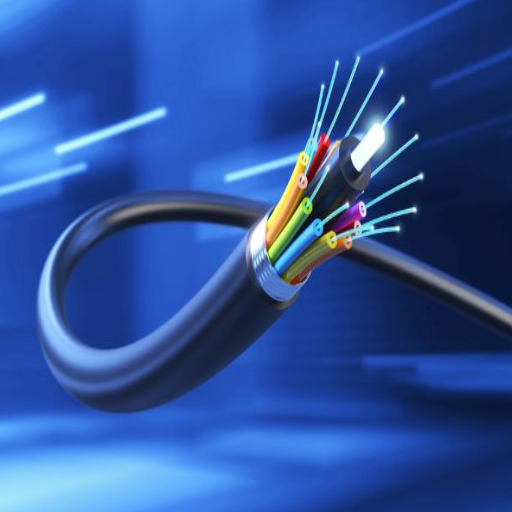
Single-Mode Fiber (SMF)
It is mostly adopted in telecommunications and data centers where signal transmission needs to cover large distances and bandwidth has to be very high. Its characteristic of long-distance signal transmission with low picoblade loss makes it an indispensable part of large-scale metro network deployment.
Multimode Fiber (MMF)
It is the best solution for short-range communication, typically within a LAN (Local Area Network) or enterprise network. Besides, the installation cost and time are reduced, making it very appealing for applications where distance is not a priority.
Loose-Tube Cables
These are the outdoor fiber cables that will survive in the most hostile of conditions. Used primarily underground or in aerial deployments, the loose tubes provide maximum protection against water and other environmental factors.
Tight-Buffered Cables
Widely used in indoor optical cable applications. These cables are easy to handle and terminate, which makes them right for use in interconnections between buildings and devices, and even for direct connections.
Different Types of Fiber Optic Cables
Different types of fiber optic cables come according to their design, usage, and the conditions of the environment. Below is a brief list of the most common types:
Loose-Tube Fiber Optic Cables
Loose-tube cables are used in outdoor installations where the area is very harsh. The fibers are put in small plastic tubes, and sometimes these tubes are filled with gel or water-resistant materials, thus giving extra protection against moisture and extreme temperatures. These cables are great for aerial, underground, and direct-burial uses, and therefore, suitable for long-distance data transfer even in difficult places.
Tight-Buffered Fiber Optic Cables
Tight-buffered cables are mostly for indoor areas where the factors of flexibility, durability, and ease of installation are highly stressed. Each fiber receives a coating of buffer material, which makes it mechanically stronger and termination easier. These cables are commonly used in local area networks (LANs), server rooms, and building interconnections between floors.
Armored Fiber Optic Cables
Armored cables with a tough metal or polymer sheath give superior protection against mechanical impact, mice, and rough weather. They are multi-functional and can be used for both indoor and outdoor installations, including ducts and direct burial.
Ribbon Fiber Optic Cables
Ribbon cables are made up of several fibers that are aligned in flat strips, facilitating high-density installation and quick splicing. Data centers, fiber-optic telecommunication, and big network infrastructures are the main areas of their utilization.
Simplex and Duplex Fiber Optic Cables
Simplex cables hold one optical fiber only and are meant for point-to-point communication, while duplex cables hold two fibers to allow simultaneous bi-directional transmission. Fiber-to-the-desk and networking equipment connections are some of the application areas where duplex cable solutions can be found.
Each type of fiber optic cable is developed specifically for both performance demands and environmental challenges to ensure data transmission is at its best and systems are reliable in both normal and tough situations. The right choice is the road to long-term operational success.
Outdoor Fiber Cable vs. Indoor Fiber Cable
Outdoor Fiber Cable
Outdoor fiber optic cables are made with special features that allow them to survive even the most extreme weather conditions and still work perfectly. To achieve this, these cables are usually provided with coatings that are resistant to UV rays, waterproof, and tolerant to temperature, which together will stop the damage caused by sunlight, moisture, and severe weather from taking place. Furthermore, they might contain armor or loose-tube construction to guard against heavy impacts, rodent bites, and even mechanical wear. Outdoor cables are frequently found in backbone installations, underground setups, and aerial applications where the ability to withstand harsh environments is a must.
Indoor Fiber Cable
Compared to outdoor fiber optic cables, indoor ones are safe and much less problematic when it comes to fires, emissions, and fume control because these requirements are indoor ones and comply with building codes like OFNR (Optical Fiber Non-Conductive Riser) and OFNP (Optical Fiber Non-Conductive Plenum) ratings. These cables are usually a lot lighter, more flexible, and easier to install in narrow spaces like inside walls, ducts, and ceilings. In contrast to outdoor cables that are built to endure the elements, indoor cables are for indoor areas only, and their use is limited to connections in network data centers or office environments.
The selection of outdoor or indoor fiber optic cables is determined by the environment of the installation as well as the specific requirements of the application. If the installation point comes with a change from indoor to outdoor, then hybrid cables or proper sealing methods should be applied to ensure the maintenance of the compliance, performance, and safety standards.
Applications of Optical Fiber in Various Industries
Optical fiber technology has become a necessity in various industries because of its efficiency that cannot be surpassed in data transmission and connectivity. The following are some applications worth mentioning:
Telecommunications
Optical fiber is the foundation of contemporary telecommunications, which allows for the fast and efficient transfer of huge amounts of data over great distances with very little signal loss. It is the backbone of the internet, telephone, and cable TV networks.
Healthcare
In the healthcare field, optical fibers are part and parcel of medical imaging apparatus like endoscopes, thus making possible the operations that are less invasive. Besides, they are applied in the area of biomedical sensors where they monitor the patient’s physiological condition in real time.
Industrial Automation
The different sectors of industry depend on the use of optical fibers for monitoring and data transfer that are automation systems. Moreover, their ability to withstand electromagnetic interference gives them the quality of being suitable for factory environments where there is a lot of electrical noise.
Aerospace and Defense
In critical aerospace and defense applications, optical fibers provide reliable and secure communication. They are used for navigation systems, missile guidance, and secure data transmission because of their lightweight nature and immunity to electromagnetic interference.
Energy and Utilities
Monitoring systems, fault detection, and large-scale communication in energy infrastructures are the main functions for which optical fiber is used in power grids and utility networks that are of growing importance.
The examples cited above highlight the many different uses and the significance of optical fiber in the promotion of efficiency, accuracy, and connectivity in various sectors.
Fiber Connectors and Components
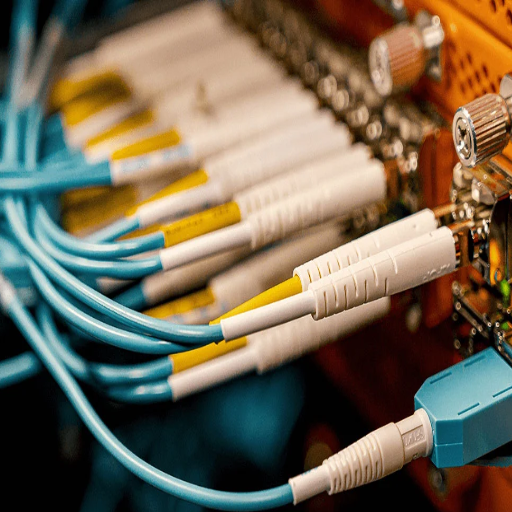
The transmission of optical signals is always efficient and reliable due to the use of fiber connectors and components. Optical fibers are connected through connectors of SC, LC, and ST types with very little loss in signal quality, and thus, high transmission quality is preserved. Among the key components, ferrules, alignment sleeves, and adapter housings are the ones whose accurate positioning of the fibers and strong physical connections are assured. The proper selection and maintenance of these components are crucial to prevent performance degradation and to prolong the life of the fiber networks.
Understanding Fiber Connectors
Types of Fiber Connectors and Their Applications
Fiber connectors are divided into various types, and among them, SC (Subscriber Connector), LC (Lucent Connector), and ST (Straight Tip) are the ones that are most widely used. Each connector type caters to its own specific application. The SC connectors, which have a pull-push design and are very durable, are mostly favored in data communications and telecommunications for their durability and convenience. The LC connectors, which are of smaller dimensions and have a locking mechanism, are especially preferred in high-density applications such as data centers. The ST connectors, which have a bayonet-style coupling, find their use in long-range networks and industrial environments that demand tough and reliable connections.
Critical Factors for Selecting Fiber Connectors
While determining fiber connectors, it becomes very important to evaluate a few factors in order to enhance the performance. The factors to consider include the type of fiber (whether it is single-mode or multi-mode), the parameters like insertion loss, return loss, and also the compatibility of the connector with the existing system. To maintain the quality of the signal, it is necessary to have low insertion loss, while high return loss will make sure that only a small amount of light is reflected, thus gradually improving the system’s reliability. The decision of which type of connector to use can have a substantial impact on the efficiency and scalability of the fiber network. Handling of the connectors and their regular cleaning are equally important in maintaining the quality of the signal transmission and in prolonging the operational life of the network.
Types of Fiber Connectors Used in Fiber Optics
Fiber optic connectors come in different varieties, each catering to a particular set of networking needs, site configurations, and performance expectations. The widely used connectors include SC, LC, ST, and MTP/MPO.
SC (Subscriber Connector)
Characterized by its square design and push-pull mechanism, the SC connector has gained popularity because of its dependable performance in both datacom and telecom settings. It offers low insertion loss along with a snap-in design that is easy and safe to use.
LC (Lucent Connector)
A small connector is widely used in dense applications, characterized by a latch mechanism that provides very precise alignment for both single-mode and multimode fibers, thus making it suitable for the present-day fiber networks.
ST (Straight Tip)
ST connector features a round, bayonet-style design that facilitates easy installation and removal. Its primary application area is multimodal networks like LAN and CCTV systems, although its use has lessened with the advent of new technologies.
MTP/MPO
These multi-fiber connectors combine several optical fibers into a single ferrule, enabling very fast, very dense data center applications. They are essential for network backbone infrastructures such as 40G/100G systems.
Performance optimization is the main goal of each connector type, achieved through the reduction of reflection, physical stability, and signal loss, thereby making them indispensable for the efficiency and reliability of fiber optics systems. The selection of connectors as per application-specific requirements is crucial to network performance optimization.
Choosing the Right Connector for Your Application
The choice of the correct fiber optic connector is primarily based on the characteristics of the application, the necessary performance, and the compatibility of the system. LC connectors are often the go-to option for high-speed data transfer in tight spots because they are small, and they also perform really well. Thanks to their easy installation and ruggedness, SC connectors, which have a push-pull mechanism, are extensively used in data centers and telecom mainly due to these reasons. Certain fiber optic connectors, like MTP/MPO, are made specifically for use in high-density applications such as 40G/100G networks, which will lead to reduced insertion loss and effective multi-fiber connectivity as well.
Moreover, the types of connector end-faces should also be observed. Where low back reflection is of utmost importance, those connectors requiring minimal light reflection (APC – Angled Physical Contact) are ideal. On the other hand, UPC (Ultra Physical Contact) connectors are appropriate for digital systems where transmission loss is to be minimized, but very low reflection is not required. In the end, being well-acquainted with your network’s specific requirements guarantees the choice of a connector that will work on efficiency, optical loss, and reliability in the long run.
Future Trends in Fiber Optic Technology
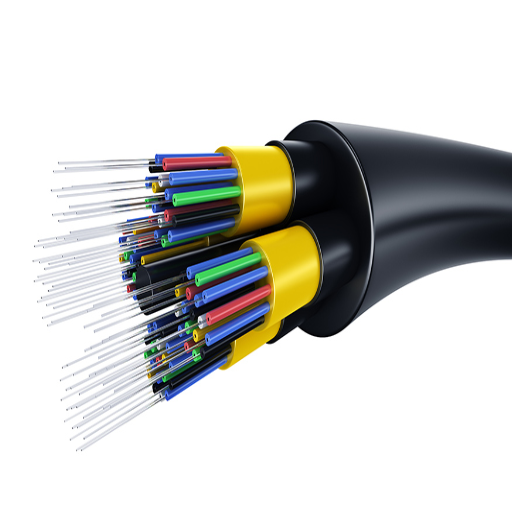
The requirements for quicker data transfer and larger network capacity are the main factors influencing the future of fiber optic technology. One of the most recent innovations is the introduction of multi-core fibers capable of carrying several signals at the same time through the same fiber, which will ultimately lead to more efficient use of the bandwidth. Moreover, the development of Wavelength-division multiplexing (WDM) techniques has paved the way for the data rates to go up by the enhanced use of the wavelengths, depending on their availability. The advent of AI and machine learning is also helping to improve performance in network management and support of predictive maintenance. With these advances and 5G and beyond networks going on, the role of fiber optics as a fundamental element in the communication infrastructure of the future is sure to become even more important.
Advancements in Fiber Optic Cables
The latest progress in fiber optic cable technology has made a great impact on the performance and durability of the cables as well as on the data transmission. The innovations in the bend-insensitive fibers have allowed the cables to be more flexible, thus the cables can still work well even when tightly twisted, which is very important in urban areas and indoor installations. The introduction of hollow-core fibers is becoming more and more popular. These cables are made with air-filled cores instead of solid glass; hence, the process of latency is reduced, and the signal loss during long-distance transmission is also reduced. Also, the use of ultra-low-loss glass as a new material has made it possible to transmit signals over long distances without using repeaters. Manufacturers are also looking at high-density cable designs, which can hold more fibers in a smaller cross-section, and this is in line with the increase in demand for bandwidth. All these advancements together help fiber optics to fulfill the ever-growing demands of modern telecommunication networks. Such demand is from 5G, IoT, and cloud computing, which are the new technologies that need scalable solutions.
Emerging Applications of Fiber Optics
Fiber optics is already integral in the development of new technologies. Their application is massively growing in the field of 5G networks, where ultra-low latency and high data throughput are the main requirements that lead to innovations. I also consider that they are a prerequisite for the Internet of Things; by connecting all the devices directly and without any interruption, they are providing support for trillions of devices. Besides, fiber optics is changing cloud computing by offering the infrastructure required for very fast and very large data transactions. These and other applications testify that there is no coming back: fiber optics is literally the mainstay of modern technology.
The Role of Fiber Optics in 5G Technology
Fiber optics is fundamental in supporting 5G technology deployment and performance, as it forms the basic infrastructure that provides ultra-fast speeds and low latency. 5G networks necessitate small cells, which are closely packed, to ensure coverage with high-capacity and quality over a wide area. The small cells’ infrastructure needs a strong backhaul solution, and thus, fiber optics becomes the perfect choice because it can carry huge amounts of information without any loss of signal, which is minimal, in fact. Moreover, the high-frequency spectrum utilized in 5G, like millimeter-wave, requires a very efficient bandwidth handling, which is another plus for fiber. Fiber optics not only connects but also links 5G base stations, edge computing nodes, and centralized data centers across the network, thus allowing for high-speed data processing and real-time connectivity that a 5G system can offer. This fusion highlights the fact that fiber optics is still a necessity if one wants to tap into the full technological capability of 5G.
Reference Sources
Frequently Asked Questions (FAQs)
What are the various kinds of fiber optic cable?
Fiber optic cables are most commonly categorized into two main types: single-mode and multimode fiber. Among the two, fiber is categorized as single-mode if it is primarily used for long-distance communication. Its core diameter is extremely small (around 9 microns), and thus only one light path is allowed within the core, resulting in minimal signal loss. The opposite is true for multimode fiber, which has a larger core (50 microns and above) and is used for short-distance communication. This type of fiber allows several modes of light to travel simultaneously, which may lead to modal dispersion.
What distinguishes single-mode fiber from multimode fiber?
Core size and optical transmission technique are the primary factors that separate single-mode fibers from multimode fibers. The core size of a single-mode fiber is around 8 to 10 microns in diameter, allowing only one light mode to propagate, which consequently results in higher bandwidth and longer distances. Conversely, the core diameter of a multimode fiber is 50 or 62.5 microns, which supports multiple light paths, but not over the distance due to modal dispersion, which is the cause of signal deterioration.
What are the uses of optical fiber?
The use of optical fiber is spread over a wide range of applications, such as telecommunications, medical equipment, industrial networks, and internet connectivity. It is particularly beneficial for high-bandwidth applications such as fiber to the home (FTTH) and fiber to the node (FTTN), which need to transmit huge amounts of data quickly and efficiently over long distances.
What are the properties of single-mode fiber?
Single-mode fibers provide really low loss and high throughput, among other beneficial characteristics. The light completely avoids the edges of the fiber because it is in a straight direction, and this results in a significant data rate increase and distance expansion. These attributes make a single-mode fiber the right choice for long-distance telecommunications.
What are the elements used to produce fiber optic cables?
Fiber optic cables are essentially composed of either glass or plastic optical fibers. Among the two, glass fiber is preferred due to its greater transmission property and lower loss, while plastic optical fibers are chosen for applications that prioritize flexibility and easy installation. Besides the fibers, there are also protective materials that are usually used as the outer layer to protect the cables from environmental damage.
How do you ensure the safety of the cable in outdoor applications?
In the outdoors, protective means like a cable jacket are employed; this is usually a strong one that can endure the elements, including moisture, UV rays, and physical impact. Besides, having water-blocking as a material and a reinforced sheath around it may be an outdoor fiber cable feature to prevent damage caused by environmental factors.
What type of fiber optic connectors are available?
Optical fiber systems incorporate various connector types like LC, SC, ST, and MTP/MPO connectors, among others. Each of these connectors is distinguished by properties that make them suitable for certain applications while ensuring the signal sent is strong, and the process of connecting and disconnecting is easy in the optical fiber networks.
What is the velocity of light in fiber optic cables?
In fiber optic cables, light travels at a velocity that is roughly one-third of its speed in a vacuum as a consequence of the fiber material’s refractive index. Depending on the fiber type and core makeup, this speed can vary, but typically it is around 60% to 70% of the speed of light in a vacuum.
What are the advantages of single-mode optical fiber for long-distance communication?
Using single-mode optical fiber for long-distance communications has multiple advantages, which include but are not limited to lower attenuation and higher bandwidth capabilities. Its configuration facilitates the long-distance transmission without repeaters, which in turn means it is less expensive for long-haul telecommunication systems. Moreover, the single-mode fiber allows for fast data transfer, making it suitable for contemporary communication requirements.