







In the world of home lighting systems, quite often the terms “single pole” and “double pole” light switches are thrown around, but what do they really mean, and how do they differ from each other? It becomes important to understand the two switch types when upgrading, installing, or troubleshooting one’s electrical layout. Whether you are the DIY type, or the homeowner planning renovations, or if you just happen to be a curious soul regarding how your lights work, this would be your basic rundown on the chief differences. We will see how each of the two switches operates, where they are generally used, and determine which option best fits your needs. After these, you will have a more concrete grounding of the place these switches take in your electrical setup and how the two can be matched up properly for the home.
What is a Switch?

A switch is a component used to control the flow of electricity in a circuit. This happens as a result of its working mechanism by either opening or closing the circuit; thus, either blocking or permitting the free flow of electrical current. Switches may be used to turn on and off lights, appliances, and several other electrical devices, and are, basically, a must for any electrical system.
Definition of a Switch
Switches are essential electrical devices that control an electrical circuit by stopping or diverting the flow of electricity. Mechanically, switches can function in either an open (off) or closed (on) state. Based on design, working principle, and application, switches may be of various kinds-conversion toggle, push-button, rotary, dimmer, etc.
Modern advancements gave rise to smart switches that incorporate wireless technologies such as Wi-Fi or Bluetooth, thus allowing users to control their devices remotely either through apps on their smartphones or via voice commands. Over the last few years, smart switch markets have experienced gigantic growth, with forecasts of compound annual growth rate (CAGR) exceeding 14% for the next few years, with increasing adoption of smart homes and offices. Another widely used category is energy-efficient switches, which reduce overall power consumption by giving consumers better choices to the consumers on how their electrical devices are used. These breakthroughs represent trends reflecting how switches have evolved from mere utilities into functions for convenience, efficiency, and energy conservation.
Types of Switches
There is a wide array of switches available, each meant for different special uses. Some types of switches with their descriptions and uses are:
Toggle Switches
A toggle switch is one of the most common and famous switches. It contains a lever that must be pushed upward or downward to complete or break the circuit, respectively. Their ruggedness and simplicity have made them widely used in domestic appliances and industrial machines. The demand for toggle switches has been slowly rising, especially in low-voltage applications.
Push-Button Switches
Push-button switches are activated when momentary action is preferred. Pressing the button finishes or interrupts the circuit. They are used in calculators, alarm devices, and doorbells. Their small size and ease make them common in recent electronic devices.
Rocker Switches
Rocker switches are activated by a tilting motion of the button or surface to govern electrical flow. You will commonly see these in auto controls, such as power strips and small appliances. They are taking the market by storm because of the ease of use and evolving preferences for customizable resources for smart home technology.
Rotary Switches
By turning the knob or dial, one activates the rotary switch to select among various circuits. These are seen on the ovens, washing machines, and audio devices where intermediate positions or levels are needed. Advanced rotary switches with their digital interfaces are now becoming quite popular for high-end applications such as medical and telecommunications equipment.
Smart Switches
These modern smart switches are Wi-Fi enabled for automation and integration with smart home ecosystems. The smart switches can be operated from a mobile app or even by voice commands, giving consumers unparalleled ease of use. Market research reports state that the smart switches segment is expected to grow rapidly due to its rising adoption in IoT technology.
Dimmer Switches
A dimmer switch can control the intensity of light to provide a tailor-made and energy-efficient ambiance. These are most sought after both in residential and commercial settings because they reduce the consumption of electricity fairly well, as they enhance the working ambience. The recent increasing emphasis on sustainable energy programs has been a driving force for such enhanced demand for dimmer switches.
Each kind of switch has a unique purpose and thus finds applications in a myriad of industries. Developments in switch technology show the increased prerogative that today’s electrical systems place on energy efficiency, smart integrations, and user-friendliness.
Importance in Electrical Systems
Obviously vital for any modern electrical system, switches do act as controllers and enablers of efficiency and safety. Hence, the switches are positioned to build that bridge between the power from the supply and the various end-use applications. For instance, advanced smart switches embedded with IoT-enabled technologies help in energy management, with studies showing smart lighting systems save up to 35% of energy in residential and commercial buildings.
Energy Efficiency Statistics:
- Smart lighting systems can save up to 35% of energy in residential and commercial buildings
- Dimming systems reduce energy consumption for lighting by around 20%
- Energy-efficient switches provide better control over electrical device usage
Another way for energy conservation is by using dimmers, which can adjust brightness levels and therefore consume less energy. Data indicates that energy consumption for lighting is reduced by around 20% in dimming systems, depending on their application. Additionally, switches and other circuit breaker systems prevent overload and short circuit situations, which could cause an electrical fire, thus safeguarding life and property. Safety and power efficiency: an argument for the sustainability of electrical infrastructure.
Understanding Single-Pole Switches
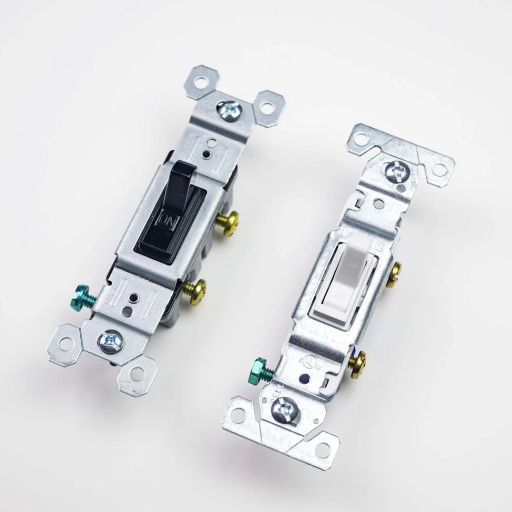
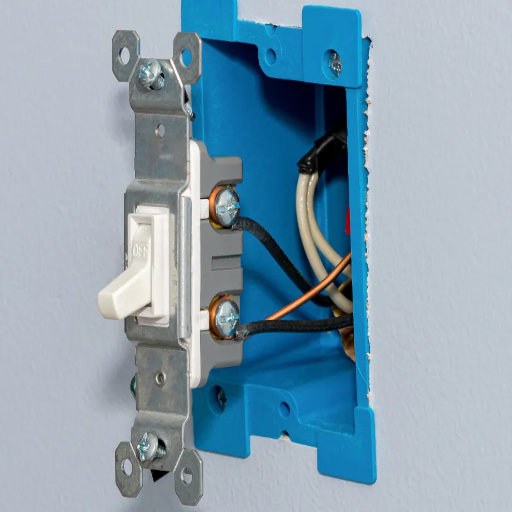
Single-pole switches control a single outlet or light from a single location, and this is the most common type of light switch. It simply opens or closes the electrical circuit to turn the light on or off. It could easily be identified by a single toggle or lever and has only two terminal screws onto which wires are attached. These types of switches are simple in operation and are very widespread in all types of lighting installations, ranging from residences to commercial establishments.
Definition of Single-Pole Switch
A single-pole switch is a widely used electrical component to control lights or fixtures from a single location. Consisting of two terminal screws on which wires are attached, it either completes or breaks an electrical circuit depending upon its position. The simple design includes only a single on/off functionality, thereby making the device quite intuitive in operation.
Single-pole switches are generally employed in residential circuits available in 15 and 20 amps at 120 volts, which is adequate for most lighting applications in the home. Present-day single-pole switches come in numerous designs, for example, toggle, rocker, and even touch-sensitive-offering the users a choice of both functionality and appearance.
Statistics reveal that single-pole switches are among the most commonly used light switches, with millions installed annually in homes and commercial buildings worldwide. They are often tested for durability, capable of withstanding tens of thousands of on/off cycles during their lifespan. Due to their straightforward design, they are cost-effective and simple to install, making them an essential choice for many wiring scenarios.
How a Single-Pole Switch Works
Unipolar switches work by blocking the flow of electricity to or from a light or other device. The physical circuit is fairly simple: live wire (hot wire), neutral wire, and ground wire. When flipped to “on,” the circuit is closed, connecting the live wire to the light or other device so that electricity flows and powers the unit. Conversely, an “off” switch breaks the circuit and ceases the flow of electricity.
Single-Pole Switch Specifications
- Voltage Rating: 120V (standard residential)
- Current Rating: 15 to 20 amperes
- Durability: At least 50,000 on/off cycles
- Terminals: Two terminal screws plus ground
- Circuit Control: Single circuit only
Knowing that an average single-pole switch is rated at 15 to 20 amperes, making it suitable for the standard residential voltages of the likes of 120V in the United States, modern new designs now incorporate additional safety features, such as insulation barriers and grounding terminals, to allow safe operation of such switches. Single-pole switches are generally tested to withstand at least 50,000 on/off cycles based on the data generated by their manufacturers, thus rendering them reliable and durable for ordinary use.
The incoming power wire is connected to one terminal screw, while the outgoing wire to the fixture is attached to the other. To prevent the occurrence of electrical hazards, a ground wire is secured to the green grounding terminal. These switches may be used with various types of lighting, including LED and CFL, further increasing their potential for integration in contemporary homes.
Their straightforward approach, low cost, and almost universal compatibility have always maintained the single-pole switch as a preferred option for residential and commercial landscapes where demand for electricity control is paramount.
Applications of Single-Pole Switches
Single-pole switches find application in homes and offices because of their direct functionality and reliability. The biggest application for them is to control either a light fixture or an appliance from one point. For example, their controlling mechanism includes those ceiling lights, wall sconces, or fans that would provide optimum working conditions for living areas, bedrooms, or bathrooms.
Besides lighting control, single-pole switches also find use in complex applications. For instances where a single control point exists, such as in utility rooms, closets, or garages, these switches are perfect. Currently, it remains a very popular choice due to its low price and compatibility with energy-efficient lighting systems such as LED and CFL bulbs. According to reports available in the industry, a whopping 75% of modern-day homes depend on single-pole switches in their electrical infrastructure simply because of how easy they are to install.
Moreover, in commercial and industrial places, single-pole switches are used for single and less complex circuits, like running some small machinery, lighting a workstation, or an individual piece of equipment. By virtue of the design evolution, these new single-pole switches consist of materials that ensure a long life with enhanced safety features that make the maintenance of such machines less required. Hence, these features keep it relevant across different uses.
Exploring Double Pole Switches
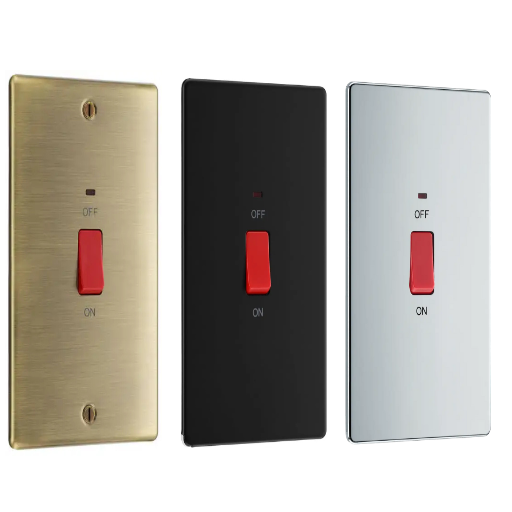
A double-pole switch can operate two different circuits simultaneously, thereby providing for an affair requiring more power. These may be set in residential, commercial, or industrial buildings to manage various devices, such as water heaters set for higher voltages. Unlike single-pole switches, they can effectively disconnect both live and neutral wires from the circuit to ensure safer operation. Double-pole switches thus form the building block of higher-power systems, given their rugged construction and functionality.
Definition of Double Pole Switch
A double-pole switch is the type of switch that works simultaneously for two connections, making it suitable for circuits that may need higher voltage or current. Double-pole switches, unlike their single counterparts, can independently block and allow flow in two wires, usually live and neutral, ensuring the circuit is fully disconnected from power when off. This feature greatly increases the risk of safety issues, especially in high-power installations.
Double-pole switches are usually rated for anything between 20 and 30 amps. If you’re running a 240-volt circuit supplied with two-phase power from the utility, these are used to power large-appliance loads such as electric water heaters, electric ovens, and HVAC systems. Due to their heavy-duty construction, they are surely found in both residential and industrial settings, wherever control of higher voltage circuits is needed. Modern switches inform users with a light or provide some form of protection, such as surge protection, for additional functionality and safety.
Double-pole switches ensure the reliability and safety of electrical systems throughout the world by managing complex loads effectively.
How Double-Pole Switches Function
Double-pole switches control two separate electrical circuits simultaneously. Each switch, having twin sets of contacts, is thus double the voltage capacity of a single-pole switch. For example, if a single-pole switch usually runs a voltage of 120 volts, then a double-pole one, generally rated at 240 volts, would be used for the heavier applications of water heaters, electric ranges, and HVAC.
Double-Pole Switch Specifications
- Voltage Rating: 240V (high-power applications)
- Current Rating: 20 to 50 amperes
- Terminals: Four terminal screws
- Circuit Control: Two circuits simultaneously
- Safety Feature: Disconnects both live wires
The mechanism made within the double-pole switch would ensure simultaneous opening or closing of both circuits for consistent operation and maximized safety. Further, such switches from time to time do provide a clear distinction of “ON” or “OFF” states, giving visible assurance as to their working. In any case, some of them may dispose of safety features like internal barriers that forbid accidental connection or overloading.
Some electrical standards, including the National Electrical Code (NEC), necessitate the use of double-pole switches in some applications, ensuring the system’s integrity and safety against hazards. Statistics verify that double-pole switches greatly decrease the chances of a circuit malfunction, especially when dealing with high-demand electrical systems. Accordingly, it would be recommended to install double-pole switches in areas that highly value reliability and safety.
When to Use Double-Pole Switches
We can never talk about safety and efficiency unless we consider double-pole switch applications. These switches are mostly used in circuits requiring high voltages, typically 240 volts, and such power circuits run large appliances, including water heaters, ovens, and HVAC systems. They cut off or control the live and neutral wires at the same time, providing maximum protection against electrical shock because safety never comes halfway.
Safety Benefits of Double-Pole Switches:
- 30% fewer equipment failures compared to single-pole installations
- Complete circuit isolation for maximum safety
- Required by NEC for high-voltage applications
- Essential for renewable energy installations
This recent industry insight reflects the essential benefits of double-pole switches in industrial and residential applications. For example, these switches can accommodate larger electrical loads during the operation of heavy machinery, which greatly reduces the possibility of overloading the circuits. Installation with double-pole switches is said to experience 30% fewer failures for equipment as compared to the installation with single-pole switches, according to safety organizations in electrical.
Additionally, for renewable energy installations, such as solar panel systems, double-pole switches are necessary to isolate DC and AC circuits safely so as to allow maintenance and give more protection to the systems. This functionality makes them necessary for the protection of modern setups, where more power is being demanded within the framework of strict electrical codes. Reliable, efficient, and safe, double-pole switches are a fit choice for any complex electrical system.
Key Differences Between Single-Pole and Double-Pole Switches
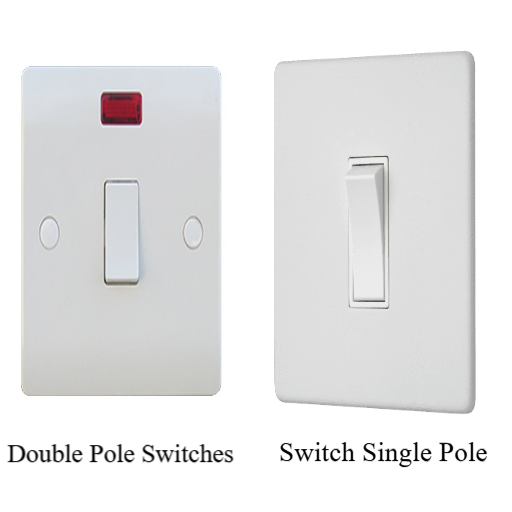
From the operational viewpoint and usage, a single-pole and a double-pole switch are different. A single-pole switch is meant to control one circuit and is used for basic “on and off” applications, such as controlling one light fixture. It has two terminals for connecting or disconnecting the circuit.
Conversely, a double-pole switch can simultaneously control two circuits. It has four terminals and is used for applications requiring more power, like controlling a 240-volt device. Since a double-pole switch will isolate both live wires in a circuit, it provides greater safety and flexibility and thus is best suited for heavy-duty or high-demand electrical work.
Single Pole vs Double Pole: Basic Features
When examining the core differences in usage and function, single-pole and double-pole switches stand segregated. Historically, a single-pole switch has been simply an on-off device controlling a single circuit, such as that of a light or a fan. An otherwise conventional single-pole switch would have two terminals, one for the live wire coming into the switch and the other for the live wire going out from the switch to the load. These switches are very easy to use and work best for simple household uses, which can handle 120 volts with fairly low currents of 15 to 20 amps.
Double-pole switches are, by contrast, a heavier-duty design for higher power and more complex situations. With four terminals, these switches control in tandem two circuits and thus find application in heavy appliances like water heaters, HVAC systems, or industrial equipment. Double-pole switches work with 240 volts and higher current ratings, usually 30 to 50 amps, depending on how the system is designed and the application being employed. The switch can safely disconnect both live wires in the circuit, a safety feature that is greatly appreciated when dealing with high-demand electrical setups.
| Feature | Single-Pole Switch | Double-Pole Switch |
|---|---|---|
| Number of Circuits Controlled | One circuit | Two circuits simultaneously |
| Number of Terminals | 2 terminals + ground | 4 terminals + ground |
| Voltage Rating | 120V | 240V |
| Current Rating | 15-20 amps | 20-50 amps |
| Typical Applications | Lights, fans, small appliances | Water heaters, HVAC, large appliances |
| Safety Features | Basic circuit interruption | Complete circuit isolation |
| Installation Complexity | Simple | More complex |
| Cost | Lower | Higher |
Technological advancements have brought changes to single-pole and double-pole switch designs. For example, of late, switches feature smart functionality that lets a user operate them remotely through an application on the mobile phone or via a voice control system, adding to convenience and energy efficiency, which in turn is earning appreciation from home and business users alike. Further, with today’s materials in construction, switches ensure durability and fire resistance for longer life and safety.
A consideration to be weighed when selecting between single-pole and double-pole switches is the peculiarities of one’s electrical installation. Voltage considerations, how high the currents may be, and the kind of devices being powered or controlled are factors that go into making those considerations.
Electrical Ratings and Specifications
Selecting switches for a particular electrical application necessitates knowledge of their ratings and specifications with the purpose of ensuring compatibility and safety. Electrical ratings normally specify voltage and current levels. Most residential light switches, for instance, are rated for 120-277 volts and should carry from 15 to 20 amperes of current, respectively, which go along with normal household and commercial power-line requirements.
It is also important to decide whether to switch on AC or DC operation, since DC switching usually involves a higher dissipation of energy in the arc because of the absence of zero crossing voltage on the system, thus causing contacts to wear out more quickly.
Important Specifications to Consider
- Temperature Rating: -40°F (-40°C) to 185°F (85°C) for extreme conditions
- Environmental Protection: IP65 rating for moisture and dust resistance
- Industrial Applications: 480 volts or above for heavy machinery
- Certifications: UL, CSA, and IEC listings for safety compliance
Almost forgot to mention the environmental and mechanical specifications of the switches, which must be considered. The temperature rating of about -40°F (-40°C) to 185°F (85°C) specifies performance dealing with extreme conditions. Switches intended for outdoor or industrial uses become certified for aspects of moisture-proofing, dust-proofing, and protection from a host of other environmental contaminants. Some standards that are applicable to such switches may be IP65 and above. In special applications like controlling huge motors and heavy machinery, switches with a higher voltage rating of 480 volts or above, and greater amperage capacity are desired. Industrial-type switches are also UL, CSA, and IEC-listed for meeting high standards of durability and safety.
These specifications certainly help in choosing an appropriate switch for specific electrical setups so that it does not, under any circumstance, overheat or short-circuit. In any case, make sure product datasheets or specifications from reputed manufacturers are consulted for such compatibility.
Choosing the Right Switch for Your Needs
Some factors are considered in selecting a switch for an application:
Type of Switch
Is there a specific type of switch suitable for your system? It can be a toggle, push-button, rotary, or slide. Each type has a specific application and a different functionality.
Electrical Ratings
The voltage, current, and power ratings of the switch should be compatible with your electrical system. The working voltage, current, and power of the switch must coincide with those of the device so as not to cause any issues like overheating or shorts.
Environment and Durability
The conditions under which the switch will work precede its assessment. There may be a need for switches prepared specifically for industrial and outdoor environments, with an appropriate ingress protection (IP) rating, and meeting UL, CSA, or IEC standards.
Contact Material and Lifespan
Study the contact material for longevity and reliability. For instance, gold contacts are generally used in low-power circuits, while silver is used predominantly for high-power applications.
Size and Mounting
Review dimensions and the mounting style for mechanical compatibility with your design. Surface mount versus through-hole might change according to the mounting considerations.
Manufacturer Specs
Always consult datasheets and compare products from more reputable manufacturers. The peculiarities of the datasheet genuinely provide vital information to ensure that the chosen switch meets the requirements for performance and safety in your application.
By studying these factors, you’ll be able to certainly choose for your system a switch that fulfills all technical requirements and the working conditions.
Importance of Professional Installation by an Electrician
Hiring a professional electrician for installation is crucial to ensure safety, compliance, and reliability. Electricians are capable of dealing with an electrical system in the right manner, ensuring that there are fewer chances for any faults in installation that otherwise would become hazards, such as electrical shocks, fire, or equipment damage. They follow the codes and regulations as required to make sure the system is legally sound. Besides, an electric system that has been installed professionally is more efficient and less likely to incur repairs or downtime in the future. Depending on professions-trained ones would guarantee long-lasting functionality and peace of mind.
Why Hire an Electrician?
The systems of electricity need to be installed, repaired, or maintained with precision and safety; thus, the hiring of a licensed electrician is mandatory. The Electrical Safety Foundation International (ESFI) estimates that there are about 51,000 house fires every year in the U.S. due to electrical hazards, over 1,400 injuries, and $1.3 billion in property damage. A trained electrician can help prevent such hazards by observing strict safety standards and regulations.
Electrical Safety Statistics
- 51,000 house fires annually due to electrical hazards
- 1,400+ injuries from electrical incidents yearly
- $1.3 billion in property damage annually
- Professional installation significantly reduces these risks
As far as continuous developments and trends in technologies and methodologies are concerned, professional electricians stay abreast of them all because they are extremely important. A professional can perform complex installations such as advanced energy-efficient systems or the integration of renewable energy sources like solar panels. This ensures proper installation, which will, in turn, reduce energy bills in the long run.
At first, one might think it’s cheaper to handle electrical work at home, but improper installations and repairs often become a hazard and expense later on. Allowing a trusted electrician to do the job holds in superior workmanship, code conformity, and warranties, incidentally protecting your home or business from eventual problems.
Correct Installation Techniques
Correct installation techniques should be applied to promote safety, precision, and conformity with all applicable electrical codes. To that effect, each component is installed as per the manufacturer’s specification, and when it comes to wiring, outlets, or panels. With an abundance of tools at my disposal and an updated knowledge of best practices, I can ensure that the installation is dependable and efficient for the long haul.
Ensuring Safety and Compliance
Safety and compliance in the execution of electrical work demands an understanding of current regulations, a strict adherence to safety standards, and the wise use of tools and protective equipment. Compliance with standards as set forth by the National Electrical Code (NEC) ensures that installations are carried out legally and safely. Regular system inspection and maintenance shall eliminate any kinds of hazards, short circuits, or electrical fire. Further, applying for permits and clear documentation quite well avoids legal troubles and ensures accountability. I keep abreast with safety code updates and place high regard on quality workmanship to afford means of prioritizing safe and compliant work.
Conclusion
Understanding the differences between single-pole and double-pole switches is essential for making informed decisions about your home’s electrical system. Single-pole switches are perfect for basic lighting control and simple applications, offering cost-effectiveness and ease of installation. Double-pole switches, while more complex and expensive, provide the safety and power handling capabilities necessary for high-voltage applications and large appliances.
When choosing between these switch types, consider your specific needs, voltage requirements, and safety considerations. Always prioritize professional installation to ensure compliance with electrical codes and maintain the safety of your electrical system. Whether you’re upgrading existing switches or planning new installations, understanding these fundamentals will help you make the right choice for your electrical needs.
Reference Sources
Dynamic Performance of Distance Relay in Single-Pole Switching Schemes for Transmission
Neutral Point Clamped Multilevel Inverter with Single Pole Triple Throw Switch
Smart Power Switch Using Internet of Things
Frequently Asked Questions (FAQs)
What is a single-pole switch, and how does it work?
A single-pole switch is a switch used for controlling light or power output from a single location. Two terminals connect to two conductors, thus creating full isolation in the circuit when it is switched off. Being simple and efficient, it is most often used in home wiring.
The difference between a single-pole and a double-pole switch?
The key difference lies in how each switch functions. One single-pole switch works on one circuit, while a double-pole switch works on two circuits simultaneously. A double-pole switch is usually needed when voltages are higher or you must coordinate two conductors so the heating system or large appliance can be fully isolated.
Is it possible to combine several single-pole switches in the same circuit?
Yes, in some cases, it is possible to have several single-pole switches on the same circuit so that they can turn on or off a light or power outlet from various locations. Be sure that the sum load does not exceed the circuit rating to avoid an overload.
How much is the electrical rating of a single-pole switch?
Lest you be unaware, such switches, even in a single manner, have power ratings up to 15 or 20 amperes, depending on the particular model and manufacturer. The switch, therefore, should be chosen as per the power supply and the requirements of the load in your project so that safe and reliable operation is guaranteed.
When to choose a double-pole switch over a single-pole one?
You want a double-pole switch to control a 240V appliance or isolate two conductors within a circuit for security. When complete isolation must be provided in heating systems or power applications-where disconnection of both conductors necessarily occurs simultaneously, a double pole switch should be fit for purpose.
What is the description of a single-pole switch?
The single-pole switch is simply one of the simplest switches to install, providing control for a circuit from a single location. It may be switched ON or OFF and is therefore easy for anyone to operate. Various designs and finishes are available for single-pole switches, and you can select one that complements your project.
Is a single-pole switch good for outdoor use?
Switches in the single-pole variety are mostly meant to be used indoors, although weatherproof types suitable for outdoor applications can be found. If you plan for a switch to be mounted outside, make sure that it is rated for such use in order to keep the moisture away and prevent environmental intrusion.