








Choosing a proper battery cable size plays a critical role in the reliability and safety of any electrical installation. Whether it’s a car, a boat, or any other battery-involving project, one must understand wire gauge and power flow. Using the wrong gauge wire can result in inefficient power transfer, overheating, or severe damage to your system. This guide clarifies the subject of battery cable sizes and wire gauges, enabling consumers to make informed decisions about their purchases. Lastly, by the end of this text, you will know how to select the battery cable that perfectly fits your needs.
Introduction to Battery Cables
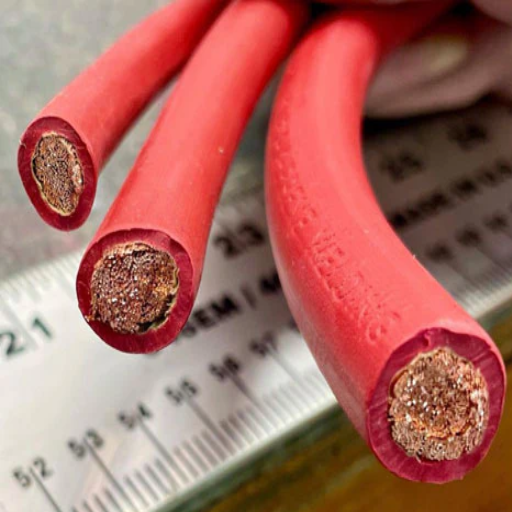
Battery cables play a crucial role in the functioning of your vehicle by connecting the battery to the electrical system, allowing for the transfer of power. These cables are composed of conductive wire, typically made of copper or aluminum, and are furnished with insulation that protects against wear and environmental elements. The proper battery cable ensures efficient power delivery and prevents problems with voltage drops or overheating. The cable size or gauge should be compatible with the power drawn through the system, ensuring safety and optimal performance throughout.
What is a Battery Cable?
A battery cable serves as a vital component in any electrical system that requires a direct connection to the power source or the load it supports. These cables are rated for high current loads, enabling the safe transfer of electricity with minimal energy loss. They are commonly made from copper and aluminum due to their conductivity properties. They are also insulated with materials such as PVC or XLPE that resist wear, heat, and other environmental influences.
Key Considerations: Cable thickness, also known as wire gauge, is an important consideration when selecting a battery cable. Sizes are measured in American Wire Gauge (AWG), and the correct size will depend on the ampacity requirements and the distance of the electrical run. For instance, a 4-gauge wire can carry 100 amps over a short distance. However, as the distance increases, a 2-gauge or even a 1/0-gauge wire may become necessary to keep voltage drop within reasonable limits and avoid undue loss of efficiency.
Another feature often incorporated into battery cables today is heat resistance, flexibility, and corrosion resistance. Installation is dependent on the cable length and the type of terminals used. Cables should not drop more than 3 percent in voltage according to the standard, so their accuracy, from measurement to material selection, will inevitably guarantee their reliability and safety throughout their lifespan.
Importance of Battery Cable Size
The size of a battery cable strongly affects an electrical system’s functioning and safety. If the cable is undersized, it may cause voltage drops and excessive heat generation, which can lower performance. After a specific duration, this can result in the component’s failure. On the other hand, an oversized cable would reduce the resistance, though it would be unnecessarily bulky and costly.
AWG Reference: In the United States, the American Wire Gauge (AWG) is more commonly used in diameter designations, with smaller gauge numbers indicating thicker cables. For instance, a 2 AWG cable can carry approximately 150 amps over a distance of about 15 feet with a voltage drop of less than 3 percent, whereas a 10 AWG cable carries only 30 amps under the same conditions.
Proper sizing of the cables will minimize losses, maximize current flow, and contribute to the long-term health of the battery and the connected apparatus. Additionally, temperature and current requirements should be taken into account when selecting the cable size. Industry standard practice requires cables exposed to high temperatures or subjected to continuous current to undergo a gauge reduction for uninterrupted performance. In addition to ensuring excellent operating safety across various electrical applications, one can refer to a cable sizing chart for a more accurate cable size recommendation, taking into account the current draw and cable length. Selecting the correct battery cable size is not a matter of convenience, but rather a serious issue of safety and system performance.
Overview of Wire Gauge
Wire gauge is a term referring to the standard measurement system used to determine the diameter of an electrical wire. The wire gauge system is prevalent in the United States, where smaller gauge numbers correspond to thicker wires, while larger gauge numbers denote thinner wires. Lower-gauge cables, which are thicker, carry higher currents with less resistance and are thus used in higher-power applications. Conversely, higher-gauge cables are used for lower currents.
The selection of a wire gauge should strike a balance between safety and efficiency; a wire that is not sufficiently sized will heat up and pose a fire hazard, whereas an oversized wire may increase the cost of materials. Several key considerations influence the selection of the correct gauge for a particular application, including amperage, wire length, and voltage drop. A reliable AWG chart can help one choose the appropriate size wire to meet these demands, ensuring the output meets industry standards or achieves optimal performance.
Understanding Battery Cable Size
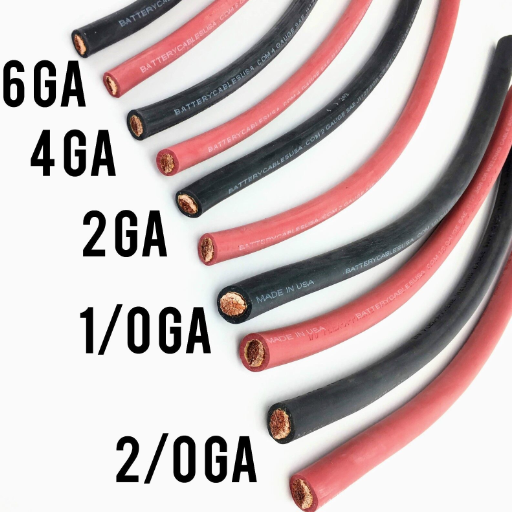
The size of battery cables must ensure an efficient and safe power transmission system. The correct cable size is therefore dependent on the amount of current or amperage required by the system, the cable length, and the acceptable voltage drop. Thus, the longer the length and the higher the current, the thicker the cables required to offer less resistance and improved power performance. Using an AWG (American Wire Gauge) chart helps determine the appropriate cable size by comparing the current, length, and voltage drop against the wire capacity. Always select cables that are specifically rated for the intended application to ensure safety and maintain proper working conditions.
Factors Affecting Battery Cable Size
Current (Amperage) Requirements
The cable gauge is determined based on the system’s amperage requirement. Higher currents will require larger cables because they carry greater electrical currents, which heat the cable. For example, a cable that can handle 100 amps may use 4 AWG at a short distance, whereas a cable designed for 200 amps may need to be 2/0 AWG. The cable must then be rated to meet the peak current demand of its application to avoid an electrical failure.
Distance and Voltage Drop
Voltage drop occurs as electricity travels through the cable, and some energy is lost as heat due to resistance. Longer cable runs become a greater cause of voltage drop, which can lead to performance issues in your system. Standard recommended values are below 3% of voltage drop. A 12V system running at 100 amps over 10 feet would require a 2 AWG cable, whereas one running over 20 feet would require a 1/0 AWG cable. Calculating voltage drop ensures efficiency and avoids power loss.
Wire Material
The cable material has a significant impact on efficiency and sizing. Copper cables have better conductivity and performance compared to aluminum cables. Yet, aluminum cables are considered much lighter and cheaper. For the same current, aluminum conductors are generally one or two sizes larger than copper ones. Use copper conductors when high performance and reliability are critical.
Insulation and Temperature Ratings
Battery cables are occasionally exposed to extreme temperatures; therefore, insulation must be rated for the environment in which it is installed. Cables with a higher temperature rating are capable of withstanding severe conditions without their insulation degrading after several years. For example, those cables rated at 105°C would be considered a better choice than the standard 75°C-rated cables when used in high-heat areas.
Application-Specific Requirements
Different systems may require specific types and sizes of cables, such as those used in automotive, marine, or solar applications. For marine applications, tinned copper wires are chosen to prevent corrosion in saltwater, while solar battery wiring systems consider direct sunlight exposure. In a solar system with 48V battery banks, the cable size should be determined based on peak loads and environmental factors to ensure long-term reliability.
Considering all these factors, and with the help of tools like voltage drop calculators or AWG charts, proper cable sizing can be determined and tailored to the specific requirements of your system. Correct selection ensures the safety, durability, and optimal performance of any electrical system.
Battery Cable Size Chart Explained
Selecting the correct battery cable size is essential to ensure efficient power delivery and electrical system safety. The proper selection of cable size depends on the system voltage, current draw (in amps), and the total cable run distance (round-trip). Undersized or small cable sizes often lead to excessive voltage drop, overheating, and potential hazards.
Typically, you determine the proper cable size by consulting an American Wire Gauge (AWG) chart. For example, for 12V or 24V systems, the most common cable sizes are 4 AWG wires for smaller distances and moderate loads, and 1/0 AWG for longer distances or heavier loads. In comparison, 48V systems, which are larger setups, might require 2/0 AWG cables or larger.
Important: Keep voltage drop in mind, as this is the biggest culprit, meaning power diminishes along the line with distance. A voltage drop of less than 3% is preferably maintained to guarantee system efficiency. Online voltage drop calculators enable you to enter your system specifics — i.e., voltage, amps, and distance—to determine the recommended cable size.
Planning and carefully selecting cable size instruments to achieve maximum efficiency and security of the setup. Always refer to a good chart or tool, and if you are still unsure, seek professional aid.
Determining the Right Size for Your Needs
Selecting the correct cable size for an electrical installation involves considering several key components to ensure both efficiency and safety. First, factors such as system voltage, current, and total distance of the run will need to be considered. Voltage drop is a factor of paramount importance. Excessive voltage drops can harm the system’s efficiency and potentially damage the equipment connected to it.
For example, in a 12V DC system transmitting 20 amps over 30 feet, a 10 AWG wire is generally recommended to limit voltage drop to below 3%. This recommendation can be confirmed by referring to an electrical wire chart and comparing the current draw and distance. Alternatively, higher currents would require thicker wires to maintain efficiency and safety against 40 amps, whereas in our hypothetical system of 30 ft, 6 AWG or 4 AWG cables may be necessary.
Most industry standards allow a 3% voltage drop for critical loads and a 5% drop for non-critical ones. Changes in temperature and insulation types equally affect the performance of a cable, which is why they have to be taken into account. Assessing all these criteria while cross-checking with reliable calculation tools will leave one confident in selecting the correct cable size for any given application.
Types of Battery Cables
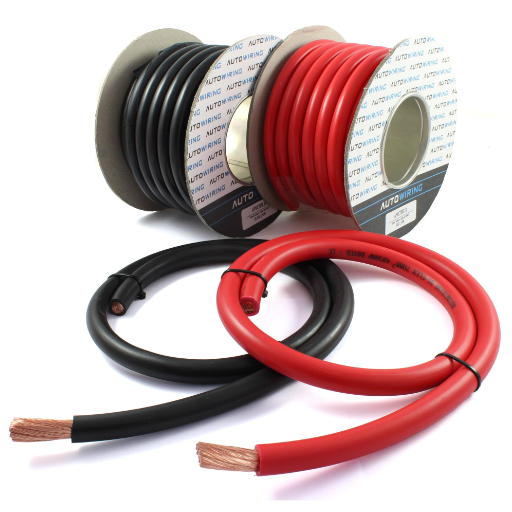
Based on their applications, there are two primary types of battery cables:
- Starter Cables: These cables carry the high current from the battery to the starter motor, initiating the engine ignition procedure. Since they require high amperage during start-up, they are usually thick and sturdy.
- Ground Cables: These cables connect the battery’s negative terminal to the vehicle chassis or engine block, thus completing the circuit. Grounding balances the system and reduces electrical issues.
Both types of cables are necessary for carrying out the tasks of electrical systems, differing in size and insulation according to their particular application and environmental restrictions.
Different Types of Battery Cables
Battery cables are primarily distinguished into three basic types according to application and construction:
- Standard Battery Cables: Being the most common cables, they are designed to connect the battery’s positive and negative terminals to the electrical equipment in automobiles. Standard battery cables are usually made of copper or aluminum to withstand environmental hazards and conduct efficiently. They come in all sizes to suit the capacity requirement.
- Battery Ground Straps: Ground straps are a type of battery cable that ensures a secure connection between the battery and the vehicle’s chassis or engine block. In comparison to standard cables, ground straps typically feature a braided design to maintain flexibility and facilitate grounding applications where high current levels are present.
- Marine Battery Cables: For boats and watercraft, marine-grade battery cables are constructed from corrosion-resistant materials and feature extra-heavy insulation due to the harsh environment. To prevent marine battery cables from being damaged in water and salt exposure, they are designed to work reliably in aquatic conditions.
Each type of battery cable is unique in purpose, with its insulation, gauge, and material designed differently to suit specific applications and environmental conditions. Selecting the right cable enhances the efficiency and safety of electrical systems.
Automotive Battery Cable Specifications
Automotive battery cables are designed to efficiently and safely provide current loads within vehicular systems. Main points for specification are:
- Gauge Size: This specification determines the current-carrying capacity of the cable. Between 6 AWG for small applications to 0/1 AWG and bigger for heavy-duty vehicles.
- Insulation Material: Automotive cable insulation typically includes PVC, XLPE, or silicone to withstand heat, oil, and abrasion.
- Temperature Rating: Generally speaking, a cable with a suitable temperature rating for use at temperatures ranging from -40°F to 257°F (-40°C to 125°C) is considered well-suited for extreme usage conditions.
- Flexibility: High strand count construction gives the cable extra flexibility, making it easier to route in tight spaces.
- Corrosion Resistance: Many cables are constructed using tinned copper conductors or are coated with protective substances to safeguard against oxidation in humid or corrosive environments.
When selecting an automotive battery cable, consider the vehicle type, electrical load requirements, and environmental conditions to ensure optimal performance and safety. Always opt for cables that meet industrial standards, such as SAE J1127 or J1128, for automotive wiring.
Comparing Cable Types: Pros and Cons
What Gauge Wire is Battery Cable? Battery cable wire gauges typically include 6, 4, 2, 1, 1/0, 2/0, 3/0, and 4/0.
| Gauge | Use Case | Amp Rating | Flexibility | Price | Durability |
|---|---|---|---|---|---|
| 6 | Light loads | Up to 50A | High | Low | Moderate |
| 4 | Moderate loads | Up to 100A | High | Moderate | Moderate |
| 2 | Heavy loads | Up to 150A | Medium | Moderate | High |
| 1 | Heavy duty | Up to 200A | Medium | High | High |
| 1/0 | Industrial | Up to 250A | Low | High | Very High |
| 2/0 | Very heavy | Up to 300A | Low | Very High | Very High |
| 3/0 | Large systems | Up to 350A | Very Low | High | Extreme |
| 4/0 | High power | Up to 400A+ | Very Low | Extreme | Extreme |
Gauge Wire and Its Importance
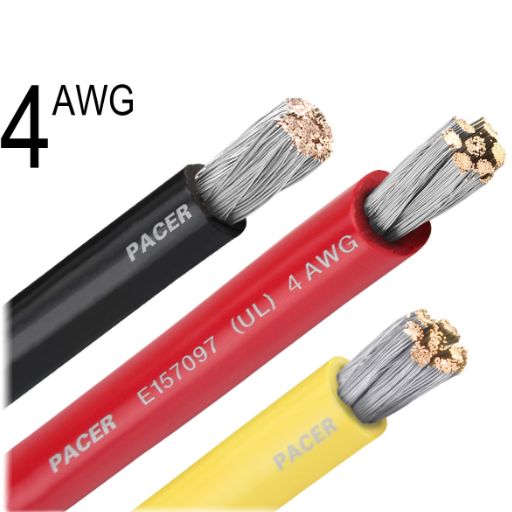
AWG gauge refers to the wire thickness and diameter of an electrical wire measured based on the American Wire Gauge (AWG) standard. The wire thickness is critical because it determines the amount of electrical current that can be carried safely without causing its temperature to rise. Lower numbers in the gauge indicate that the wire is thicker and can handle more current, while higher numbers indicate thinner wires with lower current-carrying capacity.
Properly gauged wires help achieve optimal system performance and ensure safe use. Smaller wires may cause overheating, fires, or system failure; larger wires may result in unnecessary expense. Wire gauge selection depends mainly on the electrical load, the length of the wire run, and other system requirements. Adhering to AWG standards or consulting a professional ensures the secure and efficient use of wire for any particular application.
Understanding Wire Gauge Ratings
Wire gauge ratings are a standardized measurement system to specify the diameter and capacity of an electrical wire. The most commonly used standard in the U.S. is the American Wire Gauge (AWG) system. In this system, smaller gauge numbers refer to thicker wires, while larger gauge numbers indicate thinner wires. The wire gauge chosen is critical in ensuring the safe electrical performance and is decided on by three primary considerations:
- Current Capacity (Amperes): Each wire gauge can safely carry a maximum current without posing a hazard to the wire from overheating. For instance, 12-gauge wires are ordinarily rated for carrying 20 amps, while 14-gauge wires can carry only up to 15 amps.
- Voltage Drop: The longer a wire run, the more apparent its voltage drop, especially with thinner wires; these drops can affect the performance of the system. Choosing a wire gauge thus becomes crucial to minimize energy loss across the wire.
- Application and Safety Standards: Based on their unique electrical load, some devices or systems may require specific gauges. Following safety codes, such as the National Electrical Code (NEC), and consulting with professionals will help ensure safety.
Always remember to balance functionality, cost, and safety when choosing wire gauges. Wire gauge charts, along with professional recommendations, should help one make an informed decision about any electrical installation.
How Wire Gauge Affects Electrical Performance
The wire gauge has a significant impact on the efficiency and safety of an electrical system, as it determines a wire’s ability to carry current, its resistance to current flow, and its heat dissipation. A smaller gauge number indicates a thicker wire, which can take much higher current with very little resistance. On the other hand, a wire with a very high gauge number is thin and can have low currents with high resistance.
Example: A 14 AWG wire might be allowed for currents of up to 15 amperes, whereas a 12 AWG wire can tolerate 20 amperes. When an undersized wire is used for a circuit, excessive heat may be generated in the wire, which could break the insulation or cause a fire hazard. An oversized wire would surely make the circuit safer, but it would also cause unnecessary expenditure on the higher-cost wire.
Wire gauge affects voltage drop. A skinny wire has more resistance and a greater voltage drop over long distances, which reduces the performance of the electrical device/appliance connected at the end. It is recommended that voltage drops be kept below 3% for residential and commercial installations.
To illustrate, under a similar scenario with a distance of approximately 50 feet, a 10-gauge copper wire would have significantly less voltage drop than a 14-gauge copper wire carrying the same current. This makes it crucial to select the correct gauge for electrical applications involving long cable runs or high-powered devices.
By understanding wire gauge, current capacity, resistance, and voltage drop, a user can create wiring that is both safe to work with and code-compliant, while maintaining efficiency and reliability.
Choosing the Right Gauge Wire for Your Battery
There are three key considerations when selecting the proper gauge wire for your battery: the amperage capacity of the system, the overall length of the wire run (including both positive and negative sides), and the acceptable voltage drop. The higher the current and the longer the wire run, the thicker the wire needs to be to minimize resistance and voltage loss, taking into account the wire’s thickness. One could usually check a wire gauge chart or an online calculator to select a wire size that matches the present requirements of the specific system.
For instance, with a 3% allowable voltage drop for a 12-Volt battery system, 30 amps for a 10-foot round trip would generally call for a 10-gauge wire; whereas 8-gauge or thicker wires might be needed for higher-power systems or longer distances to counteract the resistance. Always err on the side of caution and verify that your wire sizing complies with standards such as the National Electrical Code (NEC) or the manufacturer’s recommendations.
Common Issues with Battery Cables
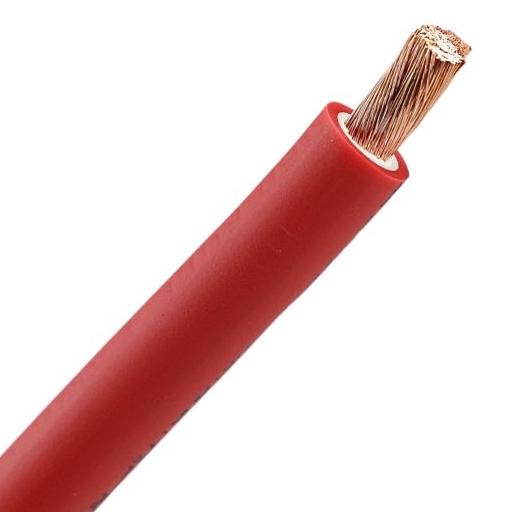
- Corrosion: Battery terminals and cables are susceptible to corrosion, which hinders electrical conductivity. Regular cleaning is necessary, along with the application of an anti-corrosion spray.
- Loose Connections: Cable connections may become loose over time due to vibrations or faulty installation, resulting in power loss or difficulty starting the vehicle. Ensure all cables are securely fastened.
- Damaged Insulation: Cracks, wear, and exposure to heat can damage cable insulation, thus increasing the possibility of short circuits. Regularly inspect cables and replace them as needed.
- Undersized Cables: If the cables are too thin for the load currents, they will cause overheating and voltage drops. Select your cables based on your power and distance requirements, ensuring compliance with safety standards.
- Frayed or Broken Wires: Enterprises often apply sharp bends or simply allow the process of aging to cause wires to break and fray, thereby terminating the connection. Immediately replace any damaged cable.
The reliability and safety of your battery system are ensured if these common problems are addressed.
Signs that Your Cable Size is Too Small
There are performance issues and hazards that can arise from undersized cables in your system. Some signs or symptoms to watch for include:
- Overheating of Cables: If the cables feel warm when touched during regular operation, they are likely undersized and struggling to carry the required current.
- Voltage Drop: A gradual reduction in power output or similar symptoms, such as dimming light sources when fed through these cables, can be attributed to significant voltage drops caused by thin wires.
- Breakers Trip Frequently: Cables with very thin cross-sections increase resistance, leading to frequent tripping of circuit breakers due to an apparent overcurrent condition.
- Burning or Melting of Insulation: The excessive heat generated by undersized cables damages insulation, exposing the wires and creating shock hazards.
- Decrease in System Efficiency: The thinner cables with higher resistance may cause energy loss, which in turn lowers the overall system efficiency.
Important: Keeping track of these symptoms can indicate whether the cable size is inadequate and can be upgraded to a gauge that is suitable for proper functioning in a safe manner. Always refer to the manufacturer’s instructions and perform an exact calculation based on your system requirements to determine a suitable cable size.
Impact of Incorrect Gauge on Electrical Systems
Having worked on several systems, I realized firsthand several adverse effects of using inappropriate gauge cables in electrical systems. Thin-gauge cables overheat and are therefore a fire hazard, destroying the very devices they are intended to power. On the other hand, these voltage drops and efficiency losses result in the systems underperforming. Using cables larger than necessary may incur an unnecessary extra cost on the project. To avoid such announcements, I always stick to the manufacturer’s recommendations and calculate the exact gauge based on the system requirements.
Solutions for Common Cable Problems
- Overheating cables: To prevent overheating, ensure that the cable gauge matches the current-carrying capacity required by the system. Cables fabricated using heat-resistant materials should be given preference. Periodic inspections for signs of wear and damage should be carried out on these cables to ensure their safety.
- Voltage Drops: Minimize voltage drops by using the shortest cable lengths possible; if long-distance wiring is unavoidable, prefer thicker cables. Additionally, ensure that connections are securely fastened and that the wires are appropriately rated to carry the voltage and current required by the system.
- Wrong Cable Size: To prevent cable sclerosis, determine the system’s power demands, including current and voltage, and refer to the sizing chart or similar references for accurate cable sizing. Making a suitable choice can also be carried out with the assistance of the manufacturer’s recommendations or an expert.
- Physical Cable Damage: Give protection against physical damage with conduit or cable trays; avoid sharp bends or heavy loads. An inspection should be conducted regularly for signs of abrasion or cuts on cables; if any damage is detected, replacement should be carried out immediately.
- Interference & Signal Loss: To minimize interference, use shielded cables or twisted-pair cables when dealing with sensitive signals—separate power and data cables to avoid cross-talk and ensure proper grounding of wires.
Key Takeaways
Proper battery cable sizing is essential for safe and efficient electrical systems. By understanding wire gauge, considering factors like current requirements and voltage drop, and addressing common issues proactively, you can ensure optimal performance and longevity of your electrical installation. Always consult professional resources and follow industry standards when in doubt.
Reference Sources
“Digital Speedometer using Arduino Board for Formula Student Cars”
“Low Power Strain Gage Measurement with Wireless Network Access”
“Low-Voltage Power Supply Subsystem for a Sub-Orbital Particle Physics Instrument”
Frequently Asked Questions (FAQs)
What is the Recommended Battery Cable Size for Automotive Applications?
The recommended battery cable size for automotive applications typically ranges from 1 gauge to 6 gauge, depending on the specific vehicle’s needs. For standard cars, 4-gauge wire is often sufficient, while high-performance vehicles, such as those with V8 automotive engines, may require a 1-gauge or even 0-gauge wire for optimal performance. It’s crucial to choose the right size battery cable to ensure sufficient current flow and avoid overheating.
How Do I Determine the Correct Gauge Wire for My Battery?
To determine the correct gauge wire for your battery, consider the total distance of the cable run, the application’s amperage, and the voltage drop you can tolerate. A shorter distance with higher amps typically requires thicker wire gauges, such as one gauge or two gauges, while longer runs might necessitate a larger gauge size to minimize resistance in the wire. Using a battery cable size chart can help guide you in making the right choice.
What Are the Different Types of Battery Cables Available?
There are several types of battery cables available, including SGX battery cable and SGT battery cable, which are designed for different applications. SGX cables are often used in solar power systems due to their flexibility and durability, whereas SGT cables are more commonly used for automotive and commercial applications. Each type has its unique specifications and is suited for varying electrical system demands.
What is the Impact of Using a Smaller Cable Size for Battery Connections?
If the cable size is too small for your battery connections, it can lead to increased resistance in the wire, causing overheating and potential failure of the electrical system. This is particularly critical in high-power alternative battery banks or heavy-gauge copper applications, where inadequate wire can lead to significant performance issues and safety hazards.
Which Wire Size is Ideal for High-Compression Engines?
For high-compression engines, such as 6-cylinder or V8 automotive engines, using a thicker wire gauge is essential to handle the high amps required during startup. A wire size of 1 gauge or two gauge is often recommended to ensure reliable performance and prevent the alternator wire from melting due to excessive current flow.
Can I Use Welding Cable as Battery Cable?
Yes, welding cable can be used as battery cable due to its flexibility and heavy-gauge copper construction, which allows it to handle high current loads. However, ensure that the welding cable meets the necessary specifications for automotive applications, as some may not be rated for the same voltage and environmental conditions as standard battery cables.
What is the Difference Between 4-gauge and 8 8-gauge battery Cables?
The primary difference between 4-gauge and 8-gauge battery cables lies in their thickness and current-carrying capacity. 4-gauge wire can carry more amps than 8-gauge wire, making it suitable for high-demand applications. When selecting between the two, consider the specific power requirements of your vehicle or system to ensure optimal performance.
How Does the Gauge Scale Affect Battery Performance?
The gauge scale directly affects battery performance, as thicker wire gauges (lower gauge numbers) can carry more current with less resistance. This is particularly important in applications with high power demands, such as backup power systems or solar power setups, where using the correct gauge battery can enhance efficiency and longevity of the system.
What Should I Consider When Choosing Battery Leads?
When choosing battery leads, consider factors such as the required length, gauge size, and the specific application. For instance, automotive battery leads should be made from heavy-gauge copper to handle high current loads, while leads for solar power systems may need to be more flexible to accommodate installation requirements. Always ensure that the leads are compatible with your electrical system’s voltage and current specifications.