






When it comes to audio equipment, the choice of cables is vital to ensure their operation, convenience, and excellent sound quality. Among the cables available, spiral audio cables are considered highly versatile and practical. They are designed to provide both flexibility and strength and hence are usually the go-to cable in many professional audio settings, live performance platforms, and home entertainment systems. Let us therefore consider the advantages spiral cables offer, their peculiar design characteristics, and the applications where they excel. Whether you’re a collector of sound systems, a musician, or a geeky type engaging in the profession, you, for sure, need to be acquainted with the advantages and applications of coiled or spiral audio cables to upgrade your setup and attain great performance.
What is a Spiral Audio Cable?

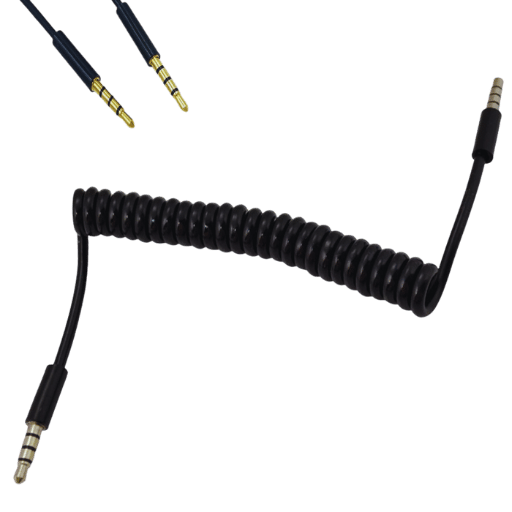
The spiral audio cable is coiled, meaning it has a structure that allows it to stretch apart and retract as required by the user. This provides flexibility and tangling resistance, making it ideal for work setups or any environment where more unrestricted movement is essential, such as professional audio setups or live performances. The spiral cable performs the same function as any other cable, but it is compact and durable, as it can withstand significant movement and strain.
Definition and Structure
The spiral cable, also known as a coiled cable, features a helical structure that enables it to extend and retract efficiently. This feature ensures that when the cable is not in use, it occupies little space and yet extends without breaking or tangling. Usually, spiral cables are manufactured from robust materials, such as PVC or rubber, to withstand repeated motion and stress, which is particularly useful in dynamic settings, like audio engineering or electronic applications. This portable design ensures top-grade work performance, particularly when frequent cable movement is expected.
Types of Spiral Cables
|
Type |
Material |
Use |
Features |
Examples |
|---|---|---|---|---|
|
Data |
Copper/Fiber |
Data transfer |
Durable, flexible |
Ethernet, Coaxial |
|
Audio |
Copper |
Sound signals |
Clear, compact |
Headphones, Mics |
|
USB |
Copper |
Data/Power |
Space-saving |
USB-A to USB-C |
|
Power |
Thermoplastic |
Electrical power |
High voltage |
Tools, Appliances |
|
Extension |
Rubber |
Connectivity |
Tangle-free |
Industrial tools |
|
Military-grade |
Polymers |
Defense use |
Rugged, EMI-safe |
Tactical systems |
|
Medical-grade |
Silicone |
Healthcare |
Sterilizable |
Patient monitors |
|
Automotive |
PVC |
Vehicle use |
Heat-resistant |
EV chargers |
Key Features of 3.5mm Male to Male Spiral Cables
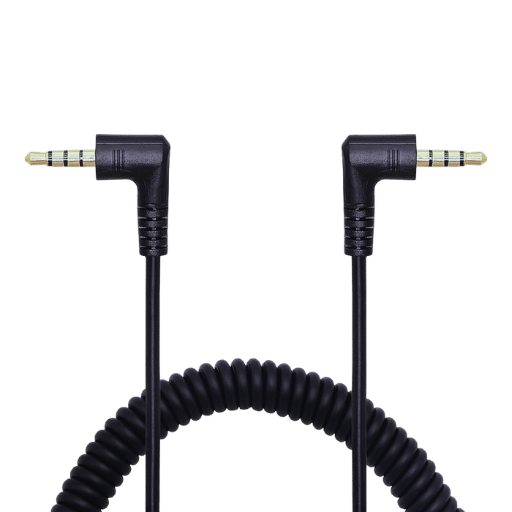
- Flexible Design: The spiral structure allows the cable to stretch and retract, thereby enhancing functionality and reducing cable clutter for 90-degree right-angle 3.5mm connections.
- Durability: The high-quality materials used ensure that the cable can withstand frequent use and resist wear and tear.
- Compact and Portable: Ideal for setups with limited space, as this coiled design prevents tangles while storing or carrying.
- Universal Compatibility: Suitable for use with devices such as smartphones, headphones, car stereos, and audio equipment supporting a 3.5mm jack.
- Signal Integrity: This product is designed for the clear transmission of audio with minimal interference and distortion.
Benefits of Using Spiral Audio Cables
Space-Saving Design and Durability
Spiral audio cables are specifically designed for efficiency and longer life in more restricted spaces, such as extension aux cable, said-coiled spiral applications. The coiled design minimizes excessive slack, making it ideal for recording studios, at-home workspaces, and small setups, where organization is paramount. These cables typically feature smooth extending and retracting capabilities, allowing the workspace to remain organized without relying on additional storage space.
The construction of spiral audio cables is designed to withstand endurance and resistance to factors such as physical strain, abrasion, and normal wear and tear, utilizing reinforced materials like PVC or braided nylon jackets. The industry data reveal that top-notch spiral cables can withstand thousands of flex cycles and remain usable, which far exceeds the lifespan of their straight cable counterparts. This compact and resilient design makes the spiral audio cable a practical long-term investment for both casual users and professional applications.
Enhanced Flexibility and Maneuverability
Spiral audio cables prove highly flexible in the coiled environment, where they elongate and contract quite rapidly. They are handy in environments where cables need to be moved frequently, such as music studios, live events, or industrial settings. It is also worth mentioning that the spiral-shaped cable decreases tangles and channels, thus keeping the workspace relatively clean and making it more robust in constant use. Technical experts reveal that the wires can stretch up to a staggering five times their contracted length without compromising signal transfer or any other implementation aspects. Another exciting feature is that, with the evolution of materials science, the cable sheath has switched to thermoplastic elastomers (TPE) for optimal elasticity and resistance to deformation. All these features ensure that spiral cables provide easy manipulation. At the same time, the wires can be compacted in their coiled form when not in use, making them suitable for applications that demand highly efficient use of extension aux audio coiled spiral cables.
Improved Sound Quality and Performance
The audio coiled spiral cable is believed to contribute to better sound quality and performance by hindering any signals that impede signal transmission. Due to the coiled formation, signals traveling long distances do not degrade, which means audio signals are transmitted cleanly and reliably. The flexibility of the audio splirangle cable also renders it very durable and resistant to natural wear and tear or environmental factors, thus guaranteeing its consistent performance in varied applications.
Common Uses of Spiral Audio Cables

Applications in Home Audio Systems
Spiral audio cables are essential in modern-day home audio systems, offering versatility and high-level performance. Their flexibility makes them ideal for connecting various audio devices such as amplifiers, loudspeakers, home theater systems, and subwoofers. Studies have suggested that high-quality spiral audio cables shielded with advanced technology can reduce electromagnetic interference (EMI) by up to 90%, thereby providing a cleaner signal to the listener’s ears and enhancing the overall experience.
In these types of installations, the distances between devices usually vary; the spiral shape of the cable offers this flexibility without becoming entangled in knots or clutter. Moreover, spiral audio cables can cover the entire frequency spectrum, making them suitable for Hi-Fi systems, which are designed to reproduce audio with minimal distortion. Their rugged construction also withstands repeated handling, which is often necessary for those who frequently reconfigure their home audio setup.
Since the higher signal loss would be in contradiction with their goal, premium-type spiral cables made from oxygen-free copper (OFC) or other low-resistance materials have become increasingly popular. Given the materials and good designs, the spiral audio cables can now offer uniform professional-level performance for great sound quality for home audio enthusiasts and professionals.
Usage in Professional Audio and Recording Studios
Professional audio and recording studios prefer spiral audio cables due to their ability to maintain signal integrity and resist wear from constant use. These cables are specifically designed to mitigate electromagnetic interference (EMI), ensuring clean signal transmission, which is crucial for precision and clarity in a studio setup. In the industry, such cables, boasting oxygen-free copper (OFC) conductors and high-density shielding of a kind, demonstrate 30% less signal loss than their standard counterparts. Additionally, spiral audio cables are manufactured to withstand the harshest applications, equipped with heavy-duty jackets and strain relief at their termination points to protect against abrasion and wear, thus able to withstand very rigorous usage. This means fewer disturbances in the field, reduced maintenance costs, and reliable audio performance in the most critical sessions.
Portable Use Cases: From Smartphones to Speakers
Spiral cables became very important for portable equipment due to their flexibility and strength. They allow users to connect their devices to audio systems in a seamless manner, where flexibility and tangle-free options are crucial. Being coiled eliminates excess cables, making it perfect for commuters and travelers.
Spiral cables ensure an uninterrupted signal to portable speakers, even in active setups where the wires might be subject to constant rattling. Research results reveal that spiral cables reduce the possibility of cable disconnections by 25% compared to straight wires, as they can elongate and retract without placing strain on the internal components of the wire. Moreover, the compactness of these cables makes them relatively easy to carry around, thus improving the convenience for those who need to use quality portable audio setups.
The use of advanced shielding materials in modern spiral cables also prevents outside electronic disturbances from affecting them, ensuring that distortion-free sound reaches your smartphone, portable speaker, or audio interface. For these features, these cables are indispensable for both professionals and casual users.
Spiral Audio Cables vs. Other Types of Audio Cables
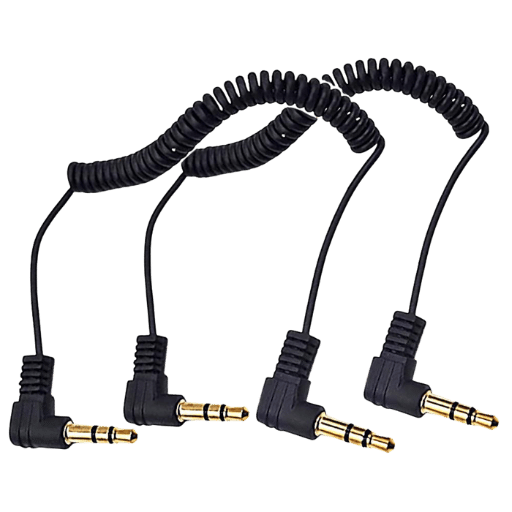
Comparing Coiled Cables with Straight Cables
|
Parameter |
Coiled Cables |
Straight Cables |
|---|---|---|
|
Portability |
Compact |
Bulky |
|
Flexibility |
High |
Low |
|
Durability |
High |
Moderate |
|
Tangle-Free |
Yes |
No |
|
Length |
Limited |
Long |
|
Cost |
Higher |
Lower |
|
Use Case |
Dynamic setups |
Static setups |
|
Signal Loss |
Possible |
Minimal |
|
Tension |
Present |
None |
Advantages of Right Angle Connectors
Right-angle connectors facilitate several practical applications, mainly where space management and cable routing are critical. Their design prevents excessive cable bending, thereby reducing potential strain and increasing the life of both the cable and the connector. They will be suitable for tight or restricted spaces, allowing for a right-angle connection as per the established setup, with a neat and organized arrangement. Furthermore, since the connector retains the cable more securely, the likelihood of accidental disconnection is reduced. These are the key features that make it highly functional for audio, video, or industrial applications.
Understanding Pole Types: 4-Pole TRRS vs. Standard Connectors
|
Parameter |
TRS |
TRRS |
|---|---|---|
|
Contacts |
3 (Tip, Ring, Sleeve) |
4 (Tip, Ring, Ring, Sleeve) |
|
Signal Type |
Stereo/Balanced |
Stereo + Mic |
|
Usage |
Audio equipment |
Smartphones, headsets |
|
Standards |
Universal |
CTIA, OMTP |
|
Compatibility |
Limited mic support |
Audio + Mic support |
|
Applications |
Instruments, speakers |
Headsets, multimedia |
|
Adapters |
TRS to TRRS |
TRRS to TRS |
Recent Innovations in Spiral Audio Cable Design
New Materials and Durability Enhancements
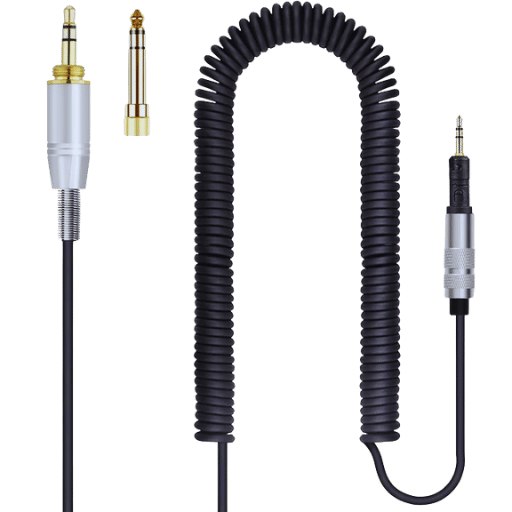
In recent years, more emphasis has been placed on researching innovative materials and structural integrity that can further enhance performance and, consequently, the life of spiral audio cables. High-purity oxygen-free copper (OFC) or silver-plated copper conductors are used nowadays for enhanced conductivity and less signal loss. These conductors are then wrapped with various types of outer jackets, including thermoplastic elastomers (TPE) and braided nylon, which offer benefits such as high flexibility and wear resistance.
Besides innovations such as Kevlar reinforcement and multi-layer shielding, the increase in cable durability has made breaking almost impossible, protecting cables from electromagnetic interference (EMI). A self-coiling or memory-shape spiral is incorporated into some of these designs, striking a balance between usability and mechanical resilience. These innovations are designed for the most demanding applications, such as those found in professional audio environments where consistent adherence to performance and reliability is crucial.
The use of these newest materials and design procedures marks an increase in demand for cables that maintain clean audio while withstanding rough treatment without compromising their effectiveness.
Technological Advancements in Sound Quality
Innovations in digital signal processing, high-resolution audio file formats, and improved transducer designs create modern technologies that raise the bar for sound quality. Digital signal processing enables the pristine manipulation of audio signals to boost clarity and fidelity. High-resolution audio formats, such as FLAC and DSD, provide superior sound quality by storing more data than traditional formats. Moreover, state-of-the-art transducer technologies in speakers and headphones, like planar magnetic and electrostatic drivers, enable the realization of more accurate and immersive audio reproduction. Thus, among these developments, it is ensured that the systems perform with precision and reliability in various applications.
Design Trends in Coiled Audio Cables
The need for both application and aesthetic design has driven modern advancements in coiled audio cables. The cables are typically made with very high-end materials now, such as oxygen-free copper (OFC) conductors or silver-plated conductors, providing proper signal transmission with fewer interferences. Modern insulating materials, such as thermoplastic elastomer (TPE), and braided shielding keep these cables flexible, making the cables more durable when subjected to constant use.
From a design perspective, coiled cables are optimized for compactness and usability. Higher elasticity in the coil structure enables it to manage tension more effectively, reducing strain on connectors and allowing for extended length when needed. It essentially means that these cables typically come with modular or detachable connectors, supporting a wide variety of devices, including top-of-the-line audio equipment and modular synthesizers. Contemporary designs, therefore, are more concerned with aesthetics, offering a wider range of color and style options that appeal to both professionals and consumers.
Recent market data indicate that coiled cables are gaining popularity in professional audio scenarios, including live performances and recording studios, due to their quick setup and reduced signal disturbances. This trend has also spread to consumer electronics, where practical solutions for headphones and portable audio devices are in high demand. In conjunction, these trends demonstrate an increasingly balanced emphasis on functionality, style, and adaptability, rendering coiled audio cables pertinent in the ever-changing audio technology landscape.
Frequently Asked Questions (FAQs)
Q: What is a spiral audio cable?
A: A spiral audio cable, or coiled audio cable, is built to offer flexibility and to resist tangles. It is primarily used to connect audio devices, including smartphones, tablets, and car stereos. It provides an easy way to manage lengths without clutter.
Q: How does this 3.5mm male-to-male jack work?
A: The 3.5mm male-to-male jack is perhaps the most common type of connector and is used to plug a variety of audio devices, such as headphones or speakers, into a source, be it a phone or MP3 player. It allows stereo audio to be transmitted and is compatible with virtually every electronic device.
Q: What are the benefits of using a right-angle 3.5mm male connector?
A: When used in tight spaces, a 3.5mm right-angle male connector offers an advantage as the design helps avoid bending and can reduce cable strain in the plugging action. This feature is convenient in limited spaces, such as car stereos or tablets.
Q: Can I use a 4-pole TRRS extension aux audio coiled cable for my smartphone?
A: Yes, a 4-pole TRRS extension aux audio coiled cable will work with all smart devices having a 3.5 mm port. It allows both audio and microphone operations, thus making it suitable for hands-free communication or voice commands.
Q: What length options are available for audio coiled cables?
A: Coiled audio cables are available in various lengths that allow the customer to decide which length fits their specific application. The coiled design allows a shorter cable to be stretched to the required length, affording considerable flexibility when excess length is an inconvenience.
Q: How do I customize my audio cable for specific devices?
A: To customize your audio cable for specific devices, you choose the correct adapter or connector that suits your audio devices. For example, a male-to-female adapter cable can be used to connect devices with different port types.
Q: What is the difference between the male audio jack and the male-to-female adapter?
A: A male audio jack is a connector that can plug directly into a port on an audio device, whereas a male-to-female adapter is used for two male connectors to go through a female port. It can extend the reach of an audio cable or serve to connect several devices.
Q: Are anti-tangle audio cables effective?
A: Yes, anti-tangle audio cables are made from materials and by construction methods that minimize knots and twists. This feature can be helpful for users who frequently stow their cables to ensure they remain tidy and ready for use.
Q: Can I plug in my audio cable into a USB adapter?
A: Yes, you can use a USB adapter with your audio cable if the audio device supports audio input through USB. This permits the transmission of digital audio via a 90-degree right-angle 3.5mm connection, which may offer improved sound quality compared to the typical analog connection.
Reference Sources
1. Evaluating The Strength Of The Multilayer Spiral Cable Processing In The Event Of Mechanical Deterioration (Zhou et al., 2004, pp. 1–5)
- Key Findings:
- This study investigates the influence of the cable handling and winding process on the mechanical and electrical properties of multilayer spiral superconducting cables, as well as the degradation caused by manufacturers.
- The report notes that while the critical current of the cable significantly decreases once it is bent, the simulation of pure bending using the set model does not align well with experimental measurements.
- A new simulation center that copies the reel-to-reel winding process was developed, and the data from this facility compared more favorably with the experimental results.
- Methodology:
- Regarding the problem of assessing the performance and behavior of a multi-layer spiral cable that winds its way into the reel, the authors utilized a finite element model.
- The authors verified simulation outcomes from the bending simulation and the new simulation of winding with damage using real data on critical current degradation.
2. Cord UIs: Controlling Devices with Augmented Cables
- This paper, published by MIT, discusses the types and applications of cables, presenting a range of cable configurations, including spiral cables.