








Wondering how electricity flows through various devices for proper and safe installation? Thus, the two-way switch is among important devices most often found in homes and offices. Instead of a single-pole switch, this device allows for control of a light or other electrical fixture from two separate locations, as a matter of fact, making a great deal convenient. This article looks into two-way switch wiring in detail-shorthand for their correct operation-well down into actual applications, thereby providing a technically inclined but easy-to-comprehend guide. Whether you are an electrician working in the field, a DIY enthusiast, or just curious about electrical systems, this guide will help you untangle this common but highly useful device.
Introduction to Two-Way Switches
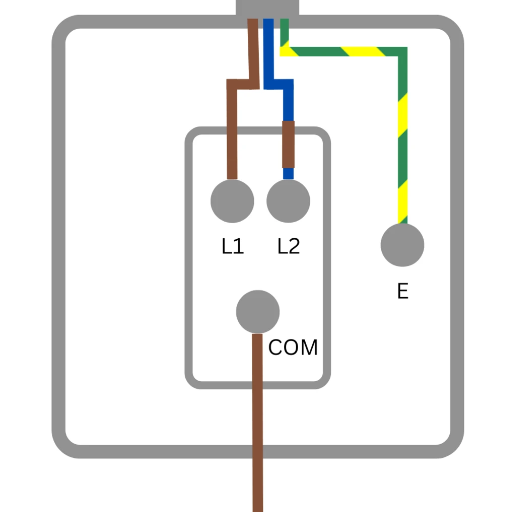
A two-way switch allows you to control one light or fixture from two different positions. This is possible because two switches are connected through two traveler wires in addition to a single common wire. Whenever either of the two switches is thrown, the circuit would either be completed or broken, which would cause the fixture to be turned on or off. They are often installed in stairways, corridors, or big rooms where dual control is a plus for accessibility and convenience.
Definition of a Two-Way Switch
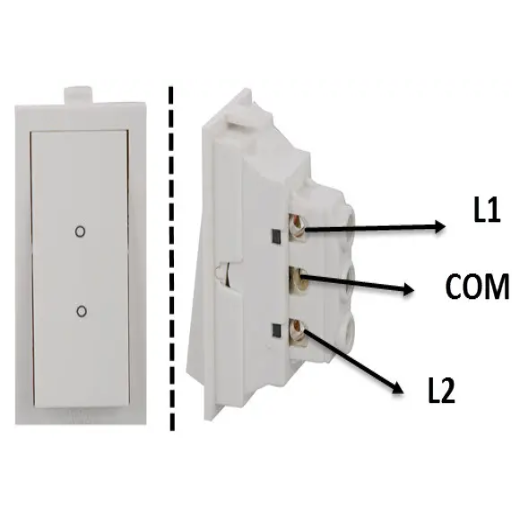
An SPDT switch or two-way switch is an electrical device used for wiring to control a load from two different locations, such as a luminaire. It operates with the cooperation between three main terminals: the common terminal and two traveler terminals (L1 and L2). The common terminal is wired either to the line or the load, while the traveler terminals are linked via traveler wires. Depending on the direction of current flow through the traveler wires, these wires will either energize or de-energize the load.
The internal workings of the two-way switch have a pivoting contact bridge that, under the actuation of the switch, will alternately connect to one or the other of the traveler terminals. This switching may provide or interrupt a path for current to complete the circuit. Industry standards determine the operating voltage and current capabilities of such switches, with ratings often being of 10A or 15A at 120/240 volts for residential use.
The present-day rendition of two-way switches has now been enhanced by the integration of smart technology. Communicating wirelessly by protocols such as Wi-Fi or Zigbee, smart two-way switches synchronize dual control points, providing a gain in installation flexibility when they sometimes eliminate the requirement of traveler wires. This gain in installation flexibility further enhances compatibility with automation or remote control systems.
Proper identification of use and wiring methods of the two-way switches would promote the applications of the two-way switches for efficient and safe operation. These switches are increasingly being employed for lighting control in houses and offices, where their use is very convenient. They have, in fact, proven useful in many places where multi-point access is required.
Importance of Two-Way Switches in Lighting
Theoretically, two-way switches will enhance a lighting scheme in convenience and functionality, as the challenge of multiple access points generally arises in corridors, staircases, or sizable rooms. These switches allow the control of one or two lights from any of two locations, thus limiting excess wiring and encouraging energy-saving and operational convenience. The judicious integration of these switches imparts minimal complexity to the circuit itself, allowing them to function seamlessly in the residential as well as commercial environment.
Two-way switch installations require utmost care for electrical safety and working reliability. The circuit thus formed permits the current to flow according to the position of the switches, which are basically a pair of coupled switches. With the increase in modern technology, intelligent two-way switches can now allow for remote control and automation, which greatly contributes to smart-home systems. Just about everything can be placed under even lighting control or energy management, with two-way switches considered basic requirements in any modern electrical design.
Common Uses of Two-Way Switches
Two-way switches find their primary application in lighting designed to be controlled at several points. A typical situation occurs in staircases in which users must turn on the lights from above and bottom as a matter of convenience and safety. Similarly, two-way switches are popularly installed in hallways and large rooms with more than one entry so lights can be turned on or off without retracing one’s steps. In addition to residential applications, commercial two-way switch applications in the industrial domain, such as warehouses or corridors, will be employed to equally enhance operational efficiency by putting lighting under the control of different strategic points. With these incidents, two-way switch concepts are becoming increasingly popular for remote and automated control through smart integration in green building designs.
How a Two-Way Switch Works
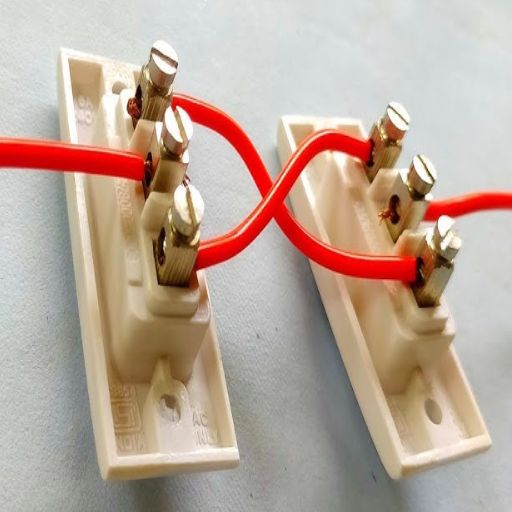
This is a light or electrical wiring system that is controlled by two switches. Essentially, the two switches are connected by a pair of traveler wires. Each switch has three terminals: one is marked “common,” while the other two are marked “traveler.” Depending on the position change in one switch, the path is completed or interrupted, thus turning the lamp on or off. This arrangement allows for control of the lamp from either of the two switches-a very practical application for stairways or long hallways.
Basic Principles of Two-Way Switch Operation
Simple two-way systems allow convenient control of a lighting circuit from two separate locations. The structure has traveler wires used to reverse the flow of current depending on the switches involved: whenever a switch is toggled, it either changes the connectivity of the traveler wires to possible completion of a circuit or interruption.
In present-day two-way switching, higher technical standards and materials are adopted for reliability and efficiency. Switches are now commonly rated for amperages varying between 15 and 20 amps, depending on specific requirements in either residential or commercial settings. Moreover, improvements in manufacturing today guarantee switch housings to be heat-resistant and durable enough for sustained operation under continuous electrical loads.
Energy Conservation Statistics: Studies demonstrate a 30% reduction in the consumption of lighting energy through smart two-way switch arrangements integrating home automation systems. This is mainly due to features like motion detection, scheduled operation, and real-time occupancy sensing.
On the whole, the principles of two-way switching would basically be the old-school electrical engineering concepts, except that with the advent of technology today, these could be made into very smart yet energy-efficient solutions for modern infrastructures.
Understanding the 2-way Switch Mechanism
The 2-way switch mechanism, at its core, relies on the fundamental principle of establishing and breaking an electrical circuit to get the output working, usually a light. A 2-way switch setup involves two switches and one load (light), allowing the user to control the load from two different locations. This is indispensable for situations like staircases, hallways, or large rooms where having more than one point of control is desirable.
With modern switch technology, one enhancement after another comes to performance, safety, and convenience. For example, today, many systems can integrate into smart home setups, permitting voice control via smart assistants and remote operation through mobile apps. Also, these newer systems can employ wireless communication protocols such as Zigbee or Z-Wave, thus sparing a lot of rewiring in retrofit installations.
According to the data, any conversion from traditional 2-way switch control into smart control will result in a significant energy-efficiency potential. For instance, a smart 2-way switch with an occupancy sensor can provide perceptible energy savings of at least 20 percent. In addition, when these switches are joined with centralized lighting control systems, they enable data-driven energy management that creates opportunities for sustainability in both home and office.
Having been simple in design, the demand for 2-way switch systems and their contemporary counterparts is on the rise due to the rationale of their great adaptability. The addition of further options like dimming control, new scene settings, real-time feedback/monitoring, etc., further elevates the systems into a very useful tool within modern electrical and automation infrastructure.
Comparing One-Way and Two-Way Switches
| Feature | One-Way Switch | Two-Way Switch |
|---|---|---|
| Control Points | Single location | Two separate locations |
| Terminals | Two terminals | Three terminals (Common + 2 Travelers) |
| Complexity | Simple installation | More complex wiring |
| Cost | Lower initial cost | Higher upfront investment |
| Applications | Bedrooms, small offices | Staircases, hallways, large rooms |
| Smart Integration | Limited functionality | Enhanced smart features |
One-way switches, also called single-pole switches, are the most basic type of electric switches commonly used for domestic and commercial developments. Exactly as its name implies, one-way switches operate one circuit that is controlled at one location; hence, they are used for simpler types of installations, such as bedrooms or small offices. Technically speaking, a one-way switch is an electric switch that has two terminals: one receives the live wire coming in from the source, whereas the other discharges the load wire to the device and henceforth comes with a rather straightforward ON and OFF function.
Two-way switches are more complex and versatile because they enable control of a single circuit from two distinct locations, so they are more suitable for large spaces like staircases, hallways, or large rooms. These switches operate with three terminals, and because their wiring must be interconnected with the other switch, they usually require the feeding conductor, two traveler cables from the other switch location, and a switched conductor back to the load. Being able to switch a light having multiple points dramatically increases user convenience and energy conservation, especially in a smart building scenario.
One of the recent changes brought by automation has distinguished these types of switches even more. One-way switches tend to be more or less static in their functions, but two-way switches have seen increased functionalities, including smart switches with programmable functions and interfacing with home automation ecosystems. A good example is two-way smart switches that could be connected with Wi-Fi or Zigbee, thus allowing remote operation through a mobile device or through a voice-enabled assistant.
Market Trend: Two-way switch systems have statistically witnessed a 15% annual increase in adoption within automated housing markets worldwide, and the pressure for multi-location control setups is a major factor causing a surge in demand. While one pays more up-front for two-way systems, their scalability and compatibility with modern energy management frameworks make them a better choice long term for dynamic environments. Meanwhile, one-way switches remain a much cheaper solution for more straightforward lighting and control needs.
Wiring a Two-Way Switch
Safety Warning: For any kind of electrical work, it is very dangerous to have the power turned on. Hence, ensure the main supply is switched off. Using a tester, confirm that no voltage exists before proceeding. Ensure all work is done in accordance with local electrical codes or under the supervision of a licensed electrician.
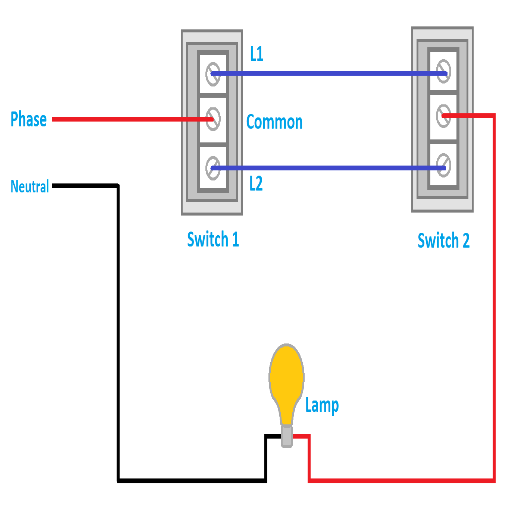
Two-Way Switch Wiring Diagram
Two-way switches are switches that allow a light to be controlled by two separate switches located in different locations. These arrangements are usually found along corridors, staircases, or large rooms. Hereby is a brief explanation of how this system works:
Main Elements:
- Switches: each with one common terminal and two traveler terminals
- Traveler Wires: They allow electricity to flow between the two switches
- Switch Leg: Goes from the second switch to the light fixture
- Live and Neutral: Connect the circuit
The scheme is as follows:
- The live wire from the source connects with the common terminal of the first switch
- Two traveler wires bond the traveler terminals of the first switch to the traveler terminals of the second switch
- The common terminal of the second switch connects to the light fixture through the switch leg
- The neutral wire is connected directly to the power source and light fixture
Working Principle:
The traveler wires form the very essence of the system: current can alternate between two pathways. The circuit is completed or interrupted depending on the positions of the two switches. This way, the system provides control of the light from both switches.
Step-by-Step Guide to Wiring a Two-Way Light Switch
- Understand the Components and Tools Required: Before installation, familiarize yourself with the components involved in a typical two-way light switch device. Components include two two-way switches, electrical wire (comprising a live wire, neutral wire, and ground wire), and the light fitting. Have all the necessary tools at hand: screwdrivers, wire strippers, voltage testers, and electrical tape.
- Turn Off the Power Supply: Safety first. Locate your electrical panel and switch off the power supply to the circuit you intend to work on. Check the wire voltage with a voltage tester to ensure there is none before proceeding with the installation to avoid any electrical hazard.
- Understand the Wiring Process: A two-way switch uses three wires between the switches: a live wire, a neutral or earth wire, and a traveler. The traveler allows the two switches to exchange the active connection. Get acquainted with the wiring diagram provided by the manufacturer or consult standard diagrams for a clear understanding.
- Wire the First Switch: Connect the live wire (usually black in color) to the common terminal (COM) of the first switch. Connect the two traveler wires (usually one wire is red in color, and the other traveler wire can be black or any color except red) to the traveler terminals L1 and L2 of the switch.
- Wire Second Switch: Connect the traveler wires coming from the first switch to the respective traveler terminals L1 and L2 of the second switch. The common terminal (COM) of the second switch is connected to the live input for the light fixture.
- Wire the Light Fixture: Attach the neutral wire (white or blue) from the power side to the neutral input of the light fixture. Ground wire (usually bare or green) should be connected to the grounding points of both switches and the fixture.
- Secure and Test the Installation: After securing all wire connections, the wires should be secured to the terminal screws. Any exposed sections of wire should be covered with electrical tape to prevent shorts from occurring. The switches and wires may then be gently pushed back into their electrical boxes and fastened with screws.
- Restore Power and Operation Check: Turn the power back on at the electrical panel. The two-way switch system needs to be tested for the light operation to be correct from both switch locations.
When in doubt, incorrect or unsafe wiring can be a danger. When in doubt, seek help from a licensed electrician or the manufacturer, and make sure all wiring is performed per electrical standards.
Common Wiring Mistakes to Avoid
- Reversing Hot and Neutral Wires: Misconnecting hot (live) and neutral wires could result in hazards from an electrical operation. This mistake may make the device live, presenting a higher risk of shocks and fires. Always check again and again to be sure that the wires are aligned with their terminals.
- Overcrowding Electrical Boxes: Overcrowding an electrical box means overheating and potential shorting. The boxes have a specific volume rating; exceeding it is not only against the safety standards, but also against the installation codes. Use boxes of appropriate size for your wiring needs.
- Improper Grounding: Either unconnected or improperly grounded wires can give rise to dangerous electrical surges. In other words, proper grounding is the pathway for the abnormal electrical current and is what protects the appliances and humans from these electrical faults.
- Using the wrong wire gauge: Improper wire size or gauge could lead to the wire overheating and thus, to failure. Higher current-carrying circuits call for thicker-gauge wires having the right insulation rating. Always consult the local electrical codes or the manufacturer’s recommendations so that wire-gauge selection can be done correctly.
- Loose Wire Connections: When the connection is loose, this may lead to intermittent application of power or arcing, heating, and fire hazards. Confirming that all connections are properly tightened to the torque values specified by the manufacturers can avoid such problems.
Advantages of Using Two-Way Switches
Easy Control
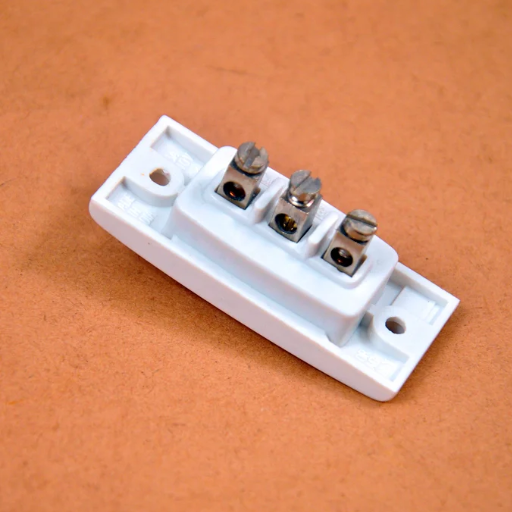
A two-way switch allows a single load, say a light fixture, to be turned ON or OFF from two separate locations. It comes in handy in areas like staircases, corridors, or large rooms with several entrances.
Improved Safety
Because lighting can be controlled from two positions, two-way switches help users to avoid having to walk through dark or barely-lit paths.
The two-way switch comes in handy in improving the safety of electrical systems. Lighting control at two or more locations means one need never walk through darkness, where incidents may be tripping or slipping. Modern two-way switches are generally insulated properly and made from quality materials that mitigate issues such as shorts and overheating. Besides, many of these switches come with safety features, including child-proof design, an indicator light that assists operators even in low-light conditions, and features that adhere to highly stringent industry safety standards. Therefore, these improvements make two-way switches a safe and dependable option for diverse environments, alongside being convenient.
Energy Saving
The two-way switch system eliminates the uneconomical use of energy, reducing the inconvenience of switching lights ON from one place and OFF from another. Thus, lights have to be employed when there is a need for them.
Multiway control of lights is not only a larger convenience, but an energy-conservation factor as well. The whole purpose behind a multiway control system is to allow a light to be turned on at one point and off at another, thus reducing energy consumption whenever possible. Hence, the two-way switch emerges to be eminently functional and convenient for both home and industrial purposes to facilitate greater control of lighting systems.
Adaptability
Two-way switches can fit almost all types of lighting systems and serve as a flexible choice in residential and commercial environments, depending on different wiring configurations and plans.
Easy Installation
Contemporary two-way switches are designed with relatively easier installation and wiring in mind. Any electrician or DIY work would consider them an easy choice.
Enhanced Control Over Lighting
Two-way switches provide an ingenious solution for lighting control. A single light fixture can be controlled from two points by these switches, after which they are convenient in bigger places or those with multiple points of entry; the functioning of the electrical circuit is simple, wherein the current flows in accordance with the position of each switch.
Two-way switches also provide anything from plain to sophisticated controls for LED and smart lighting systems. They can be used with dimmers and motion sensors for extra performance. A two-way switch is simple to install, with most switches designed to fit into standard electrical boxes with very little tooling or expertise needed.
Cost-Effectiveness in Home Wiring
The cost-effectiveness of home wiring solutions is always a matter of balancing the initial costs with energy efficiency and long-term durability. Standardized materials such as wires with PVC insulation for copper reduce the initial outlay, while high electrical conductivity and safety standards are ensured. Modern wiring systems are also designed for energy efficiency: for example, smart systems with motion detectors or programmable thermostats might keep utility costs down over time. Circuit breakers and surge protectors of the right quality will prevent expensive repairs due to electrical faults. Good design compliant with the local building codes will usher in safety and minimize the frequency of costly rewiring later.
Two-Way Switch Systems
Two-way systems are installed to enable single light or electrical fixtures to be controlled from two different locations, thus providing more convenience and flexibility in residential and commercial settings. The system utilizes a combination of two switches wired with traveler wires. Current may alternate flow down either path. This implies that either switch can be toggled to turn the fixture on or off. Hence, from a given position, an action to turn on or off can be done at either switch. The double switches are thus prepared from their positions. Planning and installation of such systems shall be performed with correct wiring methods in compliance with local codes to assure the working ability and safety of the systems. This is an assurance against electrical faults and assures longevity during execution.
Overview of Two-Way Light Switch Systems
With these systems, a light can be operated from two different locations. These systems are best used in hallways, staircases, long corridors, or large rooms. Essentially, two-way switch systems connect two switches by traveler wires and one common wire. When one switch is toggled, circuits are either completed or interrupted based on proper or improper alignment of the contacts within the switches to determine whether the light is on or off.
Technical Operation
Switches used in two-way circuits are SPDT switches. Each switch has three terminals, commonly named as Common, L1, and L2. The switches are connected with traveler wires so that the electrical current can flow through either of two ways. Changing the traveler wire used on one switch will reroute the electrical current to change the light state. Unlike other systems, a two-way system does not distinguish one switch as the “master”, and any switch can activate the circuit without needing to be switched on by the other.
The wiring connection of two-way switch systems must be made in conformity with the local codes. Safety procedures should be observed, such as switching off the power at the breaker and checking the voltage level with the multimeter before proceeding with the installation. Avoid using improper wiring methods that can cause dangers to the system itself, such as short circuits or loose connections.
Using Two Switches to Control One Light
Two-way switches are intended to control one light from two locations. It entails connecting two SPDT switches with traveller wires, with a neutral in common, all going to the light. I would determine to connect the power by way of the common terminal of one switch, while the load (light) would be connected to the common terminal of the other. Following wiring practices, all connections are checked, and then one can be confident that the light can be operated safely and successfully from either switch location.
Integration with Smart Home Systems
In a smart home, a two-way switch system offers superior control over convenience and thus energy efficiency. Modern smart switches can replace conventional SPDT switches of the Z-Wave, Zigbee, or Wi-Fi sort, with remote operation from a smartphone app or voice command using Alexa, Google Assistant, or Apple HomeKit. This entails installing smart switches that are multi-way-compatible, wiring them correctly for the two-way functionality, and then connecting the switches to the home network for added features such as schedules or geofencing and energy monitoring (where supported). It is essential to be aware of the compatibility of smart devices with the electrical system currently in the home and to make certain the network is secure to shield it from unwanted access.
Smart Integration Benefits:
- Remote control via smartphone apps
- Voice command compatibility with smart assistants
- Scheduling and automation capabilities
- Energy monitoring and reporting
- Integration with broader home automation systems
- Geofencing capabilities for automatic control
Reference Sources
What is this? Is it code switching, code mixing, or language alternating
Analysis of communication strategies used by barangay candidates in their campaign speeches
Frequently Asked Questions (FAQs)
What is a two-way switch?
A two-way switch is an electrical switch used to control a light or a fixture from two different locations. They are usually installed in large rooms or hallways having more than two entrances, where it would make sense to turn the lights on or off from either end of the area.
How do two-way switches work?
Two-way light switches operate on a particular wiring method wherein two switches are connected to the same light fixture by wires. When one switch is flipped, it switches the connection, turning the lights on or off, irrespective of she they choose in the other switch.
What is the wiring diagram for two-way light switches?
In this usual way switch wiring diagram, two switches are interconnected by two wires, and each switch has a common terminal and two traveler terminals, which allow power to flow either way, so the light can be controlled from multiple locations.
Could a two-way switch be used in conjunction with a one-way light switch?
This combination setup consists of a two-way switch with a one-way switch to control one light from one location and allow another one-way switch to turn it off from a different location.
What is the difference between a two-way switch and a three-way switch?
Two-way switches are for controlling a light from two locations, while three-way switches in North America allow control from three locations. The wiring and setting up of a three-way switch is more complicated than that of a two-way switch.
How to wire a two-way light switch?
One will have to run two wires between the two switches, connecting to the common terminal of each switch to the light fixture. The traveler terminals are then connected between the two switches. Follow the wire diagram for the exact configuration.
What are way switches?
Way switches, including two-way and three-way switches, are used to control lighting or devices from two or more locations. These work in a system of switches so that electrical installations can efficiently manage lighting in different situations.
How does a single-switch light work?
Controls for one light operate under a certain wiring system that allows several switches to do the job at once. When in action, one of the switches changes its position; it sends a signal through the wiring that either finishes or breaks the circuit so that the very same light can be controlled from different locations.