






The Internet has become the backbone of modern life. It connects people, businesses, and devices in an instant. What then enables such high-speed and reliable communication? At the core of this technical marvel lie fiber optic cables. These glass or plastic wonders have revolutionized the entire approach to transmitting data at the speed of light. However, not every fiber optic cable is the same; given this, understanding the differentiation made by them through impedance or design can go a long way toward the optimization of Internet activities. This article delves into fiber optic cable types for the Internet, disclosing their unique properties while enabling you to understand which particular fiber optic cable is best suited for certain applications.
Understanding Fiber Optic Technology
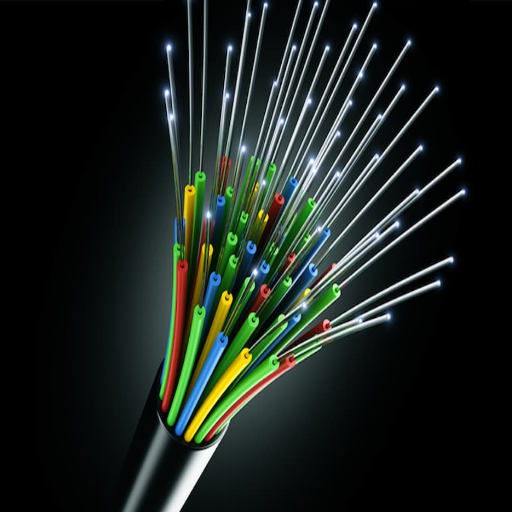
Fiber optics is a light signal data transmission means through extremely thin strands of glass or plastic called optical fibers. These fibers are capable of transporting vast amounts of information across extremely long distances at very high speeds and with minimal attenuation. The very core fiber optic system consists of the transmitter converting electrical signals into light signals; the fiber, which carries these light signals; and the receiver, which converts light signals into electrical signals. This new technology is widely applied in Internet infrastructure and offers the highest speeds, bandwidth, and reliability over copper lines; hence, parallel to its usage in high-demand applications such as streaming, online gaming, and business networking.
What is Fiber Optics?
Fiber optics is a technology that involves thin strands of glass or plastic, called optical fibers, to transmit data in the form of light pulses. An optical fiber is very thin, almost the thickness of a human hair, bundled in cables so as to carry huge amounts of data over long distances. Fiber optic systems use either lasers or LEDs as light sources that encode and communicate information at almost the speed of light, making them one of the most highly effective communication tools.
One of the biggest advantages fiber optics offers is the ultimate speed. Modern fiber optic networks, for instance, can practically give data transmission speeds of almost 1 Gbps for common residential use, while the technological advancements in some of the centers push speeds above 400 Gbps. A fiber optic network carries far more data than copper cables, boasting huge bandwidth as well. Therefore, it forms the backbone of the fastest Internet today.
The reliability of fiber optics constitutes another important factor for consideration. Therefore, in some places, copper cables are electromagnetic interference susceptible with signals degrading with distance, while optical fibers allow a high degree of signal integrity in transmission. With a minimum amount of energy loss, optical fibers will always provide the best possible and consistent performance, even under inclement weather.
Modern digital economies worldwide are fed by fiber optic networks. According to an ITU report issued in 2023, countries endowed with a dense fiber optic infrastructure are among those towns with fast internet speeds that can also sustain advanced technologies such as 5G, IoT, and cloud computing.
Fiber optics is becoming a must in industries such as telecommunications, medicine, and defense. From allowing high-quality native video streaming in telemedicine equipment meant for remote healthcare all the way to sophisticated communication in military application deployments, fiber optics is indeed empowering the connectivity of the future.
How Fiber Optic Cables Work
Fiber optic cables communicate data or information through light signals through the assembly of thin strands of glass or plastic, the diameter of each being thinner than a human hair. These fibers are bundled into cables and utilize the principle of total internal reflection to steer light to substantial distances. It is essentially surrounded by cladding that reflects the light into the core to minimize signal loss.
Thanks to modern technology, fiber optic systems have become very efficient, reaching speeds of 1,000 terabits per second in the laboratory and 1 Gbps-plus in commercial systems for consumer applications. These cables are known for having very low latency and can best support any real-time applications such as online gaming, video conferences, and remote control.
The length over which these cables can transmit signals without the need for any signal amplification is greater than 60 miles; this exhibits greater efficiency in comparison to copper cables. Multi-mode and single-mode fibers are exploited by the telecom industry according to the requirements. For instance, single-mode fiber works well for long distances where signal dispersion is minimal, and multi-mode fiber suits shorter distances.
The additional durability of fiber optic cables makes them reliable. They resist electromagnetic interference, environmental factors such as humidity, and even extreme weather conditions. Thus, these features show how better fiber optics can improve data transmission in all areas.
Types of Fiber Optic Cables
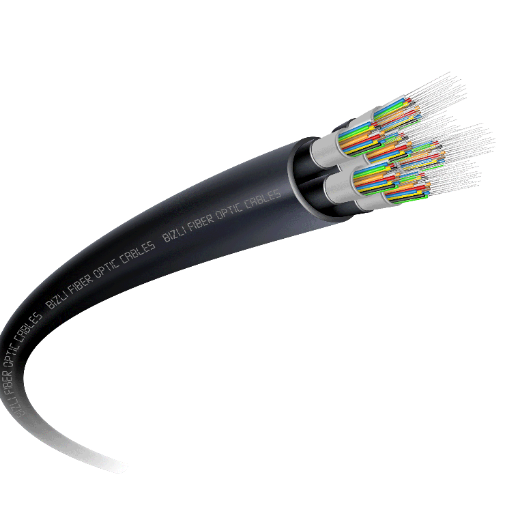
The fiber optic cables are provided in numerous varieties depending on applications and performance. The two major classifications are single-mode fiber and multi-mode fiber.
Single-Mode Fiber
Single-mode fiber optic cables work best when carrying data over long-distance paths with maximum precision. With an extremely small core size of about 8-10 microns, these cables allow light to move in a single path that, in turn, avoids any degradation in the signal and higher bandwidths. These are the cables used for telecommunications, long-haul networks, and high-speed internet connections. Single-mode fiber carrying signals is effective beyond 40 kilometers (25 miles) at 100 Gbps and higher speeds and is thus a necessity for transcontinental and undersea communications.
With a small core diameter of roughly 9 microns, single-mode fibers can allow the passage of just one mode of light. Therefore, it reduces signal distortion, offers higher bandwidth requirements for long distances, and is suitable for telecommunications, long-haul data transmission, and network applications that require high precision. With an ability to facilitate long-range communication, single-mode fiber is employed in undersea cables and metropolitan area networks. Although often needing more perfect connections, and thus expensive equipment, than multimode fiber, with respect to signal integrity over very long distances, the best option is at least in those applications where efficiency and reliability matter.
Multi-Mode Fiber
Either a 50 or 62.5-micrometer core gives this fiber optic cable a multimodal property that allows more than one light mode to travel simultaneously. The design suits short-distance data transmission cases, say, within a data center, a local area network (LAN), or an enterprise building. While multi-mode fibers generally experience greater modal dispersion than single-mode fibers, they are ideal for short-to-medium distances, approximately 550 meters (1800 feet), and are often deployed with relatively cheaper light sources like LEDs or VCSELs (Vertical-Cavity Surface Emitting Lasers).
Multimode fiber is designed with short-distance communication systems in mind and, thus, is mostly used in local area networks (LANs) and data center interconnects. It has a bigger core diameter than single-mode fiber; hence, multiple modes of light can propagate through it simultaneously. This facilitates greater data transmission at shorter distances but leads to a rise in modal dispersion that destroys a signal on longer distances. Multimode fiber is, in general, cost-efficient, as it has simplified connectivity requirements and the ability to use lower-cost light sources such as LED and VCSEL. It finds its application where bandwidth requirements are high, but the cable length is limited. In this way, multimode fiber provides a good and friendly solution for high-speed communication.
Armored Fiber Optic Cable
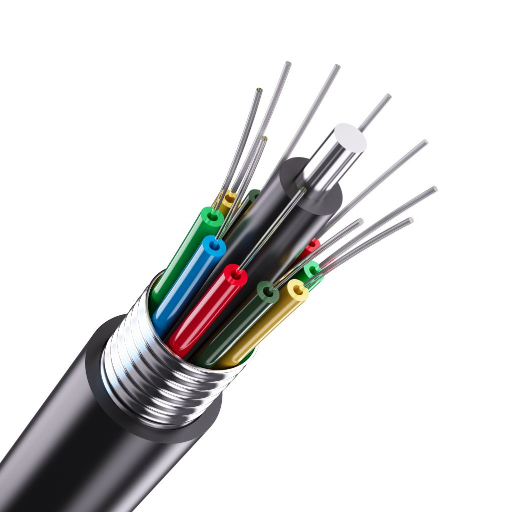
These are the cables required for durable use in harsh environments. They provide an additional protective layer that can consist of steel or aluminum, preventing the glass fibers inside from any mechanical damage or unwanted interferences, such as by pests or adverse weather changes. Industrial applications, outdoor setups, and areas with the movement of heavy machinery are normally places where they see use, ensuring a reliable option in tough environments.
Ribbon Fiber Optic Cables
Ribbon fiber optic cables have a flat, ribbon-like structure with parallel optical fibers for high-density installations. Their application areas cover data centers and telecommunication rooms where space savings are paramount and splicing must be done efficiently. Ribbon cables may have hundreds of fibers, enabling huge data throughput in very small designs.
Specialty Fiber Optic Cables
Specialty fiber optic cables, including submarine cables, have been designed and engineered for certain applications. For example, submarine cables are made to withstand pressure and environmental challenges under the oceans. On the other hand, the bend-insensitive fiber cables are designed for tight bends in indoor installations without too much signal loss, making them ideal for residential and office environments.
Fiber optic cables have changed the game in transmitting data: faster than anything ever before, with a high degree of reliability and versatility. Getting into recent times, fiber technology has been made to include ultra-low-loss materials and manufacturing techniques that have greatly changed the dynamics of connectivity in the world, making networks more intelligent, quicker, and resilient.
Comparing Optical Fiber Cable Types
Depending upon the size of the core, an optical fiber cable may be classified into either single-mode fiber or multimode fiber, each serving different purposes. A single-mode fiber has a very small core diameter in the range of 8 to 10 microns. Hence, only one mode of light can propagate through it, making it suitable for long-distance communication at very high bandwidths. The other reasons for using single-mode fiber in telecommunications, data centers, and cable TV networks are the reduction in latency and modal dispersion. Because the single-mode fiber implementation generally involves precision manufacturing and demands lasers as more expensive light sources, the capabilities of single-mode fibers set them apart when it comes to transmitting data over long distances.
In contrast, multimode fiber features a much larger core, thus allowing several modes of light to pass through simultaneously. This sort of situation allows for data transfer over short distances at high rates, but modal dispersion tends to set in at long distances, and the signal quality is degraded. Being cheap, multimode fiber greatly complements cheaper light sources like VCSELs and LEDs, thus sees widespread usage in local area networks (LANs), data centers, and short-distance interconnections within buildings.
Some things to take into consideration include distance, data rate, and budget while choosing between these two. Single-mode fiber has to be put in long-distance, high-performance networks, whereas multimode fiber performs well as a cheap, short-range option inside tight environments. Both of them can assure the designer of reliability and scalability as per their application, thus making efficient and ready-for-future networking solutions.
Benefits of Fiber Internet
- Faster Speeds: Fiber internet provides download and upload speeds higher than conventional broadband, with the higher speed of data transmission and smoother online experiences.
- Reliability: Fiber is free from interference caused by weather and signal attenuation, unlike copper connections, hence offering stable and consistent connectivity.
- Higher Bandwidth: Fiber can allow more data transmission at a time and hence is very suitable for households or businesses with multiple devices with heavy applications.
- Low Latency: Less delay provided by fiber will make performance greater for video conferencing, online gaming, and streaming.
- Future-Proof Technology: The fiber ensures long-term usability as technology keeps evolving, with the ability to cater to greater Internet demands.
Speed and Performance Advantages
If discussing speed and performance, fiber-optic internet is known as the fastest option available and, therefore, must have a customized role in the top modern needs for connectivity. Symmetrical, fiber-optic networks generally advertise upload and download data rates current to 1 Gbps or above. Ergo, with fiber, file downloads, live 4K video streaming, and video conferencing can occur together smoothly without any pauses or buffering.
Research suggests that fiber networks offer a much better experience than traditional broadband of DSLs or cable, with a latency sometimes measured in milliseconds. This becomes essential for time-sensitive applications like online gaming or financial trading, where a few milliseconds matter. Plus, the fiber maintains speed regardless of peak usage periods, while older technologies usually drop in speed during peak hours.
Fiber is deeply entrenched in the history of technology advancement. Its ability to carry large amounts of data at high speeds is the foundation for innovations such as smart homes, cloud applications, and augmented reality experiences. This potential positions fiber-optic internet as a future-proof technology, thereby securing the users’ status at the forefront of digital advancements.
Reliability and Stability
Fiber-optic internet is synonymous with absolute reliability and stability, hence an excellent decision for home and business applications. Unlike the other copper-type interface, fiber-optic cables are less affected by any weather-based phenomenon-barometric temperature, argon rays, electromagnetic field, weather-related violence, and so forth. As a result, outages are rare, and a connection becomes more consistent.
The downtime rates for fiber-optic networks are considerably lower, much lower than your DSL or cable systems, according to some studies. Fiber connectivity, for example, can guarantee an uptime of 99.9% – this being a crucial factor for business and remote-working scenarios where uninterrupted internet must take precedence. Also, due to its enhanced core design, fiber allows symmetric upload and download speeds, giving preference to a strong performance during peak hours.
High stability ensures a seamless experience with full-HD video streaming, video conferencing, and the large file transfer process devoid of any lags and buffering issues. To wrap the flights, fiber technology serves as a strong candidate for the modern internet, with number speeds, reliability, and resilience surging along with escalating digital demands.
Cost-Effectiveness in the Long Run
Though fiber-optic internet involves a very high initial investment, the investment pays for itself with time due to durability, reliability, and ability to handle varying demands. Fiber-optic cables are engineered to last a very long time; in fact, most of them claim to have at least 25 years of life. This greatly diminishes frequent maintenance, unlike conventional copper-based networks that require a lot of work now and then. These networks also experience less need for maintenance and replacement. Besides, fiber-optic networks are much more energy-saving compared to older technologies, thereby keeping operational costs low, such as the power used for data transmission.
Data also show increased productivity and less downtime provided by the fiber-optic internet, and a 1% increase in internet speed is associated with a $126 increase in annual global GDP per capita, showing the economic ripple effects of improved connections. Further, homes with fiber internet access might see a rise in property value, as reliable high-speed internet has slowly gained importance as a utility alongside electricity and water. These long-term benefits with future-proof advantages make fiber-optic internet a great option for anyone or business striving to compete in the domain of the digital age.
Choosing the Right Fiber Optic Cable
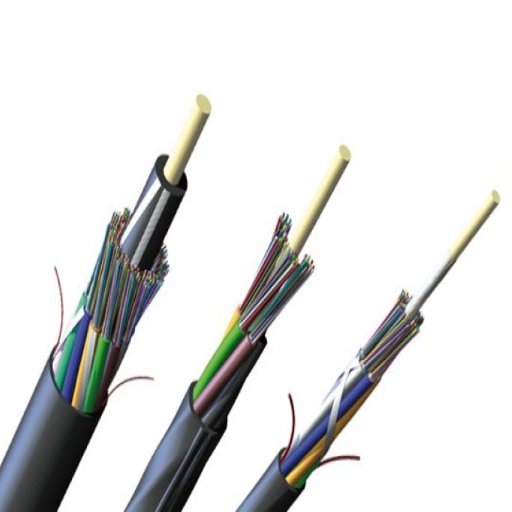
The following are the four prime considerations for selecting an appropriate fiber optic cable:
- Indoor or Outdoor Use: The indoor ones have thin jackets that offer little protection, whereas the outdoor ones are weatherproof and rugged against environmental forces.
- Single Mode or Multi-Mode: Long-distance transmission and higher bandwidth require single-mode cables, while multi-mode cables suit short-distance communications inside a building.
- Desire for Data Speed: Currently, as well as in the future, make sure the cable realizes the required data transfer speed.
- Environment: If the cable will be subjected to harsh environmental conditions like extreme heat or physical stress, identify those with coatings that can withstand such abuse or are built for rigorous environments.
The choice of an ideal cable will promise to make the work more efficient and reliable according to your needs.
Factors to Consider
- Cable Type and Application: Choosing a cable depending on its intended purpose-therefore networks require Ethernet cables such as Cat5e or Cat6, whereas audiovisual equipment requires HDMI cables. Choose a cable type suitable for the devices and performance needed.
- Compatibility and Standards: A cable should comply with accepted standards (e.g., USB 3.0 or HDMI 2.1) and also be compatible with the devices it is intended to serve. The latest standards usually offer better performance and tend to be more future-proof.
- Length and Signal Quality: The shorter the cable, the better the transmission quality. Although for longer transmission, one might opt for fiber optic cables or cables with signal boosters.
- Durability and Environment: In harsher installations, select cables with coatings such as PVC or maybe with braided shielding that can handle temperature changes, moisture, or some form of physical wear.
- Data Transfer Speed: For instance, if you have fast data transfer requirements, the cable rated for such performance must be chosen, like USB-C for a portable device or Cat6a for high-speed networking. It keeps everything flowing smoothly and efficiently.
Thus, having a cable that fits the above factors is best for your setup’s proper functioning, reliability, and longevity.
Common Mistakes in Fiber Cable Selection
- Ignoring Cable Specifications: This is a very common oversight that people usually manage to commit. It is mostly in the failure to coordinate fiber specification with network requirements, such as bandwidth and distance capabilities. Hence, it may sometimes result in under-performance or unnecessary expenses for the network.
- Overlooking Environmental Factors: Failure to factor environmental conditions into cable selection, such as temperature, moisture, or UV exposure, often ends in premature cable failure or damage.
- Improper Type of Connectors: Using an improper kind of connectors or failure in matching the connectors with existing equipment might cause a poor signal from deterioration or downtime.
- Ignoring Installation Practices: Untoward causes like exceeding bend radius limits or improper handling may yield a damaged fiber and very slow degradation of performance for some time.
- Underestimating Scalability: Being myopic about current needs and blindly ignoring future estimates in bandwidth growth is sometimes more costly in the long run when network expansions come to light.
Avoiding these common mistakes is essential in maintaining the efficient working of fiber optic networks, keeping them durable, and ready for future demands. You should always consider your own requirements and gain expert opinion from industry standards when selecting cables.
Future-Proofing Your Fiber Internet Connection
- High-Quality Components: Fiber optic cables and equipment should be bought to support higher bandwidth capacities than the ones currently in use. It is better to buy newer designs, such as single-mode fibers with 10G or 40G capabilities, to avoid production bottlenecks in case of increased demand.
- Plan Scalability: By considering enhancements in the design of the network, use modular hardware that could be upgraded later on. Consider installing additional conduits or fiber strands that would allow the network to be expanded with increased utilization or technology.
- Stay Informed on Industry Trends: Look into newer technologies such as DWDM or PON technologies that will allow for the more efficient and longer life of your fiber infrastructure.
- Installation and Maintenance of Cables: Have the cables installed by professionals and tested to ensure they perform satisfactorily. Maintenance would involve inspecting them regularly for signs of wear, environmental damage, or signal degradation, all of which impact reliability.
- Collaboration with experts: Collaborate with reputable ISPs and fiber installation contractors to customize solutions that meet your long-term business or personal objectives.
These steps will save you unnecessary upgrades, reduce downtime, and give you a sturdy network infrastructure capable of taking heavier loads.
How Fiber Optic Internet Works
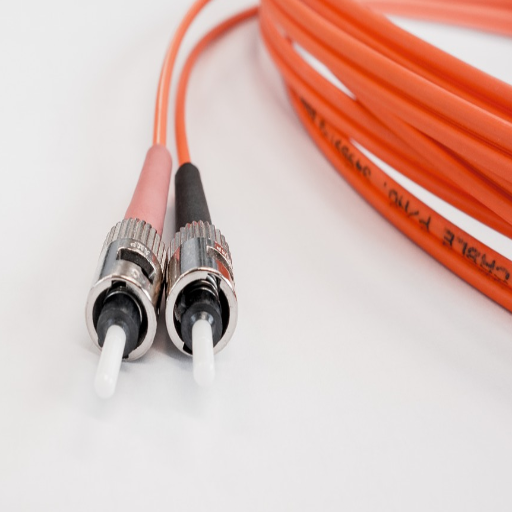
Fiber optic internet transmits data as pulses of light through very thin glass or plastic strands, termed optical fibers. These fibers are bundled into cables capable of transmitting immense quantities of data over great distances, with negligible loss of signal or interference. The light signals are converted into data that particular devices, such as computers or servers, can use. This technology guarantees the fastest possible connectivity, the lowest possible latency, and the ability to engage multiple devices working on huge data transfers at the same time, equating to the perfect solution for contemporary demands.
The Role of Fiber Cables in Internet Connections
Fiber optic cables constitute the most important factor in internet infrastructure today for high-speed and fully reliable access. These transmit data by converting it into light signals, giving it higher speeds and bandwidth that aren’t present with copper cables. Fiber optics reduces latency considerably in almost-real-time streaming, online games, and big file transfers. It is somewhat immune to electromagnetic interference, keeping a connection steady in an electronics-heavy setting. That means the fiber optics network will always be chosen for any high-performance residential and commercial internet service needed to fulfill the demand for an efficient network.
Setting Up a Fiber Internet Network
Setting up a fiber internet may be simulated by contacting an ISP that provides fiber optics in my location. Earth, air, fire, and water-for the different elements, the technician-concepts must install fiber-optic cables, along with a modem or router that is suitable for the location. Once everything has been installed, I would test the connection to verify that everything is working and to observe the fast and reliable pep-up of the internet network.
Understanding Fiber Connections in Homes and Businesses
Fiber optic internet, a comparatively fast and reliable service, stands as a prime choice for both commercial and residential applications. Fiber-assisted internet with high speeds assures uninterrupted browsing, HD streaming, and the swift transfer of large files, thereby enabling businesses to work without delays. Plus fiber ensures the greatest security in terms of lower latency, higher bandwidth, and being a future-proof technology for digital needs. Installation costs notwithstanding, the long-term benefits far outshine the input.
Reference Sources
Future trends in optical wireless communications systems
Analysis of the Telephone System of a University Campus and Design of a Converged VoIP System
Android Smartphone Damage Diagnosis Expert System by Web-Based Forward Chain Method
Frequently Asked Questions (FAQs)
What fiber optic cables are used for the internet?
The fiber optic cable used for internet connections generally falls into two main categories: single-mode fiber optic cable and multimode fiber optic cable. Single-mode cables are built for long-distance communications and use light to transmit data efficiently over longer distances, whereas multimode cables are more of a short-range cable and are probably used within a building or campus.
Advantages of fiber optic cables?
Fiber optic cables have many advantages over conventional copper cables. It can offer higher bandwidth, longer transmission distances without losses, and immunity to electromagnetic interference. Other advantages include: they are light and thin, easy to fix, and handy to handle installation.
How does fiber-optic technology work?
In fiber optic technology, communication takes place through data signals that are sent as pulses of light through the core of a fiber optic cable. This advantage has given fiber optics the edge in fast internet and reliability compared to the typical DSL and cable options. The light waves move through the cable via reflection from the alternate walls of the fiber core, thereby allowing data to be carried over long distances.
What are the different types of fiber optic cables?
Types of fiber optic cables include single-mode fiber cables for long-distance transmission and multimode fiber cables for short distances. Many different variants within these two categories exist, like OM1 multimode fiber and OS2 single-mode fiber optic, used to prescribe performance characteristics of the cables.
What factors go into choosing a fiber optic cable?
The decisive parameters include the distance of travel of data, the kind of network setup, and bandwidth requirements. Long distances call for single-mode fiber, while shorter distances and lower bandwidth needs are served better by multimode fiber.
What does the basic structure of a fiber optic cable look like?
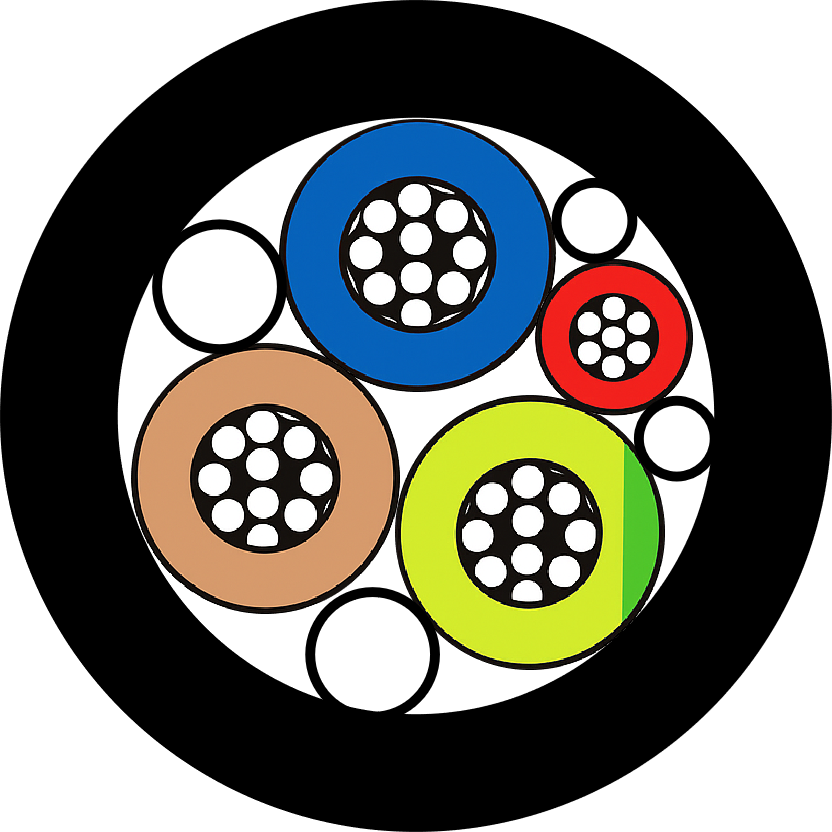
The basic structure of a fiber optic cable is core, cladding, and protective outer layers. Light passes through the core, while the cladding reflects the light out of the core to ensure minimum loss. This arrangement allows data to be sent with great fidelity through the cable over any distance.
What are the benefits of fiber optic internet?
Advantages of fiber-optic-based internet are that it yields faster speeds, more reliability, and better connection stability than traditional cable-based internet. Fiber-optic internet handles more data simultaneously, making it an excellent choice for households with many devices needing heavy Internet usage.
Are fiber-optic cables vulnerable to interference, or not?
They have that capacity, right? No! Fiber-optic cable cannot be interfered with by electromagnetic interference, which mainly affects copper cables. This immunity ensures that data being transmitted remains clear and intact, notwithstanding external electrical noise, thus rendering fiber optics a good choice for those who want a high-quality internet connection.