








When it comes to electrical safety, circuit breakers and fuses are paramount in preventing hazardous threats to your house and devices. The circuit breaker, most probably the most common name you have heard in the industry, does the safer job of an electrical device; there are a few differences between these two safety devices. In the realm of electrical processes, learning about these two safety devices helps to troubleshoot problems and make suitable decisions for your electrical system. This article explores some key differences between these safety devices to help you decide which may be better for your application. So sit back as we explore their mechanisms, benefits, and real-world applications.
Understanding the Basics of Circuit Protection
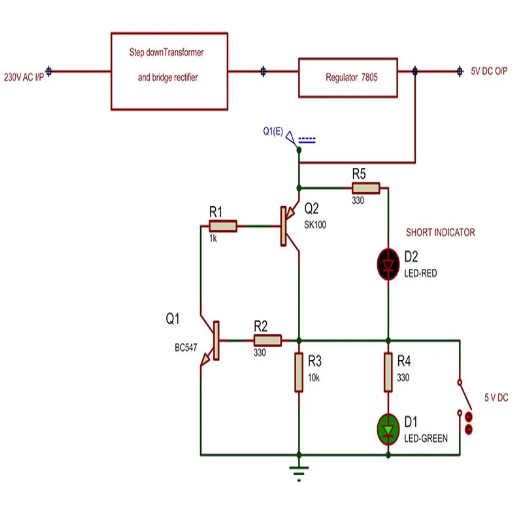
Circuit protection is used to safeguard electrical systems from damage because of instances of overcurrent, short circuiting, and overload. The working of devices, such as circuit breakers and fuses, is to detect such faults and disrupt the flow of power that may turn into hazards like fires and damage to equipment. Circuit breakers come with the advantage of being reset to reuse them and cannot be used anymore after tripping; fuses, on the other hand, have to be replaced whenever they blow. The preference, however, usually comes down to such factors as the specific competitive necessities of the system itself, ease of maintenance, and cost.
What is a Fuse?
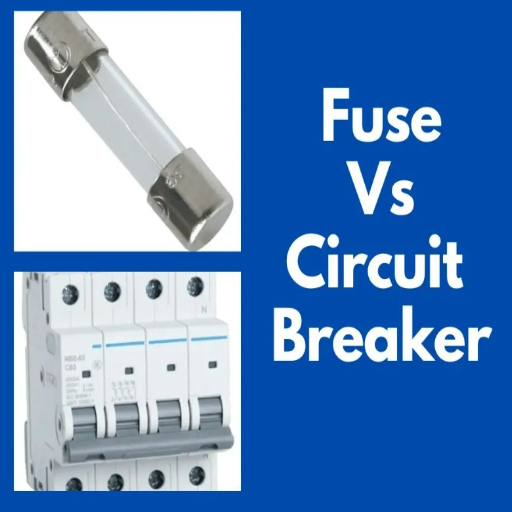
A fuse acts as a piece of electrical safety equipment designed to protect a circuit from overcurrent or excess load by cutting off the flow of electricity. A typical fuse comprises a thin metal wire or strip contained within a non-combustible casing. When a higher-than-safe current flows through the circuit, the heat produced melts the fuse wire or strip, breaking the electrical connection and, thus, protecting the system from damage.
Depending on the design and use, fuses exist in various types. Among the most common types are cartridge, blade, resettable, and high-voltage fuses. For instance, cartridge fuses find the majority of their applications in industrial applications, while blade fuses are widely employed in automotive circuits. All fuses have a voltage and current-carrying rating, and hence, it is important to use a correct fuse so as to give correct protection.
Modern-day advances in technology have certainly increased the speed and reliability of fuses. Today, usually fast-acting supposed to protect sensitive electronic equipment are given to fuse-cups. From the aforesaid studies, it is evident that because of their low cost and simple design, fuses are still widely preferred today for systems requiring disposable overcurrent protection. In addition, the ongoing trends toward miniature and surface mount fuses will assist their integration into smaller, more compact devices to meet the changing demands of consumer electronics and industrial technology.
If one intends to choose a fuse for a circuit design, one needs to take into consideration the voltage rating, current rating, response time, and environment. The proper installation of the fuse system and its maintenance will not only make the systems safer but will also enhance the lifespan of the really important electrical components.
What is a Circuit Breaker?
A circuit breaker is an important safety device in electrical systems, which prevents the flow of current when a fault, such as an overload or short circuit-is detected. Unlike the fuse, a circuit breaker gives out protection for an undesired flow of current and can be reset manually or automatically after rectifying the trouble. That makes it a more versatile and reusable solution for achieving safety in electricity.
Different types of circuit breakers have been developed in modern days to cater to voltage and current requirements, such as Miniature Circuit Breakers (MCBs) and Molded Case Circuit Breakers (MCCBs). MCBs operate with a current rating of up to 100 amperes, whereas an MCCB is designed for much higher loads, reaching several thousand amperes. Working with extraordinary accuracy, circuit breakers detect the fault current in a matter of milliseconds and immediately clear the circuit, thus preventing all the hazards arising from equipment damage, or worse, electrical fires.
With advances in smart technology, smart circuit breakers with monitoring and control features have been introduced, allowing users to operate these breakers remotely and undertake real-time diagnostics. Such features matter most in industrial environments where uptime and safety are paramount. World market data shows there is a significant growth opportunity for the circuit breakers sector, boosted by energy demand, infrastructure development, and a shift towards renewable energy sources. For example, the circuit breaker market was valued at $13 billion plus in 2022 and is expected to grow at a compound annual rate of growth rate (CAGR) of about 6% over the next decade. These trends clearly demonstrate how important circuit breakers are in the smooth functioning of modern electrical systems.
How Do Fuses and Circuit Breakers Work?
Fuses and circuit breakers are two important collaborative talents in electrical safety systems set up to ward off circuit damage under overcurrent or short-circuit conditions. A fuse consists of a tiny bit of wire or a strip of metal inside a box, which melts when excessive current flows through, disrupting the circuit. These are single-use and require replacement after one blow, making them ideal for applications wherein a low-cost design is preferred.
In contrast, more advanced and reusable circuit breakers are available. When a fault or overload occurs, the circuit breaker trips a switch to interrupt the flow of current. Once the issue has been rectified, the circuit breakers can be reset, either manually or automatically. Modern circuit breakers include many innovative features such as arc-fault detection, ground-fault protection, and digital monitoring. In this way, the use of advanced miniature circuit breakers waiting to be adopted in residential and commercial applications, in the range of 6A to 125A load, for enhanced safety, is gaining ground.
According to recent trade statistics, the use of intelligent circuit breakers is on the rise with the preliminary setup of smart home technology and energy management systems. These can be remotely monitored and controlled, allowing the user to gain insights into energy consumption. Furthermore, emerging circuit breaker technologies with solid-state design-sooner response, and an extended life-however-enhance performance and reliability. Fuses as well as circuit breakers are constantly evolving to remain relevant lately as critical safeguards of electrical systems.
Key Differences Between Fuses and Circuit Breakers
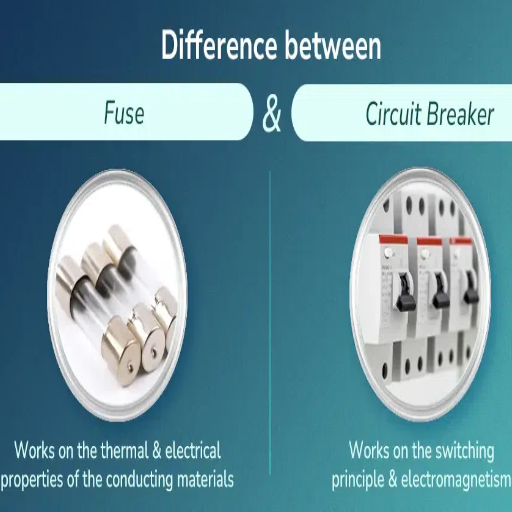
Understanding the fundamental differences between fuses and circuit breakers is crucial for making informed decisions about electrical protection systems.
| Aspect | Fuses | Circuit Breakers |
|---|---|---|
| Functionality | Melts away the conductor inside and breaks the circuit when excessive current flows beyond the capacity limit | Uses a mechanical switching mechanism to open contacts and interrupt current flow during overloads or short circuits |
| Reusability | Single-use devices that need replacement after blowing | Can be reset for reuse after tripping |
| Response Time | Generally fast-acting, offering a greater response to overcurrent conditions | Slightly slower response than most fuses, but still very effective |
| Cost | Generally cheaper initially | Costs more at first, but is cheaper in the long run due to its reusable nature |
| Suitability | Prevalent in small or low-power applications | More suited for larger systems and those that are often inconvenient to maintain |
Operational Mechanism
In ordinary circumstances, the primary difference in their mode of operations is the way they go about interrupting the current flow in case of an electrical fault. A fuse has a metallic wire or strip that is made to melt if excessive current goes through it. The melting cuts the circuit, so there is no flow of current anymore towards the appellant devices for their purposes. Fuses act very quickly, usually within milliseconds, which makes them very efficient for use during short circuits and overload protection throws low-capacity systems.
Though electromagnetic tripping can occur in electromagnetic current-interruption devices, other principles of the generation of disconnections are also available. Thermal-magnetic circuit breakers combine these two methods of tripping: excess heat created by high currents or a strong magnetic force generated during faults activates an internal switch to open the circuit. Currently, microprocessors and sensors in circuit breakers help determine faults more precisely, thus ensuring extremely fast response times and thereby improving the reliability of smaller electrical systems.
Current information observed that these breakers can trip within 0.01 to 2 seconds, depending on the manufacturer’s product specifications, allowing for variations in applications. Meanwhile, arc-fault detection technology can be included within industrial-grade systems, providing a higher level of protection for high-power environments. Such evolutions in design make circuit breakers more versatile and sturdier, especially when applied within complex electrical systems requiring frequent resets without replacing any components.
Resetting vs Replacing
Depending on the circuit that is getting tripped, resetting and replacement serve very different purposes. Being a very brief and simple operation, resetting the breaker restores electrical power, albeit when overloads or surges occur within safe limits. Data shows how modern circuit breakers are designed in such a way that they can sustain more than 10,000 cycles of trip-reset, whereby a breaker can actually go through millions of resets without losing functionality.
However, some instances might cause the breaker to be replaced, for example, if it does not trip in the event of a fault, or if it has physical damage such as burn marks or corrosion. Studies show that damaged breakers can pose a great risk, a fire risk, in fact, or a risk to the appliances connected to them, and this strongly speaks for timely inspection and maintenance.
Circuit breaker technologies evolved in such a manner that some self-diagnosing systems in industrial settings started being incorporated therein. Self-diagnosing systems provide for the surveillance of performance and notify when it should be replaced; hence, in a complex installation, reliability and safety are enhanced. These improvements sometimes turned the choice of resetting or replacing into a matter of circumstance, depending on further testing and inspection requirements enforced to decide what is appropriate.
Response Time and Protection
Response time in circuit breakers is a critical factor in securing material and human life in electrical systems. Among others, modern circuit breakers trip almost instantaneously during abnormal conditions. May it be an occurrence of a short circuit or an overcurrent? Typically, low-voltage circuit breakers can operate within a few milliseconds, with special high-speed ones acting even faster to reduce the damage to the connected devices.
Protection systems have been further enriched by intelligent systems. For example, nowadays, many circuit breakers have microprocessor-based technologies embedded within, so that these protective devices are able to provide exact monitoring and coordinate with other parts of the electrical network. These systems will recognize fault conditions and respond in a well-considered manner to prevent cascading failure.
Based on industry reports, advanced breakers offer as much as 60% downtime reduction in any given industrial setup. In addition, a real-time feedback system prevents likely hazards, reducing the chances of equipment failure or even fire. The advanced units for thermal-magnetic tripping further advance protection in adjusting themselves according to load conditions and offering better tripping accuracy.
The mention of these innovations brings about the understanding that circuit-breaker selection should consist of circuit breakers that address the particular demands of an application, thus allowing adequate response time and suitable protection to the relevant equipment and users.
Advantages and Disadvantages Comparison
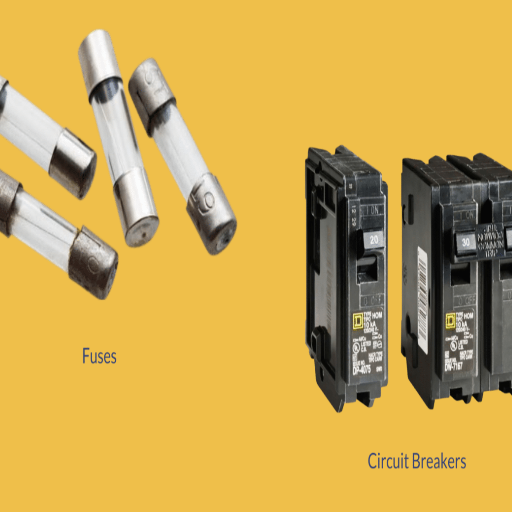
Advantages of Fuses
- Inexpensive: Fuses are less expensive than circuit breakers
- Simple in design: Easy operation and maintenance due to their simple construction
- Quick response: Fuses interrupt the current at overload or during shorts quickly, hence providing good protection
- Budget-friendly: Usually, fuses tend to be cheaper than circuit breakers; hence, they are preferred as a cheap option for electrical protection
- Response time: A fuse will open with respect to a current fault situation almost instantaneously; therefore, it gives the best kind of protection to sensitive equipment
- Maintenance: Unlike circuit breakers, fuses do not need any maintenance. As the fuse contains no moving parts, it is self-sufficient and durable
- Compactness: They are small in size, and for a compact electrical design, such a small size is a boon
Disadvantages of Fuses
- Single-shot: Fuses have to be replaced once they have blown, which can cause considerable downtime
- No flexibility: You cannot reset fuses, and you must replace them with the proper rating
- Limited capacity: When it comes to capacity, fuses appear to be less suitable
- Single-use: Once a fuse blows, it has to be replaced, which can become an inconvenience, accompanied over time by recurring replacement charges
- Less versatile: Fuses are designed to suit a current rating for a given application, making them less versatile when compared to a circuit breaker for variations in electrical requirements
- Non-recoverability: Unlike circuit breakers, fuses do not possess the capability to be reset and can therefore only be replaced after a fault occurs. Thus, a lapse in downtime of the critical systems can occur
- Environmental concerns: Blown fuses, in many cases, are incapable of reuse or recycling and eventually contribute to environmental pollution
Advantages of Circuit Breakers
- Reusable: Once tripped, a circuit breaker can be reset, hence minimizing the time needed for replacement
- Customizable: Programmable trip setting enhances application versatility
- Safety: An added safety feature is provided by a modern-day circuit breaker, such as ground fault protection
- Long Durability: They are built to operate efficiently after many cycles and have long-term dependable performance
- Safety Precautions: Up-to-date circuit breakers come with safety features like arc fault detection, hence giving greater protection to avert electrical fires
- Adjustments Made Easier: Sometimes, the settings on circuit breakers can be adjusted for different electrical loads, thus offering flexibility
- Faster Response Time: Circuit breakers are able to detect faults and interrupt small currents very fast in comparison with fuses, therefore minimizing potential damage to the electrical system
Disadvantages of Circuit Breakers
- Higher price: Circuit breakers are commonly more costly than fuses
- Complex design: They need to be serviced from time to time in order to work properly
- Slower response: Some circuit breakers may take a little more time to interrupt current than fuses
- High Cost: Purchase and installation of circuit breakers are usually far more expensive as compared to fuses
- Complex Design: It is so unique in construction that the probability of getting faults is also high, and it is difficult to perform repair and replacement without a professional
- Service Requirements: Despite being reliable, the lifespan of a circuit breaker is dependent upon some tuning, testing, or inspection on occasion
- Infections of Minor Overloads: They do not react sometimes to minor but continual overloads, somewhat lessening their protective ability
Cost Comparison: Fuse vs Circuit Breaker
A fuse is less costly initially as compared to the offer of a circuit breaker, when it comes to costs. Fuses are simple devices with a low price, and installation costs are low as well. However, the expense of continuously replacing blown fuses can add up, especially in systems that encounter frequent short circuits or overloads.
Whereas circuit barriers have a higher upfront price but become a better investment over time, they are very much economical on the side of long-term running costs. A circuit breaker will reset itself one time after tripping on a fault, but this time it comes with no replacement charge of any kind, while the next time for a fuse installation is a new wire or a replacement for identifying blown fuses. Also, they are stronger than a fuse and are reusable; therefore, they become more cost-effective in modern electrical systems, especially where interruptions have to be kept minimum.
Hence, in the end, most of the picking between fuses and breakers goes on application requirements that justify “budget constraints, maintenance issues, and the expected longevity of the electrical system.”
Choosing Between a Fuse and a Circuit Breaker
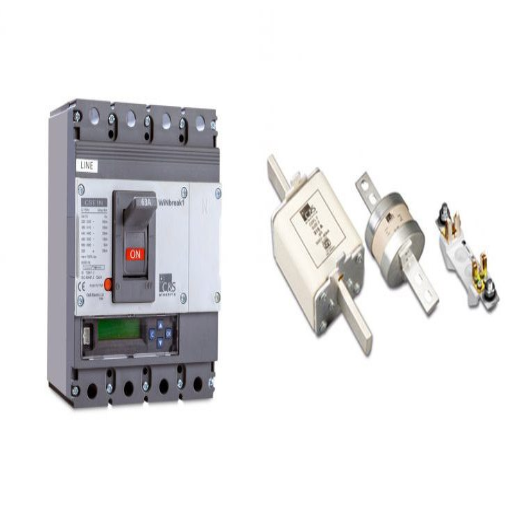
The choice between a fuse versus a circuit breaker lies in the choice of key variables related to cost, application, and maintenance. Fuses tend to be generally priced low and offer some protection in systems of low cost or a temporary nature. Apart from that, they also have to be replaced once they blow. In contrast, circuit breakers are costlier at first but are reusable, require less effort to reset, and have long-term reliability and minimal disruptions for systems of interest. Frequent maintenance or higher safety standards call for more circuit breakers. In deciding between these options, examine your system’s peculiar needs.
When to Use a Fuse
Fuses are suitable for low-cost, temporary electrical systems where simplicity and cost are key considerations. One sees fuses in small household appliances, rudimentary automotive circuits, and older electrical installations. Fuses provide very reliable protection by interrupting the circuit during overcurrent or short circuits, with the potential to damage the equipment or ignite a fire. They are well-suited for applications where faults are rare, since a replacement is needed every time the fuse blows. Conversely, it also means being very easy and cheap to acquire, making installation easy and ensuring that protection is in place without having to maintain it.
When to Use a Circuit Breaker
Nowadays, electrical systems are built to go through more frequent interruptions or be edited whenever necessary. Unlike fuses, these circuit breakers can be readily reset after tripping without any possibility of replacements being made in between. Due to their ability to withstand high electrical stresses and support more complex systems, circuit breakers are installed in home, commercial, and industrial applications. They provide safety and convenience simultaneously as they can detect almost all faults, such as overload and short circuit, and instantly stop the flow of power. These are being installed where continuous monitoring and highest reliability are required- thus, integrating them into the new-age electrical designs becomes very critical.
Factors to Consider in Electrical Systems
When designing or analyzing electrical systems, some critical considerations can be taken into account for their optimum operation and safety:
- Load Capacity: The total load expected within any given period needs to be calculated. This would ensure the system is capable of handling three-phase peak demand without any cases of overload and failure. The size of wires, circuit breakers, and transformers should always be considered so that the ability of the system to perform is not compromised.
- System Voltage: Determine voltage requirements for the application. Review whether the system is to be furnished with low-voltage, medium-voltage, or high-voltage equipment, dependent mainly on the size and type of electrical installation.
- Safety Considerations: Design safety features against faults such as overloads, short circuits, and leakage currents. Circuit breakers, grounding, and insulation are some of the typical protection mechanisms to include in an installation. A locally accepted code and local standards should always be followed for the sake of user safety.
- Energy Efficiency: Energy-efficient components and smart technologies are chosen in order to lower the power consumption, thus lowering the operational costs. An energy management system can provide insight into usage patterns that can be optimized.
- Scalability and Future Needs: The system should be flexible enough to allow future expansions or modifications without requiring significant rework. This way, the infrastructure will grow with the demands.
When these aspects are well-catered to, an electrical system will perform reliably while being geared toward the regulatory requirements and sustainability goals.
Common Applications and Usage
Electrical systems are usually found in residential, commercial, and industrial applications. In residential uses, power is required for such things as household appliances, lighting, heating, and cooling. Commercial applications maintain the operation of building services like lighting, HVAC, security, and office equipment. In industrial situations, the electrical systems are required to operate machinery, production lines, and control systems. These applications depict the versatility and nature of electrical systems across these few sectors.
Residential Use of Fuses and Circuit Breakers
A central safety feature in residential electrical installations is the fuse or circuit breaker. When electrical overloads or short circuits occur, electricity stops flowing through these devices, thus protecting homes. Fuses are the oldest of safety measures: they have a thin wire inside that melts by design when overloaded and are unusual in modern circuits. Circuit breakers, being reusable and more convenient, perform an automatic trip the moment a problem arises; thereafter, they can just be reset. The fuse or circuit breaker assembly is placed inside a home so as to protect the wiring from fire hazards and electrical shock injuries to the appliances and their owners. Modern houses use mostly circuit breakers owing to their reliability and simplicity.
Industrial Settings: Fuses vs Circuit Breakers
While both fuses and circuit breakers find use in the industrial context, wherein they lend support to the electrical system, I find that circuit breakers are far more operationally worthy. Once tripped, a circuit breaker can be reset, ultimately minimizing downtime. Fuses, however, entail replacement after a fuse blows, which becomes an inconvenience. But I do accept that there are certain instances where a fuse can best serve the purpose, say high-voltage applications, where a pursuit of electrical fault occurs at a faster pace. The choice really boils down to the upstream requirements of the system and operational priorities thereof.
Understanding Fuse Boxes and Circuit Breaker Panels
The fuse boxes and circuit-breaker panels are the safety mechanisms of a home electrical system, as they prevent an overload or short circuit. In a Fuse Box, fuses protect wiring from excess electrical current flow by melting a metal wire, breaking a circuit, and preventing electrical flow. A circuit-breaker panel uses switches that cut power when dangerous current levels are detected and can be reset without replacement.
Generally, due to greater efficiency, ease of use, and reusability, the circuit breaker panels are more frequently installed in contemporary homes. They are quicker to respond and can meet the higher electrical demands of fast-changing households. However, fuse boxes are sometimes located in rather older housing and are still capable of handling some high-voltage applications. More often than not, the upgrade from an old fuse box will require investment toward a breaker panel, but it offers a higher degree of safety and functionality thereafter. Between either system, dependent on the respective system evaluation, it varies with the age of the property, electrical demand, and safety considerations in the long run.
Reference Sources
“Short Circuit Capability and Fusing in Switch Mode Power Supplies”
“Performance of Surge Arrester Installation to Enhance Protection”
“Study of Electrical Systems in the Engineering Faculty, Udayana University”
Frequently Asked Questions (FAQs)
What is the difference between a circuit breaker and a fuse?
The main difference between circuit breakers and fuses lies in their function and ability to be reused. A fuse consists of a wire or strip that melts with excessive current flow, thus interrupting the electrical circuit. Circuit breakers, on the other hand, are reusable devices that automatically interrupt the circuit during an overload or short circuit and can be reset with no need for replacement.
How do circuit breakers protect electrical circuits?
A circuit breaker interrupts the flow of electricity when it detects any overload or short circuit. Through this, damage to the electrical system is prevented. It also lowers the chances of fire or electrical hazards occurring, thereby ensuring the safety and reliability of your home.
Are fuses replaceable?
Yes, fuses must be replaced once they blow. When a fuse responds to an overload by melting the wire inside, it cannot be reused. It is, therefore, a good idea to have several spare fuses available for quick fixes in an electrical system.
How does a fuse behave when a power surge occurs?
If a power surge occurs, a fuse melts the thin wire inside, depending on the limit of the current. This breaks the circuit, offering protection for the appliances and wiring against damage. However, a fuse is a one-time-use device and must be replaced afterward.
What difference exists between a circuit breaker and a fuse?
Among the differences between circuit breakers and fuses are their functioning, ease of use, and cost-effectiveness. Circuit breakers offer better protection since they can be reset once they trip, whereas fuses have to be replaced after being tripped. The other main difference is that circuit breakers tend to be the easiest to use, while fuses demand more work as they must be taken out of their holder and physically replaced with a new one.
Can a circuit breaker be reset for reuse?
Yes, circuit breakers are, in fact, reusable. Fuses are considered a one-time protector in the system because once they go off, they must be replaced. With circuit breakers, however, one can just reset them, assuming the fault has been cleared; this makes them more convenient for an engineer whenever in need to protect a circuit.
Which fuse types are available?
The types of fuses are cartridge types, plug types, and blade types. Each of these types of fuses deals with different current ratings and applications; therefore, one must ensure that the electrical system has the appropriate type of fuse in it.
Which one is better for home protection, fuses, or circuit breakers?
Circuit breakers are generally considered better for home protection because of their ability to reset after a trip, thus eliminating the inconvenience of replacing fuses. Besides, the circuit breakers offer greater safety, and their construction prevents them from being damaged when subjected to a high amount of current.
How will a circuit breaker be selected?
Circuit breaker selection undergoes the process of consideration for electrical load requirements, the determination of suitable amperage ratings, and application considerations within the system. Proper breaker selection offers adequate protection and performance for your electrical circuits.