






It is necessary to understand electrical systems as a homeowner or business owner, or one involved in power distribution. One of the most fundamental concepts in this field is the distinction between single-phase and three-phase power. These two types of electrical arrangements are not merely technical jargon; they determine the energy efficiency, the compatibility of equipment, and the functionality of the overall system. The difference between single-phase and three-phase power is the first thing to learn worth knowing while optimizing energy use, ensuring the right setup for your equipment, or just gaining more insight into how power flows. In this article, we shall break these down with their features, advantages, and applications, so you can make informed choices on your energy requirements.
Introduction to Power Systems
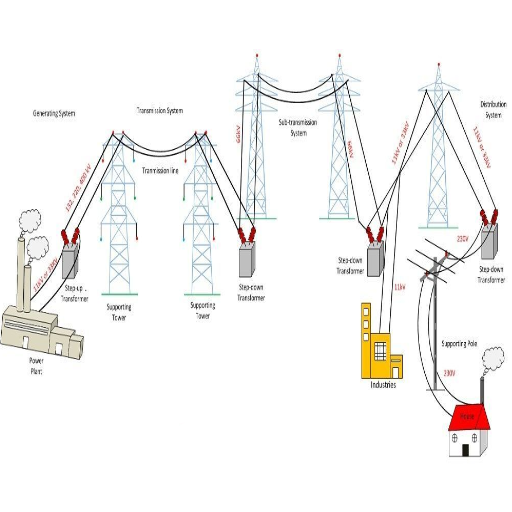
Power systems are those networks that generate, transmit, and distribute electricity to meet energy needs. They are made up of power generation units, transmission lines, and distribution systems working together to provide electricity from the source to the consumers. Efficient power systems ensure the supply of energy with reliability, minimize losses, and serve diverse purposes, from heavy industries to homes. Knowing the key components and their functions helps one in decision-making concerning energy solutions.
What is Single-Phase Power?
Single-phase power distribution is a power delivery system that is basically used for residential power or for light commercial purposes. A single-phase voltage A.C. delivers power through two wires: one is a hot or active conductor, while the other is a neutral one. This gives rise to a sinusoidal wave from which energy can efficiently flow into any electrical load.
The standard mains voltage of a single-phase power system depends on the area of supply; mainly, it is at 120 V in the US for general outlets. Some others use a supply voltage of 220-240 V. Compared with three-phase power, single-phase power is suited for low-powered loads. For instance, it specifies use for operating home appliances like lighting, refrigerators, washing machines, etc. These could also be small types of office equipment.
The main advantage of single-phase installations lies in their relative simplicity and the low cost of installation, especially in applications where energy demand is relatively constant and moderate. But at higher-end applications, the single-phase system cannot give the efficiency and load that are given by a three-phase system. Therefore, a three-phase energy source is generally used for higher and balanced energy loads of larger machinery or industrial establishments.
Types of Single-Phase Power Supplies
Single-phase power supply systems are distinguished into different types depending on design, working, and application. Below are the main types:
1. Linear Power Supplies
The working of the linear power supply depends upon directly regulating an input voltage to furnish an output voltage that is steady and constant. Systems like these are simple, low-noise, and very reliable. They hold importance in the field of sensitive electronics, such as audio equipment and lab instruments, where a steady source of power is needed. The linear power supply, however, does tend to use more energy since much of the energy is dissipated as heat in the process.
2. Switching Power Supplies
Due to their high efficiency and compact design, switching power supplies have become very popular. These are such that the input power is converted into a high-frequency AC signal, which, upon proper transformation and rectification, appears at the output as an extremely stable DC voltage. Nowadays, switching power supplies supply power to consumer electronics equipment, industrial equipment, and communication systems. These power supplies save energy in their operation, but their design might not be suitable for noise-sensitive applications.
3. Uninterruptible Power Supplies (UPS) for Single-Phase Systems
A UPS provides an alternative power source in the event of a mains failure. Single-phase UPS systems are aimed at smaller applications, such as personal computers, home networks, and small server configurations. Advanced UPSs will monitor the battery and regulate the voltage to ensure maximum performance and life.
4. Programmable Power Supplies
Programmable single-phase power supplies with digital interfaces are designed for user control of voltage, current, and other parameters. The apparatus finds extensive applications in industry for testing and development, with particular attention paid to testing electronics and components, almost always requiring precise power delivery.
Efficiency Data: Recent improvements in the design of single-phase power supplies show that switching power supplies with the newest technology are attaining efficiency ratings above 90%, scoring high on eco-friendliness and cost-effectiveness.
Advantages of Single-Phase Power
- Simplicity: These systems are cheaper to install and easier to maintain than three-phase systems
- Cost-effective: Lower installation and maintenance costs make them ideal for smaller operations
- Availability: Compatible with virtually all household appliances and small industrial equipment
- Energy efficiency for small loads: Efficient for lighting, heating, and small machines with power requirements generally not crossing 5kW
- Flexibility: Function unilaterally on a single conductor line, proving highly adaptable in rural or underdeveloped areas
- Backup power compatibility: Single-phase UPSs provide reliable backup power for home office equipment
Limitations of Single-Phase Systems
- Limited power capacity: Cannot provide the firm and steady drainage of power needed for large industrial equipment
- Higher transmission losses: Incurs higher losses than three-phase systems over long distances
- Intermittent power delivery: Single alternating voltage wave creates intermittent drops in power delivery
- Poor efficiency for high demands: Three-phase systems operate at nearly 25% greater efficiency than single-phase systems
- Equipment wear: Motors and electrical appliances may experience more wear due to power supply fluctuations
- Voltage drops: Serious voltage drops can hamper equipment performance or lead to system instability
What is Three-Phase Power?
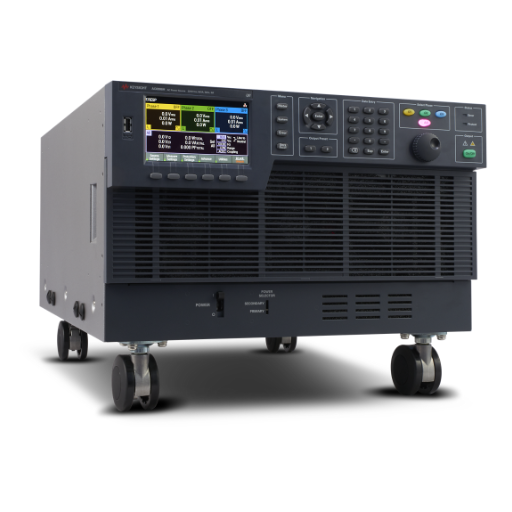
Three-phase power is a kind of AC power used widely in industries, commerce, and large-scale power distribution systems. While the single-phase system uses a single alternating sine waveform, the three-phase power generates the electricity transmission through three separate waveforms, which are outside one another by 120 degrees in phase. Such a balanced distribution amounts to even and efficient delivery of power from which high-demand systems reap the maximum benefits.
One of the major advantages is that, being able to give more power than single-phase systems, the three-phase system uses less conductor material than single-phase systems; hence making the transmission of power over long distances cheaper and more energy-efficient. The usual three-phase power system comprises three live conductors and one neutral conductor for carrying larger loads and stabilizing the operation of electric motors and equipment.
Key Statistic: Industries using large-scale machinery can see energy consumption of motor systems using three-phase power reduced by as much as 30% compared to their single-phase counterparts.
Industries using large-scale machinery-lifting compressors, pumps, and fabrication operations-for the most part, optimally utilise three-phase power. The balanced three-phase power can maintain the decline of vibrational and mechanical wear processes occurring through their motor-driven mechanism, enhancing operations’ life expectancy to a great extent.
They are particularly versatile and scalable. They may deliver low-voltage power for general use or high-voltage power for heavy industries. For example, in smaller systems, three-phase power voltage ratings normally range around 208 volts, while in large industrial settings, the rating could be 480 volts and above. Globally, three-phase power constitutes the backbone of modern electrical grids-the cabinets-from factories to data centers. Its efficiency, reliability, and scalability make it a critical infrastructure for the energy domain.
Types of Three-Phase Power Supplies
There are two main systems of three-phase power supplies in use:
Delta (Δ) Connection
The delta connection is a closed-loop system, so that the end of the winding relating to the power source connects end-to-end, just like a triangle. This type of system is commonly found in industry to offer high voltage levels and supply uninterrupted power to heavy machinery and equipment. Delta systems transmit higher power for shorter distances and are mostly useful for three-phase motors and lighting systems.
Wye (Y) Connection
In a wye connection, windings are connected at a common neutral, giving the connection a “Y” shape. Such a system is quite flexible about the loads, as it can support both three-phase and single-phase loads. The wye connection usually finds its way into distribution networks wherein neutral access is required, enabling safer and more balanced delivery to residential and commercial users. A wye connection is particularly good for longer transmission of power due to lower voltage losses.
Depending on your application, distance, and load requirements, each connection type will satisfy a particular need, thus demonstrating the adaptability of three-phase systems to a variety of settings.
Advantages of Three-Phase Power
- Superior efficiency: Provides steady and balanced energy, avoiding power dips and surges
- Greater power transmission: Can carry about 1.73 times as much energy as a single-phase system using the same conductor cross-section
- Cost-effective materials: Requires less conductor material to transmit the same energy compared to single-phase systems
- Better motor performance: Three-phase motors are smaller, lighter, and less costly than single-phase motors for the same power output
- Smooth operation: Easier starting and smooth torque result in less mechanical wear and tear
- Equipment longevity: Increased equipment lifespans and decreased maintenance costs over time
- Scalability: Can easily handle large loads, suitable for large industrial equipment and HVAC systems
- Renewable energy compatibility: Efficiently connects solar panels and wind turbines for green energy solutions
Limitations of Three-Phase Systems
- Higher installation costs: Requires additional wiring, transformers, and supporting equipment
- Complex setup: More complex installation and maintenance requirements
- Load balancing issues: Uneven load distribution can cause inefficiency and equipment overheating
- Limited residential applications: Most household appliances are designed for single-phase power
- Renewable energy challenges: Intermittent solar or wind energy can cause voltage and frequency fluctuations
- Advanced management needs: Requires voltage stabilizers or dynamic phase balancing for optimal performance
Key Differences Between Single-Phase and Three-Phase Power

| Aspect | Single-Phase Power | Three-Phase Power |
|---|---|---|
| Power Delivery | One alternating current for lower power requirements | Three alternating currents providing steadier, more efficient power flow |
| Voltage Stability | Less stable with power dips during each cycle | Stronger and continuous power supply preventing interruptions |
| Efficiency | Less efficient for energy-demanding operations | Better electricity transmission over long distances for heavy machinery |
| Cost & Complexity | Simpler to install and cheaper for small applications | More complex and costly but essential for large power needs |
| Typical Voltage | 120V or 230V depending on region | 400V to several kilovolts for industrial applications |
| Applications | Residential and light commercial use | Industrial and heavy commercial applications |
Voltage and Current Characteristics
The voltage and current characteristics vary greatly in types of single-phase versus three-phase system types, thus affecting their efficiency, stability, and application.
Single-Phase Systems
Single-phase power has an alternating current waveform. The voltage in these systems usually stands at about 120 V or 230 V, depending on the region. The current flow is not uniform in single-phase systems, whereby power dips to zero at certain lapses of each cycle. This, therefore, is less efficient in capacity during heavy or continuous energy demands.
Three-Phase Systems
Intending to deliver the desired amount of power, this system delivers and carries three AC currents having a phase difference of 120 degrees. Therefore, power remains constant and reliable. Three-phase systems usually run between 400 volts to even some kilovolts, depending on industrial or commercial requirements. The initial stage of continuous power flow in a three-phase system puts less interference on energy fluctuations that are suitable for heavy-load applications and electrical appliances.
Power Stability and Efficiency: With smoothly overlapping waveforms, three-phase systems enhance the application of the respective systems compared to single-phase systems. They deliver around 1.73 times more power without increasing current, giving less energy loss and higher performance of such systems.
Power Distribution Efficiency
With the evolution of modern technology, power distribution systems have greatly increased. Three-phase systems are purposely made to facilitate high energy transfer and are, therefore, accepted as industry standards in high-demand applications. Whereas balanced loads allow a three-phase system to perform with good energy efficiency, studies show energy losses with the transmission of three-phase power to be up to around 20-30% less than with similar single-phase systems.
Advanced Technology Impact: HVDC transmission lines carry electricity over long distances with greater efficiency than conventional AC lines, with power losses under 3% per 1,000 kilometers.
Having the ability to improve efficiency is another major benefit of embedded smart grid technologies. By combining monitoring activities in real-time with load shedding on demand, smart grids facilitate better load management and energy waste in the system. Energy Efficient Grid Upgrades have been shown to decrease energy consumption by as much as 15% in urban areas.
The above data substantiate the importance of these advances. For example, energy-efficient transformers and network improvements enabled the industrial sectors to reduce operating costs while ensuring a constant power supply. This points to the gradual transformation of power distribution into a sustainable and economical structure.
Applications and Use Cases
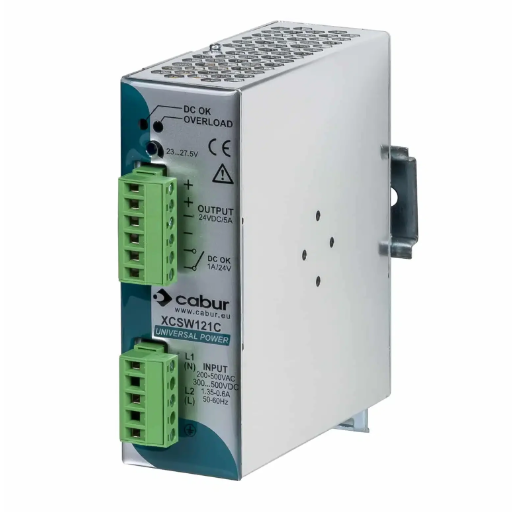
Energy-efficient power distribution systems find applications across various sectors, each benefiting from improved performance and reduced environmental impact.
Smart Grid in Urban Setup
The smart grid combines renewable energy systems with advanced metering and real-time analytics for optimal electricity distribution within cities. For instance, the installation of smart grids in urban setups of New York has brought about a 12% reduction in transmission losses with improvements in efficiency and reliability.
Industrial Automation
More advanced industrial plants are utilizing energy transformers and automated systems to minimize energy consumption. Studies have found that the industries with energy management systems have reported an approximate 20% reduction in energy bills and considerable cost advantages with environmental benefits due to reduced carbon footprints.
Data Centers
Data centers, infamous for their insatiable need for electricity, are now opening their purse strings for energy-efficient cooling systems and the installation of an optimized energy grid. Google, for instance, has embraced the use of a cooling system that consumes around 40% less energy, setting the stage for sustainability in the technology sector.
Residential Applications
From the residential side, smart meters and home energy management systems offer avenues for consumers to observe and cut down on their power consumption. Research showed that households using smart home solutions can cut down on electricity consumption on average by 10% and 15% outright power and cost savings.
Each of these applications points toward a broader scheme of energy-efficient power solutions and their deployment as essential sustenance for sustainable development and economic growth.
Choosing Between Single-Phase and Three-Phase Power

When selecting between single-phase and three-phase supply, one is dependent on the power need and applications. Single-phase supply is suitable when power is needed for the house and for light commercial use since it efficiently operates smaller appliances and is cost-effective for installation. Conversely, large commercial and industrial plants prefer three-phase supplies because they power heavy-duty equipment efficiently and keep the energy supply stable. Based on power load requirements and energy-resource demand in the long run, the better option can be realized.
Factors to Consider
The choice between single-phase and three-phase power includes many important considerations:
Energy Requirements
Generally, single-phase power is good enough for home or small office conditions with an average load not crossing above 120 or 240 volts. Three-phase power, on the contrary, is an effective alternative for large commercial or industrial uses, as it can deliver voltage at 415 levels and so can handle heavy machinery having consistent energy output. Moreover, three-phase power delivers far higher power density needed in scenarios where performance considerations take the front seat over energy requirements.
Cost Efficiency
Installation and maintenance costs often count as deciding factors. As single-phase systems are generally cheaper to install and need less infrastructure, these systems are ideal for smaller-scale operations. Businesses with high energy requirements benefit from greater long-term savings produced by three-phase electrical power because energy losses are less, along with good performance.
Equipment Compatibility
Consider the type of appliances and equipment that shall be powered. Household appliances, like refrigerators, lights, and smaller gadgets, are normally advertised for single-phase systems. In comparison, plants and machines, HVAC systems, and other high-power equipment are generally designed for three-phase utilization.
Future Scalability
Always allow for the chance of growth or change in energy demands. At present, the single-phase system may satisfy the needs, but once energy consumption grows by a large margin, expansion may be hindered. Being a three-phase system, greater scalability exists for the business to mold to a higher power load.
Energy Efficiency and Stability
Three-phase power-state energy-efficient and constant output, thus limiting downtime or fluctuations. For organizations, such as manufacturing plants or data centers, that require precision and uptime through interruptions to the output, three-phase power minimizes interruptions and increases output.
Cost Implications
Generally, the cost of a project is divided into the calculation between upfront and long-term savings. While three-phase power systems tend to have higher initial costs for installation and equipment, they may realize profit in the long term by way of energy savings with improved efficiency and reliability. For businesses such as ours, this means fewer interruptions, less maintenance cost, and higher productivity, which together make the initial purchase worth it.
Importance of Understanding Power Types
Understanding the various types of power systems helps in optimizing the distribution of energy as well as operational efficiency. For instance, a low-voltage system is usually used in residential and commercial buildings between 110 volts and 240 volts. This means it supplies power to everyday applications and lighting, making it highly important in day-to-day life. Medium-voltage and high-voltage systems, on the other hand, are used in industrial applications and the transmission of large-scale energies. Generally acting between 1 kV and 35 kV, medium-voltage systems, however, can extend beyond 100 kV as far as high-voltage systems are concerned, thus allowing for efficient power transmission over very long distances.
Recent worldwide energy-related statistics affirm the dominance of three-phase power systems in the industrial setting, owing to their ability to distribute power evenly and minimize transmission losses. The corresponding efficiency implies that industries reliant on heavy machinery, such as manufacturing and mining, have the luxury of saving on costs. Furthermore, increased powers of renewable energy, i.e., wind and solar, have necessitated grid systems capable of handling various power inputs. From learning about power types, engineers and policy makers can go on to develop energy systems that accommodate sustainability and resilience with respect to modern infrastructure needs while minimizing environmental impacts.
Future-Proofing Your Power Supply
Looking at future-proofing your power supply should mean looking at scalability, energy efficiency, and reliability. When you go in for a three-phase arrangement, this ensures that your infrastructure can accept higher loads as the energy demand rises with the increase in business. On the other hand, renewable energy can also allow you to defray the costs of staying green while abiding by the standards that callers are looking into. Regularly maintaining and upgrading equipment maximizes system uptime and prevents costly downtimes. Walking the future path with emerging technologies optimizes operational efficiency and prepares you for the energy demands of the far-flung future.
Key Takeaway: The choice between single-phase and three-phase power systems depends on your specific energy needs, budget constraints, and future growth plans. While single-phase systems offer simplicity and cost-effectiveness for smaller applications, three-phase systems provide the efficiency, stability, and scalability required for larger, more demanding operations. Understanding these differences enables informed decision-making that can optimize both immediate performance and long-term operational success.
Reference Sources
“Automatic Active Phase Selector for Single Phase Load from Three Phase Supply”
“Smart Electric Grids Three-Phase Automatic Load Balancing Applications Using Genetic Algorithms”
Frequently Asked Questions (FAQs)
What is the difference between single-phase and three-phase power?
The principal discrepancy between single-phase and three-phase is the manner of delivery and utilization of the electrical energy. Single-phase power consists of one power wire and is mostly available in residential areas, as it supplies adequate power for basic needs. Being three-phase, however, it has three wires supplying the power, and since it supplies three times as much power, it is ideal for high demand in industries.
How is single-phase power different from three-phase power?
Single-phase power is much simpler and used for smaller loads, while three-phase power is more efficient for larger power requirements. This means the three-phase system assures continuous power, which can ensure better performance of motors and other equipment. Such efficiency becomes important in industrial applications where power supply needs to undergo certain energy levels consistently and intensely.
What creates the distinction between single-phase and three-phase electricity?
The key differences basically boil down to how many power wires there are and how the power is supplied. Whereas single-phase systems have one phase and one neutral wire, a three-phase system requires three phase wires, which may or may not include a neutral wire, depending on the design. In addition, three-phase systems are better suited for carrying larger loads.
Can three-phase power be supplied to residential homes?
Whereas mainly the smaller residential homes may have single-phase power, larger homes or those with great power demands can be equipped with a three-phase power supply. This would allow the better distribution of electrical loads and can even work out scenarios where multiple high-power appliances are running simultaneously without the system getting overloaded.
What is single-phase AC power, and in what ways is it different from three-phase AC power?
Single-phase means an electric current with one alternating current supply. That is enough for low power demand. On the other hand, three-phase AC power consists of three alternating currents out of phase with one another by 120 electrical degrees, such that power remains stable and continuous practically all the time, thus appropriate for heavy power applications, from big industrial machinery down to ordinary heavy-duty loads.
Would I need three-phase supplies for my business?
Three-phase power supply is important in a larger power-demanding business, where multiple heavy machines operate simultaneously, or a perfect power supply is required for highly sensitive equipment. It has the efficiency and stability required for such demands, which single-phase power may lack when it comes to bigger applications.
How is the actual power transmitted in one-phase and three-phase systems?
Power in the single-phase system is transmitted from one phase wire through the neutral wire, or a simple circuit, to lower loads. Whereas in a three-phase system, the power is transmitted through three-phase wires, making a continuous flow of electricity in between and a relative balance of loads, and thus suitable for heavy applications.