Submersible Cable
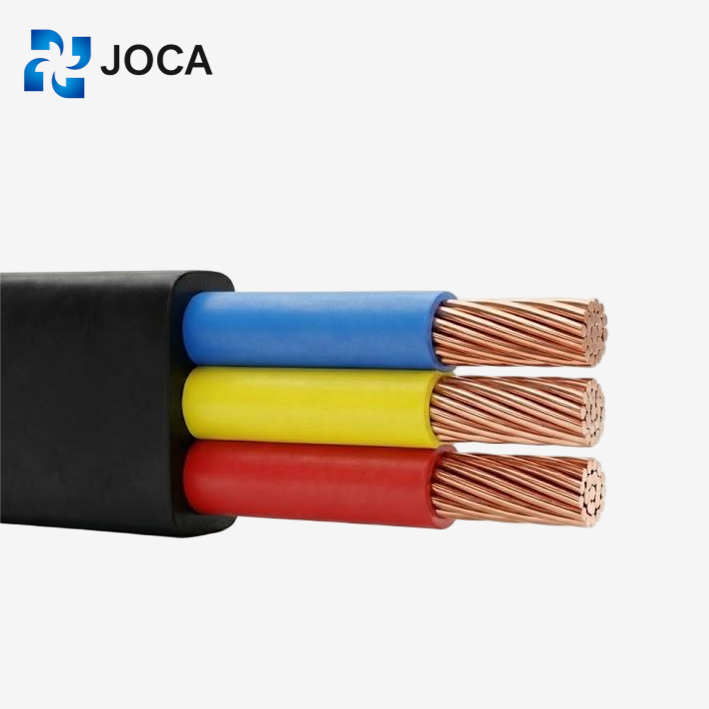
High Performance 3-Core Flat Rubber Cable for Deep Wells & Boreholes
Technical Specifications :
- Cable Shape: Flat (3-Core / 4-Core)
- Voltage Rating: 0.6/1kV (High Voltage Rating)
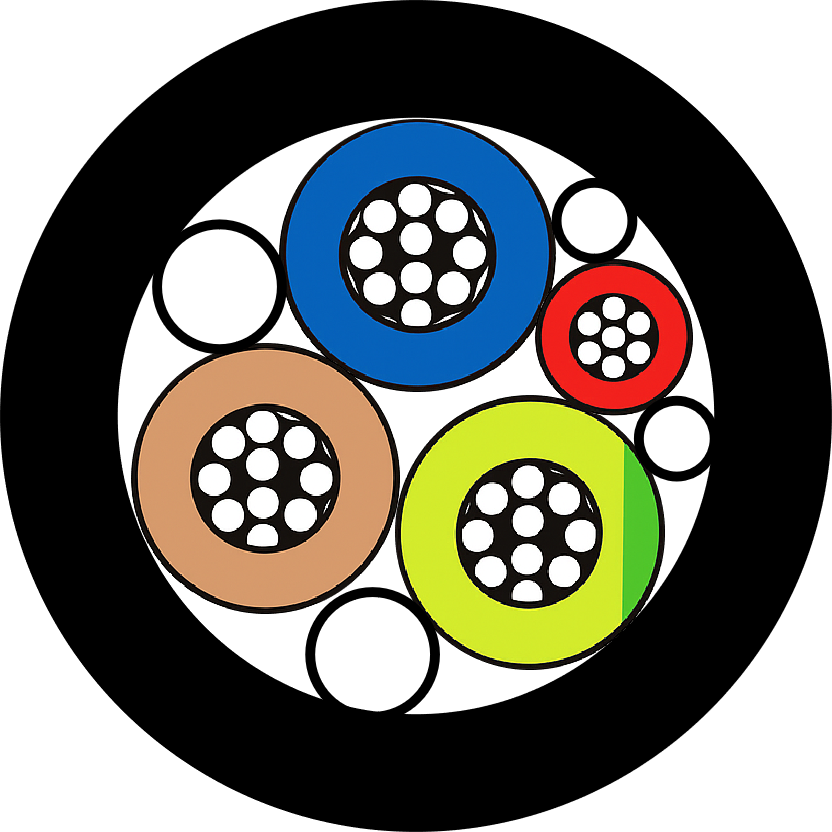
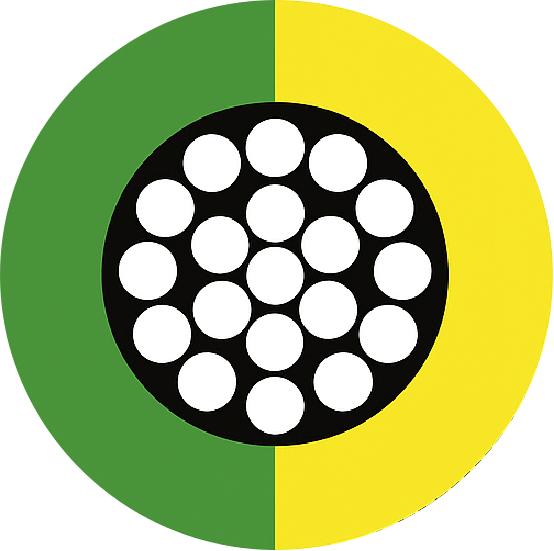
- Conductor: Class 5 Flexible Tinned Copper (Corrosion Resistant)
- Insulation: High-Grade EPR (Type 3GI3)
- Sheath: Water Resistant Rubber (Type EM2)
- Operating Temperature: -40°C to +90°C
- Max. Water Temp: Up to +60°C (Submerged)
- Bending Radius: 3x Cable Height (Extremely Flexible)
- Water Resistance: IP68 / AD8 (Permanent Submersion)
- Fast Sample Processing with Customized Solutions
- High-Quality Materials
- Affordable Price Options
- Global Delivery
- For better data protection, make sure that all uploads are secure
Save at least 30% on average
-
Product Description
Submersible Cable : Product Description and Specifications
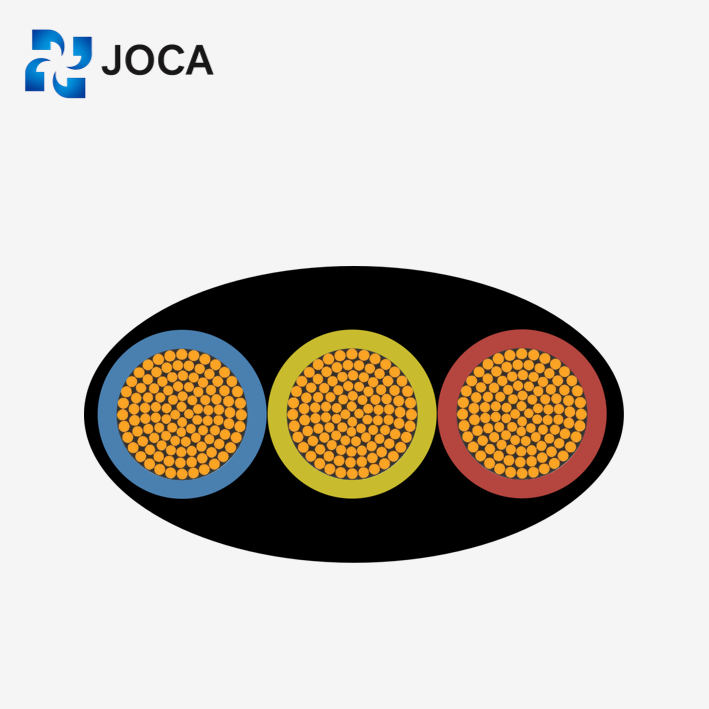
Deep well casings leave zero margin for bulky wiring. The JOCA Flat Submersible Cable is engineered specifically for this space constraint. Its low-profile flat geometry slides effortlessly between the pump riser and the borehole wall, preventing the “snagging” and jacket abrasion common with round cables.
Internally, we utilize Tinned Electrolytic Copper (Class 5 flexible) rather than bare copper. This tin layer is critical—it stops the conductors from turning black (oxidizing) in high-humidity environments. The core is sealed inside a specialized water-resistant Rubber or EPR compound, tested to withstand massive hydrostatic pressure at depths up to 300 meters. Rated for 0.6/1kV power systems and compliant with IEC 60245, this cable guarantees a permanent, watertight link for submersible pumps in drinking water or industrial drainage wells.
-
Advantages
Submersible Cable : Benefits and Features
Fits Narrow Boreholes: The flat, low-profile geometry slides easily into tight casings without scraping the walls or jamming the pump.
Stops “Black Copper”: We use fully tinned conductors to block oxidation. The wire stays bright and conductive, even after years in humid, underwater conditions.
Long-Distance Power: Rated for 0.6/1kV, it handles the voltage drop of deep-well transmission without overheating or power loss.
Potable Water Safe: The jacket uses non-toxic, food-grade rubber compounds, certified safe for drinking water pumps and eco-sensitive wells.
Zero Leakage: The pressure-tested sheath forms an impermeable barrier against water ingress, even at hydrostatic pressures up to 300m depth.
Dimensions/Parameters
| No. of Cores | Nominal Cross Sectional Area (mm²) | Nominal Diameter of Conductor (mm) | Height Min (mm) | Height Max (mm) | Width Min (mm) | Width Max (mm) | Nominal Weight (kg/km) | Maximum Tensile Load (N) |
|---|---|---|---|---|---|---|---|---|
| 3 | 4 | 2.4 | 7.0 | 8.0 | 15.5 | 16.5 | 260 | 180 |
| 3 | 6 | 2.9 | 7.5 | 8.5 | 17.5 | 18.5 | 330 | 270 |
| 3 | 10 | 3.8 | 10.3 | 11.0 | 23.1 | 24.1 | 550 | 450 |
| 3 | 16 | 4.9 | 12.2 | 13.2 | 28.0 | 29.5 | 820 | 720 |
| 3 | 25 | 6.1 | 14.2 | 15.2 | 33.0 | 34.5 | 1180 | 1125 |
| 3 | 35 | 7.2 | 16.0 | 17.5 | 37.0 | 38.7 | 1560 | 1575 |
| 3 | 50 | 8.9 | 18.5 | 20.0 | 44.1 | 45.8 | 2190 | 2250 |
| 3 | 70 | 10.6 | 20.5 | 22.0 | 50.5 | 52.5 | 2890 | 3150 |
| 3 | 95 | 12.3 | 23.1 | 23.9 | 57.1 | 57.9 | 3610 | 4275 |
| 3 | 120 | 14.2 | 25.1 | 25.9 | 62.1 | 62.9 | 4420 | 5400 |
| 3 | 150 | 15.5 | 26.8 | 27.6 | 67.2 | 68.0 | 5370 | 6750 |
| 3 | 185 | 17.0 | 28.6 | 29.4 | 72.6 | 73.4 | 6440 | 8325 |
| 4 | 4 | 2.4 | 8.0 | 9.0 | 23.0 | 24.0 | 400 | 240 |
| 4 | 6 | 2.9 | 8.5 | 9.5 | 24.5 | 25.5 | 490 | 360 |
| 4 | 10 | 3.8 | 10.0 | 11.0 | 29.5 | 30.5 | 710 | 600 |
| 4 | 16 | 4.9 | 12.0 | 13.0 | 34.5 | 35.5 | 1040 | 960 |
| 4 | 25 | 6.1 | 15.8 | 17.2 | 42.1 | 43.5 | 1660 | 1500 |
| 4 | 35 | 7.2 | 18.6 | 19.4 | 48.6 | 49.8 | 2190 | 2100 |
| 4 | 50 | 8.9 | 19.4 | 20.2 | 56.8 | 57.6 | 2880 | 3000 |
| 4 | 70 | 10.6 | 24.0 | 24.8 | 65.4 | 66.6 | 4060 | 4200 |
| 4 | 95 | 12.3 | 25.6 | 26.4 | 73.0 | 74.2 | 5050 | 5700 |
| 4 | 120 | 14.2 | 28.3 | 29.1 | 83.8 | 85.0 | 5580 | 7200 |
-
Production Processes Of Rubber cable
JOCA produces these cables using Continuous Vulcanization (CV) technology. This automated system synchronizes copper stranding with rubber extrusion, allowing the EPR insulation and PCP outer sheath to cure evenly. This integrated process ensures a consistent, solid bond between layers without structural defects. regarding quality control, we perform routine oil immersion and flexibility tests on production batches to verify compliance with IEC 60245 and EN 50525.
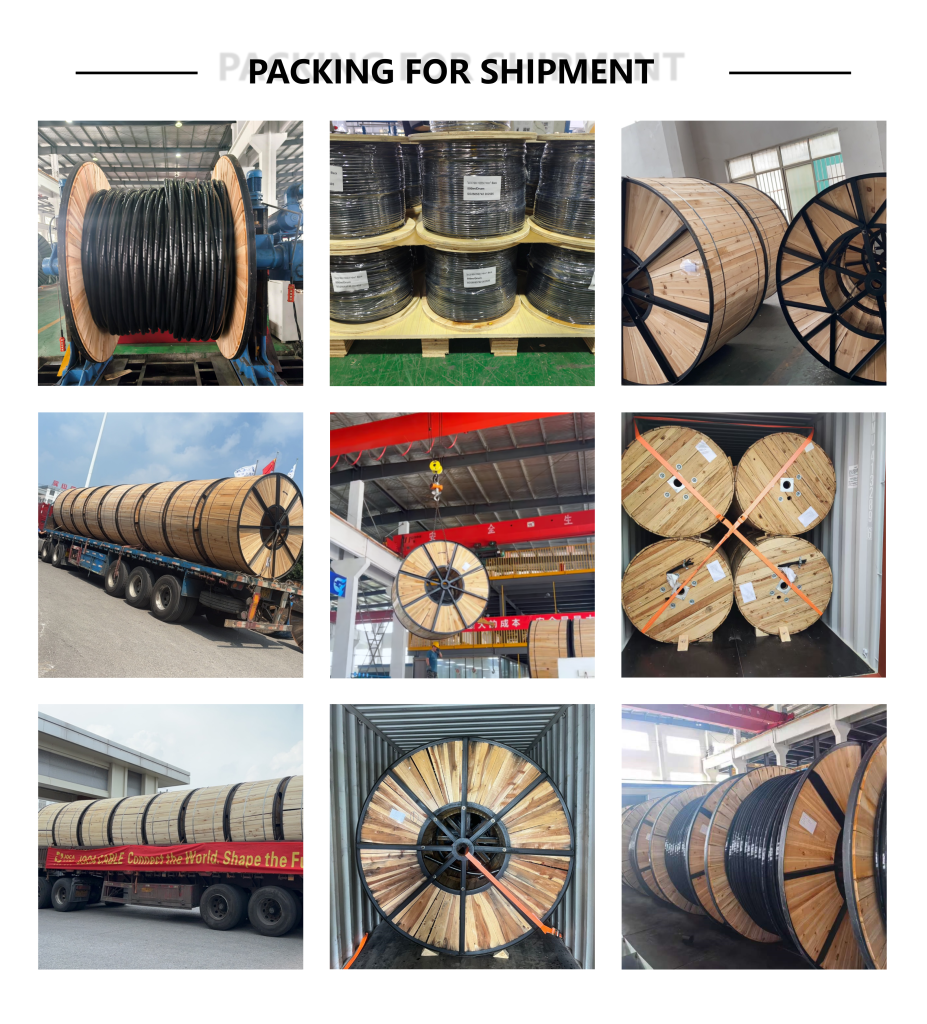
Packing For Shipment
To meet various transportation needs, there are many methods of packaging that can be used.
Have more questions?
Q: Why flat instead of round?
A: Clearance. Round cables jam in tight casings. Flat cables don’t. They slide past the pump riser without rubbing against the borehole wall. No friction, no snagging.
Q: Real depth rating?
A: 300 Meters (30 Bar). We use a high-density rubber compound. It blocks water ingress physically, ensuring permanent insulation even under massive hydrostatic pressure.
Q: Saltwater and Sewage safe?
A: Yes. The jacket is chemically inert. It handles brine, digestive acids, and sludge. Unlike cheap rubber, this material won’t swell or rot in wastewater tanks.
Q: Why Tinned Copper?
A: To kill “Black Copper” (oxidation). Bare wire turns black and fails in humidity. Tinning keeps the strands bright and conductive for the life of the pump.
Q: Voltage limit?
A: 0.6/1kV. Built to handle motor startup spikes. It resists the voltage stress that burns out lower-rated cables during deep-well pumping operations.
Q: Temp range?
A:
Air: -40°C to +90°C.
Water: Max +60°C. (Hot water speeds up rubber aging, so we recommend staying under 60°C for longevity).
Q: Is the sheath tough?
A: Drag it. It’s built for abuse. The heavy-duty jacket resists tearing even when pulled against rocky well walls or sharp casing edges.
Q: Sizing rule of thumb?
A: Watch the Voltage Drop. Long vertical runs kill voltage. Don’t just match the Amps; calculate for a <3% drop at the motor terminal. When in doubt, go one size thicker.