








Choosing the right electrical wire gauge is often seen as a matter of convenience, but it actually turns out to be a very safety, performance, and efficiency-related issue. 12 AWG and 14 AWG wires are very common and are the most often used gauges in residential wiring and audio systems. Even though they might appear to be identical at first, the two sizes have very different qualities that make them fit for different uses. Learning the dissimilarities of 12 AWG and 14 AWG wiring is a must if you want to make sure that your circuits won’t be a fire hazard and will also give you a good sound quality for your speaker systems. As such, this article will be your guide; it will give you a thorough comparison of these two wiring gauges, examining their characteristics, applications, and the factors you need to consider when selecting between them. This guide will certainly come in handy whether you are doing a home electric project or you are just going to play with a high-performance audio system.
Introduction to Wire Gauge
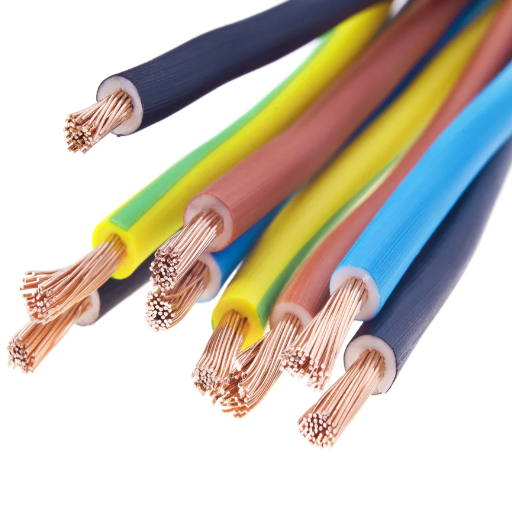
Wire gauge denotes the uniform measure of a wire’s thickness, which sets its limit of carrying electrical current. Thicker wires are represented by lower gauge numbers and are thus able to carry higher current; on the other hand, thinner wires are represented by higher gauge numbers and have lower current capacities. This measurement is important in both electrical and audio applications because the choice of the right wire gauge affects performance, efficiency, and safety. The majority of the time, for domestic electrical wiring, the wire gauges between 14 and 12 are the most commonly used, while the sound systems might need lower gauges, like 16 or 12, to give the best sound transmission over longer distances.
What is Wire Gauge?
Wire gauge is a common and standardized way of measuring the diameter of a wire and thus revealing its electrical characteristics, such as current capacity, resistance, and efficiency. In the United States, the American Wire Gauge (AWG) system is the most commonly used, in which a smaller gauge number signifies a thicker wire that can accommodate a larger current with less resistance. Wire gauge plays a vital role in many different applications, the most prominent ones being residential and industrial electrical installations and systems that require low voltage, like telecommunications and audio devices. The right wire gauge will not only give good performance but also prevent overheating and lower the chances of electrical failures. The selection of a wire gauge depends on the current, voltage, and distance, among other factors, which means that an undersized gauge could make the whole installation unsafe and inefficient. This all points out the necessity of proper wire gauge selection in every electrical design.
The Importance of Choosing the Right Gauge
The proper selection of wire gauge is a very important aspect of electrical systems’ safety, reliability, and efficiency. The wire gauge classifies the maximum electrical current a wire can carry without risk of overheating. An undersized wire will overheat, which could lead to several issues like insulation damage, short circuits, or even fire hazards. On the other hand, an oversized wire would incur unnecessary costs as well as cause inefficiencies in the design. Total current (amps), voltage drop across the distance, and type of installation (residential, industrial, or outdoor) are the basis of the considerations. For example, higher currents or longer wire runs usually mean in order to maintain good performance, you must employ larger gauges to reduce electrical resistance and heat. Following the local electrical codes, for example, the National Electrical Code (NEC), will serve as a reference in the gauge selection process, and it will help you comply with the regulations and also secure the integrity of the system.
Overview of 12 AWG and 14 AWG
For both residential and commercial electrical works, 12 AWG (American Wire Gauge) and 14 AWG are amongst the wire sizes that have the highest usage. The primary distinction between them is the diameter and the amount of current that they can accommodate. A wire of 12 AWG has the thickest diameter of approximately 2.05 mm, which is the reason for its capacity to carry the current of up to 20 amps. This makes the wire suitable for cases like outlets, large appliances, and circuits with long lengths. But the 14 AWG wire has a thinner diameter of around 1.63 mm, and its capacity is up to 15 amps, which is the reason it is used for lighting circuits and other low-power applications as a standard choice.
The choice between 12 AWG and 14 AWG should be based on the circuit’s requirements of ampacity and the run’s length. For longer distances, a wire of 12 AWG-thicker is recommended to minimize voltage drop and ensure that energy is used efficiently. Moreover, a 12 AWG wire gives the user a chance of future-proofing in case there is an upgrade or need for increased loads. But in situations where cost and space are constraints, 14 AWG is preferred because it is both lighter and cheaper.
Following NEC guidelines when choosing wire sizes is vital as it guarantees safety standards compliance and thus less likelihood of overheating and electrical failure. Also, it is necessary to understand that a scenario is not allowed where different wire gauges are mixed on the same circuit unless they are correctly matched and fused, indicating the requirement of proper planning and installation.
Comparing 12 Gauge and 14 Gauge Wires
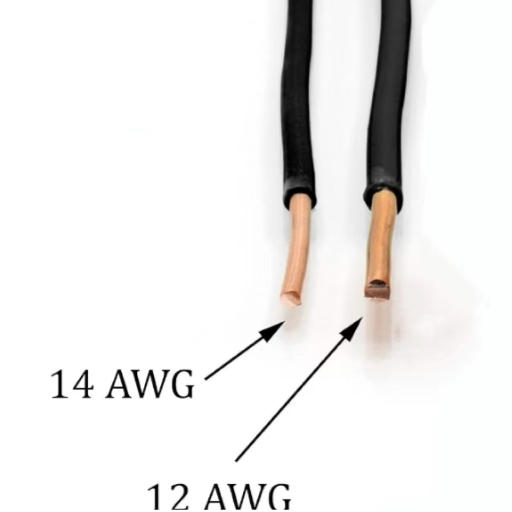
Mainly due to their different capacities for carrying current and physical characteristics, 12-gauge and 14-gauge wires are different. Thicker 12-gauge wire has the capacity of carrying as much as 20 amps and is thus used for high electrical loads like kitchen appliances or air conditioners. The thinner wire of 14-gauge, however, can only take 15 amps and is typically used for lighting or power outlet circuits. It is very important to consider not only the current rating of the circuit but also the requirements specified by the National Electrical Code (NEC) when selecting between the two wire sizes. Choosing a wire that is too thin for a particular circuit will result in overheating and will also involve safety risks.
12 Gauge vs 14 Gauge: Key Differences
Wire Diameter and Amperage Capacity
The wire thickness and current-carrying capacity are the main features that differentiate 12-gauge from 14-gauge wire. A 12-gauge wire has a bigger diameter and is capable of carrying a maximum of 20 amps without any risk. On the other hand, a 14-gauge wire has a smaller diameter and is therefore rated for 15 amps. This means that a 12-gauge wire can be connected to heavy-duty appliances such as refrigerators or space heaters, while a 14-gauge wire is usually connected to standard lighting circuits and small electrical outlets.
Applications
12-gauge wire is used in circuits with heavier power demands due to its higher amperage rating. For example, it is commonly used in kitchens, bathrooms, and laundry rooms where appliances are energy-consuming and thus pulling a lot of power. In contrast, 14-gauge wire is usually found in places where the electrical load is light. A good example is that it is used very often in standard bedrooms or living rooms, which don’t require a lot of power.
Safety and Code Compliance
Wire gauge and circuit amperage matching is critical for safety. The National Electrical Code (NEC) states that 12-gauge wire is to be used for 20-amp circuits and 14-gauge wire for 15-amp circuits. Incorrect gauge usage may lead to overheating, circuit breaker trips, and even a fire hazard.
Cost and Flexibility
12-gauge wire, although more expensive, is stronger and can handle heavier loads, and is less flexible. This can make installation in the confined space more difficult. Conversely, 14-gauge wire is more affordable and user-friendly, which is why it is often used in simpler applications of low-demand installations.
Being aware of the differences helps in selecting the appropriate gauge wire according to circuit amperage and application, thus leading to more safety and efficiency in the system.
| Feature | 12 AWG Wire | 14 AWG Wire |
|---|---|---|
| Wire Diameter | Approximately 2.05 mm | Approximately 1.63 mm |
| Amperage Capacity | Up to 20 amps | Up to 15 amps |
| Circuit Breaker | 20-amp breaker | 15-amp breaker |
| Primary Applications | Heavy-duty appliances, kitchen circuits, and air conditioners | Lighting circuits, standard outlets, and low-power devices |
| Cost | More expensive | More affordable |
| Flexibility | Less flexible, harder to install in tight spaces | More flexible, easier to work with |
| Voltage Drop | Lower voltage drop over long distances | Higher voltage drop over long distances |
| Best For | Long runs, high-power requirements, and future-proofing | Short runs, low-power applications, budget-conscious projects |
Wire Diameter and Ampacity
There is a direct relationship between wire diameter and ampacity; in fact, the thicker the wire is, the more current it can carry without being heated up. The American Wire Gauge (AWG) system is widely accepted to classify the sizes of wires; thus, the smaller the gauge number, the thicker the wire and the higher the capacity for current to flow.
The ampacity rating of a wire is determined by the wire’s gauge, the type of insulation, and the temperature of operation. To illustrate, a 12-gauge wire is normally rated for a maximum of 20 amps in the case of residential circuits, while a 14-gauge wire is a 15-amp circuit. One should always keep in mind that operating at a wire beyond its designated ampacity will cause the wire to overheat, the insulation to be damaged, or a fire to break out, among other things. Besides, the total length of the wire run must also be evaluated, as longer ones might experience a voltage drop, requiring a thicker wire to be used so that the performance will be the same.
Following the National Electrical Code (NEC) for guidelines and calculating ampacity according to specific application requirements will prevent any risks of system failure, safety violations, and non-compliance. The wire size and ampacity selection affect both the efficiency and reliability of the electric system directly.
Applications of 12 AWG and 14 AWG
The decision to use either 12 AWG or 14 AWG wires is mainly based on the electrical load and circuit specifications. A 12 AWG wire, which can carry a current of 20 amps in standard residential circuits, is a typical choice for the most demanding appliances such as air conditioners, hot kitchens, and heavy-duty tools. The reason for this is that a thicker wire reduces the voltage loss over long distances, thus it can be used for circuits that require more power.
Conversely, a 14 AWG wire, which is only capable of carrying a current of 15 amps, is mostly used for general lighting, smoke alarms, and low-power appliances. It is generally preferred for its flexibility and lower price in circuits where the power demand is not more than its capacity. Nevertheless, it is vital that the wire size is correct for the breaker rating of the circuit; this way, safe operation and compliance with NEC standards will be assured.
Correct application of 12 AWG and 14 AWG wires in either residential or commercial systems will lead to electrical efficiency, safety, and compliance being achieved.
12 AWG Wire Applications
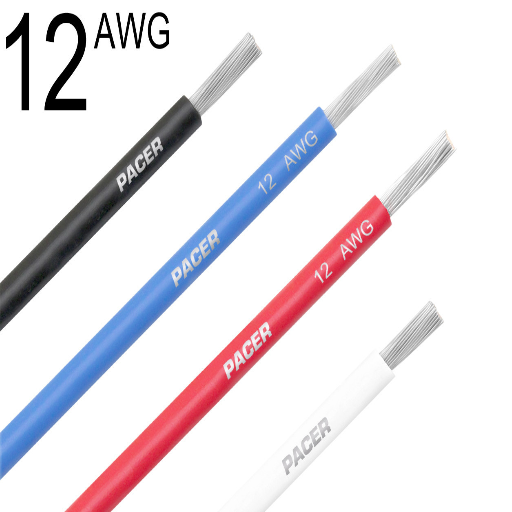
The 12 AWG wire is an electrical wire gauge that can handle the currents that are higher than the lower limit of the next wire sizes. It is perfect for general lighting, outlets, and using devices that do not draw more than 20 amps. Besides, the wire can even be used for peak power-demanding appliances, including microwaves, dishwashers, and air conditioners, as long as the total power used at a time does not go over the rating of the circuit. This wire gauge is often the choice in both residential and commercial wiring projects because of its performance and safety ratio.
When to Use 12 Gauge Wire
The 12-gauge wire is the main player in electrical circuits with a maximum load capacity of 20 amps. It is perfectly suited for branch circuits that feed standard electrical outlets, lighting fixtures, and small kitchen appliances. This wire size is often present in homes for circuits dedicated to specific uses, such as dishwashers and garbage disposals. Moreover, 12 AWG wire is suitable for longer circuit runs when voltage drop considerations are paramount, since it has lower resistance than smaller gauge wires such as 14 AWG. It is very important to check that all the devices and components connected are rated for the 20-amp circuit and also that the right circuit breakers are used to guarantee safety and adherence to the electrical codes.
12 Gauge for 20 Amp Circuits
To set up a 20-amp circuit, the National Electrical Code (NEC) wire recommendation is to use a 12 AWG wire. This specific gauge wire is able to take the current that a 20-amp breaker can deliver without running the risk of overheating or experiencing voltage drops. It must be ensured that not only the wire is rated for 20 amps but also all the components, such as outlets, switches, and receptacles, in order to keep circuit integrity and safety.
If circuit runs are longer than 50 feet, the possibility of voltage drop is there, even with a 12 AWG wire. In such cases, one should either do the calculations or use the wire of the next size up, which is 10 AWG, so that performance is not compromised.
Besides the applications, such as dedicated circuits for home appliances (refrigerators, microwaves, dishwashers, etc.), 12 AWG wire is often used in 20-amp circuits to connect utility devices like garbage disposals or heaters. A 20-amp rated circuit breaker must be used, and all work must comply with local building and safety codes, with the conductance of inspections where necessary.
12 Gauge Speaker Wire Benefits
The use of 12-gauge speaker wire brings with it a lot of benefits, which is why it is commonly used in heavy-duty audio setups. The bigger wire diameter is an advantage because of the better conductivity it offers, which in turn lowers the resistance, and the signal gets to the end of the wire in an efficient way, even if the wire is quite long. This is particularly important in bigger setups or professional surroundings. This type of wire can carry more power, so it can be used safely with high-power speakers, where distortion or loss of quality is totally eliminated. On top of that, 12-gauge wire can tolerate rough treatments and is therefore useful in both indoor home theaters and ecosystems for outdoor speaker placements. It will always give the same quality sound, no matter how hot or cold it gets. The wire should always be accompanied by the proper rated connectors and devices for best results.
14 AWG Wire Applications
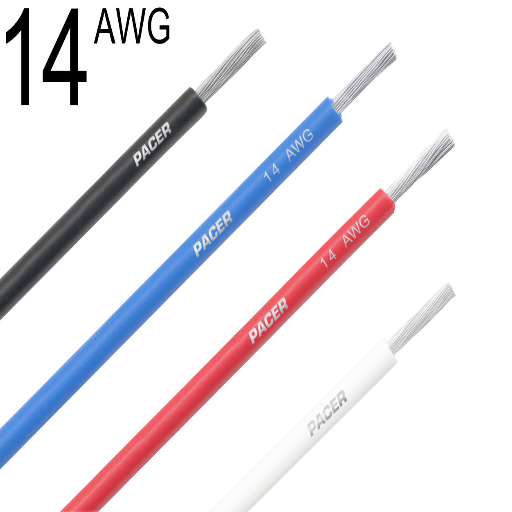
14 AWG wire is commonly used in medium-power applications due to its balance of flexibility and conductivity. It is ideal for home audio systems, including bookshelf speakers and in-wall installations, where precision and reliability are necessary but extreme power handling is not required. Additionally, it is frequently utilized in lighting circuits and small appliances, offering efficient performance without excessive bulk. This wire type is suitable for installations that require solid performance within moderate distance limits, maintaining signal integrity and reducing power loss effectively.
When to Use 14 Gauge Wire
14-gauge wire is the correct wire to use for circuits that will not exceed a current of 15 amps, the limit of most building codes. It has been widely used in residential lighting circuits that have current loads too low for its capacity. This wire is perfect for short to medium runs, thus minimizing the resistance and keeping the power loss relatively low. Moreover, 14-gauge wire can be used for sockets, small appliances, and low-demand devices, as long as the total current does not exceed 15 amps. It is a good value wire for an electrical installation couple of light fixtures, where the larger wires are not needed, and will provide a safe and reliable performance that is up to code. Always check local codes and regulations before choosing wire gauges for specific projects.
14 Gauge for Residential Applications
14-gauge wire is still a good option for households, especially when it is used neatly and easily within the limit of 15 amps or ampacity. The wire is a part of lighting circuits, standard outlets for electricity, and sometimes a combination of devices that draw little power. It is fully compliant with NEC (National Electrical Code) regulations if installed properly. Besides, a smaller diameter saves material costs; hence, it becomes an inexpensive option when the installation of thicker wire is not necessary. Meanwhile, one should not overlook its restrictions. If there are circuits that bear high electrical loads or serve high-power appliances like air conditioners or ovens, then heavy-gauge wire, for instance, 12-gauge or 10-gauge, should be installed to avert fire and ensure safety.
The installation process always demands proper load calculations and consideration of factors such as the length of the circuit and possible voltage drop. Also, local electrical codes may have additional recommendations or limitations, which is why it is always wise to discuss the matter with a licensed electrician or check the official guidelines before going for the 14-gauge wire in any installation. Using the right wire gauge not only keeps you on the safe side but also boosts the electrical systems’ life span and performance.
14 Gauge Speaker Wire Considerations
In the process of choosing 14-gauge wire for making connections between speakers, several technical factors have to be weighed up in order to get the best performance. It is a standard wire gauge that is usually used for medium to long cable runs, which can be as long as 50 feet, but it depends on the impedance of the speakers that are being used. For 8-ohm speakers, which is the most common impedance, 14-gauge wire means that there is no resistance at all, and signal loss is therefore almost nonexistent over the distance where it is recommended distance. On the other hand, in the case of a 4-ohm speaker, the cable run should not be longer than necessary to avoid losing sound quality and preventing power loss.
The choice of wire material, like copper or copper-clad aluminum (CCA), will also play an important role in deciding the performance of the wire. The pure copper wire, thus, would be more expensive than CCA in terms of both conductivity and durability. The resistance of CCA is also higher than that of copper, thus it is less efficient. Insulation is also an important consideration when it comes to wire. Look for wires that have excellent quality and durable sheathing materials.
It is also very important that the wire gauge corresponds to the output capacity of the amplifier and the power rating of the speakers. If the components are mismatched, the result will be overheating or impaired sound quality. When in doubt, referring to the specifications of both the amplifier and speaker, plus the wire gauge charts that have been validated, will give one accurate guidance on the right selection.
Sound Quality and Performance
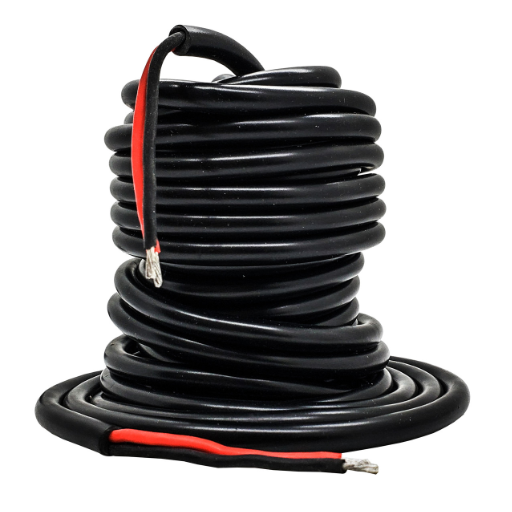
Achieving optimal sound quality depends on the synergy between your audio system’s components. High-quality speaker wires with appropriate gauge ensure clear audio transmission with minimal signal loss. Additionally, proper connection techniques—securely fastening wires to terminals and avoiding oxidation—help maintain consistent performance. Regularly inspect and maintain all components to detect and resolve any issues that may degrade audio output, ensuring long-term reliability and clarity.
Impact of Gauge on Sound Quality
In sound quality, the gauge of speaker wire has a significant effect since it is responsible for the amount of resistance and power loss incurred during the transmission of the audio signal. Thinner wires are indicated by lower gauge numbers, while thicker wires (e.g., 12 or 14 gauge) are more capable of handling signals without loss of quality over long distances due to their low resistance and heat production. For speakers that are located close to the amplifier, wires of higher gauge (e.g., 16-18 gauge) may be used without any noticeable degradation in the signal quality. Nevertheless, for long runs of cable or powerful amplifiers, thicker wires like 12 or 14 gauge are suggested to maintain the purity of sound. Right gauge selection guarantees best performance, especially when it comes to giving clear and strong bass, as very thin wires would create high resistance and thus would hamper the low-frequency signals. So, distance and power requirements in relation to wire gauge should be considered properly, as this is the only way to keep your audio system’s integrity.
Comparing 12 vs 14 AWG in Audio Systems
In the case of audio systems, I give priority to the specific application and requirements of the setup when comparing the two types, namely 12 AWG and 14 AWG. If I am using cables that are a long distance apart or if I have high-output speakers with significant wattage, I choose 12 AWG because it has lower resistance and is capable of handling high currents without any loss of signal, more than 14 AWG. On the other hand, I will go with 14 AWG if the installation is short or if the system is not demanding much power; in this case, I will still get the performance I wanted, but I would have spent less, and the installation will be much easier.
| Factor | 12 AWG for Audio | 14 AWG for Audio |
|---|---|---|
| Resistance | Lower resistance | Slightly higher resistance |
| Ideal Cable Run | Long distances (over 50 feet) | Short to medium distances (up to 50 feet) |
| Power Handling | High-power speakers and amplifiers | Medium-power audio systems |
| Signal Loss | Minimal signal loss | Acceptable signal loss for shorter runs |
| Best Applications | Professional setups, home theaters, outdoor speakers | Bookshelf speakers, in-wall installations, home audio |
| Cost | More expensive | More affordable |
| Installation | Less flexible, harder to route | More flexible, easier to install |
Choosing the Right Speaker Wire for Optimal Sound
When selecting speaker wire that would provide the best sound quality, several critical factors need to be considered to enable proper performance and keep signal loss at a minimum:
Gauge (Thickness)
The American Wire Gauge (AWG) number is of utmost importance—thicker wires are indicated by lower numbers, and thus they will work well for long distances and high-power applications. For a wire length of less than 50 feet with standard home audio systems, 14 or 16 AWG is usually enough. Where the runs are longer or the speaker systems have very high power, the 12 AWG wire is suggested to cut down resistance and keep the signal strong.
Distance
The scenario here is where there is more resistance in the wire due to the longer distances, which can affect the sound quality. For shorter runs (up to 50 feet), 16 AWG is acceptable for lighter wire. However, if the distance is beyond 50 feet, thicker wire (14 or 12 AWG) is the better choice to minimize loss.
Power Handling and Speaker Impedance
The wire gauge should be the same as the power output of your amplifier and the impedance of your speakers. Impedance is less in speakers of 4 or 6 ohms; thus, they require thicker wire to cope with the increased current without getting hot or losing the signal.
Material
The use of oxygen-free copper (OFC) wires is very much advisable owing to their high conductivity and good performance over a long time in comparison to copper-clad aluminum (CCA). In the long run, OFC, although being costly, still provides a good investment since it passes the signal continuously over time.
Coating and Build Quality
Always go for wires that come with insulation that is strong enough to withstand damage and, at the same time, provide safety. PVC or CL-rated coatings are good for in-wall installations, while the outdoor systems may need UV-resistant insulation.
By using the right wire gauge, material, and distance based on your system needs, the best sound quality and long-lasting performance can be realized. Always check the user manuals of your audio equipment to ensure compatibility and specifications.
Wire Gauge Selection Guidelines
Critical Factors for Selection:
- Current Load: Calculate the total amperage draw of all devices on the circuit
- Circuit Length: Longer runs require thicker wire to minimize voltage drop
- Ambient Temperature: Higher temperatures reduce ampacity; consider derating factors
- Installation Method: Conduit, free air, or bundled installations affect heat dissipation
- Code Compliance: Always follow NEC guidelines and local building codes
- Future Expansion: Consider potential load increases when selecting wire gauge
- Budget Constraints: Balance upfront costs with long-term safety and performance
- Application Type: Electrical circuits vs. audio systems have different requirements
Safety Considerations and Best Practices
Essential Safety Guidelines:
- Never Mix Wire Gauges: Do not use different wire gauges on the same circuit unless properly matched and fused
- Match Breaker to Wire: Always use a 20-amp breaker with 12 AWG wire and a 15-amp breaker with 14 AWG wire
- Proper Insulation: Ensure all wires have appropriate insulation ratings for the application and environment
- Professional Installation: Hire licensed electricians for complex installations to ensure code compliance
- Regular Inspections: Periodically inspect wiring for signs of damage, overheating, or wear
- Avoid Overloading: Never exceed the rated ampacity of the wire gauge being used
- Voltage Drop Calculations: For runs longer than 50 feet, calculate voltage drop and upsize wire if necessary
- Proper Connections: Ensure all connections are tight, secure, and made with appropriate connectors
- Color Coding: Follow standard color coding for hot, neutral, and ground wires
- Documentation: Keep records of all wiring installations for future reference and maintenance
Common Applications: Quick Reference Guide
| Application | Recommended Gauge | Circuit Breaker | Notes |
|---|---|---|---|
| General Lighting | 14 AWG | 15 amps | Standard residential lighting circuits |
| Standard Outlets (Bedroom/Living Room) | 14 AWG | 15 amps | Low-power devices and electronics |
| Kitchen Outlets | 12 AWG | 20 amps | Multiple small appliances, higher demand |
| Bathroom Outlets | 12 AWG | 20 amps | Hair dryers, space heaters |
| Dishwasher | 12 AWG | 20 amps | Dedicated circuit recommended |
| Garbage Disposal | 12 AWG | 20 amps | Dedicated circuit recommended |
| Microwave | 12 AWG | 20 amps | Dedicated circuit recommended |
| Air Conditioner | 12 AWG or larger | 20 amps or higher | Check specific unit requirements |
| Electric Heater | 12 AWG or larger | 20 amps or higher | Check specific unit requirements |
| Home Theater (Short Runs) | 14 AWG | N/A | For speaker wire, up to 50 feet |
| Home Theater (Long Runs) | 12 AWG | N/A | For speaker wire, over 50 feet |
| Professional Audio Systems | 12 AWG | N/A | High-power speakers, long distances |
| Smoke Alarms | 14 AWG | 15 amps | Low power draw, code-compliant |
Cost Comparison and Budget Considerations
Understanding the Cost Difference
While 12 AWG wire costs more upfront than 14 AWG wire, the total cost analysis should include several factors:
- Material Costs: 12 AWG wire typically costs 20-30% more than 14 AWG wire due to increased copper content
- Installation Costs: 12 AWG wire is less flexible and may require more labor time for installation, especially in tight spaces
- Future-Proofing: Installing 12 AWG wire may eliminate the need for rewiring if power demands increase
- Energy Efficiency: Lower resistance in 12 AWG wire means less energy loss, potentially saving money over time
- Safety Margins: The extra capacity of 12 AWG wire provides a safety buffer against overloading
- Resale Value: Homes wired with heavier gauge wire may have higher resale value due to greater capacity
Summary: Key Takeaways
Essential Points to Remember
- Wire Gauge Basics: Lower AWG numbers indicate thicker wires with higher current capacity
- 12 AWG Specifications: Approximately 2.05 mm diameter, rated for 20 amps, requires a 20-amp breaker
- 14 AWG Specifications: Approximately 1.63 mm diameter, rated for 15 amps, requires a 15-amp breaker
- Electrical Applications: 12 AWG for high-power appliances and long runs; 14 AWG for lighting and standard outlets
- Audio Applications: 12 AWG for long speaker runs and high-power systems; 14 AWG for shorter distances and moderate power
- Safety First: Always match wire gauge to circuit breaker rating and follow NEC guidelines
- Voltage Drop: Consider voltage drop calculations for runs exceeding 50 feet
- Cost vs. Performance: Balance upfront costs with long-term safety, efficiency, and future needs
- Professional Help: Consult licensed electricians for complex installations or when in doubt
- Code Compliance: Always verify local building codes and obtain necessary permits
Conclusion
Understanding the differences between 12 AWG and 14 AWG wire is fundamental to creating safe, efficient, and reliable electrical and audio systems. While both wire gauges have their place in residential and commercial applications, selecting the appropriate gauge requires careful consideration of current loads, circuit lengths, application types, and future needs.
For electrical installations, the choice is often dictated by the National Electrical Code and local building regulations. The 12 AWG wire’s 20-amp capacity makes it essential for kitchen circuits, bathroom outlets, and any application involving high-power appliances. Its lower resistance also makes it the preferred choice for longer circuit runs where voltage drop could be a concern. The 14 AWG wire, with its 15-amp rating, remains an economical and practical solution for lighting circuits, standard bedroom and living room outlets, and other low-power applications.
In audio applications, the decision between 12 AWG and 14 AWG speaker wire hinges on the distance between components and the power requirements of your system. Professional installations and high-power home theater systems benefit from the lower resistance and superior signal transmission of 12 AWG wire, especially over longer distances. For more modest audio setups with shorter cable runs, 14 AWG wire provides excellent performance at a lower cost.
Safety should always be the primary consideration when selecting wire gauge. Undersized wires pose serious fire hazards and can lead to equipment damage, while properly sized wires ensure reliable operation and peace of mind. The additional cost of using heavier gauge wire is minimal compared to the potential consequences of electrical failure.
Whether you’re planning a new electrical installation, upgrading existing circuits, or setting up an audio system, taking the time to understand wire gauge requirements will result in a system that performs optimally, operates safely, and meets all applicable codes and standards. When in doubt, consulting with a licensed electrician or audio professional can provide the expertise needed to make the right choice for your specific application.
By following the guidelines presented in this comprehensive guide, you can confidently select between 12 AWG and 14 AWG wire for your projects, ensuring safety, performance, and long-term reliability for years to come.
Reference Sources
“Low-Voltage Power Supply Subsystem for a Sub-Orbital Particle Physics Instrument”
Frequently Asked Questions (FAQs)
What is the distinction between 12 and 14-gauge wire?
The distinction between 12 and 14-gauge wire mainly lies in their thickness. The wire of 12 AWG has more cross-sectional area than the wire of 14 AWG, making it able to carry a larger current. This takes 12 AWG wire to the level of being used in applications that need higher amperages, whereas 14 AWG wire is accordingly suitable for a range of lesser power applications.
When should I opt for 12-gauge and when for 14-gauge wire?
To be on the safe side, use 12-gauge wire in case your specific requirements need high current loads, such as running appliances on a circuit of 20 amps. On the other hand, 14-gauge wire is appropriate for use in circuits not exceeding 15 amps; thus, it’s perfect for smaller devices and lighting.
Is 12 AWG wire better for longer runs?
Indeed, it is. 12 AWG wire is generally the preferable option for longer runs over the 14 AWG wire by a good margin. With its thicker diameter, 12 AWG wire can bring about a very low voltage drop even when the distance is quite long, and thus, it can efficiently power devices that are positioned far away from the electrical panel.
What is the rating for amps of 12 and 14 gauge wires, respectively?
The amp rating for 12 AWG wire is generally 20 amps, while 14 AWG wire is rated for 15 amps. This variation is very important when looking at circuit breakers and confirming that the wiring complies with the necessary safety standards.
Is using a 14-gauge wire on a 20-amp breaker possible?
Definitely not, using 14-gauge wire on a 20-amp breaker is not a good idea at all. The 14 AWG wire can never go beyond the 15 amps mark, and installing it on a 20 amp circuit could result in a fire risk due to overheating.
What benefits do stranded wires have over solid wires?
Stranded wires, like 12 or 14 gauge stranded wire, are much more flexible, and hence, they are easier to handle, especially in confined areas. On the other hand, solid wire lasts longer and is often used for permanent installations. The decision mainly depends on the intended application and on the type of installation environment.
What is the operation of the gauge system in measuring wire sizes?
The gauge system, which is used for wire sizes like 12 and 14 gauge, indicates the diameter of the wire. The lower the gauge number, the thicker the wire, which means it can carry more current. For example, the 12-gauge wire is thicker than the one that is 14-gauge wire and provides therefore less resistance to the flow of higher amperages.
What are 12 12-gauge and 14-gauge wire common applications?
12-gauge wire can be found in different applications, such as doing residential wiring for outlets and appliances on a 20-amp circuit, and the lighting circuits or smaller devices on a 15-amp breaker are 14-gauge wire. Saying it the other way round, one should choose the right gauge wire because safety and efficiency are major factors in electrical installations.