







Armoured cables are of great significance in today’s settings. They are crucial in today’s infrastructure because they offer unparalleled robustness and protection under some of the most challenging conditions. Be it industrial plants, outdoor locations subject to extreme weather, or even underground installations, these cables are built to endure chemical aggression, environmental threats, physical stress, and even harsh chemicals. So, why are armoured cables crucial and what makes them so versatile for endless applications? In this article, we will highlight the importance of armoured cables, the versatile applications, and the risks they mitigate to achieve a safer and stronger electrical system. By the end, you’ll understand why these cables are essential today.
What is Armoured Cable?
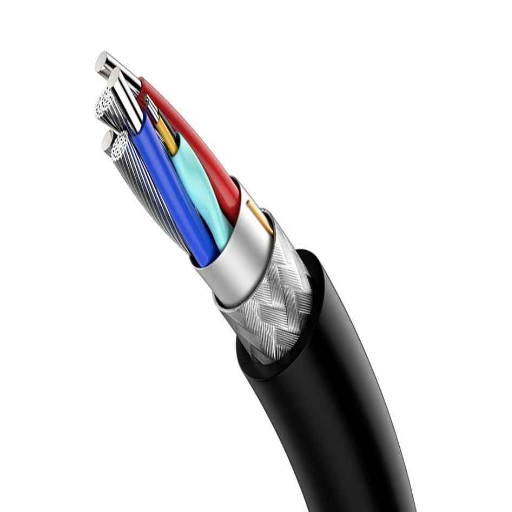
An ode to every business unit’s worst nightmare, armoured cables are a special category of electrical cables that come encased with an additional protection and bound with steel and aluminum. This layer provides extra strength and makes the cable more susceptible to mechanical injury, thus making it proficient for harsh conditions. Most of the damage towards electrical systems is caused by impacts, water, and other external forces, arms cables mitigate such risks making them perfect for industrial areas, waterlines, and Externspace.
Definition of Armoured Cable
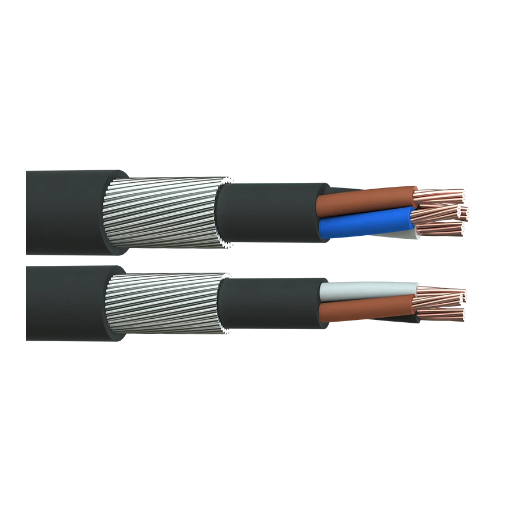
An armoured cable is a strong electrical cable with enhanced protection designed to shield it from physical damage and severe environmental conditions. It contains insulated conductors with PVC or XLPE surrounded by an armor layer usually made of steel wire, steel tape, or aluminum. This structure provides mechanical protection and greater resistance to moisture, chemicals, and other external pressures. Armoured cables are used in industrial applications and underground and outdoor installations because they provide efficient electricity transmission over long distances, even in harsh environments.
Components of Armoured Electrical Cables
A durable and reliable performance of the armoured electrical cables is a result of the collaboration of the components of each armoured cable. The key elements include:
- Conductor: The conductor, made of copper or aluminum, is used to carry the electrical current within the armoured electrical cable. The material selected depends on the voltage and current, as well as the sizing requirements of the application.
- Insulation: The conductor is encased in the insulated layer, which is made from PVC or XLPE. The insulated layer is responsible for electrical separation, protection from heat, and even resistance.
- Bedding Layer: The armor is positioned on top of the insulation layer, and the bedding layer is used as a neutral zone between the two components. The plush layer protects wires from the external armor’s pressure.
- Armour Layer: One of the most vital pieces, the armor layer is usually constructed with aluminum, steel wires, and steel tapes. It is mechanically reinforced with strong impact armor and is even rodent-proof to secure the cables from forces that could destroy or damage them.
- Outer Sheath: The last layer to place is the outer sheath. The sheath is resistant to chemicals, moisture, scratches, and long-lasting, ensuring that the most rugged armoured cables tend to survive the most extreme guarded conditions.
Armoured cables are ideal for industrial and underground setups due to their durable design and construction, which ensures performance reliability. Even in the most challenging situations, efficiency and safety are maintained.
When to Use Armoured Cable?
Armor cables are essential in applications where safety and durability are critical. Ideal for underground power installations where mechanical protection from external forces is required, armor cables excel in a wide range of applications. Industrial applications where cables are exposed to heavy machinery, moisture, or even chemicals require armor cables. Their robust design provides unparalleled reliability and performance in any environment, placing a heightened demand for electrical cords.
Applications of Armoured Cable
Armored cables are adaptable and work dependably in various industries and environments. A few of the applications include:
- Underground Installations
Armored cables can be used in buried installations because they resist physical damage and protect against heavy loads and soil movements.
- Industrial Plants
These cables are widely used in factories and industrial plants that are exposed to heavy vibrating machinery and abrasive materials.
- Harsh And Outdoor Environments
The cables are designed to operate effectively in outdoor settings due to extreme temperatures, high levels of moisture, and UV radiation.
- Power Distribution Networks
In high-demand scenarios for power transmission and distribution systems, armored cables are extensively used to ensure safety and the flow of uninterrupted power.
- Marine and Offshore Applications
These cables are meant for use in marine environments, such as shipyards and oil rigs, because they resist salt water, pressure, and corrosion.
Benefits of Using Armoured Cable
- Enhanced Durability
Armored cable designs are suitable for harsh conditions, such as construction work and industrial facilities, as they withstand mechanical stress and environmental conditions.
- Superior Protection Against Damage
An armored layer protects against impact, rodent activity, and abrasion. This protection extends to outages and repairs, thus increasing the cables’ overall lifespan.
- Flexibility in Installation
These cables can adapt to fulfill diverse project needs. Ground, underground, or submerged cable installation is possible as they prove useful in multiple placements.
- Improved Electrical Safety
Cables with designs that reduce the chances of electric faults, short circuits, and other electrical system errors tend to be safer for both residential and commercial spaces.
- Resistance to Environmental Elements
Extreme temperature, moisture, or chemicals all serve to displace helmet cables from differential marine and offshore operations. Cables are guaranteed for use in demanding application settings.
Comparison: Armoured vs Non-Armoured Cable
Armored cables provide superior protection and structural integrity for extreme environments, whereas non-armored cables provide cost-effective methods for less demanding situations.
| Parameter | Armoured Cable | Non-Armoured Cable |
|---|---|---|
|
Protection |
High |
Low |
|
Cost |
Expensive |
Affordable |
|
Applications |
Harsh areas |
Indoor/protected |
|
Durability |
Strong |
Moderate |
|
Installation |
Underground/buried |
Not suitable for burial |
|
Material |
Metal/fiber armor |
Insulated only |
|
Usage |
Hazardous zones |
General use |
|
Resistance |
Rodent/moisture proof |
Limited |
|
Flexibility |
Less flexible |
More flexible |
|
Grounding |
Possible |
Not applicable |
What are the Key Features of Steel Wire Armour?
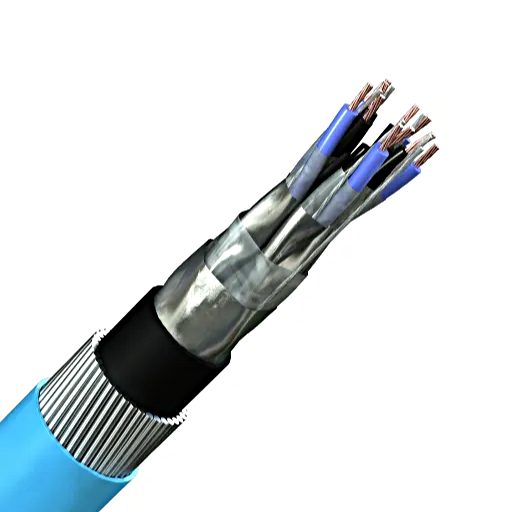
Steel Wire Armour (SWA) offers many benefits, increasing a cable’s durability and making it easier to protect:
- Mechanical Protection
SWA offers very high protection from frequent physical damage, maintaining the cable’s structural integrity at all times, including in extreme and heavy-duty environments.
- Load-Bearing Capability
It increases the cable’s durability because it can withstand large amounts of mechanical strain or tension without sustaining damage.
- Corrosion Resistance
Aggressive treatment is done for the steel wires, making SWA function well for outdoor and underground installation.
- Fire Resistance
SWA assists in the preservation of the cable’s structure over high temperatures, increasing safety in case of fire.
- Versatility
This armor is used with a wide variety of cables. Therefore, it is very common in construction and power distribution industries.
Mechanical Protection Offered by SWA
Steel Wire Armor (SWA) has the best mechanical protection for cables, guaranteeing their utmost strength and functionality in challenging situations. Its garnished construction defensively protects cables against external impacts like intense crushing, unintentional injury, and extreme stresses. From the most recent information, SWA is increasing its acceptance in contemporary infrastructure projects in modern buildings because of the risk areas like construction zones, industrial plants, and underground utilities, due to its modern technology that fundamentally preserves cable functionality. This level of protection noticeably improves failure chances, eliminates interferences, and enhances the operational life of cables across different applications.
Insulation Types for Armoured Cable
Armoured cables are used for high-end applications. The insulation electrodes used are essential from a performance, safety, and reliability perspective. Some of the most commonly used materials for insulation are:
- PVC (Polyvinyl Chloride): General-purpose Armoured cables utilize flexible PVC due to its low cost and functionality. It is also resistant to moisture, chemicals, and abrasion, making it useful for outdoor and indoor installations.
- XLPE (Cross-Linked Polyethylene): It withstands significant wear and tear and heat, making it ideal for high-temperature applications. In industrial settings, XLPE is preferred due to its excellent insulation properties.
- EPR (Ethylene Propylene Rubber) is known for its unrivaled flexibility coupled with thermal resistance. This makes it ideal for extreme conditions where flexibility is a must.
- LSZH (Low Smoke Zero Halogen): This is used in buildings such as hospitals that have safety concerns and emit noxious gases, as LSZH insulation emits no toxic gases while burning.
Cables should provide good performance and suppleness while placed under harsh conditions. Therefore, these materials are environmentally friendly.
Durability and Resistance of Steel Wire Armoured Cable
Steel Wire Armoured (SWA) cables are durable in harsh settings, such as outdoor or industrial settings. SWA cables are often employed in construction projects due to their strength. The steel armor provides excellent mechanical protection to the wires, which can get damaged through impact, pressure, or intense tension. Also, these cables withstand harsh environments. For example, chemical, moisture, and extreme temperature exposure for an extended period do not impact their functionality. The wires also maintain great tensile strength, making them best suited for underground installation and mercilessly exposed areas, guaranteeing constant access and long-term dependability.
What are the Different Cable Types Available?
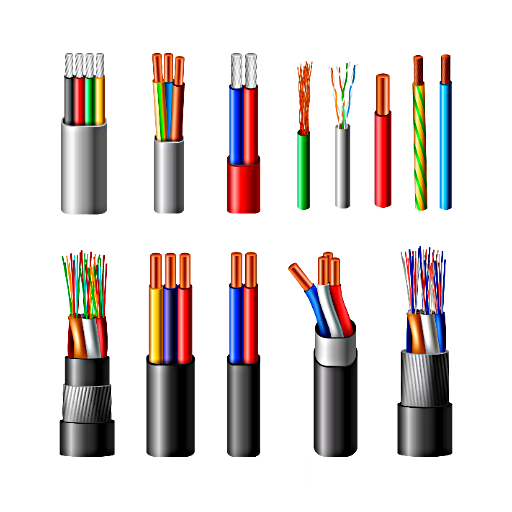
Each type of cable serves a different purpose as outlined below:
- Armored Cables (SWA Cables) – Relatively tough and suited for severe duty applications, they also offer mechanical protection, making them suitable for underground areas that may be subject to high-impact areas.
- Coaxial Cables—These cables have a core conductor, an insulator, a metal shield, and an outer jacket to protect the important parts. They are used for sending TV and internet signals.
- Ethernet Cables—Used for connection in networks, various types exist, such as Cat5e and Cat6, which differ in speed and data transmission capabilities.
- Fiber Optic Cables—These cables transmit data using light and are recognized for long-distance communication and data transmission at high speeds.
- Rubber Cables – Also referred to as Flexible cables, their main strength lies in their durability. Mostly used in short-term power supply installations like construction sites or events.
- Twin and Earth Cables: Twin and Earth Cables consist of two insulated conductors and a bare earth wire. They are primarily used in domestic wiring.
These cable types have a wide range of applications, including commercial, industrial, and even residential. The only downfall is that they must be selected based on the environment and the purpose for which they are used to ensure they are durable enough.
Low Smoke Zero Halogen Armoured Cable
“Low Smoke Zero Halogen” or LSZH armoured cables are used in applications where the risk of fire is a concern. These cables are ideal for use in tunnels, hospitals, and other confined spaces because they emit no hazardous halogen gases or smoke during high heat or flame exposure. The armouring also helps provide additional shaft mechanical protection, which increases the cable’s durability against physical damage.
Key aspects such as the voltage rating, environmental conditions, and installation site-specific standards greatly influence the selection of these types of LSZH armoured cables. Modern infrastructure integrated with these types of cables reaps the benefits of reduced toxic fume emissions while still maintaining structural integrity during stress scenarios.
Aluminium Wire Armoured vs Copper Wire Armoured
Durable copper wire armoured cables defend the bowstring and weaken its conductivity, strength, and reliability. Meanwhile, Aluminum wire armoured cables are lightweight, affordable, and highly adaptable to different scopes and systems.
| Parameter | Aluminium Wire | Copper Wire |
|---|---|---|
|
Weight |
Lightweight |
Heavier |
|
Cost |
Affordable |
Expensive |
|
Conductivity |
Moderate |
High |
|
Durability |
Less durable |
Highly durable |
|
Flexibility |
Less flexible |
More flexible |
|
Corrosion |
Prone |
Resistant |
|
Applications |
Large-scale |
Precision/critical |
|
Heat Dissipation |
Faster |
Slower |
|
Maintenance |
High |
Low |
|
Safety |
Moderate |
High |
Choosing the Right Cable Size for Your Needs
Measuring cable size correctly, equally proportionate to the project’s safety, cost effectiveness, and efficiency goals. Many steps must be considered to ensure the voltage drop, current capacity, and load type are all within parameters. To begin, figure out what the attached wire’s complete load will bear in amperes and see if any set conditions, such as the temperature or the type of insulation, would prove problematic. For dependable calculations and recommendations, it is advisable to refer to the manufacturer’s instructions or speak to an experienced electrician.
Reference Sources
1. Experimental Harmonic Validation of 3D Multiconductor Cell Analysis: Measurements on the 100 km Long Sicily-Malta 220 kV Three-Core Armoured Cable
- Authors: R. Benato et al.
- Journal: IEEE Transactions on Power Delivery
- Publication Date: February 1, 2022
- Citation Token: (Benato et al., 2022, pp. 573–581)
- Summary:
- This study presents an experimental validation of a three-dimensional Multiconductor Cell Analysis (MCA) method applied to a 100 km long HVAC submarine three-core armoured cable, specifically the Sicily-Malta interconnector.
- The research involved a measurement campaign that assessed frequency measurements from 0 to the 40th harmonic order, comparing the results from measurements with those predicted by the MCA.
- Key findings indicate an excellent agreement between the measurements and MCA results, with maximum differences of 10%, which are considered negligible when accounting for measurement uncertainties.
2. Numerical Study on Electromagnetic Thermal Performance of Non-Metallic Armoured Optoelectronic Cable Winch System
- Authors: Wenhua Li et al.
- Journal: Journal of Marine Science and Engineering
- Publication Date: May 28, 2024
- Citation Token: (Li et al., 2024)
- Summary:
- This study investigates the electromagnetic thermal performance of non-metallic armoured optoelectronic cable winch systems, which are crucial for subsea applications.
- The research examines the magnetic and temperature field distributions under varying currents and winding layers, revealing that current amplitude and the number of winding layers influence temperature distribution.
- Key findings indicate that the magnetic flux density changes periodically, with the minimum flux density occurring at the cable center, and that the internal temperature distribution pattern remains unaffected by current variations.
Frequently Asked Questions (FAQs)
Q: What is armored cable, and what types of armored cable are commonly used?
A: An armored cable is an electrical cable with a protective layer of steel or aluminum to prevent mechanical damage. Common types include metal-clad wires, which use a metal sheath, and cables used in hazardous locations that require additional protection against environmental factors.
Q: How is the installation of armored cable different from standard cables?
A: Due to its protective layers, armored cable installation typically requires more consideration. Special tools may be needed to cut through the metal sheathing, and specific methods for terminating the cable may also be necessary to ensure safety and reliability in power networks.
Q: In what applications is control cable commonly used?
A: Control cable is often used in industrial control systems and automation. It is designed to carry signals rather than power, making it essential for controlling machinery and processes, particularly in hazardous locations where additional protection is necessary.
Q: What are the benefits of using steel tape in armored cables?
A: Steel tape provides enhanced mechanical protection and helps protect the cable from physical damage. It also offers a layer of water resistance, making it suitable for installation in challenging environments, including hazardous locations.
Q: What types of insulation materials are commonly used in armored cables?
A: Armored cables often use insulation materials like XLPE (cross-linked polyethylene) and PVC (polyvinyl chloride). These materials provide flame-retardant properties and help protect the conductors from environmental factors and mechanical damage.
Q: Can armored cables be used for direct burial applications?
A: Yes, armored cables can be used for direct burial applications. Their protective layers make them suitable for underground installations where they may be exposed to moisture, soil pressure, and other environmental factors.
Q: What is the service life of armored cables compared to standard electric wires?
A: Armored cables generally have a longer service life than standard electric cables due to their robust construction and protective features. The added mechanical and environmental protection helps them withstand challenging conditions, ultimately enhancing their durability.
Q: How does using copper conductors in armored cables affect their performance?
A: Copper conductors in armored cables enhance conductivity and reduce energy losses, making them ideal for power transmission. Combined with protective armouring, their use allows for safe and reliable operation in various applications, including control systems.
Q: What considerations should be considered when choosing armored cable for hazardous locations?
A: When selecting armored cable for hazardous locations, it is essential to ensure that the cable is rated for the specific environmental conditions, including temperature and moisture levels. Additionally, the cable should feature adequate insulation and armouring to protect against potential hazards.