


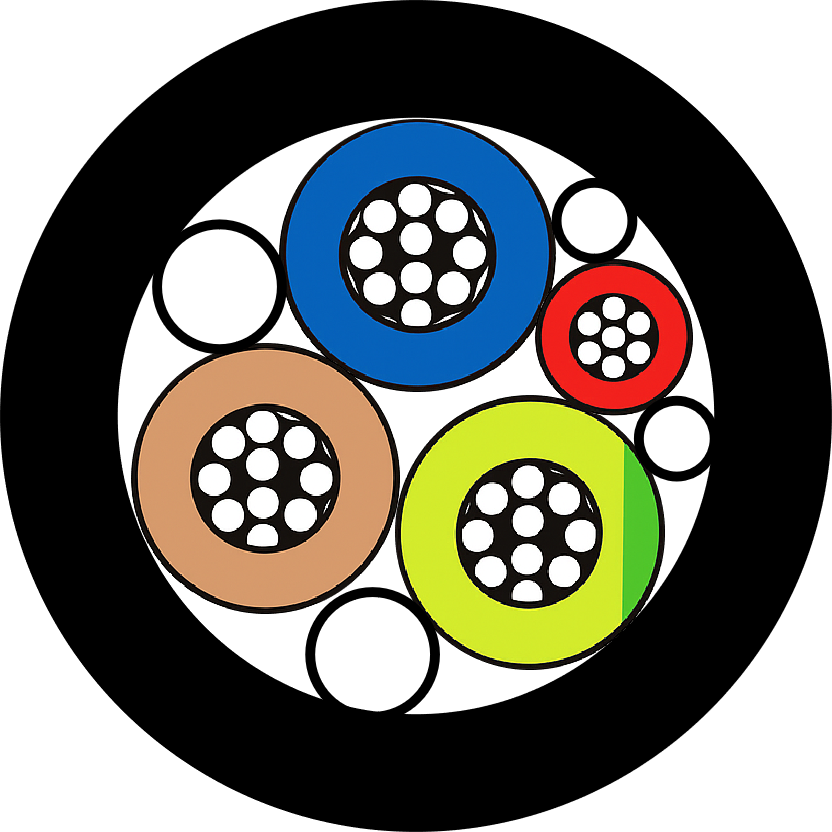





As with any other norm, understanding the distinction between twinax and coaxial cables is essential in selecting the correct one for data transmission. Both of them are widely used in various industries, but they are designed to fulfill very specific technical requirements and serve distinct purposes. In this article, coax cables and twinax cables are discussed on the basis of their construction features and performance characteristics as well as their customary uses. Regardless of whether you are an IT specialist, a network engineer, or a person trying to make sense of the world of cabling, this document will enable fact-based choices that correspond to the demands of the system at hand. Read along to find out what answer can best suit your cabling needs and what these differences impact modern connectivity.
What is a twinax cable, and how does it work?
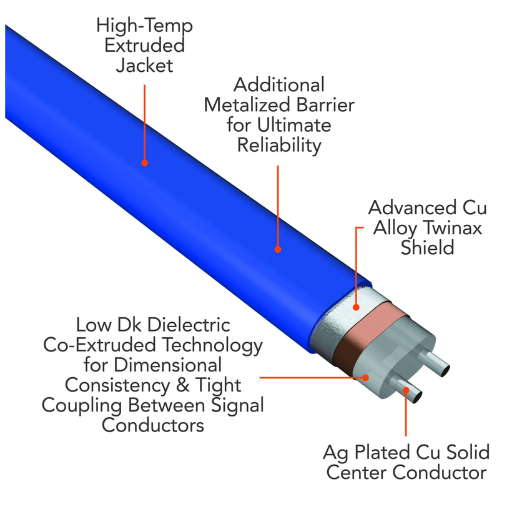
Twinax cables, short for twinaxial cables, focus on balanced high-speed transmission over reduced length distances. Economically, it is used in data centers and storage area networks for performance-critical server-switch-system connections. It is imperative to note that these cables maintain high signal precision while offering latency reduction, which is vital in modern architecture. An advantage of using twinax cables is the improved data-triple transmission. In comparison, these twinax shields provide immunity to outside EMI, as well as additional layers further mitigating interference.
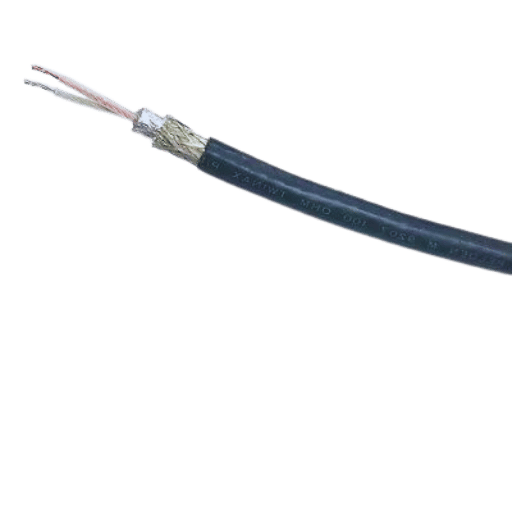
Structure of a twinax cable
A Twinax cable is made from the following primary elements:
- Conductor Pair: Two copper conductors are insulated and run parallel to each other to carry a differential signal.
- Insulation: Each conductor is insulated to maintain signal integrity and avoid crosstalk.
- Shielding: Usually made with braided foil or a combination of both, shielding protects the cable from electromagnetic interference, or EMI.
- Outer Jacket: The outer jacket provides protection from environment factors and physical impact to the cable, encasing the entire structure.
This particular design architecture ensures optimal high-precision performance, uptime signal fidelity, and latency dampening across multiple data stream arrays within data-heavy operational contexts.
Signal transmission and usage
The process of signal transmission can be defined as the sending of information from one device to another device or a system. For efficient transmission, there must be well-maintained cables, shielding, and insulation that prevent interference from outside signals. Typical examples include communication networks, audio-visual systems, and industrial process automation. Efficient signal transmission provides accurate data exchange in different operations, which enhances the overall performance in many functions. In any case, there is less signal degradation and a positive improvement in system performance. Thus, appropriate cabling must be chosen and best installation practices followed.
Advantages of twinaxial cable over other types
- Reduced Signal Loss: Twinaxial cables maintain a competitive advantage in signal loss attenuation when compared to other cables. This characteristic makes them ideal for high-frequency applications.
- Enhanced Noise Immunity: The twinaxial cable’s noise emission level is significantly lower than average due to the differential signal transmission, which reduces the effect of electromagnetic interference (EMI).
- High Data Transfer Rates: The twinaxial allows for modern networks and data centers to operate at greater data transfer speeds, and therefore provides significantly higher data rate capabilities.
- Cost Efficiency: The twinaxial exhibit better performance in compact spaces than other heavily shielded cable types, therefore, providing better shielding at a lower price.
- Improved Flexibility and Durability: Due to the demanding nature of applications requiring twinaxial cables, their robustness and flexibility lower the frequency of required replacements.
- Superior Signal Integrity in Short Distances: Often used in high-speed server interconnections, twinaxial excels for short-distance signal transmission.
- Compatibility with Modern Standards: Businesses will have little trouble integrating twinaxial into their existing systems as they are compatible with 10GBASE-CX4 and SFP+ DAC cables.
Exploring the Coaxial Cable: Basics and Applications

Components of a coaxial cable
A coaxial cable is made of the following primary components:
- Central Conductor – This goes to the signal’s core and serves as the copper conductor or on copper-plated materials.
- Dielectric Insulator: Provides insulation to the conductor and keeps it from the outer layers to ensure uniform spacing which promotes proper transmission.
- Outer Shield: A braid or solid cover that is made from copper or aluminum which protects the cable from external electromagnetic signals.
- Outer jack – The layer that goes last. This one provides a protective coat made of hard plastics to shelter the cable from mechanical injury and environmental exposure.
Common applications of coax cable
- Television Signal Transmission: Commonly used in cable TV networks for the transmission of analog and digital television signals with minimum disruption.
- Internet Connectivity: Especially important in broadband internet connections like cable internet services done via DOCSIS.
- Two-Way Radio Communications: Employed in the transmission and reception of signals for police, fire, and other emergency service functions.
- Satellite Communication: Enables the transmission of signals to and from satellite dishes and receivers.
- Telephony Systems: Voiced signals are transmitted using the older telephone systems.
- CCTV and Surveillance Systems: Ensures the closed-circuit security systems have uninterrupted video signal transmission.
- Aerospace and Military Applications: Important for the aircraft, communication, and defense equipment for the military regarding information transfer.
- Medical Equipment: Pertains to some imaging devices like ultrasounds and MRI systems.
How coaxial cables aid in signal protection
The construction of coaxial cables aids in safeguarding signals from damage due to interference and signal attenuation. Coaxial cables possess a central conductor that is encased by an insulating layer, a metallic shield, and an outer jacket of insulation. During transmission, the signal is protected from electromagnetic interference (EMI) and radio frequency interference (RFI) by the metallic shield, which also maintains the integrity of the signal. Moreover, the insulating layers fight against signal degradation, which allows for the reliable transmission of high-quality data and is applicable in different fields.
Comparing twinax vs coax: Which is right for your needs?
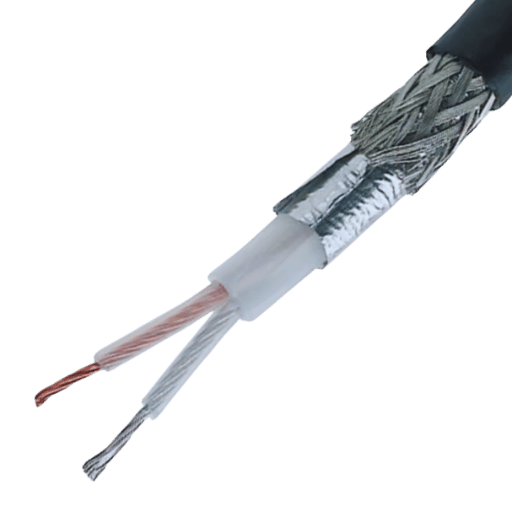
Key differences between coax and twinax cables
Coax cables contain a single conductor and are used for conveying high-frequency signals; twinax cables have two conductors and are designed for short-range high-speed data transmission.
Below is a summarizing table of the most important differences:
|
Parameter |
Coax Cable |
Twinax Cable |
|---|---|---|
|
Conductors |
Single |
Two |
|
Frequency Use |
High |
Low |
|
Distance |
Long |
Short |
|
Speed |
Moderate |
High |
|
Shielding |
Strong |
Moderate |
|
Applications |
TV, Radio |
Data Centers |
Factors to consider: impedance, interference, and distance
Impedance
- Impedance is of concern when evaluating a cable’s integration within a system and its interplay with other components. Coaxial cables have specifically tailored impedances of 50 or 75 ohms which support certain communications, particularly video and RF Transfers. Twinax cables used in high-speed data transmission in Ethernet and InfiniBand tend to have lower impedances of 100 ohms. Proper matching of impedance is critical as signal degradation through loss or reflection greatly reduced network performance.
Interference
- In terms of Interference, both coaxial and twinax cables perform above average to reduce signal degradation; however, their success is always relative to the given circumstance. Coaxial cables are suitable for moderate interference environments due to their shielding layer’s protective qualities against EMI and RFI. They do not have the same advantages in high-speed data transmission. With two wires twisted together, twinax cables reduce electromagnetic interference to a great extent because of the twisted pair cancellation effect. This also makes them popular in high-speed systems where interference poses a significant challenge to signal fidelity.
Distance
- Distance considerations are crucial in choosing between coaxial and twinax cables. Coaxial cables excel over longer distances, maintaining signal integrity for cable television and broadband applications. In contrast, twinax cables are preferable in short-range, high-speed requirements often found in data centers where low latency and high bandwidth are critical. Weighing the anticipated cable length against the expected signal quality helps make an informed decision.
When to choose twinaxial cable over coax
Selecting twinaxial cable over coaxial cable is preferred for speed-sensitive data transmission over short distances. Twinax is particularly useful for places like data centers where low latency and high bandwidth are important. Superior signal integrity at minimal distance makes twinax ideal for short-range connections in high-performance computing, servers, and storage systems.
The Role of connectors in cable assemblies
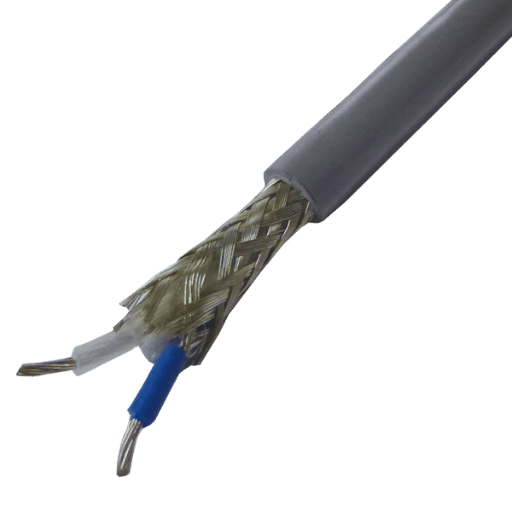
Types of connectors for coaxial and twinaxial cable
BNC (Bayonet Neill-Concelman) Connector
- Utilized in radio and television, as well as in RF devices. Has the option of quick connect/disconnect.
TNC (Threaded Neill-Concelman) Connector
- Like the BNC, it has threads for improved performance for higher frequencies.
SMA (SubMiniature Version A) Connector
- For microwave frequencies. High-performance for coaxial and twinaxial cables.
N-Type Connector
- Used for low-frequency RF applications. Has a threaded design that is rugged and weather-tight.
DIN 1.0/2.3 Connector
- With high-density capabilities, it is compact and mostly used in telecommunication.
RCA Connector
- Used for audio and video data transmission in home audiovisual equipment.
F-Type Connector
- For coaxial cables in cable television and satellites for signal distribution.
MCX (Micro Coaxial) Connector
- Used in mobile wireless communication equipment for small, compact areas.
QMA Connector
- Used in testing and measuring environments. It is a quick-release version of the SMA.
Twinax Connectors
- Used for applications involving twinaxial cables. Ensures good impedance matching and low loss in high-speed signal transmission.
RP-SMA (Reverse Polarity SMA) Connector
- The interface is reverse polarity. Used in certain RF wireless systems.
UHF Connector
- For RF applications, it is a general-purpose connector, but it’s not very good for high frequencies.
The unique functions and environments associated with each connector highlight the importance of selection accuracy in optimizing performance and reliability.
Impact of connector types on signal loss
A system’s signal loss is greatly impacted by the type of connector used. High-grade connectors, such as SMA and N-type, minimize degradation of the signal, particularly in high-frequency applications. On the other hand, general-purpose UHF connectors’ signal degeneration at high frequencies makes them more unsuitable for precision applications. In RF systems, proper selection of connectors is critical in ensuring signal fidelity is maintained, interference is minimized, and performance is optimized.
How do you choose the right twinax or coax?
Understanding your data transmission needs
In selecting a twinax or coax cable, understanding how data will be transmitted and evaluating prerequisites is the most essential step. The operating environment, distance for the signal propagation, and the frequency range of the signal all need to be taken into consideration. If the case involves high-frequency signals or longer distances for transmission, a coaxial cable, which is low-loss and highly shielded, is ideal. In cases where there is balanced signaling, such as differential pair transmissions, twinax cables are more effective due to their lower susceptibility to interference. It is always vital to choose a cable that meets the required standards for the system in order to maintain the reliability and efficiency of the entire system.
Evaluating environmental factors and interference
When assessing the environment and impact factors, pay attention to the following:
- Electromagnetic Interference (EMI): Evaluate inner devices or systems that may interact with the electromagnetic field, as they can compromise the integrity of signals.
- Temperature Extremes: Obey the confines of the temperature operating range, as extreme heat or cold can damage cable insulation and reduce its overall performance.
- Moisture and Humidity: Exposure to water or high humidity levels increases the likelihood of corrosion, short-circuiting, or other vessel breaches. Ensure waterproofing covers critical areas effectively.
- Chemical Exposure: Assess whether the relevant cables will be exposed to chemicals or solvents capable of degrading chemical constituent block materials.
- Mechanical Stress: Assess the exposure to sustained tension, bending, and vibrations that impact the cable’s endurance.
- UV Radiation: Evaluate potential exposure to the sun, which can cause slow deterioration of certain materials used in the cables.
- Proximity to Power Lines: Nearby high voltage power lines may impose additional interferences beyond those identified requiring additional shielding.
- Bonding and Grounding: Effective bonding ensures sufficient preservation of the electromagnetic signal path, thus greatly reducing unwanted interference.
Taking into account the above outlines in both the environment and interference should ensure the cable chosen will function optimally for its intended purpose.
Considering high-speed signaling applications
The importance of precision in signal integrity and performance analysis becomes evident when choosing cables for high-speed signaling applications. Primary issues to focus on include:
- Cable bandwidth capacity: For any given task, select cables which at the very least meet the required bandwidth for ensuring dependable data transmission, especially during high-speed activities.
- Signal attenuation: Select low resistance, high quality conductors so that attenuation is minimized, and thus ensures adequate signal strength throughout the distance.
- Shielding effectiveness: This is of major importance for high-speed applications – strong shields should be employed to reduce high levels of electromagnetic interference.
- Connector relevance: Check whether the cable connectors are constructed to the necessary standards for data transfer rate to ascertain that they will not compromise the signal.
It is essential for efficient high-speed communication in complex applications.
Frequently Asked Questions (FAQs)
Q: What are the main differences between twinax and coax cables?
A: Twinax computer and data processing cables are engineered for high-speed differential data processing and information transfer, while coax cables consist of a copper wire commonly utilized for video transmission and is prone to environmental losses. Moreover, twinax cables tend to better safeguard signals from any form of interference.
Q: Why would one choose a twinax cable over a coax cable?
A: Twinax cables are preferred for robust differential data processing and other high-speed applications that require protection from environmental factors, along with lower cable loss. Their signal interference protection makes them suitable for use in hostile environments.
Q: How does the construction of twinax cables differ from coax cables?
A: Twinax cables are made with two inner conductors along with a wire and copper mesh shield which enhances signal protection from interference. Many standard coax cables still have a single copper wire and depend on a copper mesh shield for signal protection.
Q: In what applications are twinax cables commonly utilized?
A: Twinax cables are often utilized within data centers and in networking situations where the speed of data transmission is of the essence and loss due to external factors is kept at a minimum. They are commonly found in DAC cable applications for device interfacing.
Q: What are coax cables commonly utilized for?
A: Coax cables are commonly utilized for the transmission and reception of video and audio signals, cable television, and internet servies. Their simplistic construction coupled with their effectiveness over shorter distances make them preferred tools in these cases.
Q: Would it be possible to interchange twinax and coax cables?
A: Although both these cables serve the purpose of signal transmission, they cannot be used interchangeably. For high-speed data transfer, twinax cables would be a better choice, while coax cables are more suitable for video and basic data transfer.
Q: What is the importance of maintaining environmental quality where interference is prevalent?
A: Where these cables are concerned, the copper mesh acts as shields protecting the signal from environmental interference. This is essential when dealing with shielding the signal from interference of the very accurate kinds.
Q: In what aspects do twinax cables differ from fiber optic cables?
A: Although twinax and fiber optic cables both high-speed data transfer, fiber optic cables have a greater distance capability and bandwidth. Twinax is more economical than fiber optic and thus preferred for shorter distance connections.
Q: Do twinax and coax cables have specific standards or types?
A: These cables do have defined standards. For instance, coax cables often use RG or M17 types, which specify parameters such as impedance and shielding. Like other types of cables, twinax also has standards that govern its different uses.
Reference Sources
- Types of BNC Connectors – An MIT paper describing twinax connectors and how they differ from coaxial connectors.
- Lectures on Theory of Microwave and Optical Waveguides – A Purdue University lecture that covers comparisons between coax, twinax, and other types of waveguides.
- Report on Cabling Navy Bases for Voice, Data, and Video – A NIST report covering the conversion of coax, twinax, and some other types of cables to a twisted pair format.
- Coaxial cable
- Electrical cable
- Wire