








In terms of electrical safety, Ground Fault Circuit Interrupter (GFCI) outlets are a must-have in both residential and commercial setups. But what if several GFCI outlets were wired in series? This technique, known as daisy chaining, brings up issues regarding the function, the safety of the setup, and whether or not it is in line with the electrical codes. Since the question is posed not only by homeowners but also by electricians and DIY enthusiasts, they all try to figure out if daisy chaining GFCI outlets is a good method or could it weaken their system’s reliability. In the following text, the author attempts to clarify the issue of daisy chaining GFCI receptacles, discuss possible pros and cons of the practice, and finally give clear recommendations for case-by-case scenarios. The reader will also be able to garner the technical knowledge that ensures the safety and efficiency of the electric systems at the very end.
Introduction to GFCI Outlets
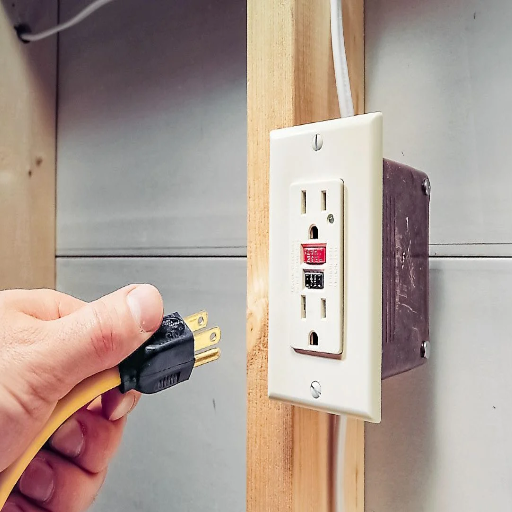
Ground Fault Circuit Interrupter (GFCI) outlets provide a safeguard against electric shock by interrupting the current whenever a ground fault is detected. A ground fault is where electrical current seeks an unintended conductor, like water or a person. GFCI outlets constantly check the electric current and disconnect the circuit if they detect a difference in the flow of current, thereby minimizing the chance of an accident. GFCI outlets are often installed in places that are close to water, for instance, bathrooms, kitchens, and gardens, and they form an inseparable part of electrical safety in both homes and workplaces. Apart from being a common practice, the use of GFCI outlets has become a requirement in many places according to the electrical code for the purpose of improving safety against possible hazards.
What is a GFCI Outlet?
A Ground Fault Circuit Interrupter (GFCI) outlet is a safety device that protects people from electric shock due to ground faults. It measures the current flow between the hot and neutral wires continuously, and as soon as it notices an imbalance—even a tiny one—it infers that electricity might be leaking through an unintended route, such as water or a person, and it cuts the power off in milliseconds. GFCI outlets are usually found in places where moisture is present, such as bathrooms, kitchens, laundry rooms, and outside areas, since these are the places where contact with water is most likely due to the nature of the activities performed there. The National Electrical Code (NEC) has mandated the installation of GFCI outlets in many areas, making them indispensable for providing electrical safety by preventing electrocution and reducing fire hazards caused by ground faults.
Importance of GFCI Protection
GFCI (Ground Fault Circuit Interrupter) protection is necessary for minimizing electrical hazards, especially in places where water and electricity can meet. Ground faults happen when the currents from the electric power source go to the ground instead of following the circuit path. The stray electric current might go through such unintended conductors as the human body or even water. In the absence of a GFCI, a person could suffer very serious injuries or even die from electrocution. GFCIs constantly analyze the electricity’s flow and are capable of locating the fluctuations as small as 4-6 milliamps, which could signify a ground. The GFCI then takes very quick action and turns off the electric power, usually within 1/40th of a second, hence eliminating the possibility of harm to the person.
Furthermore, GFCI outlets also aid in the prevention of fires because they cut off power to the circuit whenever the grounding causes are due to, for instance, bad wiring or poor insulation. This protection is most needed in bathrooms, kitchens, outdoor areas, and garages because getting wet easily increases the chance of ground faults. The National Electrical Code (NEC) requires GFCI installation in such locations, thus highlighting not only its importance for safety and protection of human and property from electrical incidents. Testing and maintaining the GFCI outlets regularly will ensure that they are always functional and continue to offer the same level of protection as intended.
How GFCI Outlets Work
The operation of GFCI outlets is based on the continuous monitoring of the electrical current’s flow in the circuit. They are capable of recognizing the differences in the flow between the hot (live) and neutral wires, which might suggest a ground fault or a possible route for current to leak. The GFCI disconnects the power to the outlet almost instantly if it detects a difference as little as 4-6 milliamps. The current flow is interrupted very quickly, and thus, the electrical shock is prevented because the circuit is cut off before the current can hurt someone. GFCI outlets are made safe in the moisture-prone areas or areas where accidental water exposure is accidental because they are equipped with internal sensors and trip mechanisms. These outlets usually come with “Test” and “Reset” buttons, making it possible for users to check the operational status and power the outlet again after a trip.
Daisy Chaining GFCI Outlets
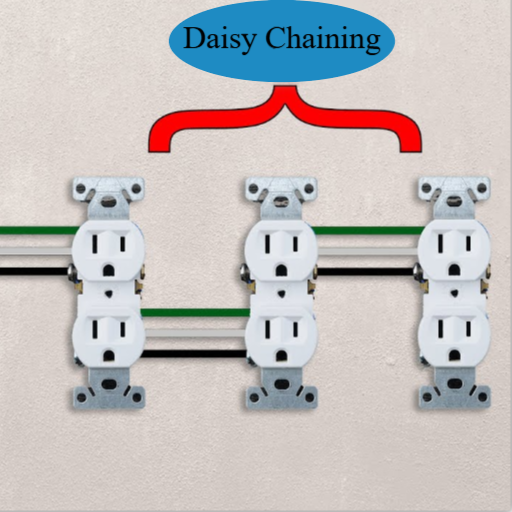
Daisy chaining GFCI outlets is possible, but proper installation is very important to make sure the outlets are both functional and safe. In daisy chaining, just the first GFCI outlet of the circuit has to have its protection features turned on. The “Load” terminals of the first outlet can deliver the same ground fault protection to the downstream outlets. Nevertheless, only the first outlet will trip or reset with a fault. Making the connections and having the protection setup done wrong can be avoided by following the manufacturer’s instructions and making sure that the wiring scheme adheres to the National Electrical Code (NEC). Consulting a skilled electrician in case of uncertainty is strongly advisable.
What Does Daisy Chaining Mean?
Daisy chaining is a practice wherein multiple electrical outlets or devices are connected in a series manner. The term daisy chaining applied to GFCI outlets means that additional outlets are connected to the “Load” terminals of an upstream GFCI outlet. This is done to ensure that all downstream outlets get the ground fault protection of the primary unit. Therefore, the arrangement allows for the protection of multiple outlets without the need for each to be provided with its own independent GFCI. Nonetheless, applying daisy chaining incorrectly will not only violate the electrical code but also put safety at risk or fail to deliver sufficient fault protection. Proper wiring and compliance with the NEC are of utmost importance in this process to ensure both safety and functionality.
Benefits of Daisy Chaining GFCI Receptacles
Cost-Effectiveness
The use of GFCI receptacles in a daisy chain arrangement results in a huge project cost reduction, as one GFCI receptacle is enough to protect several downstream outlets. This practice allows for the installation of GFCI receptacles at only one location instead of every location, thus maintaining safety standards, provided correct wiring practices are followed.
Simplified Maintenance
The presence of one GFCI outlet for multiple outlets makes it easier to troubleshoot and maintain. When a ground fault happens, the GFCI controlling the other outlets trips, making it quite obvious that inspection is needed, and no individual testing of the downstream outlets is required.
Enhanced Protection Scope
The death of a GFCI setup through a daisy chain gives an entire series of outlets extended protection against electrical ground faults. To be specific, each device that is connected to the trip will get better safety from the upstream GFCI unit. This is especially the case in moisture-prone areas, e.g., kitchens, bathrooms, and outdoor locations.
Improved Circuit Organization
The daisy-chaining technique results in neater electrical installations by having just one GFCI receptacle per circuit for protection. This way, it is possible to organize the components better, and the fuse boxes or panel setups will not be so cluttered.
One should always follow the guidelines in the National Electrical Code (NEC) carefully and carry out appropriate testing after the installation to guarantee that the system is functioning optimally and safely.
How to Daisy Chain GFCI Outlets Safely
Daisy chaining of GFCI (Ground Fault Circuit Interrupter) outlets should always be done in such a way that the proper electrical standards and safety measures are observed. Steps to a secure and compliant installation are shown in detail below:
Electrical Needs Should Be Known
Total load capacity should be the first thing to figure out, and check that the circuit has not been overloaded afterwards. Generally, 15-amp or 20-amp circuits with the correct wire gauge (14 AWG for 15 amps, 12 AWG for 20 amps) are necessary. Power supply and connected devices must be confirmed to be in the range of the GFCI’s rated specifications.
Power Switch Off at Circuit Breaker
Disconnect the power to the circuit at the circuit breaker panel before the start of your installation. Testing the voltage will help to make sure no current is passing through the wires, which means you are working in a safe area.
Proper Connection of Upstream GFCI Outlet
The GFCI outlet should be the first one in the daisy chain. LINE and LOAD terminals should be identified on the GFCI outlet. The power supply (hot and neutral wires) from the breaker panel has to be connected to the LINE terminals. The GFCI will now be able to correctly protect the outlet downstream.
LOAD Terminals Wiring of Standard Outlets
After the LINE wiring is set up, connect the outgoing wires (to the next outlet in the chain) to the LOAD terminals of the GFCI. Try not to include more than one GFCI in the wiring of the additional outlets, making them standard non-GFCI ones instead, as daisy-chaining GFCIs can lead to unnecessary tripping.
Connections Must Be Tightened, And Proper Grounding Followed
Appropriate terminal screws should be used to tightly secure all connections, making it impossible for there to be loose wires. Moreover, every outlet in the chain should be properly grounded, with the ground wire being connected to the ground screws at each outlet’s housing.
Installation Should Be Tested Thoroughly
When the wiring is done, turn the power on and check the installation. Use the test and reset buttons of the GFCI outlet to make sure it is functional. Use a GFCI outlet tester to check downstream outlets and see that they are getting the right protection. New testers will recognize wiring mistakes, e.g., open ground, reversed polarity, or a malfunctioning GFCI.
Nec Guidelines Compliance
Quality installation relies on following the National Electrical Code (NEC) in its latest version at all times. For areas such as completed bathrooms, kitchens, and outdoors, GFCI protection is required by the NEC regulations.
If you follow the steps as described, then downstream outlets will have a working GFCI protection, and the electric system, of course, will be safer. It is very important to do periodic maintenance and visual inspection that will give you long-term reliability and safety. If the installation is complex or you have doubts, ask a licensed electrician for help.
Wiring Considerations for Daisy Chaining GFCI Outlets
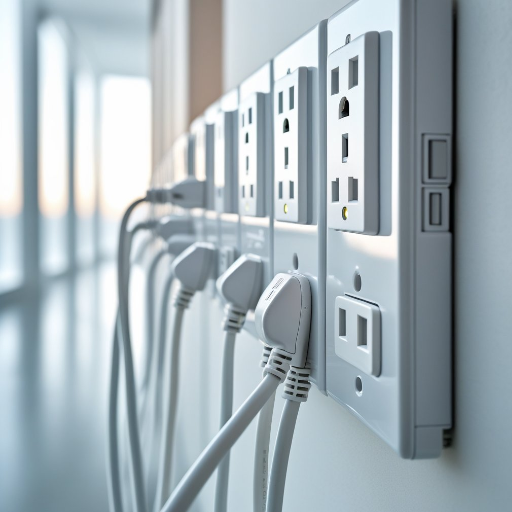
Daisy Daisy-chaining GFCI outlets, it is very important to have the wiring connections precisely done to secure both safety and proper functioning. The first outlet of the chain must be wired to the source of power, and the “LINE” terminals should be given the incoming supply. Connect all other outlets to the “LOAD” terminals of the first GFCI in the number sequence. This setup enables the leading GFCI to give the ground fault protection to all the following outlets in the circuit.
Prior to starting, make sure the circuit is not live by switching off the breaker and checking with a voltage tester. Use cables with correct ratings and also follow all local electrical codes and the NEC (National Electrical Code) requirements. In case of future maintenance or troubleshooting, GFCIs should be labeled properly, indicating their respective roles in the circuit, as this will make for easier work. Never compromise on safety and call in a qualified electrician if you have any doubts.
Understanding Electrical Circuits
Electrical circuits are an arrangement of elements that allow the flow of electric current and connect a power source to the components, such as lights, appliances, or other devices. A simple circuit contains a power source (battery or mains supply), conductive wires, a load (device consuming electricity), and a control element (like a switch) among its parts. The circuits are formed through the closing of a loop that allows the electrons to go from the power source to the load and then back to the source.
There are two main circuit types—series and parallel. A series circuit connects components in such a way that current flows through them one after the other, and thus the same current gets through all components. On the other or conversely, a parallel circuit arranges components in such a manner that current divides itself and flows through each branch independently, thereby allowing the current to divide and flow through each branch separately. Knowing the differences is important in making systems efficient because parallel circuits usually offer reliability by allowing the rest of the components to work even when one has failed.
Applying safety measures is important when making or designing electrical circuits, and abiding by the regulations set out by the National Electrical Code (NEC), for example, is a must. Properly rated components, excellent insulation, and sufficient circuit protection (like fuses or circuit breakers) are the measures to be implemented to avoid overloads and hazards of fire or electric shock arising from the use of electricity. Always employ tools and testers that are suited to the specific voltage of the circuit, and call a qualified electrician if troubleshooting or installation beyond the usual is needed. This is the backbone of the safer and more efficient use of electricity in various applications.
Wire Gauge and Load Capacity
There is a direct relationship between the wire gauge and its amperage, which is the maximum current that can pass through the wire, and this is one of the main characteristics to keep in mind when designing electrical installations. The American Wire Gauge (AWG) system is the most widely used wire gauge system, and it is marked by an inverse relation; the smaller the gauge number, the thicker the wire and the higher the load capacity. So, a 14-gauge wire can carry a current of up to 15 amps, while a 12-gauge wire can carry 20 amps. The risk of fire and overheating is present when the current flowing through the wire exceeds the amperage prescribed for that wire size.
One has to take into account the wire length and the surrounding temperature when calculating load capacity, as resistance goes up with distance, and hot temperatures lower the conductivity. The correct wire gauge selection requires referring to the National Electrical Code (NEC) tables because they specify the different factors that influence the ampacity and, thus, compliance with safety standards. Always use a wire size that meets or exceeds the power needs of the appliance or equipment, and when not sure, go with a thicker wire gauge to keep the voltage drop low and prevent overheating.
Breaker Requirements for Daisy-Chained GFCIs
It is necessary to pick the correct circuit breaker when installing daisy-chained Ground Fault Circuit Interrupters (GFCIs) for functionality and safety. GFCIs are breakers that require amperage rated and the circuit’s rated current to be matched, which generally is either 15-amp or 20-amp, depending upon the load connected and the wire’s ratings. Besides, it should also be compatible with the panel’s specifications and requirements.
Wiring GFCI outlets in a series does not require a special breaker since each outlet has its own built-in protection that works. However, the power terminals of only the first GFCI outlet in the chain should be connected to the downstream outlets if the entire branch is to be protected. This setup makes sure that all downstream connected devices are provided with fault detection and tripping. It is customary to use a normal breaker in such situations, as the GFCI outlets themselves offer the fault protection.
In the end, it is absolutely necessary to avoid unnecessarily connecting several GFCIs to the same branch circuit, as this might cause nuisance tripping. Make sure all connections follow the National Electrical Code (NEC) regulations, and check with the panel manufacturer about the compatibility of breakers to ensure reliability and compliance with operability.
Alternatives to Daisy-Chaining GFCI Outlets
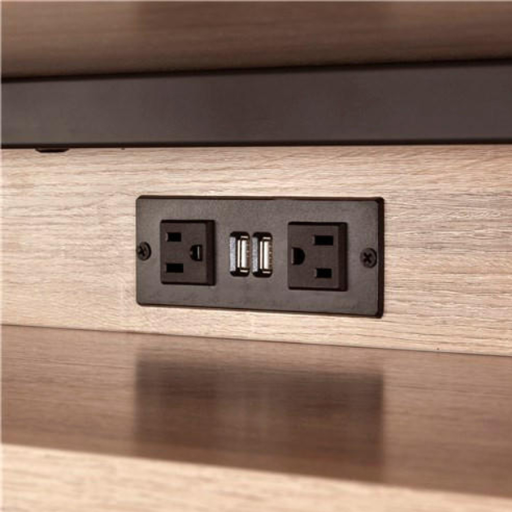
To prevent the GFCI outlets from daisy-chaining each other, here are some alternatives:
-
Install a Single GFCI Outlet at the Start of the Circuit
One GFCI should be installed at the first receptacle in the circuit. This will extend the GFCI protection to all outlets downstream without the need for more GFCIs.
-
Utilize a GFCI Circuit Breaker
If the circuit breaker panel has a regular breaker, then it can be replaced by a GFCI circuit breaker. This method extends the protection to the whole circuit and gets rid of the necessity for separate GFCI outlets.
-
Install Standard Outlets Downstream
Once a GFCI outlet or breaker is fixed at the beginning of the circuit, use standard outlets for downstream connections. The ground faults will still be controlled by the initial GFCI device through these outlets.
These techniques not only make the installation easy, but also reduce the total expenses, the chance of nuisance tripping, and still comply with the NEC regulations.
Using Regular Outlets with GFCI Protection
Regular outlets can be used together with GFCI protection safely if they are installed according to the electrical safety codes. This method normally consists of a GFCI device, either a GFCI outlet or a GFCI circuit breaker, at the start of the electrical circuit. The GFCI device controls the amount of electricity and cuts off the power immediately if it notices a leakage current of over 4 to 6 milliamperes (mA), thus giving the most important protection against electrical shock hazards.
After the GFCI device is connected and set up as the first socket or breaker on the circuit, ordinary outlets can be placed after it. This way, the GFCI’s safety is passed on to every other outlet that is next to the circuit. This completely removes the necessity for several GFCI outlets, thereby cutting down on material costs and installation difficulties a lot.
To make it durable, it is very important to check the GFCI device’s performance often. It is reported that about 10-15% of GFCI devices might stop working eventually due to mechanical wear and tear or environmental factors. Usually, testing is done by pushing the “Test” and “Reset” buttons on the GFCI device. Adhering to this practice guarantees safety performance consistency.
Also, having standard outlets after the GFCI devices is a factor that lessens nuisance tripping, which is the result of current leakage accumulating and is most common in circuits with several GFCI outlets close to one another. The easier wiring process also minimizes the chances of connection mistakes, thus giving reliability in both household and commercial uses.
Using the regular outlets with the GFCI protection upstream is in accordance with National Electrical Code (NEC) Article 210.8, so compliance is guaranteed while simultaneously enhancing safety and cost-effectiveness. The proper execution of this strategy gives an effective way to protect the electrical systems without the need to compromise either the safety or functionality aspects.
Installing a New GFCI Outlet
Before you start the process of installing a new GFCI outlet, power off the circuit at the breaker panel and then test with a voltage tester to make sure that the outlet box you will be using is not powered. Remove the old outlet and pay attention to the line (incoming) and load (outgoing) wires. For the proper installation of the GFCI, connect the “LINE” terminals to the wires that are supplying the power and the “LOAD” terminals to the outlets that are located downstream and require GFCI protection. Make sure to secure all connections tightly.
Place the GFCI outlet back in the box with caution, screw it in, and put on the cover plate. Turn on the power at the breaker panel and test the GFCI by pressing both the “TEST” and “RESET” buttons. The outlet will be able to trip if installed correctly since it will cut off the power in the event of a ground fault. Always follow the manufacturer’s guidelines and also respect the national as well as the local electrical codes. If the installation is complicated or if you have doubts regarding the wiring, seek the help of a qualified electrician to make sure that the operation is safe and meets the code.
Best Practices for Outlet Installation
Proper outlet installation is a must not only for safety but also for efficiency in the electrical systems. First, it is recommended to pick the right outlet type based on the application, for instance, standard duplex outlets, GFCI outlets in wet areas, or AFCI outlets to lower the chances of electrical fire. The specific safety issues and certain code regulations for each and every type is made for are the factors being addressed.
Before the wiring starts, check to see that the electrical panel is switched off and the circuit is tested to be without electricity using a voltage tester. Always use outlets that can handle the load of the circuit, usually 15 or 20 amps in case of domestic wiring, to circumvent the overheating and fire risks. Also, it is very important to use outlets with certification labels, like UL (Underwriters Laboratories), so that the product is compliant with the safety standards.
The wire connections should be both tight and accurate. The colors of the wires should be matched: black (hot), white (neutral), and green or bare (ground) – with their respective terminals. Poor connections and wrong wires together can cause power outages or turn into fire risks. If there are several outlets on a single circuit, they have to be wired in parallel to keep the same operation in case of any failure.
Abide by the 2023 National Electrical Code (NEC) rules, which are mentioned in the guidelines, like GFCI protection in kitchens, bathrooms, and outdoor areas, and AFCI protection in most living spaces, etc. For instance, the NEC dictates the installation of tamper-resistant receptacles that will make it hard for children to cause electrical shocks if they put something into the socket.
Make use of high-quality tools, for example, insulated screwdrivers and wire strippers, to guarantee the very precise handling of components. The circuits at the breaker panel should be clearly labeled with tags for easier future troubleshooting. Besides, regular maintenance and monthly testing of GFCI and AFCI outlets (by pressing the “TEST” button) are crucial to keep the outlets in working condition.
If the outlet installation is for challenging environments, for example, industrial plants or places that are moist and dirty, then it is better to opt for weatherproof or industrial-grade outlets that are built to last. Usage of correctly rated outlets in such situations has been found to cut down the equipment damage and downtime by as much as 40% according to industry statistics.
Thus, by following these best practices, planning properly, and carrying out regular maintenance, you can ensure safe and reliable electrical outlet installations that meet the current safety standards. An electrician should always be consulted for complicated situations or when dealing with unfamiliar wiring configurations.
Common Issues with Daisy-Chained GFCI Outlets
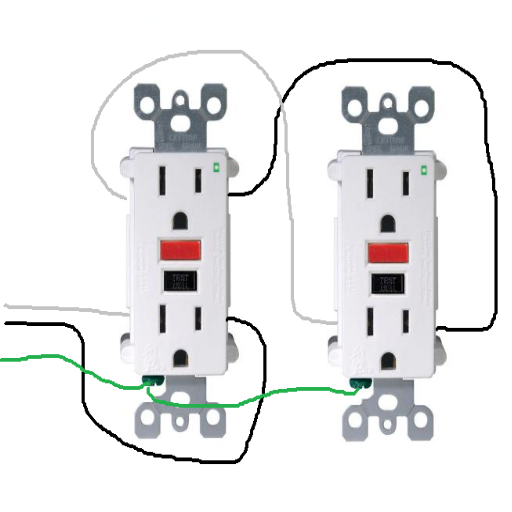
In case Daisy-chaining GFCI outlets is not done in the right way, it can cause numerous common issues. Out of these issues, the most common one is nuisance tripping. The upstream GFCI outlet might trip and disconnect power to the goat and subsequently related outlets. Such a thing can happen through the use of overlapping protection or incorrect wiring configurations. Upstream GFCIs’ nuisance tripping can lock up downstream outlets undesirably, and one problem can be wrong load and line terminations. Such problems can lead to inadequate protection by the GFCI and malfunction of the circuit altogether. Additionally, troubleshooting faults in a daisy-chained configuration can be complex, as identifying the source of the problem often requires isolating each outlet for inspection, hence the intricate nature of it. Nevertheless, proper planning, adherence to the manufacturer’s instructions, and regular testing of the outlets can prove to be effective in mitigating these issues. Always ensure that the National Electric Code (NEC) is followed to guarantee safe installations.
Potential Overload Problems
Overloading circuits happens when a circuit’s total electrical demand is greater than its capacity. The results of this might be the wires getting very hot, damaging the insulation of the wiring, or it might cause the circuit breaker to trip. By calculating the amperage of all the appliances on that particular circuit, you can prevent this from happening. A typical home circuit has a capacity of either 15 or 20 amps; if you go over this limit, you are likely to either have an electrical failure or fire. Divide the power-consuming appliances among the different circuits and don’t use more than one device in every outlet by getting power strips or extension cords. If you cannot load balance, refer to the circuit diagram for your electrical system and decide whether an upgrade is necessary to accommodate your household’s power consumption safely. Breakers tripping often is generally an indication of an overloaded circuit, and therefore, the situation demands a professional check-up to ensure everything is up to code when it comes to safety issues.
Tripping Issues in Daisy-Chained Circuits
Based on my knowledge, the branching circuit’s tendency to trip might mostly be connected to the situation when too much current flows through the linked sockets. In fact, such an arrangement is usually unable to handle safely the high energy loads, particularly when the devices plugged in are of the same rate and at the same time. I suggest that the problem can be solved by cutting the number of devices plugged into one outlet and spreading the load out over several circuits. In the case where the problem still exists, then it is a good idea to have the wiring checked for any defects or to upgrade the circuit so it can carry more current and still be within the limits set by the electrical code.
Regular Outlet vs. GFCI Outlet in Series
Comparing a conventional outlet with a GFCI (Ground Fault Circuit Interrupter) outlet necessitates taking into account the different features and safety measures of both. Regular outlets serve merely as points of connection for electrical devices, while GFCI outlets also function as a safeguard against electric shock by current monitoring. The GFCI outlet, in such a case, detects the imbalance in current and cuts off the power instantly to avoid any possible harm.
In the case of wiring a series circuit with both regular and GFCI outlets, the location of the GFCI outlet becomes a deciding factor. If the GFCI is positioned at the upstream (nearest the breaker panel) end of the circuit, it will give downstream protection, which means all devices or outlets that are connected after it will be protected from ground faults. On the other hand, if the GFCI is at the downstream end, that very outlet alone will be protected from ground faults, whereas the upstream outlets will be unprotected. GFCI outlets must be installed in accordance with National Electrical Code (NEC) regulations because of their significance in safety and compliance.
Summary and Key Takeaways
Important Points to Remember
- GFCI outlets are essential safety devices that protect against electric shock by detecting ground faults and interrupting power within milliseconds.
- Daisy chaining GFCI outlets is possible when done correctly, with only the first GFCI in the chain providing protection to all downstream outlets.
- Proper installation is critical – connect the power source to LINE terminals and downstream outlets to LOAD terminals on the first GFCI.
- Cost-effective solution – one GFCI can protect multiple standard outlets, reducing installation costs while maintaining safety.
- Avoid daisy-chaining multiple GFCIs as this can lead to nuisance tripping and troubleshooting difficulties.
- Regular testing is essential – use the TEST and RESET buttons monthly to ensure proper GFCI function.
- NEC compliance is mandatory – always follow National Electrical Code guidelines for GFCI installation in moisture-prone areas.
- Consider alternatives such as GFCI circuit breakers or single upstream GFCI outlets with standard outlets downstream.
- Professional assistance recommended – consult a licensed electrician for complex installations or when in doubt.
Conclusion
Daisy chaining GFCI outlets represents a practical and cost-effective approach to electrical safety when implemented correctly. By understanding the proper wiring techniques, following National Electrical Code guidelines, and adhering to manufacturer specifications, homeowners and electricians can create safe, efficient electrical systems that provide comprehensive ground fault protection throughout residential and commercial spaces.
The key to successful GFCI installation lies in proper planning, precise execution, and regular maintenance. Whether choosing to daisy chain outlets or implement alternative protection methods, the primary goal remains constant: ensuring the safety of individuals and property from electrical hazards. With the knowledge and guidelines provided in this comprehensive guide, you are now equipped to make informed decisions about GFCI outlet installation and maintenance.
Remember that electrical work carries inherent risks, and when in doubt, it is always advisable to seek the expertise of a qualified, licensed electrician. Regular testing, proper documentation, and adherence to safety standards will ensure that your electrical system continues to provide reliable protection for years to come.
| Installation Method | Advantages | Disadvantages | Best Use Case |
|---|---|---|---|
| Daisy-Chained GFCI Outlets | Cost-effective, simplified maintenance, single point of protection | All outlets trip together, complex troubleshooting | Multiple outlets in same moisture-prone area |
| GFCI Circuit Breaker | Protects entire circuit, no outlet-level GFCI needed, cleaner installation | Higher upfront cost, entire circuit trips, requires panel access | New construction, circuit-wide protection needed |
| Single GFCI with Standard Outlets | Most cost-effective, easy maintenance, reduced nuisance tripping | First outlet must be accessible, requires proper LINE/LOAD wiring | Residential kitchens, bathrooms, outdoor circuits |
| Individual GFCI at Each Location | Independent operation, easy fault isolation, flexible | Most expensive, requires more testing and maintenance | Critical equipment, separate protection zones needed |
Final Recommendations
When deciding on the best approach for GFCI protection in your electrical system, consider the following factors: the layout of your space, the number of outlets required, your budget constraints, and the specific requirements of the National Electrical Code for your location. Each installation scenario is unique, and what works best for one situation may not be ideal for another.
Prioritize safety above all else. Ensure that all electrical work is performed with the power turned off at the breaker panel, use proper tools and testing equipment, and verify that all connections are secure and correctly wired. Document your installation with clear labeling to assist with future maintenance and troubleshooting efforts.
Stay informed about updates to electrical codes and safety standards, as these regulations evolve to address new technologies and safety concerns. Regular inspection and testing of GFCI devices will help maintain their protective capabilities and ensure continued safety for all occupants of the space.
By following the comprehensive guidance provided in this article, you can confidently approach GFCI outlet installation with the knowledge necessary to create a safe, code-compliant electrical system that provides reliable protection against ground faults and electrical hazards.
Reference Sources
“LIBERTY: Lightweight Battery System for Extended Range at Improved Safety”
“Application of G.hn Broadband Powerline Communication for Industrial Control Using COTS Components”
Frequently Asked Questions (FAQs)
Is it possible to daisy chain GFCI outlets?
Indeed, GFCI outlets can be daisy-chained. This technique permits connecting more than one outlet to the sole GFCI and ensuring that all of them are protected, as well. If GFCIs multiply, proper connections are the one thing that can secure the ground fault protection throughout the entire circuit.
How is the GFCI breaker that protects outlets on the same circuit?
A GFCI breaker monitors the current flowing through the line side of the circuit, and if it detects any imbalance, it trips power to the entire circuit, which means that all the connected outlets are still safe.
What goes on when multiple GFCI outlets are wired up?
Wiring multiple GFCIs means the first one on the line side throws protection on all the low ones down the line. The second, though, if not wired right, can cause the GFCI to trip more often or be less protective than it should.
Is it possible to connect a second downstream GFCI outlet?
A second GFCI outlet can indeed be placed downstream of the first one. Power to the latter will be provided by the former, but it’s important that the connection be done right to keep tripping issues at bay.
When talking about GFCIs, what does load side refer to?
The load side of the GFCI is called the part where the wires leading to downstream outlets are connected. Power is transferred to the connected outlets on this side while GFCI protection is still active.
What is the procedure for installing a new GFCI outlet?
The first thing to do when installing a new GFCI outlet is to turn the power off at the circuit breaker. After that, the incoming wire goes to the line side of the GFCI and the outgoing to the load side. The black wire must be connected to the brass terminal and the white one to the silver terminal. Finally, after securing everything, power comes back on, and the outlet is tested.
Can a GFCI outlet protect several outlets at once?
Yes, a GFCI outlet can protect several outlets if the proper wiring is done. All the other outlets connected downstream will be ground fault protected, and hence, safety in the circuit will be maintained.
Your GFCI outlet trips often. What do you do?
A GFCI outlet tripping often means there might be a problem with the wiring or the connected device. First, check to see if all outlets on that circuit are functioning fine; then, you might want to use a GFCI tester to pinpoint the issue.
Is it permissible to have two GFCIs installed on one circuit? x
You can put two GFCIs on the same circuit, but it is usually not needed. The first GFCI outlet protects all the downstream outlets; hence, having another GFCI may lead to unintentional complications and tripping issues.