








Experts in network architecture and IT frequently face the choice between SFP (Small Form-Factor Pluggable) ports and standard Ethernet when it comes to the setting of network connections that are both reliable and fast. Indeed, both technologies are critical to modern networking, but performance, speed, and flexibility in some scenarios still create confusion as to which one is better. In this article, the technical details around SFP and Ethernet connections are completely unpacked, revealing their major differences, showcasing their use cases, and listing the pros and cons. Having know-how with these technologies is critical when making choices, be it in optimizing a corporate data center, managing a telecommunications network, or upgrading office infrastructure. Continue reading to find out whether SFP really beats Ethernet in terms of speed and versatility, and to see which one perfectly matches your networking needs.
Understanding Ethernet and SFP
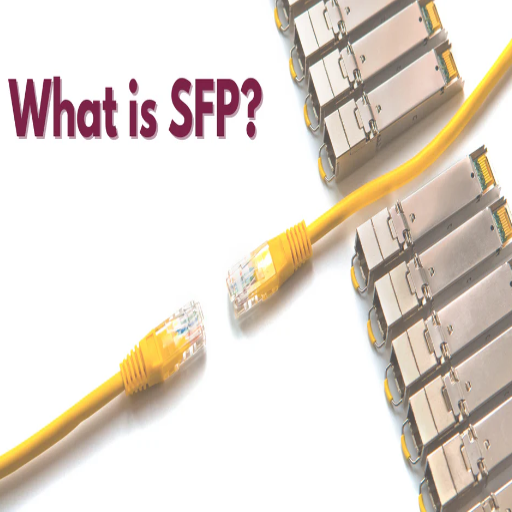
Ethernet and SFP are two technologies that are popularly utilized in networking, but these two are not the same. While Ethernet is the standard for wired local area networks (LANs), it is mainly copper-based and thus allows for the transfer of data at high speeds. The technology is not only cost-effective but also suitable for short to medium distance connections, which are characteristic of modern offices and homes.
SFP (Small Form-factor Pluggable) modules, on the other hand, are the ones that facilitate the installation of fiber-optic or copper-based connections that are flexible and scalable; however, this is mostly done in enterprise and telecom environments. SFP can transmit through longer distances and at higher speeds than standard Ethernet connections, which makes it the data centers and networks requiring high bandwidth and extended reach areas as its application.
Ethernet or SFP is a question that you should ask yourself when considering the exact network specifications. For local applications that do not require much, Ethernet is the option most likely to be chosen. SFP is the best option for high-performance or long-distance needs.
What is Ethernet?
Ethernet is an extremely popular networking technology that allows communication among local area networks (LANs), metropolitan area networks (MANs), and sometimes even wide area networks (WANs). It functions by splitting the data into packets, which are then sent via either physical cables or wireless connections. The Ethernet standards set by the IEEE 802.3 protocol guarantee that devices will be compatible and reliable. Ethernet technology has and still comes in different speeds, from the historical 10 Mbps to the contemporary 400 Gbps; thus, it is very adaptable to different fields and can scale. It is always considered a simple, inexpensive, and, at the same time, a very widely used technology, thus a pillar of almost every network structure that is built.
What is an SFP Port?
The SFP port, which stands for Small Form-Factor Pluggable port, is a type of network interface that allows the use of hot-swappable transceivers. It is widely found in network devices like switches, routers, and servers, where it offers the advantage of having different types of connectivity through either fiber optics or copper wires. SFP ports provide high-speed data transmission (generally up to 1 Gbps or even more in the case of SFP+ or QSFP modules) over different distances and media, which makes them suitable for both short-range and long-range communication. Their modularity feature makes it possible to upgrade networks easily and tailor them to specific needs, such as switching between Ethernet and fiber optic connections.
Comparison: SFP vs Ethernet
When making a comparison between SFP (Small Form-factor Pluggable) modules and Ethernet ports, it is crucial to take their main functions and applications into consideration first. Ethernet ports are normally built into the network devices and used for direct copper-based cabling, thus allowing data transmission over short distances (Cat5e or Cat6 cables, for example). They do not cost much and are easy to work with, which is why they are the preferred choice for local area networks (LANs).
SFP ports, however, do provide more flexibility by being able to switch between different modules that support both copper and fiber optic connections. This feature also allows SFP to handle high-speed data transmission over long distances, which standard copper-based Ethernet ports cannot provide. For instance, networking through Ethernet is usually restricted to approximately 100 meters with copper cables, while SFP modules together with fiber optic cables can reach even tens of kilometers or more, depending on the specific module type.
In terms of performance, SFP ports are the ones that usually take the higher bandwidth scalability, especially when they are using technologies such as SFP+ (10 Gbps) or QSFP (40 Gbps). Ethernet ports, on the other hand, may not be so advanced with respect to their performance and distance, but will still be perfect for inexpensive applications that rely on user-friendliness and low complexity.
Key Comparison Summary
In the end, the decision between SFP and Ethernet is determined by the network’s scalability, distance, and speed requirements. For smaller networks or short-range connectivity, Ethernet is often sufficient. However, for enterprise networks, data centers, or situations where long-range communication is needed, SFP modules provide the advanced capabilities required in order to facilitate effective and adaptive network performance.
Performance Metrics of SFP and Ethernet
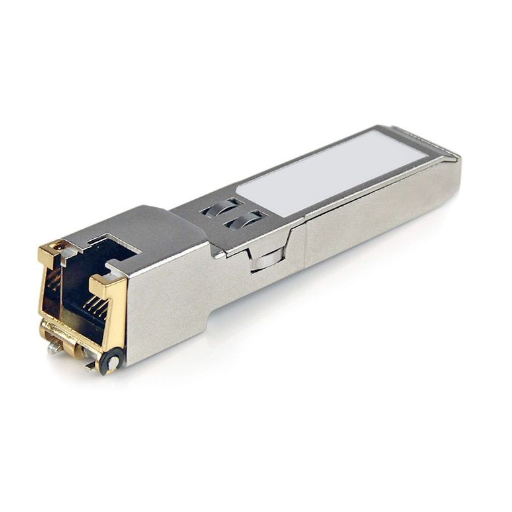
SFP and Ethernet are compared in terms of three main aspects: speed, distance, and reliability.
Speed
Ethernet, depending on the cable category and technology, can reach up to 100 Gbps, which is adequate for most short-range applications. SFP modules, on the other hand, are also able to reach the same speeds and operate over different distances, according to the type of transceiver used.
Distance
The Maximum range for Ethernet cables is generally 100 meters before they need repeaters or switches. In this aspect, SFP is ahead of Ethernet by offering a variety of range options from 550 meters to over 100 kilometers with single-mode fiber.
Reliability
Both Ethernet and SFP are considered to be very reliable, but SFP can handle even more demanding conditions, such as being in an area with minimal interference and communicating at high speed over long distances.
Application Guidance: Applications in data centers or high-speed backbone connections that have heavy demand can choose SFP, while Ethernet is still an effective solution for smaller, short-distance, and less demanding applications.
Speed Comparisons: 1Gbps and Beyond
In terms of speed, both Ethernet and SFP have gone past the 1Gbps and are now offering different speed levels according to the network requirements. Most of the current office networks are based on Gigabit Ethernet (1GbE), which is very effective and affordable for the usual business applications. The top speed tiers of 10GbE, 40GbE, and 100GbE, though they are available to everyone now, are mainly used in corporate spaces, data centers, and service provider networks.
Meanwhile, SFP transceivers also provide similar speed steps but are mainly used where long-distance communication is a must. Ordinary SFP modules allow a transmission of up to 1Gbps, while SFP+ gives 10Gbps. Next-generation technologies such as QSFP and QSFP+ (quad small form-factor pluggable) have led to even higher speeds of 40Gbps and more, giving the possibility of connecting more users in a high-throughput network without any interruption.
Decision Factor: The decision between the two often depends on the particular use case. Ethernet is commonly used for shorter runs with a limited budget, whereas optical SFP solutions take the lead in cases that require the longest distance, lowest latency, and the most reliable high-speed transmission.
| Technology | Speed Options | Primary Use Cases | Cost Level |
|---|---|---|---|
| Gigabit Ethernet (1GbE) | 1 Gbps | Office networks, standard business applications | Low |
| 10GbE | 10 Gbps | Corporate spaces, data centers | Medium |
| Standard SFP | Up to 1 Gbps | Long-distance communication | Medium |
| SFP+ | 10 Gbps | Enterprise networks, extended reach | Medium-High |
| QSFP/QSFP+ | 40+ Gbps | High-throughput networks, data centers | High |
| 40GbE/100GbE | 40-100 Gbps | Service provider networks, backbone connections | Very High |
Latency Considerations
The term Latency, which has a decisive role in determining how good the network performance is, is known as the duration that elapses from the moment a data packet is sent until it is finally received. Several factors contribute to this time lapse, and they include the medium of transmission, the speed of the signal, the time taken for processing, and the network congestion. Usually, Ethernet provides low latency for short distances, which is its major advantage due to its basic and direct design that is highly compatible with low-noise environments where there is little interference. On the other hand, the Optical SFP solutions are reliable over long distances but can sometimes have slightly more latency due to the conversion of the signal from electrical to optical and vice versa. Nevertheless, with the continuous improvement in optical technology, the latency caused by the signal conversion has been reduced to a very small extent.
In applications like financial trading, gaming, and cloud computing, where even a few milliseconds of delay can be a real bottleneck, reducing latency to the bare minimum is of utmost importance. The selection of the right technology is often determined by the specific performance needs, distance, and the delay tolerance in the network’s operational situation. Besides, the application of optimizations such as traffic prioritization, routing, and hardware upgrades can also help to alleviate latency issues further.
Latency Optimization Strategies
- Traffic Prioritization: Implement Quality of Service (QoS) to prioritize critical applications
- Optimized Routing: Use efficient routing protocols to minimize hop counts
- Hardware Upgrades: Deploy high-performance network equipment with faster processing
- Network Segmentation: Reduce congestion through proper network design
- Direct Connections: Minimize intermediate devices for latency-sensitive applications
Bandwidth Capabilities
Bandwidth— the highest rate of data transfer that can be achieved in a network— is a very important factor in determining the overall quality of the network. The ability to transfer large quantities of data quickly is very much dependent on high bandwidth, and thus we find such applications in streaming video, performing large-scale file transfers, and using cloud-based applications. The network’s ability to take on such high-bandwidth tasks depends mainly on the infrastructure (like fiber-optic, DSL, or wireless), possible bottlenecks, and the quality of service (QoS) settings that have been established.
The present-day networks face the dual challenge of not only having to support bandwidth that keeps on increasing, but also having to consider factors like latency and jitter. For example, switching to a high-speed internet connection of around fiber optic can dramatically improve the throughput and, at the same time, make it possible for users to carry out multiple data-heavy activities without experiencing a drop in the network quality. Furthermore, if the organization puts in place good network management, such as congestion control and bandwidth monitoring, then it will not only be able to allocate network resources optimally but also improve the network reliability and user experience overall.
Types of SFP Modules
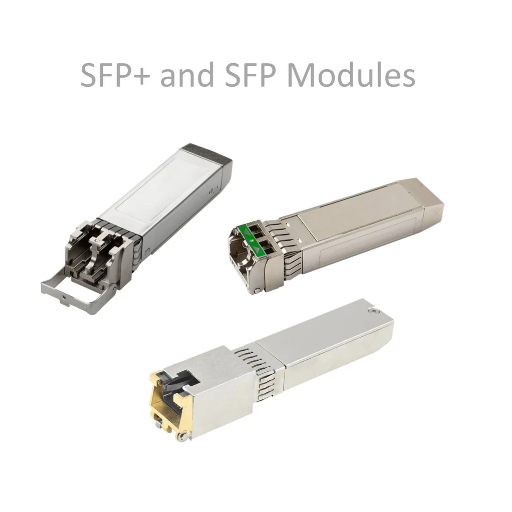
SFP (Small Form-Factor Pluggable) modules are classified according to their transmission distance, data rate, and the type of medium used. The major categories are as follows:
SX Modules
For short-range applications, generally up to 550 meters using multimode fiber (MMF).
LX Modules
Long-range capable up to 10 kilometers with single-mode fiber (SMF).
EX Modules
Highest range modules for 40 kilometers on fiber.
Copper Modules
For single/double connections across standard Ethernet copper cables, usually up to 100 meters.
BX Modules
Use one fiber for two-way communication over distances of up to 10 kilometers and more.
Selection Criteria: The selection of each type is done according to the particular needs of the application, like distance, data rate, and the type of cabling.
Standard SFP Modules
The standard SFP (Small Form-Factor Pluggable) modules are an array of optical transceivers very versatile and applicable for both data communication and telecommunication. These modules are able to transmit at rates typically from 1Gbps to 10Gbps, depending on the particular type. The standard SFPs can be further divided into categories that are based on their functionality and transmission distances:
| Module Type | Fiber Type | Maximum Distance | Wavelength | Data Rate |
|---|---|---|---|---|
| SX Modules | Multimode Fiber (MMF) | 550 meters | 850nm | 1.25 Gbps |
| LX Modules | Single-Mode Fiber (SMF) | 10 kilometers | 1310nm | Up to 10 Gbps |
| EX Modules | Single-Mode Fiber (SMF) | 40 kilometers | 1550nm | Up to 10 Gbps |
| ZX Modules | Single-Mode Fiber (SMF) | 80 kilometers | 1550nm | Up to 10 Gbps |
Selection Considerations: The selection of the SFP module type is determined by the major parameters such as link distance, network architecture, and fiber type, thereby allowing the network to be deployed in a scalable and efficient manner. Added to that is the fact that they are compatible with a wide range of networking equipment and comply with MSA (Multi-Source Agreement) standards, which makes them an indispensable element in contemporary data networks.
Enhanced SFP Modules
The Enhanced Small Form-Factor Pluggable (SFP) modules come with the latest upgraded advantages that modern networking systems require. These modules’ principal functionality includes high-speed data transmissions, usually from 1 Gbps to 100 Gbps, and meeting the MSA standards for interoperability between different manufacturers’ devices. They additionally offer the choice of a single-mode and multi-mode fiber option, thus meeting all kinds of network requirements.
Enhanced SFP modules have many benefits, and one of these is the support of long link distances, while some models, through the use of amplified optics and Dense Wavelength Division Multiplexing (DWDM), are able to cover a distance of over 100 kilometers. Furthermore, the incorporation of the diagnostic monitoring interfaces (DOM) allows for the real-time performance monitoring of the optical power, which is being transmitted and received, the temperature, and the voltage, thereby guaranteeing a reliable network operation.
Enhanced SFP Module Features
- High-Speed Transmission: Data rates ranging from 1 Gbps to 100 Gbps
- MSA Standards Compliance: Ensures interoperability across different manufacturers
- Fiber Options: Support for both single-mode and multi-mode fiber
- Extended Reach: Distances exceeding 100 kilometers with advanced optics
- DWDM Support: Dense Wavelength Division Multiplexing for maximum efficiency
- Diagnostic Monitoring: Real-time performance tracking of optical power, temperature, and voltage
SFP module selection must take into account several technical aspects such as data rate, distance, and environment. Confirmation of compatibility with networking devices, to prevent operational mismatches, is equally important. The Enhanced SFP modules are vital in constructing enterprise, telecom, and data center applications, which are scalable, flexible, and low-latency network infrastructures. Their modularity implies that they can be easily upgraded; thus, they are in line with the ever-changing network demands.
Choosing the Right SFP Module for Your Needs
The process of choosing the right SFP module is a very technical one and involves a thorough evaluation of network specifications, plus future scalability. Firstly, determine the type of cabling, either fiber or copper, that is used in the network; this could be multimode fiber (MMF) for short distances, or single-mode fiber (SMF) for long connections. Next, check the wavelength that is required (for example, 850nm, 1310nm, or 1550nm), as this is very important in making sure that the hardware you are using is compatible with each other. The transfer rate of the data that is needed is another factor to consider, as generally, the SFP modules support up to 1Gbps, while the SFP+ and QSFP variations handle the rates from 10Gbps to 100Gbps for the higher bandwidth consumption.
Factors of the environment, like the temperature range and electromagnetic interference, should also be part of the consideration, especially in the case of industrial or outdoor deployments. The Monitoring capability of the Digital Diagnostics on the module must be considered for real-time performance monitoring, which is necessary in managing high-performance networks. Lastly, check if the vendor is compatible with your network equipment because, in some cases, the switches or devices may only work perfectly with the manufacturer or approved SFP modules. These aspects, when analyzed systematically, will lead to improved network performance, reliability, and success of operations over time.
Selection Checklist
- Cabling Type: MMF for short distances, SMF for long connections
- Wavelength Requirements: 850nm, 1310nm, or 1550nm compatibility
- Data Transfer Rate: Match module speed to bandwidth requirements
- Environmental Factors: Temperature range and EMI considerations
- Digital Diagnostics: DOM capability for performance monitoring
- Vendor Compatibility: Ensure approved module compatibility with equipment
RJ45 vs SFP: Which is Better?
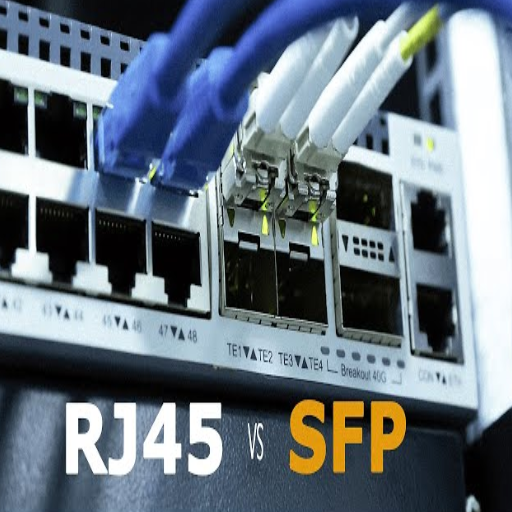
The selection between RJ45 and SFP is determined by the particular needs of your networking application. RJ45 is perfectly suited for short distances, up to 100 meters generally, and it qualifies as the most economical way to make standard Ethernet connections with the use of copper wires. It is typically found in residential networks, small offices, and places where the main concerns are to have things simple and cheap.
In contrast, SFP modules are very flexible, allowing for fiber optic or copper connections, and hence can be used for longer distances. High-speed data transmission is another key area for SFPs, as these are predominantly found in enterprise-level networks and data centers where scalability, reliability, and performance are indispensable.
Quick Decision Guide
So, in the end, RJ45 is best for straightforward, short-length setups, while SFP is hard on the heels of complex, high-performance, and long-length network configurations.
Understanding RJ45 Connectors
RJ45 connectors are an interface standard very much utilized for Ethernet networking in connecting devices in a local area network (LAN). They are made for twisted-pair copper cabling, which is the best type of cabling for short and medium distances, usually up to 100 meters (328 feet), and the distance depends on the cable category. These connectors come with eight pins, facilitating the sending of data and signals through several wires in the cable, which makes the communication process very efficient.
RJ45 is primarily linked to UTP/STP cabling, which is comprised of the Cat5e, Cat6, and Cat6a categories, where each category comes with particular enhancements in speed, bandwidth, and reliability. For example, in the case of RJ45 with Cat6 cables, the data rate can reach 1 Gbps, while with Cat6a, it can even go up to 10 Gbps in perfect settings.
Because of their straightforwardness and low price, RJ45 connectors are very common in home networks, small businesses, and basic enterprise setups. Their major application areas include such devices as personal computers, routers, switches, and VoIP phones. Nevertheless, such performance is not sufficient for environments that require extremely high bandwidth or very long cable runs, where fiber optics or SFP modules are the preferred solutions.
Advantages and Disadvantages of RJ45 and SFP
Advantages of RJ45
- Cost-Effective: It is the RJ45 connectors along with their cables that come at a significantly lower price than SFP modules and fiber optic solutions, and thus are the best option for setups with limited budgets.
- Ease of Use: The Highest possible installation and maintenance of RJ45 cables come with ease, and only basic technical skills are required.
- Compatibility: RJ45 gets along with a large variety of networking devices like routers, switches, and computers.
- Adequate for Short-to-Medium Distances: RJ45 Ethernet cables are capable of handling 10 Gbps speed up to a distance of 100 meters efficiently, which is enough for most local networks.
Disadvantages of RJ45
- Limited Distance and Bandwidth: Data loss occurs after a distance of 100 meters, and it cannot support the higher bandwidth and speeds that are required in advanced data centers or for long-distance connections.
- Susceptibility to Interference: The copper cables fitted with RJ45 are more susceptible to electromagnetic interference in comparison with fiber optic solutions.
- Temperature and Environmental Constraints: The performance and durability of RJ45 cables are affected in extreme environmental conditions, as they are not very rugged in such situations.
Advantages of SFP
- High-Speed Performance: Data rates of SFP modules can be as high as 100 Gbps; thus it is RJ45 will be defeated to say the least.
- Longer Transmission Distances: When using fiber optics, SFP modules can send data for much longer distances than copper cables can.
- Flexibility and Scalability: The SFP ports that are meant for copper and fiber transceivers are the most versatile for all kinds of network designs.
- Reduced Interference: The fiber optics with SFP is very resistant to electromagnetic interference, which guarantees a stable performance.
Disadvantages of SFP
- Higher Cost: The equipment, as well as the installation costs for SFP modules and fiber optic cables, are much higher than those of RJ45 solutions.
- Complex Installation and Maintenance: SFP modules deployment and maintenance require very specific knowledge and are not easy for everyone.
- Power Consumption: SFP modules generally draw more power as compared to standard Ethernet ports that use RJ45 connectors.
Decision Framework: The cost-effective way to make an informed decision based on the specific use case, performance requirements, and budgetary limits is the weigh these pros and cons by the network administrators.
When to Use RJ45 and When to Use SFP
The selection of RJ45 or SFP primarily relies on the network’s specific requirements, such as distance, speed, cost, and scalability. RJ45 connectors are the best choice for short-distance connections (within 100 meters) in office or small networks. They are based on standard Ethernet cables (Cat5e/6/6a), are cost-effective, and thus suitable for low to moderate bandwidth requirements where simplicity and low price are the main factors.
Alternatively, SFP modules are the main factor in high-performance and long-distance applications. They can basically connect via both fiber optic and copper, with the latter being the one that, depending on the module type, can support scalable speeds of as high as 100 Gbps. SFPs find their place in data centers, enterprise networks, and setups requiring a strong infrastructure, even for long ranges (with fiber-optic modules up to 80 km). Though they incur a higher upfront cost and are technical, they are the most suitable when bandwidth, flexibility, and distance factors are more important than the price.
Strategic Decision Making: By analyzing the current network requirements and considering future growth, the network administrators can tactically decide on the use of RJ45 for cost-effective, simple installations and SFP for sophisticated, long-distance layouts.
| Use Case | Recommended Technology | Key Reasons |
|---|---|---|
| Home Networks | RJ45 | Cost-effective, simple installation, adequate speed |
| Small Office Networks | RJ45 | Budget-friendly, easy maintenance, sufficient for local needs |
| Data Centers | SFP | High bandwidth, long distances, scalability |
| Enterprise Networks | SFP | Performance, flexibility, future-proofing |
| Campus Connections | SFP | Extended reach, high-speed backbone |
| Basic Desktop Connectivity | RJ45 | Universal compatibility, low cost, simple setup |
Implementing SFP in Networking
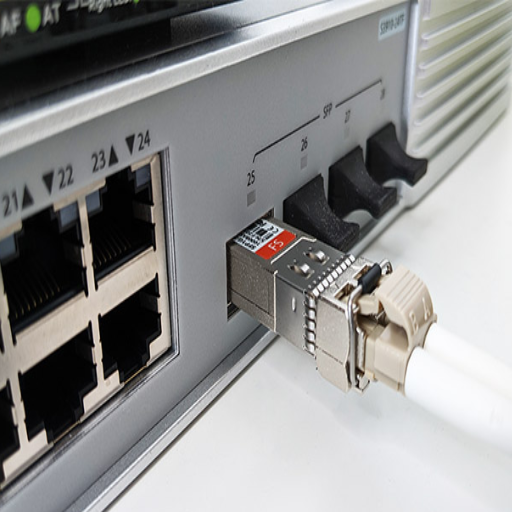
The procedure of utilizing SFP (Small Form-Factor Pluggable) in networking revolves around taking advantage of its modular design to increase flexibility and scalability. First and foremost, determine and choose SFP modules that are in accordance with your network’s specifications, including data transfer rates (1 Gbps, 10 Gbps) and the distance they can cover. After that, introduce these modules to SFP-compatible network devices like switches, routers, or servers. Make sure to use the correct type of cabling—fiber optic for long-distance connections or copper for short ranges—to get the best performance out of your setup. Keep an eye on the modules regularly and carry out maintenance to avoid connectivity issues, as they are the lifeline of fast and reliable data transmission.
Setting Up an SFP Port
Here’s how to configure SFP ports for smooth integration with the network:
- Choose the Right SFP Module: Select an SFP module that meets the needs of the network by taking into account the factors of data transfer rates (e.g., 1 Gbps or 10 Gbps), maximum distance, and other devices (e.g., switches, routers, and servers) with which compatibility is required. When deciding between fiber optic and copper-based modules, keep the connection type and distance in mind.
- Put in the SFP Module: With utmost care, line up and push the SFP module into the port till it makes a clicking sound. Make sure that the module is entirely in place to prevent any connectivity problems. If the module is equipped with any locking devices, fasten it as necessary.
- Link the desired Cable: Connect the module to the appropriate cable type – fiber optic cables for long-distance connections, or RJ45 (copper) cables for shorter distances. Inspect the cable quality thoroughly to avoid transmission errors.
- Check Device Compatibility: Perform the device support and detection for the SFP module. To do this, check the logs or the management interface of the system for the module’s operational status.
- Connection Testing: Make use of networking testing tools or commands to check if the link works at the required speed and stability. For confirmation, evaluate the parameters of latency, data throughput, and error rates.
- Ongoing Monitoring and Maintenance: Every so often, check the SFP modules and cables for physical damage or dirt that could affect performance. Replace parts that are not working and clear the dirt off the connectors to ensure that the systems are running at peak performance.
Success Factor: After applying these steps, you can be certain that the SFP port is correctly configured, thus ensuring the network’s data transmission is both efficient and reliable.
Integrating SFP with Network Switches
When it comes to connecting SFP modules with network switches, I first check the compatibility between them. This means that I need to ensure that the switch supports the exact SFP type, like SFP, SFP+, or QSFP. The next step is to take the module and carefully insert it into the correct port and plug in the matching fiber or copper cable. Meanwhile, I also make sure that the cable is of the right type for the required distance and speed. Then, I make the switch’s interface visible to me and check if the module is detected and working. At the same time, I am monitoring the link status and signal strength as my proof of connection. The correct integration of modules leads to the best performance and stability of the network.
Troubleshooting SFP Connections
Isolating possible problems and systematically fixing them is very important when it comes to SFP connections troubleshooting. The first step is to check the physical hardware, especially the SFP module, which should be tightly inserted into the port, and the type of module should be appropriate for the application (e.g., single-mode or multi-mode). After that, check the fiber or copper cable; if it is clean and not damaged, then it is properly connected and it meets the requirements for length, type, and bandwidth set by the specifications.
Then, look at the switch or device settings to check if the port is correctly turned on and is of the same type as the SFP module. Check the device for firmware updates, as sometimes compatibility issues can arise when the software is outdated. Use diagnostic tools or logs to monitor link state, error rates, and ports’ operational condition. Signal strength (dBm) and light levels are among the metrics that need to be checked, and they should not be greater than or less than the limits set by the SFP module specifications.
If the problem remains, the next step would be to check the module and cable in another port or device to exclude the possibility of hardware failure. Furthermore, verify if the connection on both sides is done with compatible transceivers and cabling standards. Change doubtful components one at a time until the cause is ascertained. Staying organized during the process guarantees that once and for all, connectivity problems will be solved and that the network will be more reliable.
Troubleshooting Checklist
- Physical Hardware Check: Ensure SFP module is securely inserted and appropriate for application
- Cable Inspection: Verify cables are clean, undamaged, and meet specifications
- Port Configuration: Confirm port is enabled and matches SFP module type
- Firmware Updates: Check for and install latest device firmware
- Diagnostic Monitoring: Use tools to check link state, error rates, and operational status
- Signal Strength: Verify dBm levels and light levels are within specifications
- Component Testing: Test modules and cables in alternative ports or devices
- Compatibility Verification: Ensure both ends use compatible transceivers and standards
- Systematic Replacement: Change components one at a time to identify the issue
Conclusion: Making the Right Choice for Your Network
The decision between SFP and Ethernet is not a matter of which technology is universally superior, but rather which solution best aligns with your specific networking requirements, budget constraints, and future scalability needs. Both technologies have earned their place in modern networking infrastructure, each excelling in particular scenarios and applications.
Ethernet, with its RJ45 connectors and copper cabling, remains the gold standard for cost-effective, short-distance networking. Its simplicity, widespread compatibility, and ease of installation make it the ideal choice for home networks, small offices, and local area networks where distances don’t exceed 100 meters. For organizations operating within budget constraints or those with straightforward networking needs, Ethernet provides reliable performance without unnecessary complexity.
SFP modules, on the other hand, represent the cutting edge of flexible, high-performance networking. Their ability to support both fiber optic and copper connections, combined with their scalability from 1 Gbps to 100 Gbps and beyond, makes them indispensable in enterprise environments, data centers, and telecommunications networks. While the initial investment is higher and technical expertise is required, the long-term benefits of extended reach, superior bandwidth, minimal interference, and future-proofing capabilities make SFP modules the clear choice for demanding applications.
As you evaluate your networking strategy, consider not only your current requirements but also your anticipated growth. The network infrastructure you deploy today should be capable of supporting tomorrow’s demands. For many organizations, a hybrid approach—using Ethernet for desktop connectivity and local networks while deploying SFP for backbone connections and inter-building links—provides the optimal balance of cost-effectiveness and performance.
Ultimately, successful network implementation requires careful assessment of distance requirements, bandwidth needs, environmental factors, budget limitations, and technical capabilities. By understanding the strengths and limitations of both SFP and Ethernet technologies, you can make informed decisions that ensure your network infrastructure supports your organization’s goals while remaining scalable, reliable, and cost-effective for years to come.
Essential Takeaways
- Ethernet is ideal for short-distance, cost-effective networking up to 100 meters using copper cabling
- SFP modules provide flexibility for both fiber optic and copper connections with speeds up to 100 Gbps
- Distance is a critical factor: Ethernet maxes out at 100m, while SFP can reach 100+ kilometers
- RJ45/Ethernet excels in simplicity, compatibility, and affordability for basic applications
- SFP modules offer superior bandwidth, scalability, and interference resistance for enterprise needs
- Different SFP module types (SX, LX, EX, ZX) serve specific distance and speed requirements
- Enhanced SFP modules support advanced features like DOM for real-time performance monitoring
- Proper module selection requires consideration of cabling type, wavelength, data rate, and environment
- Installation and troubleshooting of SFP connections requires technical expertise and systematic approach
- A hybrid approach using both technologies often provides the best balance for modern networks
Final Recommendations
For Small Businesses and Home Users: Start with Ethernet/RJ45 for cost-effective, reliable connectivity. Upgrade to SFP only when specific needs arise for longer distances or higher bandwidth.
For Enterprise and Data Centers: Invest in SFP infrastructure for backbone connections, inter-building links, and high-performance applications. Use Ethernet for end-user desktop connectivity to balance cost and performance.
For Network Administrators: Plan for future growth by implementing SFP-capable switches even if currently using Ethernet. This provides upgrade flexibility without replacing core infrastructure.
For Budget-Conscious Organizations: Prioritize SFP deployment for critical, high-traffic links while using Ethernet for less demanding connections. This targeted approach maximizes ROI while ensuring performance where it matters most.
Reference Sources
Ethernet in Industrial Automation: Overcoming Obstacles
Stress Testing Ethernet Switches for NectarCAM in the Cherenkov Telescope Array
Readout Electronics System of the CASCA Front-End Chip for the TPC-Based X-Ray Polarimeter
Frequently Asked Questions (FAQs)
Is SFP Faster Than Ethernet for Long-Distance Data Transmission?
Definitely, SFP modules guarantee instant data rates over long distances compared to classic Ethernet connections. Regular Ethernet connections generally reach their maximum speed of 1G in copper cabling, but SFP modules are available in different data rates supporting 10G and even more when transmitting via fiber. Thus, SFP is an appropriate choice for the network structure needing more bandwidth and less signal loss across longer ranges.
How Do SFP Modules Compare to RJ45 Ports in Network Setups?
SFP ports are way more flexible and scalable than RJ45 ports. While the latter are the main choice for copper cabling like Cat 5, SFPs can go with either fiber optic or copper DAC (Direct Attach Copper) cables. This ability helps the network guys to build their communication networks in accordance with the particular requirements of data rates and distances.
What Are the Types of SFP Modules Available for Ethernet Connections?
There are a variety of SFP modules available, each with its own standards and network requirements. Among them are standard SFP for 1G connections, SFP+ for 10G connections, and SFP28 for 25G connections. You can deploy any of these modules in your switches and routers to make your network interconnections operate smoothly with the support of different NICs and wires.
Can I Use an SFP Module for My Existing Ethernet Network?
Absolutely, using an SFP module to strategically boost your Ethernet network is a definite option. These SFP ports, which most modern switches have, let you install SFP modules for both fiber-optic and copper connectors. Thus, you get the ease of upgrading plus the benefit of transmitting data at higher rates, while still being able to accommodate the older RJ45 connections.
What Are the Advantages of Using SFP Over Traditional Ethernet?
Using SFP instead of traditional Ethernet has a number of advantages, such as connecting networks over vast distances without the drawback of significant signal loss, and as an option of using fiber optic modules with superior data rates. Also, SFP modules are compatible with multiple standards, thus providing the required different applications and network needs, making it a future-proof solution.
How Does Signal Loss Differ Between SFP and RJ45 Connections?
By all means, less signal loss with SFP modules is especially noted in the case of optical fiber usage. On the contrary, RJ45 connections have been facing issues with higher signal loss at longer distances, especially because it is the limitation of copper transmission that the signal cannot travel so far. The inference is that fiber-connected SFP modules maintain data quality even at long distances, where they become the choice for high-speed connections.
What Is the Role of SFP Ports in Modern Switches?
SFP ports in contemporary switches are network upgrades; they increase the switch’s reliability and versatility by creating opportunities for interfacing SFP modules. Thus, the switch can tap any network of different types-the media could be either fiber or copper. This kind of flexibility leads to designing networks that easily expand and adapt as the customer’s needs change.
Are There Specific SFP Modules for Different Data Rates?
Certainly, there are dedicated SFP modules that operate at different data rates. For instance, SFP is the standard for 1G, while SFP+ takes care of 10G. Besides that, even for faster speeds, SFP28 modules are applicable for 25G. Thus, the network engineers get to access the right module of their specific needs and data transmission demands through the process of selection.