








It could be said that while creating a network, the choicest decision would be between wired versus wireless network connections. Each has its advantages, impediments, and ideal occasions during which it will be employed, but the decision depends on your needs. Are you craving blazing-fast and stable connections for gaming and streaming? Or rather, are you going for something that allows your device to be flexible and mobile? This article accentuates the prominent differences between wired and wireless networks, thereby breaking down their advantages, drawbacks, and practical uses to facilitate the choice. Whether you’re an enthusiast setting up a home office or running a business and optimizing your workspace, understanding these networks is essential in today’s connected world.
Overview of Network Connections
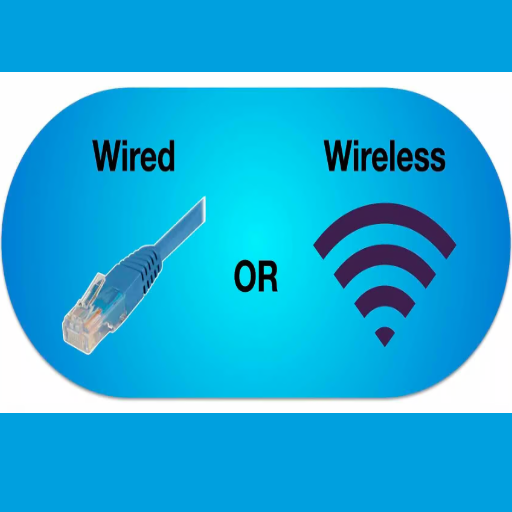
Depending on what you want to do, two different utilities-wired and wireless networks-serve the purpose. A wired network in which Ethernet cables are most likely used provides fast speed, very good reliability, and low latency, thus to suitable for online gaming, video streaming, and other activities that require a stable connection. On the contrary, wireless networks allow for ease of movement and conceptual design with no physical cable to connect devices. Devices utilizing wireless networks are generally mobile, and actions where moving around is more important. Your choice would, therefore, be a tradeoff between performance and convenience.
Understanding Network Connection Types
What is a Wired Connection?
The wired connection starts by plugging a device into a network using cables such as Ethernet. It is the type of connection known to be stable, high-speed, and secure. Ethernet cables commonly used for wired connections range from Fast Ethernet at 100 Mbps through 10 Gbps or higher at present using Cat 6, Cat 7 standard cable. Since wired networks are not subject to interference in the manner wireless ones are, bandwidth-intensive applications such as watching 4K videos, transferring data, and playing online games will be best deployed on wired networks.
Research shows that wired interventions normally have much lower latencies, ranging from 1 millisecond (ms) to 5 ms, whereas wireless environment measurements may range anywhere between 20 ms and 100 ms, depending on environmental conditions. Moreover, with modern support, wired connections provide a secure networking environment and are hardly ever intercepted; thus, they are perfect for business and the transfer of sensitive data. As the technology has evolved, Power over Ethernet (PoE) has further diversified the wired networks as it simultaneously delivers power and data to devices like IP cameras or access points!
What is a Wireless Connection?
A wireless connection involves the transmission of data between devices and a network using radio waves instead of wired media. Wireless networks, hence Wi-Fi, are considered crucial and have been in use in homes, offices, and public areas due to their convenience and ease of access. Wi-Fi mostly works in the two frequency bands, 2.4 GHz and 5 GHz, where-speed-and-range-are-varied. The 2.4 GHz band offers slower speeds but greater range, whereas the 5 GHz band offers faster speeds at short distances.
With recent advances in wireless technology gained through Wi-Fi 6 and Wi-Fi 6E as an emerging technology, the performance has dramatically improved. To mention some of the Wi-Fi 6 specifications, it gives speeds up to 9.6 Gbps, helps in efficiency in heavy congestion in networks, and aids multiple devices in working simultaneously. Wi-Fi 6E further provides a greater bandwidth from the use of the 6 GHz spectrum while accounting for minimum congestion. Despite these enhancements in performance, wireless connections get interrupted more due to walls or other malevolent electronic devices. Security, again, is the main purpose of disputes, as the wireless network is much more prone to breaches than its wired counterpart, hence the need for robust encryption techniques such as WPA3 for securing data.
Key Differences Between Wired and Wireless Networks
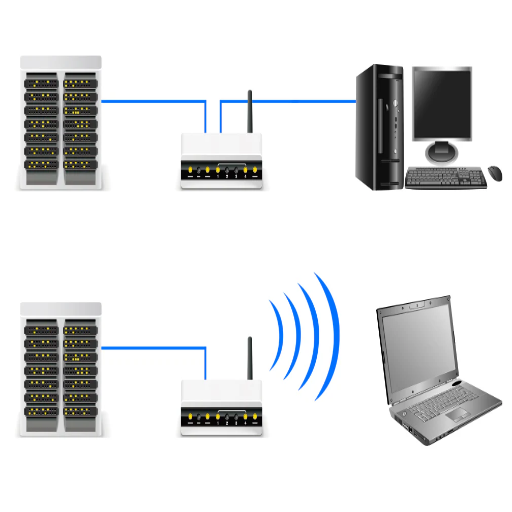
| Feature | Wired Connection | Wireless Connection |
|---|---|---|
| Speed | Up to 10 Gbps (Cat 6/7 cables) | Up to 9.6 Gbps (Wi-Fi 6) |
| Latency | 1-5 milliseconds | 20-100 milliseconds |
| Reliability | Very stable, minimal interference | Subject to interference and obstacles |
| Mobility | Limited to cable length | Full mobility within signal range |
| Security | Highly secure (physical access required) | Vulnerable to interception |
| Installation | Complex, requires cabling | Quick and easy setup |
Speed and Performance
A wired connection is often considered faster and steadier when compared to several alternatives working wirelessly. Most modern Ethernet connections come with their own exclusive labeling and support up to 10 Gbps speed, which depends on the cable type and network configuration. Now that Wi-Fi 6 and even Wi-Fi 6E have come into existence, wireless speeds have greatly improved, and while older technologies offer speeds under 1 Gbps, the new ones can theoretically realize 9.6 Gbps under perfect situations. But the thing about wireless speeds is that they rarely ever attain real speed, which is affected by interference, distance from the router, and usage in the network.
Latency
Latency tends to get lower on the wired side and is preferred for any time-critical events like gaming or video conferencing. Wired setups can see latency ranges in just a few milliseconds, whereas wireless ones will tend to go higher based on whether you have interference or obstacles in the environment.
Stability
A wired network will likely remain a more stable network, being independent of factors such as walls, competing network signals, or random physical obstructions. Wireless networks provide convenience when on the move, yet signal drops or interruptions may ensue, particularly in a dense urban environment or when other devices vie for bandwidth on the same frequency band.
Mobility and Convenience
With wireless networks, we enjoy through-the-roof convenience and mobility. You can walk around with several different devices, almost anywhere within a signal range. This world of flexibility, especially beneficial when working with multiple users inside the house, may also be found in public spaces. Wired connections, on the other hand, are constricted because cables must be plugged into routers or switches, thus providing limited access but stable connectivity.
Security
Wired networks are said to be more secure as they require physical access to the connection. For instance, wireless networks can be hacked through signal interception, which is impossible for a cable-based network. Apart from improper implementation and inattentiveness of the user, strong encryption technologies like WPA3 have, in fact, enhanced wireless security to a great extent.
Installation and Cost
Wired networks necessitate installation costs and maintenance, plus expenses for cabling and hardware such as switches and routers. Installation can be fairly complex, especially for large-scale applications involving structured cabling. By reducing the amount of wiring needed, wireless networks can sometimes provide a cheaper initial cost but might require higher-end equipment to keep performance strong in larger or congested areas.
Advantages and Disadvantages of Each Connection Type

Advantages of Wired Networks
- Reliability: Stable and consistent connection with fewer chances of interference
- Speed: It would mostly bear a higher data rate than wireless networks
- Low Latency: Perfect for instant response-required situations, such as gaming, video conferencing, etc.
- Security: Physical limitations provide less opportunity for illegal access
- Less Signal Interference: Wired connections, unlike wireless connections, are not affected by any kind of obstruction or electronic devices, thus guaranteeing that their performance shall remain consistent irrespective of the environmental conditions
Disadvantages of Wired Networks
- Limited Mobility: Tied to designated locations
- Installation Complexity: Setting up cables and hardware could take time and money
- Scalability: Adding new devices becomes cumbersome in complex setups
- Higher Expenses: Compared with wireless networks, wired networks require more hardware, like cables, switches, and installation kits, which would increase the initial investment and maintenance costs
- Cable Management: Handling multiple cables in wired backend procedures creates a distraction and, in a way, poses an increased risk due to possible damage, resulting in more maintenance needs over time
Advantages of Wireless Networks
- Flexibility: It enables the mobility of devices throughout the network
- Ease of Setup: Considered to be quick and convenient without consideration for physical cabling
- Scalability: Easily accommodates more devices without considering slight reconfiguration
- Cost-Effectiveness Over Time: While the initial installation cost can fluctuate, the wireless option, in general, happens to cut down on expenses involving purchasing cables, managing, and replacements, thus proving to be cheaper for both companies and households
- Support for Modern Technology: These wireless networks are compatible with an array of different ones and support such advances as Internet of Things (IoT), thereby facilitating the smooth integration of newer innovations and technologies
Disadvantages of Wireless Networks
- Interference: Connectivity issues may arise due to obstacles or signals of overlapping frequencies
- Security Risk: More vulnerable to unauthorized intrusion and breach
- Latency and Speed: Normally, much slower than cable-based networks under high traffic or over long distances
Connectivity and Performance Comparison
Generally, wired networks promise much faster, stable, and reliable experiences than their wireless counterparts. They are less vulnerable to interference, trying to disrupt high-speed streaming or online gaming-dependent connections with a file transfer infrastructure with stringent requirements. Accordingly, wireless networks came to the rescue, offering unmatched flexibility and convenience by allowing multiple devices to connect without any cables. Although considerably and steadily better, the wireless technology is yet susceptible to conceivable hindrances due to signal interference or sudden interruptions in changes within performance, especially in a highly crowded or obstructed environment. Hence, one chooses between wired and wireless purely depending on whether one prioritizes speed or more on stability and convenience.
Speed and Stability of Wired Connections
Wired networks–say Ethernet–are known to offer faster bandwidths and better stability than their wireless counterparts. With Ethernet cables of Cat 6 or Cat 7 standards, data speeds can reach as high as 10 Gbps or more with standards of higher definition; thus, any application requiring high bandwidth will be best served through it. Examples include online gaming, 4K or 8K video streaming, or gargantuan data file transfers. Not to mention, any wired connection remains free from interference via walls or other electronic devices that may obstruct wireless signals to ensure greater consistency and stability.
Another major advantage is latency because wired networks generally tend to have lower ping times and minimal packet loss, which is very important in real-time applications such as video conferencing or esports. Market study data from recently revealed that homes and offices using Ethernet connections experience up to 30% fewer connection drops compared with wireless solutions. Modern offerings in PoE further integrate better with wired connections for such systems as IP cameras and smart homes, offering speed, stability, and flexibility.
Wireless Connection Speed: A Closer Look
In recent years, wireless technologies-Focusing largely upon Wi-Fi- have technically celebrated one evolution after the other, throwing a legacy of faster speeds and wider coverage into the bargain. With Wi-Fi 6 and Wi-Fi 6E, the maximum peak theoretical rate has touched 9.6 Gbps, in contrast to Wi-Fi 5 standards of 3.5 Gbps. Streaming remains smooth and downloading gets quick while several devices can be handled simultaneously with that sort of improvement. Considering some industry data, Wi-Fi acts as a dominant means of connection for 60% of households while ably supporting myriad activities.
The factors affecting rates in a real-world wireless traffic are network congestion, signal interference, and routing distances, among others. In one instance, urban areas with high density in wireless networks can cause very slow connection speeds for the user due to overlapping signals. To alleviate the problem, mesh Wi-Fi has been made available as a solution to increase coverage and reliability inside homes and offices. Moreover, faster wireless broadband under 5G is opening new pathways for mobile connectivity and the Internet of Things, capable of providing speeds up to 10 Gbps in near-perfect conditions.
Comparing Reliability in Wired and Wireless Networks
In terms of the stability and reliability of wired and wireless networks, considerations must be given to certain factors, such as stability and speed consistency, and susceptibility to interference. In the case of a type of wired network, Ethernet is considered to be the more reliable variety, as a direct physical connection reduces the chances of signal loss. According to research, wire networks generally have constant speeds under different conditions; for instance, Gigabit Ethernet sustains a speed of 1 Gbps very stably, useful for any bandwidth-intensive activity of gaming, video streaming, or huge data transfers.
Wireless networks and radio waves, intertwining the two, represent some usual interference originating from physical obstacles and devices or from electromagnetic disturbances. Consider an example where average Wi-Fi may experience different speeds depending on how far it is from the router, obstacles such as walls, or congested networks. But with developments in wireless technology considered, Wi-Fi 6 promises high speed (ca 9.6 Gbps) and better reliability, especially in dense environments with an enormous number of connected devices.
While the wired ones stand tall in demanding circumstances where utmost reliability and low latency are at stake, the wireless ones stay flexible and convenient and thus somewhat ideal for mobile and dynamic environments. The choice between the two is generally metered by the specific needs of the user, with some hybrid solutions integrating both for best performance and reliability.
Choosing the Right Connection: Factors to Consider
Setting the right connection needs consideration on several points:
- Speed Requirements: Based on the medium bandwidth needed for daily activities like streaming, gaming, or working remotely, consider the speeds required for a smooth experience
- Coverage Area: Consider if the connection will serve the entire home or office without dead spots
- Device Compatibility: The connection should work with all your devices: smartphones, laptops, Wi-Fi-enabled printers, or perhaps IoT-gadgetry
- Budget: Keep in mind setup and monthly charges to find a solution well within your fiscal constraints, but also meets your requirements
- Reliability: Go for a connection that is top-notch in sustained performance and least outages reputation
- Scalability: Those that grow with your present demands or future technologies, such that they will not need to be frequently upgraded, are wisest to choose
All these factors should be considered while choosing what suits your needs and lifestyle.
Mobility and Scalability Needs
When considering mobility and scalability needs for your Internet connection, look for solutions that emphasize flexibility and adaptability. For on-the-go access, mobile broadband or 5G technology will offer an excellent compromise. Fiber-optic connections, being highly scalable, are best for homes or businesses with data demand expected to increase. Make sure your provider supports seamless upgrade paths, whether that be for higher speeds, more devices, or future technologies. Researching providers considered reliable and comparing their performance metrics as professed in user reviews is key to churning out an informed selection. Balance your present and future-proof needs to make frequent shifting and unexpected costs history.
Best Use Cases for Wired and Wireless Networks
Wired Networks Excel In:
- Gaming setups requiring ultra-low latency
- Video conferencing and streaming
- Large file transfers
- Data centers and server environments
- Critical business applications
- Security-sensitive environments
- High-definition content creation
Wireless Networks Excel In:
- Mobile device connectivity
- Smart home and IoT devices
- Public spaces and cafes
- Temporary setups and events
- Areas where cabling is impractical
- Multiple device environments
- Flexible workspace solutions
Wired networks excel in situations requiring ultra-high-speed data transfer speeds and low-latency connections. They are therefore commonly found in offices, gaming setups, or data centers where performance guarantees are taken seriously, especially where bandwidth-intensive applications are involved, including video conferencing, large file transfers, and HD streaming. At times, organizations requiring wires prefer them for critical applications as they offer a higher security level and less interference compared to wireless networks.
Wireless networks are excellent when mobility, flexibility, and convenience are at the forefront. They make an ideal situational network for homes, cafes, and parks, with multiple devices such as smartphones, laptops, or tablets getting connected without any physical cabling. Wireless networks are fit for locations where setting up wired infrastructure is either impractical or expensive. They also support smart home devices to enable functionality wherever they are in use.
Hybrid Solutions: The Best of Both Worlds
Hybrid networks combine the sturdiness and speed of wired connections with the flexibility and usability of wireless technology. This guarantees a higher bandwidth for applications requiring massive amounts of data, such as video streaming or large-file transfers, while the said users can enjoy wireless access while browsing or managing IoT devices. The strategic juxtaposition of these solutions will enable businesses to maximize their network performance, scale to growing demands, and reduce downtime through a diversified range of connection options. This approach balances efficiency with adaptability, providing a versatile network infrastructure to meet the needs of every home and business.
Future of Connectivity: Trends in Wired and Wireless Networks
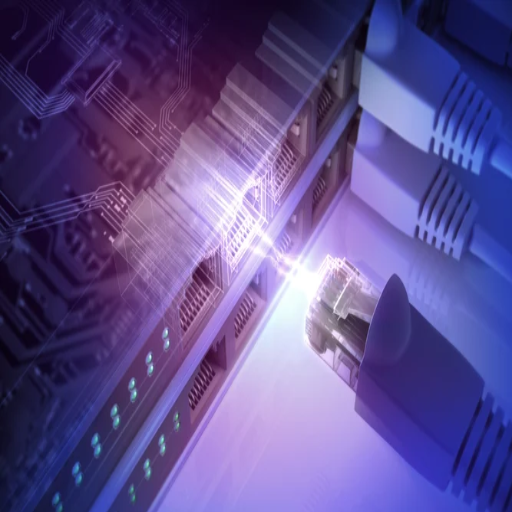
The future of connectivity will offer seamless and integrated wired and wireless networks, depending upon the state of the art and business demands for high-speed data services. Wired networks are now being upgraded with faster fiber-optic technologies: a must-have for speed and stability when handling data-heavy applications. On the other hand, wireless networks are ever improving with the roll-out of 5G and the beginning stages of 6G, which promise better mobility, ultra-low latency, and device capacity. These trends will bring connectivity to every nook and corner for smarter devices to enable efficient cloud computing and the evolution of the Internet of Things (IoT) so that networks can cater equally well to personal needs and those of an industrial application.
Impact of 5G on Wireless Connections
When the fifth generation was introduced, it was considered a revolutionary wireless technology because it raised the benchmark speed-wise, with lower latency and more devices connected at the same time. Until then, previous generations of wireless technologies could not support the simultaneous connection of millions of devices and differentiation needed to support a vast array of services with different speed requirements, in an example of which 5G can stand at speeds even 100 times faster than 4G, with support for activities like high-definition streaming, immersive AR experiences, and VR experiences-the ultra-low latency of 5G being catering to the real-time applications such as autonomous vehicles, smart cities, and industrial automation. Further sophistication is incorporated into 5G while factoring in the mounting demands of the Internet of Things, which lets billions of interconnected devices communicate with one another. This revolutionary wireless technology sets a new paradigm for consumer experiences but also affords industrial-grade services with new avenues for innovative economic growth.
Emerging Technologies in Wired Networking
When considering emerging technologies in the field of wired networking, one sees how fiber-optic communication and Ethernet innovations are basically transforming the industry. Fiber-optic technologies offer limitless speed and bandwidth and are required by data-intensive applications and substitute means of internet connectivity. Likewise, next-generation Ethernet standards such as 400G Ethernet are being developed to meet the bandwidth demand of data centers and enterprises. These technologies keep wired networks efficient and scalable, and thus complement all going wireless advancements such as 5G.
Conclusion: Making Informed Choices
Specific needs and use cases must be evaluated for wired and wireless technologies. With innovations like fiber-optic technology and 400G Ethernet, wired networks can offer the ultimate speed, reliability, and scalability, making them a suitable working environment for data centers and enterprises. The wireless side, with its 5G implementations, offers flexibility, mobility, and increased accessibility, suitable for small personal devices and environments that keep changing. If these two technologies are balanced on the requirements of bandwidth, network complexity, and future scalability, users and organizations should be able to make decisions that will maximize performance and connectivity.
Reference Sources
1. Analysis of Software-Defined Networking (SDN) Performance in Wired and Wireless Networks
2. Comparison Between Arduino-Based Wireless and Wired Methods for Power Theft Detection
3. Wireless Transceiver Module HC-12 Based Automatic Water-Level Monitoring and Control System
Frequently Asked Questions (FAQs)
Wired vs Wireless Connections-What are the Distinguishing Features?
Typically, two sets of factors differ between wired and wireless connections. These factors are data transmission, stability, and speed. A wired connection is commonly used and thus, established using physical cables such as Ethernet cables. These connections are very reliable and fast. Wireless connections, on the other hand, use radio waves, and distance can nullify or weaken speed and stability. Walls or any other obstruction, including the access point to the client distance, affect wireless speed and stability.
Wired versus Wireless Connection-Which One is Best?
Finishing this decision is as good as picking one over the other because both are good options-tailored to specific needs. If you value movement freedom and need to connect a large number of devices over a big area, then wireless is probably a winning combination. If you are interested in securing good speed and network security for amateur or professional uses, including games or video conferencing, then linking via an Ethernet cable will be the perfect option.
What are the pros and cons of wireless and wired?
The wireless connection permits mobility and treats movement as freedom, allowing one to connect while moving anywhere in the office. Yet, it might suffer interference and, thus, slower speeds than those caused by wired connections, offering stability and faster data transfer but hindering one due to jacks and cables.
How much does network security differ between wired and wireless?
Network Security is more or less different from one another. Details are represented in the following description. A wired network is generally considered more secure because to connect or implant any device, hard physical access to certain ports must be attained. On the flip side, wireless networks can become more vulnerable to certain kinds of security breaches when they are not set up with sufficient security measures such as encryption and strong passwords.
Can I use the Ethernet cable for the wireless connection?
Can I plug my device into the AP or the router through an Ethernet cable? Hybrid networks have some devices connecting wirelessly while others are set on Ethernet for reliability and speed.
What do I need to connect my device in a wired manner?
To work on a wired connection, you need the Ethernet cable, the device with an Ethernet jack, and the router or the switch. That Ethernet cable connects your device straight into the router and offers a very stable and fast Internet connection.
How does the mobility factor help me to decide on wired or wireless?
Mobility is a major factor in choosing between wired and wireless connections. Wireless networks offer freedom to wander around untethered by a cable, which is great for employees working from anywhere. On the other hand, wired connections limit wandering about and offer a more stable and faster connection for stationary devices.
What considerations should I make for wired and wireless networks in a big space?
In a large space, the coverage and the number of devices connecting to the network shall be taken into account. In a wireless network, there could be many access points to ensure good coverage of the area. In a wired network, the distance of the cabling might be long, but it ensures that devices requiring a stable connection, such as desktops and servers, are well connected.