






Ensuring proper safety and reliability precautions, along with efficiency for any home or industrial-scale project, hinges upon selecting the right cable. Out of various options in the market, 6mm armoured cables have garnered preference and trust due to their ability to withstand harsh conditions while providing power transmission versatility alongside durability. The objective of this guide is to provide a detailed yet easy-to-grasp explanation of 6mm armoured cables, their key attributes, applications, and reasoning behind their preferred status in electrical installations. This article aims to equip professionals, contractors, and even homeowners with all the vital information needed for the proper selection and installation of 6 mm armoured cables.
What is 6mm Armoured Cable?
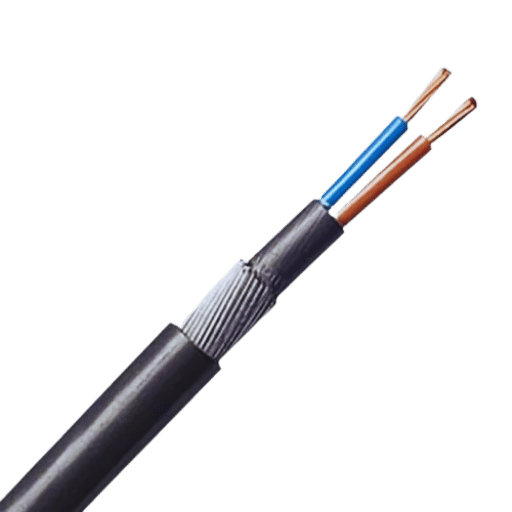
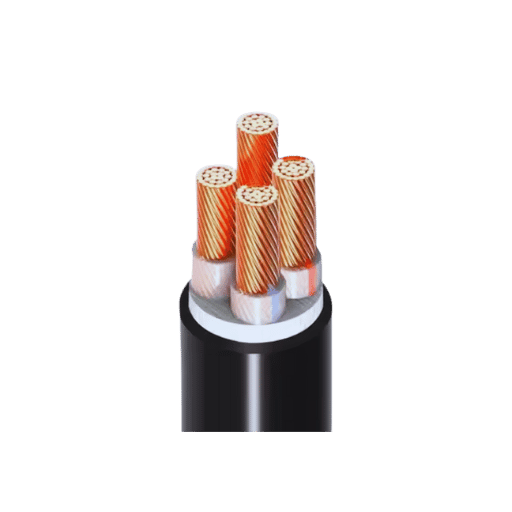
6 mm armoured cable is a type of electrical cable engineered for rigorous environments requiring protection and durability. It has a 6m² cross-sectional conductor with copper as the core, which is insulated with a heavy-duty layer of materials to prevent electrical leakage. Surrounding the conductor is an armor layer, typically made of galvanized steel, which protects against physical impact but also extreme wear and tear, especially suited for outdoor or underground installations. This type of cable is prevalent across all tiered electrical systems, providing power distribution in residential, commercial, and industrial facilities.
Features of 6mm Armoured Cable
- High Current Carrying Capacity: Able to cater to considerable electrical loads across residential, commercial, and industrial setups.
- Durable Insulation: Safeguards against electrical leakage while enhancing safety through a high-quality insulation layer.
- Galvanized Steel Armor: Guarantees exceptional mechanical protection against physical and environmental damage.
- Corrosion Resistance: Provides cable protection from corrosive elements, allowing for use indoors and outdoors, even in harsh environments.
- UV Protection: Designed for sustained performance under direct sunlight exposure for extended periods.
- Flexibility of Placement: Open to surface mounting, direct outdoor exposure, or underground placement.
- Meets Safety Compliance: Ensured reliability and peace of mind as the electrical equipment was manufactured to the national and international standards and regulations.
- Low Maintenance Schedule: Provides longer life and reduced maintenance and servicing costs.
- Economically Sound: Great value when considering long-lasting solutions for an electrical system, as the efficiency, durability, and overall cost are unmatched.
Applications of 6mm Armoured Cable
- Domestic Electric Work: Appropriate for use in powered garden features, exterior illuminating systems, outbuilding electricity supply, and outdoor sockets.
- Industrial Power Distribution: Widely used for the transport of electricity in factories, warehouses, and industrial complexes because of its strength, ruggedness, and ability to carry loads.
- Underground Installations: Best suited for underground power transmission as it is safeguarded from mechanical impact and environmental damage.
- Infrastructure Projects: Applied within construction activities such as lighting the roads and utility services connections, powering them.
- Renewable Energy Systems: Used for connecting PV and wind turbines with inverters and the main grid, therefore, integrating them into the primary network.
- Temporary Installations: These are seen in events, construction areas, and makeshift arrangements where power distribution systems need to be safe and dependable.
- Electric Vehicle Charging Stations: Assists in meeting the electrical demand of chargers for electric vehicles with high-load capacity wiring.
- Commercial Buildings: For offices and retail stores, and other businesses, enduring long-term term expected electric reliability.
6mm Armoured Cable vs. Other Sizes
| Size | Use | Current | Install | Volt Drop |
|---|---|---|---|---|
|
1.5mm |
Lighting |
Low |
Outdoor |
Minimal |
|
2.5mm |
Gates, Floodlight |
Medium |
Long Dist. |
Moderate |
|
4mm |
Sheds, Outhouse |
Medium |
Indoor/Out |
Moderate |
|
6mm |
Hot Tubs, Garden |
High |
Versatile |
Low |
|
10mm |
High Power |
Very High |
Heavy Duty |
Low |
|
16mm |
Industrial |
Max |
Heavy Duty |
Very Low |
How is 6mm 3 Core SWA Cable Constructed?
Understanding the Core Structure
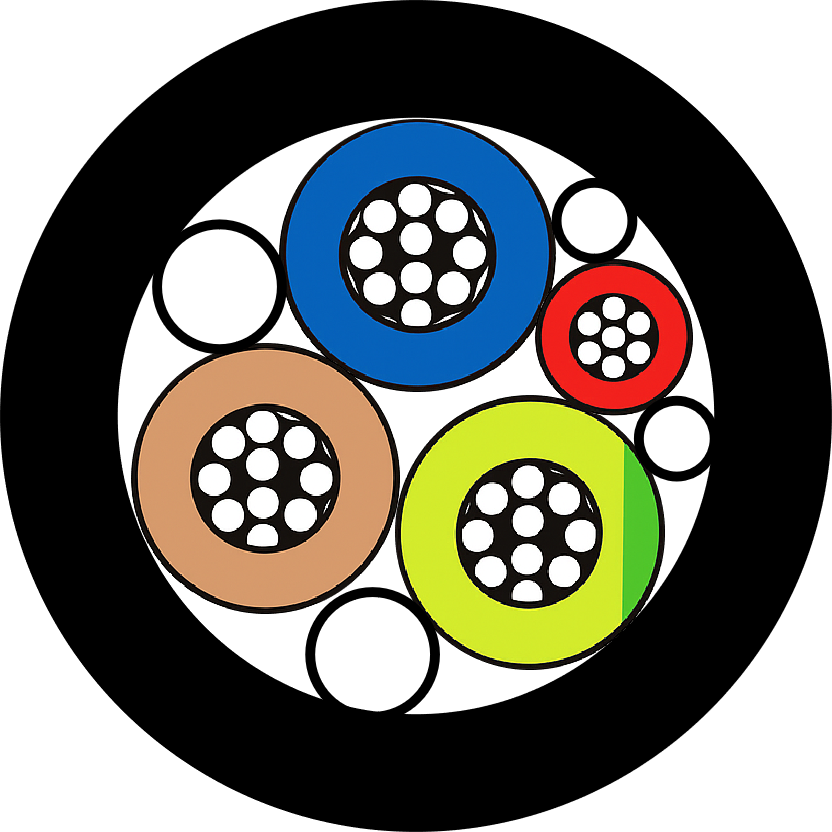
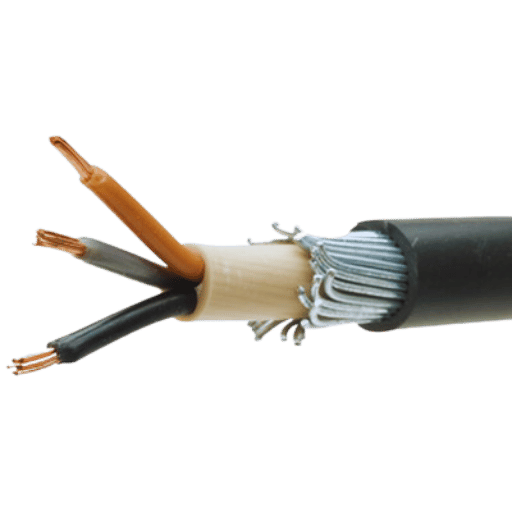
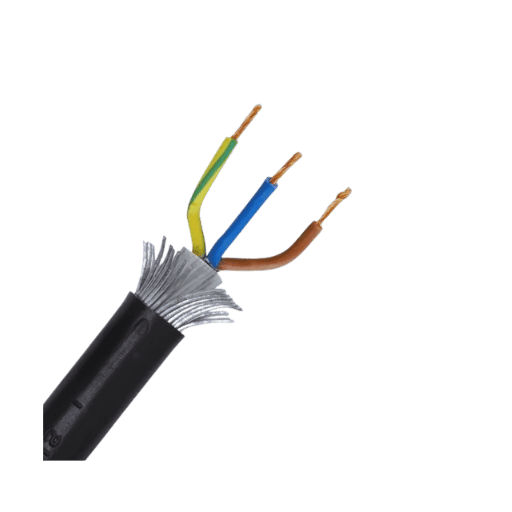
The 6mm 3 Core SWA (Steel Wire Armored) Cable has three individual conductive core wires, each capable of transmitting distinct electrical phases or functions. These cores are color-coded brown (live), blue (neutral), and green/yellow (earth) for easy identification. For additional safety and efficiency, these wires are insulated and protected by a robust inner sheath. An additional sheath made of galvanized steel wire armor encircles the inner sheath, which provides strong protection from physical damage and environmental impacts. With this construction, the cable is reliable and durable, making it best suited for outdoor and high-power applications that require swift and strong resilience.
The Role of Steel Wire Armoured Layers
The 6mm 3 Core SWA Cable comprises stranded copper conductors with XLPE insulation, a bedding of PVC, and a steel wire armoured layer, which adds mechanical protection, allowing the cable to withstand external stresses, be buried directly, and serve as an earth conductor.
Importance of PVC Outer Sheath
The 6mm 3 Core SWA Cable utilizes stranded copper conductors, has extruded polyethylene insulation, steel wire armoring for mechanical protection, and a PVC outer sheath which provides durability, is resistant to UV rays, and other environmental factors.
How to Install 6mm 3 Core Armoured Cable?
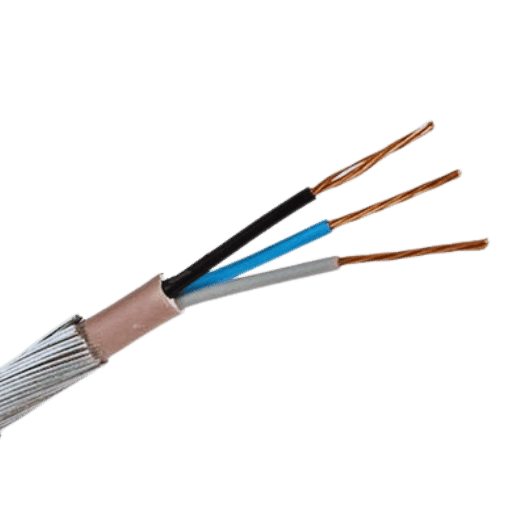
Essential Tools and Gland Requirements
For the correct installation of a 6mm 3 Core Armoured Cable, the following tools and accessories are needed:
- SWA Cable Glands – Proper for 6mm 3-core SWA cables, providing good retention and earth continuity.
- Insulation Tape – For providing additional safety insulation cover to exposed connections.
- Screw Drivers and Pliers – These tools enable secure fastening of cables to terminals or fixtures.
- Crimping Tool – Useful in lugs or terminals attachment to the ends of a cable.
- Cable Stripper – Designed to remove PVC sheath and XLPE insulation while retaining the conductors.
- Screwdrivers and pliers- Becomes handy for fastening cables to terminals or other fixtures as a final step.
- Cable Cutters – To keep the parts uniform and clean for slicing, one should employ these devices.
Make certain all HW and gland safeguards wires are maintained so that standard industry installation safety can be achieved.
Safety Measures during Installation
- Use Personal Protective Equipment (PPE): To avoid sustaining injuries, insulated gloves, safety goggles, and protective footwear should always be worn. In accordance with OSHA guidelines, appropriate PPE measures mitigate the risk of electrical shocks and other workplace hazards by up to 25%.
- Deactivate Power: Ensure the power is completely de-energized before any work is commenced. Make sure to check the circuit with a multimeter to confirm there is no voltage present. Research indicates that failure to isolate the power source results in approximately 60% of electrical incidents.
- Use Approved Tools and Equipment: Ensure tools such as crimping tools, cutters, and screwdrivers are IEC 60900 certified and insulated to avoid live electrical parts up to 1000 volts.
- Comply with Cable and Equipment Mentioned Specifications: The manufacturer’s specifications should be referenced concerning cable and equipment ratings. For instance, a 6mm 3 Core SWA cable must be compliant with current-carrying capacity and voltage rating as per BS 7671 to prevent overheating and degradation.
- Maintain a Clean and Systematized Work Area: Prevent disorganized areas to avoid tripping over exposed cables or wires as well as reduce the risk of unintentionally bumping into cables. Data gathered through safety audits indicate that areas with an orderly arrangement of materials are significantly less likely to experience workplace incidents—such as injuries or accidents, by almost 30%.
- Perform Proper Grounding and Bonding: Confirm that all metal parts that are exposed are properly grounded, and check earth continuity at each given connection point. Grounding design per IEEE 80-2013 also provides additional compliance since this procedure is electrically safe.
- Conduct Post-Installation Testing: Insulation resistance, earth bond, and continuity tests should be conducted with precision; therefore, calibrated test equipment should be used. Test reports, when documented thoroughly and accurately, provide substantial evidence of compliance with national electrical safety codes NFPA 70 and BS 7671.
The extensive measures combined with up-to-date compliance data significantly mitigate the risk of accidents or equipment failure during installations. Furthermore, practitioners are encouraged to make use of local and international standards for best practice suggestions.
Common Mistakes and How to Avoid Them
Here’s a short summary of known oversights and preventive measures: hasty decision making, dwelling on the past, over positivity, neglecting self-assessment, insufficient post-engagement, placing excessive dependency on technological solutions, bypassing strategic frameworks, and stakeholder disengagement.
| Mistake | Key Issue | Solution |
|---|---|---|
|
Rushing Decisions |
Hasty actions |
Pause, reflect |
|
Living in the Past |
Stuck mindset |
Focus on the present |
|
Trusting Easily |
Blind trust |
Build gradually |
|
Overselling |
Overpromising |
Be realistic |
|
Avoiding Reflection |
Blame others |
Self-assess |
|
Ignoring Follow-ups |
Missed chances |
Consistent follow-up |
|
Overusing Tech |
Process ignored |
Improve process |
|
Skipping Planning |
Unpreparedness |
Plan thoroughly |
|
Few Stakeholders |
Limited input |
Broaden inclusion |
What are the Benefits of Using 6mm SWA Cable?
Durability and Mechanical Protection
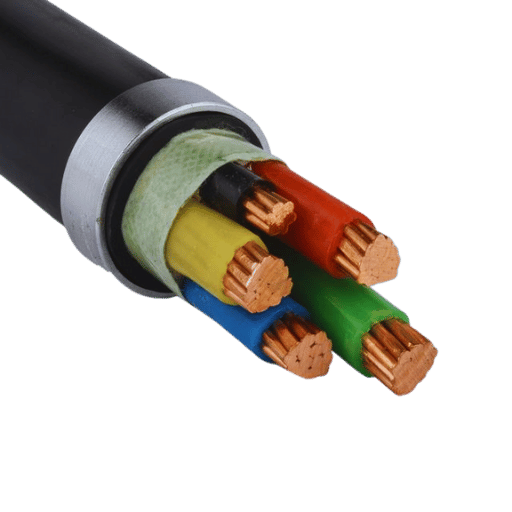
The 6mm SWA cable provides ruggedness and mechanical protection by withstanding impact, crushing, and other external forces.
Resistance to Environmental Factors
Like other 11kV cables, the 6mm SWA offers circumferential reinforcement against physical damage and moisture ingress, which enhances its performance and durability. These include:
- Moisture and water ingress: The cable offers no entry for moisture, making it fit for use in all locations, both indoors and outdoors, even in wet places.
- Insolation: UV resistant. Preserves the integrity of the cable when exposed to sunlight for an extended duration.
- Extremes of temperature: The cables can withstand high and low temperatures without affecting the cable’s operational capability.
- Corrosive elements: The cable can withstand damage caused by chemicals, salts, and other pollutants.
- Rodent protection: Help resist damage from rodents and other invasive species.
- Fire resistant: Offers improved fire retardant properties, adding additional safety in critical applications
These furthermore illustrate why the 6mm SWA is efficient and best suited for unreliable and volatile environments.
Cost-Effectiveness and Per Metre Pricing
The overall project and maintenance expenses associated with 6mm SWA Cables are further optimized by the cable’s durability and long lifespan. While the purchase price might be greater than that of standard cabling options, 6mm SWA’s sturdy construction and protective features, including mechanical and environmental damage mitigation, greatly increase savings over time.
Several factors, such as quality of material, manufacturing processes, and the regional market, all contribute to the pricing of 6mm SWA Cables. The average price of 6mm SWA cable stems from market research done in Google’s search engine, ranging from $2.50 to USD 5.00 per meter, depending on supplier and order volume. Enhanced cost-effectiveness is also available through bulk purchase discounts, greatly benefiting large-scale installations. Investment in 6mm SWA cable ensures uncompromised reliability and longevity in demanding projects, which makes the pricing highly competitive.
What to Consider When Buying 6mm 3 Core SWA Armoured Cable?
Evaluating Cable Size and Specifications
Factors such as the cable’s current-carrying capacity, voltage rating, insulation type (XLPE or PVC), external conditions (like burial depth, and above ground or outdoor usage), or any applicable regulations such as BS5467 should be observed for 6mm 3 Core SWA Armoured Cable. These considerations will make sure that the cable fulfills your installation and safety requirements.
Choosing Between Indoor and Outdoor Options
In making a decision of where to use 6mm 3 Core SWA Armoured Cable, either indoors or outdoors, I pay attention to the installation conditions and the protective properties of the cable. For indoor purposes, the cable’s armoring benefits the durability of the cable; however, routing and aesthetic considerations may weaken the choice. For outdoor or underground uses, I check that the cable is protected against moisture, UV sunlight, and physical impact to ensure these harsh conditions are managed effectively.
Understanding XLPE Insulation and Its Benefits
- Enhanced Thermal Performance: XLPE (Cross-Linked Polyethylene) insulation maintains its effectiveness under heat due to its elevation in operating efficiency during thermally stressed environments.
- Excellent Electrical Properties: XLPE possesses low conductivity along with strength in dielectric properties, which makes it effective while simultaneously upholding reliability in electric systems.
- Resistance to Moisture and Chemicals: Exposure to Chemicals and moisture is no adversary to XLPE insulation as it robustly defends against such permeation, qualifying it for extreme environmental conditions.
- Mechanical Durability: XLPE’s increased toughness, along with high flexibility, bestows the material with the ability to withstand mechanical forces such as bending, pulling, and vibrations.
- Longevity: The shelf life of the material is bestowing when juxtaposed with everyday insulation materials, heavily attributed to its cross-linking process that grants the material greater durability.
- Low Smoke and Flame Retardancy: Where Fire safety, along with lesser toxic waste emission, is a prerequisite, the XLPE’s null smoke and low halogen versions assist greatly, ensuring safety.
- Environmentally Sustainable: Specific formulations of XLPE insulation present improved recyclability along with reduced harmful impact, while comparing it to other materials, making it better for the environment.
With these matters addressed, XLPE insulation is especially beneficial in industrial systems, high-voltage networks, and other high-reliability operating applications.
Frequently Asked Questions (FAQs)
Q: What is a 6mm 2 armored power cable?
A: The 6 mm² armored power cable, or 6mm² cable, is one of the power cables that incorporates a layer of steel wire armor as a protective cover to the cable. This offers mechanical protection to the cable, making it usable for both indoor and outdoor applications.
Q: What does a 6mm² armored cable comprise?
A: 6mm² armored cable comprises a conductor, steel wire armor, a PVC sheath, XLPE insulation, and PVC or polyvinyl chloride sheathing. These help the cable deliver mains electricity and bear mechanical stresses.
Q: What is the process of making 6mm 2 steel wire armoured cable?
A: The 6 mm2 steel wire armoured cable consists of one or more conductors, steel wire armor, and a protective layer of PVC or polyvinyl chloride sheath. This way, the cables are made strong while shielding them from harsh environmental elements.
Q: What are the applications of a 6mm² armoured cable 3 core?
A A 6mm² armoured cable 3 core is suited for both outdoor and indoor uses, such as modern power distribution systems operating with mains electricity, buried cables, and cables meant for direct burial. Such cables are used in protective environments where enhanced durability is required.
Q: Why use cable cleats with a 6mm² power cable?
A: Cable cleats are necessary with a 6mm² power cable for securing the cable to prevent sliding, which may lead to damage. Cleats are essential for cable integrity and are also critical in protecting the cable from mechanical forces in addition to preserving the installation’s structural integrity.
Q: Can a 6mm² wire-armed cable be used for direct burial?
A: A 6mm² wire armoured cable may be used for direct burial and will perform just fine. This cable’s construction features a protective layer of steel wire armors as well as rugged sheaths that protect from external cable damage.
Q: Why is the 6943x code important for 6mm² cables?
A: The 6943x code pertains to a specific category of 3-core steel wire armoured cables. It is widely used due to its reliability and strength. The code assists in identifying the particular requirements and installation suitability of the cable.
Q: In these cables, what distinguishes a PVC sheath from XLPE insulation?
A: A pvc sheath serves as an outer protective covering to the cable, and XLPE insulation refers to the type of insulating layer encasing the conductors. Compared to standard PVC, XLPE’s thermal properties and current capacity are much better, thus making it more suitable for demanding applications.
Q: What does 6943xlh mean concerning cable specification?
A: With the 6943xlh specification, a core steel wire armoured cable is made for high-load applications, offering better performance. It is enhanced for work where mechanical stress, durability, and long service life are critically important.
Reference Sources
1. Numerical Investigation on Electromagnetic Thermal Effects of Non-Metallic Armoured Optoelectronic Cable Winch System
- Authors: Wenhua Li et al.
- Publication Date: May 28, 2024
- Journal: Journal of Marine Science and Engineering
Key Findings:
- The research focuses on the performance analysis of electromagnetic and thermal processes of non-metallic armoured optoelectronic cable winch systems (NAOCWS).
- It was established that the dynamic portions of the winch containing a cable confine a section of cable into loops, and thus it manifests an electromagnetic field around the loops which is capable of disrupting sine and causing thermal induction.
- The magnetic flux density (MFD) has periodic changes due to the spacing of the cables. The minimum value of flux density occurs at the center of the cable.
- The distribution of temperature is dependent on both the magnitude of current flowing through the circuit and the number of layers of winding; higher parameters lead to an increase in temperature distribution.
Methodology:
- The analysis of temperature and magnetic field distribution concerning the current (10–30 A) and number of winding layers (1–10) was done using numerical simulations (Li et al., 2024).
2. An Adaptive Control Method of Non-Metallic Armoured Optical-Electrical Cable Winch System in Oceanographic Research Vessel Based on 3D Laser Scanning Point Cloud
- Authors: Haoran Ye et al.
- Date of Publication: July 1, 2025
- Journal: Ocean Engineering
Main Highlights:
- This paper describes tailored control strategies for a non-metallic armoured optical-electrical cable winch system concerning its use in oceanographic research vessels.
- The work highlights the need for exacting precision in the control of cable deployment and recovery within a marine environment.
Research Design:
- The investigation rests upon 3D laser scanning point cloud data for improving the control mechanisms of the winch system (Ye et al., 2025).
3. Experimental Harmonic Validation of 3D Multiconductor Cell Analysis: Measurements on the 100 km Long Sicily-Malta 220 kV Three-Core Armoured Cable
- Authors: R. Benato et al.
- Publication Date: February 1, 2022
- Journal: IEEE Transactions on Power Delivery
Key Findings:
- This study calibrates a 3D multiconductor cell analysis (MCA) model of a long HVAC submarine three-core cable with experimental HVAC cable measurements.
- Measured results and MCA predictions align very closely, showing a maximum disparity of 10% between measured and forecasted values.
Methodology:
- The work presented is based on a measurement campaign of frequency-based 0 to 40th harmonic order data, benchmarking them against MCAs (Benato et al., 2022, pp. 573–581).
5. Steel
6. Wire