







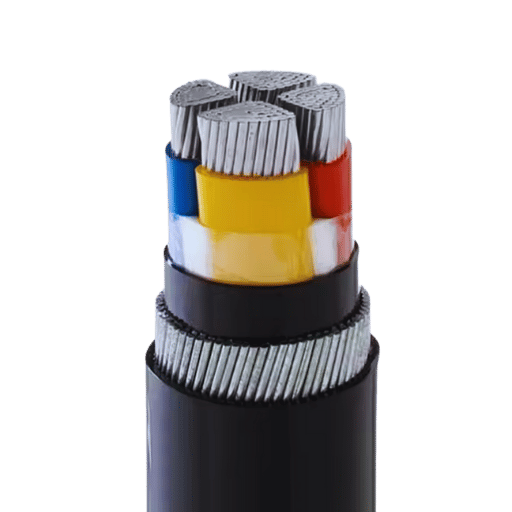
With regards to an installation’s safety and reliability, 4mm armoured cable serves as an indispensable part in the matter of safety. Armoured cables, moreover, come in handy as they are portable, possess good electrical characteristics, and can operate in damp weather. Knowing what 4mm armoured cable is extends beyond simply covering the joints and intervals within the electrical network of the armoured cable. Although they are often used in basements, where other types of cables would not be practical. Here, we’ll guide you on 4mm armoured cable, explaining step by step its construction, installation, legal norms, and tips necessary for correct laying. By the end, you’ll be ready to make this versatile armoured cable fully utilizable for your tasks. Keep reading to find out why DIY enthusiasts and professionals alike love 4mm armoured cable so much.
What is a 4mm Armoured Cable?
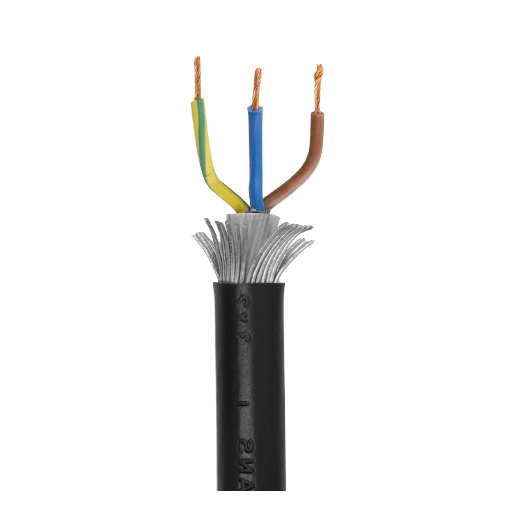
A 4 mm Armored cable is an example of an electrical cable sliced with two conductive materials in the shape of a 4mm squared cross section that will provide efficient electrical performance, which in this case will be shielded by steel wires. Consequently, this form of reinforcement will protect from mechanical hazards in addition to any harsh conditions, like being placed outdoors or below ground. Due to being power efficient, this cable is most desirable when powering outdoor lighting, workshops, garages, and toilets, hence its use. This Sturdy Construction wire is designed to provide safety and reliability when installing devices that require Armored Cables of this nature.
Understanding the armoured cable structure
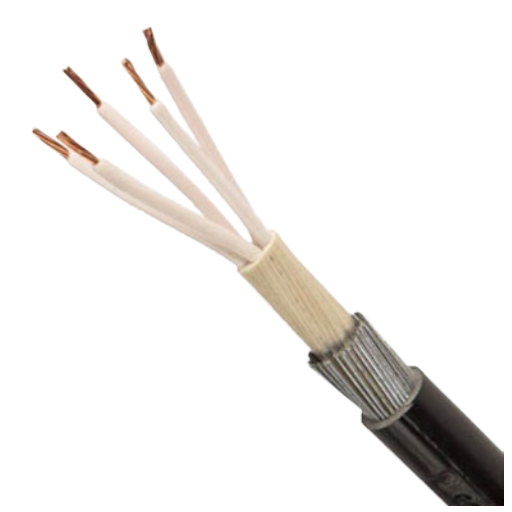
A 4mm armoured cable is an example of a strong electrical cable used for transmitting electrical energy. It has a cross-sectional area of 4 mm2, one of its features being reinforced steel wire armor, which offers protection from physical damage. 4mm cables are suitable for providing mains power in outdoor, industrial, or underground locations.
Applications of 4mm armoured cable
- Supplying electric energy for illumination, such as garden lights, security lights, and pathway lighting.
- Providing electrical supply to outbuildings like sheds, garages, and greenhouses.
- Installation of electrical conduits, both underground and above ground, for residential and commercial buildings.
- Providing power supply for industrial equipment or manufacturing machines that need heavy-duty power supply units and surge protection.
- Installation of electric vehicle (EV) chargers mounted externally on buildings.
- Distribution and rerouting of electric conduits in outdoor settings, for example, construction and event venues, in a fixed or temporary layout, ensuring safety from unauthorized access.
- Installation of electric wiring in places exposed to rough mechanical forces or outside elements and weather conditions.
Differences between 4mm and other cable sizes
Current carrying capability, voltage drop, flexibility, weight as well and applicability all diverge with the use of 4mm cables when compared to other sizes.
| Parameter | 4mm Cable | Other Sizes |
|---|---|---|
|
Cross-Section |
4 sq. mm |
Varies (e.g., 2.5mm², 6mm²) |
|
Current (A) |
Up to 55A |
Lower (e.g., 20-25A for 2.5mm²) or higher (e.g., 70A for 6mm²) |
|
Voltage Drop |
Moderate |
Higher (smaller sizes) or lower (larger sizes) |
|
Flexibility |
Moderate |
Higher (smaller sizes) or lower (larger sizes) |
|
Weight |
Moderate |
Lighter (smaller sizes) or heavier (larger sizes) |
|
Applications |
Medium loads |
Smaller loads (e.g., 2.5mm²) or heavy loads (e.g., 6mm²) |
How to Install 4mm Armoured Cable Safely?
Preparing for cable installation: Tools and safety tips
Regarding the installation of 4mm armoured cable, the following tools, along with the appropriate safety measures, must be addressed to guarantee proper and safe installation:
Required Tools:
- Cable cutters for armoured cables.
- Armoured cable stripper or stripping knives for the removal of sheathing.
- Screwdrivers for terminals and junction boxes.
- Ring or internal insulation wire strippers.
- End terminal crimpers.
- Multi-meters or continuity testers for checking continuity.
- Hammers and armored cable cleats for the anchorage of cables.
- Wrenches and spanners for the fastening of cable glands.
- Personal protective equipment, such as goggles and gloves during shearing and stripping.
Safety Reminders:
- Prior to manipulating the cables, always turn off the power from the circuit electricity supply.
- Put on protective gloves to avoid electrical shocks or cuts from sharp cable edges.
- Use proper personal protective equipment (PPE) like safety goggles and boots.
- Make sure that the workplace is dry and tidy to help reduce the possibility of accidents.
- Installation procedures followed must not contradict the policy of the manufacturer’s instructions for tools and parts to be used.
- Do not exceed the minimum specified bend radius of the cable in order to preserve its structural integrity.
- Check all tools and materials for damage prior to starting the installation process.
Step-by-step guide to installing 4mm armoured cable
- Design the Cable Route: Investigate whether the chosen route for the 4mm armoured cable follows optimal conditions. During and after the installation process, ensure that the path does not encounter sharp edges, excessive bends, or physically delicate segments.
- Measure and Cut the Cable: Alongside granting additional allowance for slack that permits effortless connections, accurately measuring the required length will aid in effective mounting. Utilize an appropriate cable cutter suited for clean cuts to armor cables.
- Excavate a Trench (if the cable is to be buried): Adhering to local regulations and suggested guidelines, trenches should usually have a minimum depth of 18 inches. Ensure that the opened trench is devoid of sharp instruments in the designated areas.
- Install Cable Protection: Dirt conduits and ducting can be appropriately placed at the bottom of the trench to safeguard the cable from possible abrasive injuries.
- Strip the Cable Ends: Make the necessary undoing steps to expose the inner components. Utilize armoured hacksaws to make precise cuts and clean adjustments for the vented fittings used to seal the cables.
- Join the Cables: The released parts can securely be placed in their designated slots at the source of power and the load. As appropriate, utilize a torque and screw gear for tight locking to consort proper fitments.
- Secure the Cable: Adapt cable routes using clips or ties to monitor and secure the cable, ensuring it is devoid of undue strain or pressure, particularly around bends.
- Test the Installation: Conduct thorough insulation as well as continuity tests with a multimeter or other approved instruments to validate the operational safety of the cable.
- Backfill the Trench (if applicable): While backfilling the excavated soil, cover the cable within the trench with a layer of fine sand or other appropriate bedding material. Install cable marking tape above the cable to signify its position.
- Inspect and Document: Executing a final review of the installation, ensure that all components are aligned with the safety regulations. Recording notes regarding installation will act as reference points for corrective and maintenance actions in the future.
Common mistakes to avoid during installation
The frequent errors to refrain from as far as installation is concerned include improper gauging, poor leveling, neglect, premature sealing, and use of improper materials.
|
Key Point |
Description |
|---|---|
|
Measurements |
Ensure accurate dimensions. |
|
Leveling |
Check for proper alignment. |
|
Instructions |
Follow manufacturer guidelines. |
|
Sealing |
Use proper insulation. |
|
Materials |
Choose high-quality tools. |
Why Choose 4mm Armoured Cable for Your Electrical Projects?

Benefits of using armoured over non-armoured cables
- Enhanced Protection: The internal conductors of armored cables are shielded with an extra protective layer made of steel or aluminum, safeguarding them from physical damage, hard impacts, and severe temperatures.
- Durability: These cables are well-suited for use in harsh conditions, like being placed outdoors or underground, because they suffer little to no damage.
- Improved Safety: Armored cables increase safety by decreasing the possibility of electrical errors from unintentional damage, therefore reducing risks of fire danger while providing dependable operation.
- Load Bearing Capabilities: Armored cables can accommodate greater mechanical strain, maintaining functionality while supporting heavily used electrical frameworks.
- Moisture Resistance: Armored cables have protective coatings that prevent moisture from infiltrating the cable, guaranteeing performance in wet conditions.
- Flexibility Versatility: These cables can be used in a wide variety of areas, from industrial and commercial to residential settings.
- Increased Lifespan: Maintenance and replacement expenses are minimized through the robust structure of armored cables, which maximizes their lifespan.
- Compliance with Standards: Most armored cables have rigorous checks on safety and quality measures, making them safe and reliable for use in various applications where safety is needed.
How a 4mm armoured cable ensures safety and durability
Safety and endurance in combination with the structural design and material makeup of the equipment is guaranteed by the 4mm armoured cable. Withstanding cutting, environmental stress, impacts, and a host of other destructive forces is possible due to the steel wire armoring, which provides mechanical protection to the cable. This feature enhances its suitability for underground, outdoor, or industrial applications, which tend to be rough or face harsh environments.
Moisture, chemicals, and temperature changes for the 4mm cable are resisted through insulation and sheathing, thus maintaining consistent electrical conductivity and minimizing faults or short circuits. Its moderate size provides the current carrying capacity to be adequate for diverse installation purposes, therefore making it a reliable option for use in small commercial buildings and residences. The cable also complies with the critical safety requirements of IEC 60502 or BS 5467, which assures compliance with electrical regulations. Modern armoured cables are being manufactured with improvements to processes aimed at optimizing efficiency, longevity, and performance.
What are the Components of a 4mm Armoured Cable?
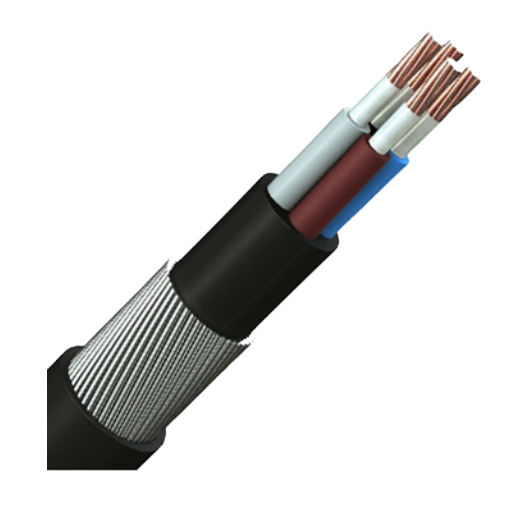
Exploring the armour and sheath of the cable
Stranded copper conductors, XLPE insulation (cross-linked polyethylene), a PVC bedding layer, galvanized steel wire armor applied for mechanical protection, and a PVC outer sheath all make up a 4mm armored cable.
The role of XLPE insulation and PVC sheath
The insulation of the 4 mm armoured cables is cross-linked polyethylene (XLPE), which, besides being critical for the braided cables’ electrical performance, also serves as a protective factor. XLPE’s insulation role is to effectively cover the conductors with layers of strong electrical insulation that prevent electricity loss while being hard enough to resist heat, chemicals, and other damaging factors. Insulation using XLPE is very preferable since it has good thermal properties and can be used in hot environments, not only in houses but also in industrial places.
The polyvinyl chloride (PVC) sheath acts like the outer protective layer of the cable. It protects the cable from moisture ingress and also blocks ultraviolet rays as well as mechanical scratches. The PVC sheath impacts durability because, without it, it would be impossible for the other components to stay protected from external factors, meaning that the whole cable would deteriorate. The XLPE and PVC sheath combine into one reliable structure, which allows efficient electrical functioning while withstanding harsh environments and maintaining its physical shape.
Understanding core and strand composition
The functions and performance of a cable are determined by its core and strand composition. The core is the central conductor, which is made of aluminum or copper to minimize current resistance. Strands are the small, flexible wires that come together to make the core. The stranded structure increases the cable’s flexibility and allows for use in many different situations, especially those that require bending or movement. The cable’s electrical conductivity, tensile strength, and even adaptability to specific installation conditions are determined by the core material and strand structure.
How to Maintain and Troubleshoot 4mm Armoured Cable?

Routine maintenance tips for armoured cable
- Inspect Regularly: Carry out visual inspections from time to time for any physical damage, wear, or corrosion to the overlying cable sheath and armor.
- Check for Moisture: Ensure the cable does not come into contact with water, as this can cause damage to the insulation and sheath.
- Avoid Overloading: Make sure the load connected to the cable does not overheat perilously close to the rated limit of the cable, as this could cause the cable to malfunction and even shut down completely.
- Secure Proper Installation: Confirm all terminations and interconnections of the cable are properly done with no undue mechanical loads that could invoke failures.
- Maintain Proper Bending Radius: Avoid sharp bends that increase flex that damage the cable and or reduce its performance.
- Protect Against External Damage: Install protective covers or conduits in places where there is a likelihood of the cable being scratched or hit so as to minimize the risk of abrasion.
- Inspect Grounding and Bonding: Check the armoring for relevant electrical bonds that would be hazardous and increase risks to the persons around it.
- Conduct Insulation Testing: Perform routine insulation resistance tests on the cable to identify any deterioration and possible faults timely.
- Address Faults Promptly: Remove offending damaged pieces of the cable so as not to leave hazardous situations unattended and undertake repairs immediately.
- Keep Documentation: Preserve attending records of wiring inspections, tests, and repairs that track and note the life cycle status of the cable.
Identifying and fixing common electrical issues
- Faulty Wiring: Outdated or worn wiring that is damaged can lead to power outages, fire hazards, and short circuits. Regularly checking inspections is needed, so replace worn wiring. Repair or add wiring that meets electrical codes to the standard during installations and repairs.
- Overloaded Circuits: Operations that involve excessive demand will cause breakers to be physically tripped or overheat. Change the electrical allocation and effort into multiple circuits and upgrade the system if sufficient capacitance is not met.
- Tripped Circuit Breakers: The cause for the circuits to break is that a breaker is put in place to reroute the power flow, thus, the circuits are damaged. Reduce the load and remove strain from the affected circuit to help solve the issue. It is also possible that too many changes are made, thus reducing the need for replacing the circuit.
- Loose Connections: Weak or intertwined connections set up corroded equipment for overheating, as well as causing inconsistent power. In regard to providing an easier solution, sealing gaps and unclogging contact points will guarantee stronger electrical flow.
- Damaged Outlets or Switches: Plugging and unplugging devices into an outlet can lead to increased chances of cracking or damage. Repair output and switching components so they are able to change without getting stuck on any items.
- Dimming Flickering Lights: Look up new fixing options if these do not suit your building, but there are several reasons why perimeter solutions can be effective: Ground Faults: A ground fault occurs when electricity takes an unintentional route through water or a grounded surface. Install GFCI (Ground Fault Circuit Interrupter) Construction Protection Devices (CPDs) in at-risk locations and remediate damage sources or heightened risk areas of water ingress.
- Persistent Electrical Noise: Increased static, buzzing, or humming sounds may be caused by loose fittings, aging parts, or an uneven distribution of power. To eliminate these irritants, improve and modify the abnormal electrical wiring and faulty equipment.
- Outdated Electrical Panels: Outdated electrical panels installed in buildings and homes may lead to frequent trips or overloads owing to their reduced capacity to meet contemporary demands for power. Change out the panel to one that better supports energy demands for enhanced system performance and optimised efficiency.
Electrical systems need to be optimized, wired, and maintained by the parameters and performance standards set forth by the law; stagnant systems need to be wired and maintained to avoid being unregulated. Assigning professionals mitigates unregulated vulnerabilities and resolves all potential downtimes.
When to seek professional help for cable problems
From my observation, it is necessary to specialize when dealing with seriously exposed wires, corrosion, or cuts for cables with reinforced sheaths. Moreover, noticing prolonged electrical quirks like overheating, sporadic power loss, or shorts without any clear reason usually points to the need for deeper analysis. For complex installations or repairs, I strongly urge contacting certified professionals, especially for high-voltage cables, as they can be classified as hazardous. Above all, safety should be the main concern.
Frequently Asked Questions (FAQs)

Q: What is a 4mm 3 core armoured cable?
A: 4mm 3 core armoured cables are cables containing three insulated copper conductors, each 4mm² in cross-section. These cables have Stranded Wire Armours (SWA), which serve as a mechanical protective sheath, rendering the cable suitable for outdoor and underground use.
Q: How does steel wire armour (SWA) provide protection?
A: SWAs provide mechanical protection by surrounding the internal conductors with steel wires that strengthen the cable. Braided cables offer some protection from physical damage and additional durability. This makes using SWA in construction environments that expose cables to physical forces beneficial.
Q: What are the common applications for 4-core SWA cables?
A: SWA cables are also employed in intercom systems for commercial and industrial sectors, including electric power systems, industrial installations, and interfacing with electric vehicle (EV) charging. They have a strong construction that allows them to be used and installed outdoors and below ground.
Q: What Factors Should Be Considered When Selecting A Gland for an SWA Cable?
A: As for the selection of glands for a swa cable, it is imperative to look at the size of the cable, the number of cores, and the environmental factors that are at play. The gland is supposed to be suitable with the cable’s diameter, and provision of a seal which will maintain the cable’s integrity and performance.
Q: What Core Differentiates 3-core SWA cables from 4-core SWA cables?
A: Differentiation between 3-core and 4-core SWA cables is primarily attributed to several conductors in each cable. A 3-core SWA cable is fitted with three conductors, whereas a 4-core SWA cable is fitted with four.
Q: Can 4mm 3 Core Armoured Cables Be Installed Within A Building Or Center?
A: Indeed, the use of 4mm 3 core armored cables is permitted within a building. Homes and office places that are categorized as industrial or commercial do provide these types of cords due to the extra mechanical support they offer. Nonetheless, these bolts are most properly fitted onto outdoor settings as they are much more durable.
Q: What does the BS5467 standard prescribe concerning armoured cables, and what is its importance?
A: BS5467 standard specification for steel wire armoured cables covers the requirements for armoured cables used in power transmission and distribution. Adherence to the standard ensures a certain level of structural integrity and encapsulated cables’ safety, performance, and quality functions.
Q: What role do cable cleats serve, and why are they critical?
A: Cable cleats are used to secure cables in a static position through mounting onto a surface that prevents any movement of the cables in three-dimensional space. They play a critical role in the safety and reliability of the installation, especially for cables that are exposed to harsh external environmental or mechanical forces.
Q: What is XLPE insulation, and what advantages does it give to SWA cables?
A: Cross-linked polyethylene (XLPE) insulation has very good thermal resistance, electrical insulation, and chemical resistance. It improves the performance of SWA cables by permitting safe operation under extreme temperatures and challenging conditions.
Reference Sources
1. Numerical Study on Electromagnetic Thermal Performance of Non-Metallic Armoured Optoelectronic Cable Winch System
- Authors: Wenhua Li et al.
- Published: May 28, 2024
- Summary: The study is focused on the problem of electrothermal performance for non-metallic armoured optoelectronic cable winch systems (NAOCWS). In particular, the problem of coils of the cable, which have the potential of generating electromagnetic interference with signal transmission, as well as heating, which reduces the lifespan of the cable. The study investigates the dependence of the magnetic and thermal fields on the respective currents (10 to 30 A) and several winding layers (1 to 10). Some results obtained are:
- Magnetic flux density is a periodic function of distance and is distance-dependent, and temperature is distributed based on distance from cables.
- The distribution of temperature is dependent on both the current value and the number of winding layers. After reaching a maximum, it becomes constant for that layer, independent of current (Li et al., 2024).
2. Experimental Harmonic Validation of 3D Multiconductor Cell Analysis: Measurements on the 100 km Long Sicily-Malta 220 kV Three-Core Armoured Cable
- Authors: R. Benato et al.
- Published: February 1, 2022
- Summary: The study conducted an experimental validation of a three-dimensional Multiconductor Cell Analysis (MCA) on a long HVAC submarine three-core armoured cable. There was a measurement campaign in which frequency measurements for up to the 40th harmonic order were compared with results from the MCA. The study demonstrates that measurements and MCA results strongly agree with each other, achieving 10% maximum difference, which is small relative to the measurement uncertainty (Benato et al., 2022, pp. 573–581).
3. A New Multiconductor Cell Three-Dimension Matrix-Based Analysis Applied to a Three-Core Armoured Cable
- Writers: R. Benato, S. Sessa
- Released: August 1, 2018
- Abstract: This research integrates a new armored cable analysis methodology employing a three-dimensional matrix (3D Matrix) approach, facilitating analysis of three-core armored cables. The methodology provides the possibility to analyze transmission lines with flexible conductor positioning. The work also analyzes the computational efficiency of the method in comparison with the finite element method, showing a remarkable savings in computation time without losing precision (Benato & Sessa, 2018, pp. 1636–1646).