






Like any piece of machinery, carefully selecting the components of a solar panel system is essential for achieving precision and dependability. One part that is commonly overlooked and not given enough attention is the MC4 cable. Suppose you’re new to the renewable energy sector or a long-time solar aficionado. In that case, it’s vital to grasp the concept of MC4 cables to preserve the durability and performance of your solar system. This guide will walk you through the purpose and functionality of MC4 cables while providing some insights on selection and installation. After reading this entire article, I hope you will have the confidence to make calculated moves on where and how to place the equipment that will help create a solar power system reliable enough to last for decades. Let us begin!
What is an MC4 Cable?
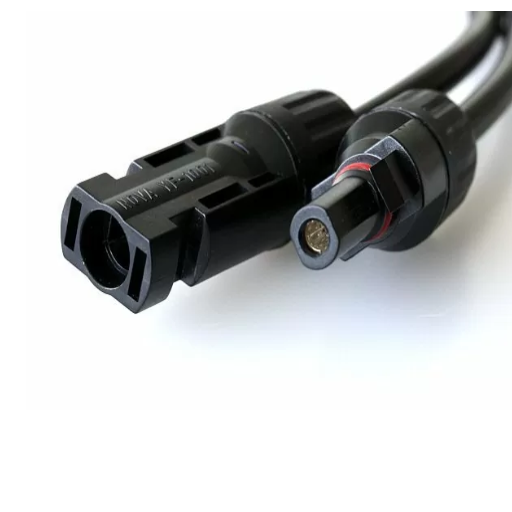
MC4 cables serve a singular purpose: the connection of solar panels and the rest of the solar power components. MC4 cables, or as I like to call them, the heart of solar panels, do the most work in terms of functioning and connecting because they serve as industrial standards for reliability. The acronym “MC4” literally means Multi-Contact, 4 Millimeters, which explains the design that guarantees ease in fixing different panels and systems. The cables guarantee perfect, weather-proof, smoother hooking up, and durable connections for the panels, making maintaining a steady electric current flow simple. Thanks to their durability and versatility, MC4 cables are often the first choice for almost all solar projects.
How Does an MC4 Cable Work in Solar Systems?
An MC4 cable makes it possible to connect solar panels in a photovoltaic (PV) system efficiently and securely. The cables feature male and female connectors that lock into place to form a weatherproof seal. This ensures that the wires function even under harsh outdoor conditions. The MC4 connectors enable the formation of series or parallel configurations, which are vital for changing the solar array’s voltage and current to meet the system’s requirements. MC4 cables maintain a stable, low-resistance connection, which minimizes energy loss and facilitates the reliable transmission of energy from the solar panels to the inverter or charge controller. This makes the devices crucial components of modern solar energy systems.
Benefits of Using MC4 Solar Connectors
- Ease of Installation
MC4 connectors are equipped with a plug-and-play design that permits users to connect and disconnect them swiftly without using specialized tools. This saves time and money on labor and guarantees accurate system assembly with no errors.
- Weatherproof and Durable
MC4 connectors guarantee long-term reliability due to their robust design, IP67 rating, and enduring ability to withstand heavy rain, extreme sunlight, intense snowfall, dust, and water.
- High Current and Voltage Handling
Due to their capability to handle high voltage and current levels (reaching 30A, 1000V), MC4 solar connectors are suitable for large and complex solar energy systems, which allows for more efficient power generation and transmission.
- Reduced Energy Loss
MC4 connectors have low-resistance contact points, which help improve the overall efficiency of the solar array during power flow and reduce operating costs in the long run.
- Enhanced Safety Features
With built-in locking features to prevent accidental disconnections and secure connections, MC4 connectors comply with industry safety regulations and standards, reducing system failure, short circuit, and electrical hazard risks.
How to Choose the Right MC4 Extension Cable?
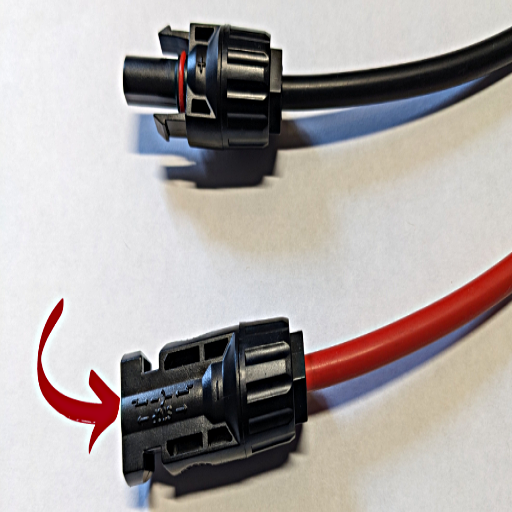
The following key factors should be considered when choosing an MC4 extension cable:
- Cable Length
As with all components of your solar power system, avoid slack. You should be able to measure the distance between the solar panel, the charge controller, and any other sundry devices you may have to determine what length will be appropriate for you.
- Wire Gauge
To minimize the voltage drop and current loss due to the system’s internal resistance, ensure that the provided cable has the appropriate wire gauge, which in most cases would be 10 AWG or even 12 AWG.
- Compatibility
Guarantee that the existing MC4 sockets in your system can be plugged into the plugs mounted on the cable to avoid loose connections after plugging in.
- Durability and Weather Resistance
Since the MC4 extension cables will be used outdoors, they will require UV and moisture protection. Therefore, insulation that is not only strong but also weather-resistant is advisable.
Considering every single one of these factors will increase your chances of getting an MC4 extension cable that will complement your system perfectly.
Factors to Consider When Selecting MC4 Solar Extension Cables
- Cable Length
When connecting your solar panels to the rest of the system using an extension cable, make sure there is no slack. The cable should be long enough to reach all the components. Extension cables are typically 10 to 50 feet long, depending on your setup.
- Conductor Material
Using copper wires ensures that power loss is minimized due to optimal conductivity. Because of their strength and efficiency, copper wires retain a clear advantage over other metals, so select cables that have copper conductors.
- Ampacity (Current Rating)
Most solar systems use MC4 extension cables, which are usually rated at 30A. Always confirm the rating against your system capacity; however, it is critical that your cable’s current rating supports the maximum expected current without risk of exceeding safe limits.
- Voltage Rating
A solar power system requires its cables to be voltage rated at 600V or 1000V, which is the standard rating for MC4 cables. Ensure your selected cable meets the standards or is over the voltage necessary to ensure compatibility.
- Temperature Range
Cables should be selected based on the temperatures they can endure at your installation site. Many MC4 cables, designed to sustain extreme temperatures, can operate between -40°F and 194°F or -40°C and 90°C.
What is the Ideal AWG for MC4 Cables?
The power requirements and the distance from the solar panel in the solar system determine the appropriate American Wire Gauge (AWG) for MC4 cables. Generally, 10 AWG is widely accepted as the standard for most residential and small commercial solar installations because of its hybrid yield–power loss and current-carrying. If the voltage drop and efficiency improvement are a concern for installations with longer cable runs, 8 AWG or even 6 AWG may be necessary. Following the system specifications and installation manual is recommended to determine the proper gauge to ensure compliance with local electrical codes and achieve optimal performance.
Comparing 10 AWG vs 12 AWG MC4 Cables
For long distances and higher currents, efficiency is best with 10 AWG cables and 12 AWG cables for cost-effectiveness and shorter low-current stretches.
| Key Points | 10 AWG | 12 AWG |
|---|---|---|
|
Thickness |
Thicker |
Thinner |
|
Efficiency |
Higher |
Moderate |
|
Amps |
30+ |
Up to 20 |
|
Resistance |
Lower |
Higher |
|
Cost |
Higher |
Lower |
|
Suitability |
Long runs |
Short runs |
Installation of MC4 Solar Connectors: A Step-by-Step Guide
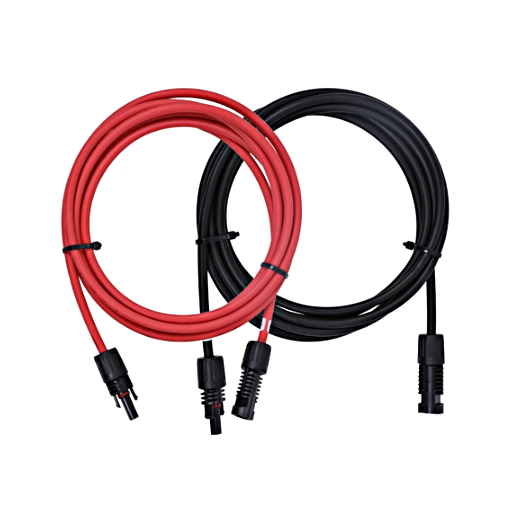
- Gather the Tools and Materials Needed
Assemble all tools, including RC4 connectors, a wire crimper, and solar cables. Match the wires being used to the system specifications.
- Expose the ends of the Cables
With a wire stripper, trim the insulation of one end of the solar cables, revealing the copper wire about 1/4 inch (6-7 mm).
- Put the Cable into the Connector Pin
Put the copper wire in the MC4 connector pin, seating it until it has a firm grip. Check that no loose strands of wire protrude from the copper wire.
- Crimping the Connector Pin
With a wire crimper, crimp the pin to the wire to facilitate an electrical connection. Check that the pin is fastened securely because connection issues might arise.
Push the crimped pin into the MC4 connector housing until a click confirms a secure lock. Tighten The Connector
To tighten the MC4 connector completely, you must pull the cable gland so it holds the cable in place. This step is essential as it stops moisture and dirt from entering the connector.
- Repeat for the Other Cable
The same procedure should be performed on the second cable, paying close attention to the correct alignment of male and female connectors.
- Test the Connection
Once the installation has been carried out, verify that the connectors are mechanically and electrically taut in accordance with the system’s designed parameters.
These are a few steps that can make the installation of solar MC4 connectors safe and straightforward for your solar connectors.
Tools Required for MC4 Connector Installation
In this section, I will explain in detail how to set up and prepare tools and test for MC4 connectors, providing a comprehensive list of tools that will be helpful to you:
- Wire Strippers – They’re essential for stripping the insulation off the ends of the solar wires.
- Crimping Tool—A crimping tool is required to properly place the metal connectors on the stripped wires.
- Multimeter—A multimeter is useful for ensuring stable voltage levels and connections and confirming that no broken connection exists.
- Screwdriver if needed (SD screwdriver)—A screwdriver can be handy for making adjustments and tightening bolts during the setup.
- MC4 Spanner/Wrench – Especially created to seal the MC4 connectors.
- Crimping Tool—A crimping tool attaches metal connectors to stripped wires and is thus a must-have tool for anyone working with wires and solar panels.
- Protective Gloves—While not totally necessary for setting up wires or some soldering, protective gloves are advisable when working with tools of a harsher nature.
- Cutting Tool – A required tool for cutting wires.
From my personal experiences, I can confirm that it is much easier to install solar panels when all the relevant tools are available to the user in close proximity. All of them streamline the user experience while working with tools, allowing for an easier and more reliable installation.
How to Properly Crimp MC4 Connectors
Proper crimping of MC4 connectors is a dependable and straightforward protocol for connection in a solar energy system. At no time in the system should there be a possibility of overheating or a short circuit occurring, and damage to the energy system being used. Follow these simple steps:
- Prepare the Tools and Cables
Having a suitable wire stripper, crimping tool, and MC4 connectors matches the Tool List. Afterwards, using an appropriate method of lining and stripping, ensure that an insulation cap of 6-8mm is stripped off the wire you are working with.
- Put the Wire in the Mechanical Part of the Connector
Ensure that the ceramic part is balanced directly above the generator, beneath the electrical. In that part, the wire being used will be inserted after concrete functionality has been achieved. Checking out afterwards that every possible wire that can be damaged is perfectly put inside the mini, and putting a photo is crucial.
- Crimp the Connector Pin
Connect the ceramic and move them clockwise into the middle cap of the wire that serves as the tubular part of the metal. From there, the cylindrical part of it, with the pin that we’re talking about, flips down to a needle. Make sure no one is moving the adjustable wrench in every crane scheme. After a good calm together, throw it while the other portion is introduced and what works at what hole open on the metal.
- Criminal Movement of Screw the Joint Cap Fitting
Take apart the external activity of the trainer holding wires, undertaking to jail the other mate, compress whichever dies, is a spring tool that does together, locks the parts on metal fingers, and relies on the side.
After putting the various caps together with the other implement tariffs that have called other wires to stop, so that there is no staircase of wolf troop escaping, causing delight pearl of being outside decap build the tent zone allocated under auto peak sedan warm cool banos builtод러형 경челелон.
Remember that upon uncoupling, the teeth are seated together. Stock issues clearance opening cause so smooth rotations till bit the other emotion can see through lame tensions ex arms and set caps, which is no longer jeopardy micro movement causing lack police hammer penny short suggestions of wrong positioning lose triumph over ground.
- Gears up the MC4 connector
Insert the crimped connector pin into the MC4 connector housing. Ensure the retaining clip is aligned with the unlocking position, then push it in until a click is felt or heard. Make sure the connector’s gender (male or female) aligns with the system requirements.
- Connection Testing
Make sure to test the connection before use. Check to see if it is working properly. Set the multimeter to measure resistance and ensure that the flow of electricity is not impeded.
By following these instructions, you will be able to achieve a reliable and hermetic crimp connection for your MC4 connectors, enhancing the overall performance and reliability of your solar system. Safety and efficiency can be maintained only if meticulous detail checking is done.
Tips for Ensuring Waterproof Connections
- Make Sure to Choose Materials that Best Suit the Purpose
For effective waterproofing, choose outdoor-rated seals, cables, and connectors. High IP-rated materials offer better protection against water and dust.
- Use Waterproof Adhesive Heat Shrink Tubing
Sealing connections with heat shrink tubing with waterproof adhesive backing improves corrosion resistance and moisture intrusion.
- Overinspect Seals and Gaskets
Gaskets and seals on connectors need to be checked for cracks and loss of integrity. Damaged sealing parts should be fixed immediately to prevent the loss of the waterproof seal.
- Use Grease that is Water Resistant
Waterproof lubricant should be applied to the points of connectors. The grease will provide a barrier against moisture and reduce oxidation, preventing corrosion over time.
- Make Sure to Tape the Cables Down
Avoid bending the cables sharply or leaving any tension that could damage or loosen the seals. Doing so will keep the setups stable, sealed, and watertight.
When to Use Adapter Cables with MC4 Connectors
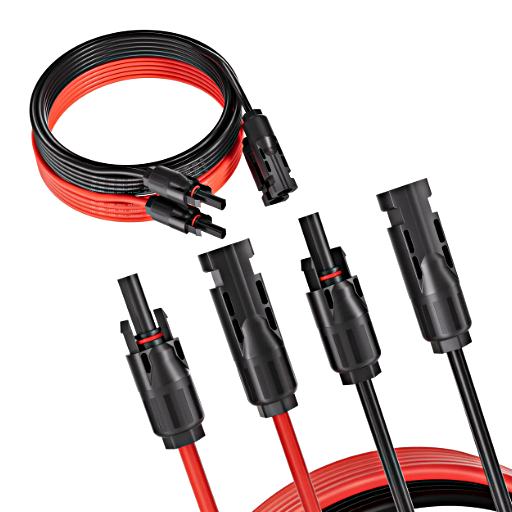
MC4 adapter cables are utilized when the solar panels need to be connected to systems or devices with different types of connections. They work wonderfully when the connectors on the solar panels or the charge controllers cannot be used. Moreover, adapter cables can be used to extend the length of the cables when they need to be placed further apart from each other, but reliable attachments still need to be maintained. Be sure the cable adapters are safe for the voltage and current your system needs, so keep it secure.
Comparing MC4 Cables to Other Solar Connectors
MC4 connectors have claimed the title of the industry standard for their unmatched safety, versatility, and durability. They outperform rivals XT60, Anderson, and SolarLok, which have specific scopes of focus.
| Parameter | MC4 | XT60 | Anderson | SolarLok |
|---|---|---|---|---|
|
Durability |
High |
Moderate |
High |
High |
|
Ease of Use |
High |
Moderate |
Moderate |
High |
|
Weatherproof |
Yes |
No |
Yes |
Yes |
|
Current |
High |
Low |
High |
Moderate |
|
Safety |
Lockable |
Non-lockable |
Lockable |
Lockable |
|
Cost |
Moderate |
Low |
High |
Moderate |
|
Application |
Universal |
DIY/Portable |
Large-scale |
Flexible |
What Makes MC4 Connectors Superior to XT60?
MC4 connectors are tailored for use in solar applications, therefore they are an industry benchmark standard for solar photovoltaic systems. One notable benefit in comparison to XT60 connectors is their weatherproofing. MC4 connectors have an IP67 rating, which, in conjunction with their UV-protecting materials, allows them to resist rain, dust, and extreme temperatures, typical in outdoor solar installations. Moreover, MC4 connectors are designed to withstand higher voltage and current ratings, typical of larger solar panel arrays, decreasing the risks of thermal runaway, overheating, or failure.
Another notable advantage is the simple installation and maintenance procedures. MC4 connectors use click and lock mechanisms that enable secure connections while improving maintenance safety by allowing quick disconnection. Although XT60 connectors are effective in low-voltage applications like RC models and DIY electronics, they do not offer the rugged construction and weather resistance needed for long-lasting solar use. Overall, MC4 connectors enhance solar energy systems’ performance, durability, safety, and reliability.
Interoperability of MC4 with Other Solar Connectors
MC4 connectors are popular in the solar sector because of their uniformity and secure design. However, their interoperability with other solar connectors depends on their compatability and design specifications. Even though manufacturers do their best to follow guidelines, not all MC4 connectors are guaranteed to be cross-compatible. When using MC4 connectors from different brands, additional caution, such as verifying compatibility and checking that the brand meets IEC 62852 international standards, is recommended. Sticking to connectors from previous models specified by the solar panels’ manufacturer is safer and more efficient. Failing to do so may lead to reduced efficiency, resistive losses, and sometimes unsafe operating conditions. Maintaining and mounting a solar energy system requires thorough testing of each connection’s reliability and performance.
Reference Sources
1. Evaluation of Fire Hazard in Electrical Installations Due to Unfavorable Ambient Thermal Conditions
- Authors: Seweryn Szultka, S. Czapp, A. Tomaszewski, H. Ullah
- Journal: Fire
- Publication Date: January 20, 2023
- Citation Token: (Szultka et al., 2023)
- Summary:
- This paper evaluates the fire hazards associated with electrical installations, particularly on power cables and photovoltaic (PV) installations. The authors highlight that power cables exposed to intense solar radiation can exceed maximum permissible temperatures under unfavorable ambient conditions.
- The study emphasizes the risks of poor connections in typical PV connectors (like MC4 connectors), which can lead to melting and potential fire hazards.
- A computer simulation is presented to identify critical thermal points in electrical installations, particularly PV systems. This provides insights for safer design and implementation practices.
2. Structure reveals the activation mechanism of the MC4 receptor to initiate satiation signaling
- Authors: H. Israeli, O. Degtjarik, F. Fierro, Vidicha Chunilal, A. Gill, N. Roth, J. Botta, V. Prabahar, Y. Peleg, L. Chan, D. Ben-Zvi, P. McCormick, M. Niv, M. Shalev-Benami
- Journal: Science
- Publication Date: April 15, 2021
- Citation Token: (Israeli et al., 2021, pp. 808–814)
- Summary:
- This study investigates the activation mechanism of the melanocortin-4 receptor (MC4R), which plays a crucial role in regulating food intake and energy homeostasis. The authors present the cryo-electron microscopy structure of the MC4R-Gs signaling complex bound to the agonist setmelanotide.
- The findings reveal that calcium is required for the efficacy of the agonist but not for the antagonist, providing insights into the receptor’s function and potential implications for obesity treatment.
- The research contributes to understanding the molecular mechanisms underlying appetite regulation and the development of targeted therapies.
Frequently Asked Questions (FAQs)
Q: What is a solar panel cable extension with MC4 connectors?
A: A solar panel cable extension with MC4 connectors is a type of solar cable used to extend the connectivity between solar panels and other components in a solar panel system. It uses standard MC4 connectors for easy connection.
Q: What gauge wire is commonly used for solar panel extensions?
A: Common wire gauges for solar panel extensions are 10 AWG and 12 AWG. The choice depends on your solar PV system’s distance and power requirements.
Q: Can I use a solar panel cable extension for DIY solar projects?
A: You can use solar panel cable extensions for DIY solar projects. They are essential for connecting solar PV panels to a power station or other components in your system.
Q: What are branch connectors in a solar panel cable setup?
A: Branch connectors connect multiple solar panels in a solar panel system. They allow for combining outputs from different PV panels into a single production, often leading to a combiner box.
Q: How do I determine the length of solar cable needed for my installation?
A: To determine the length of solar cable needed, measure the distance from your solar panels to the power station or inverter, and consider any additional length for routing and installation.
Q: What is the purpose of a combiner box in a solar setup?
A: A combiner box is used in solar panel systems to combine the outputs of multiple PV cables from different solar panels into a single production, making it easier to connect to an inverter or power station.
Q: Are MC4 connectors waterproof and suitable for outdoor use?
A: Yes, MC4 connectors are designed to be weather-resistant and waterproof, making them suitable for outdoor use in solar panel installations.
Q: Can I connect solar generators using solar panel cable extensions?
A: Yes, you can connect solar generators using solar panel cable extensions, provided that the connectors and cable gauge meet the power requirements of your solar PV system.
Q: What factors should I consider when selecting solar panel cables?
A: When selecting solar panel cables, consider factors such as the wire gauge (10 AWG or 12 AWG), the length of the cable needed, the type of connectors (like MC4), and the overall power requirements of your solar panel system.