





Fiber optic color knowledge is crucial for anyone working in telecommunications, networking, or data management. This tiny strand of optical fiber plays a huge role in modern technologies, transferring data at the speed of light. Yet, correctly identifying and sorting these cables is paramount in maintaining system efficiency and avoiding costly errors. This guide will break down everything you need to know about fiber optic color codes, including industry standards, fundamental concepts of conduct, and why this knowledge is indispensable for professionals. While installing new infrastructure or working on existing networks, this article will provide you with the knowledge needed to work confidently and precisely with fiber optic cables.
Understanding Fiber Optic Color Codes

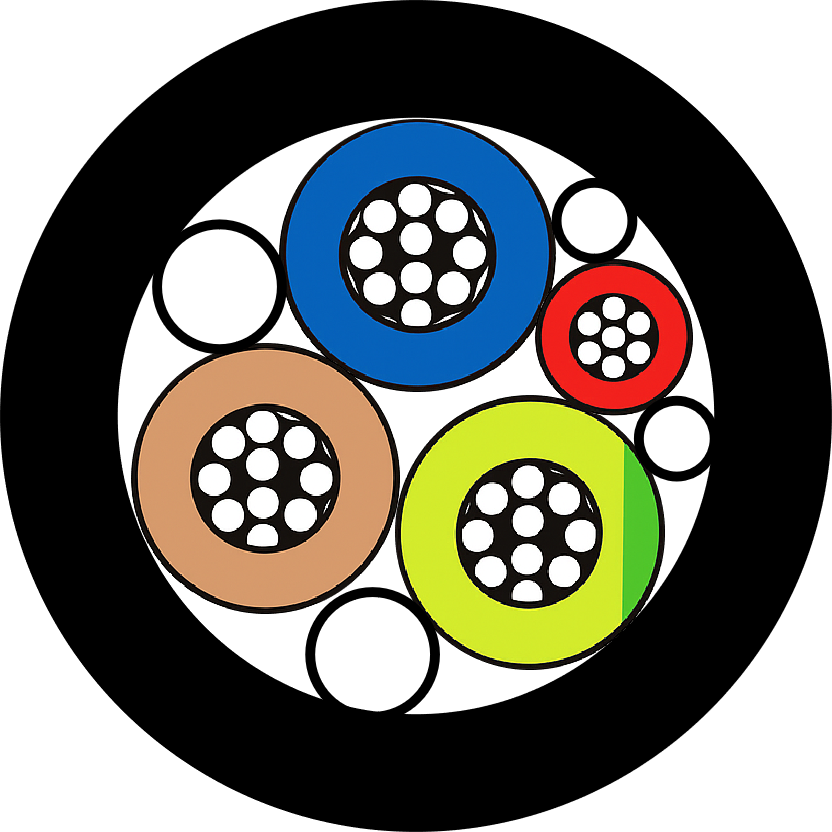
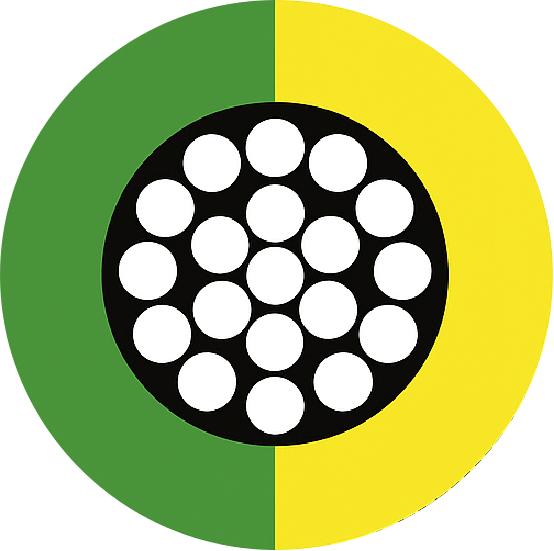
The fiber optic color codes refer to a standardized system used to identify individual fibers within a particular cable. These codes ensure correct organization and connectivity during installation or maintenance processes. The colors typically follow a color scheme established by industry standards in a specific sequence. An example is the TIA/EIA-598, which assigns colors to each fiber in a particular order. Giving an example: The 1st fiber is blue, the 2nd fiber is orange, the 3rd fiber is green. The sequence goes through 12 colors in total. A proper understanding and application of these codes are crucial when troubleshooting or managing fiber optic networks. It is always advised to consult the applicable standard for guidance.
Importance of Fiber Color Coding
Fiber color coding is essential for the proper and efficient management of fiber optic networks. As fiber optics have increased rapidly across the globe, the market size is predicted to surpass $16 billion by 2023; standardized methods for organization and identification have become necessary. With the use of this color code system, as outlined by TIA/EIA-598, technicians can differentiate individual fibers within a cable, thereby considerably reducing the time required for installation, testing, and maintenance.
In high-density network environments, where cables can contain hundreds or thousands of fibers, color coding simplifies trouble-finding and troubleshooting. A fiber incorrectly identified may hinder data transmission or cause prolonged downtime, which is particularly critical in industries such as telecommunications, healthcare, or cloud computing. Proper color coding also enhances safety by avoiding accidental interference with active fibers.
To put it simply, adherence to color coding standards is further emphasized with the adoption of multi-fiber connectors, such as MPO/MTP systems. These systems have the potential to house up to 24 fibers within a single connector, making it crucial to ensure proper identification to prevent cross-connecting or data loss. By combining established color codes with new and innovative labeling solutions, companies can enhance productivity while ensuring network reliability in mission-critical applications.
Standard Fiber Color Code
The standard fiber color code chart includes Blue, Orange, Green, Brown, Slate, White, Red, Black, Yellow, Violet, Rose, and Aqua for 12 primary fibers.
|
Fiber |
Color |
Alternate Name |
|---|---|---|
|
1 |
Blue |
BL |
|
2 |
Orange |
OR |
|
3 |
Green |
GR |
|
4 |
Brown |
BR |
|
5 |
Slate |
SL |
|
6 |
White |
WH |
|
7 |
Red |
RD |
|
8 |
Black |
BK |
|
9 |
Yellow |
YL |
|
10 |
Violet |
VI |
|
11 |
Rose |
RS |
|
12 |
Aqua |
AQ |
Color Coding Standards in Fiber Optics
Purpose of Color Coding in Fiber Optics: Fiber optic color coding is primarily used to organize and identify individual fibers within a cable, facilitating adequate installation, maintenance, and troubleshooting. Based on the pre-set standard color codes, technicians can quickly identify particular fibers of interest and thereby reduce errors during splicing or testing.
International Standards for Color Coding: Fiber optic cables adhere to international standards for fiber color codes, as established by organizations such as the Telecommunications Industry Association (TIA) in the United States. Among other things, TIA-598C is generally accepted as specifying the sequence and colors of fibers and tubes in cables, thus defining the 12-color sequence shown on the above chart. These standards are essential for interfacing among different manufacturers and regions.
Advantages of Fiber Color Coding: Standardized color codes eliminate confusion and speed up work in large installations. Troubleshooters appreciate clear identification so they can quickly isolate and fix problems. This allows teams to work together confidently, ensuring fiber optic networks can be maintained reliably and consistently.
Types of Fiber Optic Cables
Fiber optic cables are divided into two major types:
Single-Mode Fiber (SMF): Designed for use in long-distance communication, the single-mode fiber features a smaller core (approximately 9 microns in diameter), allowing light to be transmitted straight through the fiber with minimal signal loss. It should be used for long-distance telecommunications and data transmission.
Multi-Mode Fiber (MMF): It is made for short distances. Multi-mode fiber has a larger core (generally 50 or 62.5 microns), which allows multiple modes of light to travel through the cable. It is mainly used in LANs and data centers.
Each of these types has specific applications, giving flexibility to meet the varied requirements of today’s communication systems.
Single-Mode Fiber vs. Multi-Mode Fiber
Single-mode fiber and multi-mode fiber support different functions, thus performing well in specific scenarios. The following comparison charts will give you a detailed idea about their main features and applications:
Core Size: Single-mode fiber has a minimal core diameter of approximately 8-10 microns, allowing for only one mode of light. On the other hand, multi-mode fiber has a core diameter of 50 or 62.5 micrometers, allowing several light modes to propagate simultaneously.
Transmission Distance: Single-mode fiber is more suitable for long-distance communication, usually over 40 kilometers, when combined with appropriate equipment. Hence, it must be used for high-bandwidth, long-haul networks, such as MANs. For shorter distances, limiting the signal quality to much longer distances, in MP, the signal quality is affected by its large core dispersion; therefore, multi-mode fiber would be a suitable option.
Data Bandwidth: Single-mode fiber offers a very high bandwidth capacity, with a transmission speed exceeding 100 Gbps, making it suitable for telecom, data centers, and internet backbones. Multi-mode fiber offers sufficient bandwidth capacity for most local networks, with typical operating speeds of 10 Gbps and occasionally 40 Gbps over very short distances.
Light Source and Cost: Single-mode fiber utilizes a laser as its light source, which is more precise but also more expensive. The multi-mode fiber uses an LED as a light source, which is cheaper for short-range operations but cannot support the high precision required for long-range applications.
Applications: Its prime usage for single-mode fiber includes long-haul, high-performance communications, undersea cables, and networks for telecom providers. Multi-mode fiber is commonly used in local area networks within buildings, data centers, and campus environments, where transmission distances are typically shorter.
Cost of Deployment: Multi-mode fiber is cheaper to install and maintain, as it utilizes less expensive optics, whereas single-mode fiber is generally more expensive upfront due to the cost of lasers and components. Nonetheless, whenever long-distance communication with higher bandwidth is required, single-mode fiber will prove to be cost-effective due to its scalability.
Signal Reliability: Single-mode fiber enables stable and reliable signal transmission over long distances by eliminating modal dispersion. Multi-mode fiber will cause signal degradation over time, especially at greater distances. This occurs because different light modes propagate at varying speeds within a larger core of multi-mode fiber.
Summary Table:
|
Characteristic |
Single-Mode Fiber |
Multi-Mode Fiber |
|---|---|---|
|
Core Diameter |
8-10 microns |
50-62.5 microns |
|
Transmission Distance |
Up to 40+ km |
Up to 500 meters |
|
Bandwidth Capacity |
Extremely high |
Moderate (10 Gbps to 40 Gbps) |
|
Light Source |
Laser |
LED |
|
Cost |
Higher upfront cost |
Lower cost |
|
Applications |
Long-haul, telecom, data centers |
LANs, campuses, data centers |
|
Signal Reliability |
Minimal signal degradation |
More prone to modal dispersion |
By understanding these distinctions, organizations can select the most suitable fiber optic solution tailored to their specific requirements, including distance, bandwidth, and budget.
Understanding Fiber Optic Cable Jackets
Fiber optic cable jackets comprise various protective layers that safeguard the internal components, enabling the cable to perform optimally under diverse environmental conditions. These jackets are typically made from PVC, LSZH (low-smoke, zero-halogen), or polyurethane, each of which is suited for specific uses and environmental conditions.
PVC Jackets: Being both flexible and strong, as well as cost-effective, these are primarily considered for indoor installations. They resist many environmental factors, such as chemicals and moisture, but can release toxic fumes when burned.
LSZH Jackets: These jackets are primarily used in areas where fire safety is of utmost concern, such as enclosed spaces, data centers, or engineering spaces within buildings. LSZH jackets produce minimal smoke and do not release toxic halogens during combustion.
Polyurethane Jackets: A Stronger disposition is demanded outdoors or in industrial constructions. These jackets thus became preferable for abrasion, exposure to UV light, and harsh weather conditions.
When selecting a cable jacket, key considerations include whether the cable will be installed indoors or outdoors, safety requirements, and resistance to wear and tear. With these considerations in place and aligned with the specific application, an organization can make an informed decision that balances fiber optic performance with concerns for safety and durability.
Inner Fiber Color Code Explained

The inner fiber color code is a general term used to identify a single optical fiber, fiber, or fiber bundle within cables. Special colors are assigned to each fiber during its manufacture, making fiber manipulation easier for plant personnel during installation, maintenance, and troubleshooting. The initial sequence of colors was described as blue, orange, green, brown, slate, white, red, black, yellow, violet, rose, and aqua. For a higher number of fibers, the sequence is repeated and then held distinct by some markers or binders. It ensures that fibers can be easily identified through matching throughout the entire cable length, thereby easing cable operations and minimizing accidents.
Connector Color Codes and Their Significance
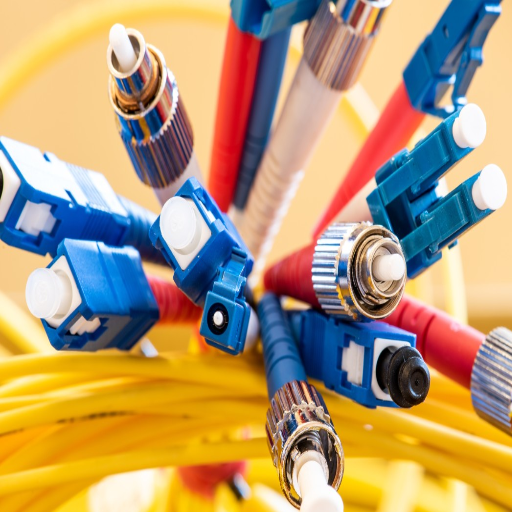
The color of the connector is crucial for fiber optic and cable management, as it provides a universal method for identifying each connection by type and purpose. For instance, blue connectors typically denote single-mode fibers with UPC (Ultra-Precision Cut) polish, while green connectors indicate single-mode fibers with APC (Angle-Precision Cut) polish. Beige connectors refer to multimode fibers that comply with the OM1 or OM2 standards. In contrast, aqua connectors are typically used for multimode fibers of OM3 or OM4 standards, which are often employed for short distances at very high data rates.
These color codes are necessary for both visual identification and maintaining performance standards. For example, using the wrong connector packet, such as mixing APC and UPC, will cause dramatic increases in signal losses due to mismatched polishing angles. As the faster-speed network demands greater clarity and less interference, these color codings will help technicians select or install components correctly during upgrades, thereby reducing mistakes. Following these standard color codes will increase system reliability in varied areas, from telecommunications to data centers.
Using the Color Code Chart for Identification
The color code chart simplifies the tedious task of identifying and joining fiber optics in various applications. It serves as a standardized guide to categorize fibers in cables by color, facilitating ease of organization during both installation and maintenance. For instance, the industry-standard color code for 12-fiber cables specifies colors such as blue, orange, green, and brown for the separate fibers, ensuring instant recognition. This approach minimizes potential errors in fiber splicing or termination, thereby reducing downtime and enhancing network reliability.
Moreover, operational data confirm that adherence to a clear identification system can reduce troubleshooting time by up to 30%, as technicians can quickly trace particular fibers. In environments with extremely high fiber density, such as data centers, the color code system is crucial for handling possibly thousands of fibers. Therefore, by ensuring an efficient workflow through clarity and consistency, the chart provides an additional heavy hand in minimizing costly errors.
Single-Mode vs Multi-Mode Fiber Color Codes

Standard color codes for single-mode and multi-mode fibers help ease identification during installation and maintenance.
Single-Mode Fiber: Yellow jackets typically identify single-mode fibers. This color symbolizes the transmission of data for long distances with a narrow core.
Multi-Mode Fiber: The jackets for multi-mode fiber, specifically OM1 and OM2, are typically orange in color, whereas those for OM3 and OM4 are aqua (light blue), indicating better performance for higher bandwidth requirements.
Hence, such standardized color codes serve to maintain clarity and uniformity in fiber optic installations.
Differences in Color Coding
The variations in fiber optic cable color codes are crucial for distinguishing between cable types and their intended uses. For instance, single-mode fibers are usually given yellow jackets, as this particular color indicates their use for long-distance communication and narrow-core-type technology. On the other hand, multi-mode fiber cables are identified by different color codes according to their performance specifications.
OM1 and OM2 Multi-Mode Fiber: These are assigned orange jackets and are intended for implementations at short distances (typically around 550 meters) with lower bandwidth capacities.
OM3 Multi-Mode Fiber: The aqua jacket distinguishes it from the OC1 fiber, providing excellent channel performance that can carry speeds of 10 Gigabits per second over 300 meters.
OM4 Multi-Mode Fiber: It also features an aqua jacket, offering improved bandwidth and longer transmission distances of up to 400 meters with high data rates.
OM5 Multi-Mode Fiber: The latest standard, OM5 features a lime green jacket and is designed explicitly for wavelength-division multiplexing (WDM), which significantly enhances data transmission efficiency in areas such as data centers.
The non-standard fibers may, of course, have different-colored jacket implementations based on customers’ requirements or manufacturers’ distinctions, further emphasizing the need for consistent labeling and documentation. These visual codes are key factors that ensure fast identification and ease during installation and troubleshooting, and thereby can make fiber optic communication system implementation more efficient.
Identifying Single-Mode Fiber Cables
Single-mode fiber optic cables are designed so the light travels essentially straight down the fiber with little dispersion, making such fibers ideal for long-distance and high-bandwidth transmission. These cables typically feature a small core diameter of approximately 8 to 10 microns, allowing only a single mode of light to propagate. This nearly eliminates signal loss and interference. They are often color-coded with yellow jackets for easy identification; however, proper labeling and documentation should always be verified.
Single-mode fibers are particularly useful in telecommunications, Wide Area Networks (WANs), and data centers, where high-speed data transfer is crucial over distances exceeding tens of kilometers. The attenuation rate for single-mode fibers generally is around 0.4 dB/km at a wavelength of 1310 nm and around 0.25 dB/km at a wavelength of 1550 nm, making them far more efficient than their multimode counterparts in such applications.
New advances in single-mode fiber technology have brought about variations such as low-loss fibers and bend-insensitive fibers. For instance, G.652.D and G.657 offer better performance, especially in environments where densely packed layouts, tight bends, and high-density cabling are prevalent, such as in modern data centers. These advances continue to facilitate faster and more reliable communications, ensuring that single-mode fiber remains the backbone of today’s fiber optic networks.
Identifying Multi-Mode Fiber Cables
Multi-mode fiber cables have found broader applications in short-range communications within data centers, LANs (Local Area Networks), and campus networks. Multimode fiber serves as the transmission medium for multiple modes of light, owing to its comparatively larger core diameter compared to a single-mode fiber. Usually, multimode fiber is designed with an average core diameter of either 50 microns (for OM2, OM3, OM4, and OM5) or 62.5 microns (for OM1).
Such a design enables data transmission at higher rates for shorter distances.
The main difference among multimode fiber types lies in their modal bandwidth and distance capabilities. For example, OM1 fibers offer 1 Gbps of transmission rate for around 300 meters; however, with the progress in technology, OM3, OM4, and OM5 fibers are introduced for high-speed networks and extended reach. The OM3 fiber is capable of transmitting 10 Gbps up to 300 meters, whereas the OM4 fiber extends that up to around 550 meters. The OM5 fiber is relatively new and is designed to be employed between 850 nm and 953 nm, supporting either 40 or 100 Gbps at distances of up to 150 meters.
Another key significance of multi-mode fibers is that they use inexpensive light sources such as LEDs or VCSELs. Thus, they offer a more economical alternative for short-range interconnection than single-mode fibers, which require more expensive laser technology. Additionally, these multimode cables feature graded-index fiber designs to minimize modal dispersion, thereby enhancing signal quality and improving overall system performance, as required in modern networks.
Practical Applications of Fiber Color Coding

Fiber color coding is primarily used where the handling and identification of optical fibers are crucial for the efficiency and reliability of the operation. Data centers, telecommunications infrastructure, and network installations are the key examples. Thus, this system enables technicians to identify an individual fiber quickly, troubleshoot it, and perform maintenance with minimal disruption. With the standardization of color schemes, fiber color coding minimizes error potential, enhances organization, and facilitates smooth communication among teams and systems. This simple method is no less than an aid to operational accuracy within complex, high-density network environments.
Cable Identification in Networking
The cable identification methods in networking rely on standardized systems that utilize color codes, labels, or numbers for easy identification and the organized management of cables within a system. I treasure these systems greatly, as they ensure clarity and reduce errors during troubleshooting, maintenance, or network management. Such identification protocols enable me to streamline operations and enhance communication within my team.
Importance of Fiber Optic Installation
Fiber optic installation has been utilized worldwide for a long time in transforming communication infrastructure and meeting the demands for high-speed internet. If fiber optic cables are built from glass or plastic strands, they transmit data in light pulses, hence the reputation for being way faster than traditional copper-based systems. This technology supports speeds of 1 Gbps and above, enabling effortless video streaming, high-speed downloads, and seamless connections to multiple online services with minimal latency.
Fiber optics exhibit less signal degradation in long-distance transmissions than conventional wire systems, which makes them well-suited for industries and homes that require stable performance. They provide better shielding from electromagnetic interference, ensuring uninterrupted and secure data transmission even in boisterous electrical environments. The need for high-speed gigabit internet is growing annually; thus, more and more fiber installations are being prioritized by providers to bridge the digital divide and support newer technologies, such as 5G, IoT, and remote work.
Above all, there are environmental and economic benefits that make fiber optic installation more critical. The lower energy requirements of fiber networks help reduce the carbon footprint associated with data transmission. Better reliability and bandwidth capacity equal higher productivity for businesses and an improved quality of life for the user. By taking the step forward through the adoption of fiber optic systems, communities worldwide are setting the stage for a more connected, efficient, and future-proof digital environment.
Maintaining and Troubleshooting Fiber Cables
Proper care and troubleshooting of a fiber optic cable are essential to ensure optimal network performance and an extended service life. Regular inspections are necessary for detecting possible problems, such as physical trauma, bending, or stress points that could cause signal interference. Equally important is the cleaning of connectors and splices; any dust or dirt particles can harm performance. According to industry standards, the proper way to clean these components is with lint-free wipes and isopropyl alcohol.
Troubleshooting begins with recognizing the signs, which can include attenuation rise, disturbed connections, or a decrease in bandwidth. The commonly used tools for such a job are Optical Time-Domain Reflectometers (OTDRs), which locate disturbed events, such as breaks or attenuation, within the fiber link. More than 70 percent of fiber optic issues arise from dirty or poorly maintained connectors, which further bolsters the need for careful handling and cleanliness. Protective measures, such as providing protective housing for cables and adhering to a standard bend radius, can help prevent recurring issues.
In large-scale operations, the most effective strategy is to employ proactive monitoring through automation tools, enabling irregularities to be detected before they escalate into major outages. Ultimately, vigilance and good maintenance practices will ensure a robust and efficient fiber optic network.
Reference Sources
Frequently Asked Questions (FAQs)
What is the fiber color code system?
The fiber color code system is a standardized color scheme used to identify individual fibers within a fiber optic cable. Each fiber type is assigned a specific color, allowing technicians and engineers to recognize and manage different fibers during installation and maintenance easily.
Why is color coding important in fiber optic cables?
Color coding helps in the efficient identification of individual fibers within a fiber optic cable. It enables technicians to quickly identify fiber connections, ensuring that fiber optic cables are correctly spliced and installed, which is crucial for maintaining an efficient network.
What are the standard color codes used in fiber optic cables?
Standard color codes include a variety of colors, such as blue, orange, green, and brown, which represent different fiber strands. The color sequence repeats after 12 fibers, allowing for easy identification and organization of cable types in various applications.
How do I identify fiber optic cables using the color code chart?
To identify fiber optic cables, refer to the fiber color code chart, which outlines the colors assigned to each fiber strand. By comparing the colors of the cable jacket and the individual fibers, you can accurately determine the fiber type and ensure that the connections are proper.
What are the jacket colors used in fiber optic cable installation?
The colors of jackets in fiber optic cable installations vary depending on the application and the type of cable. Standard colors used for fiber optic cables include yellow for single-mode fiber and orange for multimode fiber. Understanding these jacket colors is crucial for selecting the correct cable types for specific installations.
How can I effectively maintain fiber optic cables?
Maintaining fiber optic cables involves regular inspection and cleaning of connectors and jackets, ensuring that cables are not bent excessively, and keeping a reference chart handy for color coding. Proper maintenance helps prevent signal loss and provides reliable performance of the fiber optic network.
What is the framework for fiber optic color coding standards?
The framework for fiber optic color coding standards includes guidelines that define the colors and sequences used for different fiber types. These standards are essential for ensuring consistency across installations, allowing technicians to follow a uniform approach to identifying fibers and connectors.
How do color codes serve in the world of fiber optics?
Color codes serve as a universal language within the world of fiber optics, enabling technicians to communicate effectively about different fibers and connections. This standardized approach reduces errors during the installation and splicing of fiber optic cables, ensuring a reliable and efficient network.