








Introduction to Temperature Measurement
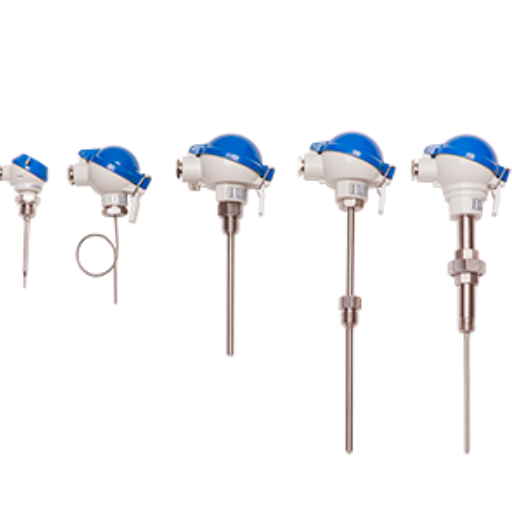
Temperature measurement is the process of determining the amount of heat present in any object or environment. This parameter finds its usage in a myriad of applications—from industrial plants to daily weather reports. Temperature readings must be recorded with safety, efficiency, and expected results on different systems. Modern instruments of temperature measurement-those of resistance thermometers and thermocouples-are reliable means available for keeping a check of varying degrees of heat levels. Each of them is suitable for a particular need. Hence the selection of the right tool will depend on factors of precision, durability, and usage.
Understanding Temperature Measurement Devices
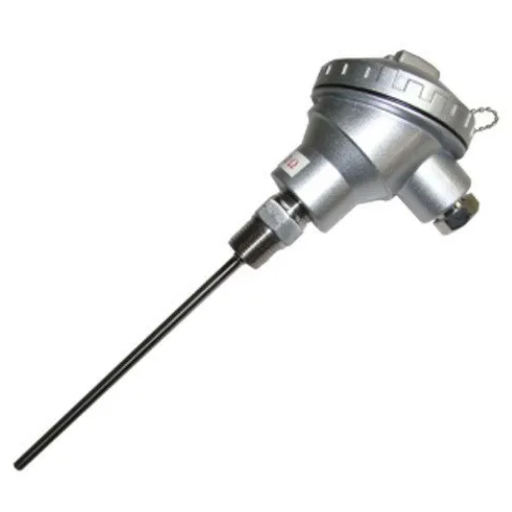
Temperature measurement devices encompass a wide range of types, including both contact and non-contact options, tailored to their respective applications. Depending on the scenario, contact-type devices include resistance temperature detectors (RTDs) and thermocouples. RTDs offer high accuracy and stability in time and are therefore used in industrial processes. Thermocouples can be used to measure almost any temperature, although they can be slightly less accurate.
Non-contact temperature measurement devices include:
- Infrared thermometers
- Thermal imaging cameras
These devices measure temperature using radiant heat, making them suitable for applications where contact poses a practical threat or safety hazard, such as in high-temperature furnaces or moving machinery, among others. These kinds of instruments are highly valued because they enable one to take a rapid remote reading of temperature.
Device selection depends on the accuracy needed, temperature range, response time, and environmental conditions. Choosing the right instrument for temperature measurement is always a prerequisite for obtaining reliable findings in any field, including industrial manufacturing and medical applications.
Importance of Accurate Temperature Measurement
Temperature measurement is crucial for safety and efficiency across various industries. In medicine, for example, temperature must be read accurately for sterilization processes, or under some conditions, it may be used to monitor vital signs. Modern autoclaving of medical instruments requires precise temperature control, typically within ±0.5°C, to ensure the complete death of harmful microorganisms.
Likewise, in industrial applications, temperature must be measured accurately for quality control and energy conservation. For example, in forging, materials are heated to different temperature ranges, from 1,200 to 2,500 degrees Fahrenheit, depending on the metal, to produce the needed hardness and durability. Even a slight change in temperature can cause a product to be defective, increase wastage, and result in financial loss.
Climate research and environmental monitoring also have temperature accuracy playing an equally important role to other factors. To study the pressures of global warming, extremely precise temperature measurements are required; instruments that can sense even slight changes in temperature or changes in hundredths of a degree Celsius have been used for these studies.
Modern Technology Improvements:
Having integrated various new technologies has only helped to improve the precision of temperature measurement further. Infrared thermometers and thermal imaging cameras, for instance, provide non-contact readings with a standard accuracy of ±1 °C, which is particularly helpful when monitoring machinery or assessing energy losses in buildings.
High accuracy maintains uniformity in processes, mitigates safety risks, and drives innovation in critical sectors. As technology advances and the demand for precision increases, reliable temperature measurement is gaining increasing significance.
Overview of Thermocouples and Resistance Thermometers
A thermocouple or resistance thermometer stands among the two most common measuring devices in all industrial applications. Every particular technology comes with intrinsic features that enable differentiation in its appropriate applications.
Thermocouple Operation
The thermocouple operates on the principle of the Seebeck effect: when two metals are joined at one end and have different temperatures at their free ends, a voltage is generated across their junction. Because this voltage depends on temperature, this effect is beneficial for monitoring the temperature of the heat. The ranges of temperature values covered are extensive, depending on the metals used, from -200°C to approximately 2000°C. Thermocouples are widely accepted in industrial applications due to their ruggedness and ability to withstand adverse environmental conditions, as well as their rapid response time. For example, one of the most common thermocouples, Type K, stands between -200°C and 1260°C in its applications and is undoubtedly very versatile and rugged.
Resistance Thermometer Operation
Resistance thermometers, commonly known as Resistance Temperature Detectors, function upon the principle that the electrical resistance of a material varies with temperature. Generally made of pure platinum, RTDs offer highly accurate readings over a moderate temperature range, typically from -200°C to 850°C. They are well-suited for applications requiring precise temperature control, such as laboratory experiments, medical equipment, and food processing, due to their precision and repeatability. One standard RTD is the PT100, which has a resistance value of 100 ohms at 0°C, as specified by the industry standard. With improvements in thick- and thin-film technology, the performance of RTDs has significantly enhanced, offering greater sensitivity and smaller size.
Both thermocouples and resistive temperature devices continue to evolve with innovations focused on miniaturization, wireless connectivity, and integration into intelligent systems. Aerospace, manufacturing, and healthcare industries rely more on such technologies as the demand for accurate and reliable temperature measurement rises. The choice depends on specific applications and sometimes balances factors such as temperature ranges, accuracy, and environmental conditions.
Comparison Between Thermocouple and Resistance Thermometer
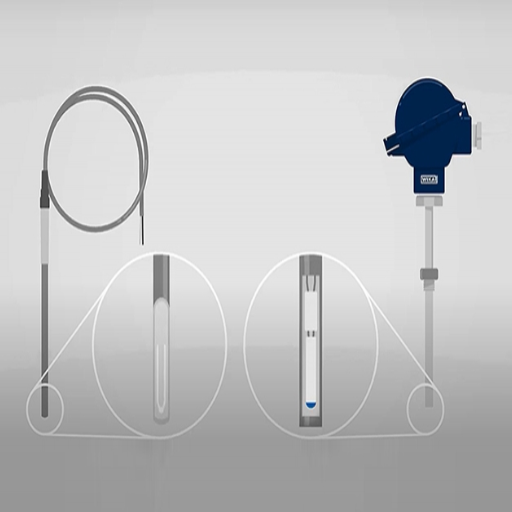
Both thermocouples and resistance thermometers differ in their construction methods, principles of operation, and applications. A thermocouple generates a voltage between two dissimilar metals due to the temperature difference between the measuring and reference junctions, making it suitable for an extensive temperature range and a fast response time. In contrast, a resistance thermometer, such as that of the RTDs (Resistance Temperature Detectors), measures temperature by the change in electrical resistance of a metal, providing very accurate and stable temperature measurements over relatively narrow temperature ranges.
While thermocouples are commonly employed in high-temperature settings, for example, industrial furnaces, resistance thermometers dominate low-to-moderate temperature applications when accuracy is highly demanded, such as in laboratories or for medical uses. Additionally, resistance thermometers are more resilient against electromagnetic interference, while thermocouples excel in being economical and are often chosen where wear and tear are a significant concern. A choice can be made between the two based on the nature of the particular application or its requirements in terms of performance and environment.
Key Differences in Functionality
Resistance thermometers, also known as resistance-type temperature detectors (RTDs), operate on the principle that the electrical resistance of certain materials varies with temperature. Usually, they are constructed from a pure metal, such as platinum, which provides nearly perfect and stable readings in the temperature range of approximately -200°C to 850°C. These are very sensitive and precise instruments used mainly where exact precision is required, such as in pharmaceutical manufacturing processes, aerospace, and laboratory measurements.
Thermocouples are instruments that work on the principle of the Seebeck effect, which states that a voltage is generated at the junctions of dissimilar metals when exposed to a temperature gradient. They measure extremely high temperatures. For this purpose, certain types of thermocouples such as Type B, R, or S can operate at temperatures as high as 1700°C or beyond. Industrial processes, such as steelmaking, gas turbines, and chemical processing, find thermocouples to be most useful.
Response Time Comparison:
Another big difference is the response time. RTDs are slow to respond to temperature changes, often due to their construction, while a thermocouple has the advantage in terms of fast response, and its design is robust and straightforward. This advantage is crucial in a dynamic and rapidly changing environment. Thermocouples have this added advantage of being less costly and very durable, making them the best fit for occasions where economic decisions are under scrutiny and where extreme and harsh temperature conditions prevail.
In a nutshell, Resistance thermometers will be very accurate and repeatable within a specific range of temperatures. On the other hand, thermocouples continue to occupy applications where robustness and high-temperature resistance dominate. Being able to understand those differences and relating them to the specific needs of the application would then ensure good performance and reliable data.
Accuracy of Measurement in Different Scenarios
Temperature-recording instruments exhibit a varying range of accuracy, dependent on the type of sensor and the scene of operation. The passive environment of medium temperatures generally suits resistance thermometers (RTDs: Resistance Temperature Detectors) due to their relative accuracy and repeatability. For instance, a platinum RTD can be as accurate as ±0.1 °C over wide operating ranges and is mainly considered by laboratories, pharmaceutical manufacturing, and food processing applications where utmost accuracy is critical.
In contrast to RTDs, thermocouples offer the best performance in high-temperature or rapidly changing environments, albeit with less accuracy. Depending on the type, thermocouples may have accuracies ranging anywhere from ±1°C to ±2°C. There are, however, some of the situations in which such temperature readings above 1000°C are essential for considerations of industrial furnaces or jet engine testing, and hence their durability is paramount.
Factors Affecting Accuracy:
In addition to other factors, the accuracy of these sensors is also affected by EMI disturbances, installation methods, and calibration quality. Proper shielding and grounding are employed to minimize inaccuracies, as is following the manufacturer’s installation recommendations. Additionally, improvements in digital temperature transmitters enhance linearity and reliability, applicable to both RTDs and thermocouples. The goodness of fit will put the devices through their paces in the most challenging situations.
When choosing a particular measurement instrument, one must consider the specific requirements of the application, including temperature range, response time, and environmental conditions, balancing these factors against the highest degree of precision and endurance.
Applications of Thermocouples and Resistance Thermometers
Due to their dependability and accuracy, these systems have a wide range of applications across various sectors in temperature measurement.
Thermocouple Applications
Thermocouples find their industrial applications in manufacturing, metal treatment, and energy production. Extreme temperatures and quick response times are standard parameters termed by thermocouples when wide ranges are applied; hence, they become perfect when the range is extensive with a response time on the order of seconds. For instance, kilns, furnaces, and engines frequently use them because they can withstand the harsh conditions required in these applications.
RTD Applications
In contrast, if accuracy and stability are required within a narrow temperature range, the use of RTDs becomes preferable. They are typically used in food processing, pharmaceutical treatments, and laboratory applications where precise temperature control is necessary. They also find favor in HVAC and environmental applications due to their long-term reliability and stability.
Thermocouples and RTDs are two types of temperature-measuring devices. Depending on the application’s requirements, temperature range, accuracy, durability, and environmental conditions, one option would be chosen over the other. These instruments play a crucial role in maintaining process efficiency, safety, and quality across various fields.
Understanding Resistance Thermometers
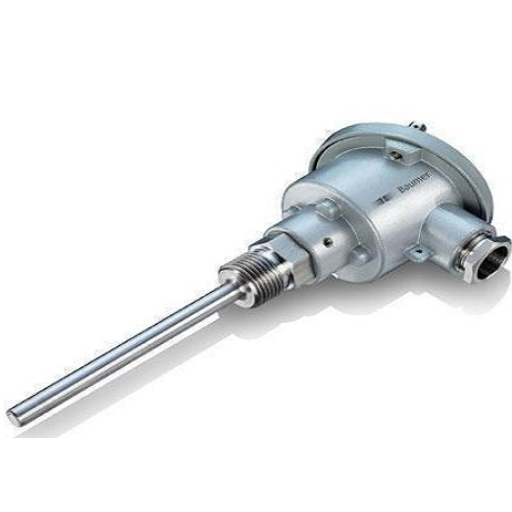
Resistance thermometers, commonly referred to as RTDs (Resistance Temperature Detectors), are temperature measurement instruments that rely on the correlation between temperature changes and changes in electrical resistance. Usually made from pure materials such as platinum, RTDs enjoy high accuracy, stability, and repeatability over intermediate temperature ranges. The resistance in the sensor increases with rising temperature, allowing it to be monitored with great accuracy. Due to these qualities, RTDs are widely used in industrial, scientific, and environmental applications where precision is crucial.
What is a Resistance Thermometer?
A resistance thermometer, also known as a Resistance Temperature Detector, is a highly accurate temperature sensor that measures temperature by establishing a correlation between resistance and temperature. RTDs are primarily constructed using pure metals such as platinum, nickel, or copper, with platinum being the best choice due to its excellent stability properties and a broad range of operating temperatures. The working mechanism involves the metal in these sensors exhibiting a change in electrical resistance that behaves in a predictable and repeatable manner when subjected to different temperatures.
RTD Specifications:
- Temperature range: -200°C to 850°C
- Accuracy: ±0.1°C (high-grade platinum RTDs)
- Standards: IEC 60751 compliance
- Tolerance classes: Class A (more accurate) and Class B
Industries such as aerospace, energy production, and laboratory measurements are typical applications for these sensors. Their ability to provide reliable readings also underpins their use in environmental monitoring and advanced industrial automation systems. RTDs are always hooked up to a Wheatstone bridge circuit or something similar so that resistance change can be translated into temperature data; thus, they are easily interfaced into measurement systems or modern equipment. Their versatility of application and accuracy make their presence indispensable in temperature measuring technology.
Types: PT100 and PT1000 Explained
PT100 Sensors
Also known as 100-ohm resistance temperature detectors, PT100 sensors have a resistance of 100 ohms at 0°C. They are commonly used in both field and scientific measurements because of their precision and reliability. Suitable for use in situations with long leads or wires, PT100 sensors are less susceptible to errors caused by lead-wire resistance.
PT1000 Sensors
The PT1000 sensor, on the other hand, differs with the 1000-ohm resistance value at 0°C. This level of resistance gives it greater sensitivity against adverse effects from the lead-wire resistance. Therefore, PT1000 sensors are suitable for longer leads or cable applications, or where wiring complexity needs to be minimized.
While both types excel equally in terms of performance regarding stability and accuracy over a fairly wide temperature range, the choice between a PT100 and a PT1000 usually depends on specific aspects of the installation, such as wiring, environmental conditions, and measurement precision.
Advantages and Limitations of Resistance Thermometers
Advantages
Resistance thermometers, also known as RTD (Resistance Temperature Detectors), are highly precise for measuring temperature. Among their advantages are the excellent accuracy levels, repeatability, and good time stability. These qualities make them essential for hard applications in industries such as pharmaceuticals, aerospace, and energy. RTDs maintain their unparalleled accuracy over a wide temperature range from -200°C to 600°C, ensuring that both low and high-temperature extremes are appropriately measured with dependable performance. On the other hand, this reliability in performance provides for the predictable and usually linear resistance-temperature relation, greatly simplifying calibration and temperature calculation.
Limitations
On certain occasions, resistance thermometers have their limitations. When it is compared to other temperature-measuring technologies, such as thermocouples, it tends to be more expensive to set up and requires higher maintenance. Mechanical vibrations can bring about adverse effects on the readings of RTDs, especially in applications where vibration or motion is continuous. They measure temperatures more slowly than thermocouples, so this could place a limitation on their usefulness for processes demanding quick reaction to temperature changes. At the same time, lead-wire resistance problems can be alleviated in PT1000 sensors; however, lead-wiring complexities with PT100 sensors may sometimes create issues in exact applications.
In essence, resistance thermometers remain the gold standard in any application where utmost accuracy and stability are desired; however, their selection entails careful consideration of environmental conditions, budgetary constraints, and the specific needs of the measurement system.
Diving into Thermocouples
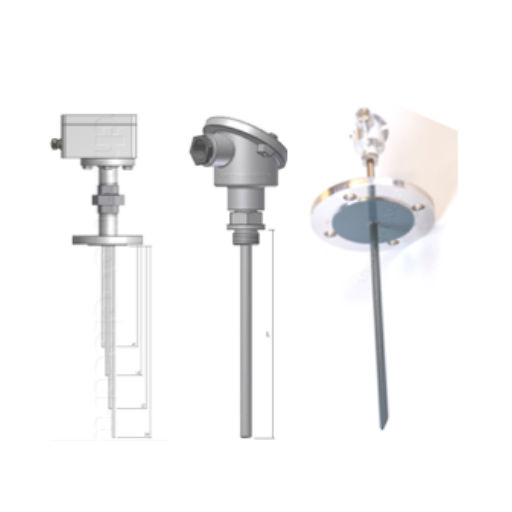
Thermocouples are physical temperature sensors known for their sturdiness, covering a wide range of temperatures and having short response times. The working principle of thermocouples is based on the creation of voltage when two different metals are joined and held at various temperatures on either side, known as the Seebeck effect. This flexibility makes them suitable for harsh environments: high-temperature industrial processes and cryogenic applications. Although less accurate than resistance thermometers, they are available at a low price and are easy to install, making them most suited when the application demands ruggedness and response time rather than accuracy. When selecting a thermocouple, it is essential to match the thermocouple type and its optimal temperature range with the actual operating conditions.
How Does a Thermocouple Work?
The thermocouple works based on the Seebeck effect, whereby a potential difference occurs when two dissimilar metals are connected at two points and exposed to a temperature difference. One junction, called the hot or measuring junction, is placed in the environment whose temperature is to be measured. In contrast, the other, named the cold or reference junction, is maintained at a known fixed temperature.
In the presence of a temperature difference between the two junctions, electrons move through the materials, creating a voltage that is directly proportional to the temperature difference across the materials. This voltage is known as the thermoelectric voltage, which is utilized for temperature measurement. The thermoelectric voltage is duly measured and converted into temperature using thermocouple tables or by connecting transmitters or data loggers.
Common Thermocouple Examples:
- Type K (chromel-alumel): -200°C to 1260°C (-328°F to 2300°F)
- Type T (copper and constantan): -200°C to 350°C (-328°F to 662°F)
Thermocouple systems nowadays often measure the reference-junction temperature and compensate for its variation, a process known as cold junction compensation. Highly durable and capable of withstanding a wide range of temperatures, thermocouples remain a reliable option across various industries, including aerospace, manufacturing, and HVAC.
Different Types of Thermocouples and Their Uses
Thermocouples are divided into different types according to the substances that compose them and their temperature ranges, with each suited to particular applications:
Type K (Nickel-Chromium/Nickel-Aluminum)
Temperature Range: -200°C to 1260°C (-328°F to 2300°F)
Being the thermocouple most commonly used, Type K is a general-purpose sample, slightly versatile, considered entirely durable and inexpensive, and therefore utilized in applications such as furnaces, engines, and HVAC systems.
Type J (Iron/Constantan)
Temperature Range: -40°C to +750°C (-40°F to 1382°F)
A traditional one, it is mainly used for older systems and is best suited for dry, non-corrosive environments, such as those found in plastic or rubber industries.
Type T (Copper/Constantan)
Temperature Range: -200°C to +370°C (-328°F to +698°F)
Most suited to low-temperature measurements. Due to the accuracy of Type T thermocouples and their moisture resistance, they are commonly used in cryogenics, food storage, and other temperature-sensitive applications.
Type N (Nickel-Chromium-Silicon/Nickel-Silicon)
Temperature Range: -270°C to 1300°C (-454°F to 2372°F)
Offering temperature stability, Type N resists corrosion and oxidation and can be used as a substitute for Type K in high-temperature industrial applications.
Type S and Type R (Platinum/Rhodium Alloys)
Temperature Range: 0°C to 1480°C (32°F to 2696°F)
Offer very high accuracy and durability. Due to their high cost, they are generally used in demanding applications, particularly in the laboratory and pharmaceutical industries.
Type B (Platinum/Rhodium)
Temperature Range: 0°C to 1700°C (32°F to 3092°F)
Provide the most accurate measurements at extremely high temperatures, which makes them essential in the process areas of glass and ceramics and steel production.
Because each thermocouple type is designed to meet specific requirements, its primary function is to accurately and reliably measure temperature in various industries and environments. It must be appropriately selected based on the expected application to achieve optimal functionality and efficiency.
Benefits and Drawbacks of Using Thermocouples
Benefits
Thermocouples have gained widespread use in both industrial and commercial settings, owing to the specific benefits they offer. The temperature range is one such advantage, given that it can vary from -270°C (-454°F) to 1800°C (3272°F), depending on the type of thermocouple. This characteristic would be utilized in environments that require rigorous working conditions in the aerospace, metallurgical, and chemical processing sectors. Thermocouples also exhibit an extraordinary level of robustness and durability, which enables them to function under adverse conditions such as vibrations, elevated pressure levels, and instances of temperature variation. Additionally, their rapid responses facilitate real-time monitoring of a process, making them useful in applications that require swift corrections and precision-based control.
Drawbacks
Conversely, certain drawbacks do exist with thermocouples. They include the eventual inaccuracies induced by EMI interference or changes resulting from the temperature drift of the equipment over time. For instance, Type K thermocouples, being versatile, might degrade in extreme oxidation environments, thereby changing the accuracy of the data. Moreover, thermocouples typically produce low output voltages that must be carefully calibrated and measured with precise instruments to obtain reliable readings. Nevertheless, with improved materials and manufacturing techniques, some of these disadvantages can now be mitigated, thereby enhancing the performance and durability of existing thermocouples.
Temperature Calibration Techniques
The purpose of any temperature calibration system is to guarantee accuracy and precision. The most common temperature calibration techniques are:
Fixed-Point Calibration
This technique calibrates temperature sensors using reproducible, well-determined reference points, such as the melting and freezing points of pure substances.
Comparison Calibration
The instrument under test is compared against a reference thermometer in a stable-temperature environment, such as a calibration bath or dry-block calibrator.
Thermal Calibration Chambers
Thermal chambers provide precise temperature control for sensor calibration over a wide range of temperatures, ensuring traceability and consistency.
Depending on the application requirements, the accuracy needed, or the type of temperature sensor in question, one should choose among the methods.
Calibrating Resistance Thermometers
Step-by-Step Calibration Process:
- Select a reference thermometer
- Ensure a stable heat source (calibration bath or dry-block calibrator)
- Immerse both resistance thermometer and reference thermometer in the heat source
- Ensure both reach the same temperature point
- Compare readings at multiple temperature points over the required range
- Note discrepancies and adjust or correct the resistance thermometer
The procedure for calibrating resistance thermometers is systematic to ensure accuracy and reliability. First, a reference thermometer would be selected, and a stable heat source should be ensured, such as a calibration bath or a dry-block calibrator. The resistance thermometer and the reference thermometer would be immersed in the heat source, ensuring that they both reach the same temperature point. The readings of the resistance thermometer would be compared with those of the reference thermometer at multiple temperature points over the required range. Any discrepancies would be noted and used to either adjust or correct the resistance thermometer so that it performs in line with the desired specifications.
Calibrating Thermocouples
Thermocouple Calibration Process:
- Compare thermocouple output against known reference temperature sources (ice points, boiling water, certified calibration bath)
- Use a high-accuracy reference thermometer for measurement
- Immerse both thermocouple and reference thermometer together in calibration medium
- Ensure good thermal contact and eliminate thermal gradients
- Record readings at all needed temperature ranges
- Note deviations and apply correction factors or formulas
- Perform periodic calibration checks for continued reliability
To calibrate thermocouples, start by comparing the thermocouple output against known reference temperature sources, such as ice points, boiling water, or a certified temperature calibration bath. A high-accuracy reference thermometer is to be used for the measurement. Both the thermocouple and the reference thermometer are immersed together in the medium to be calibrated, ensuring good thermal contact and eliminating thermal gradients. Record the readings at all needed temperature ranges and note down any deviations of the thermocouple from the reference thermometer. These deviations may be used either to derive a correction formula or to directly apply correction factors to the thermocouple, ensuring it conforms to the desired accuracy specifications. Performing periodic calibration checks will thus ensure that measurements remain trustworthy.
Importance of Regular Calibration
Why Regular Calibration Matters
Calibration checks are essential for the accuracy, reliability, and consistency of some measuring devices, including thermocouples. Calibration is necessary as it helps identify and correct deviations that arise due to slow deterioration, environmental factors, or prolonged usage. Measurement errors often lead to product errors, which are generally considered unacceptable in manufacturing, healthcare, and research fields. In contrast, calibration plays a crucial role in quality control and regulatory compliance.
Benefits of Consistent Calibration:
- Minimizes measurement errors
- Reduces instrument downtime
- Enhances overall operational efficiency
- Ensures safety compliance
- Extends instrument lifespan
- Maintains quality control standards
- Supports regulatory compliance
Consistent calibration minimizes errors and reduces downtime of measuring instruments, thereby significantly enhancing overall efficiency in daily operations. By following the calibration schedule, an organization can achieve its full potential, ensure safety, and extend the life of its measuring instruments.
Conclusion
Temperature measurement remains a critical aspect across numerous industries, with resistance thermometers and thermocouples serving as the primary solutions for different applications. Understanding the fundamental differences between these technologies enables professionals to make informed decisions based on their specific requirements.
Resistance thermometers (RTDs) excel in applications requiring high accuracy and stability within moderate temperature ranges, making them ideal for laboratory work, pharmaceutical manufacturing, and precision industrial processes. Their superior accuracy of ±0.1°C and excellent long-term stability come at the cost of higher initial investment and slower response times.
Thermocouples, on the other hand, provide robust, cost-effective solutions for extreme temperature environments and applications requiring rapid response times. While they may sacrifice some accuracy compared to RTDs, their durability, wide temperature range, and quick response make them indispensable in harsh industrial settings, high-temperature processes, and dynamic measurement scenarios.
The choice between these technologies ultimately depends on balancing factors such as required accuracy, temperature range, response time, environmental conditions, and budget constraints. Regular calibration and proper installation remain crucial for both technologies to ensure reliable, accurate measurements that support safety, efficiency, and quality in temperature-critical applications.
Reference Sources
Miniature High-Frequency Chilled-Mirror Hygrometer for Atmospheric Measurements
Thermal Regime of Automobile Exhaust System at Low Temperature
Frequently Asked Questions (FAQs)
How accurate can a resistance thermometer be compared to a thermocouple?
Resistance thermometers are reputed to offer higher accuracy in measurement than thermocouples. The characteristic curve of the platinum resistance thermometer is linear and therefore predictable for all temperature ranges, allowing the extraction of an exact temperature reading. Thermocouples, on the other hand, sometimes show non-linear characteristics, and their accuracy may be influenced by calibration or ambient conditions.
Where do resistance thermometers have a competitive edge over thermocouples?
Resistance thermometers are typically preferred for highly precise and stable applications, including laboratory activities, industrial processes, and environments with strict temperature control. They are very efficient at measuring low temperatures, unlike thermocouples, which are almost always used in high-temperature applications.
What are the advantages of thermocouples over resistance thermometers?
There are several advantages to using thermocouples, including their ability to cover a wide range of temperatures, their faster response time, and their lower cost. They constitute one of the easiest types of sensors to place in a wide variety of measuring conditions without consideration for the surroundings. Other advantages include that thermometers are durable and can be manufactured from a wide range of materials, depending on the specific application.
How do the measuring points of resistance thermometers and thermocouples differ?
The measuring point of resistance thermometers is typically located at the tip of a probe that is immersed in the substance whose temperature is being measured, thereby maximizing accuracy. Thermocouples can be installed in various ways, including surface mounting, which might vary in accuracy depending on thermal contact with the surface being measured.
Can resistance thermometers and thermocouples be used together?
Yes, resistance thermometers and thermocouples can be used in tandem in specific applications, allowing their respective advantages to be utilized. The resistance thermometer can measure precise temperatures in a controlled environment, while the thermocouple can assess temperature changes in dynamic or extreme settings.
What materials do resistance thermometers use?
The primary material used in resistance thermometers is platinum, as its resistance remains relatively stable over a wide range of temperatures. Other materials that are usually taken into consideration are nickel and copper; however, due to their accuracy and reliability, platinum resistance thermometers are primarily used in scientific and industrial applications.
How does the electrical conductor in resistance thermometers affect performance?
The choice of electrical conductor is of great importance for resistance thermometers because it is, in essence, crucial to the accuracy and stability of temperature readings. Platinum has been chosen because it exhibits stable resistance and responds linearly to temperature changes, generating a consistent characteristic curve that ensures accurate measurements over time.