








Standard 12-Gauge Wire Ampacity
Amps Maximum Current Rating
What is 12-Gauge Wire?
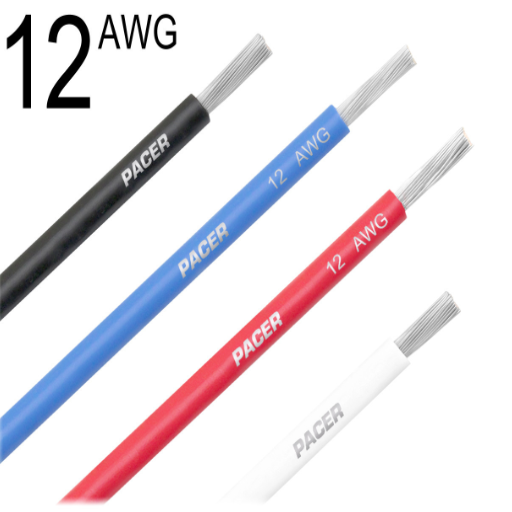
The 12-gauge wire is a type of wiring commonly used in residential and commercial applications. It is thicker than others, measuring roughly 2.05 mm or 0.081 inches. Being rated for current up to 20 amps, this wire can provide service to circuits for outlets, light fixtures, and small appliances. Since it is durable, it will surely serve the purpose as a general-purpose wiring for diverse applications.
12-Gauge Wire Key Specifications
Definition and Characteristics
The American Wire Gauge (AWG) standard designates 12-gauge wire, which is versatile for a variety of electrical wiring applications. It carries a current rating of 20 amps, which, in compliance with safety codes, makes it efficient for distributing power to households and other commercial circuits. The wire is typically made of copper or aluminum, with copper being more common due to its superior conductivity and corrosion resistance.
Due to its physical attributes, the 12-gauge wire supports a maximum load of around 2,400 watts on a 120-volt system (or 4,800 watts on a 240-volt system). Generally, it can be used in wiring receptacles and lighting circuits, as well as for specific appliances such as refrigerators and dishwashers. Insulation on the wire, typically made of thermoplastic materials, enhances safety by preventing electric shocks and heat damage. The best protection and performance are ensured when circuit breakers are installed according to the wire’s capacity.
Common Uses of 12-Gauge Wire
12-gauge wire is a versatile and reliable type of wire used for a wide range of residential and commercial electrical applications. Fundamentally, this wire is employed in wiring typical electrical outlets and lighting circuits. This wire can handle electrical currents of up to 20 amps, making it suitable for general-purpose circuits in homes where moderate electrical load consumption is anticipated.
Kitchen Appliances
Perfect for refrigerators, dishwashers, microwaves, and other medium-duty equipment, ensuring the safety and stability of these essential devices.
Outdoor Applications
Ideal for outdoor lighting, water pumps, patio outlets, and garage installations that require durability in rough conditions.
Safety Integration
Compatible with GFCIs and AFCIs, providing ultimate safety features, especially in moisture-prone areas like bathrooms and kitchens.
It can be said that its compatibility with GFCIs and AFCIs reinforces an ultimate safety feature, especially in areas subjected to moisture, such as bathrooms or kitchens. 12-gauge wire is considered the gold standard for many mid-grade applications, as its uniform conductivity and efficiency ensure guaranteed safety code compliance and durability for years to come.
Comparison with Other Wire Gauges
| Wire Gauge | Amp Rating | Typical Applications | Cost | Installation Ease |
|---|---|---|---|---|
| 14-Gauge | 15 Amps | Lighting circuits, low-power outlets | Lower | Easier (thinner) |
| 12-Gauge | 20 Amps | General outlets, kitchen appliances | Moderate | Standard |
| 10-Gauge | 30 Amps | Heavy appliances, subpanels, A/C | Higher | More difficult (thicker) |
There are significant differences between 12-gauge wires and other wire gauges. For example, 14-gauge wire is thinner and cannot handle a high electrical load; thus, a lighting circuit would work fine for it, yet it is not suitable for use in outlets or for devices requiring a lot of power. A 10-gauge wire, however, is much thicker and is used for applications requiring high currents, such as heavy-duty appliances, subpanels, or air conditioners. Although 10-gauge wire can carry more current, resulting in less voltage drop over a very long distance, it is heavier and more expensive to handle compared to 12-gauge wire. Generally speaking, wire choice considerations include the length of the circuit, the amount of current that will be drawn, and the electrical requirements; 12-gauge is often the best compromise for general-purpose residential wiring.
Ampacity of 12-Gauge Wire
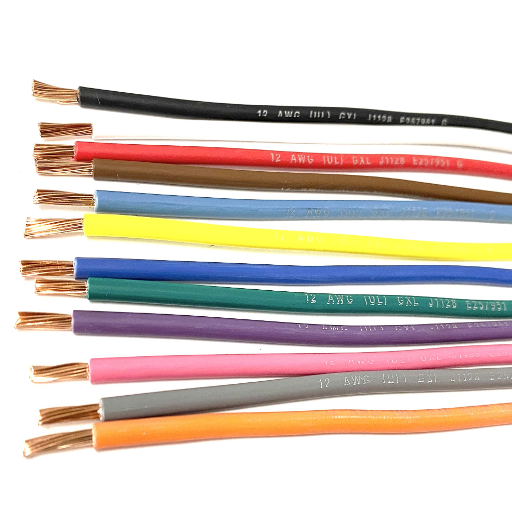
The accepted ampacity rating for a 12-gauge wire is commonly 20 amps for general-purpose uses and conditions. This limit follows the NEC code of conduct, assuming copper wire operating at a temperature rating of 60°C (140°F). For some exceptional cases, the ambient temperature of an installation, the type of insulation used, and how wires are bundled can influence the ampacity; hence, an engineer’s perspective must be sought when such variables deviate from typical cases.
Understanding Ampacity
Ampacity refers to the wire’s current-carrying capacity in terms of safety. This is a significant consideration due to several important factors. The type of material is a significant factor. The conductivity of copper is superior to that of aluminum; therefore, the currents carried by the former are higher. Another factor influencing ampacity is size; the thicker the wire (meaning the lower the gauge number), the greater the ampacity value. For instance, a 10-gauge copper wire can usually carry 30 amps under standard conditions.
The type of insulation on a wire also affects its ampacity rating. Higher temperature rated insulations such as THHN (rated for 90°C or 194°F) can help increase the current carrying capacity of the wire during installation with other cables. Bundling allows a significant amount of heat to be generated; therefore, derating factors are applied to reduce the ampacity number in such installations.
When selecting wire gauge and insulation for a specific installation, it is essential to follow the correct steps to prevent hazards such as overheating and electrical fires. For calculation under any other abnormal condition, ampacity charts or professional assistance should always be consulted.
Factors Affecting Ampacity
Several important factors affect the ampacity of a particular conductor, enabling it to safely carry a maximum current load without exceeding temperature limits. Understanding these variables brings safety, performance, and compliance into electrical installations.
Ambient Temperature
The ampacity depends mainly on the surrounding temperature. A conductor installed under high temperatures does not dissipate heat as well as it should, hence it will be de-rated. If a wire is rated at 30A for an ambient temperature of 77°F (25°C), but it is being installed somewhere where the ambient temperature is 104°F (40°C), then the conductor will have to be de-rated for that higher temperature; proper adjustments must be made based on NEC tables to avoid any risk.
Conductor Size and Material
A higher ampacity or current-carrying capacity indicates a lower resistance in large conductors. Another factor affecting performance is the conductor material, such as copper or aluminum. Copper has a higher electric conductivity and it can carry more current than aluminum of the same wire size. A number 6 AWG copper conductor is rated for about 65 amperes, while an aluminum conductor of the same size is rated at about 50 amperes.
Insulation Types
The type of insulation determines the maximum operating temperature of a wire. THHN insulation, for example, is rated for 90°C, while NM-B is rated for 60°C in most residential applications. It is essential to select insulation that takes into account its operating temperature and environment to ensure safe performance.
Conduit Fill and Bundling
When wires are bundled or installed in conduits, the resultant heat buildup increases due to the diminished capacity of heat dissipation. Under these conditions, the application of a de-rating factor becomes necessary. Hence, if the number of current-carrying conductors exceeds three in a conduit, the NEC imposes a percentage reduction in the allowed current capacity, depending on the actual number.
Run Length
The longer the wire run, the more resistant it is to voltage drop than a shorter run. To counteract this resistance, thicker wires (with lower gauge numbers) are often required for long-distance runs, ensuring that voltage drop—generally kept below 3% in most cases—is minimal. For instance, a 14 AWG wire might be sufficient to carry 15A over a short distance, but will require an upgrade for a longer distance to prevent overheating and loss of efficiency.
Environmental Considerations
Wires exposed to harsh conditions, such as extreme heat, moisture, or chemicals, require special insulation and de-rating considerations. UV-resistant and waterproof types of insulation, such as USE or XHHW, are typically used for outdoor installations.
Taking these factors into consideration allows the electrician and the planner to ensure that wiring systems operate safely and reliably under various conditions, maintain efficiency, and avoid damage or failures.
Calculating Amp Rating for 12-Gauge Wire
Various factors determine the amperage rating of a 12-gauge wire. These include the type of wire material, the type of insulation, and the installation environment. For copper conductors, a 12-gauge wire is customarily rated for 20 amps on circuits, assuming normal conditions, as stated by the National Electrical Code (NEC). Even so, the rating is derated in cases where factors such as elevated ambient temperatures are present or multiple wires need to share the same conduit.
| Insulation Type | Temperature Rating | Typical Applications | Performance Characteristics |
|---|---|---|---|
| THHN | 90°C (194°F) | Indoor installations | Higher amp levels, dry conditions |
| XHHW | 90°C (194°F) | Outdoor installations | Environmental protection, moisture resistant |
| NM-B | 60°C (140°F) | Residential wiring | Standard household applications |
By contrast, insulation plays a similarly significant role in determining ampacity. For instance, a common Type THHN insulation is rated for maximum usage temperatures of up to 90°C (194°F), thus permitting safe current flow at higher amp levels. Outdoor insulation, on the other hand, such as XHHW, protects against environmental elements but may exhibit slightly different performance characteristics.
Applications of 12-Gauge Wire
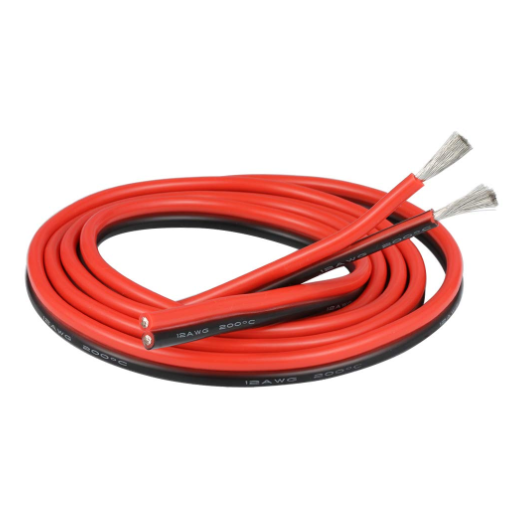
12-gauge wire is a typical wire used in electrical applications in residential and commercial districts. It is suitable for 20-amp circuits and is compatible with outlets, lighting, and small appliances. Hence, it is commonly used for general household wiring, such as circuits powering outlets in kitchens or bathrooms, where 20-amp circuits are a minimum. It is also often used when wiring equipment or apparatus that requires slightly more power but still below the safety limit. Always verify if a wire is suitable for an application and consult the NEC requirements or a professional electrician if necessary.
12-Gauge Wire in Extension Cords
Extension cords having 12-gauge wire would be an ideal choice in many medium- to heavy-duty applications. This gauge wire is capable of sustaining 20 amps of current, making it suitable for high-load devices such as power tools, air compressors, and space heaters. Typically, a 12-gauge extension cord has a rating of 15 or 20 amps and can safely transmit electricity over a distance of 100 feet, minimizing any voltage drop as well.
The specifications of a 12-gauge cord typically range from 1,800 to 2,400 watts, depending on the circuit’s amperage and voltage. To put it simply, carrying the right load is always best, as overloading will create several problems for these cords. Therefore, ensure that the Amp rating of the extension cord matches the Amp requirement of the equipment connected.
The 12-gauge wire is selected for its safety, strength, and versatility. It is the right electric extension for many heavy-duty residential, commercial, and industrial devices. Be sure to consider the maximum amperage and distance capacity when selecting an extension cord to ensure safe operation and prevent overheating.
Using 12-Gauge Wire for Electrical Installations
Being unidimensional, the 12-gauge wire is widely considered to be superior, as it can carry more power and is therefore more versatile in electrical work. If circuits require 20 amps of current, the wire is best and is thus used for many applications and situations. 12-gauge wire is most commonly used for residential wiring. 12-gauge wire can power wall outlets, lighting fixtures, and small appliances. 12-gauge wire is also widely chosen for outdoor circuits, such as those for landscape lighting or patio outlets, where durability and power capacity are crucial.
Residential Wiring
Wall outlets, lighting fixtures, and small appliances throughout the home.
Outdoor Circuits
Landscape lighting and patio outlets require durability and power capacity.
Workshop Equipment
Power tools and heavy-duty equipment are commonly found in garages and workshops.
When planning electrical installations for long distances, voltage drop is a critical consideration. The 12-gauge wire ensures efficient power transfer across medium distances, making it suitable for most homes and smaller commercial establishments. For length calculations, it is demonstrated that a 12-gauge wire with a 20-amp circuit can operate efficiently for 50 feet without experiencing a voltage drop of more than 3%. This would ensure that equipment loading receives a constant voltage; otherwise, in the case of undervoltage, the device would suffer damage.
Benefits of 12-Gauge Wire in High-Load Applications
12-gauge wire is suitable for use in heavy-duty applications because of its strength and ability to carry current. The cables are rated to carry up to 20 A safely without overheating and deliver optimal performance under demanding working conditions. As a result, it comes into play whenever specific heavy equipment or several outlets are being powered. The voltage drop becomes minimal with a thicker conductor diameter in 12-gauge wire, which is most relevant in maintaining efficiency in long runs or high-power applications.
The 12-gauge wire is versatile and makes an excellent choice for use in various environments, including residential and commercial settings, ensuring low-cost maintenance over time and supporting critical systems for reliability and peace of mind. By installing 12-gauge wire in all current or energy-demanding applications, users can achieve energy efficiency, long-term durability, and electrical safety.
Comparing 12-Gauge Wire to 14-Gauge Wire
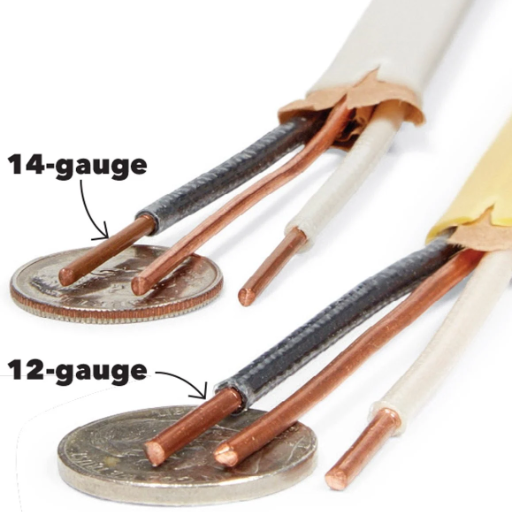
Wires of sizes 12 and 14 differ primarily in their current-carrying capacity and are recommended accordingly for various applications. A wire of size 12 is thicker and can handle currents of up to 20 amps, which is more demanding than a typical circuit. A high-demand circuit, on the other hand, could be used for kitchen appliances or outlets. A wire size 14 is thinner and can support 15 amps, typically used for lighting and low-power devices. The choice would depend on whether one opts for cost-effectiveness, durability, and the ability to support heavier loads. Always check the local electrical codes to ensure compliance with the chosen option.
12-Gauge Wire
Best for:
- Kitchen outlets
- Heavy appliances
- Future-proofing
- High-demand circuits
14-Gauge Wire
Best for:
- Lighting circuits
- Low-power devices
- Cost-effective solutions
- Basic applications
Amp Ratings of 12-Gauge vs. 14-Gauge Wire
When selecting wire types for circuits, the specific amp ratings for 12- and 14-gauge wires must be considered for both safety and efficiency. The proper wire needed would have a rating of 20 amps, such as 12 gauge. A foster circuit of such high demand can include kitchen outlets, air conditioning units, or heavy-duty tools. In order to carry larger loads efficiently without overheating, a larger wire size is required to heat smaller loads that require less energy. Thicker wiring offers the extra margin of safety that thinner wires lack.
| Wire Gauge | Current Rating | Circuit Breaker | Typical Applications | Cost Factor |
|---|---|---|---|---|
| 12-Gauge | 20 Amps | 20-Amp Breaker | Kitchen outlets, A/C units, heavy tools | Higher initial cost |
| 14-Gauge | 15 Amps | 15-Amp Breaker | Lighting, bedroom outlets, low-power devices | Lower initial cost |
To put it another way, 14-gauge wire is rated for carrying 15 amps. It is often found in circuits with lower energy demand, such as lighting fixtures or ordinary outlets in bedrooms and living rooms. Since it has a lower capacity for carrying current, it is advisable never to use it where the load could exceed its maximum rating; hence, it is cheaper and easier to handle because it is thinner.
When to Choose 12-Gauge Over 14-Gauge
Between 12- and 14-gauge wire, the deciding factor would be the power demanded by the circuit. A 12-gauge wire is capable of carrying up to 20 amps and should be selected for heavier appliances and circuits. In contrast, when setting up kitchen outlets, where several high-powered units, such as microwaves and toasters, may be turned on simultaneously, it is better to use a 12-gauge wire. It handles the heavy load without overheating, thereby ensuring safety and longevity.
Choose 12-Gauge When:
- Installing kitchen outlets
- Powering air conditioning units
- Running power tools
- Future-proofing installations
- Long wire runs (voltage drop)
14-Gauge is Sufficient For:
- Lighting circuits
- Bedroom/living room outlets
- Low-power applications
- Cost-sensitive projects
- Simple lighting installations
On the other hand, 14-gauge wire rated for 15 amps is used for lighting circuits or other applications that demand relatively low currents. However, it is crucial to understand that under a 20-amp breaker, a 14-gauge wire is dangerous; incapable of carrying such a load safely, it predisposes to overheating and a fire risk. Where the circuit will require some flexibility in the future or heavier loads are anticipated, it is a wise idea to always use 12-gauge wire, even if the load requirements are minimal. It is essential to adhere to the National Electrical Code (NEC) standards to ensure safety and compliance.
Safety Considerations in Wire Selection
When choosing wire for electrical circuits, safety is paramount to prevent hazards such as overheating, short circuits, and, in the worst-case scenario, an electrical fire. One factor that must be considered is the current-carrying capacity of the wire, also known as ampacity in layman’s terms. For instance, 14-gauge wire is rated for a maximum of 15 amps, whereas 12-gauge wire can withstand currents up to 20 amps. Exceeding the limits can cause the wire to overheat and lead to insulation failure.
Insulation Type Considerations
Another factor worth considering is the type of insulation on the wire. For instance, wires bearing the labels “THHN” or “THWN-2” are preferred in modern installations for their high heat resistance and ability to be used under both dry and wet conditions. Specifically, THWN-2 wires are rated for higher temperatures, around 90°C, thereby offering a safety advantage when used in harsh applications.
Voltage Drop Considerations
Voltage drop cannot be neglected, especially in long wiring runs, as a higher voltage drop reduces efficiency and can damage the appliance. The usual recommendation is for a voltage drop to be less than 3%. That is where using a bigger wire gauge comes in handy to counteract the voltage drop and to ensure that the load operates correctly.
Environmental Factors
Finally, environmental factors such as exposure to moisture, corrosive atmospheres, or extreme temperatures must be taken into consideration. For outdoor or underground installations, cables rated for direct burial or with a protective jacket offer the best assurance against cable degradation and provide longevity. With wire selection guided by such considerations, while also abiding by the National Electrical Code (NEC), electrical systems will be safer and more reliable. Reevaluating the wire size and type for potential future loads further enhances durability and ensures compliance with long-term requirements.
Best Practices for Using 12-Gauge Wire
- Ampacity Limits: Typically, a 12-gauge wire is rated for 20 amps. Verify that the circuit breaker matches this rating to prevent overheating and other hazards.
- Use Appropriate Insulation: Choose an insulation that suits the surrounding environment. Indoors, standard insulation is alright, whereas outdoors or in damp areas, weather- or water-resistant options should be used.
- Make Connections Tight: All wire connections must be tight to prevent arc or power loss. Tighten them using wire nuts or terminals rated for 12-gauge wiring.
- Don’t Overload: Do not connect loads of equipment or appliances that draw more than 20 amps in total, as this would endanger safety and performance.
- Follow NEC Guidelines: Always ensure that the installation follows the National Electrical Code (NEC) standards for wire protection, grounding, and placement.
Installation Tips for 12-Gauge Wire
Maintaining Safe Amperage Levels
A safe amperage should be maintained to prevent heating, electrical fires, or equipment damage. Proper wire gauges should always be used for the current ratings of the circuits. Wires that are too small can overheat when overloaded with excessive current. Employ a correctly rated circuit breaker or fuse whose rating equals the maximum amperage of your circuit as a fail-safe in case of overcurrent. Safety is ensured by performing installations by the manufacturer’s specifications and local electrical codes. Regular inspections and tests can help detect situations such as insulation deterioration or increased resistance, which can lead to unsafe amperage levels. Follow these precautions to ensure the safety and long-term functionality of your device.
Free Air and Its Impact on Wire Performance
Installing wires in open air means that the wind freely moves around them; in other words, they are not enclosed in conduits or bundled into cable trays. Heat is dispersed more rapidly under such conditions; hence, in principle, such an installation permits higher currents or ampacities. For example, free air installation generally permits a higher ampacity rating compared with installation in a conduit because air movement cools the wires more quickly and reduces the risk of overheating.
| Installation Method | Heat Dissipation | Ampacity Effect | Typical Applications |
|---|---|---|---|
| Free Air | Excellent | Higher ampacity possible | Industrial, outdoor applications |
| Conduit | Reduced | Standard ampacity | Residential, commercial wiring |
| Cable Tray | Good | Moderate ampacity | Commercial installations |
The performance of a wire in free air depends on several factors, including ambient temperature, wire size, material, and insulation type. For proper use, it is recommended to consult the ampacity tables of the NEC, which take into consideration the respective conditions of free-air installations. Free air wiring is mainly found in industrial and outdoor applications where temperature regulation and open configurations are beneficial. It can never be stressed enough: when it comes to safety and proper wire functioning, the application of codes and standards should never be compromised.
Conclusion
Key Takeaway: 12-Gauge Wire Ampacity
Safe Current Rating for Standard Applications
Understanding the ampacity and applications of 12-gauge wire is essential for safe and efficient electrical installations. With its 20-amp current rating, 12-gauge wire strikes an optimal balance between cost, performance, and safety for a wide range of residential and commercial applications.
Summary of 12-Gauge Wire Benefits
Final Recommendations
- Safety First: Always match wire gauge to circuit breaker ratings – 12-gauge wire requires a 20-amp breaker
- Code Compliance: Follow NEC guidelines and local electrical codes for all installations
- Environmental Considerations: Choose appropriate insulation based on installation conditions
- Future-Proofing: Consider using 12-gauge wire even for lighter loads to accommodate future upgrades
- Professional Consultation: When in doubt, consult with a qualified electrician for complex installations
Whether you’re a DIY homeowner or a professional electrician, understanding the proper application and limitations of 12-gauge wire ensures safe, code-compliant installations that will serve reliably for years to come. The investment in adequate wire gauge selection pays dividends in safety, performance, and peace of mind.
Reference Sources
Frequently Asked Questions (FAQs)
Ampacity of 12-Gauge Wire
The ampacity of 12-gauge wire varies depending on the application and installation method. Generally, 12 AWG wire can handle up to 20 amps for average residential and commercial use. Still, ampacity may need to be adjusted by codes and standards when using high-power applications or longer wire lengths.
How many amps can a 12 AWG wire carry?
Generally, a 12 AWG wire can typically carry up to 20 amps for a short run in residential wiring. However, if the wire is for continuous loads, it is advisable to consider a lower amp rating to prevent overheating. Therefore, 12 AWG wire should not be used for a 30-amp circuit, but rather a thicker wire gauge, such as 10 AWG, should be used.
Why is understanding the amp rating of 12-gauge wire so important?
Understanding amp ratings for 12-gauge wire is crucial to ensure safety and properly carry electrical installations. If the wire is undergauge, it may overheat and start fires. A wire of the correct gauge allows for the selection of the appropriate fuse or circuit breaker to protect the circuit against overload.
Can 12-gauge wire be used for making extension cords?
Yes. 12-gauge wire is commonly used in extension cords, especially for high-powered applications such as those involving power tools and outdoor equipment. Being thicker, the wire carries an increased capacity for power transmission with minimal voltage drop over extensive distances, thus ensuring that the devices are sufficiently powered without suffering from overheating.
What happens if one uses a 12 AWG wire for a circuit that requires over 20 amps?
It is not a good idea to use a 12 AWG wire in a circuit that carries more than 20 amps of current, as this can cause the wires to overheat and melt their insulation, which could easily catch fire. One must adhere to gauge recommendations to ensure the appropriate ampacity requirement of the circuit, thereby guaranteeing safety and compliance with electrical codes.
How are amp ratings affected by wire thickness?
Wire thickness, known as gauge, is necessary because it affects the amp ratings of wires. Thicker wires (for example, 10 AWG) carry more amperes than thinner wires (14 AWG). Hence, when specifying wire for a particular application, it is essential to consider the ampacity involved and choose accordingly.
What is the maximum length for 12-gauge wire in a branch circuit?
The maximum length of a 12-gauge wire in a branch circuit varies with the load and installation conditions. The recommended general length for a 20-amp circuit is approximately 100 feet. Beyond this distance, consider going one wire size up so that performance and safety are not compromised.
Is 12-Gauge Wire Good for Home Wiring?
Yes, 12-gauge wire is suitable for home wiring, especially for any circuits rated for 20 amps or less. It is great for lighting and outlet circuits in home settings. Installation should be performed correctly, following local electrical codes for safety and optimal functionality.