


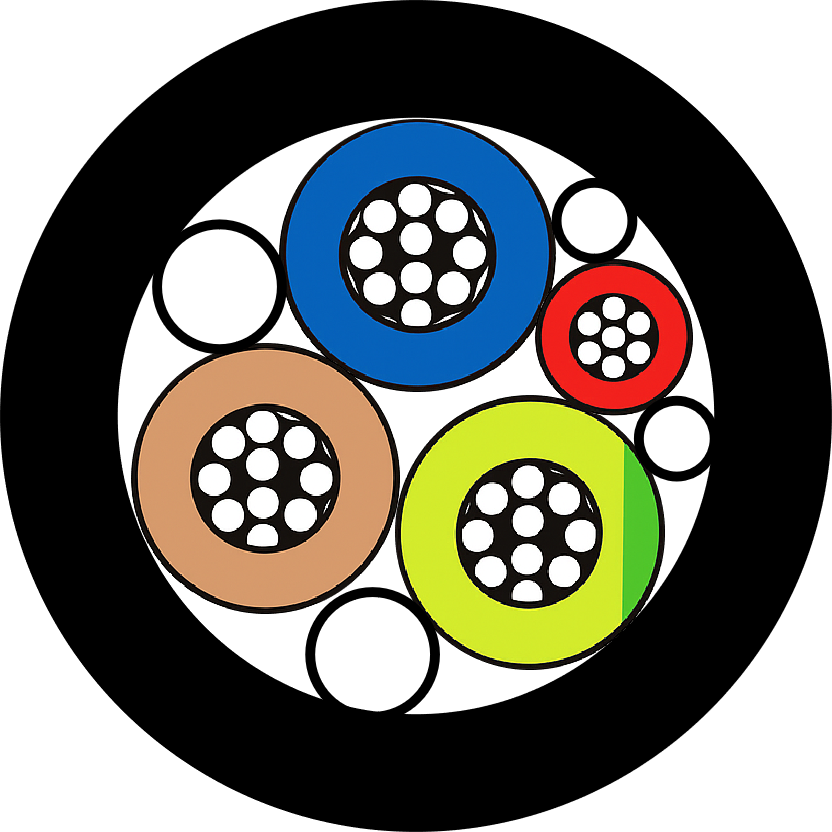





Building a reliable and high-performance network requires purchasing the right Ethernet cable, a significant decision. Among the many choices, Cat 5 and Cat 7 cables seem to get the most attention. But how do these differ? And which one do you need? This blog post explains the essential distinctions between the two categories of cable, discussing their performance, speed offerings, and practical uses. Understanding these differences will help you choose the right cable for setting up a home network or establishing a working infrastructure. Let’s delve into the details behind Ethernet cables and determine what works best for your connectivity objectives.
Overview of Ethernet Cable Categories
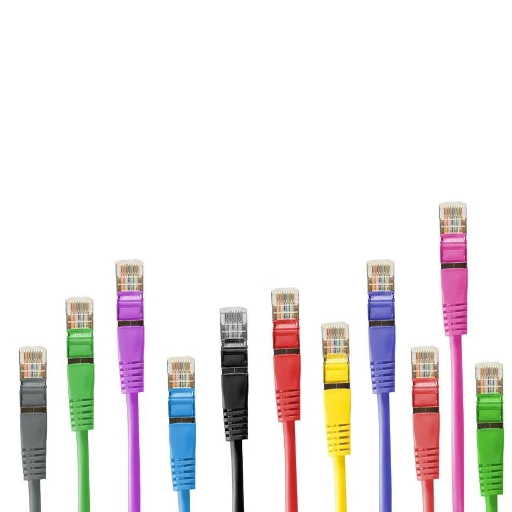
Ethernet cables are primarily categorized by their performance and speed ratings. Usually, Cat5e and Cat6 cables are the two most common types. Cat5e cables were designed to support speeds of up to 1 Gbps and bandwidths of up to 100 MHz, making them well-suited for standard home networks and small offices. Conversely, Cat6 offers better performance, with speeds of up to 10 Gbps for shorter distances and bandwidths of up to 250 MHz, making Cat6 cables suited to more demanding setups, such as advanced gaming systems, extensive business infrastructure, or any scenario that requires higher transfer rates. Understanding the differences in speed, bandwidth, and application will help you select the best cable to meet your connectivity requirements.
What is Cat 5 Cable?
A Cat5 cable, also known as Category 5 cable, is a twisted pair cable primarily used in data communication. These cables came into widespread use before newer standards, such as Cat5e and Cat6, were introduced. A Cat 5 cable can transmit signals at up to 100 megabits per second and has a bandwidth of up to 100 MHz. It is an older cable type and is sufficient for basic networking setups, such as home networks and small businesses, where high-speed internet or large data transfer rates are not a significant concern.
Although they are predominantly replaced by Cat5e or higher categories of cable, Cat5 cables were initially designed to accommodate Ethernet standards of 10Base-T and 100Base-T. For maintaining optimal performance, it should not exceed 100m (328ft) in length before requiring any signal boosting. Gigabit speeds and high bandwidth requirements, commonplace in modern networks, on the other hand, are yet to be supported by Cat 5. For such operations that demand higher speeds, such as 4K video streaming or bulk data transfer, cable categories newer than Cat5, like Cat5e or Cat6, are preferred.
What is Cat 7 Cable?
Cat 7, or Category 7 cable, is a high-performance Ethernet cable designed for demanding networking applications. The cable is specifically made to achieve data rates of 10 Gbps for distances of up to 100 meters (328 feet). Cat 7 cables achieve higher data rates by utilizing shielded pairs (S/FTP – Shielded Foiled Twisted Pair), which effectively reduces crosstalk and EMI.
They carry a bandwidth of up to 600 MHz, in stark contrast to the 100 MHz and 250 MHz of Cat5e and Cat6, respectively. That makes Cat 7 the perfect solution for bandwidth-intensive purposes, such as 4K or 8K video streaming, data-heavy server environments, and modern smart homes.
Another prominent feature of Cat 7 is the use of GG45 or TERA connectors, which are backward-compatible with RJ45 but offer improved performance. With a high degree of shielding and the ability to maintain high-speed, reliable connections, Cat 7 is best suited for industrial settings and for precasting home and office networks for the future. However, with its thicker and more complex cabling, installation costs and flexibility are two factors that may deter a buyer from going this route.
Comparing Performance: Cat 5 vs Cat 7
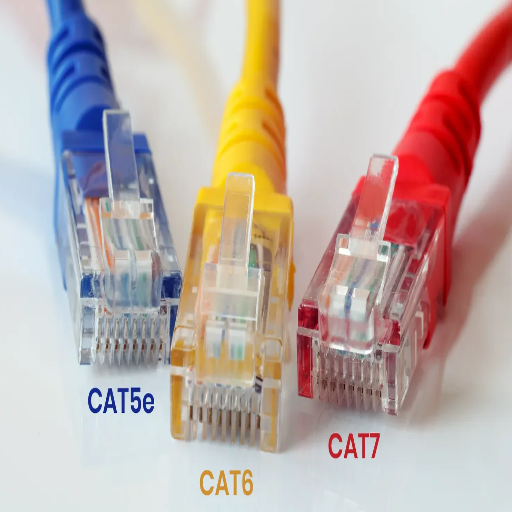
Cat 5 SpeedMbps with 100 MHz bandwidth
Cat 7 SpeedGbps with 600 MHz bandwidth
In terms of velocity and frequency, Cat 7 is a higher class than Cat 5. Whereas Cat 5 can transfer information at 100 Mbps speeds and has a 100 MHz bandwidth, Cat 7 can comfortably boast speeds of up to 10 Gbps, coupled with a 600 MHz bandwidth. In addition, these cables feature a robust shielding layer that effectively counteracts physical interference, resulting in a clearer signal and enabling high-grade resolution in top-performing and resource-demanding network environments. On the other hand, Cat 5 can be the perfect option if your network does not require a significant investment and only demands the bare minimum, but it cannot support modern applications that demand a fast pace of connectivity.
Speed Capabilities
In the summer, higher temperatures affect the speed capabilities of network cable categories. They usually allow speeds up to only 100 Mbps with bandwidths of 100 MHz; this suits a simple home or a small office network just fine. By contrast, Cat 5e cables are said to offer speeds of 1 GHz bandwidth and channel crosstalk attenuation, and therefore are much more versatile for slightly higher requirements.
The Cat 6 and Cat 6a cables provide the highest speeds, with provisions for interruptions of 1 Gbps at 250 MHz for Cat 6 and 10 Gbps at 500 MHz for Cat 6a. These are recommended for larger networks or setups that require high-speed internet connectivity.
Cat 7 further extends to speeds of up to 10 Gbps, with a bandwidth of 600 MHz, while offering a higher degree of shielding to mitigate electromagnetic interference. For the utmost modern performance at its service, Cat 8 offers speeds up to 40 Gbps. Considered to run at a 2000 MHz bandwidth, it fits into the data centers or for any extremely demanding applications on the professional front. All these cable categories exist for various purposes, allowing users to decide what is best for their networking needs.
Bandwidth Differences
| Cable Category | Bandwidth | Speed | Best Use Case |
|---|---|---|---|
| Cat 5e | 100 MHz | 1 Gbps | Basic home and office use |
| Cat 6 | 250 MHz | 10 Gbps (short distance) | Heavy loads and faster data transfers |
| Cat 6a | 500 MHz | 10 Gbps | High-speed Internet, professional environments |
| Cat 7 | 600 MHz | 10 Gbps | High-speed networks with noise resistance |
| Cat 8 | 2000 MHz | 40 Gbps | Data centers, server rooms |
The farther the bandwidth can transmit data or various information over the network in a given period, the more critical the bandwidth becomes to the transmission. Different categories of Ethernet cables have varying bandwidth capacities, each suitable for specific applications. For instance, the Cat 5e cable can support a bandwidth of 100 MHz, which is sufficient for basic home and office use with speeds of up to 1 Gbps. Cat 6 cables, on the other hand, provide an enhanced bandwidth capacity of 250 MHz, suitable for cases requiring heavier loads and faster data transfers.
So far, Cat 6a takes a significant leap ahead by providing a bandwidth of 500 MHz for 10 Gbps speeds; it is, hence, an excellent fit for high-speed Internet and moderately sized professional environments. On the other hand, Cat 7 operates on a 600 MHz bandwidth and remains suitable for high-speed networks while providing an additional level of noise resistance through further shielding.
High-end applications use the bandwidth of 2000 MHz provided by Cat 8 cables. This category supports an operational speed of 40 Gbps and is utilized in data centers, server rooms, and other situations where real-time data processing is required. Such factors emphasize that selection must depend on the specific bandwidth and speed requirements of a network.
Shielding and Interference
Shielding is crucial in maintaining signal integrity and ensuring proper data transmission in Ethernet cables. For the best-grade Ethernet cables, such as Cat 7 and Cat 8, the most effective shielding techniques are employed. For example, a Cat 7 cable employs STP (Shielded Twisted Pair) shielding, which means that each wire pair has its own shielding layer, plus an additional layer of shielding around the entire cable. This design significantly reduces both crosstalk and external EMI.
Cat 8 cables take shielding to the next level by utilizing fully shielded twisted pairs and a foil shield covering each pair of wires. Such security against signal degradation is paramount in environments where high interference can occur, such as industrial settings or data centers with numerous electronic devices. Strong shielding in Cat 8 cables enables these cables to maintain unprecedented data transmission speeds of up to 40 Gbps over a distance of 30 meters, while maintaining a considerably high EMI resistance.
Furthermore, with shielded cables, the very possibility of RFI cannot even be tolerated; hence, their paramount reliability, because an uncompromised application cannot be compromised, particularly in applications that involve video conferencing, cloud-based pointer jobs, or high-performance gaming platforms. Users working in a cluttered and high-frequency environment should select these solutions for design performance considerations. Wheizzato prevents sudden drops or degradation in connection quality.
Advantages of Using Cat 7 Ethernet Cables
- Faster Speed Puts Everything Else to Shame: Cat 7 cable transmits data at 10 Gbps with a bandwidth of 600 MHz, making it ideal for high-speed networking and resource-intensive applications.
- Better Shielding: Cat 7 cable with its additional shielding cuts down on both crosstalk and EMI, which would otherwise be major disruptors of a stable and reliable connection.
- More Durable and Long-lasting: A cable is considered remarkably resilient if it is engineered with the highest quality materials in an STP format, as it is designed to withstand physical stress and therefore provide reliable networking for the longest time possible.
- Backward Compatibility: Cat 7 cables are backward compatible with Cat 6, Cat 5e, and Cat 5 equipment, thus providing maximum flexibility and ease of use during network upgrades.
- More Security: With less noise and interference during transmission, Cat7 cables provide a more secure and stable network, thereby decreasing the chances of data errors or unauthorized access due to compromised signal quality.
Enhanced Speed and Performance
Cat 7 cables are designed for ultra-fast data transmission and are therefore ideal for modern high-performance networks. Offering 10 Gbps of speed at a distance of 100 meters and a frequency capacity of 600 MHz, these cables are far superior to the earlier versions, such as Cat 6 and Cat 5e. Hence, working at its best means that the cable has extremely low latency, smooth data transit, and strong support for bandwidth-heavy applications like 4K video streaming, online gaming, and cloud computing. Additionally, the shielded twisted pair (STP) design helps prevent crosstalk and EMI (electromagnetic interference), providing the user with a stable and reliable connectivity environment, even in high electronic interference levels. Therefore, these three factors—speed, bandwidth, and stability —make Cat 7 cables the best choice for businesses as well as home networks that require efficient and reliable operation.
Future-Proofing Your Network
To ensure that your network is ready for the demands of tomorrow, implementing an intermediate technology that can support both current and near-future developments becomes imperative. Cat 7 cables, for example, support speeds of up to 10 Gbps and a frequency of up to 600 MHz, and thus are best suited to accommodate the increasing demand for data. It is, therefore, imperative to upgrade to a higher-performance networking infrastructure, given that worldwide internet traffic is expected to increase by more than threefold in the next five years, according to industry reports.
With the advent of things like IoT, the growth of smart homes, and the spread of services that stream in 4K and even 8K, networks require data transport capacities with the lowest possible latency. Cat 7 cables not only offer high speed but also provide shielding to ensure steady performance in modern, interference-heavy environments. Specifically for businesses, investing in infrastructure means preventing their operations from being hindered by an aging system, while on the individual side, it means an uninterrupted connection for all their newer devices. So, when you prepare your network today, you are indeed gearing yourself to remain ahead in tomorrow’s ever-demanding digital landscape.
Comparing Cat 5 vs Cat 7: Is It Worth the Upgrade?
There are significant differences in performance, lifespan, and suitability for modern networks between Cat 5 and Cat 7 cables. Once a standard network cable, Cat 5 offers a maximum speed of only 100 Mbps and a bandwidth of up to 100 MHz. While extremely sufficient for basic internet tasks and small-scale home networks, these specifications are grossly outdated to meet the requirements of high-speed connectivity today.
Whereas Cat 7 supports 10 Gbps speeds and 600 MHz of bandwidth, it is thus suitable for data-intensive operations such as 4K streaming, online gaming, and transferring large amounts of data in commercial work. Furthermore, Cat 7 cables have better shielding, which lowers the interference from nearby electrical devices or other cables. This establishes a strong connection in high-device-count environments.
Future-proofing is also a key consideration. While outdated Cat 5 cables struggle to keep up with present-day internet speeds, Cat 7 offers better longevity to support newer applications and higher performance demands. For high-performance users and businesses, the extra cost of Cat 7 cables would be justified due to the speed, stability, and scalability they offer to their network. Whether it’s a home system upgrade or an office infrastructure modernization, Cat 7 is far ahead of Cat 5 in almost every respect.
Everyday Use Cases for Cat 5 and Cat 7 Cables
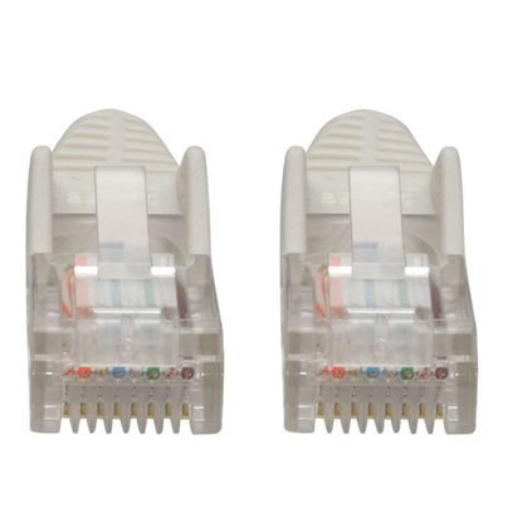
Cat 5 Cables
Cat 5 cables are typically considered for a wide range of common-purpose uses, including establishing home routers, streaming devices, or basic office setups. Generally, for Internet exposure, browsing, video streaming, and light file sharing, these are suitable options. Hence, for regular applications, they are more appropriate and relatively economical.
Cat 7 Cables
Cat 7 cables are designed for high-speed and data-intensive environments. They are used for setting up advanced home entertainment systems, gaming networks, or high-speed office infrastructures. Cat 7 is typically favorable in situations where super-fast data transfer is of paramount importance, such as with 4K streaming, large file transfers, or supporting multiple devices on high-speed networks.
Residential Networking
Residential networking is now a crucial aspect of modern living, ensuring that various devices, such as smartphones, laptops, smart TVs, and IoT devices, work seamlessly within a single household. To establish an efficient residential network, the first crucial requirement is high-quality cabling, followed by a high-quality router and an effective network topology.
Cat 6 and Cat 7 cables are typically preferred as a wired solution, with Cat 7 being the preferred choice due to its faster speed and additional shielding that blocks crosstalk in busy environments. These cables support data transfer rates of up to 10 Gbps over 100 meters, which is ideal when a lot of bandwidth is required, such as for streaming 4K video or online gaming.
In addition to residential purposes, wireless networking is vital. Routers for Wi-Fi 6 technology are positioned as much speedier and capacious, with a theoretical speed limit set at 9.6 Gbps. Furthermore, efficiency increases and latency decreases in the presence of multiple devices in a single household environment. Either placing the router in the center of the house or away from any obstruction will facilitate a strong wi-fi signal for the entire home.
In an effort to further enhance the scope of home networking, mesh Wi-Fi systems are gaining popularity. These networks eliminate dead zones by utilizing thousands of nodes that provide a strong and consistent signal throughout the house. Research shows that 43 percent of homes can achieve better coverage by upgrading to a mesh Wi-Fi network, making it a more popular choice in recent times.
A well-designed home networking system will provide everything needed for connectivity, thereby enhancing productivity, entertainment, and smart home features, allowing all digital devices to work together seamlessly.
Commercial Applications
It is a transformation in networking for business, thanks to the provision of strong and scalable solutions for various commercial applications. Mesh networks offer seamless connectivity to offices, retail stores, and big warehouses. For example, an office environment mesh network facilitates uninterrupted video conferences, rapid file transfers, and simultaneous patching of multiple users. Research shows that mesh Wi-Fi can lead to productivity improvements of 30% for businesses, resulting in fewer connectivity issues.
Retail environments can employ mesh Wi-Fi to support digital payment and inventory systems, while also offering free Wi-Fi for customers. This provides a pleasant customer experience and increases engagement. Additionally, mesh networks excel in expansive spaces like warehouses, whereas a conventional router may struggle to consistently provide access to both automated systems and innovative inventory-management tools. With a global smart-home and IoT market projected to reach $622.59 billion by 2031, businesses that embrace mesh networking have a good chance at integrating next-generation IoT devices that require reliable connectivity.
Mesh Wi-Fi, in addition, is highly vital to the hospitality industry for providing high-speed, reliable internet for guest satisfaction. Hotel and resort management benefited from this technology to ensure consistent coverage across rooms, lobbies, and even some areas outside. Interruptions in other venues would put a slight dent in the guest experience. Mesh networks are an increasingly important tool in the fast-paced digital world, enabling businesses to maintain uninterrupted, fast, and secure connections.
Gaming and Streaming Requirements
When it comes to gaming and streaming, modern-day services require an internet connection with the highest possible speed, guaranteed low latency, and constant bandwidth allocation profiles. The lower the latency, especially when it is less than 20 milliseconds, the better for gamers, particularly those involved in competitive online play, as it promotes smoother, real-time interactions. On the other hand, streaming platforms require a consistent amount of download speed in relation to the resolution. For instance, streaming content in 4K Ultra HD requires at least 25 Mbps, whereas 1080p HD streams are typically around 5-10 Mbps.
With no dead zone in mesh network terminology, it ensures consistent coverage and allows multiple devices to be connected without compromising speed or quality. Simultaneous high-data activities, such as gaming and video streaming, can easily go uninterrupted in larger homes or multi-floor spaces, thanks to this flexibility. Hence, it is crucial for any household or business that places a premium on entertainment and productivity.
Choosing the Right Ethernet Cable for Your Needs
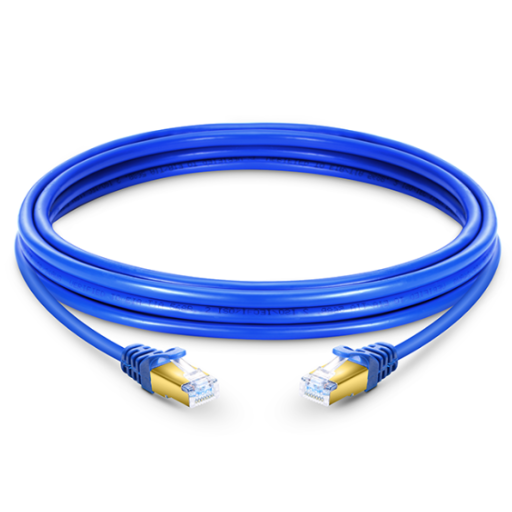
Three important considerations when selecting an Ethernet cable are speed, compatibility, and distance. These are more than likely the most critical considerations. Cat 5e and Cat 6 cables are suitable for most applications today, with speeds of up to 1 Gbps and 10 Gbps, respectively. In some cases, Cat 6a or higher is preferred when working in high-performance environments or when future-proofing is necessary. Compatibility-wise, the cable should match the specifications of the router or device used. If you anticipate longer distances, higher-category cables that resist signal degradation, such as shielded cables, provide suitable options. Use high-quality materials for maximum durability and consistent high performance.
When to Use Cat 5
The Cat 5 cable may seem more suitable for some basic networking needs in residences or small offices where high data transfer rates are not a top priority. Cat 5 cables are sufficient for basic internet browsing, email, and SD video streaming, offering speeds of up to 100 Mbps and a frequency of 100 MHz. They generally sell at a lower price and are commonly found in older networks that aren’t up to the high standards of newer categories of cables.
Although it is worth mentioning that Cat 5 cables are increasingly outdated compared to their succeeding types, such as Cat 5e or Cat 6, which offer significantly higher speeds and reduced crosstalk. While Cat 5 cables may still be applicable for legacy systems, end users should opt for a newer category for faster speeds, better reliability, or compatibility with modern network hardware. In an interference-free environment with bandwidths not heavily required, Cat 5 should still be a solution for distances less than 100 meters.
When to Opt for Cat 7
The Category 7 cable would be ideal for high-performance networking environments where the utmost reliability and speed are required. Designed to work at a speed of 10 Gigabit per second and maxing out at 100 meters, with bandwidths as wide as 600 MHz, Cat 7 is apt for doing anything that demands massive bandwidth, such as computer media streaming, high definition, creating massive environments for virtualization, or running extensive enterprise systems.
One advantage these Cat 7 cables offer is their added shielding, which decreases the possibility of crosstalk or EMI. The cables consist of twisted pairs, each pair having its shielding, surrounded by yet another layer of shielding. These are thus good candidates for areas where there are a lot of electronic devices or where the very integrity of the data is essential, such as data centers or smart home systems interlinking IoT devices.
While Cat 7 fares well against a wide range of older standards, it is also worth noting that Cat 7 is primarily compatible with GG45 or TERA connectors, rather than the typical RJ45 connectors used in preceding categories. If you are looking to future-proof your network infrastructure while ensuring it receives the best possible support, then upgrading to Cat 7 may be the solution, offering a sturdy and reliable alternative.
Final Recommendations
In the context of final recommendations, the upgrade to Cat 7 should always be one’s focus for future-proofing inadequate networks against obsolescence and top-line performance. Please note that it requires either the GG45 or TERA connector, not an RJ45. Hence, if one seeks to ensure the highest levels of data integrity and reliability, and thus possesses higher requirements in terms of input, Cat 7 will be apt for such demanding needs, such as data centers or IoT-heavy environments.
Reference Sources
1. Evaluation of 10G Ethernet under Various Environments (2024)
2. Toughness of Augmented Cables for Ethernet Technology Assessment (2024)
3. 10 Gbps Transmission Over Standard Category-5 Copper Cable (2003)
Frequently Asked Questions (FAQs)
What are the main differences between Cat 5 and Cat 7 cables?
Cat 5 cables are designed with low bandwidth, and their speeds can go up to 100 Mbps; on the other hand, Cat 7 allows speeds of up to 10 Gbps. With shielding that reduces crosstalk and enhances performance over longer cable stretches, Cat 7 becomes ideal for high-speed networks.
How do Cat 6 and Cat 7 cables compare?
While Cat 6 may permit 1 Gbps at a maximum distance of 100 meters, Cat 7 may allow 10 Gbps and still run at high speeds over longer distances of 100 meters, owing to the shield. In this manner, Cat 7 is the ideal choice for keeping network installations future-proof.
What are the kinds of Ethernet cables available in the market?
Currently, the Ethernet cabling market features cables categorized as Cat 5, Cat 5e, Cat 6, Cat 6a, Cat 7, and Cat 8. Each category comes with its specifications, depending on the speed, bandwidth, and distance it can carry data over; Cat 8 is the latest and fastest on the market.
Are Cat7 cables compatible with older Ethernet standards?
Yes, Cat 7 cables can be used with older cable types and standards, such as Cat 5 and Cat 6. They use the standard RJ-45 connector, so there is no problem plugging them into network devices.
What is the maximum length for Cat 7 and Cat 6 cables?
The optimal length of cable for both Cat-6 and Cat-7 cables is approximately 100 meters. However, the maximum effective distance can vary depending on the type of Ethernet cable in use and the network speed being applied.
What is the price difference between Cat 5 cables and Cat 7 cables?
Cat 5 cables are less expensive than Cat 7 cables due to the differences in technology and the advanced performance specifications that Cat 7 cables offer, such as improved shielding and support for enhanced data transfer speeds.
What separates patch cables from regular Ethernet cables?
Patch cables are a specific kind of Ethernet cable, designed for flexibility in connecting devices to a network port. They can be any category from Cat 5 to Cat 7 and are shorter than regular cables, making them an excellent medium for connecting different devices in a network setup.
What could be meant by an Ethernet cable supporting gigabit speeds?
When an Ethernet cable supports gigabit speeds, it means that it can carry data at 1 Gbps or higher. Cables such as Cat 5e, Cat 6, and Cat 7 are suitable for carrying gigabit speeds and, hence, serve the purpose of current high-speed internet.
What are some prime advantages of Cat 7 Ethernet cables?
However, Cat 7 Ethernet cables have several advantages, including higher data transfer speeds of up to 10 Gbps, increased shielding to prevent interference, and support for higher-frequency applications. Thus, Cat 7 is considered for use in commercial and data centers where high-speed, reliable communication is crucial.