







The cable used to establish a reliable internet connection has a significant impact on performance, speed, and overall user experience. Two of the most commonly used wires are coaxial cable and Ethernet cable. While both are integral to the world of Internet connections, each of them serves a different purpose and focuses on specific advantages. Knowing the key differences between the two will allow you to make an informed decision-whether setting up a computer network, upgrading your internet service, or simply getting curious about how your connection works. This article aims to demystify the functions of coaxial and Ethernet cables by examining their pros and cons, as well as the situations in which each is preferable, so that you can make an informed choice for your Internet setup. Trust us, the connectivity objectives will be revealed, allowing you to choose individually.
Understanding Ethernet Cable
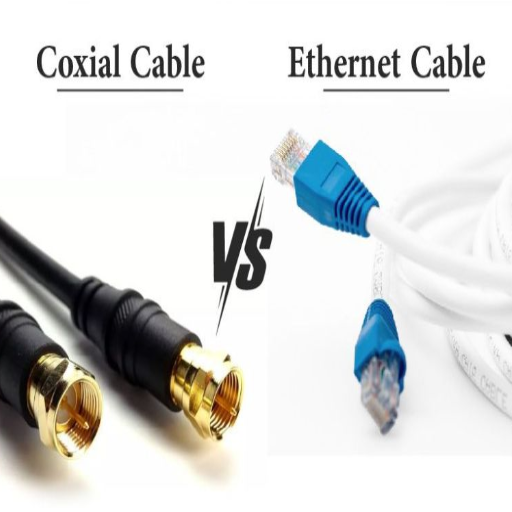
Ethernet cables are a requisite for any wired internet connection. These cables connect and transmit data between various types of devices and networks with speed and precision. They are commonly used in households and office applications to link computers, routers, and other networked devices. There are different types of Ethernet cables, such as Cat5e and Cat6, each offering distinct speeds and levels of performance. With their stable and fast connection, they are preferable when you want flawless performance, such as in gaming or streaming, where any lag will be unacceptable.
What is Ethernet Cable?
An Ethernet cable is a special type of networking cable with applications for wired connections between devices within a LAN. It transports data by sending electrical signals back and forth between two devices-it could be two computers, a router, an ADSL modem, a gaming console, or a network switch. Ethernet cables come in different designs, speeds, and performance classes; the most common categories are Cat5e, Cat6, Cat6a, Cat7, and Cat8.
Ethernet cable categories vary based on their applications and performance needs. Cat5e is designed for speeds of up to 1 Gbps at frequencies of 100 MHz; therefore, it is simply adequate for average home and office networks. The Cat6 and Cat6a cables exceed these specifications, with bandwidth performance of up to 10 Gbps, operating at frequencies of 250 MHz and 500 MHz, respectively. This makes them suitable for more demanding applications, such as file transfers or professional game streaming. On the other hand, Cat7 and Cat8 cables offer even better speed capabilities, reaching up to 40 Gbps with an operating frequency in the 600 MHz range or higher, and are commonly used in data centers and enterprise-level networking environments.
Ethernet cables have an advantage over Wi-Fi in terms of lower latency and reduced interference, resulting in more stable and stronger data transmission quality. These characteristics are fundamental in cases where applications require uninterrupted communication, such as video conferencing, online gaming, and streaming HD content. Likewise, Ethernet cable supports reliable distance for ordinary use, up to 328 feet (100 m), and beyond this distance by deploying networking equipment, such as switches and repeaters.
In their own right, Ethernet cables have evolved into a robust backbone of modern-day networking, offering a combination of potent working capabilities, lower costs, and reliability. The emergence of newer technologies even trains them to gear up for the future demands of fast and consistent data communication.
Types of Ethernet Cables: Focus on Cat6
Coax cables are primarily used for transmitting TV and internet signals over long distances, while Ethernet cables, such as Cat6, are designed for high-speed data transfer in networking applications.
|
Key Point |
Coax Cable |
Ethernet (Cat6) |
|---|---|---|
|
Use |
TV, Internet |
Networking |
|
Speed |
Moderate |
High |
|
Distance |
Long |
Short |
|
Bandwidth |
Limited |
High |
|
Interference |
Resistant |
Susceptible |
|
Installation |
Easy |
Moderate |
|
Cost |
Low |
Moderate |
|
Data Quality |
Variable |
Consistent |
These differences highlight that Ethernet cables, such as Cat6, are best suited for achieving reliable and high-speed connections within a home or office network. In contrast, coax cables are more suitable for specific scenarios involving long-distance signal transmission.
How Ethernet Cables Work
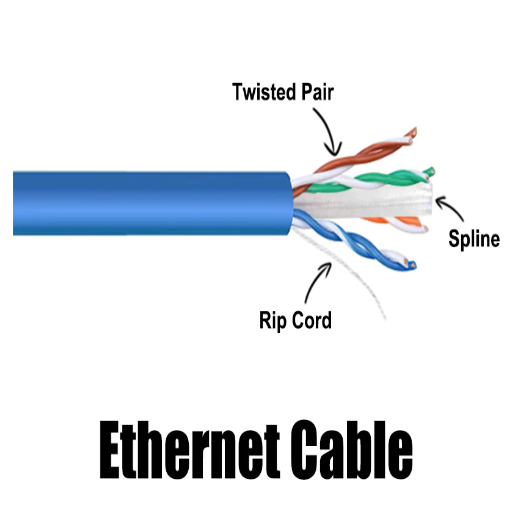
For modern-day wired networks, data transmission is the primary function of an Ethernet cable. An Ethernet cable is an arrangement of twisted-pair copper wires designed to resist crosstalk and electromagnetic interference, facilitating data transmission. The data transfer occurs when the connected device converts digital information into electrical signals, keeps the signals in transit through the cable, and finally converts them back into usable data at the receiving end. Different standards are adhered to by Ethernet cables, such as Cat5, Cat6, or Cat7, each of which denotes a specific speed and performance requirement.
Cat5e cables, for instance, can promise a maximum speed of 1 Gbps for cable runs of 328 feet (100 meters), which is sufficient for almost any home network. Cat6, therefore, becomes faster in short distances, able to hit 10Gbps at lengths of approximately 55 meters or 180 feet before dropping down to 1Gbps at the full length of 100 meters. Therefore, Cat6a reaches 10Gbps for 100 meters.
STP or UTP is the general terminology for one of the best-known features in enhancing Ethernet cables. Some STP cables offer additional shielding against electromagnetic interference; ideally, these should be used in high-noise environments, such as industrial facilities. Ethernet cables provide lower latency and high bandwidth, making them essential for video conferencing, online gaming, or data center activities that require rapid data transfer. Name given to cables followed by structured standards installed to ensure smooth communication between devices, fulfilling the demand of modern connectivity.
Exploring Coaxial Cable
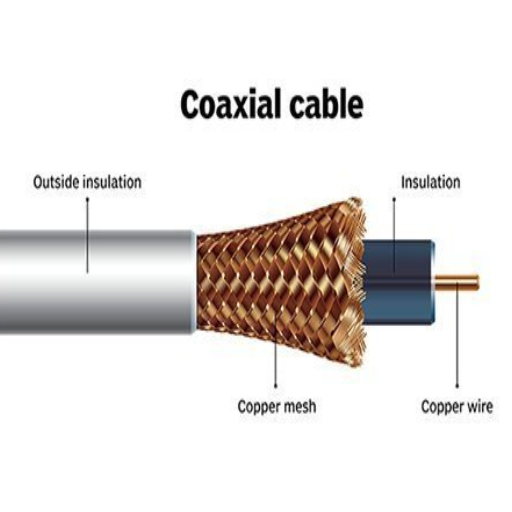
Coaxial cables are electrical cables used to carry signals with little interference. A coaxial cable has a central conductive core surrounded by an insulating layer, which is then covered by a metallic shield and an outer protective layer. Due to their durability and ability to maintain signal quality over long distances, these cables are used for cable television, internet, and radio frequency signals. Their design enables them to block out electromagnetic interference, ensuring reliable data transmission.
What is Coaxial Cable?
Coaxial cable is an electrical cable primarily used for data transmission, video, and voice communications, with minimal signal loss. This layered design is made up of four components:
Central Conductor – Typically made of copper or a material coated with copper, this core carries the electrical signal.
Dielectric Insulator – This insulating material surrounds the central conductor, preventing signal leakage and nominally maintaining spacing between the conductor and its shielding.
Metallic Shield – Consisting of braided wire, aluminum foil, or both, it ranges from a scrim to a solid barrier of aluminum to defend against EMI.
Outer Jacket – A robust outer coating, typically made of plastic, provides physical protection and weather resistance.
Coaxial cables, as compared to other types such as twisted pair cable, maintain good signal integrity over long distances. For instance, broadband Internet can operate at speeds of up to 10 Gbps, depending on the specific cable type and the provider’s infrastructure.
Among the applications of coaxial cables are cable television, where bandwidth capacities are used simultaneously to transmit multiple channels and high-definition TV signals. They are also used for broadband Internet delivery, satellite communication, and security camera installations. Thanks to their noise immunity, coaxial cables are considered the best in environments where the data must be transmitted with reliability and consistency.
The latest enhancements in coaxial cable technology have led to the development of RG-6 and RG-11 cables, whose designs cater to higher bandwidth requirements, resulting in improved performance. Even today, these cables form the foundation of communication networks, both residential and commercial.
Applications of Coaxial Cable
Due to their robustness and ability to transmit high-frequency signals with minimal interference, coaxial cables are utilized across various sectors and applications.
Television Broadcasting and Cable TV: Television signals are sent into homes and offices through coaxial cables. RG-6 cable is a widely used cable for transmitting HD- and 4K-level video signals, providing excellent signal quality over considerable distances. This enables cable providers to deliver high-resolution channels to millions of viewers without significant channel impairments.
Internet Services: Coaxial cables have an equally large customer base for broadband internet services. Now, these cables, via hybrid fiber-coaxial (HFC) networks, can deliver data at speeds exceeding 1 Gbps, thereby meeting the needs of modern homes and businesses that require speedy and stable internet connections.
Surveillance: They continue to stay relevant for analog and IP-based CCTV systems. RG-59 is often used for shorter installations, while RG-6 is preferred for longer distances. Both of these cables ensure that video signals are clear and power transmission is reliable, thereby serving security purposes in urban areas, offices, and homes.
Military and Aerospace Communication Applications: Due to the protection and durability that coaxial cables provide, they are widely used in military and aerospace applications, including radar systems, RF communications, and avionics. They pass through harsh environments yet maintain signal integrity.
Medical Equipment: Coaxial cables are used in medical imaging in ultrasound and MRI machines. These cables, being precise and having low signal loss, ensure that diagnostic results are accurate, facilitating good patient care.
Power and Energy Systems: Coaxial cables are used in monitoring and control equipment within the industrial and energy sectors, ensuring the orderly operation of signal transmission even in electrically noisy environments.
Their versatility and dependability have helped coaxial cables remain relevant to date, even as emerging communication technologies like fiber optics take center stage. By manifesting the best traits of being durable yet reliable in their performance, coaxial cables have become an essential aspect of today’s interconnected world.
How Coaxial Cables Function
Most of the electrical signals pass through the coaxial cable due to its special structure, which is designed to minimize interference and maintain signal integrity. The cable consists of four layers: the inner conductor, the dielectric insulator, the metal shield, and the outer jacket. Typically, copper or aluminum serves as the inner conductor, which conducts electrical signals. This conductor is surrounded by a dielectric insulator that helps prevent signal loss and maintain a constant separation between the layers. The metal shield is commonly either a woven sheath or a solid layer of aluminum or copper, designed to prevent interference from outside electromagnetic interference (EMI) and to contain the signals being transmitted. The outer jacket is there to provide mechanical protection from physical abuse and environmental factors.
One of the features of coaxial cables is the ability to provide high-bandwidth and low-loss signaling in long-distance communications. The standard RG6 coaxial cable has a frequency range of up to 2.5 GHz, allowing it to transmit HDTV and broadband internet signals. Attenuation, however, remains low with these cables; for instance, at 100 MHz, an RG6 cable has an attenuation of approximately 1.5 dB per 100 feet, making it highly suitable for use in both residential and commercial areas.
Moreover, these coaxial cables carry both analog and digital signals, allowing them to be used in a wide array of applications, including cable TV, Internet, and telephony. The layered structure minimizes crosstalk and signal reflection, enabling smooth data flow. With advancements in materials and technology, coaxial cables today can sustain high performance, ensuring the prominence of coaxial cables in the data world.
Differences Between Ethernet and Coaxial Cables
Purpose: Ethernet cables are for networking and connecting different devices within LANs, whereas coaxial cables are used primarily for transmitting television signals, internet data, and other digital communications.
Design: Ethernet cables consist of twisted pairs of wires that work against EMI. The coaxial cables, on the other hand, are made of a single copper conductor wrapped by insulation and a braid shield to protect the signals from loss.
Speed and Bandwidth: Depending on their category, particularly Cat 6 and higher bandwidth, Ethernet cables permit faster data transmission compared to coaxial cables.
Usage: The Ethernet is mainly used in data networks to connect computers, servers, and routers. Coaxial cables are used mainly in broadband internet connections and cable television systems.
Flexibility: Ethernet cables offer greater operational flexibility during installations, especially for complex ones; coaxial cables struggle with installations due to their limited flexibility.
Speed Comparison: Ethernet vs Coaxial
Ethernet cables offer significantly higher speeds, lower latency, and are better suited for modern high-bandwidth applications compared to coaxial cables, which are slower and primarily designed for signal transmission over longer distances.
|
Parameter |
Ethernet |
Coaxial |
|---|---|---|
|
Speed |
Up to 10Gbps |
Up to 1Gbps |
|
Latency |
Low |
High |
|
Bandwidth |
High |
Moderate |
|
Distance |
Short |
Long |
|
Usage |
Network |
TV/Internet |
|
Reliability |
High |
Moderate |
Key Differences in Performance
Ethernet and coaxial cables operate differently and offer distinct performance characteristics, considering technical parameters and specific applications. Cables for LANs, or Ethernet cables, particularly Cat5e, Cat6, and above, serve modern network environments. They transmit data at speeds of up to 10Gbps, with a length limited to 100 meters for a standard cable, making them suitable for local networking in homes and offices. Due to the twisted pair nature of LAN cables, they tend to be less susceptible to EMI, and thus, are superior in terms of latency and reliability.
Coaxial cables are used in the broadcasting and long-distance transmission of signals, such as cable TV or cable internet. They typically operate within a speed range of 1 Gbps, but with the introduction of DOCSIS 3.1, a few applications are now approaching 10 Gbps, albeit with higher latency. Coaxial cables effectively preserve signal integrity over long distances, typically up to several kilometers, with the aid of boosters, utilizing a shielded mechanism to resist signal loss.
From a bandwidth perspective, the Ethernet cable typically provides much larger bandwidth capacities, frequently exceeding 1,000 MHz in modern categories, which is an enormous task for high computational data traffic, such as video conferencing or gaming. Coaxial cables typically support bandwidths below 1,000 MHz, which are suitable for traditional TV or internet use but are limiting in high-bandwidth scenarios.
In short, Ethernet is preferred for most high-speed and low-latency networking applications, while coaxial signals are used over long distances in specific situations. A never-ending process of improvements ensures the continued relevance of both technologies for their respective uses.
Cable Installation and Flexibility
Installation and other trouble-free cabling solutions will undoubtedly contribute to their choice for any application. Ethernet cables that include Category 6 and newer Category 6a types are comparatively easier to install due to their ease of installation, flexibility of design, and ability to route through walls, ceilings, or any restricted spaces without obstruction. There have also been developments in Ethernet cable design to enhance shielding against crosstalk and EMI, ensuring their performance is not degraded even when placed side by side in hard-wiring environments.
Whereas coaxial cables must be handled more scrupulously during installation, their stiffer and thicker nature can sometimes be challenging to route through tighter or more curved spaces. Nonetheless, coaxial cables are extremely rugged with nearly super resistance to outside interference. Strong shielding, combined with their ability to carry signals over very long distances with minimal degradation, has made them highly popular in application-based arenas such as broadcasting and cable TV networks.
To account for recent developments, some newer coaxial cable constructions now feature tri-shield or quad-shield designs, which can further optimize EMI protection. On the other side, the Ethernet arena is now geared toward the staggering heights of data transmission; therefore, Cat8 cables offer bandwidths in the range of 2,000MHz, with 40 Gbps over shorter distances, 10-30 meters, being applicable for data centers and high-performance networks.
Ultimately, the best choice of cable type should consider the project’s specific requirements, including bandwidth, distance, environment, and budget. Considering the pros and cons of flexible Ethernet cables versus rugged coaxial types, the final decision should be firmly grounded in solid facts.
Choosing Between Coaxial and Ethernet
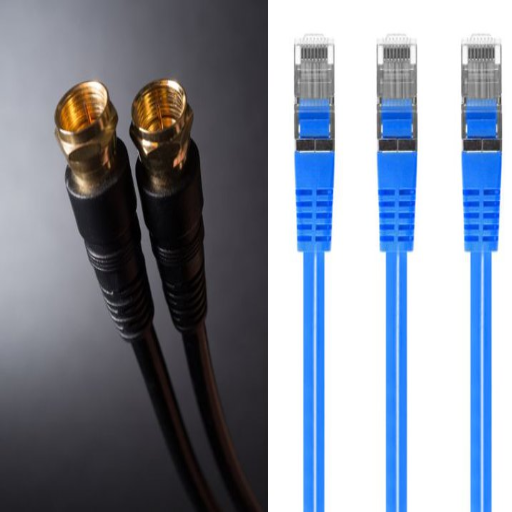
Consider their strengths and your requirements when selecting between coaxial cables and Ethernet cables. Coaxial cables are highly durable, resistant to electrical interference, and well-suited for long-distance transmission, such as cable television and broadband internet. Ethernet cables would provide higher speeds, lower latency, and more flexibility for use in high-performance networks, in data centers, and even in LANs. Consider factors such as speed requirements, distance to be covered, level of interference, and budget to determine the perfect match for your application.
Pros and Cons of Coaxial Cables
Advantages:
Durability: Coaxial cables are sturdy and resistant to physical attacks, thereby remaining reliable for long-term installations in various arrangements.
Resistance to Interference: These cables are highly shielded, offering a high degree of protection against EMI and RFI.
Lower Cost: Coaxial cables are a less expensive investment than fiber optics; therefore, they provide an inexpensive solution to signal transmission over moderate distances.
Easy to install: They are commonly used in installations and require minimal tools, making them suitable for both residential and commercial applications.
Uninterrupted Signal Transmission: These cables ensure exceptional performance, capable of handling both analog and digital signals.
Cons:
Limited Bandwidth: Coaxial cables have inferior bandwidth compared to modern options, such as fiber optic cable, and may therefore be less suitable for high-speed applications.
Signal Loss: Signals traveling in coaxial cables degrade over distance if they are not amplified or repeated.
Bulky Design: Due to their thick layering, they are somewhat inflexible and rigid, making them difficult to maneuver in tight spaces during installation.
Susceptible to Aging: Over time, the materials of coaxial cables undergo aging, which may result in impairment and occasional replacement.
Outdated Technology: Coaxial cables have started losing their importance to fiber optics for ultra-high-speed and advanced transmission applications.
When to Choose Ethernet Over Coaxial
In applications where high-speed data transfer, scalability, and reliability are critical, Ethernet is usually preferred. Modern Ethernet cables, especially those of the Cat6, Cat6a, or Cat7 variety, are capable of impressive transmission speeds, with a maximum transfer rate of 10 Gbps. These speeds are well-suited for bandwidth-intensive activities, such as streaming 4 K or 8 K video, online gaming, and large data transfers.
Ethernet also supports long cable runs without signal degradation of up to 100 meters until the signal needs to be regenerated (Cat6). Coaxial cables tend to incur signal loss over shorter distances and can, therefore, quickly become unfit for larger network setups. Scalability is yet another area where Ethernet shines, as you can easily obtain network switches and routers to add a handful or several hundred devices.
Interference resistance also matters a lot. The design of Ethernet cables, especially shielded twisted pair (STP), counters EMI occurrence to create a consistent and stable connection under heavy electronic interference. Coaxial cables are certainly shielded, but under certain conditions, these situations can affect their performance.
Ethernet usually outdoes coaxial cables in terms of price for modern networking requirements. Installation costs may vary depending on the circumstances. Still, maintenance and upgrading will always be easier with Ethernet because it is the most widely adopted networking medium and is promising for widespread adoption with new technology sets that support Power over Ethernet (PoE) features, which combine both power and data over a single cable.
Hence, this type stands out as a definite choice for corporate offices, data centers, and home environments where future-proof performance, high speed, and scalability are all considered essential. Coaxial cables, although still suitable for specific applications such as television and some radio frequency (RF) uses, are no longer sufficient for modern networking needs.
Factors to Consider for Your Internet Connection
Factors to consider for an internet connection, to be sure of consistent performance and suitability for one’s needs, are the following:
Internet Speed: Internet speed is a paramount requirement in an increasingly complex world of streaming, remote work, and online gaming. For example, 4K streaming requires a minimum download speed of 25 Mbps, whereas fast-paced competitive gaming demands at least 50-100 Mbps to achieve the lowest latency possible. Assess the internet speed requirements based on the household or business usage.
Connection Type: The type of Internet connection offered in the area of residence plays a significant role in determining performance. Fiber-optic connections offer the fastest speeds with the lowest latency, making them exceptionally well-suited for users with heavy data needs. Cable broadband typically hides speeds at a level below that of fiber, but it can experience slowdowns during peak times. DSL and satellite internet services remain the most widely available but offer lower speeds with less reliability.
Reliability and Latency: It primarily depends on user experience, which needs to be reliable and have very low latency. Fiber optics offer latency as low as 1 to 10 ms, which is ideal for activities such as video conferencing or gaming. In contrast, satellite connections have the highest latency, sometimes exceeding 600 ms, as data travels over very long distances.
Data Caps and Costs: Some plans are data-limited, which restricts heavy users from downloading large files or streaming. In some cases, some unlimited plans offer a peace of mind package, but that comes at a premium price every month. In the US, fiber-optic internet plans start at around $60 per month, while satellite internet plans may range from $70 to $150 per month, depending on the company.
Equipment and Installation: When it comes to equipment, consider your modem, router, and our setup, as these can significantly impact your internet experience. For instance, Wi-Fi 6 routers will offer improved coverage, faster speeds, and more simultaneous connections compared to older Wi-Fi standards. On the other hand, fiber-optic installations may have upfront costs but will pay off significantly sooner due to their performance and efficiency benefits.
Based on these considerations, you can select an internet connection and service tailored to your specific needs, ensuring that it meets your personal and professional requirements adequately.
Ethernet Over Coaxial: A Hybrid Approach
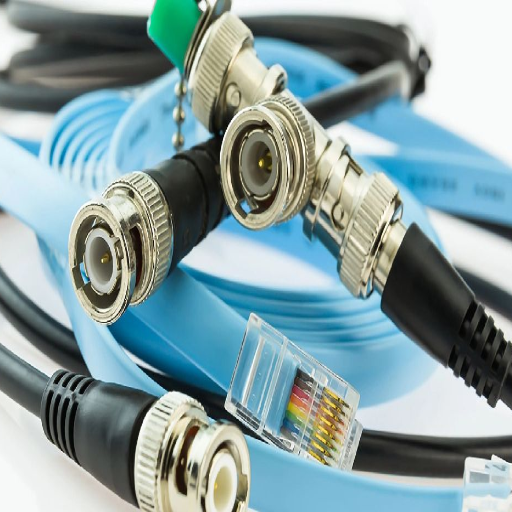
Ethernet over coaxial is a reliable solution for extending wired network connections using existing coaxial cables. It is a perfect solution in an environment where installing new Ethernet cables is almost impossible or expensive. An Ethernet signal is transmitted through coaxial cables with the aid of adapters and then received at the other end, providing stable, high-speed connectivity. It is perhaps the most cost-effective and efficient way to enhance network capability without requiring significant infrastructural changes.
What is Ethernet Over Coaxial?
Ethernet over Coax-Transmission of Ethernet signals using pre-existing coaxial cables designed for Cable TV or Satellite TV. It employs a frequency-division multiplexing technique, whereby an Ethernet signal can coexist on the same type of cable without interfering with other services, such as broadcast TV. With specialized adapters/converters for converting signals at either end of the coaxial cable, Ethernet signals are effectively coded and decoded.
The solution supports high data rates, with many modern implementations exceeding 1 Gbps, provided that good-quality coaxial cables and devices are used. The cable Distance of Ethernet over Coax) It is also better than standard Ethernet cables, i.e., around 1,000 feet (300 meters) vs. 328 feet (100 meters). This is a significant advantage for large buildings, apartment complexes, or historic homes where rewiring with Ethernet cables would be prohibitively expensive.
The next significant advantage is that modern networking needs, including VoIP communications, video surveillance, and streaming services, require a solid and reliable connection. Many industries and organizations are utilizing this technology to retrofit existing infrastructures for high-speed connectivity, eliminating the cost and effort needed to install completely new wiring.
Benefits of Using Ethernet Over Coaxial
From what I can tell, one of the most significant advantages of considering Ethernet over coaxial is its relative cheapness. I could just as well use the cable that is already laid, saving both parties time and money compared to installing new wiring. Additionally, it provides high-speed connectivity that is reliable, supporting favored applications such as VoIP, video streaming, and surveillance, making the solution highly viable for upgrading network infrastructure with minimal disruptions.
Setup and Configuration
To initialize Ethernet over coaxial, you must procure MoCA (Multimedia over Coax Alliance) adapters, which are used to convert the Ethernet signal for transmission over coaxial cables. First, locate your coaxial ports. Connect one MoCA adapter to your router using an Ethernet cable, and then connect the adapter to the coaxial port with a coaxial cable. On the far end, attach the second MoCA adapter to the coaxial outlet, and then an Ethernet cable from this second adapter to your device or switch. Most MoCA adapters are plug-and-play, requiring minimal installation. However, it is advisable to regularly upgrade the firmware and configure network security settings to achieve optimal performance and secure the connection.
Reference Sources
Getting Connected: Ethernet and Coaxial Cable in Networking
Energy Consumption and Environmental Implications of Wired Access Networks
Infrared Uplink Implementation for Software-Defined Visible Light Communication Systems
Frequently Asked Questions (FAQs)
What are the key differences between Ethernet and coaxial cables?
Ethernet cables and coaxial cables serve different purposes in networking. Ethernet cables, particularly Cat6 and higher standards, are designed for data transmission and are commonly used for connecting devices within a local area network (LAN). Coaxial cables, on the other hand, are often used for cable TV and internet services, providing a robust connection for video and broadband data. The main differences lie in their construction, flexibility, and data transmission capabilities.
How does the speed comparison between coaxial and Ethernet cables work?
When it comes to speed, Ethernet generally offers faster data transmission rates compared to coaxial cables. For instance, gigabit Ethernet can handle speeds up to 1 Gbps, making it ideal for high-bandwidth applications. Coaxial cables can also transmit data efficiently, but they are typically used for cable TV and internet services where high speed is not always crucial.
What are the pros and cons of coaxial cables?
Coaxial cables have their advantages and disadvantages. They are known for their durability and resistance to interference, making them a reliable choice for cable TV and the internet. However, coaxial cables are less flexible than Ethernet cables, making installation in tight spaces more challenging. Additionally, they may not support the same high-speed data transfer as Ethernet cables.
How do I choose between coaxial and Ethernet cables for my internet connection?
Choosing between coaxial and Ethernet cables depends on your specific needs. If you require a stable connection for cable TV and internet services, coaxial may be the right choice. However, if you are setting up a network where speed and flexibility are priorities, Ethernet cables, especially Cat6 or higher, would be more beneficial.
Can I use Ethernet over coaxial for my TV and internet services?
Yes, Ethernet over coaxial is possible using technologies like MoCA (Multimedia over Coax Alliance) adapters. This setup allows you to transmit Ethernet data over existing coaxial cable infrastructure, enabling a faster and more reliable internet connection without the need to run new cables.
Are Cat6 Ethernet cables better than coaxial cables?
In many scenarios, Cat6 Ethernet cables are considered better due to their ability to support higher speeds and bandwidth. Ethernet cables are also more flexible, making them easier to install in various environments. However, for specific applications, such as cable TV, coaxial cables may still be preferred due to their long-standing reliability in this area.
What types of services can coaxial cables support?
Coaxial cables are commonly used for transmitting cable television signals and internet services. They are designed to handle a wide range of frequencies, making them suitable for both video and broadband data transmission. Their robust construction allows them to deliver stable connections for these services, but they may not match the performance of Ethernet cables in high-speed data applications.
What should I consider when selecting the right cable for my needs?
When selecting the right cable, consider the type of services you require, the distance of the cable run, and the speed necessary for your applications. For internet service providers that offer high-speed internet, Ethernet cables, particularly those meeting Cat6 or higher standards, are generally the best bet. If your focus is on cable TV, coaxial cables would be more suitable.