








When it comes to controlling lights from various points, the 4-way switch is one of the most useful tools it offers for both ease and functionality. Conversely, in case you are a homeowner who wants to improve the functionality of your lighting system, or perhaps a DIY enthusiast intent on a rewarding endeavor, understanding the working and proper wiring of the 4-way switch will be of more help. This article introduces the basic concepts of the 4-way switch, explaining the 4-way custom switches setup and opening up the wiring process. This becomes important for you to realize so that you may have fewer fears and a straightforward appreciation for well-thought-out electrical systems.
What is a 4-Way Switch?
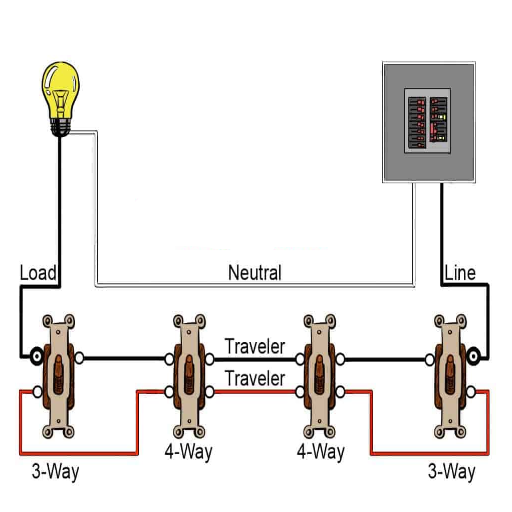
A 4-way switch is simply an electrical switch used in a multi-way switching arrangement to control one light fixture or a set of lights from three or more different locations. It is worked upon within the realm of two 3-way switches and contains four terminals so that it can direct the flow of electricity along alternate paths, thereby allowing the light to be turned on and off from several positions, which comes in very handy if there are long distances to be covered, like in halls or staircases.
Definition of a 4-Way Switch
The 4-way switch allows one or more additional locations to operate a lighting control method. It finds installation in itself between two 3-way switches in a circuit. The 4-way switch has 4 terminals, usually arranged as pairs of input and output. Operators inside the switch change the path of the electric current between the terminals, so that lights may be turned on or off from different locations.
The configuration is common for spaces like large conference rooms, long corridors, and stairways in multi-story buildings where accessibility and convenience are paramount. From an electrical-hardware point of view, modern 4-way switches are increasingly integrated into smart home systems. Some supported remote control by apps now or synchronized operations with smart assistants. Also, advancements in materials and designs make these switches energy-efficient with almost no loss of current in operation.
4 Terminals
Two input and two output terminals for maximum flexibility
Multi-Location Control
Control lighting from three or more different locations
Smart Integration
Compatible with modern smart home systems
Energy Efficient
Minimal current loss during operation
| Feature | Specification | Application |
|---|---|---|
| Number of Terminals | Four (Two input and Two output) | Multi-point control systems |
| Primary Use | Control one lighting fixture from three or more locations | Large spaces with multiple entry points |
| Installation Position | Between two 3-way switches in a circuit | Extended lighting circuits |
| Common Applications | Large hallways, staircases, and offices | Commercial and residential buildings |
| Advanced Features | Smart integration with app and voice control | Modern smart home systems |
Functionality of a 4-Way Switch
A 4-way switch is a critical component of an advanced lighting loop as it performs about two 3-way switches. The essence of this is to control a lighting fixture from three or more points, ensuring the switch is useful for enormous spaces or places with multiple entry points.
Unlike normal switches, the 4-way switch directs the electrical current between two traveler wires connected to the 3-way switches at either end of the circuit. According to recent data, the 4-way switch can help save on triple wiring, thus properly defining switch placement for energy management in any space greater than 150 square feet.
The modern version of the 4-way switch is often compatible with smart systems. Using this, one can have smartphone-based control, voice control, or schedule-based activation of lights. This increases the ease of use while emphasizing energy efficiency. It has been reported that the smart 4-way switch system can reduce the consumption of lighting energy by 25% in homes and offices, endowed with a knob of functionality and sustainability, with which any design feels worthy.
Comparison with 3-Way Switches
3-Way Switches
- Controls light from two locations
- Commonly used in hallways or staircases
- Simpler installation process
- Suitable for small to medium-sized areas
- Less complex wiring requirements
- Lower initial cost
4-Way Switches
- Controls light from three or more locations
- Ideal for large rooms and open plan areas
- More complex installation due to additional traveler wires
- Perfect for spaces larger than 150 square feet
- Requires series connection with additional wiring
- Higher functionality and flexibility
The fundamental differences are made clearer when two-way and three-way switches are discussed; usually, a 3-way switch controls a light from two locations, commonly hallways or staircases. In contrast, a 4-way switch adds another dimension of control wherein more than two persons can operate the circuit between three or more locations; this is helpful for bigger rooms such as open plan living areas and conference rooms.
The installation of 4-way switches is a little bit more complicated when compared to 3-way switches, owing to the additional traveler wires that need to connect the switches in series. From the point of view of philosophy, the 4-way switch is a better option for an environment in which multiple entries are important. For the most part, 3-way switches are enough for small- to medium-sized areas, while 4-way switches are a good option for areas larger than 150 square feet or homes with intricate lighting arrangements.
Another recent distinction comes from recent advancements. For instance, smart 3-way switches can function perfectly but may not have the same wide array of options that a 4-way switch might offer in larger spaces. According to a study on smart automation systems, the presence of a 4-way switch reduces manual intervention by almost 40% while increasing lighting efficiency. Further, a 4-way switch arrangement facilitates the integration of controls with voice-activated systems and smart home routines, allowing a greater scope of use than either classic or smart 3-way systems.
Finally, the 3-way versus 4-way choice depends on the size and needs of the space. Where 3-ways are cheap to install for specified purposes, 4-ways are more adaptable to meet lighting complexity in a modern home or commercial building.
How a 4-Way Switch Works
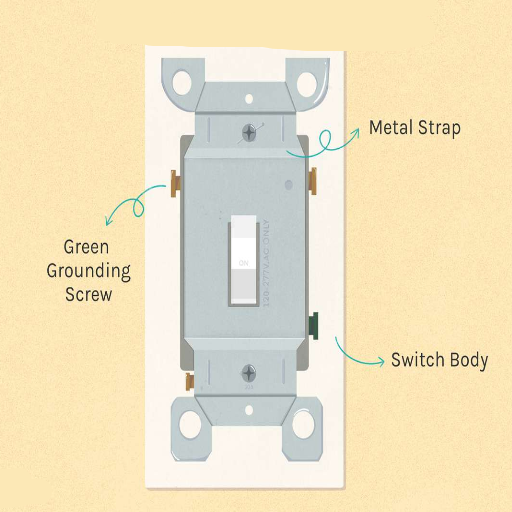
One 4-way switch operates between two 3-way switches to control a single light, or perhaps several lights, from three or more distinct locations. It works by changing the electrical path between the connected switches. The 4-way switch does not happen to be wired directly to the light; instead, the flow of electricity is altered by the switch itself, depending on the toggle position, which ensures proper function. Generally, travelers from the 3-way switches are connected to the inputs and outputs of the 4-way switch so that it can alternate the current path to maintain correct operation.
Basic Operation Principle
4-way switches work by varying the electrical circuit through which lights are turned on and off in more than one place. Its operation depends on its internal setup, which consists of movable contact points that provide alternate pathways for different currents. Being able to pair it with two 3-way switches makes for a flexible combination of controlling lights in long corridors, staircases, or big rooms where people require multiple entryways.
Recent trends suggest that the modern switch is more efficient in operation. Upon researching better materials and safe wiring practices, the modern 4-way switch is designed to handle a heavier load, usually up to 15 amps at 120 volts, thus most compatible with residential and commercial settings. Also, some advanced features such as screwless terminals and rugged plastic housings are factored in today by manufacturers for easier installation and greater longevity.
The 4-way typical wiring diagram allows lateral changes, but energy conservation increases in this case. Thus, with more occupants, the lights may be turned on or off without adding other circuits. Proper wiring diagrams must be used so that standards are met according to local electrical codes.
Role in Circuit Configuration
The 4-way switch is a flexible lighting control device working in larger rooms, halls, staircases, or commercial places. Installed between two 3-way switches, this arrangement allows the switches to seamlessly work together so the light may be switched on or off in three or more locations, giving more convenience to the users.
The shares of switches mentioned above are connected by traveler wires to carry the current regardless of the position of the switches. Industry improvements in circuitry configuration emphasize efficient wiring schemes and better materials with the least energy loss and safe operation. A report from the electrical industry from 2023 stated that the sales of 4-way switches have grown steadily at an approximate 6% annual growth rate, due obviously to greater incorporation into smart home systems and green-building solutions.
When integrated with automation devices, a 4-way switch system collaborates with dimmers and motion sensors to further optimize energy usage and user-specific customizations. Also, following correct installation practices-which means respecting NEC (National Electrical Code) standards or equivalent local codes, will ensure the safety and efficient functioning of modern circuits.
Interaction with Circuit Breakers
Such integration with circuit breakers is paramount in electrical safety and system efficiency. Circuit breakers serve as required protection by stopping the flow of electricity whenever there is an overload or short circuit. When used alongside 4-way switches, they keep the lighting circuits easy to manage while minimizing the hazards of electrical faults.
In the current scenario, some newer types of circuit breakers like the A.F.C.Is and G.F.C.It enhances further protection against electrical hazards. AFCIs prevent shock hazards going on to detecting ground-fault currents. Based on recent industry data, AFCI installations have the capability to reduce the incidence of electrical fires in residences by around 50% where homes are equipped with such devices.
An ideal balance of safety and utility can be achieved in residential and commercial settings by treating advanced circuit breakers integrated with the 4-way switching system. Further, the correct sizing and coordination of circuit breakers according to the current load demand have become a primary assurer of performance. Additionally, it helps avoid unnecessary tripping. This synergy makes these products safer and adds more credence in the growing vicinity of energy and smart system design standards.
Wiring a 4-Way Switch
⚠️ Safety First
Always turn off the power at the circuit breaker before beginning any electrical work. Use a voltage tester to confirm power is off before proceeding.
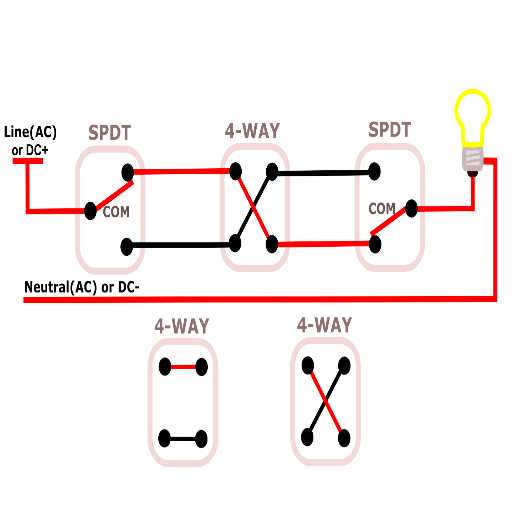
Turning off the power at the circuit breaker is the first step before wiring a 4-way switch. A four-way switch is usually located between the two 3-way switches within a circuit that allows for the control of one light fixture from three or more switches.
Identify wires: Four terminals for traveler wires would be present on a 4-way switch; there is no common terminal. Traveler wires will enter from the 3-way switches and will leave toward the opposite side of the 4-way switch.
Connect traveler wires: The two traveler wires that come in are connected to one pair of terminals of the 4-way switch, and the two traveler wires that go out are connected to the other pair of terminals.
Verify connections: Make sure that the wire fastenings are secure and that all these connections are made according to the markings or wiring diagram of the switch.
Test: Turn on the power again, test, and toggle from all control points.
Insist on consulting for specific instructions in the manufacturer’s guide and always follow local electrical codes. If in doubt, ask a professional.
Required Tools and Materials
🔧 Tools Required:
- Flathead and Phillips screwdrivers
- Voltage tester or multimeter
- Wire stripper or wire cutter
- Needle-nose pliers
- Electrical tape
🛠️ Materials Required:
- 4-way switches compatible with your wiring needs
- Electrical wire (14 or 12 gauge, depending on circuit)
- Wire connectors or wire nuts
- Wall plates
- Ground wires and terminals
Before beginning work on the switch, always switch off the power at the circuit breaker panel to avoid injury. Use a voltage tester to be sure there is no current flowing.
Step-by-Step Wiring Guide
- Power Off!
Locate the circuit breaker panel and remove power from the circuit you will be working on. Use a voltage tester to be sure there is no electricity flowing into the switches or wires. - Prepare Your Materials
Be sure the proper tools and materials have been gathered and that you have the correct gauge wire (14-gauge for a 15-amp circuit or 12-gauge for a 20-amp circuit). Also, check to ensure that your switches fit into your electrical setting. - Inspect the Wiring
Open the existing electrical boxes, revealing the wiring inside. Recognize the line (source of power), load (goes to light fixture), travelers, and grounds. Usually, a setup consists of two traveler wires and one common wire. - Connect Your First 3-Way Switch
First, at the first switch, identify the incoming power source wire; this wire is the power line. Connect the black wire (hot) coming from the power source to the common terminal of the first switch. Connect two traveler wires (usually red and black) to the other two terminals. Ground one of the wires to the green grounding screw. - Install the 4-Way Switch
Connect the traveler wires from the first 3-way switch to the input terminals of the 4-way switch. Connect the output terminals of the 4-way switch to the traveler wires leading to the second 3-way switch. Ensure proper grounding. - Connect the Second 3-Way Switch
From the second switch, connect the common terminal to the wire going to the load (the light fixture). Ensure the ground wire is connected to the grounding screw for the second switch. - Connect the Light Fixture
At the fixture, connect the hot wire from the second switch to the fixture’s live terminal. Attach the white neutral wire and the green ground wire securely. Keep the connections tight. - Insulate and Secure Connections
Cap all exposed wires with the appropriate wire connectors or wire nuts. Wrap electrical tape around those connectors and any exposed wire beyond the connectors to avoid contact. - Install and Test
Fasten the switches back into the boxes. Screw on the wall plates securely. Turn on the power at the circuit breaker. Test the switches, observing the light go on and off from all switch locations. - Final Safety Checks
Double-check all functions and connections of the switches. Listen for any buzzing sounds or observe any flickering of the switches that might indicate an issue. If all looks normal, your 4-way switch system is fully installed and operating properly.
This guide ensures that your wiring is performed precisely and safely according to standard electrical codes. Always apply local regulations regarding electrical work in your area. Consulting a licensed electrician for any complications or uncertainties in your project is advisable.
Common Mistakes to Avoid
Critical Safety Mistakes
- Not Turning Off Power Before Beginning Work: This is one of the most dangerous mistakes committed during an installation or troubleshooting. It creates a tremendous hazard, with the possibility of electrical shock or damage to the system. It is a prerequisite to always ensure that all power is off using a voltage tester before working on any wiring.
- Not Correctly Identifying the Wires: Incorrectly identifying common, traveler, or ground wires is an oftentimes made mistake that will cause malfunction or failure of the circuit. Testing and marking wires properly with a multimeter will go a long way in preventing this issue.
- Loose Connections: The loose connections cause intermittent problems–for instance, a switch does not stay lit or flickers. They will cause heat with time, and that heat triggers electrical fires. Be sure that all connections are fastened with wire nuts and that all screws are tight.
| Common Mistake | Consequence | Prevention |
|---|---|---|
| Misplacement of wires on switch terminals | Switches not functioning properly | Follow official wiring diagrams carefully |
| Using incompatible components | System overheating and failure | Check amperage and voltage ratings |
| Skipping post-installation testing | Undetected faults and safety issues | Test all switches for proper operation |
| Ignoring local electrical codes | Code violations and safety hazards | Consult local electrical standards |
Missteps in these actions may pose a threat to effectiveness and safety in your 4-way switch system. Taking the time to perform testing properly and following recommended practices will help you avert these pitfalls and end up with a dependable, properly working system.
Applications of 4-Way Switches

A 4-way switch finds its main applications in homes and commercial buildings. It controls either a lone light fixture or a number of light fixtures from three or more discrete locations. 4-way switches are particularly apt for large areas such as corridors, stairways, or open-plan rooms with numerous entries that require simple accessibility to lighting. A 4-way switch mechanism can enhance the flexibility and ease of use for those rooms where various lighting operations would be needed.
Usage in Different Locations
4-way switches fit beautifully into any array, for it is in convenience and adaptability that they provide options in lighting control arrangements.
Residential Spaces: Large living rooms, long hallways, and multi-story staircases often call for 4-way switches in residential installations. For instance, in a three-story house, 4-way switches render lighting controllable on each floor; thereby, one does not have to walk up or down just to turn a light on or off. This has gradually become one of the much-appreciated features in modern home designs, wherein functionality and ease of use are given much priority.
Commercial Buildings: Since most commercial spaces, such as office buildings, hotels, and conference centers, have to light extensive areas or sections with multiple access points, they resort to 4-way switches. For example, a conference room having more than one door can have switches installed by each door to have the lights controlled from any point.
Such venues require the circuits to be illuminated to ensure accessibility for the large spaces, which include energy-efficient lighting. 4-way switches have thus found an area of interest. Their flexibility makes the switches paired with dimmers or smart controls on lighting enthusiastic contributors to the energy-saving cause. Such control reduces the use of energy in residential and commercial spaces and is thus inseparable from sustainable design efforts. Recent insights indicate that adoption is increasing mainly because these systems are capable of saving some 20 percent in electricity consumption at various points, which contributes to the synergy of lowering the costs while maintaining convenience.
| Location Type | Typical Applications | Benefits | Energy Savings |
|---|---|---|---|
| Residential | Long hallways, staircases, and large living rooms | Convenience, safety, accessibility | Up to 25% with smart integration |
| Commercial | Conference rooms, office corridors, lobbies | Multiple access control, efficiency | Up to 40% with automation systems |
| Industrial | Warehouses, manufacturing floors | Wide-area lighting control | Up to 30% with motion sensors |
| Educational | Classrooms, auditoriums, corridors | Easy access, safety compliance | Up to 35% with scheduled control |
Benefits of Installing 4-Way Switches
Enhanced Lighting Control
One of the valuable 4-way switching benefits is providing better lighting control for large spaces. A setup equivalent to 4-way switching controls a single fixture from three or more locations. Such a feature is handy for areas like hallways, staircases, or big living spaces, where it may be uncomfortable to operate the switches.
Energy Saving
Consider combining any 4-way switch system with energy-saving setups such as LED lighting or dimmers; such a 4-way system can continue to assure energy savings. Recent studies suggest that combining smart lighting with 4-way switches could allow a well-optimized setting to perform with a 40% energy saving.
Safety Improvement
For greater safety, especially in multi-story buildings, 4-way switches are of vital concern in lighting. They increase the ability to provide illumination from several points to ensure the user has a well-lit path to walk on, thereby reducing the chances of a trip or fall.
Smart Integration
The capability of 4-way switches is largely enhanced when set within a contemporary smart home ecosystem. Once connected to a smart hub or voice-controlled system, further automation of lighting programs may be set, or the lights controlled remotely through a smartphone.
This goes in favor of the occupants for lower utility bills and reducing energy wastage, and being environmentally friendly.
Always consider these with younger ones in the household, elderly members, or family members with mobility challenges; visibility becomes imperative when navigating the stairway or through a dim area.
This level of control is merely comfortable and is fast becoming the norm in home design. Smart integration has already made lighting systems fairly efficient; however, it can reduce lighting energy wastage even more after recent advances.
There are these practical types of switches that ensure smarter, safer, and energy-conscious lighting control in residential and commercial buildings. With this increasing trend in acceptance, it can clearly be seen as a step towards sustainable and intelligent living environments.
Considerations for Homeowners
While considering the installation of 4-way switches and smart lighting systems, homeowners should weigh different important factors that can give maximum efficiency and benefits. Energy savings from implementing smart lighting systems with advanced switches, according to new studies, have the capacity to reduce up to 30% of energy consumption, thus making it an environmentally friendly and cost-effective option.
Another important fact to consider is installation ease. In certain situations, professional help may be required, but with many modern 4-way switches, the installation is now much easier, thus giving homeowners more options and decreasing initial labor costs. In addition, one should also consider the compatibility with one’s current smart home ecosystem so that a chosen 4-way switch works well with platforms such as Alexa, Google Home, or Apple HomeKit for great convenience and control.
Lastly, long-term durability and warranty coverage should not be forgotten. Investing in brands holding long warranties will always provide protection against maintenance needs or replacement costs in the long run. Working on these things can prepare homeowners to develop a really smart, safely built, and energy-efficient living environment.
Safety Tips and Best Practices
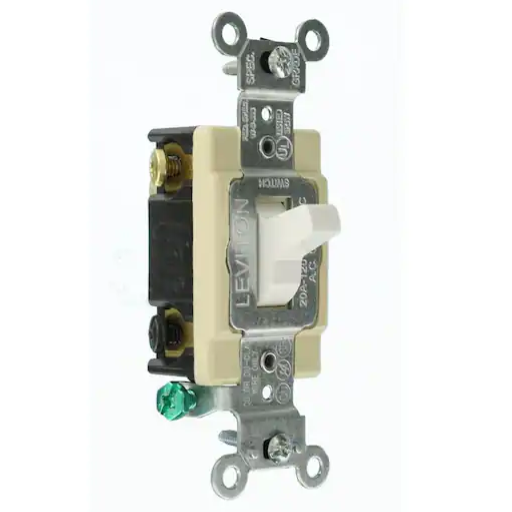
Essential Safety Guidelines
Safety should always be the top priority when working with electrical systems. Following proper procedures can prevent accidents and ensure reliable operation.
Ensuring Safe Wiring Practices
Proper wiring ensures safety and functionality for your home. To ensure safe wiring practice, adhere to your local building codes and regulations that guide wire size, installation methods, and circuit requirements. Before working on an electrical item, make sure to turn off the power supply at the circuit breaker; this will prevent any chances of accidents. Use the correct wire type and size for any electrical load. Using wires or connectors that have been damaged is dangerous. Tighten all your connections to avoid arcing or electrical fires, and make sure your wires are insulated correctly to prevent short circuits. Be sure to seek the help of a licensed electrician when in doubt about the wiring to be assured of proper and safe wiring. Regular inspection of wiring should take place, especially when encountering visible signs of wear, overheating, or damage, and such issues should be taken care of immediately to uphold system integrity.
| Safety Practice | Why It’s Important | How to Implement |
|---|---|---|
| Read Instructions Carefully | Prevents improper installation and safety hazards | Always refer to the manufacturer’s guidelines |
| Turn Off Power Before Work | Prevents electrical shock and system damage | Use circuit breaker and verify with voltage tester |
| Use Certified Products | Ensures safety standards and compatibility | Look for UL or Energy Star certifications |
| Avoid Circuit Overloading | Prevents overheating and electrical fires | Calculate total load and stay within limits |
| Regular Maintenance | Identifies wear and prevents failures | Periodic inspections and prompt repairs |
| Secure Network (Smart Systems) | Protects against unauthorized access | Strong passwords and encryption enabled |
Checking Circuit Breakers and Power Supply
The first check performed is one to see if any breakers may have tripped and thereby ensuring they are all in the correct position. A tripped breaker should always be reset, which means that one first turns it all the way off and then all the way on. Verify that the power supply is stable and connected properly. If there are some problems that persist or the origin is not quite clear, immediately get a professional intervention from an electrician before putting yourself at risk.
Maintenance of 4-Way Switches
When maintaining 4-way switches, first turn off the power to ensure safety. Inspect the switch for damage, such as loose connections, worn screws, or burned components. Tighten the screws if they are loose and make sure that all the wires are firmly connected to their terminals. Clean the switch plates and surrounding areas so that dust and debris cannot impair the switch’s performance. Test the switch by toggling it while verifying that all lights or devices attached to it are functioning properly. If the problems persist or the switch refuses to work, consider either changing it or seeking professional help from an electrician. Regular cleaning and inspection will allow a 4-way switch to last longer and maintain proper working conditions.
Summary: Mastering 4-Way Switch Systems
4-way switches represent a sophisticated solution for modern lighting control, offering unparalleled flexibility and convenience in both residential and commercial applications. By understanding their functionality, proper wiring techniques, and safety considerations, you can successfully implement these systems to enhance your space’s lighting efficiency and user experience.
The key to successful 4-way switch installation lies in careful planning, adherence to safety protocols, and proper understanding of electrical principles. Whether you’re upgrading an existing lighting system or designing a new one, 4-way switches provide the versatility needed for comprehensive lighting control from multiple locations.
Remember that while DIY installation is possible for experienced individuals, complex electrical work should always be performed by licensed professionals to ensure safety and code compliance. The investment in proper installation and quality components will provide years of reliable service and enhanced convenience in your lighting control system.
Reference Sources
Implementation of Feeder Automation Using Colored Petri Nets
Remote Control of Electrical Home Appliances Using an RF Module-Based Remote
Frequently Asked Questions (FAQs)
What is a 4-way switch, and how does it work?
A 4-way switch basically allows you to control one light fixture from three separate locations. It works along with two 3-way switches to create a circuit that can switch on and off a light from various points in a room.
How do I wire a 4-way switch in my circuit?
The 4-way switch gets wired into the traveler wires, which run between the two 3-way switches. The 4-way switch has four terminals, usually two brass-colored terminal screws and two other terminals. The black and red wires coming from the 3-way switches are connected to the appropriate terminals on the 4-way switch so that it can turn the light on or off from different locations.
Can I just install an additional 4-way switch in my current control setup?
Adding one more 4-way switch to a current circuit is easy to do; it essentially grants another control point, so a single light fixture can be controlled from more locations. Make sure to wire the 4-way switch properly so that it connects to the traveler wires of the existing 3-way switches.
What color wire should be used in a 4-way switch wiring?
Normally, the wire colors in a 4-way switch wiring consist of black and red wires that serve as the travelers. The colors of the wires used on the power source and light fixture connections may vary. To ensure a safe and efficient operation, you should always respect the standards and practices of your specific electrical systems.
What is a 4-way switch, and how does it differ from a 3-way switch?
Many times, the light is controlled from more than just two points through the combination of two 3-way switches and a 4-way switch. The 4-way switch simply provides an intermediate point in the circuit that can be completed because there are two routes through it, depending on the toggle positions.
What about the circuit breaker when installing the 4-way switch?
When installing a 4-way switch circuit, one must take care to ensure that the circuit breaker can support the load. Also, take into consideration your safety by always turning off the circuit breaker and working from there.
How do I control the light from three locations?
From three different locations, controlling the light requires two 3-way switches and one 4-way switch combination. Through the two opposite ends, the 3-way switch connects to the power source and the light, and the 4-way switch is connected in the middle between the two 3-way switches to allow for multiple toggle positions in switching the light on or off.
What is the purpose of traveler wires in a 4-way switch circuit?
Traveler wires are the most crucial factor between the 3-way switches and the 4-way switch, conducting currents in a 4-way switch circuit. These wires allow communication between the switches so that the light can be switched from different locations.
What is the importance of the pigtail connection in a 4-way switch circuit?
In a 4-way switch setup, pigtails are usually connected to multiple wires together to ensure a secure and reliable connection. This method facilitates wiring and helps to ensure the proper electrical flow through the circuit, especially when connecting to several switches.