







In industrial and heavy-duty electrical applications, cable selection is a critical decision with direct implications for safety, performance, and durability. With all versatility and reliability put on the table, Type G and Type G-GC cables are undoubtedly the most common options, especially for rugged environmental challenges and consistent power delivery. These cables would be used within mining operations, tunneling equipment, and other harsh industrial environments where exposure to moisture, abrasion, and mechanical stress cannot be avoided. This article aims to provide an in-depth exploration of Type G and Type G-GC cables, focusing on their construction, key differences, and qualities that set them apart. Whether it is to improve operational efficiency or maximize safety standards, having a sound knowledge of these cables will enable you to make sound decisions for your project.
Introduction to Type G-GC Cables
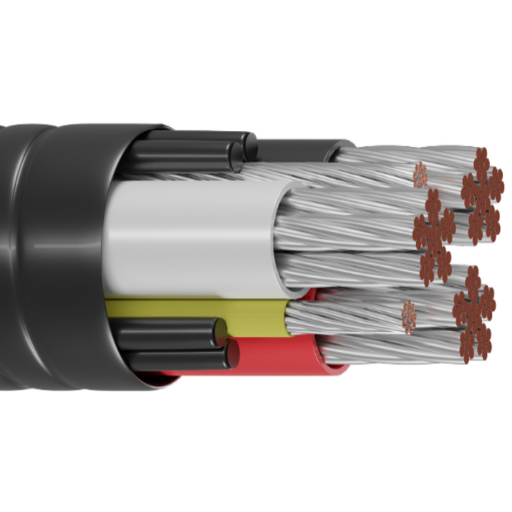
This Type G-GC cable is a heavy-duty, robust, multi-core cable meant primarily for industrial and mining uses. It is built to resist severe conditions, including very high abrasion, moisture, and mechanical stresses. With tough insulation, sturdy outer jackets, and grounding conductors, these cables ensure very reliable power distribution in harsh environments. Additional flexibility and resistance to wear characterize the cable well, proving that it can withstand working applications for a long time, even with portable equipment. The Type G-GC cables are considered for use when safety and durability are at the top of the list.
What are Type G-GC Cables?
Type G-GC cables are industrial, portable power cables that are heavy-duty and designed to meet the heavy demands of industrial and mining settings. They are used to supply power to equipment such as drills, loaders, and other portable tools, making them a crucial component for operations that require dependable and safe electric connections. G signifies General-Use Grounding Conductor, while GC indicates Ground-Check Conductor; therefore, the designation of Type G-GC connotes a special design with a corresponding safety and functionality application.
Embodying the essence of many conductors with power, ground, and safety monitoring functions, Type G-GC cables generally consist of insulated copper conductors with voltage ratings from 600V to 2000V, depending on the application. The ground-check conductor carries a through path for continual monitoring of the grounding path, assuring electrical safety, while the heavy-duty rubber insulation will resist oil, heat, moisture, and abrasion, and the same stands for the thermoplastic rubber insulation. Furthermore, the nylon jacket is flame-retardant, guaranteeing top performance in adverse environments.
In theory, Type G-GC cables meet more rigorous standards, such as MSHA (Mine Safety and Health Administration) certifications for mining applications, ensuring that they hold safety and durability in the highest regard. The cables are intended to be serviced in any climatic condition, with temperature ranges between -40°C and 90°C. With very high flexibility, they are suited for various portable applications involving frequent movement and bending of the cables, thereby minimizing the chance of damage through normal use.
The high specifications and sturdy design of Type G-GC cables make them key to providing power to sophisticated equipment in an industrial setting, to deliver power efficiently and safely.
Key Features of Type G-GC Cables
Operating Temperature Wide Range
Type G-GC cable is constructed to operate in high temperatures, generally in the -40°C to 90°C range. This wide temperature spectrum allows proper functioning of these cables in freezing conditions as well as brutal heat, thus making it best suited for industrial and outdoor use.
Extraordinary Durability
With jackets made of various heavy-duty materials, these cables resist abrasion, cutting, and crushing forces perfectly. All such ruggedness lends them durability in places such as mines, construction sites, and places where heavy industrial machinery is operated.
Highly Flexible
The Type G-GC cable is very flexible, allowing it to accommodate frequent movement, bending, and rolling without becoming impaired. Hence, these cables find good application in portable equipment types where the required connection may have to be repositioned or reestablished often.
Voltage Ratings
Above 600V, the cable runs are rated and, for this reason, were stressed to support medium and heavy-industrial devices. Voltage rating eliminates any possibility of improper or unsafe power transmission to any systems considered to be critical.
Enhanced Safety Features
Integral ground wires provide great security to Type G-GC cables, giving protection from hazards. Moisture and sunlight resistance allowed these cables to be used outdoors or in the wet for any occasion.
Oil and Chemical Resistance
The outer insulation is formulated to resist any adverse effect that oils, acids, or industrial chemicals may have. This resistance prolongs the life of the cable when placed in harsh chemical or oil environmental conditions.
Meeting Industry Standards
Type G-GC cables conform to or exceed the requirements of industry standards such as ICEA S-75-381/NEMA WC58 and UL listings. Thus, the cables meet rigorous safety and performance requirements.
Key Takeaway: Offering factors of resilience, high performance, and safety, Type G-GC cables find industrial and portable power applications across a wide spectrum. They have strong construction and technical requisites to work under adverse conditions and are trusted and relied upon by industries around the world for highly challenging assignments.
Applications of Type G-GC Cables
The Type G-GC cable finds its application in settings requiring a dependable power supply under adverse conditions. Their design specifications make these cables ideal for mine-site operations, construction sites, oil and gas exploration, and power generation on the go. The cables are built to withstand mechanical stresses, high degrees of abrasion, and adverse environmental factors such as moisture, chemicals, and temperature.
Mining and Tunneling
Heavy machinery such as drilling rigs for tunnel and shaft construction, haulage systems, and conveyor belts are all driven by Type G-GC cables in mining operations. Because the cable may cut and tear in very abrasive places with power interruptions, the cables need a tough rubber jacket. In fact, these cables meet MSHA flame-resistant requirements to provide at least an additional layer of safety in underground applications.
Construction Sites
At the construction site, Type G-GC cables are supplied by power systems to operate hoists, cranes, and portable lighting systems. Their flexibility and sturdy construction allow the cables to be handled and relocated frequently without suffering degradation in their performance. The voltage rating of these cables tends to rise up to about 2,000 volts, which can easily accommodate the high power consumption found at a construction site.
Oil and Gas Industry
In the oil and gas industry, where exposure to hydrocarbons and extreme conditions is so frequent, these cables perform optimally. In providing power for onshore drilling rigs or for offshore platforms, with their oil resistance and resistance to corrosive agents, these cables remain operative, thus reducing downtime and maintenance costs.
Portable and Emergency Power Systems
Type G-GC cables serve the portable generator hookups of mobile substations and temporary power installations. The insulation is tough enough to take in high amperage load currents, making them worthy of consideration for emergency systems requiring immediate installation and long-term reliability.
Industrial Manufacturing Facilities
In industrial settings, the cable is run through heavy machines and motor systems that demand heavy energy transmission. Their capacity to work in hazardous locations or areas that continuously vibrate acts to highlight this versatility and durability.
By being versatile, Type G-GC cables ensure that critical operations in various industries meet the stringent demands of an application with the utmost reliability.
Comparison: Type G vs Type G-GC
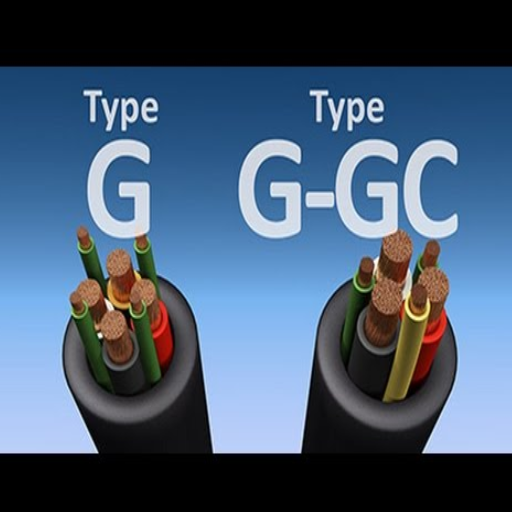
The Type G and Type G-GC cables have almost similar constructions and are meant for demanding industrial applications. Their distinction lies solely in their supplementary function:
- Type G cables are normally used in the distribution of power, subject to high-current loads in rugged and harsh environments. They come equipped with ground wires to enhance safety.
- Type G-GC cables perform the functions of Type G but include one extra ground-check conductor. This conductor keeps a continuous check on the ground circuit integrity, hence it is best suited for applications where the ground circuit must be monitored for safety.
Both types maintain high durability, but the inclusion of a ground-check conductor increases G-GC’s preference in operations requiring additional safety features.
Design Differences
The design differences between a Type G and a Type G-GC cable revolve mainly around the grounding and safety concepts. Type G cables feature a standard configuration of multiple grounds that provides a better capability to ensure electrical safety, especially in high-demand environments. In contrast, Type G-GC cables are fitted with an extra ground-check (GC) conductor whose purpose is to actively verify the integrity of the grounding arrangement. This unique ground-check conductor becomes especially important in settings where the safety of equipment must be ensured constantly, such as mining and heavy industrial activities.
Both cable types are built for hard treatment with tough insulation and thus have the greatest resistance to abrasion and chemicals. But with the ground-check system installed in the Type G-GC cable, they strike out as the suitable choice where proactive safety measures take precedence.
Performance Characteristics
Performance characteristics for Type G and Type G-GC cables are defined based on their durability qualities, safety features, and suitability in hostile environments. Both types of cables have been constructed with high tensile strength conductors and tough insulation materials to ensure premium electrical performance and reliability, especially when used for a long time under stiff conditions. Type G cables, in particular, are very heavy-duty in their mechanical resistance. These cables can resist damage caused by mechanical impact, chemicals, and extreme temperatures, and hence are employed in heavy-duty power distribution.
The Type G-GC differs in that it includes an integrated ground-check conductor that keeps track of the ground integrity continuously. From the viewpoint of safety, its very presence can make the detection of ground faults or even possible hazards in real time. Both cable types are quite flexible and are easily installed, irrespective of whether they are in confined places or vibration-prone areas.
These cables meet requirements laid out by UL, CSA, and MSHA and, therefore, are capable of delivering optimal performance in mining, construction, and other industrial applications. Their robust construction allows for operation in either wet or dry environments or even exposed conditions. This maximizes equipment uptime and minimizes safety risks.
Best Use Cases for Each Type
Type G Cables
Type G cables are best suited for relatively heavy industrial and mining applications where rugged performance is demanded. Putting them through harsh environments-abusing water, oil, and abrasion-they are used for powering such large equipment as drills, loaders, conveyors, and shovels. Because they are so tough and have the best insulation, they can be used in surface mining as well as underground mining.
Type W Cables
These cables are very versatile and are used for portable power applications in construction, entertainment, and mining projects. Their weaknesses for weather, ozone, and sunlight degradation make them highly desirable for temporary power distribution or portable-type equipment. Their typical applications include powering welders and generators, along with portable lighting systems-really anything that requires temporary power in outdoor sites or harsh environments.
Type SOOW Cables
One can mostly find SOOW cables in flexibility-demanding applications in conjunction with resistance to different environmental stresses, such as circumstances in industry, construction, and temporary power. Oil-resistance and abrasion-resistant qualities in SOOW cables make for handy cables to be used with smaller tools, appliances, and motors. These cables can also function indoors and outdoors, which benefits mobile operations.
Manufacturers realize that all cable types serve different industrial applications and accordingly ensure reliability and durability under various conditions. Determining the correct type of cable will depend largely on environmental considerations, power requirements, and compatibility with the equipment.
Specifications of G-GC Cables
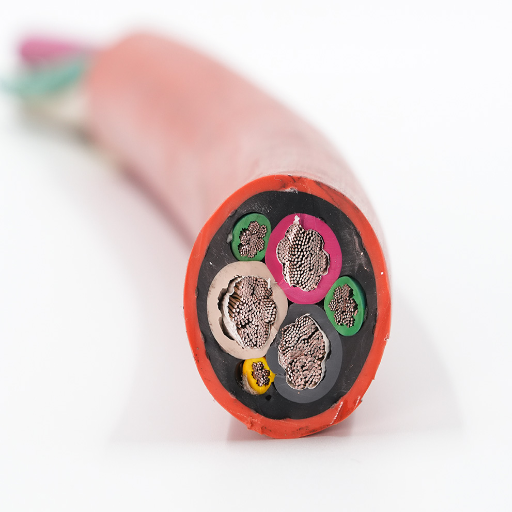
| Specification | Details |
|---|---|
| Voltage Rating | Rated for applications of 600V, compatible with industrial power requirements |
| Conductor Material | Made with copper stranded conductors for good flexibility and conductivity |
| Insulation | Thermoset insulation durable enough to withstand high temperatures, preventing electrical leakage |
| Jacket Material | Thermoset or thermoplastic, hard enough to withstand abrasion, moisture, and chemicals |
| Temperature Range | Functions between temperature ranges from -40°C up to 90°C |
| Application | Portable power distribution, mining equipment, and heavy industrial |
These specifications make G-GC cables high-performing and reliable in challenging situations.
Power Cable Specifications
Power cables are designed for an efficient power flow and to withstand different working environments. Below are some of the major specifications and features of modern power cables:
Conductor Material
Power cables mostly use copper or aluminum conductors, depending on their electrical characteristics and cost. Copper has greater conductivity and durability, whereas aluminum is relatively lighter and thus more economical for large capacity installations.
Insulation Material
Insulation materials used are chosen to provide good electrical insulation under their application. Cross-linked polyethylene (XLPE) and ethylene propylene rubber (EPR) are common materials used. They are thermally stable, resist dielectric loss, and have high mechanical strength.
Voltage Ratings
Power cables are manufactured for a wide variety of voltage levels (low, medium, and high voltage) and are usually categorized into three groups: low voltage (LV), which in general means up to 1000 V; medium voltage (MV), which generally ranges from 1 kV to about 35 kV; and high voltage (HV), which is anything exceeding 35 kV.
Temperature Ratings
Most cables are engineered to withstand temperatures ranging from about -40°C down to +90°C. Some are given specific designs to endure rather hostile conditions, like those in an arctic environment or high-heat industrial processes.
Shielding Options
The shielding that a cable receives varies; in general, it is a combination of layers of foil and braid to prevent EMI within a degree that would seriously hinder signal transmission in sensitive or high-voltage environments.
Durability and the Environment
High-quality jacketing materials protect against mechanical wear as well as local environmental conditions such as sunlight (UV), chemical aggression, and water ingress. Hence, such cables are ideal for outdoor or underground installations.
Applications
Power cables find heavy usage in energy distribution systems, construction, mining operations, and heavy industries. These cables offer the undisturbed delivery of electric power in stationary and portable configurations.
Combining knowledge from authoritative sources, these specifications address the varied requirements of power transmission in industries in terms of performance, safety, and adaptability to complex environments.
Conductor Materials Used in G-GC Cables
The conductor materials primarily used for G-GC cables are copper and, rarely, aluminum. Copper is the most frequently used conductor due to its exceptional electrical, thermal, and mechanical characteristics. Copper conducts well to ensure efficient power transfer with as little loss through resistance as possible, making it ideal for industrial applications. Since G-GC cables are employed primarily in areas where bending or movement is frequent, copper conductors are stranded for flexibility under mining and construction environments.
Aluminum is less common but may sometimes be used as a cheaper alternative in some low-cost applications. This means it cannot ensure heavy-duty performance as its conductivity is inferior to that of copper and requires larger cross-sectional areas for such electrical performance. Since copper conductors guarantee consistent, high-quality delivery of power, G-GC cables that strictly follow the safety and performance standards seldom consider aluminum conductors.
Grounding Features of Type G and Type G-GC
Type G and Type G-GC cables are specifically designed with enhanced grounding features for operative safety in demanding environments. The two types of cable have multiple grounding conductors, normally three, evenly spaced around the power conductors. This makes one effective fault current path, and along with that uniform mechanical balance.
In the case of Type G cables, ground conductors are sized to withstand fault currents without damage to comply with the requirements of standards such as UL and CSA. The Type G-GC cable takes this one step further by having a ground check conductor. This insulation on the ground check conductor is used to verify the integrity of the system by providing real-time feedback on the continuity of the grounding circuit. This feature is crucial for mining, tunneling, or heavy industrial applications. Essentially, these features guarantee strong groundings while minimizing the risk of electrical hazards to ensure continuous operations amidst harsh environments.
Understanding G-GC Power and Grounding
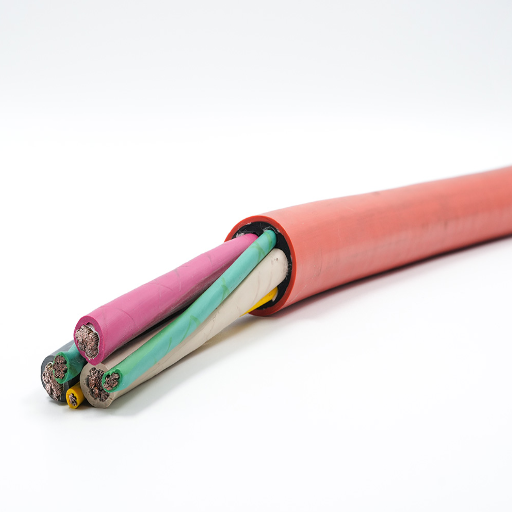
G-GC cables are crafted especially for harsh industrial settings, where power distribution and the integrity of the system are crucial. They are commonly used in mines, tunnel projects, or construction sites. Their sturdy structure—the ground check conductor included—provides a means to constantly evaluate the grounding systems, thereby obstructing, or at least minimizing, the chances of electrical failures. Besides that, they can withstand degrading conditions due to abrasion, moisture, or stresses of mechanical stresses acting upon them. Hence, G-GC cables become a reliable option for applications wherein safety and operational efficiency must go hand-in-hand.
Importance of Grounding in G-GC Cables
Grounding in G-GC cables is quintessential to promoting electrical safety and system stability in industrial and heavy-duty installations. This cable, by means of a ground check conductor, ensures that the integrity of the grounding system is being continually observed; failure of which could cause electrical shock hazards and damage to apparatus. Grounding systems, when properly installed, provide a path for currents from fault to earth, thereby minimizing the possibilities for short-circuits, fires, and operational losses. Moreover, this strong grounding arrangement in G-GC cables also improves their endurance under testing environmental factors such as abrasion, moisture, and mechanical shock. This feature ensures safety for the personnel and equipment and also meets stringent safety standards; thus, the cable finds its use in extremely harsh applications such as mining, tunneling, and construction. Their advanced grounding systems ensure optimum safety and efficiency during operations.
Ground Check Conductor Specifications
Ground check conductors are integral components within safety-critical cable systems, designed to check and verify the integrity of grounding circuits for various electrical applications. These conductors are generally insulated and constructed of stranded copper or other similarly conductive materials to assure a high degree of durability and flexibility. Their arrangement allows for an uninterrupted check system of the grounding path to avoid inadvertent disconnection in a harsh environment.
The most important features in ground check conductors are their voltage rating, which varies between 600V and 2kV depending on the application, and how they conform to standards, such as UL and IEEE. Usually, the conductors are insulated with materials like ethylene propylene rubber (EPR) or cross-linked polyethylene (XLPE) to resist abrasion, moisture, and heat very well. These materials serve to increase their usefulness in high-stress applications, including heavy mining and industrial settings.
However, these conductors may also have a signal wire or monitoring system that would continuously communicate the ground’s continuity. Working with this feature, it alerts in real time if any issues arise in grounding; thus, it ensures the highest safety. Normal custom sizes for these conductors extended from 8 AWG to 500 MCM, but the manufacturer could also make variable sizes depending on specific operational needs. Such attention to engineering detail assures superbly high reliability and longevity even under extremely rigorous working conditions.
Comparative Analysis of G and G-GC Cables
The G and G-GC cables are mining and industrial cables built for harsh environments, thus sharing some similarities in construction while having some operational design differences. G cables are general-purpose power conductors, usually with four or more conductors; they are often used for portable power applications. They possess good insulation qualities and good resistance to abrasion, but are deemed fit for medium-voltage circumstances.
In contrast, G-GC cables are a special kind of G cable, which distinguishes itself with the noteworthy classification of including ground-check conductors (GC). These extra conductors are designed to monitor the ground integrity continuously, thereby ensuring further safety in critical applications. G-GC cables find use in situations requiring on-the-fly ground status in machinery, heavy industrial equipment, mining equipment, etc. The cable construction involves the use of reinforced insulation and elevated shielding layers to withstand mechanical stresses, moisture, and exposure to hazardous substances.
All G cables, by definition, adhere to stringent standards for extreme environmental applications and are designed for great durability and performance. There are certain differentiating special features and accordingly specific uses throughout different G cables. While G cables are general-purpose cables that are used in almost any portable power distribution requirement, G-GC cables offer additional geometrical safeguards, paving their way into continuous monitoring grounds.
Industrial Applications of G-GC Power Cables

The G-GC power cables find their uses in industrial setups, where very heavy and extremely reliable power transmission is needed. Some applications include powering heavy machinery, portable equipment services, and mining operations. The cable is produced to bear harsh environmental conditions, including abrasion, moisture, chemicals, etc. Integrated ground wires in these cables make them suitable for safety and enhanced grounding in an area that includes construction sites and manufacturing factories.
Sector-Specific Use Cases
Construction Industry
Heavy-duty power cables find wide application in construction sites for powering tools, machines, and temporary lighting. The sites typically make for unpropitious environments, owing to heavy equipment movement, and debris and water depositions on the process. It, therefore, implies that such cables need to possess high durability and abrasion resistance; otherwise, any operational breakdown could be very costly.
Mining Operations
The mining industry demands extremely high mechanical strength and chemical resistance for these cables. Power cables in such areas must withstand conditions like underground deployment and exposure to corrosive materials. Their reliability, in turn, ensures an uninterrupted power supply to heavy machinery like drills, conveyors, and ventilation systems.
Industrial Manufacturing
High-power cables from power utilities ensure the operation of presses, assembly robots, and extrusion facilities within the factories and industrial units. These cables are designed having specifications to withstand high temperatures, oil exposure, chemical stress, and, in fact, provide safety due to effective grounding and insulation.
One can observe the versatility and requirement of high-performance power cables in some major sectors. The extremely specialized designs promote durability and efficiency even under stringent conditions.
Advantages of Using G-GC in Industry
In terms of durability under extreme operating conditions, I think it is the key advantage in industrial applications of these G-GC cables. It is this design feature that enables the cables to thrive even in unfriendly environments characterized by high heat, oil exposure, and other chemical stresses, guaranteeing their longevity and reliability. Superior grounding and insulation properties being offered by these cables also enhance safety during operations, thus minimizing incidents of electrical failures. In the demanding industrial environment, the flexibility and resilience of G-GC cables make them a preferred option since these cables reduce downtime and maximize efficiency for any high-powered equipment.
Future Trends in Power Cable Technology
There are promising changes at the brink of transformation for the power cable industry-largely because of developments in material science, integration of smart technology, and seeking higher impetus for sustainability. Superconducting cables are unique in their own realm, being capable of almost no energy losses and extremely high current density, thereby very much suitable for cities and power grids with major demands. Besides, smart cables, equipped with sensors and IoT, enabling real-time monitoring of temperature, stress, and electrical parameters, are on the rise. This technology helps predictive maintenance to cut down incidents of operational failures.
Sustainability is also culminating in the power cables’ future offers challenges. In alignment with global environmental goals, attempts are being made to incorporate biodegradable materials and recyclable components, which are gradually gaining prominence. Renewable energy systems, on the other hand, call for specific cable types that withstand harsh environmental conditions and can transfer power with great efficiency, thus resultantly spurring the features of various cable designs. These developments, therefore, along the path of increasing efficiency with respect to power cable technologies, shall surely provide a technological and ecological outlook for their durability.
Reference Sources
1. The Role of GC-Biased Gene Conversion in Shaping the Fastest Evolving Regions of the Human Genome
3. A Systematic Approach to the Study of GC-Biased Gene Conversion in Mammals
Frequently Asked Questions (FAQs)
What are type G and type G-GC cables?
Type G and type G-GC cables are industrial application specialty power cables. They use bare copper conductors, suitable for use where ground is considered a must-do action, such as an oil drilling platform or heavy industrial arena. Thanks to their name, they have acquired a solid reputation for durability in harsh working environments.
What equipment uses types G and G-GC cables?
G and G-GC cables find application in various equipment-type installations, anywhere a ground check conductor may be needed. They are typically utilized in mining applications, oil drilling platforms, and a variety of heavy industrial uses. The design of these cables makes them perfect for situations where electrical safety takes the front seat.
Does the G-GC cable require a ground check?
Yes, ground checks are required for G-GC cables for proper functioning and safety. Grounding checks may be necessary if the installation is done by submersion under water or any other difficult condition.
What are some of the attributes of portable power cables?
High flexibility, durability, and high voltage rating, at times up to around 2000 volts, are some of the attributes portable power cables excel in. These cables sustain the utmost efficient working conditions in an environment that calls for heavy-duty industrial wires during their application to ensure additional safety and reliability in a power supply.
How do G and G-GC cables differ from other industrial cables?
The G and G-GC cables differ from other types of industrial cables mainly in their construction and application. These types of cables have bare copper conductors to increase conductivity and are specially designed for locations where grounding is frequently required. This contrasts with the standard cables that may not contain certain qualities of grounding.
What is the importance of bare copper conductors in G and G-GC cables?
With high conductivity, bare copper conductors ensure the usage of G and G-GC cables in very heavy demand applications. Portable power cables and heavy industrial usage employ these cables for power transmission, particularly where conductive parts of the cable are expected to maintain a strong electrical connection.
Where do we use G-GC cables frequently?
The G-GC cable is prominently used around oil drilling platforms, ships, and mining equipment. The cable is meant to supply power wherever ground wires are required, thereby ensuring safety and functionality in such highly demanding environments. It becomes very useful in industrial applications, especially when environmental conditions are extreme.
Which power cables are best suited for heavy-duty industrial applications?
For heavy-duty industrial applications, the best types of power cable are G and G-GC cables with gooseneck construction and bare copper conductors. These cables are very high on voltage tolerance and power supply in adverse conditions, and hence are used for oil drilling platforms and other demanding environments.