







In the case of towing a trailer, correct wiring is not merely a matter of convenience but also a significant safety and legal compliance component. For most people, the intricacies involved in changing a 5-wire trailer circuit into a 4-wire setup can be really overwhelming. No matter if you are a highly experienced DIY person or just starting with your trailer maintenance, knowing how these systems function and how to adjust them is crucial for the perfect operation of all lighting and signaling. The present guide is meant to clear out the confusion regarding the wiring, and it will also provide you with easy and step-by-step actions to successfully convert your trailer’s wiring without losing the advantages of functionality or safety. After reading this article, you will have the confidence to take on this project, which, in turn, will create a reliable and smooth link between your car and trailer.
Understanding Trailer Wiring
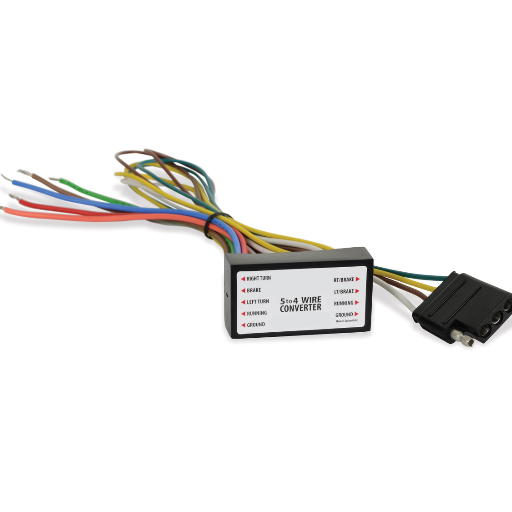
Trailer wiring is that very system which connects all the electrical signals of your car to the trailer and makes sure that all the most important functions like brake lights, turn signals, and running lights are operating properly. The standard trailer wiring transmits these signals through either a 4-pin, 5-pin, 6-pin, or 7-pin connector, where 4-pin connectors are by far the most commonly used ones for basic lighting needs. Each of the pins has one specific purpose, for instance, controlling left or right turn signals, tail lights, or grounding. It is essential to adhere strictly to the type and configuration of the connector of your trailer to that of your car in order to guarantee proper functioning. Always do a test after the wiring has been done to see if all the lights and signals are working properly or not.
What is a 5 Wire Trailer Wiring System?
The 5-wire trailer wiring system builds on the standard 4-wire system by introducing one more wire, which usually performs a specific function depending on the type of trailer. The fifth wire is mostly assigned to electric brakes or auxiliary power, thus increasing the trailer’s usability. The setup consists of wires for:
- Left turn/brake lights (Yellow)
- Right turn/brake lights (Green)
- Tail/running lights (Brown)
- Ground connection (White)
- Auxiliary function wire (Blue or designated color)
Proper fitting calls for meticulous alignment with the vehicle’s wiring system in order to guarantee not only compatibility but also safety. Testing the system after installation is a must for confirming that all signals and components are working correctly.
What is a 4 Wire Trailer Wiring System?
The main distinction between a 5-wire and a 4-wire trailer wiring system is mainly due to their functionality and the types of applications they are designed for. The 4-wire system connects the brake lights and turn signals of the trailer into a single circuit for each side, hence simplifying the wiring layout and making it appropriate for standard trailers devoid of independent systems like surge or electric brakes. The system, therefore, has wires for the left brake and turn signal, the right brake and turn signal, the tail/running lights, and a ground connection.
On the other hand, the 5-wire system provides for the separation of the brake lights and turn signals operation trails, which is done by the introduction of the fifth wire. This is pivotal for trailers fitted with surge brakes since it includes the disengaging of such brakes when reversing by using the fifth wire to activate a reverse lockout solenoid. The 5-wire system gives more accurate control and flexibility; thus, it is ideal for intricate trailer setups.
Moreover, both systems are made in such a way as to maintain the compatibility of the towing vehicle; however, switching to the 5-wire system from the 4-wire one might need an adapter or wiring harness changes, based on the particular electrical configuration of the towing vehicle that is in use. In both system configurations, proper installation and stout connections are crucial in guaranteeing performance and safety.
Key Differences Between 5 Wire and 4 Wire Systems
| Feature | 5-Wire System | 4-Wire System |
|---|---|---|
| Brake & Turn Signals | Separate circuits for brake lights and turn signals | Combined brake and turn signal circuits |
| Wire Count | 5 wires total (includes auxiliary function) | 4 wires total (basic lighting only) |
| Complexity | More complex, suitable for advanced trailers | Simpler, ideal for standard trailers |
| Applications | Trailers with surge brakes, electric brakes, or auxiliary systems | Basic trailers without independent brake systems |
| Reverse Function | Can activate reverse lockout solenoid | No dedicated reverse function |
Converting 5 Wire Trailer Wiring to 4 Wire
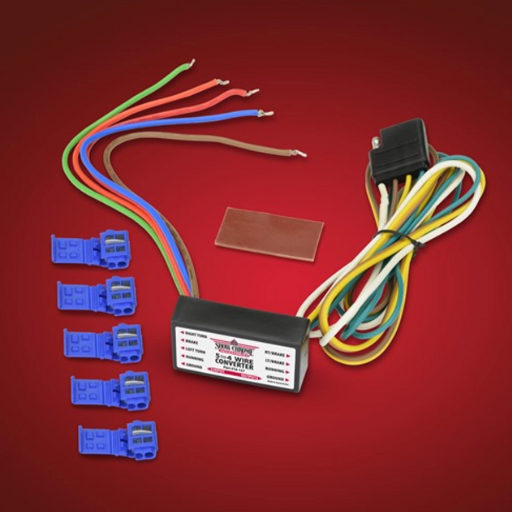
When converting a 5-wire trailer wiring system into a 4-wire one, the most important thing is that the 5-wire system has brake lights and turn signals separated, whereas in the 4-wire the combo has to be brakes plus turn signal. This can be accomplished with a trailer light converter. Here are the steps to follow:
Step 1: Obtain a Trailer Light Converter
Get a good quality trailer light converter which is made to combines the two functions–brake light and turn signal–and facilitates their coexistence.
Step 2: Connect the Wires
The 5-wire system’s input wires are to be connected to the trailer light converter. Usually, there are separate wires for left turn, right turn, brake lights, and taillights. The brake and turn signal functions will be consolidated on the output side of the converter, resulting in a 4-wire setup (left turn/brake, right turn/brake, taillights, and ground).
Step 3: Secure Connections
Insulate and protect properly all wiring connections to avoid any electrical problems.
Step 4: Test the System
After the installation is completed, test the trailer lights to verify that the brake lights, turn signals, and taillights are all working correctly.
Summary: Using a light converter, the transition from a 5-wire system to a 4-wire one can be done quickly, with all the necessary lighting functions being preserved.
Tools Required for Conversion
For a 5-wire to 4-wire conversion, the following tools are very frequently needed as the main ones:
Light Converter Kit
It is required to change the wiring system and to make sure that the vehicle and the trailer are compatible.
Wire Strippers and Crimpers
They are utilized for the removal of insulation from the wires and for the crimping of connectors for strong electrical connections.
Multimeter
It is very important for testing the voltage and the continuity to confirm the wiring arrangement and to spot any faults.
Electrical Tape and Heat Shrink Tubing
They are used for the insulation of connections to keep them safe from moisture and electrical shorts.
Screwdrivers and Socket Wrenches
They are used for the purpose of securing the converter and the wiring components in place during the installation process.
Wiring Diagram
It is a trustworthy reference that is especially for your vehicle and trailer configuration for precise implementation.
Step-by-Step Guide to Using a Converter
1Secure the Vehicle and Trailer
First of all, the vehicle has to be parked on a flat and stable surface where the brake parking is to be engaged. The trailer should be in such a position that easy access to the wiring connections is granted.
2Review the Wiring Diagram
Take the vehicle-specific wiring diagram as a reference to point out the right wires for the connections. Check the specifications for both the input (vehicle side) and output (trailer side).
3Prepare the Wires
By stripping a part of the insulation from the wires, the copper strands will be exposed. The purpose of this is to ensure a good connection and also to reduce resistance in the electrical circuit.
4Connect the Converter
The matching wires on the converter have to be connected to those on the vehicle. The wiring diagram should be used to verify the connections (e.g., left turn signal, right turn signal, brake lights, and tail lights). The connections have to be secured either by using butt connectors or soldering, which would last longer.
5Secure Grounding
The ground wire from the converter will have to be connected to a clean, unpainted metal area of the vehicle’s frame. Grounding that is done securely leads to stable electrical communication.
6Test the Connections
The trailer is to be connected to the vehicle, and then every light function (turn signals, brake lights, and running lights) is tested to confirm they are working properly. A multimeter should be employed for troubleshooting if any of the lights do not turn on as they should.
7Wiring Secure
After the wiring is confirmed to be operational, it should be secured with zip ties or cable clamps to prevent stress or abrasion. Also, all wires should be routed neatly to avoid interference from moving parts.
8Final Inspection
Make a thorough inspection of the whole setup to ensure that all connections are tight, wires are protected, and there are no exposed areas that could cause shorts or damage.
Important Safety Note
If you follow these steps correctly, a converter will be used properly and a reliable connection for your trailer’s lighting system will be provided, thus keeping safety and compliance on the road.
Choosing the Right 4 Wire Trailer Harness
Selecting the right 4-wire trailer harness is extremely important in order to have the best possible performance and safety. When making your selection, start with the wiring configuration that you need for your trailer, which is usually the same as the 4-wire systems that have a connection for the left turn/brake light, right turn/brake light, and running lights, plus a ground wire. Make sure that the harness is the same type of connector as the one on your tow vehicle, for example, a flat four-pin connector, to ensure compatibility.
Think about the quality of the material and the harness’s durability since it will be functioning outdoors. Consider the weather-resistant insulation, corrosion-resistant terminals, and UV protection that all serve to prolong the system’s lifespan. Furthermore, check that the harness is rated for the right voltage and amperage so that it can carry light for the trailer without risk of overheating.
The simplicity of installation is another necessary aspect. Choose a harness that comes with detailed instructions, has pre-attached connectors, and wire long enough to reach your trailer without putting it under extra tension. Some of the models might even offer the additional features of color-coded wiring or plug-and-play designs to make the installation smoother.
In the end, if you give preference to compatibility, durability, and functionality, it will be very accurate to say that you will finally pick the most suitable 4-wire trailer harness for your needs, which will not only yield reliable performance but also ensure improved safety during operation.
Wiring Harness and Connectors
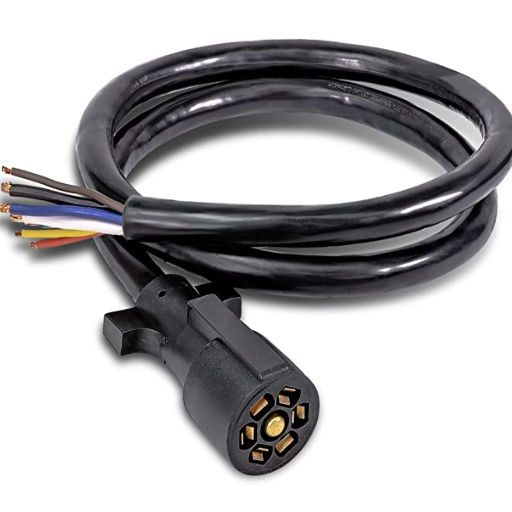
When you pick wiring harnesses and connectors, make sure that they conform to the electrical specifications of your trailer and towing vehicle. To avoid corrosion and keep the functionality of your system over a long period, look for materials that are strong and resistant to weather. Pick connectors that are appropriate for your particular wiring setup, e.g., 4-pin or 7-pin options, depending on the power and lighting requirements of the trailer. Correct installation requires tightly securing all connections and not allowing the wires to be too loose or too tight. Check the parts periodically for signs of wear or damage so as to maintain the performance and safety levels.
Types of Trailer Wiring Harnesses
Trailer wiring harnesses come in various types, each catering to different towing requirements and configurations:
4-Way Flat Connector
The 4-way flat connector is amongst the most ubiquitous types, generally applied to non-braked small trailers. This connector allows for basic light functions only—tail lights, brake lights, and the like. It is not only fastened in an uncomplicated manner but is also a good choice for light trailers since there is no need for further power connections.
5-Way Flat Connector
The 5-way flat connector is quite similar to the 4-way harness, and it has an extra wire that is often utilized for controlling a reverse lockout on surge brakes or for lighting the backup area. Accordingly, this type is good for both boat trailers and trailers that require an extra auxiliary feature on top of the standard lighting that has to be done.
6-Way Round Connector
Technically, the 6-way round harness has even more possibilities, since it supports trailer brake and auxiliary power. It is usually fitted on medium-duty trailers and is very applicable to those situations where power delivery or an auxiliary function of a certain technical specification is needed.
7-Way Round Connector
The 7-way round connector is the most versatile one, and it is thoroughly used for larger trailers or RVs. The wires for tail lights, turn signals, brake lights, electric brakes, backup lights, a 12V power supply, and a ground connection are all included. This harness is not only recommended but also necessary for trailers that need complex electrical systems or heavy-duty towing.
Understanding 4 Pin Trailer Harness Connectors
The 4-pin trailer harness connector is a standard means to connect minimal trailer lighting to a towing vehicle. The wires of this connector are four in number, and each of them has a particular function that is indispensable for the safe and legal operation of the trailer. The wires are as follows:
- Ground Wire (White): This wire forms the electrical ground connection, and thus, it is the origin of the electrical circuit for all other components to function properly.
- Tail Lights/Running Lights (Brown): This wire lights up the trailer’s tail lights and side marker lights, which ultimately makes the trailer visible at night or during low-visibility conditions.
- Left Turn Signal and Brake Lights (Yellow): The yellow wire is used to wire the left turn signal and brake light, and thus to provide directing and braking signals to other drivers.
- Right Turn Signal and Brake Lights (Green): The function of this wire is the same as that of the yellow wire; it manages the right turn signal and brake light for proper signaling.
A 4-pin connector is mostly suitable for small and light trailers that do not require extra power for electric brakes or auxiliary systems. These connectors are simple to install and take care of; therefore, they are a very good choice for basic towing operations. It is very important that the installation is done correctly, which involves the steps of securing clean, corrosion-free connections and matching all the wiring to the respective terminal. Even though it is simple in construction, the 4-pin trailer harness provides the essential functionality that makes it possible for safe towing.
Common Issues with Trailer Wiring Connections
While towing, trailer wiring systems, which are necessary for safe towing, can still have problems that affect their function. The most common problems are listed below:
Corroded or Damaged Connectors
Corrosion on connectors because of moisture, dirt, and road debris exposure is often the reason for reduced conductivity, leading to intermittent or complete failure. Regular checking and the use of dielectric grease can reduce this concern.
Faulty Grounding
One of the major reasons behind non-functioning trailer lights is improper or weak grounding. A reliable ground wire or secure attachment point is required for all connections to work properly. A poor ground will cause lights to be dim or non-functional.
Broken or Frayed Wiring
Frequent usage or improper routing may cause a wire to break or be exposed. This can lead to short circuits, blown fuses, or even fire hazards. It is essential to keep all wires away from sharp edges and moving parts.
Mismatched Wire Connections
Incorrectly paired or misaligned wires during installation often result in trailer lights not working properly. Misidentifying wires and connecting them incorrectly according to the standard color codes will cause this issue.
Overloaded Circuits
Too many accessories plugged into the electrical system can lead to a power draw that is more than the system can bear, resulting in damage to the fuse or wiring harness of the tow vehicle. Therefore, it is crucial to monitor the system’s load and make sure it is not overloaded while at the same time being able to handle the amperage of all connected components.
Trailer Lighting Considerations.

The legal requirements and safety standards should be the primary considerations when it comes to trailer lighting. Federal and state laws require that all trailers be equipped with operational brake lights, turn signals, tail lights, and reflectors. A functional lighting system enhances the visibility of the vehicle and communicates with other drivers, which is particularly important when visibility is poor or when people are driving in a dangerous situation. It is necessary to check that the trailer’s lights are adequately connected and timed with those of the vehicle before it is driven. Carry out regular inspections to spot and change burnt-out bulbs, cracked lenses, or rusted contacts, thus guaranteeing no interruptions in the lighting operation and safety on the road.
Importance of Proper Trailer Lighting
Legal and Safety Requirements
The right trailer lighting is essential for both legal compliance and road safety. Trailer lighting, consisting of brake lights, turn indicators, and tail lights, plays a crucial role by informing other drivers about the movements of the vehicle, thus minimizing accidents. Poorly maintained or improperly connected trailer lights may lead to accidents, fines, or even penalties for not following the regulations. It is critical to conduct regular checks to confirm that all the lights are working as they should. This will involve checking the wiring connections, replacing bulbs that have gone out right away, and making sure the electrical system is protected from rust or any other harm. Properly functioning trailer lights mean better visibility in bad weather and at night, hence the driver’s and other road users’ safety. Making regular maintenance and keeping up with safety standards are your priorities will not only reduce the chances of accidents but also strengthen the image of a responsible vehicle operator.
Installing Lights on a 4 Wire Trailer
The process of installing lights on a 4-wire trailer is to first connect the trailer’s wiring system with that of the towing vehicle while adhering to the standard color-coding scheme for wires. A simple yet informative guide to carry out the installation is given below:
- Get the 4-Wire System: The 4-wire trailer wiring carries out four different functions: White Wire (Ground), Brown Wire (Tail lights and marker lights on the side), Yellow Wire (Lights for the left turn signal and brake light), Green Wire (Right turn signal and brake light)
- Get the Things Ready: Trailer light kit (compatible with the 4-wire system), Wire connectors or heat-shrink butt connectors, Electrical tape and zip ties, Test the light or the multimeter to find out the connections
- Lights for Trailer Are Installed: Following the manufacturer’s instructions, the tail lights and side marker lights are mounted on the trailer, taking care of visibility in being symmetrical in the area. A ground wire of white color is connected to a metal surface that is unpainted on the frame of the trailer by means of a screw that self-taps, thus forming a good ground connection.
- Trailer Is Wired: The wiring harness is opened up along the frame of the trailer, where it is held in place by zip ties, so that it does not move or get damaged. Match and join the wires in a way that for every one that is a specific function with connectors. For example, the yellow wire should go to the left side light, the green wire to the right side light, and the brown wire to both tail lights and side markers. Make certain that all the connections are solid and covered with either electrical tape or heat shrink to be immune to corrosion or short circuit.
- The Vehicle Is Connected: The harness that is coming from the trailer gets plugged into the 4-pin connector of the vehicle. By testing every single function of the wiring, like turn signals, brake lights, and tail lights, make sure that the vehicle’s wiring matches that of the trailer.
- The System Is Tested: Using a helper or a test light, verify that all lights, including brake lights, turn signals, and tail lights, are functioning correctly. Fix any faulty connections or bulb malfunctions as needed.
Your adherence to these steps makes it possible for an installation that is both safe and effective and meets the requirements set by road safety regulations. Regular testing and maintenance are necessary to keep the trailer lighting system functional over the long haul.
Maintenance Tips for Trailer Lights
Essential Maintenance Practices
Proper maintenance of trailer lights is considered an important factor for safety, compliance with regulations, and preventing potential hazards. The experts’ recommendations form the basis of the following consolidated tips:
Regular Inspections: Before and after using the trailer, inspection of the lights should be done to detect problems like dimming, flickering, or burnt bulbs. Also, wear and damage to the wiring should be checked, especially after long trips or rough terrain exposure.
Keep Connections Clean: Use electrical contact cleaner or a wire brush to clean every electrical connection so that corrosion is prevented, particularly at the plug ends and ground points. Dielectric grease should be applied to the connectors to increase conductivity and to protect them from moisture.
Protect Against Water Damage: Check that all lights and wiring are appropriately sealed and waterproofed, primarily for the trailers that are exposed to the rain a lot or that are submerged while launching the boat. Silicones should be applied to the fragile areas to make them more water-resistant.
Replace Damaged Components Promptly: Being cases of burnt bulbs, broken wires, or damaged housings, they should be replaced without delay. The use of high-quality, weather-resistant LED lights is a good option for improved life and energy efficiency.
Test System Regularly: An overall testing of the complete lighting system, including the brake lights, turn signals, and running lights, should be done regularly either by a technician or by connecting the trailer to the tow vehicle. This guarantees that all lights are functioning properly before the drive starts.
By practicing these maintenance techniques, not only will the lifespan of your trailer lights be prolonged, but also they will perform reliably, and road safety will be improved overall.
Special Considerations for Motorcycles

Motorcycle Lighting Systems
The priority when maintaining a motorcycle’s lighting systems is visibility and compliance with local regulations. Make sure that the headlights are properly aligned, so they do not impair the sight of other vehicle drivers, but at the same time, the road illumination is maximized. Turn signals and brake lights should be inspected regularly for their functionality, as they are crucial for communicating your intentions to other road users. Replace bulbs promptly with the correct models and think about using LED options for better visibility and longevity. Check all wiring connections to avoid problems caused by vibrations during rides. Routine testing and compliance with safety standards are necessary to guarantee the reliability of performance and the safety of riders.
Adapting Wiring for Motorcycle Trailers
Modifying the wiring for motorcycle trailers includes verifying the compatibility of the motorcycle’s electrical system and the trailer’s lighting. First, find out if your motorcycle has a 3-wire or a 2-wire lighting system. A 3-wire system has separate controls for brake and turn signals, while a 2-wire system merges them together. When the systems are not interoperable, apply a converter to make them work together.
Next, put in a trailer wiring harness made for motorcycles specifically, which usually has a powered relay module that protects the bike’s electrical system from becoming overloaded. Securely guide the wiring along the bike without going to places that are hot or can cause wear; organize it well with zip ties. The ground points are very important—make sure there is a very good common ground between the trailer and the bike so that there will be no flickering or malfunctioning of lights.
Before you start riding, check all the connections very well; these include brake lights, turn signals, and running lights. For more dependability, you may want to apply dielectric grease at all connection points to block corrosion. Following these procedures guarantees the safe and effective wiring setup required for motorcycle trailer towing.
Safety Tips for Motorcycle Trailer Wiring
Critical Safety Measures
In connecting motorcycle trailers, I constantly put safety first by re-checking the entire system and verifying that the ground is right. I apply dielectric grease to the connectors as a corrosion prevention measure and check all the lights, that is, brake, turn signals, and running lights, before taking off. Being very careful to follow these steps gives not only comfort but also a chance to avoid problems that might arise later while on the road.
Recommended Wiring Harnesses for Motorcycle Trailers
The selection of a wiring harness for your motorcycle trailer must hinge on the aspects of compatibility, build quality, and installation simplicity. In accordance with the evaluation of the most credible sources, below are three good picks:
Hopkins Towing Solutions Wiring Kit
The harness of this make is referred to as “plug-and-play,” and it installs easily and works perfectly. The package comes with connectors that are weatherproof and very durable, and therefore able to maintain good performance even under harsh conditions due to the built-in circuit protection.
CURT 5-Wire to 4-Wire Powered Adapter
The adapter is made for motorcycles that have different wiring setups, and it does so by connecting the two systems very well. It has a circuit trip, and the sealing design is such that the system is well protected from the elements; thus, it is indicated as a choice for long-lasting use.
Kuryakyn Trailer Wiring and Relay Harness
The wiring and relay harness of this kit is specifically for cyclists and come with isolator relays to protect against electrical overloads. It not only guarantees your bike’s electrical system to work perfectly with the brake, turn, and running lights but also maintains that performance level.
Reference Sources
IoT-Based Driver Information System for Monitoring Load Securing
FlexRay – A Communication Network for Automotive Control Systems
Mechatronic Systems for the Braking Mechanisms
Frequently Asked Questions (FAQs)
What are the trailer wiring colors for the conversion from 5 to 4 wires?
Usually, when transitioning from a 5-wire trailer wiring system to a 4-wire one, the colors of the trailer wiring are in agreement with the standard color code. The colors used most frequently are: brow for tail lights, yellow for left turn signal lights, green for right turn signal lights, and white for ground wire. It is very important to adhere to these color codes to avoid any problems with proper functioning.
How will I splice the wires, changing from a 5-wire to a 4-wire system?
The splicing of wires for a 5 4 wire conversion shall begin with the identification of each corresponding wire. Then, using a wire stripper, the ends of the wires are to be exposed, followed by twisting them and securing the twisted joint with a wire connector or electrical tape. It is important to connect the red wire from the trailer correctly to the wire in the 4-pin plug that is supposed to be for brake lights; otherwise, they won’t work.
What is the easiest way to connect a flat trailer with 4 wires to a truck?
Connecting the flat trailer with 4 wires to your truck can be done in the easiest way using a 4-pin plug. Make sure you connect the trailer wiring colors to those of the truck. A good practice would be to refer to the truck’s wiring diagram to verify the correct connections for the taillights, turn signals, and ground.
May I use a diode in the wiring for a small cargo trailer?
Certainly, a diode could be one of the options for small cargo trailer wiring, as it helps to avoid the backfeeding of current. This is particularly the case with separate turn signal lights and brake lights, giving them the opportunity to work individually without haunting each other or causing complications in the wiring system.
What are the proper steps to follow if the wire for my trailer lights is not working properly?
If there are issues with the trailer light wire, the first step is to check all the connections to see if they are properly secured and spliced. Then, proceed to the inspection of trailer wiring colors for any inconsistencies and look out for broken wires. Conducting tests with a multimeter may also be useful in determining if the problem is with the current flow or not.
Is it possible to bypass the need for a replacement harness when converting from 5 5-wire to 4 4-wire?
While a replacement harness is a good idea when converting from a 5-wire to a 4-wire system, it is not mandatory. If your current harness is not in a good state or is outdated, then it is prescription of the new 4-pin harness that will make the installation easier and give you reliable connections for your trailer lights.
What is the typical voltage for trailer wiring systems?
The voltage for trailer wiring systems is typically 12 volts. This is the standard for most automotive applications, including light trailers. It is essential that all components used throughout the wiring system can withstand this voltage so that electrical failures do not happen while the trailer is being towed.
How can I troubleshoot turn signal light problems on my trailer?
In order to troubleshoot turn signal light problems on your trailer, the first step is to check the connections for loose or corroded wires. Next, confirm that the truck’s wiring is correct by checking if the wiring colors match up. The method of testing with a multimeter to check if the turn signal lights get power when they are turned on is also useful.
What benefits do trailers get from using a 4-pin plug for trailer wiring?
The key and main advantages of trailer wiring using a 4-pin plug are simplicity and maintenance-free installation. Usually, a 4-pin setup covers the basic functions that are the most essential and also includes trailers that are not heavy, like tail lights, left and right turn signals, and ground. That is why this setup is becoming more and more popular with light-duty trailers, as it reduces the risk of problems during setup, and it is very easy to install.