





In the area of product safety and compliance, the expressions “UL Listed” and “Non-UL Listed” will come up frequently, and this situation will raise a question about their real meaning among many consumers and professionals. It is not enough to know the terms; one needs to understand the differences to make informed choices. However, the fact is that one would encounter such an issue particularly in sectors that have strict safety and performance standards. This paper will elucidate the product classifications of UL and Non-UL, together with the certifications and their roles in ensuring safety and dependability, and the reasons for concern among the manufacturers and buyers. It will tackle the issue of product evaluations and standards compliance from the consumer’s perspective. The reader will be able to discern different aspects of these contrasting positions through the detailed analysis given in the article, along with the provision of necessary regulatory standards.
What is UL Listing?

UL Listing is a stamp of approval given by Underwriters Laboratories (UL), an impartial testing company, to signify that a product has undergone testing and has reached certain safety and performance criteria. This certificate guarantees that the product is fit for use according to the specified conditions and meets the recognized industry standards. UL Listed goods are subjected to a thorough risk assessment considering fire, electrical, and mechanical hazards, thus giving certainty to the parties involved in the product’s manufacturing, supply, and purchase about its safety and reliability.
Definition of UL Listing
The UL Listing is a certification issued by Underwriters Laboratories (UL), which is a leading international firm dealing with safety consultancy and certification. This certification indicates that an item has been tested and has surpassed the rigorous safety and performance standards that apply to the given category, which can be electrical appliances, building materials, or industrial equipment. UL testing involves a thorough investigation of possible dangers like electric shock, fire risk, and mechanical failure to assure the product’s reliability under normal use conditions.
To illustrate, in the USA, UL standards are very close to the National Electrical Code (NEC), thus making sure the standards are compatible with the local safety regulations. The products having a UL Listing label are first tested in UL laboratories or other certified facilities that use the standard protocols. A recent survey shows that more than 22 billion products are stamped with the UL mark each year, which is a clear indication of its global acceptance and recognition as a reliable mark across different industries.
In addition, the manufacturers are subjected to regular compliance checks to keep their listed status which ensures that the changes made to the product do not compromise its safety. UL Listing is an assurance of safety that not only raises the confidence of consumers but also gives the access to the market through the ability to comply with the legal requirements for safety posed by regulators in various jurisdictions.
Importance of UL Certification
The UL Certification is of great importance because it has the function of being a standard for safety, reliability, and compliance in a wide variety of products and industries. UL Certification allows a product to be marketed not only as safe to use but also to protect the consumers, reduce the risk of lawsuits against the manufacturers, and be more competitive in the global market.
Recent industry reports indicate that certified products are now in much higher demand than ever before, and 80% of global consumers will not buy anything that does not comply with the recognized safety standards. For manufacturers, UL Certification can be a major source of savings as they can expect fewer recalls and incidents related to safety if they only produce certified products; non-certified ones are the most susceptible ones to face problems once introduced to the market. What’s more, UL Certified goods are frequently demanded by insurers and authorities, which means companies can get through the approval process of the market more quickly and thus have the time spent on their products being delayed in the market reduced.
The certification process is not only about overcoming the present needs of the market but also takes care of the future challenges of IoT technology integration and sustainability in product design. For example, UL has created certain certifications for energy efficiency and cybersecurity so that modern products can be considered safe if they not only meet the traditional safety standards but also the new criteria that arise with technological and environmental developments. This flexibility is an indicator that UL Certification is a long-term investment in quality and accountability.
Examples of UL Listed Products
The products that are UL Listed cover a wide range of categories, showing that the organization is committed to safety and performance throughout different industries. Detailed examples of such products are given below:
Electric Appliances
Refrigerators, washing machines, and air conditioners—some of the main electrical devices in most households—most of the time have the UL Listing mark on them. This certification guarantees that these items are made to the high standards that the UL company has set for safety in electrical performance, thus eliminating the possibilities of fire or electric shock. For instance, more than a fifth of the world’s appliance makers who are at the top of the market use UL-certified components in their equipment design to be on the safe side.
Lighting Products
The UL Listing includes lighting products for homes as well as for business, so that is, LED bulbs, lamps, and even complicated smart light sets. This certification supports the energy efficiency, durability, and safety from overheating claims. Research has shown that UL LED-lit lamps last as long as 25,000 hours on average, which reduces energy costs and environmental impact.
Industrial Equipment
The major machines used in building, making goods, and producing electricity normally undergo UL assessment for operational safety. For example, a UL-certified industrial motor is put through tests for thermal stability, load endurance, and compliance with international safety protocols, which means the motor is reliable in difficult conditions. This is especially so in industries where equipment breakdown could mean huge financial or safety losses.
Fire Protection Systems
Fire alarms, sprinkler systems, and smoke detectors are among the product classifications that are most common and vital under UL Listing. Such products created by means of very stringent testing processes are supposed to work reliably during emergencies. It has been reported that about 38% of the cases of fire-related injuries would not have occurred if UL-listed smoke alarms had been installed. This highlights the great potential of compliance standards in saving lives.
Network Equipment and IT Devices
The growing demand for networking devices worldwide goes along with the increasing number of UL-listed routers, data storage units, and IT infrastructure that have been necessarily subjected to cybersecurity and electrical safety. IoT-enabled devices are one specific instance of how cybersecurity standards from UL 2900 are often utilized to curb weaknesses in connected systems, thus making them less vulnerable.
Protective Gears
Industrial or medical helmets, gloves, and face shields that prevent injuries to workers are usually UL-listed for the guarantee of operation under unsafe conditions. The tests done on the materials used in these certifications meet the impact and resistance testing standards, e.g., the level of assurance for the users in both sectors, healthcare and construction, is higher.
UL Certified products play a key role in the triangle of safety, sustainability, and performance, which involves both consumer and industrial applications. This practice also shows accountability, but it also increases trust in their products among global markets that have been gained slowly and through the hard work done.
Exploring Non UL Listed Products

Non-UL Listed products are those that have not been subjected to UL standards’ rigorous testing and certification processes. They might still work properly, but there is no external validation that can guarantee their adherence to any safety or performance standards. This non-certification may lead to risks as the products could be below the safety criteria imposed. It is therefore essential for consumers and businesses to be careful with non-UL Listed products, for instance, in critical areas of reliability and safety. One should not just take it for granted but rather scrutinize the manufacturer’s reputation and check other certifications or third-party tests that might help fill the gaps.
What Does Non UL Mean?
The term “Non UL” indicates that the product or component has not been put through the testing and certification of Underwriters Laboratories (UL), which is an authority recognized around the world for safety certification. Having UL certification means that the products are checked against specific safety and performance standards and are then trusted to be safe and reliable. The marking of a product as “Non UL” implies that it was not subjected to this thorough testing. Such products may still work fine, but they do not bring the confirmed guarantee of having passed the safety standards, which can thus create risks, especially in the case of important uses. Users must scrutinize such products through a careful consideration of third-party testing, alternative certifications, or the manufacturer’s reputation in order to lessen the safety issues.
Advantages of Non UL Listed Devices
Non UL-listed devices are very advantageous in several ways that might be attractive to specific users or applications. Firstly, they are often less expensive than the UL-listed devices, because the manufacturers do not have to pay for the certification. Thus, they are a good choice for projects that have a limited budget or where safety compliance is not a big issue. Secondly, these devices might give the users more choice as well as new features, because the manufacturers may be focusing on niche markets or speeding up their product development by not going through the UL certification process. Finally, non-critical applications can use non-UL-listed devices that would not pass the regulatory compliance test, as long as the user does proper checking to confirm quality and reliability, since they are delivering performance and functionality that meet the users’ needs.
Common Non UL Listed Products
Non UL-listed products are widely used in different industries and consumer markets. Among these products are portable power adapters, LED lighting fixtures, certain types of industrial machines, and small appliances for homes. In addition, many off-brand phone chargers and battery packs are included in this group as a rule, usually given by manufacturers that are more on the economical side. Moreover, some electronic parts, such as circuit boards or wires, may not have UL certification, particularly if they are made by smaller companies or manufacturers who are aiming at international markets with lower safety standards. Even though these products can be very effective in their functions, the users have to critically check specifications, reviews, and alternative certifications so as to be very sure with regard to safety and performance needs.
Differences Between UL Listed and Non-UL Listed Products

The main point of distinction between UL Listed and non-UL Listed items is through safety verification. UL-listed items are positively tested through Underwriters Laboratories (UL) and are approved as per the specific safety standards. This certification assures that they are up to the mark in terms of performance and safety for the purpose they are designated to use.
Conversely, non-UL Listed items are not certified by UL, implying that their safety and performance have not been tested or verified by this body. Some non-UL products might still comply with other safety standards or certifications, but the lack of a UL mark means the user has to do extra verification to ensure the product’s reliability and conformity to the required safety standards.
Opting for UL-listed items generally means a greater assurance level, particularly in those applications where safety is the first concern.
| Feature | UL Listed Products | Non-UL Listed Products |
|---|---|---|
| Safety Verification | Tested and certified by Underwriters Laboratories | No UL testing or certification |
| Compliance | Meets recognized safety and performance standards | May or may not meet safety standards |
| Consumer Trust | High level of assurance and confidence | Requires additional verification by users |
| Market Access | Easier regulatory approval and broader market access | May be restricted in certain markets |
| Cost | Generally higher due to certification costs | Often less expensive |
| Risk Level | Lower safety risks | Potentially higher safety risks |
Safety Standards and Requirements
Safety standards are the set norms that guarantee the safe operation, performance, and user-friendliness of products in various industries. These standards are usually set by either regulatory authorities or by international organizations, which include Underwriters Laboratories (UL), the International Electrotechnical Commission (IEC), and the American National Standards Institute (ANSI). Adhering to these standards not only safeguards consumers but also minimizes risks and prevents accidents.
In most cases, the safety requirements for products will result in the performance of rigorous tests in order to ascertain that the products can perform safely during their intended use. The key factors that are considered include electrical safety, fire resistance, structural integrity, and environmental durability. Manufacturers are required to submit documents such as compliance certificates to prove that they have complied with the relevant standards. It is therefore important that the users confirm the legitimacy of the certifications and also check whether the product meets the industry-specific requirements, particularly for critical applications.
The end-users should always be careful when choosing the products and should make sure that the products have the safety certifications that are recognized, such as UL, CE, or CSA marks. Usually, these certifications show that the product has undergone independent testing and meets the required safety and functionality standards. However, when there are no such marks that can be recognized, it is highly advisable to dig deeper into the manufacturer’s claims and the results of the third-party testing.
Quality Assurance and Consumer Trust
In the quality assurance process, maintaining strict protocols is a key factor to gain and keep consumer trust in the market that is so competitive today. Recent reports show that more than 70% of consumers see third-party certifications and quality seals as a main factor in their buying decision. The certifications act as a transparent validation process that guarantees the products pass or are above the established safety and performance standards. Also, extensive testing methods, such as ISO 9001 compliance, which talks about continuous improvement and standardized quality management, can further assure consumers about a product’s reliability.
Moreover, research has shown that poor quality control could have a severe impact on the brand’s reputation, with studies citing that 62% of consumers are not going to return to a brand after one negative experience. This highlights the necessity of equipping quality assurance processes with real-time monitoring tools and advanced analytics. Implementation of these practices not only greatly reduces the chances of defects but also leads to a process of continuous refinement through feedback, and thereby creates more trust among consumers.
Cost Implications of UL Certification
The process of obtaining UL (Underwriters Laboratories) certification brings with it cost variations that are determined by a number of factors, including but not limited to product complexity, testing types, and the number of units assessed. The fees imposed at the start are usually for the purposes of application handling, laboratory tests, and document checking. Besides these one-off costs, the manufacturers might also have to pay for regular factory inspections in order to keep up with the compliance standards and obtain certification. The complete price could be anything from a couple of thousand dollars for uncomplicated products to tens of thousands for intricate or heavily regulated ones.
Although UL certification may involve a considerable money outlay, it certainly brings a lot of good things. The UL mark grants an authorizing stamp that not only guarantees product safety but also builds up marketplace trust and possibly shortens the process of getting approval from the authorities. Moreover, certified goods usually come out as more attractive and are allowed to sell in bigger markets, where compliance with safety standards is a must. Hence, the costs should not be perceived merely as an expense but rather as a long-term investment in terms of trust, reliability, and market positioning.
Non-UL Listed COB Strip Lights
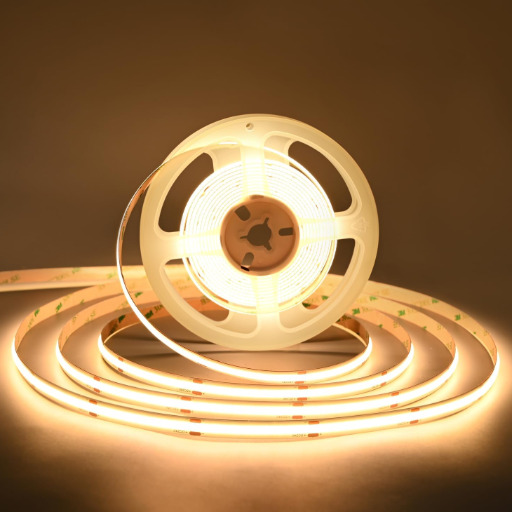
Non-UL-listed COB strip lights represent a lighting alternative, but they do not possess the safety certification of UL standards. They are not tested by an independent laboratory to meet particular safety requirements. The lower initial costs of these products could be one reason for the higher risks, like electrical hazards or shorter lifespan. Besides, the lack of UL certification may restrict their application in projects that require safety standard compliance. It is crucial to analyze the most suitable application and risks before deciding on non-UL-listed COB strip lights.
Overview of COB Technology
Chip on Board (COB) technology is the most modern and sophisticated LED packaging technique, where several LED chips are placed directly on a substrate. The result of this configuration is a single module that gives off light of equal quality and high intensity. The major benefit of COB technology is that it provides higher lumen output per watt and hence less energy consumption, making it a good candidate for applications where brighter illuminations are required. Furthermore, the design minimizes the components that are done outside, so the management of heat is done better and the LED lives are longer compared to the conventional LED configurations.
COB LEDs can be found in many applications, for instance, automobile lighting, street lamps, and lighting for indoor use, due to their small size and great efficiency. Apart from this, COB technology outclasses SMD in terms of light output and reliability, even though there are some drawbacks, such as initial high cost and the need for specialized drivers for optimum performance. With the robust design and visual consistency, COB technology is becoming an increasingly preferred choice in modern lighting solutions.
Benefits of Non-UL Listed COB Strip Lights
Non-UL-listed COB strip lights are a low-cost alternative for manifold uses, offering their amazing brightness and steady lighting at a lower price in comparison with UL-listed products. These strips are suitable for use in installations where safety codes are not strictly enforced, for instance, in homes or DIY projects, where money might be the determining factor. Moreover, they come with a flexible mounting method and good suitability for a wide variety of applications, like installations that require both fast and slow fading, such as accent lighting or under-cabinet improvements. Even without a UL certification, a number of non-UL strip lights continue to meet the basic safety standards and provide good performance when operated within their specified limits. As a result, they are commonly chosen by buyers who want to save on the cost of certification while getting practical and efficient light solutions.
Considerations When Choosing Non-UL Listed Products
When it comes to choosing non-UL-listed products, the first thing that needs to be done is to assess their safety and compatibility for the intended application. First of all, check the manufacturer’s specifications and make sure that the product complies with the essential safety requirements, such as the voltage, wattage, and environmental ratings. Secondly, the products from reputable manufacturers or suppliers who have received good reviews should be given priority, as a good reputation usually means quality and reliability. Furthermore, take into account the operating environment, for instance, whether the product will be exposed to moisture or heat, and make sure that the product is rated for those conditions so that no hazards arise. Finally, take a look at the warranty and customer support to ensure that you will get the help you need if there are any defects or the product fails. Non-UL-listed products are usually cheaper but still need careful consideration to make sure that the usage is both safe and efficient.
Choosing Between UL Listed and Non-UL Products
When choosing between UL-listed and non-UL products, the first concern should be nothing less than the safety and compatibility of the product with the intended application. The UL Listed products, in the first place, have to deal with very strict safety standards and are considered to be trustworthy and, consequently, suitable for use in different environments. These products are perfect for places where strict adherence to safety certifications is non-negotiable.
On the other hand, non-UL products might help you save a few bucks and require a lot of effort to analyze their quality, performance, and warranty carefully so as to avoid the risk of not getting your needs met. When in doubt, go for UL Listed products and get the comfort of compliance and support.
Factors to Consider
When deciding between UL-listed products and non-UL products, it is important to give priority to a few important factors:
UL Listed products are usually the ones that get the nod in the first place since they are the ones that undergo testing that meets the standards for safety in usage and performance, hence they are the ones that are very suitable in areas with strict regulations, such as governmental sectors. But then again, non-UL products may not have the same level of documentation or testing, so make sure to check their compliance with relevant local and international standards before buying.
First of all, consider what the product is going to be used for and what the risks are. Applications in high-risk or sensitive areas, such as healthcare or industrial, should certainly look for safety guarantees such as UL, as the cost of potential litigation and loss of goodwill would be much higher than the price tag of the product itself.
Initially, non-UL products might seem to be more economical, but don’t forget to think about the future scenarios. The less expensive products may not have gone through the same amount of testing and may not last as long as the certified ones, and then end up having the same or even higher costs for maintenance or replacement in the long run.
Buyers usually feel more secure with UL-listed products because of the comprehensive warranty and manufacturer support that comes with them. On the flip side, the non-certified products may come with short warranties, and hence their reliability and customer service may not even be predictable.
In fact, the use of certified products such as those with the UL mark is explicitly mentioned in some insurance policies and legal regulations. Always consult your insurer or local authorities to make sure you are not facing fines, losing coverage, or taking on liability risk.
By thinking through these factors very meticulously, you would be able to arrive at a choice that not only satisfies operational needs but also coincides with safety priorities.
Final Recommendations
In the case of choosing certified items, for instance, those with the UL mark, I suggest giving primary importance to safety, compliance, and reliability. Meeting the regulations can help me not only mitigate legal liabilities and satisfy insurance requirements but also have a smooth operation and peace of mind in the long run. Moreover, going for certified products guarantees the same level of performance and support, which are vital for keeping the standards high. My choice will be based on these important factors to get the best results.
Future Trends in Product Listings
Product listing trends that are coming up hugely focus on the usage of high-end technologies that will not only improve customer satisfaction but also make the whole process easier. The first thing that comes to mind is the use of artificial intelligence (AI) and machine learning, which are gradually being incorporated into the operation of making smart suggestions and ranking the search results, which in turn guarantee that the buyers get exactly what they want. Secondly, products with an emphasis on sustainability and providing information about the sources are the things that consumers will want the most, as they will be looking for companies that go green and have their supply chain open. Finally, the use of augmented reality (AR) and tools for 3D visualization has increased, and consequently, consumers’ interaction with the products online has been altered as they get more involved in experiences like virtual fitting rooms or thorough product checking. The technological and consumer-inspired changes will be the ones that will influence modern e-commerce strategies the most.
Reference Sources
Frequently Asked Questions (FAQs)
What are the differences between UL-listed and non-UL-listed products?
UL-listed products are certified by UL, while non-UL-listed products have not gone through this extensive testing and may not comply with UL’s safety standards. As a result, UL-listed products are deemed safe for consumers and the electricity they will operate on, while non-UL-listed ones may not comply with these safety rules.
Why is it important to choose UL-listed COB strip lights?
Selecting UL-listed COB strip lights is the best possible choice because such emissive materials have been certified for performance and safety. They guarantee that the lights are safe and conform to the industry’s standards for their use in a variety of conditions. Also, UL-listed products frequently offer a variety of advantages, including superior longevity and energy consumption, as opposed to non-UL-listed options.
What does it mean for a product to be UL listed?
When a product is UL listed, it conveys that it has undergone a very exhaustive testing and evaluation process by Underwriters Laboratories, ensuring that it complies with stringent electrical safety standards. This approval gives the consumer confidence regarding the safety aspect mentioned, in the sense that the product is dependable and its use is safe in accordance with its intended purpose.
How do non-UL-listed COB strip lights compare to UL-listed options?
Non-UL-listed COB strip lights can sometimes be cheaper, resulting in some cost benefits, but they do not come with the safety assurance that is a characteristic of UL-certified items. UL-listed COB strip lights go through the rigorous testing process to verify that the particular safety and performance standards have been achieved, making them the best choice for consumers who are in search of trustworthy lighting solutions.
Can non-UL devices be used in residential settings?
Theoretically, non-UL devices can be placed in residential areas; however, the customer needs to be attentive to the fact that their use might be a violation of the cool-white safety standards laid down for electrical appliances and devices. The employment of UL-listed products automatically grants the lighting system a safety and reliability character, thereby minimizing electrical hazards.
What are the critical factors to consider when choosing between UL-listed and non-UL-listed products?
While selecting between UL-listed and non-UL-listed items, major things to think about are: safety, performance, adherence to the industry standards, and warranty offerings. UL-listed products are subjected to strict testing and provide safety assurance, while non-UL-listed options might have uncertain quality.
What safety assurance do UL-listed products provide?
The UL-listed products offer the safety assurance due to a certification procedure that ensures that the products comply with strict safety standards. This guarantee is very important for the customers since it always indicates that the products have been thoroughly tested and are safe to be used even in the most challenging places.
Are there any cost benefits to choosing non-UL-listed products?
Yes, one of the reasons why non-UL listed products are cheaper is that they are not considered as valuable as LED lights with the UL listed quality. Still, it is important to point out that the only drawback of not having the UL-listed certification might be the electricity bills in the long run, as the end user might unknowingly incur higher costs because of safety problems stemming from non-UL-listed products.