








When dealing with steel in any of the industrial, manufacturing, or construction environments, the first step is to determine the right grade and type of steel, which is essential for maintaining the structural integrity, performance, and compliance with the project. The steel color code chart is a common system that was created to facilitate and accelerate the process by providing a complete list of steel types and grades together with their corresponding colors. This is indispensable for the proper identification of the materials by the professionals very quickly and accurately, which in turn minimizes the errors and speeds up the assigning of the tasks. In the following paragraphs, we will explain the steel identification standards, the role of color coding in different industries, and finally, how these codes are utilized in different applications. Whether you are an experienced engineer, a fabricator, or even a newcomer to the field, the knowledge of these rules will enable you to make the right decision and keep your operations running smoothly.
Introduction to Steel Color Codes

Steel color codes are authorized systems that classify steel very fast and efficiently by showing its composition, grade, and other properties. The process of color coding often includes the application of specific colors on the surface of the material that are linked to certain qualities set by industry standards or manufacturers. This method improves identification, decreases the chances of making mistakes during selection or processing, and helps to make the workflow in industrial settings more efficient. It is very important to follow these color-coding systems to avoid compatibility, safety, and accuracy issues in applications.
What Are Steel Color Codes?
Steel color codes are no longer just a handy tool, but a necessity for the metalworking as well as manufacturing industries, because they allow for fast and accurate material identification and classification. Accordingly, the color codes or the metal painting rules are based mainly on the standards of such organizations as ASTM (American Society for Testing and Materials) or ISO (International Organization for Standardization). The colors granted are determined by the grades, the compositions, or the treatments of the steel, and thus the workers will always be in the know about the material’s applicability to the specific application.
Taking an example, a red mark in some of the standard systems might signal high carbon steel, which is characterized by its hardness and wear resistance, while a yellow mark could mean low carbon steel, which is more ductile and thus very good for welding. Sometimes, additional color codes, such as blue or green, are used for stainless steel grades to specify between the austenitic steels (for example, 304, 316) and the martensitic steels.
A recent survey shows that the color coding system is able to cut down industrial mistakes by a huge margin during handling processes like machining, welding, and heat treatment. The study also states that the use of certain identification systems can uplift the operational efficiency by 30% or more, thus cutting down the occurrence of the wrong type of material delivered or even the establishment of production delay. Moreover, the universal color codes not only improve the safety level but also protect against the use of improper materials in high-stress or critical environments, such as those in construction or aerospace applications, thus indirectly elevating the safety standards.
By taking these codes as part of their daily activities, the industries across the globe not only ensure uniformity but also save on time losses and maintain strict control over the quality of their products. In this light, it becomes ever more crucial to adhere to the color coding frameworks that have been laid down.
Importance of Steel Color Code Standards
The steel color code standards are very important for the materials to be identified, traced, and utilized properly and efficiently. The color code of each type of steel is related to the specific grade classifications, mechanical properties, and chemical compositions, hence, providing instant recognition of the steel by the engineers, technicians, and manufacturers. For example, the color-coded marking on the steel bars or pipes will help the transformers to tell carbon steels, stainless steels, alloy steels, or high-strength steels apart—thus eliminating errors that might occur in the factories or at construction sites.
The new industry standards have also shown that the use of these regulations is very effective in avoiding production mistakes. A mistaken identification of a steel type could, for instance, cause the building to collapse or the people around to be harmed, especially in such places as the construction or the power sector. From what is being reported, there are up to 27% fewer material identification errors in those industries that follow the strictest color code practices, which again has a direct effect on the reliability and safety of the operations.
As a rule, the steel color coding system has made it easier for international trade, and hence, the compliance with the cross-border materials specifications has been greatly simplified. The processes that have been codified, in turn, have led to shorter inspection times during the customs clearance of the goods and quicker deployment of the materials after they have arrived. The classification of the steels through color coding has thus led to the international supply chain benefiting through the acceleration of workflows, cost efficiency, and the establishment of stricter quality control/assurance standards. This is a case where the very simple coding systems have turned out to be significant contributors to the technical and operational efficacies across the different industrial domains.
How to Use the Steel Color Code Chart
The Steel Color Code Chart is a powerful tool, but to get the most out of it, you’ll have to first figure out the exact color markings on the steel piece. Each color signifies a certain grade, standard, or type of steel according to the particular color coding system of the manufacturer or by the industry’s general standards. Observe the color and check the chart to find the composition of that material along with its mechanical properties like tensile strength, hardness, or alloy composition.
After that, make sure the material is application compatible by matching the identified steel grade with project requirements or specifications. This prevents the material from being over- or under-rated for the environment it is going to be used in, whether it is building, manufacturing, or machining. Be sure to take into consideration the differences in coding systems that can be found between various regions and suppliers, as they might have a direct influence on the chart’s interpretation. To achieve the ultimate accuracy, you can consult the manufacturer’s documentation or the relevant standards, such as ASTM or ISO, which are usually provided with the material. Frequent usage of the color code chart will make the identification of materials quicker, less error-prone, and more efficient in terms of operations.
Types of Steel and Their Color Codes
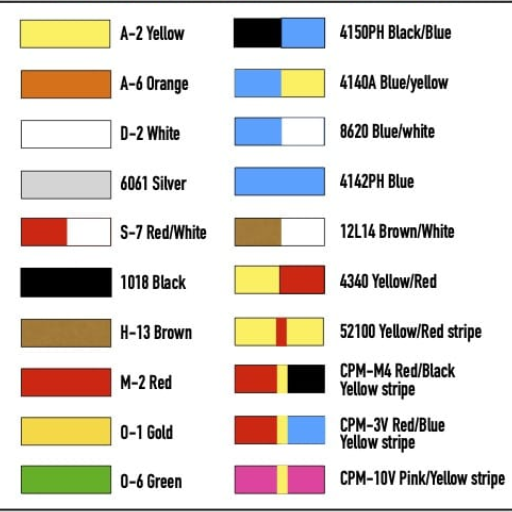
Steel is usually divided into different categories according to its composition and purpose of use, and frequently a color code is assigned for easier identification of each type. The main types of steel, along with their respective standard color codes, are given below:
| Steel Type | Common Color Codes | Characteristics | Primary Applications |
|---|---|---|---|
| Carbon Steel | Blue Black |
General-purpose applications, various carbon content levels | Construction, machinery, pipelines |
| Alloy Steel | Green | Enhanced strength, toughness, wear resistance | Automotive, aerospace, heavy machinery |
| Stainless Steel | White Silver |
Corrosion resistance, high durability, hygiene | Food processing, medical, architectural |
| Tool Steel | Red Orange |
Extreme hardness, wear resistance | Cutting tools, dies, molds |
Stainless Steel Color Codes
The surface of stainless steel materials is often marked in a specific way, so these materials can be easily identified, corresponding to the color codes that are applied to them, thereby preventing mistakes during fabrication and installation. The color codes are different for each grade and finish of the steel, but they are still commonly consistent with industry standards. A good example is the following:
- Grade 304 is usually indicated by green or light-colored tags and is the most common material used for general corrosion resistance.
- Grade 316 is usually marked by a blue or brown color code, which indicates that it has a higher resistance to saltwater corrosion, thus making it suitable for marine and chemical applications.
- Grade 430 may be marked with yellow or no marking at all, which means it is the least expensive and can be used in moderate-durability applications.
Carbon Steel Color Codes
The color codes for carbon steel have become a must-have tool in industrial applications since they allow for fast identification of material grades, thus streamlining processes and minimizing errors. However, these codes can be different according to the standards and practices of certain manufacturers or industries. For example, ASTM and ASME standards are mostly used for the classification of carbon steel according to its various properties, such as tensile strength, carbon content, and ductility. Generally, color codes are put on either end of steel bars or along their length and represent the composition and grade of the steel.
Although there is no one classification system that is accepted universally, common approaches like the Worldwide Standardized Steel Numbers (WS), alloy numbers, or simply the naked eye are employed for division. It is of utmost importance to match these markings with the certification of the material provided by the manufacturer in order to ensure compliance with the international safety regulations.
Alloy Steel Color Codes
The utilization of color codes for alloy steels has been very important in making the different grades and properties of alloy steels visible, and thus identification during manufacturing and construction processes has become more efficient. Normally, color codes are applied to the ends of bars or to the marked areas of the steel products. Even though the exact codes may differ according to the manufacturer and the region, some common practices are taken from the standards laid down by organizations like ASTM and ANSI.
For instance:
- Yellow: designates the chromoly steel families such as 4130 or 4140.
- Green: shows the presence of nickel-chromium-molybdenum steel.
- Red: marks the low-alloy steels with particular hardening characteristics.
- Blue: points carbon steels or high-carbon alloys in some areas.
Understanding Steel Grades and Their Color Identification

Steel grades can be grouped according to their chemical makeup and physical features, which encompass strength, hardness, and ductility. The properties mentioned above not only help in the selection of steel grades for various applications but also in the determination of the grade’s suitability for different industries like construction, automotive, or tool making. Among the commonly used classification systems are the ASTM (American Society for Testing and Materials) and EN (European Norms) standards.
Color coding resembles a method of practicality since it enables the quick identification of steel grades right on the construction site. The colors used in this method each indicate an alloy composition and grade according to the manufacturer’s chart or the industry standard. However, the verification of the accuracy of color coding by means of its cross-referencing with certified documentation is of utmost importance. Material Test Reports (MTRs) are an example of such documentation. This practice ensures that there is no error in the selection of materials and that the project specifications have been met.
Overview of Steel Grades
Steel grades are the different categories that give information about the exact chemical composition, physical properties, and use of steel. The grading process usually depends on the standards set by the American Society for Testing and Materials (ASTM), International Organization for Standardization (ISO), or European Norms (EN). The grading system plays a key role in industrial applications where compatibility and performance are to be ensured.
The main types of steel grades are: Carbon Steel, Alloy Steel, Stainless Steel, and Tool Steel. Carbon steels are composed mainly of iron and carbon and are further classified into low, medium, and high carbon content, which affects their ductility and strength. Alloy steels, on the other hand, have a mixture of elements such as chromium, manganese, and nickel for different purposes. Corrosion resistance, hardenability, and other performance features can all be positively impacted by the alloying of steel. The chromium content is a significant factor in the classification of stainless steels, as those with a high percentage of it get excellent corrosion resistance, and they are thus suitable for applications in severe environments. The wear and tear capable of being withstood by tool steels is a property that makes them perfect for even the most difficult of cutting tools or molds.
The project must take into account the right steel grade choice along with environmental conditions, loadings, and adherence to industry standards. The material certification with a detailed report of the chemical and physical properties of the steel plays a vital role in the quality control process of specifications’ compliance.
Color Codes for Different Steel Grades
Color coding is a common practice in the steel sector to ensure fast and easy recognition of differences between steel grades as per their characteristics and specifications. The adoption of this system helps in the smooth movement of materials and error reduction at the selection or processing stages. The actual codes used, however, may differ according to the manufacturer or standard, but certain conventions are generally recognized:
| Steel Grade | Color Code | Key Characteristics |
|---|---|---|
| Carbon Steel | Blue Black |
Versatile usages and high strength |
| Stainless Steel | Green White |
Corrosion resistance, suitable for hygienic conditions |
| Alloy Steel | Orange Purple |
Improved mechanical properties for specific applications |
| Tool Steel | Yellow Red |
High strength and wear resistance for cutting tools |
Common Applications of Each Steel Grade
Carbon Steel
Among all types of steel, carbon steel stands out as the one commonly used for construction due and its low cost. It is mainly used for the framework of buildings, parts of machinery, pipelines, and car manufacturing. Besides that, its capability of being milled and forged makes it a good candidate for various products demanding strength, like the components of a bridge and vessels holding high pressure.
Stainless Steel
Stainless steel is a material that is most wanted for its everlasting corrosion resistance and is very much used in places where moisture and chemicals are present. Hospitals, the making of utensils, chemical processing plants, and architectural decoration, such as lifting and cladding and handrails, are among the places that use it the most. Also, it is preferred in the processing of food and drugs because of its cleanliness.
Tool Steel
Tool steel pieces are very hard and can take a lot of wear and tear, which makes them very useful in the process of cutting, shaping, and molding. The most common places to find them are in molds used for plastic and metal, cutting and drilling tools for industries, and dies for stamping and extrusion processes. Moreover, their thermal stability allows them to be used in high-temperature environments.
Alloy Steel
The mechanical properties of alloy steel, such as its improved toughness and heat resistance, allow it to be easily accepted in different applications like aircraft parts, power-generation turbines, and heavy-duty gears, where the utmost performance is required. Its use is not limited to the mentioned industries but covers places including oil and gas pipelines, large-scale ship building, and similar that need long-lasting materials under stress.
High-Speed Steel (HSS)
High-speed steel belongs to the family of specialized tool steels and is made to keep hardness even at high temperatures. That is why it is the primary material for the production of high-performance cutting tools, including but not limited to drilling, sawing, and end milling. The ability to stay sharp during high-speed machining operations has made the HSS material popular in precision industries like aerospace and automotive manufacturing.
Different Forms of Steel and Their Color Codes

The color codes are specifically assigned to the steel types in order to facilitate their quick recognition in the industrial and manufacturing settings. The following lists the typical steel types together with their color codes:
| Steel Form | Color Code | Key Characteristics |
|---|---|---|
| Mild Steel | Blue Yellow |
Low carbon, ductile |
| Stainless Steel | Green White |
Corrosion resistance |
| Tool Steel | Red Orange |
High hardness, wear resistance |
| High-Speed Steel (HSS) | Purple Black |
Heat resistance, cutting tools |
| Carbon Steel | Gray Brown |
Variable carbon content and strength |
Color Codes for Steel Sheets
The color designation of steel sheets is a necessary measure that makes it possible for the industries to identify and apply the materials consistently and efficiently. Although the systems of color coding might differ according to the geographical location and the organization that sets the standards, the most accepted practices revolve around color marking that conveys information about the materials’ constituents, mechanical properties, and treating methods. The main categories of steel are as follows, according to industry norms:
- Galvanized Steel Sheets: The color code for these sheets is usually silver or blue-gray, which indicates the zinc coating around them as the main reason for their excellent corrosion resistance. The construction, automotive, and outdoor sectors are among those that most rely on galvanized steel sheets, as these are known for their long life.
- Stainless Steel Sheets: They are usually colored white or silver, indicating that they are made of a chromium-rich alloy, which is why they are oxidation and staining-resistant. The applications of this metal are in food processing equipment, medical instruments, and architectural design, where cleanliness and durability are the top priorities.
- Cold-Rolled Steel Sheets: Their color code usually consists of light gray or blue, which signals their smooth surface and high strength. These sheets are proper for precision engineering applications like automotive panels and appliances, where very accurate dimensions are a must.
- Hot-Rolled Steel Sheets: These sheets are identified by dark gray or black color codes because of their surface being scale-covered after the high-temperature rolling process. The use of these sheets is in the making of structural parts, heavyweight machines, and vast buildings, where the quality of surface finish is not too crucial.
Identification of Bar Grades by Color
The identification of bar grades through color coding is a common practice in the industry that makes it easier to select materials and ensure correct usage. Each color represents certain bar grades, and thus tells their chemical makeup, mechanical attributes, and where they are meant to be used. For instance:
- Yellow is generally associated with A36 steel bars, which have good weldability and low-carbon content, hence are left for construction and general fabrication.
- Green usually indicates 4140 steel, an alloy steel that is very strong and wear-resistant, and it is the most common use of the alloy in tooling and machinery.
- Blue stands for 8620 steel, which can be easily case-hardened and, thus, is highly used in the manufacturing of gears, bushings, and automotive parts.
Along with that, these color codes offer an early visual guide to the workers, leading to the minimization of mistakes, an increase in production and and compliance with engineering standards. The exact regulations regarding color-coded identification might slightly differ according to the locality or the organization’s rules; still, they are considered to be an essential element in today’s manufacturing and supply chain systems.
Tool Steel Color Coding Standards
Tool steel color coding is a system consisting of standardized color markings that are applied to the raw material stock in a way that allows easier and more accurate identification of grades and specifications. The color codes play a critical role in distinguishing the different types of tool steels, which have different compositions and hardness levels, and are used for different purposes. The manufacturing industry adopted these standards to make sure that the right selection of materials is made during production.
Tool steel is commonly classified by the American Iron and Steel Institute (AISI) into specific grades such as water-hardening (W-series), cold-work (O-series, A-series, D-series), shock-resistant (S-series), high-speed (M-series, T-series), hot-work (H-series), and special-purpose tool steels. Typically, every grade has a color code that corresponds to indicating its type. For example, high-speed steel (HSS) like M2 often adopts a blue color marking, while O1 is typically indicated by a green stripe or end cap. The specific coding standards may not be similar between suppliers, but in general, manufacturers do conform to the industry practices as a measure of reducing mistakes that could arise during material handling.
The following benefits are the result of the practices of adhering to color coding: improved material traceability, simplified inventory management, and ensured compliance with engineering and production standards. In order to make precise identification, workers usually resort to the use of extensive color code charts that are provided by suppliers, which not only show the exact markings but also the corresponding tool steel specification.
Applications and Uses of the Steel Color Code Chart
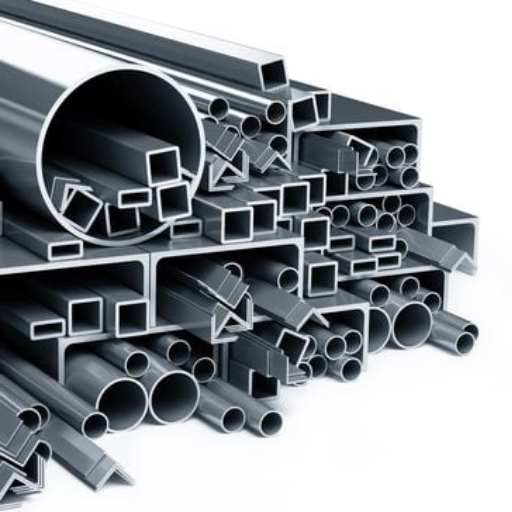
Steel color code charts have a major role in simplifying the identification of different steel grades and specifications in the manufacturing and engineering sectors. The workers would find the charts very helpful in quickly identifying the type of steel needed for a particular application, thus preventing mistakes and increasing productivity at the same time. These charts are a must-have in places like machine shops, construction sites, and fabrication facilities where the right choice of material is crucial for the product’s performance and quality. Moreover, by using color coding for identification, the charts also play a part in making safety a priority and keeping compliance with industry standards.
Industrial Applications of Steel Color Codes
The use of steel color codes is widespread across multiple sectors, which not only makes the processes easier but also assures safety. In the construction industry, for example, these codes are used to tell the carbon steel or stainless steel, which quickly happens to be the most important for the strength and lifetime of the building in the case of steel frames. It is very important for the two sides to be able to communicate the same thing, and that is why color codes are being used on different grades of steel for equipment, piping, or other components, guaranteeing that they will possess the exact mechanical and chemical properties. These indications are also present in the manufacturing workplaces, and more so in the automotive and aerospace industries, which speed up the process of selecting the correct material by reducing the possibility of making mistakes during production. Steel color codes thus make it very easy to identify the materials, and they eventually help in the proper management of the stock and adhering to the quality standards such as ASTM and ISO, which together are the main factors in the creation of a uniform and safe industry-wide standard practice.
How Color Codes Aid in Material Selection
In my opinion, color codes are twinkling in the sky when it comes to making material selection easier and faster. They act like a torch, throwing light on a material’s specifications, such as grade, composition, or mechanical properties, not only in the general way but also in the most proper standards for the specific application. This way, I can spot right away if a material fulfills the required standards or not, lessening the chances of mistakes and making the whole selection procedure more efficient through speed and higher accuracy.
Reference Sources
Frequently Asked Questions (FAQs)
What is a Steel Color Code Chart?
A steel color code chart is a guide that not only illustrates but also facilitates, through color coding, the identification of the different kinds of steels together with their respective properties. A manufacturer or user can be easily guided in the selection of the right material for his/her needs by the application of color coding, which is the assigning of a particular color to a certain grade or type of steel, including, among others, carbon steel, stainless steel, and tool steel.
How do I read a Steel Color Code?
Reading a code for steel involves comprehending the various assigned colors to the different grades or types of steel. Each color also signifies a different factor, for instance, the alloy or mechanical properties. By means of the steel color code chart, the user can determine the specific steel in a matter of seconds, just by looking at its color.
What are the common grades of Steel included in the Color Code?
The carbon steel grades like 1045, ferritic stainless steels, and a variety of alloy steels may be common grades of steel included in the color code chart. These grades, once known, will aid the users in choosing the steel type that is appropriate for their projects, thus guaranteeing the right mechanical properties and corrosion resistance.
What types of Steel are represented in the Steel Color Code?
In most cases, the steel color code chart depicts the four main types of steel: carbon, alloy, stainless, and tool. Each of them is specialized for a specific application, and the identification through color codes does streamline the selection from the manufacturers’ and engineers’ points of view.
Is there a Standard Steel Color Code for Identification?
The steel color codes are not the same in the whole world, but most of the industries are using similar practices, which result in somewhat the same color codes. These standards bring about consistency in steel grade identification that makes it easier for professionals to communicate and select the materials through visual cues.
How does Aluminum differ from Steel in Color Coding?
Aluminum generally requires different color coding than steel because of its properties and applications. The grades of steel that are related to strength and corrosion resistance are the focus of steel color codes, while aluminum color codes are often related to surface treatments and alloy compositions. To avoid any misunderstandings, it is important to consult the specific color chart for aluminum.
Can I find a Steel Color Code Chart for Aluminum and Steel?
Definitely, there are a few resources that offer the color code charts incorporating both the metals, aluminum and steel. Such charts serve the purpose of enabling the users to recognize at a glance the different materials and their properties, and they are especially useful in industries dealing with the two metals.
What role does the Steel Color Code play in Material Selection?
The steel color code is of great significance in the material selection process since it offers an easy-to-read visual reference that is clear and simple for steel types and grades to be identified. This type of support in choosing the right material that meets requirements like strength, durability, and corrosion resistance is very helpful for engineers, manufacturers, and technicians.